
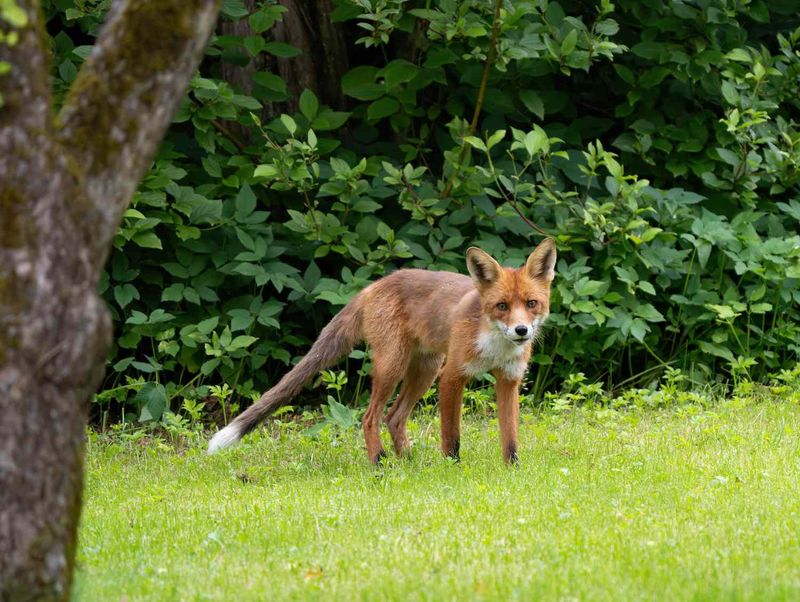
Spotting a fox in your yard once is a surprise, but seeing one again and again starts to feel like a message worth decoding. Most North Carolina homeowners jump straight to worrying about a population explosion or a sick animal, when the real explanation is usually much simpler and closer to home.
Your yard is quietly offering something the fox finds useful, and figuring out what that is puts you in charge of what happens next.
Repeated sightings reveal usable habitat, not a population boom
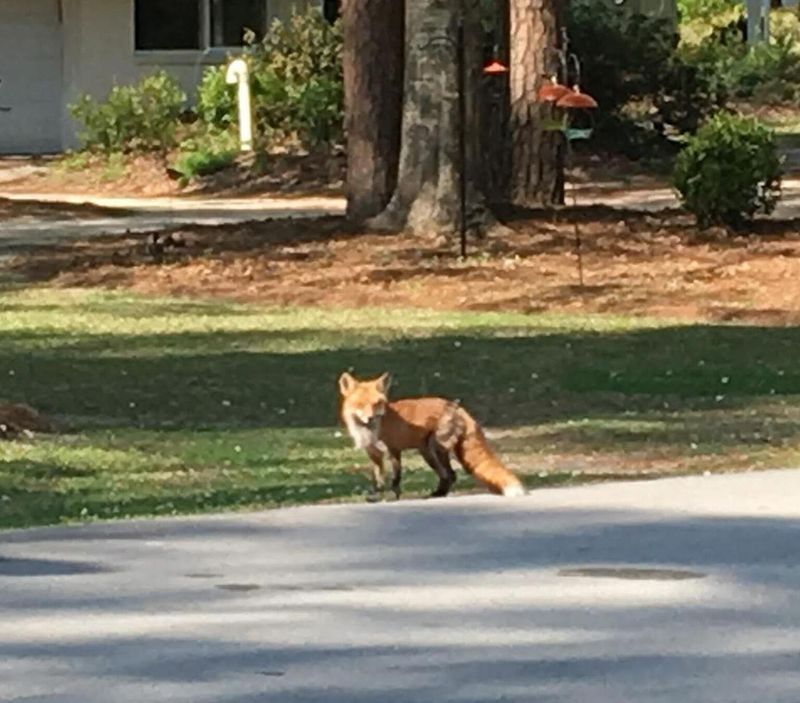
Seeing the same fox trot through your yard three mornings in a row does not mean the surrounding neighborhood is suddenly overrun. What it records is a fox that has found a place worth returning to, and that is a very different conclusion from a population surge.
NC Wildlife Resources Commission materials on red foxes make clear that residential areas can supply foxes with food and denning or hiding cover, which is exactly the kind of resource combination that turns a yard into a regular stop.
The repeat visitor could be a single resident fox running a familiar circuit, a mated pair sharing a territory, or a family group whose den sits nearby. It could also be multiple unrelated foxes using the same prey-rich corridor or travel route on different nights.
Sightings tell you that fox activity is happening; they do not give you a headcount of the broader population.
North Carolina is home to both red and gray foxes, and the NC Wildlife species directory shows both occurring throughout the state. A USDA APHIS environmental assessment for North Carolina described the red fox population as stable, though it also noted that statewide density data were unavailable, which is precisely why a handful of yard sightings cannot reliably signal a regional boom.
The more productive question to ask is not “how many foxes are out there?” but rather “what is my property providing that keeps making this trip worthwhile?” Shifting that question changes your response from alarm to action, and the answer almost always points to something specific and fixable on your own land.
What is the fox finding in your yard?
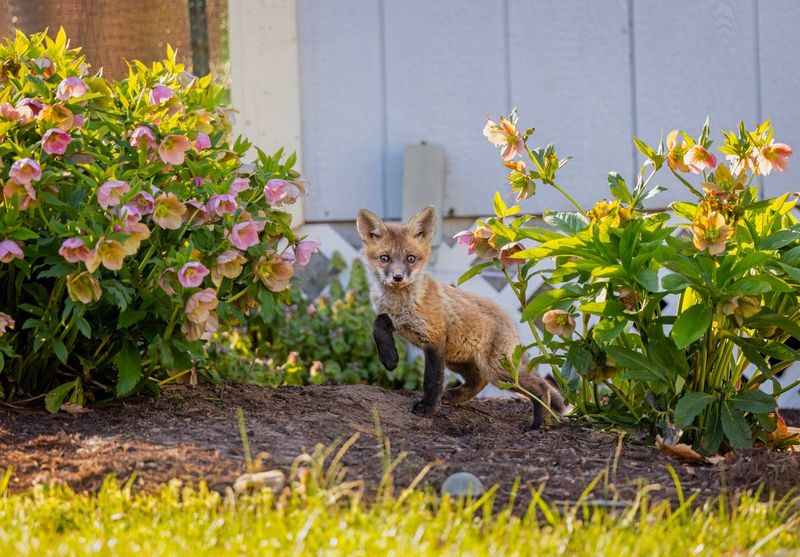
Foxes are opportunistic eaters with a broad menu, and a well-stocked North Carolina yard can check several boxes at once. NC Wildlife’s red fox profile lists mice, meadow voles, rabbits, insects, birds, eggs, fruit, berries, carrion, and refuse as regular food sources.
Any yard that hosts a few of those items, whether intentionally or not, becomes a reliable hunting ground.
Human-associated food is often the bigger draw than homeowners expect. An outdoor pet bowl left out overnight, a garbage can with a loose lid, spilled birdseed under a feeder, fallen apples or figs, an unsecured compost bin, backyard chickens in a flimsy coop, or open livestock feed storage can all provide easy calories.
NC Wildlife’s coexistence guidance specifically names pet food, garbage, fallen fruit, and ground-level birdseed as attractants worth removing. A yard with no obvious mouse problem can still be drawing foxes for any one of these other reasons.
Cover is the third resource category, and it works alongside food to make a property genuinely attractive. Ornamental shrubs with dense low growth, the dark space beneath a deck, a gap under a porch, an unscreened crawl space, or the shadowed interior of a storage shed can all serve as resting spots or, during breeding season, denning sites.
Wildlife damage management guidance notes that foxes are frequently attracted to rodents living around crawl spaces, sheds, garages, and barns, so a structure that offers both harborage for prey and shelter for the fox itself is doubly appealing.
Several conditions can stack. A yard with a birdseed spill, an open compost pile, and a gap under the back porch is offering food, more food, and cover all at once, which explains why the same fox keeps coming back even when a neighbor’s yard sits equally close.
Summer can make ordinary fox activity easier to notice
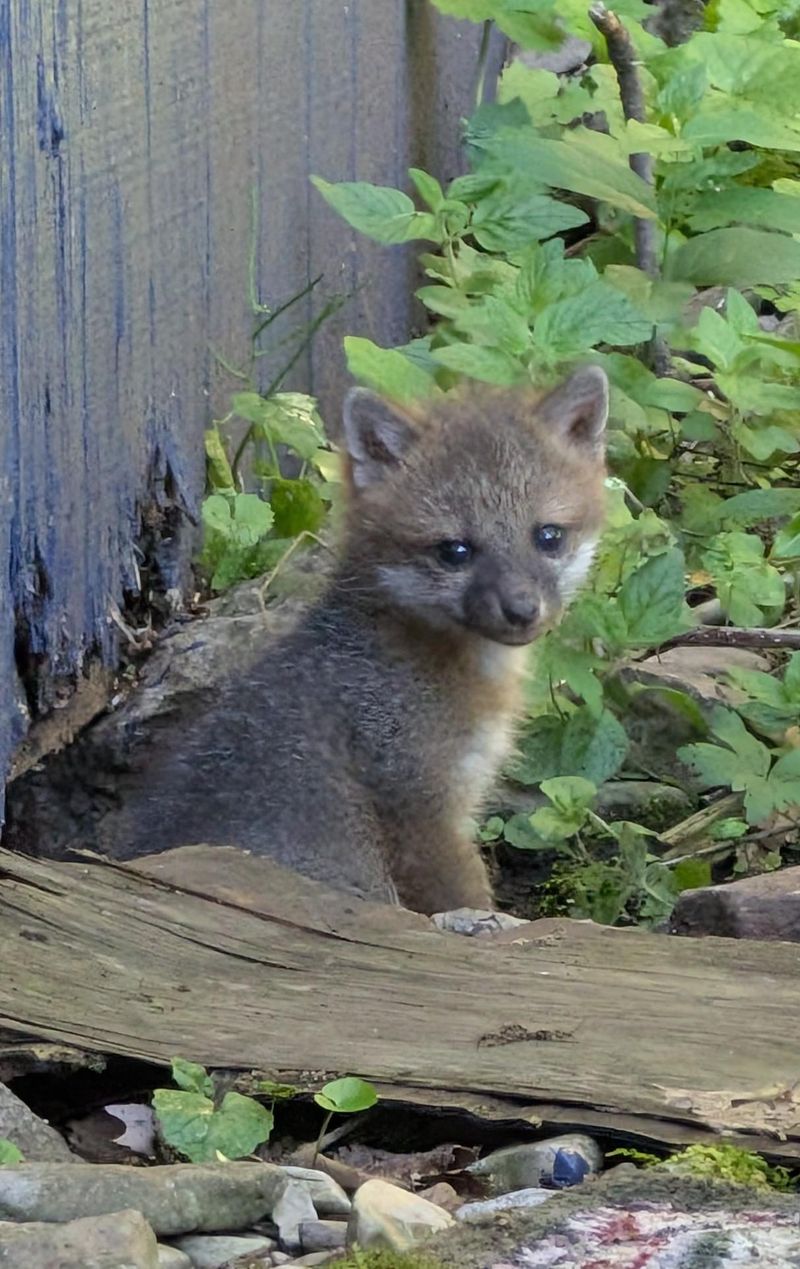
Summer fox sightings can feel like a sudden spike, but the activity level may not have changed as much as the visibility has. Adults provisioning young make more trips in and out of a territory, recently mobile young foxes explore more widely, and the homeowner’s own schedule, a new security camera, or a different walking routine can put eyes on behavior that was always there.
Gray fox timing gives this a concrete seasonal shape. NC Wildlife’s gray fox profile shows that kits are born in March and April, grow quickly through spring, and typically reach adult size and begin dispersing by early fall.
That life-history arc means summer sits right in the window when young foxes are mobile enough to be seen but not yet gone, and when adults are still moving frequently to feed them.
That said, not every summer visitor is a kit, and not every repeat sighting involves a family group. NC Wildlife’s coexistence materials describe foxes as animals that use residential areas for food and cover year-round, not just during the breeding season.
A single adult fox can develop a reliable summer route through a neighborhood simply because the food rewards are consistent and the route is safe.
Urban land-use research also supports the idea that sighting frequency reflects habitat quality more than raw population size. A peer-reviewed study on fox sightings and urban land use found that the features of a landscape shape where foxes appear and how often, which means a surge in your personal sighting count is more likely a story about your yard than about the county’s fox population.
A quick yard audit can identify the reason for the visits
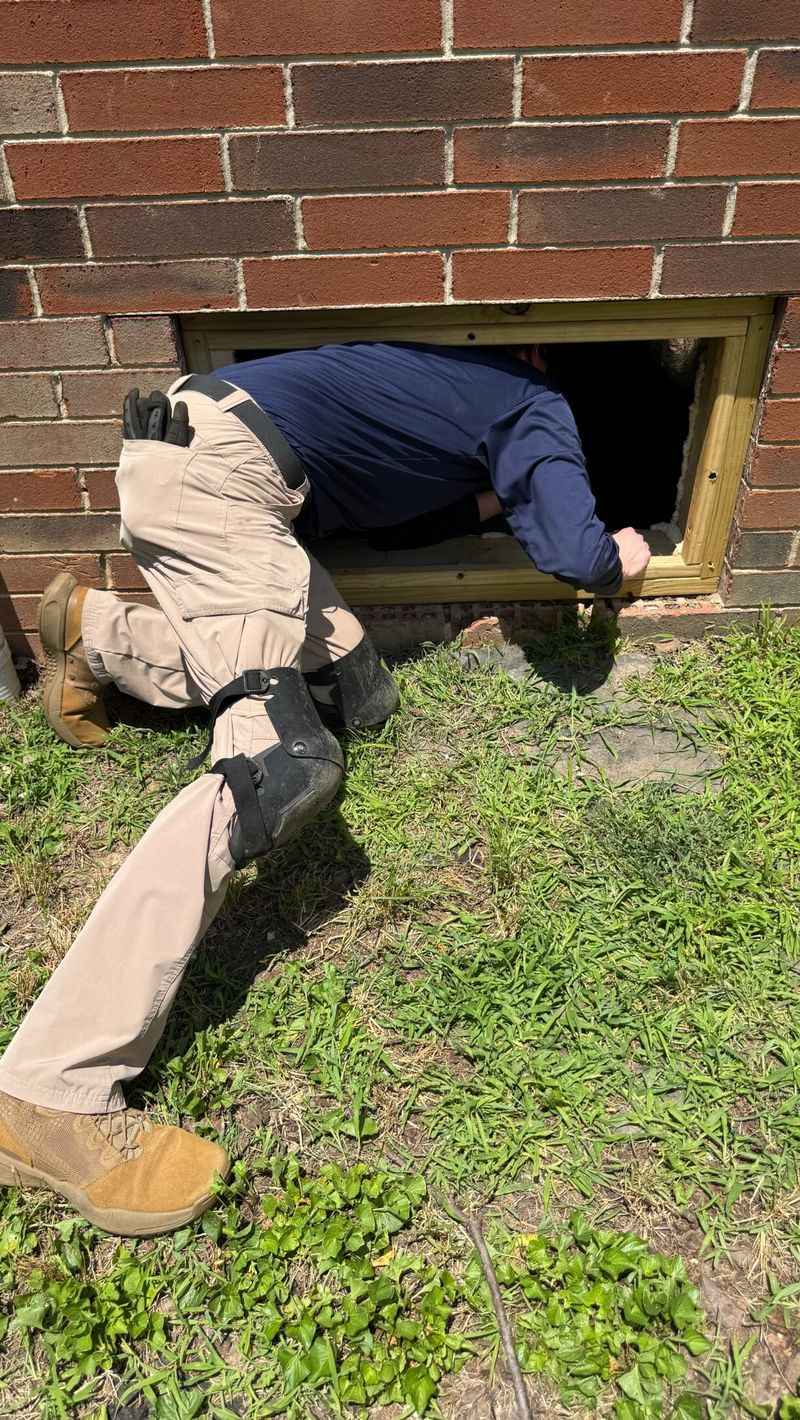
Before deciding what to do about a repeat fox visitor, spend twenty minutes walking the property with fresh eyes. The goal is to find what the fox is finding, and the list of candidates is longer than most people expect.
Start at the places where food can collect without anyone noticing. Check whether pet bowls sit outside after feeding time, whether garbage cans have lids that close and latch securely, and whether a compost bin or food-waste pile is open or loosely covered.
Walk under any fruit trees or berry shrubs and look for fallen produce on the ground. Scan under bird feeders for seed that has accumulated at ground level.
NC Wildlife’s fox coexistence guide flags all of these as conditions worth correcting before attempting any other intervention.
Then check for rodent activity and shelter around outbuildings. Look for burrow openings, gnaw marks, or droppings near the foundation of sheds, garages, and barns.
Tall grass or dense debris piles near a fence line or foundation create prime mouse and vole harborage, which in turn creates a reliable hunting spot for any fox in the area. NC Wildlife’s red fox profile identifies mice and meadow voles as major prey items, so a rodent-friendly yard is also a fox-friendly yard.
Finally, inspect every ground-level opening: crawl space vents, gaps beneath decks and porches, and any unscreened space under a shed or outbuilding. Wildlife damage management guidance recommends securing these openings, but only after confirming no animal is inside.
Not seeing mice during your walk does not clear the yard; pet food, birdseed, or an open crawl space can explain the visits just as well.
Remove the invitation before you try to remove the fox
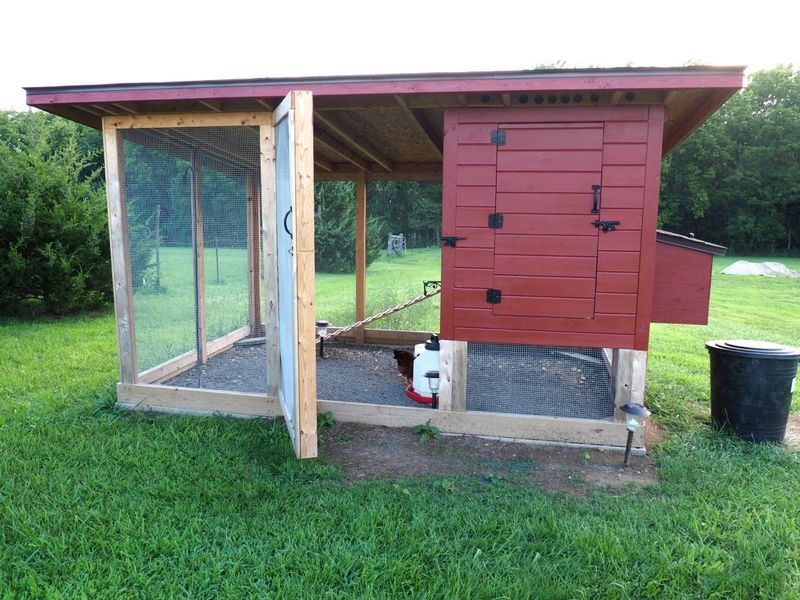
Fixing what the yard offers is almost always more effective than trying to remove the fox itself, and it is the step that actually prevents the next visitor from moving in after the first one leaves. Work through the attractants in a clear order so nothing gets skipped.
Feed pets indoors whenever possible, or bring bowls inside immediately after the animal finishes eating. Switch to garbage cans with tight-fitting, wildlife-resistant lids, and check that the latches actually engage.
Clean up fallen fruit under trees and shrubs every day or two during summer, and move birdfeeders to pole-mounted stations high enough that seed cannot accumulate at ground level. Secure compost in a closed bin rather than an open pile, and store poultry or livestock feed in rodent-proof metal containers.
NC Wildlife’s coexistence materials list all of these steps as the practical first response to fox activity near homes.
Physical exclusion is more reliable than scent products. Wildlife damage management guidance describes dog or coyote urine repellents as temporary at best and notes that their long-term effectiveness is questionable.
Securing crawl spaces, closing gaps beneath decks and porches, using hardware cloth or welded wire fencing around garden beds, and keeping garbage inaccessible are the measures with stronger staying power.
Poultry protection deserves its own attention. Penn State Extension guidance on raising fowl in urban areas and NC Wildlife’s general wildlife-handling considerations both support keeping chickens and ducks in enclosed, predator-resistant housing with a secure roof, especially overnight when foxes are most active.
Hardware cloth with small openings holds better than standard chicken wire against a determined predator.
One rule applies to every ground-level opening you plan to seal: confirm the space is empty before you close it. Blocking an active den entrance traps animals inside and can create a more serious problem than the one you started with.
Watch the opening for several days, or use a loose plug of newspaper to check for disturbance before installing a permanent barrier.
When should a normal sighting become a safety concern?
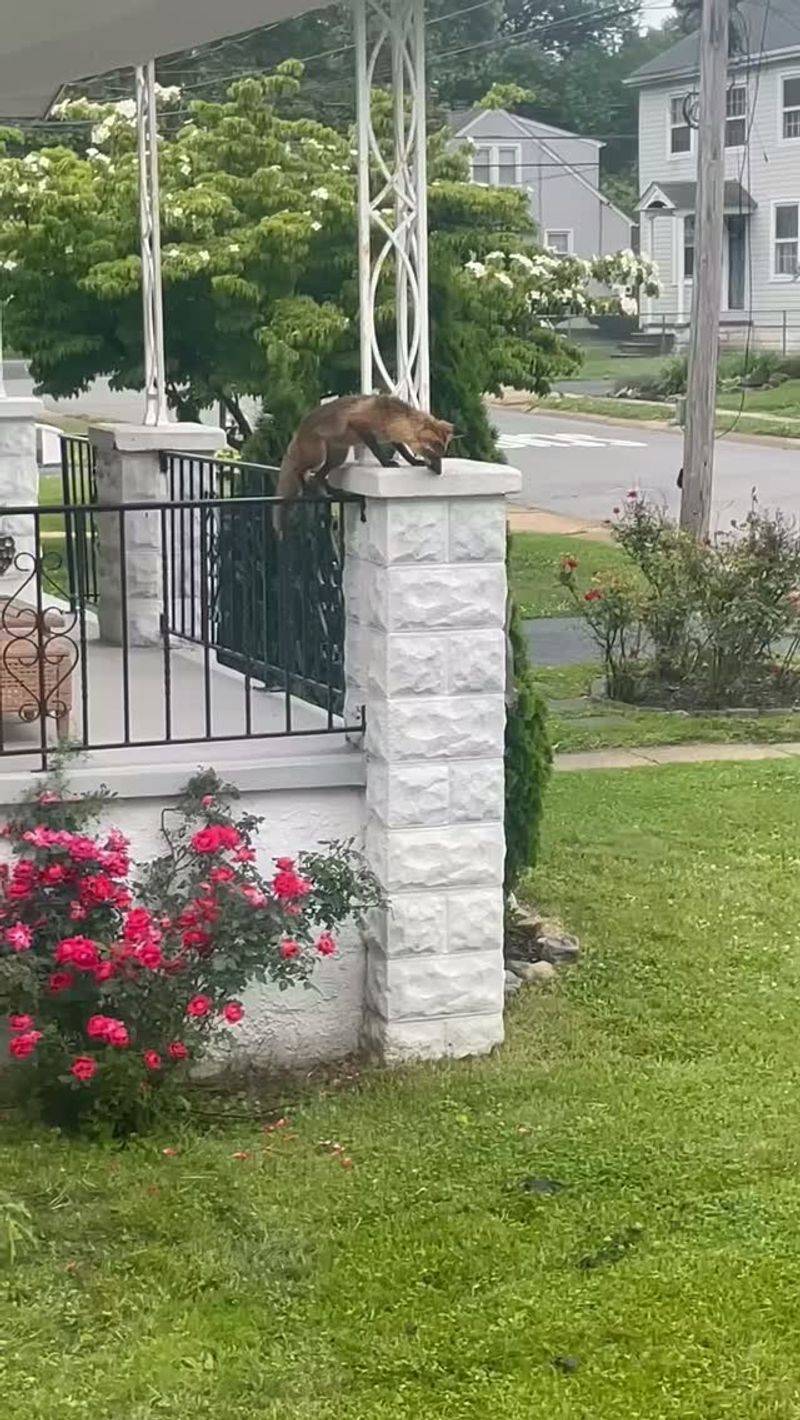
Seeing a fox in your yard, even in the middle of the afternoon, is not by itself a reason to call anyone or take action. NC Wildlife’s “Have a Wildlife Problem?” guidance states that foxes can be seen during the day, especially in spring and summer, and that daytime activity alone is not a valid reason for removal.
Simply being visible is not a red flag.
What does warrant attention is a change in behavior or a direct conflict. A fox that approaches people without hesitation, lingers in a yard even when people are present and active, or repeatedly damages property has crossed from ordinary wildlife activity into a pattern that needs a response.
NC Wildlife’s fox coexistence guide describes foxes as generally shy and non-aggressive and says that simply seeing one is not cause for concern, but it also identifies habituation to people, repeated property damage, and abnormal behavior as legitimate intervention triggers.
Do not approach a fox to get a closer look, offer food, photograph it at close range, or attempt to handle it. A mother fox may defend a den or nearby young, and a kit seen alone in a yard is not necessarily abandoned or in distress.
Young foxes become more independent through summer and may appear to be on their own when they are simply exploring.
One caution that carries real weight: a fox’s calm appearance or apparently healthy coat does not tell you anything reliable about its disease status. NC DHHS rabies control guidance and the NC Rabies Control Manual’s section on animals that bite humans are clear that exposure circumstances, not a homeowner’s visual judgment, determine whether a rabies assessment is needed.
A fox that looks fine can still pose a risk if contact occurs.
Handle bites and scratches through the right health channel

If a fox bites or scratches a person, the first step happens at the sink, not on the phone. Wash the wound thoroughly with soap and running water for a full 15 minutes.
That initial cleaning is the single most important physical step you can take before any other response.
After washing, contact a doctor or other medical provider, your local health department, and animal control as directed. NC DHHS rabies information explains that North Carolina treats foxes as high-risk rabies-vector wildlife.
Unlike dogs, cats, and ferrets, wild foxes do not have a routine observation period after biting, which means public-health authorities assess the exposure and determine whether post-exposure treatment is necessary. Do not wait to see whether symptoms develop before making that call.
The response for a pet that has been bitten or scratched follows a separate path. Wash the wound if you can do so safely, then contact a veterinarian immediately.
NC DHHS rabies control guidance and the NC Rabies Control Manual’s guidance on animals that bite humans direct owners to report the pet’s exposure through local animal-control or public-health channels as instructed. A veterinarian handles the animal’s medical evaluation; a doctor or medical provider handles any human exposure.
Keep those two channels separate and contact both promptly.
Speed matters in both cases. Rabies post-exposure treatment is highly effective when started promptly, and the public-health process depends on getting accurate information about the exposure as quickly as possible after it happens.
North Carolina rules shape the next step
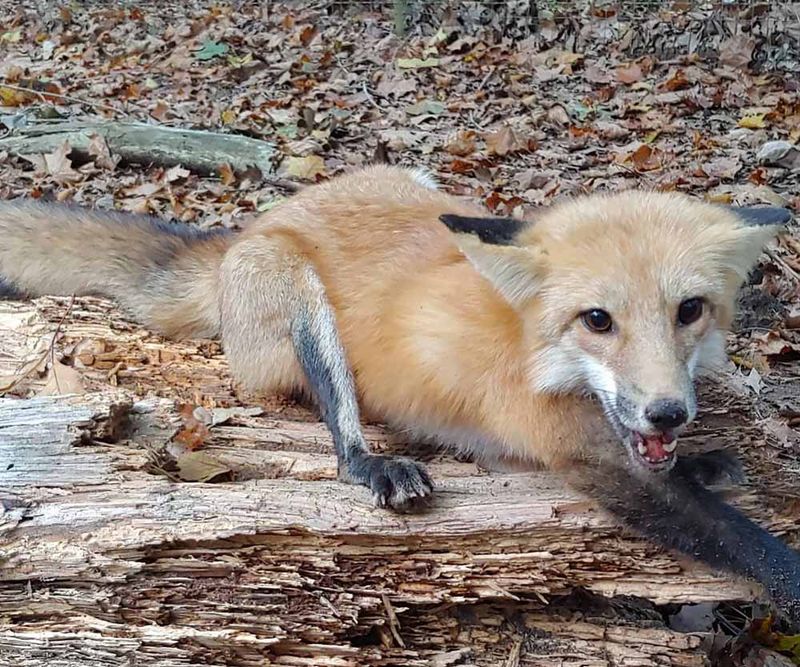
Prevention handles most fox conflicts on its own, but when it does not, the next step is shaped by North Carolina law rather than personal preference. One of the most common assumptions homeowners make, that they can trap the fox and release it somewhere else, is not a legal option in this state.
NC Wildlife is explicit: foxes cannot simply be relocated in North Carolina.
Trapping and hunting rules add another layer of complexity. Regulations can vary by county and by season, which means a homeowner who sets a trap without checking current rules may be acting outside the law even if the intention is to resolve a genuine property conflict.
NC Wildlife’s general considerations for handling wildlife and the NC Wildlife fox coexistence guide both direct residents toward licensed professionals rather than do-it-yourself trapping when a conflict requires wildlife management beyond routine prevention.
The correct resource is a licensed Wildlife Damage Control Agent. These are professionals authorized under North Carolina law to manage wildlife conflicts, and they understand both the legal framework and the practical options available in your county.
North Carolina General Statutes section 113-291.4 governs wildlife damage control activities and establishes the licensing structure that applies to this kind of work.
Reaching out to a licensed agent does not automatically mean lethal removal. These professionals can assess the specific situation, advise on exclusion options, and help determine whether management beyond prevention is actually warranted.
Contacting them early in a genuine conflict is more productive than attempting a solution that may be ineffective or legally problematic.
Read the yard, not just the sighting
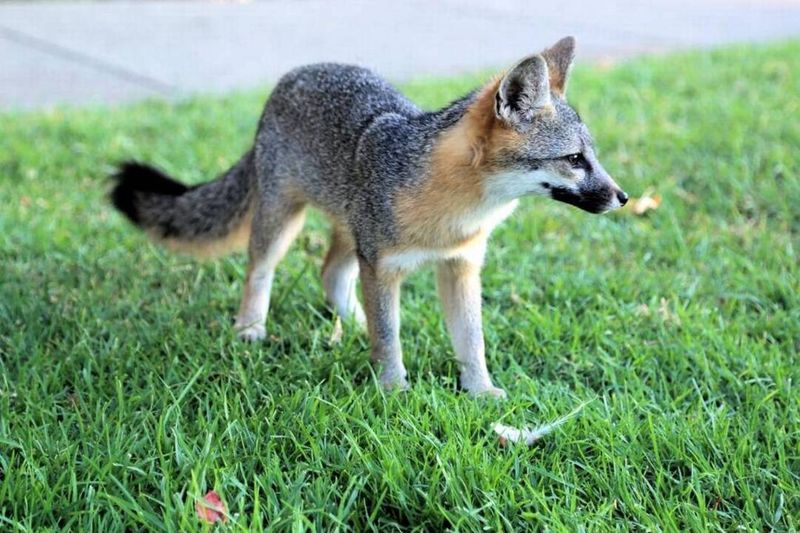
A fox that keeps appearing in your yard is sending a land-use signal, not a population report. The repeat visits almost always mean the property offers food, prey, cover, a useful travel route, or some combination of those things, and that explanation is far more actionable than worrying about a countywide surge that the available evidence does not support.
The first priorities remain the same regardless of which specific attractant is driving the visits: remove food rewards, address rodent shelter around outbuildings, protect poultry in secure housing, and confirm any ground-level opening is empty before sealing it. NC Wildlife’s red fox profile and the NC Wildlife fox coexistence guide both point to those steps as the foundation of any practical response.
The line between coexistence and intervention is drawn by behavior, not by presence. NC Wildlife’s wildlife problem guidance is clear that a visible fox is part of ordinary North Carolina wildlife activity.
A fox that bites, becomes habituated to people, causes repeated property damage, or behaves abnormally is a different matter that warrants professional or public-health help. Knowing which situation you are actually in is the most useful thing the sighting can tell you.