
Staring at a hydrangea covered in lush green leaves but not a single bloom can be genuinely frustrating, especially when the plant looks otherwise healthy. For traditional bigleaf and oakleaf hydrangeas, one pruning mistake made at the wrong time of year can quietly erase the next season’s flowers while leaving the foliage untouched.
Understanding why this happens, and which type of hydrangea you’re actually dealing with, is the first step toward protecting next year’s bloom cycle.
Late pruning can cost an old-wood hydrangea its next bloom
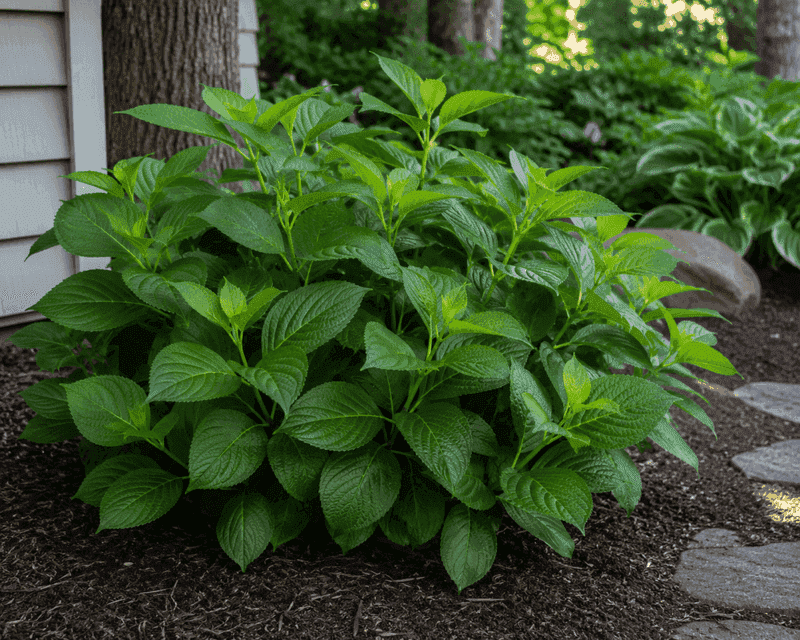
Most hydrangeas with big, healthy leaves and zero flowers in mid-August are traditional bigleaf hydrangeas, including mophead and lacecap forms of Hydrangea macrophyllaH. quercifolia, or oakleaf hydrangeas (). Both types set their flower buds on old wood, meaning the stems that grew during the previous season carry the buds that open the following year.
When those stems get cut away at the wrong time, the plant has no buds left to open, yet it grows foliage just fine from whatever base growth remains.
The critical timing issue is not pruning itself, but pruning too long after flowering. UGA Cooperative Extension guidance on bigleaf hydrangeas specifically warns that pruning after buds begin forming in late summer can eliminate the next season’s bloom display entirely.
The practical rule is to prune soon after the current flowers fade, before the plant begins setting buds for next year, and to avoid major cuts in fall, winter, or early spring on old-wood types.
Pruning right after flowering is not the problem. The mistake is waiting weeks or months past that window, then cutting stems that already carry next year’s buds.
A plant that was shaped in September, October, or early spring may push out abundant leafy growth while producing no flowers at all, because the bud-bearing wood is gone. University of Minnesota Extension’s pruning guide reinforces that this explanation applies specifically to old-wood bloomers, not to every hydrangea species.
Identify the hydrangea before you reach for the shears
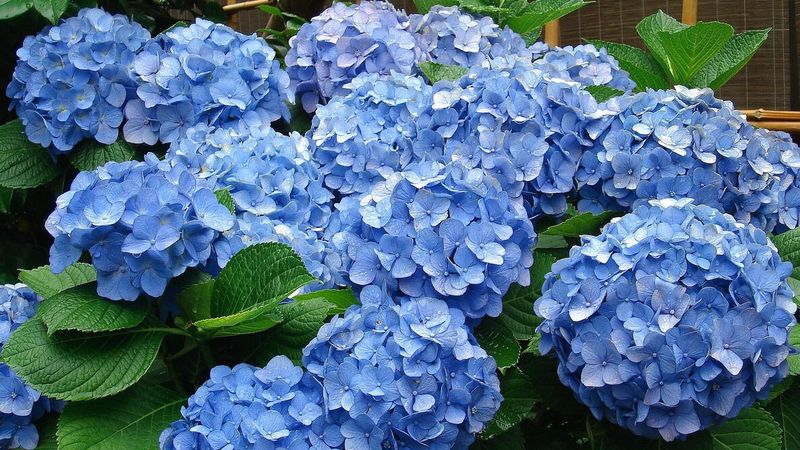
Before making any pruning decision, knowing which hydrangea you actually have is the most useful thing you can do. Bigleaf hydrangeas have large, glossy, oval leaves with a slightly serrated edge, and their flowers appear either as dense, ball-shaped mopheads or as flatter lacecap clusters with tiny central florets ringed by larger petals.
These are the most common hydrangeas sold in Southern garden centers and the ones most vulnerable to a late-pruning mistake.
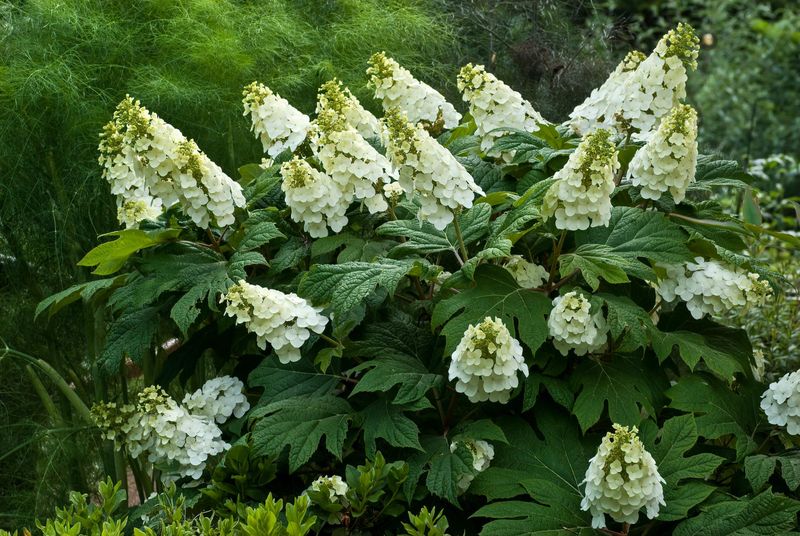
Oakleaf hydrangeas are easier to spot because their leaves are shaped almost exactly like oak leaves, with deep lobes and a rough texture. The bark on older stems often peels in thin layers, which is another giveaway.
UGA Extension’s identification guide for Forsyth County describes how leaf and flower characteristics separate these types and directly connects identification to the correct pruning window.
Panicle hydrangeas produce cone-shaped flower clusters rather than round heads, and they tend to be more sun-tolerant than bigleaf types. Smooth hydrangeas, often sold as ‘Annabelle’ or similar cultivars, form rounded shrubs with large ball-shaped or lacecap blooms and have a softer, less glossy leaf surface than bigleaf types.
If you’re still uncertain after looking at the leaves and flowers, check the plant tag or a photo from when it was blooming, since cultivar names can narrow down the bloom habit considerably.
Old wood and new wood set different pruning schedules
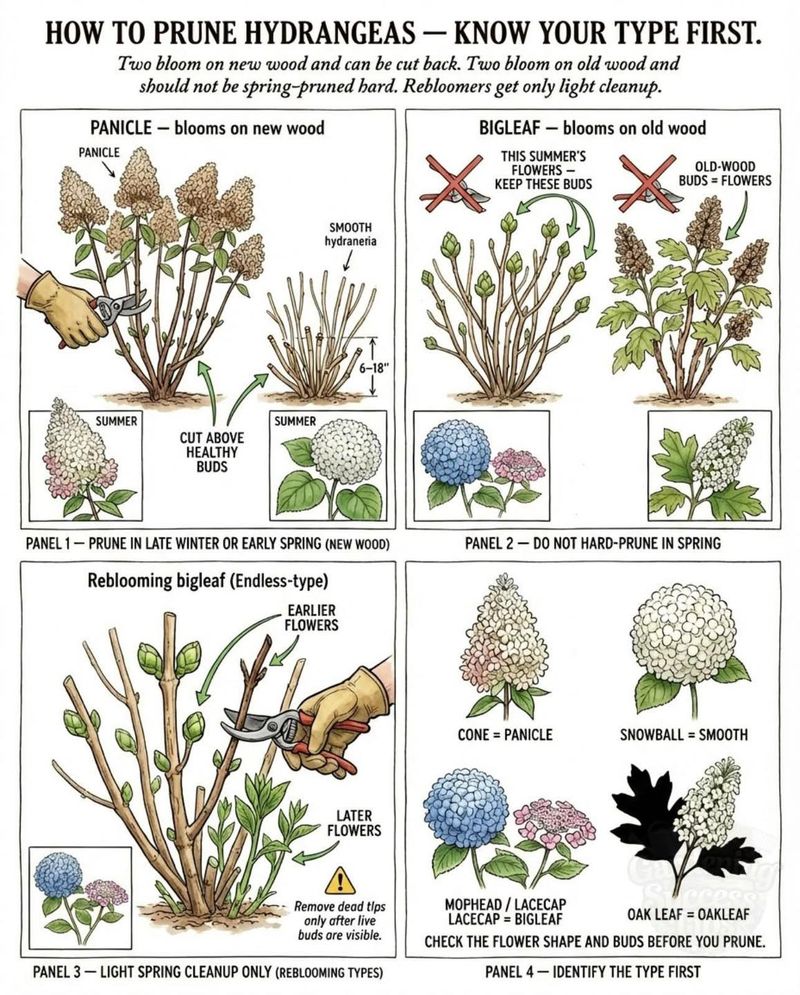
Old wood refers to stems that grew during the previous growing season and survived the winter. New wood is whatever the plant has pushed out during the current growing season.
That distinction controls everything about when and how much you can safely cut.
Traditional bigleaf and oakleaf hydrangeas rely on old wood for their flowers. Those stems need to stay intact through fall and winter so the buds they carry can open the following summer.
University of Minnesota Extension explains that pruning these types in late summer, fall, or early spring removes the very wood that would have flowered. The recommended window is soon after flowering ends, before the plant begins forming next year’s buds on those same stems.
Smooth hydrangeas, including ‘Annabelle’ types, and panicle hydrangeas, including popular cultivars like ‘Limelight,’ work on a completely different schedule. Both bloom on new wood, so cutting them back in late winter or early spring before growth begins does not sacrifice the coming season’s flowers.
UGA Extension’s Forsyth County pruning overview notes that smooth hydrangeas can even tolerate a harder cutback, sometimes to roughly six to twelve inches, without losing their bloom.
Reblooming bigleaf cultivars, such as those in the Endless Summer or Let’s Dance series, can produce flowers on both old and new wood, making them more forgiving of a late cut. Still, Penn State Extension’s guide on hydrangea bloom failure points out that even reblooming types can lose their early-season flowers if old wood is removed or winter-damaged, so they are not completely immune to poor pruning timing.
What to do with a flowerless plant in mid-August
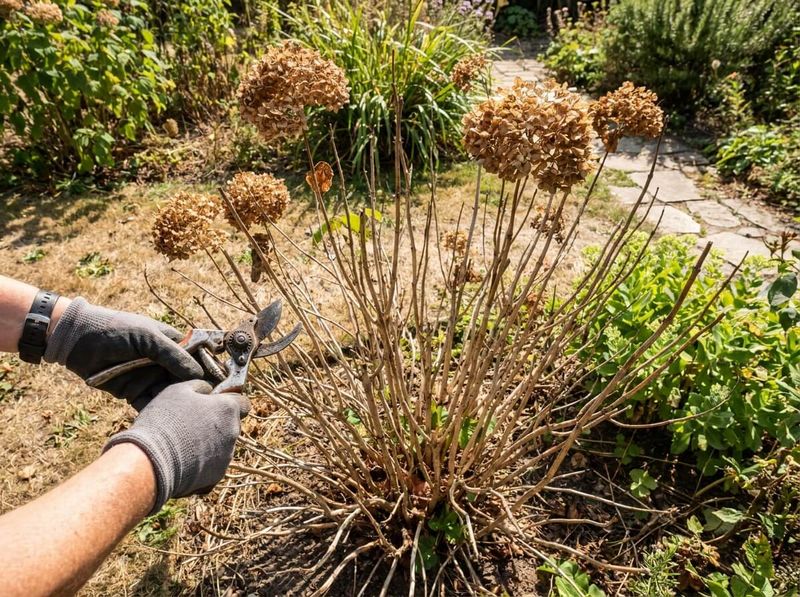
The most useful thing you can do right now with a leafy, flowerless hydrangea is stop major pruning until you know what type of plant you have. Cutting healthy stems off a suspected old-wood bigleaf or oakleaf hydrangea in mid-August can remove whatever buds managed to survive, making next season’s bloom even less likely.
Put the shears down and spend a few minutes on identification first.
Once a bud has been pruned away, no amount of cutting can bring it back for the current cycle. UGA’s bigleaf hydrangea publication makes clear that the practical response after late pruning is to preserve surviving stems and wait for the next appropriate pruning window rather than attempt a correction now.
Protecting those stems from cold damage, deer browsing, and drought stress through the coming months gives them the best chance of carrying viable buds into next spring.
Not every hydrangea without flowers in mid-August is in trouble. NC State Extension’s profile of panicle hydrangeas notes that some panicle cultivars bloom in mid-to-late summer and may simply not have opened yet.
Penn State Extension also notes that bloom timing varies with cultivar, location, light, and weather. A cautious wait-and-watch approach, combined with basic plant care, is a safer mid-August response than any aggressive pruning.
Use a restrained cut when the pruning window arrives
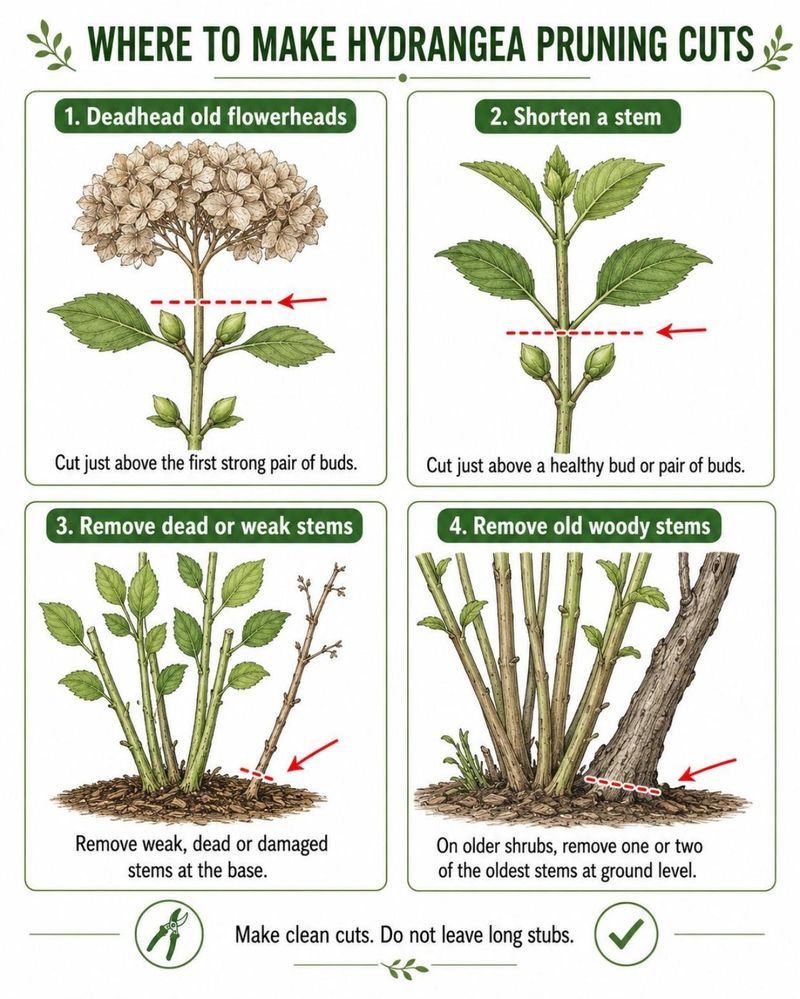
When the right window finally arrives, the goal is a clean, conservative cut rather than a dramatic reshape. Start by removing any wood that is clearly dead, damaged, or thin and weak.
Dead stems snap easily and often look gray or hollow inside; removing them improves air circulation without touching any bud-bearing wood. On old-wood types like bigleaf and oakleaf hydrangeas, that removal alone may be all the pruning the plant needs in a given year.
Oregon State Extension’s overview of hydrangeas recommends making cuts just above a live bud or lateral branch, using clean, sharp tools to avoid tearing the stem. For bigleaf and oakleaf types, this light approach, done soon after flowering ends, removes spent blooms and any problem wood while leaving the healthy old stems intact for next year’s flowers.
UGA Extension’s Forsyth County guide echoes this preference for light post-flowering pruning on old-wood types.
Smooth and panicle hydrangeas can handle a more substantial cutback in late winter or early spring, but even those cuts should have a purpose rather than simply reducing the plant’s size out of habit. Mississippi State University Extension’s hydrangea publication cautions that heavy pruning on bigleaf or oakleaf types can sacrifice a full flowering season, so more is rarely better when old wood is involved.
Check other causes before blaming the shears
Pruning timing is a strong explanation when a traditional bigleaf or oakleaf hydrangea was cut beyond its proper window, but it is not the only reason a hydrangea can sit there in August without a single bloom. Winter and late-spring freezes are a credible alternative, particularly across the South where temperatures can swing unexpectedly.
UGA’s bigleaf hydrangea guide explains that a plant can survive and push out abundant leaves even when its flower buds were killed by a cold snap, because the roots and lower stems remain viable while the bud tissue dies.
Excessive shade can reduce flowering over time, since bigleaf hydrangeas generally prefer morning sun with afternoon shade rather than full shadow all day. Drought and inconsistent watering can stress plants enough to suppress blooms, while deer or other browsers can remove flower buds before they ever open.
Excess nitrogen from lawn fertilizer or an overly generous feeding schedule tends to push leafy growth at the expense of flowers, which can look a lot like a pruning problem from the outside. Penn State Extension’s bloom-failure resource lists all of these as credible contributors alongside pruning mistakes.
Some plants that appear flowerless in mid-August are simply not done yet. NC State Extension’s panicle hydrangea profile notes that panicle cultivars can bloom in mid-to-late summer, so a cone-flowered shrub without open blooms in early August may just need more time.
Florida gardeners face an extra layer of complexity: University of Florida IFAS Extension guidance suggests that subtropical and tropical conditions across the state make cultivar identity and site-specific timing far more reliable than a universal August pruning deadline. One more distinction worth making: soil pH can shift flower color in some bigleaf and mountain hydrangeas from pink toward blue or vice versa, but adjusting pH will not restore buds that were removed by pruning or killed by cold.
Make identification the first check, not the only diagnosis
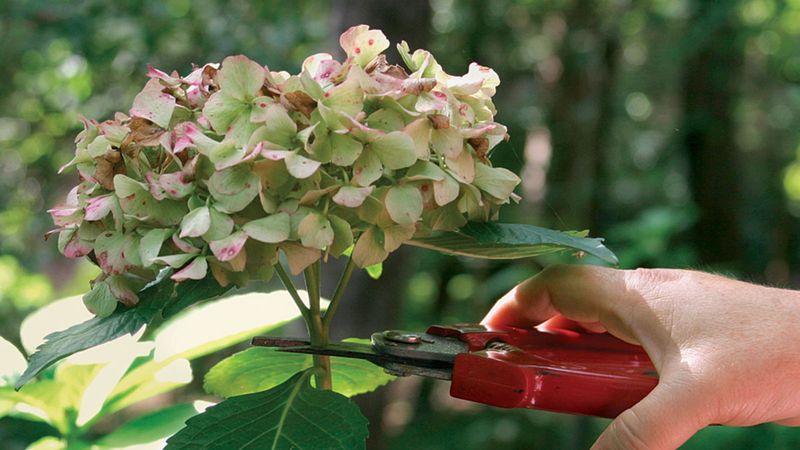
A practical decision rule for any leafy, flowerless hydrangea starts with two questions: what type is it, and when was it last pruned? If the plant is a traditional bigleaf or oakleaf hydrangea and it was pruned in late summer, fall, winter, or early spring, delayed pruning is a leading explanation for the missing flowers.
University of Minnesota Extension’s pruning guide is direct on this point: the pruning schedule must match the bloom habit, and old-wood types need protection of their previous-season stems through the winter.
When that pattern does not fit, the investigation should expand. Freeze damage, inadequate light, inconsistent moisture, excess nitrogen, deer browsing, plant age, and normal cultivar bloom timing can all produce the same leafy-but-flowerless result.
UGA Extension and Penn State Extension both treat these as genuine alternative causes rather than unlikely edge cases, and a thorough diagnosis checks each one before settling on a single explanation.
Avoid making any major mid-August cut until the bloom habit is clear. Protecting surviving stems now, improving basic growing conditions, and pruning at the correct time next season gives a traditional old-wood hydrangea its best realistic shot at flowers.
Knowing the plant before reaching for the shears is not just good advice for this season – it is what separates a one-time bloom failure from a recurring one.