
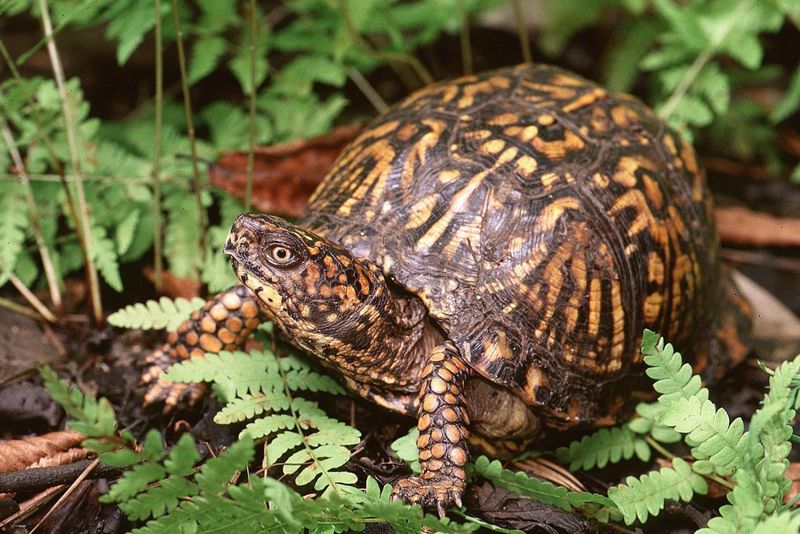
Spotting a box turtle tucked into your garden bed once is a surprise. Seeing one there again and again makes you wonder what is actually drawing it in.
For North Carolina homeowners, those repeat visits can reveal real things about your yard, but they can also be easy to misread. Understanding what the sightings may and may not mean helps you protect a native animal that faces real pressures across the state.
Repeated visits can have more than one explanation
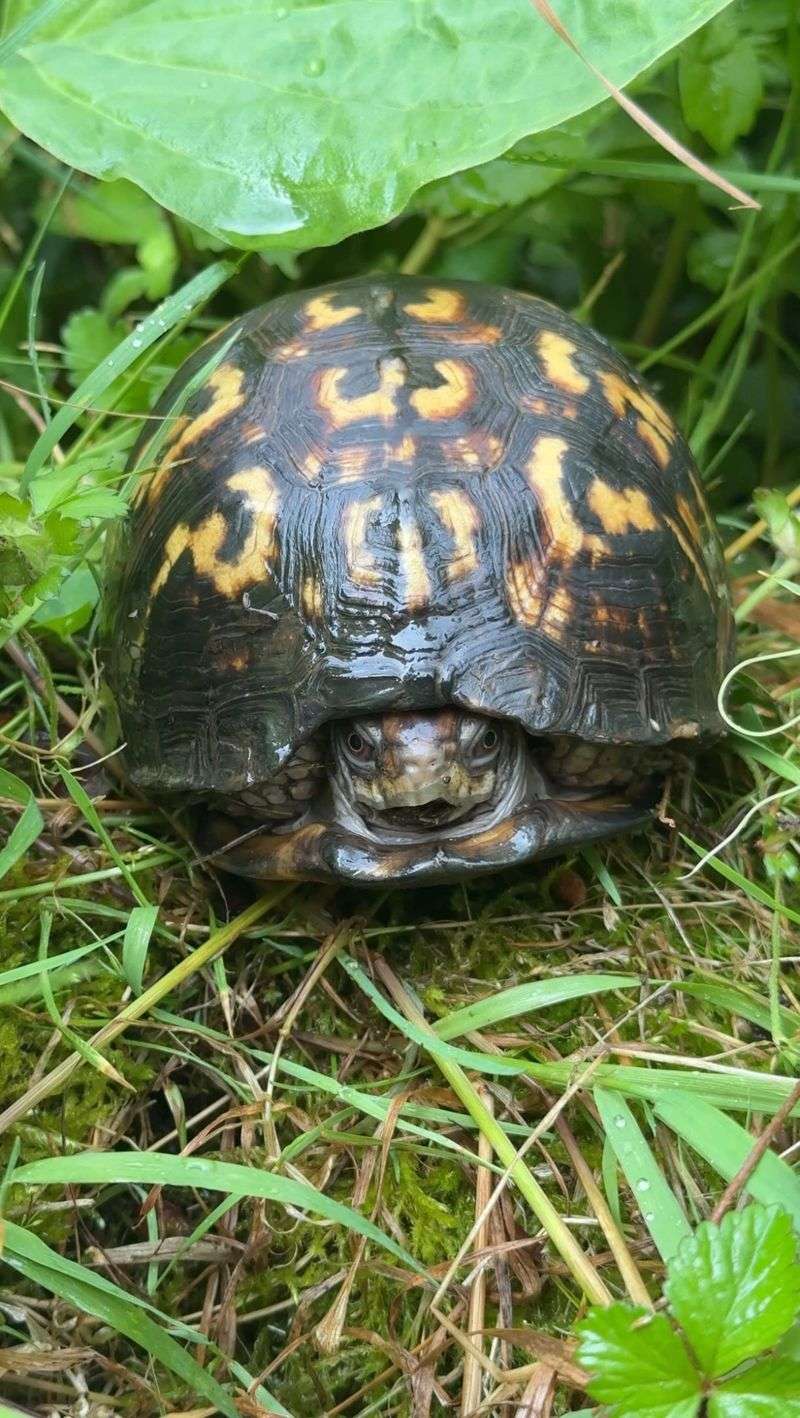
Seeing the same turtle-shaped outline tucked under your tomato plants two or three times a summer is enough to make you wonder whether one regular visitor has claimed your garden as its territory. That explanation is genuinely plausible.
NC Wildlife notes that eastern box turtles typically occupy small territories, often under two acres, and carry strong homing instincts that keep them returning to familiar ground. A single individual learning that your beds stay moist and cool could account for every sighting.
At the same time, that reading is not the only one. Repeated observations could just as easily involve two or three different turtles passing through at different times, or an individual making occasional movements across a larger stretch of landscape.
Without individually marking or tracking the animals, there is no reliable way to count them from casual sightings alone. Noting whether the turtle looks identical each time, including shell pattern, size, and any distinctive markings, adds useful context, but it still does not settle the question.
Eastern box turtles use a wide range of habitats: forests, brushy fields, suburban yards, and other fragmented areas. A garden bed sitting near a wooded edge, a brushy fence line, or a drainage strip can fall within the travel range of an animal that spends most of its life close to home.
Research on box turtle population ecology in fragmented landscapes shows that roads, development, and habitat loss reduce movement and survival, particularly for animals trying to cross between patches. A turtle reaching your garden says the property is accessible from wherever it came from, but it does not confirm that a connected corridor exists or that a healthy local population is thriving nearby.
North Carolina’s Wildlife Action Plan identifies habitat fragmentation, road mortality, and collection as documented conservation pressures on the species statewide. The visits deserve attention, but they should be read carefully rather than overinterpreted.
What a summer garden bed may offer a box turtle
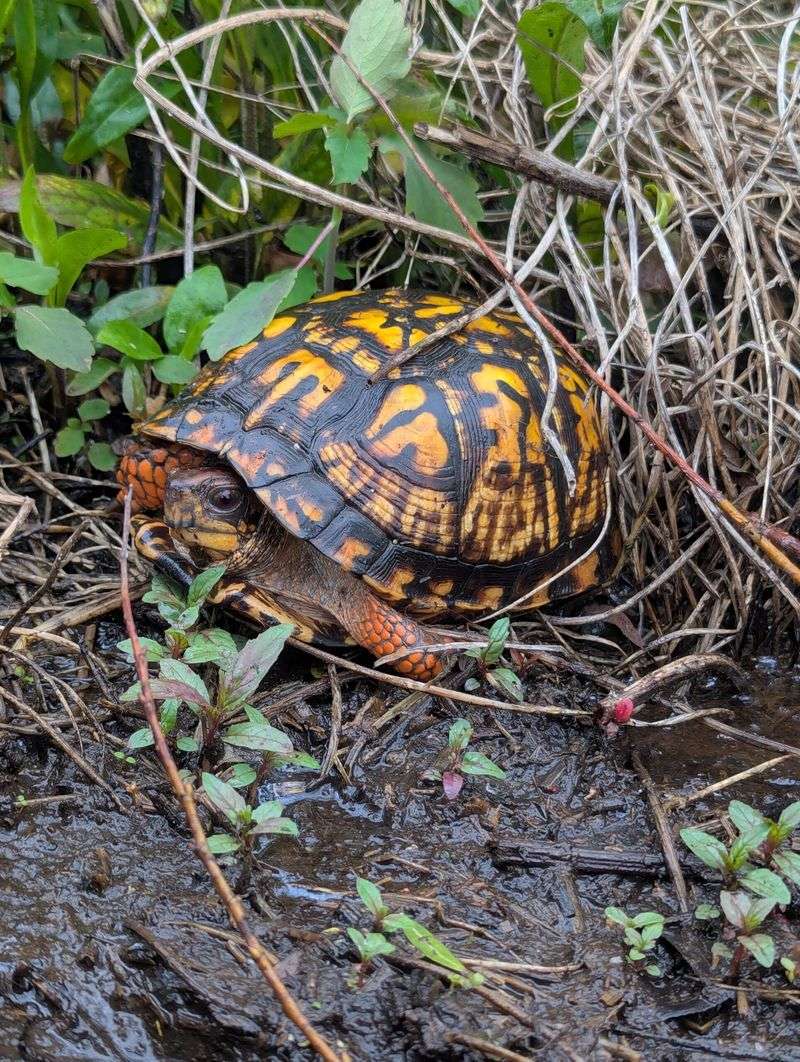
Garden beds do not attract box turtles by accident. Several physical conditions common to well-tended summer beds overlap closely with what this species seeks out in its natural habitat.
Moisture is probably the most immediate draw. A bed that holds water after rain or irrigation stays cooler and softer than the surrounding lawn, and U.S.
Forest Service habitat research on eastern box turtles identifies moisture, ground cover, leaf litter, and varied vegetation as consistently relevant habitat features. A freshly watered raised bed in July can feel, to a turtle, a lot like the forest floor it would otherwise prefer.
Shade matters too. Eastern box turtles are ectothermic, meaning they rely on their environment to regulate body temperature.
A bed shaded by shrubs, trellised plants, or a fence provides a cool refuge during the hottest part of a North Carolina summer day. Leaf litter left as mulch, dense low-growing ground cover, or a thick layer of straw adds shelter that lets a turtle press close to the ground and stay hidden.
These structural features, moisture plus shade plus cover, can make a garden bed function as a temporary refuge even if it sits in the middle of a suburban lot.
Food is a third possible draw, though it should not be overstated as the single cause of every visit. NC Wildlife describes the eastern box turtle’s diet as opportunistic, including earthworms, slugs, snails, beetles, grubs, caterpillars, berries, mushrooms, and various plant material.
The Smithsonian’s National Zoo similarly notes that box turtles eat both animal and plant matter depending on what is available. A bed with ripe strawberries, fallen figs, or an earthworm population stirred up by recent digging offers a mix of food types that fits this animal’s habits.
None of that makes the bed unusually pest-ridden or the soil unusually rich; it simply means the garden has some of the same features the turtle would find in a productive forest edge.
A box turtle is not a soil test or pest survey
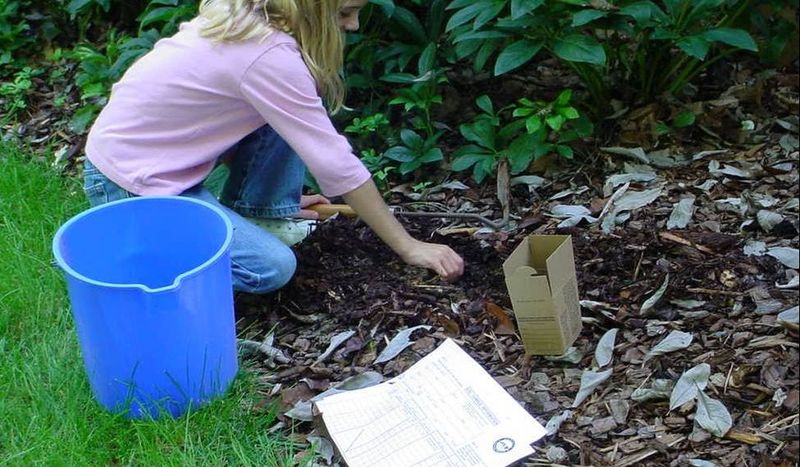
A turtle moving through your beds tells you the property is reachable and offers something useful to the animal right now. It does not tell you whether your pH is balanced, your nutrient levels are adequate, your drainage is functioning well, or your pesticide exposure is low.
Those are separate questions that require separate methods. NC State Extension’s soil testing guidance explains that reliable pH and nutrient recommendations come from laboratory analysis, not from field observation of any kind, including wildlife sightings.
If your beds are underperforming or you suspect a soil problem, a soil test through NCDA&CS or another qualified laboratory is the appropriate next step.
Researchers have explored whether turtles and other reptiles might serve as environmental sentinels, particularly for contamination. A peer-reviewed review of reptiles as biomonitor models describes how such work typically involves standardized sampling, tissue analysis across multiple animals, and population-level monitoring.
Watching one turtle walk through a garden bed is not that kind of study. A turtle’s presence cannot confirm that the soil is clean, contamination-free, or chemically balanced.
It equally cannot prove the opposite.
The pest-control angle deserves the same careful treatment. Eastern box turtles eat a varied diet that includes many invertebrates, and that is genuinely interesting.
What it does not do is establish meaningful garden-scale reduction of slugs, ticks, or any other pest category. A single turtle foraging occasionally through a bed is not running a pest management program.
Promising that a box turtle will protect your family from tick exposure, for example, has no support in the available diet or behavior research. Tick populations in a yard depend on host availability, humidity, vegetation structure, and other factors that one turtle’s presence cannot meaningfully change.
Read the sighting for what it is: evidence that your yard is accessible and currently offers something the turtle finds useful, nothing more and nothing less.
Observe the bed, then test the questions that need testing
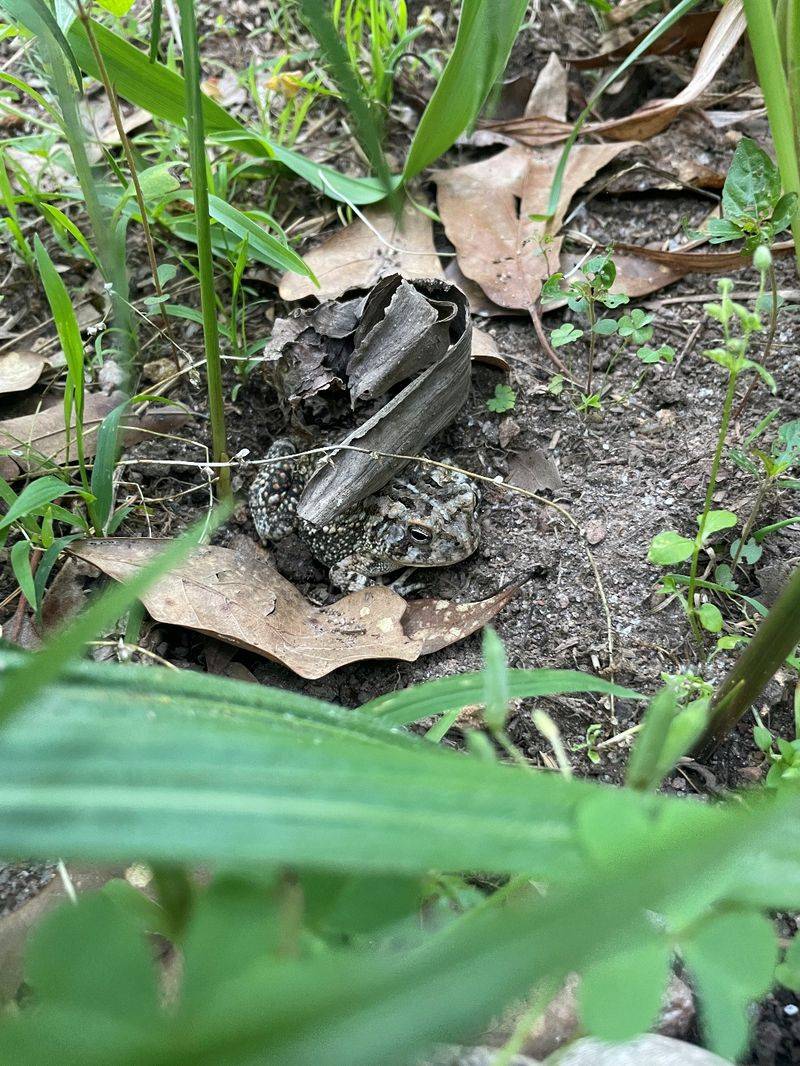
Before drawing any conclusions about why a turtle keeps appearing, spend a few minutes actually looking at the conditions in that bed. Check whether the soil stays visibly moist for a day or two after rain or watering.
Note whether the bed sits in full shade, partial shade, or open sun during the hottest afternoon hours. Look for leaf litter, straw mulch, dense low-growing plants, or any ground-level cover that a turtle could press into for shelter.
Each of these is an observation, not a verdict on your garden’s quality.
Also note what is growing nearby. A bed that backs up to a wooded fence line, a brushy drainage area, or a strip of unmowed vegetation sits within easier reach of an animal that travels on foot and prefers cover.
Forest Service habitat research identifies these kinds of vegetated edges as relevant features in box turtle habitat. Visible invertebrates, earthworms near the surface after watering, slugs under boards or pots, beetles in the mulch, are worth noting as possible food clues, though their presence does not prove a pest problem any more than a turtle’s visit does.
When the questions go beyond what you can observe, use the right tool for the job. If your plants are struggling, leaves are discolored, or you want to know whether your beds need lime or fertilizer, NC State Extension’s soil testing program and the NC State gardener’s guide to soil testing walk through exactly how to collect samples and submit them for lab analysis.
That process returns specific pH readings and nutrient recommendations you can act on. Retaining some leaf litter and ground cover in parts of your yard may support habitat conditions that benefit turtles and other wildlife, but those steps are habitat improvements, not a substitute for testing when testing is what your garden actually needs.
Protect turtles during routine summer yard work
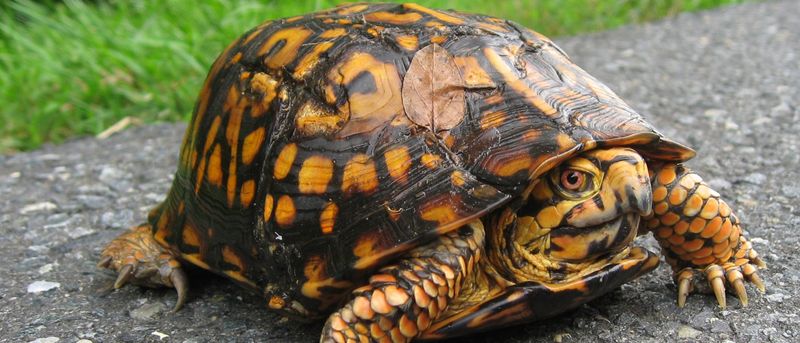
Once you know turtles may be moving through your beds, a small habit change can prevent serious harm. Check any garden bed, mulched border, or brushy corner before you dig, trim, or run any power equipment.
Turtles often pull into their shells and sit still when they sense vibration or movement, which makes them easy to miss under a layer of mulch or dense ground cover. A quick visual scan and a slow pass with a hand tool before you commit to digging takes less than a minute and eliminates most of the risk.
Mowing deserves special attention. Research on box turtle population ecology in fragmented landscapes identifies mowing and machinery as documented sources of human-caused mortality.
String trimmers are particularly dangerous near bed edges, brush piles, and areas with dense ground cover where turtles rest during the heat of the day. Slowing down at habitat edges and scanning before trimming gives any animal in the area a chance to move.
Pesticide choices matter too. EPA guidance on reducing pesticide impacts on wildlife recommends using products only when a pest problem actually requires treatment, applying them only to the affected area rather than broadcasting across the whole yard, and keeping all products away from drainage routes and water sources.
The EPA’s ecological risk framework for pesticides recognizes terrestrial reptiles as non-target organisms that can be exposed through food, water, and contact with treated surfaces. A turtle’s shell does not protect it from pesticide exposure; slug bait and some insecticides can be ingested directly or through contaminated prey.
Always read and follow the product label, which legally governs where and how it may be applied.
Leaf litter, dense ground cover, and shaded moist areas along bed edges are worth keeping in portions of the yard where they fit your plans. Forest Service habitat research lists these features as relevant to box turtle use.
Present them as habitat improvements that may benefit turtles and other ground-level wildlife, not as guaranteed pest-control measures or a promise to attract specific animals.
Leave an uninjured turtle alone and respond only to clear danger
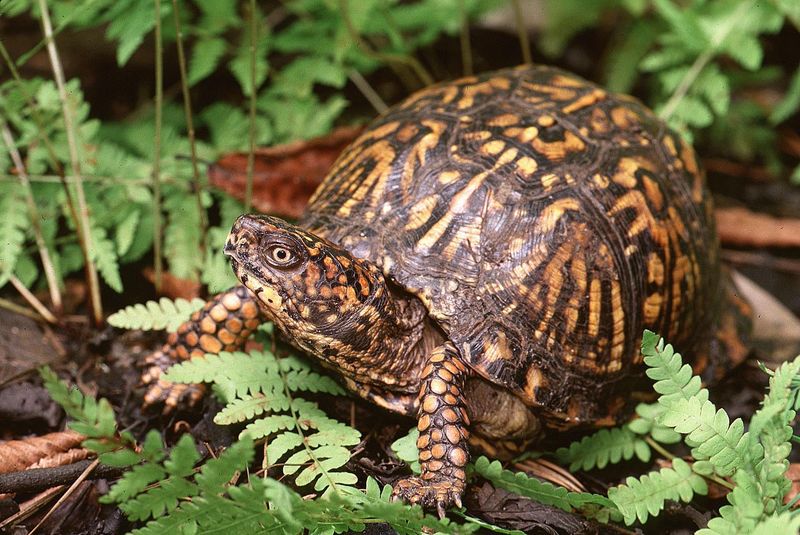
Finding a box turtle in your garden bed calls for restraint more than intervention. Leave an uninjured turtle exactly where it is.
Do not carry it to a wooded area, a nearby park, a neighbor’s property, or a pond. NC Wildlife explains that eastern box turtles spend their lives within small, familiar territories and may not survive being relocated outside their established home range.
An animal moved even a short distance to what looks like better habitat may spend the rest of its season trying to return, crossing roads and unfamiliar ground in the process. The kindest response to a turtle resting in your bed is to leave it alone and let it move on when it is ready.
Do not attempt to feed the turtle fruit, dog food, garden produce, or anything else. Supplemental feeding is unnecessary for an apparently healthy wild animal, risks habituating it to human contact, and may cause nutritional problems or attract other unwanted wildlife.
The same restraint applies to water: do not place a terrestrial box turtle in a dish of deep water or a backyard pond. Eastern box turtles are not aquatic, and deep water can be dangerous for them.
A turtle in a roadway is a different situation, and personal safety comes first. If traffic conditions make it safe to help, pick the turtle up and carry it in the direction it was already traveling, crossing only the shortest practical distance, ideally less than 50 feet.
Do not turn it around or carry it back to the side it came from. NC Wildlife advises moving the turtle only as far as necessary to get it clear of immediate danger.
The threshold for contacting a professional is visible injury. Bleeding, a cracked or crushed shell, or obvious trauma are the signs that warrant reaching out to a licensed reptile rehabilitator through NC Wildlife’s injured wildlife resources.
A turtle that looks healthy but is simply slow, resting, or partially buried in your mulch does not need rescue. Homeowners are not equipped to assess a wild turtle’s overall internal condition, so the visible-injury standard is the right line to use.
Treat the sighting as a habitat clue, not a garden report card
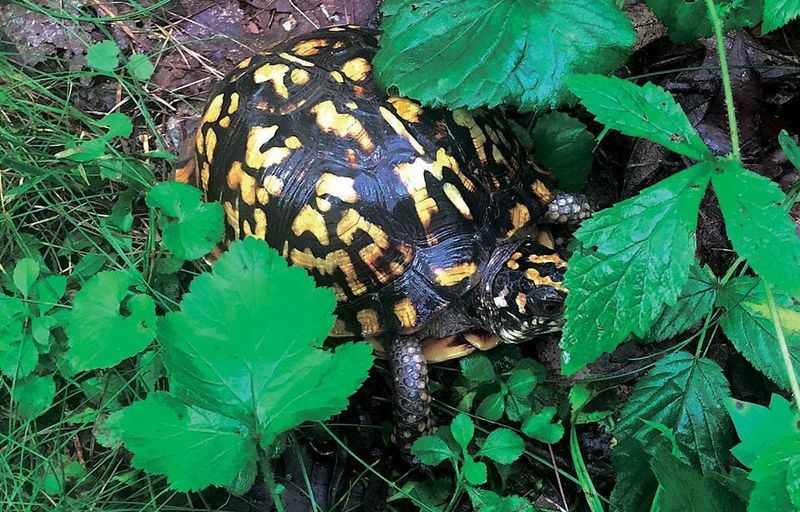
Pulling all of this together, a box turtle appearing in your garden beds this summer most likely means the property is reachable from wherever the animal lives and that your beds currently offer something worth using: shade, moisture, ground cover, shelter, or accessible food. Forest Service habitat research points to exactly these features as relevant to how eastern box turtles use their environment.
That is genuinely useful information about what your yard is doing right now, as long as you read it at the right scale.
The sighting cannot tell you that your soil is fertile, your pest population is unusually high, your landscape is ecologically connected, or that a healthy turtle population lives nearby. For soil answers, NC State Extension’s soil testing program is the right tool.
For wildlife answers, the most honest response is to observe conditions carefully, protect the animals during yard work, and leave healthy individuals alone. NC Wildlife’s guidance is consistent on this point: the best thing most homeowners can do for an eastern box turtle is simply not interfere with it.
A turtle in your garden is a reminder that your yard sits inside a larger landscape that native animals still move through. That is worth noticing, even if it is not a certificate of ecological excellence.