
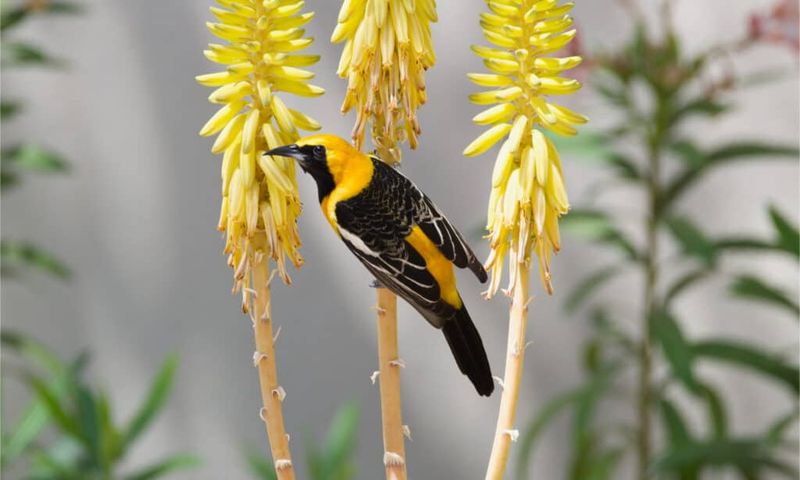
Bright orange-and-black orioles showing up in your yard feel like a reward for doing something right, and more California homeowners want to know how to keep those visits coming. The honest answer is that nectar plants can be one useful piece of the puzzle, but they work alongside trees, insects, and habitat rather than acting as a guaranteed return ticket for any particular bird.
Two species are most likely visiting your yard: the Bullock’s Oriole, which ranges widely across California, and the Hooded Oriole, a suburban Southern California regular with a strong preference for palms. Understanding what each species actually needs gives you a much better foundation than chasing a single plant tip.
Identify which California oriole visits your yard
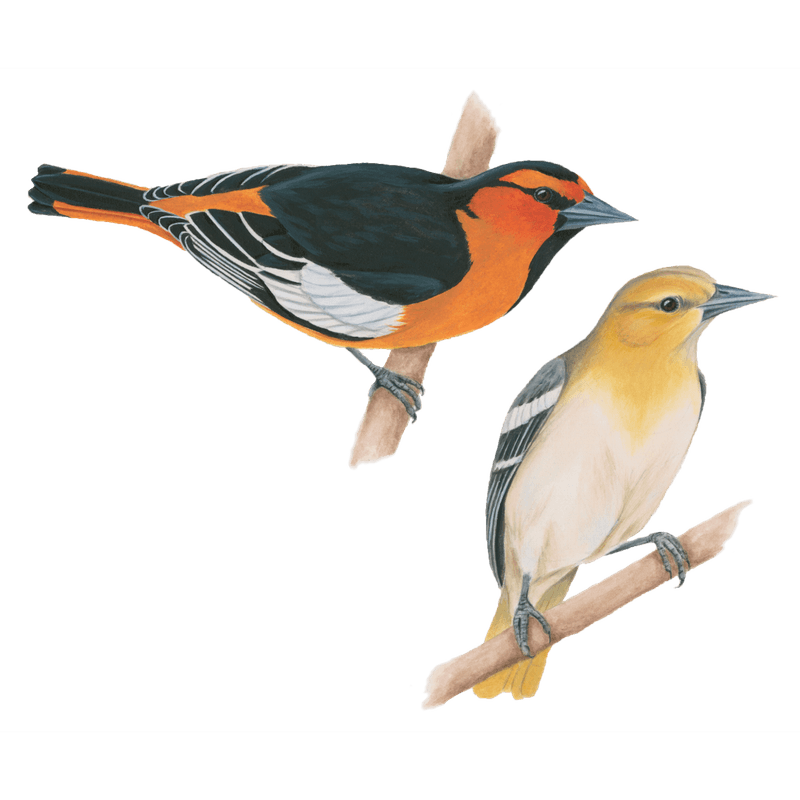
Before choosing any plant or feeder, spend a few minutes figuring out which bird you are actually watching. Two oriole species account for the overwhelming majority of California backyard sightings, and they have meaningfully different habitat preferences that should shape every decision that follows.
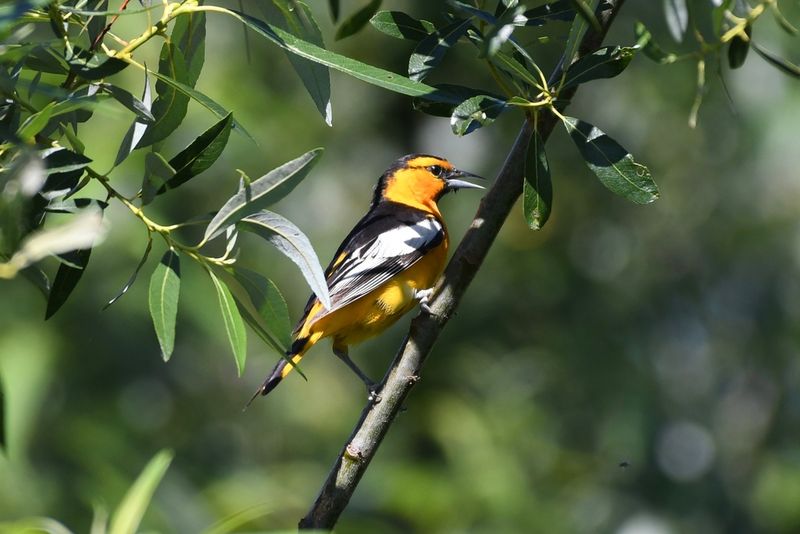
The Bullock’s Oriole is the more widespread of the two. Males show a bold combination of orange and black with a white wing patch, while females are yellowish-olive with a whitish belly.
Cornell Lab’s Bullock’s Oriole life history describes the species as a common summer resident across much of California, favoring open woodland and large deciduous trees such as sycamores, cottonwoods, willows, and oaks. If you live in an inland valley, a foothill neighborhood, or anywhere with mature riparian trees nearby, this is the bird most likely passing through your yard.
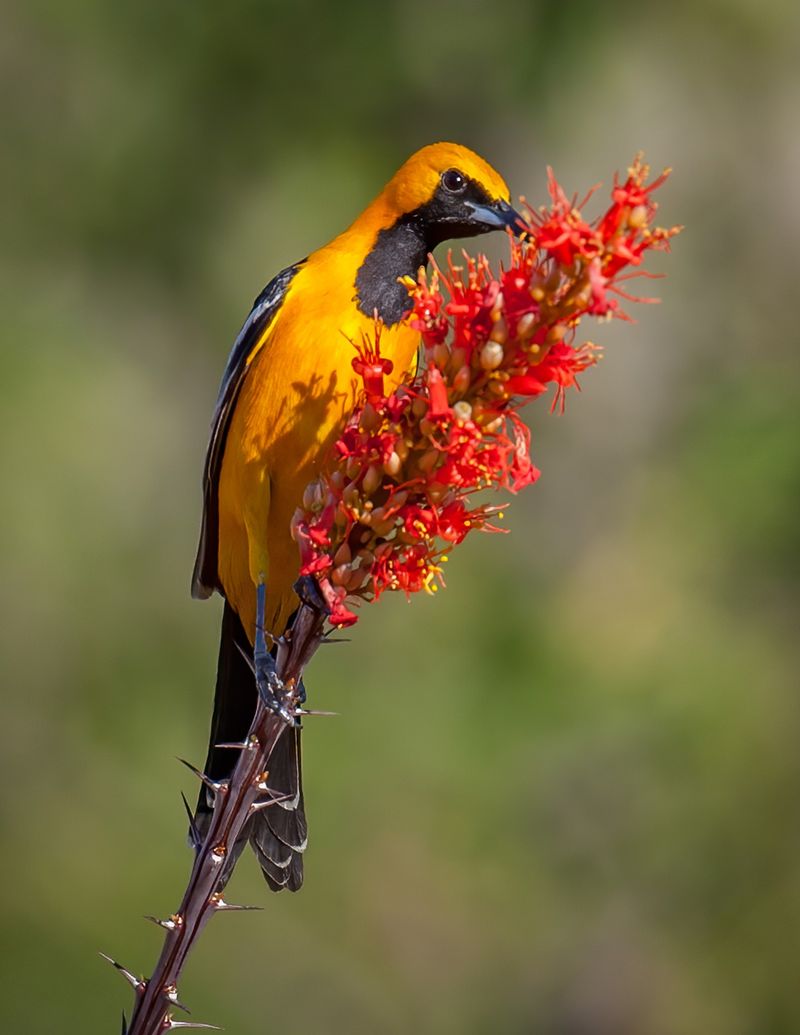
The Hooded Oriole is the other species to know, particularly for homeowners in Southern California suburbs. Males wear a brilliant orange-yellow hood with a black face and bib, and the species is closely tied to fan palms, both native and ornamental.
If your neighborhood has queen palms, Washingtonia palms, or similar plantings, a Hooded Oriole may be using the fronds as nesting material or foraging sites even before it notices your flowers.
Getting the identification right matters because habitat advice that fits one species may not fit the other. A Bullock’s Oriole needs large deciduous trees and insect-rich foliage; a Hooded Oriole may prioritize palms and suburban plantings in ways that shift your planting priorities.
The California Department of Fish and Wildlife’s life history account for Bullock’s Oriole confirms that Bullock’s Orioles are primarily summer residents arriving in spring and departing by early fall, which also helps you set realistic seasonal expectations before you start modifying your yard.
Nectar can support visits, but it cannot guarantee a return
The title of this article makes a promise worth correcting right away: no nectar plant, no matter how well chosen, can reliably cause the same oriole to come back to your yard every season. Migration timing, winter survival, breeding-site fidelity, regional food availability, and weather all influence where any individual bird ends up each year, and none of those factors are under a homeowner’s control.
What nectar plants can do is make your yard more useful when orioles are present. Bullock’s Orioles are documented nectar feeders, and Cornell Lab’s Bullock’s Oriole life history specifically notes their use of agaves, flowering eucalyptus, and other flowers.
That is genuine evidence for adding nectar plants to a yard that already has suitable structure. What the same evidence does not show is that nectar is the primary reason orioles choose a location or return to it annually.
The broader picture of what makes a yard useful to a Bullock’s Oriole includes large trees for nesting and perching, abundant insects and spiders as the main food source, fruit and berries as supplemental food, dense foliage for cover, and open areas for foraging. A flowering bed sitting alone in a lawn with no mature trees and few insects offers a brief pit stop at best.
Audubon notes that nectar-feeding birds that discover a garden may stay for the season and possibly return the following year, but this is general guidance for nectar-feeding birds as a group, not a documented pattern for individual orioles responding to a specific plant. The Audubon guide to attracting hummingbirds and orioles frames nectar plants as one element of a welcoming yard rather than a guaranteed return mechanism.
Build the habitat first, then add nectar plants as a supplemental layer, and your yard becomes genuinely more valuable to any oriole that passes through.
Large trees provide the yard’s strongest habitat foundation
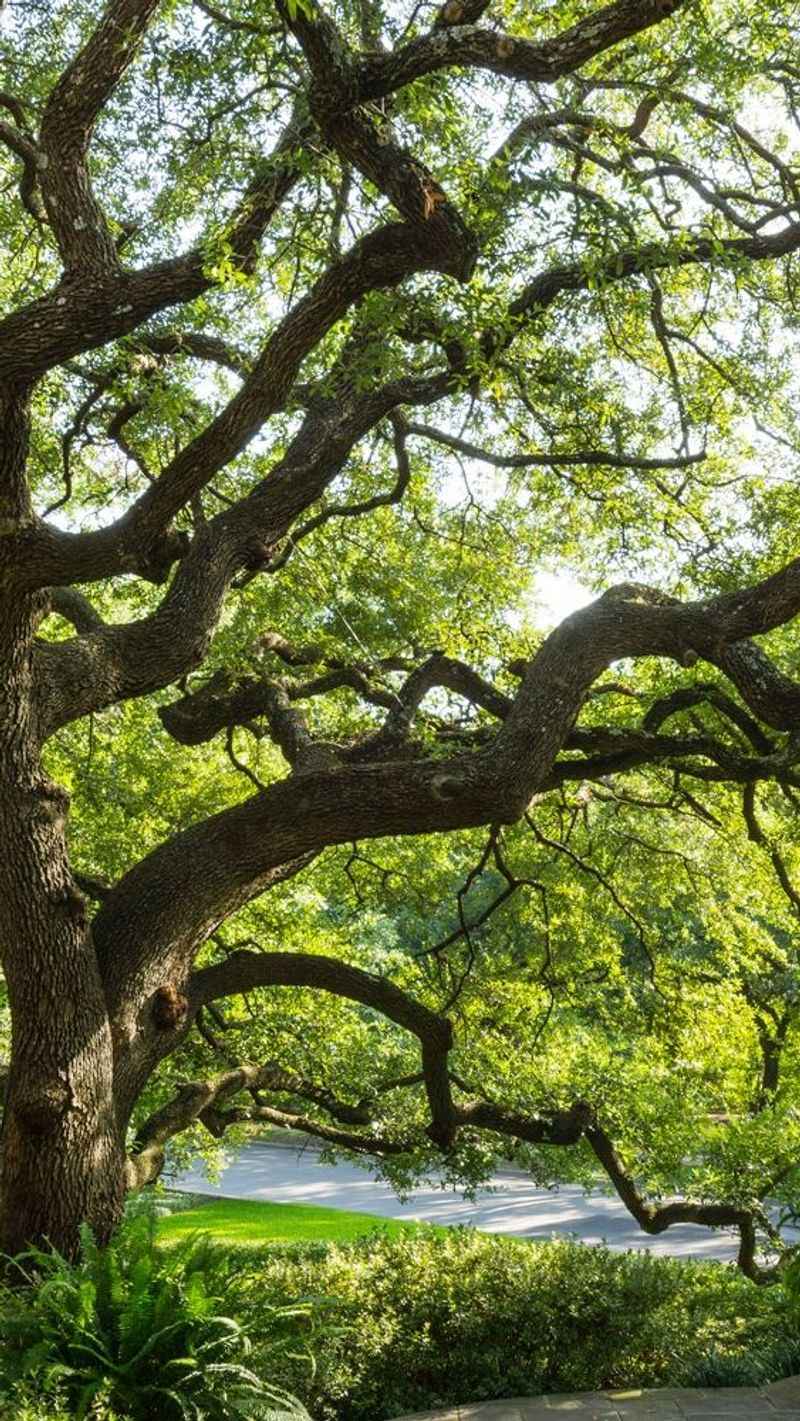
A single flowering plant gets a lot of attention in oriole gardening articles, but the single most valuable thing most California homeowners can do for visiting orioles costs nothing: protect the large trees already in the yard. Mature trees provide nesting sites, shaded perches, open foraging canopy, and the structural complexity that supports the insects orioles depend on.
Bullock’s Orioles nest in a recognizable set of tree types. Cornell Lab’s life history account lists sycamores, cottonwoods, willows, deciduous oaks, madrones, mesquite, live oaks, pecans, and orchard trees as common nesting associates.
The species tends to choose trees with an open canopy and enough branch length to suspend the distinctive woven, pouch-shaped nest. If you have any of these trees and have been considering removing them for tidiness or water savings, the oriole case for keeping them is strong.
Homeowners without existing mature trees face a longer timeline, but planting a native oak, valley sycamore, or fremont cottonwood in a spot with enough water access begins building that structure for future seasons. A young tree will not replace a 30-year-old cottonwood immediately, but it starts the process and supports other wildlife in the meantime.
The California Department of Fish and Wildlife’s Bullock’s Oriole account reinforces that the species is closely tied to riparian and open woodland settings. Even in suburban yards, trees that mimic that open, leafy structure – spaced so birds can move freely between branches – are more useful than a dense hedge or a tightly clipped ornamental row.
Think about the yard in three dimensions: canopy layer for nesting and perching, mid-story shrubs for cover, and open ground or low plantings for foraging. Nectar flowers fit into the mid-story or edges of that structure, not as replacements for it.
Build an insect-rich yard before adding supplemental food
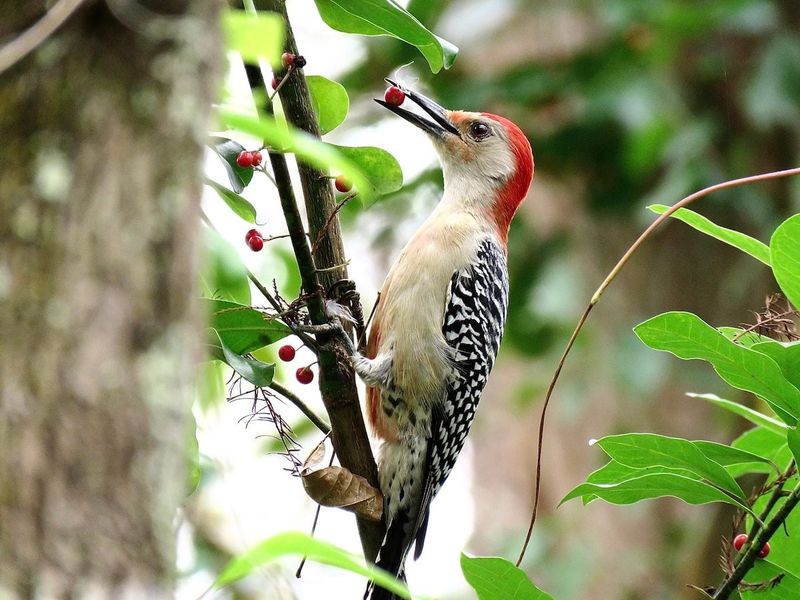
Nectar and feeders get most of the publicity, but insects and spiders are the food that Bullock’s Orioles depend on most. The California Department of Fish and Wildlife’s life history account for Bullock’s Oriole makes clear that arthropods form the bulk of the diet, with fruit, buds, and nectar serving as supplements.
That ratio means a yard full of nectar plants but stripped of insect life is a significantly less useful place for an oriole than a yard with moderate native plantings and a healthy insect community.
The most practical step homeowners can take is reducing or eliminating routine pesticide applications across the yard. Systemic insecticides in particular can move through plant tissue and into the insects that feed on treated plants, which then become contaminated food for any bird eating them.
The Audubon guide to attracting orioles specifically warns that systemic pesticides can also move into flower nectar, meaning that a treated plant intended to attract birds may actually harm them.
Retaining varied vegetation matters too. Leaf litter, dense shrub layers, native ground covers, and unmowed patches all support the beetles, caterpillars, grasshoppers, and spiders that orioles hunt.
A tidy, uniformly mowed yard with no structural variety offers very little prey regardless of how many flowers are blooming at its edges.
Tolerating some insect activity is part of the bargain. Caterpillars on oak leaves, aphid clusters on willows, and spider webs in shrub corners are signs of a functioning food web, not failures of yard management.
The distinction worth making is between that normal insect presence and a genuine infestation that threatens a tree’s health or a structure’s integrity. Spot-treating a specific problem with a targeted, low-persistence product when necessary is reasonable; blanket spraying on a schedule is not compatible with a yard meant to support insect-eating birds.
Choose nectar plants for local California conditions
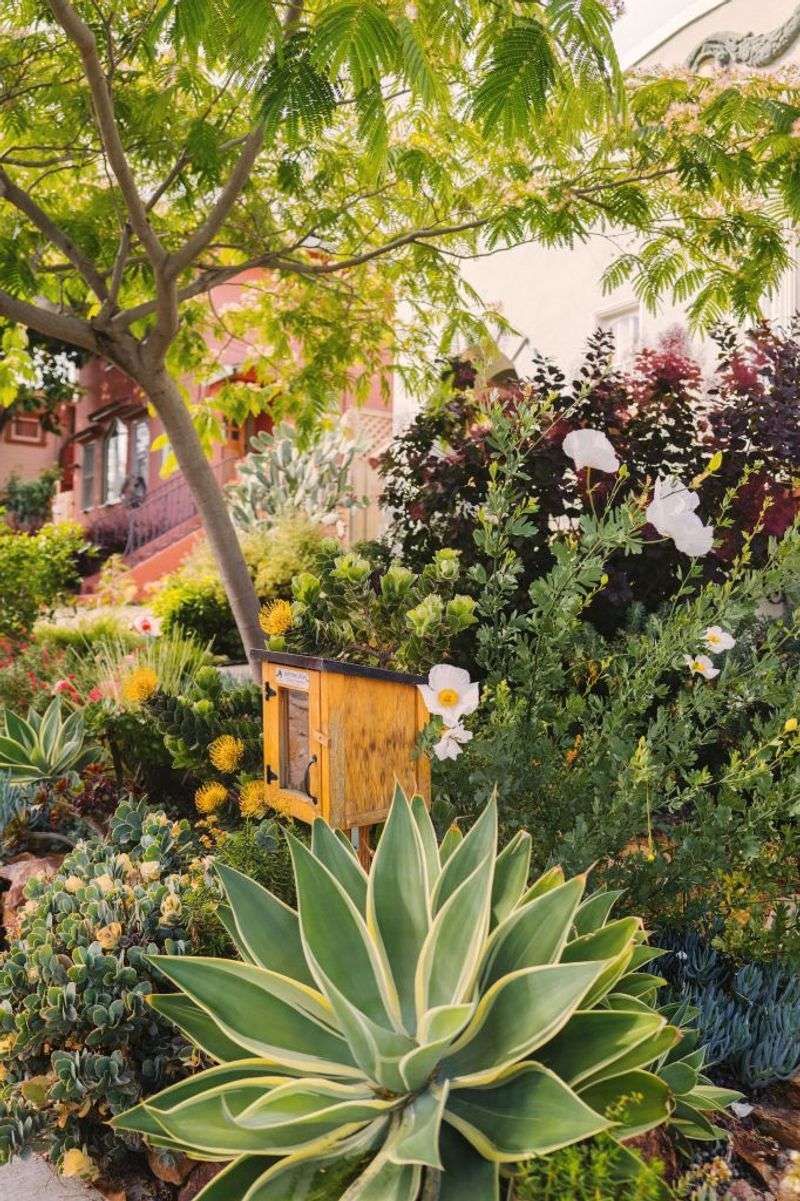
Agave is the strongest starting point for California homeowners who want to add a nectar plant with real documented value for Bullock’s Orioles. Cornell Lab specifically lists agave as a nectar source used by the species, and agave fits California’s water-wise gardening ethic well: most species are drought-tolerant, long-lived, and produce tall flower stalks that offer accessible nectar at a height orioles can reach from a perch.
The plant blooms once at the end of its life cycle, so planting a staggered group of different-aged agaves or species with different bloom timing helps extend the seasonal window.
Beyond agave, the best approach is to consult regional nectar guides rather than defaulting to a generic flower list. The Audubon nectar guide for California lists plants suited to the state’s varied climate zones, which is a more reliable starting point than recommendations written for Florida or the Southeast.
The California Native Plant Society also provides guidance on matching plants to local conditions, bloom periods, and habitat types.
California fuchsia comes up frequently in native garden discussions, and the California Native Plant Society’s profile of California fuchsia makes clear it is an excellent late-summer nectar source for hummingbirds and pollinators. The evidence for it specifically attracting Bullock’s Orioles is thinner, so treat it as a broadly valuable wildlife plant rather than an oriole-focused planting.
A yard that supports hummingbirds and native bees is also a yard with more overall insect activity, which benefits orioles indirectly.
When selecting plants, prioritize growing-condition fit over flower color or a supposed secret species. A plant that thrives in your soil and climate will bloom reliably and produce more nectar than a stressed specimen that barely survives.
Aim for a sequence of bloom across spring, summer, and early fall to cover the periods when orioles are most likely present in your region. The CNPS year-round native garden guide offers practical advice on sequencing bloom for continuous wildlife value across California’s long growing season.
Account for wildfire safety and seasonal timing
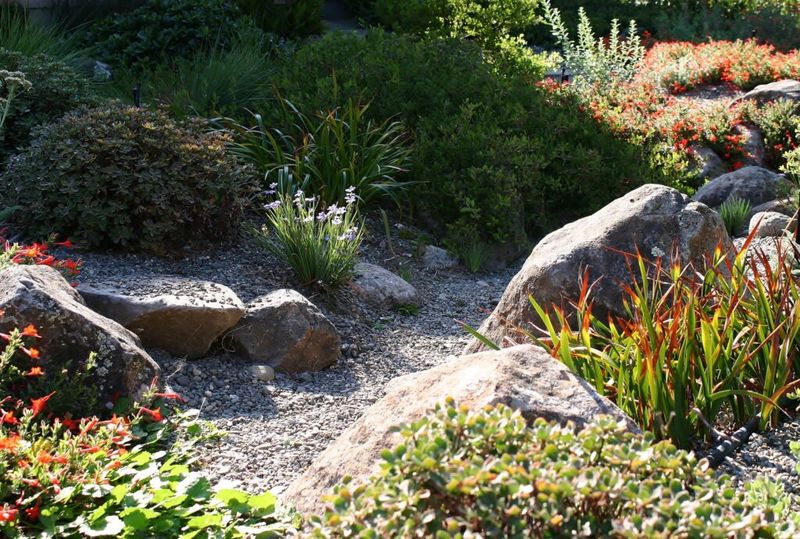
Plant recommendations that work fine in a Florida or Pacific Northwest yard can create real problems in fire-prone California communities. Two issues come up most often for oriole-garden advice: eucalyptus and defensible-space compliance.
Flowering eucalyptus does provide nectar that Bullock’s Orioles and other wildlife use, and Cornell Lab’s life history account includes it as a documented food source. That is a real benefit.
However, the California Invasive Plant Council’s Don’t Plant a Pest guide identifies several eucalyptus species as invasive or potentially invasive in California, and the Cal-IPC profile for Eucalyptus globulus notes its documented spread into natural areas. Southern California fire agencies have also flagged eucalyptus for its high flammability.
Planting it solely to attract orioles is not a trade-off that makes sense for most California homeowners, particularly those in wildland-interface communities.
If you live in a fire-prone area, CAL FIRE’s defensible space requirements take priority over any wildlife gardening goal. The guidelines call for removing dead vegetation, maintaining separation between trees and shrubs, and keeping the first five feet around structures as ember-resistant as possible.
Native drought-tolerant plants that stay green through summer, grow low to the ground, and do not accumulate heavy litter loads are the most compatible with both fire safety and wildlife habitat.
Seasonal timing also shapes realistic expectations. The California Department of Fish and Wildlife places Bullock’s Oriole spring migration mostly in late March and early April, with fall movement primarily in August and early September.
Some orioles, particularly Hooded Orioles, may remain along the Southern California coast through winter. Knowing that window helps you time planting so nectar plants are blooming when birds are actually present, and it reminds you that a yard with no visitors in October has not failed – the birds have simply moved on according to their own schedule, not yours.
Use optional feeders with disciplined hygiene
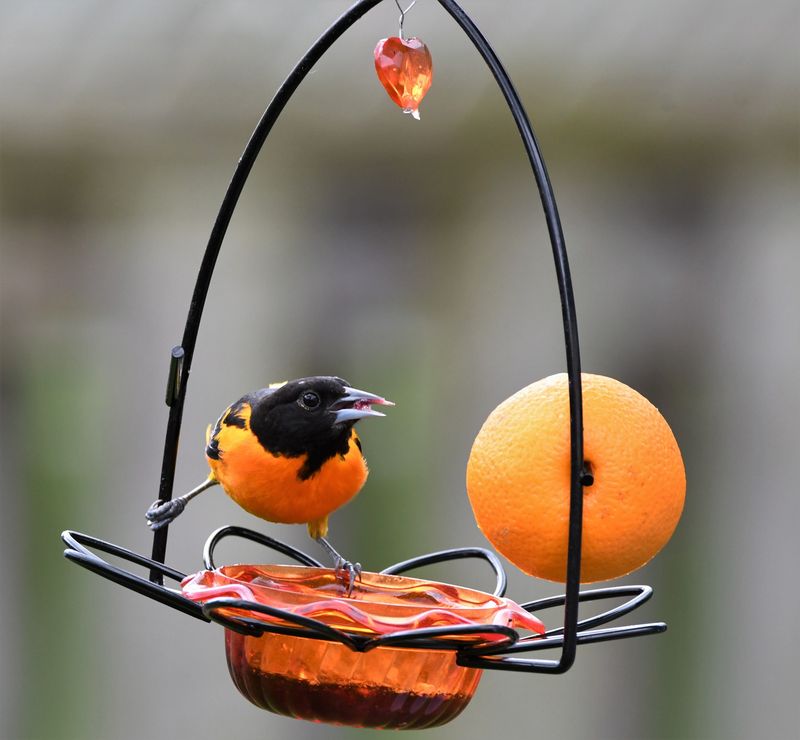
Feeders are not a requirement for supporting orioles, and they do not override the habitat improvements covered in earlier sections. What they can do is offer a convenient supplemental food source during the weeks when birds are actively moving through your yard.
The key word is supplemental: a feeder placed in a yard with no trees, no insects, and no cover is unlikely to create a meaningful oriole habitat on its own.
For Bullock’s Orioles, Cornell Lab’s Bullock’s Oriole overview suggests a shallow container with a half-and-half mixture of water and grape jelly, orange halves placed in a shallow dish, or an oriole-style nectar feeder with sugar water. Cornell advises replacing orange halves daily to prevent mold and shifting toward mealworms once nesting begins, since adults need high-protein food to feed nestlings.
Leaving fruit or jelly out indefinitely creates spoilage and can attract pests, so daily replacement is not optional.
For sugar-water feeders, Audubon’s oriole and hummingbird guide recommends one part white granulated sugar dissolved in four parts water, with no honey, artificial sweeteners, or red food coloring. Clean nectar feeders every two to three days under normal conditions, and more frequently during hot weather.
A feeder that looks or smells sour should be cleaned immediately regardless of schedule.
Feeder placement matters for bird safety. The Audubon guide on feeder disease prevention recommends keeping stations away from windows to reduce collision risk and providing nearby cover such as shrubs or low branches so birds can retreat quickly if disturbed.
Concentrated feeding areas can also increase disease transmission between birds.
If you see sick or dead birds near a feeder, the CDC guidance on salmonella outbreaks linked to wild songbirds recommends removing feeders temporarily, cleaning them thoroughly with a dilute bleach solution, washing your hands after handling any feeder equipment, and keeping pets away from areas where wild birds congregate. Feeders are a privilege for healthy birds, not a permanent installation that runs on autopilot.
Use a habitat-first checklist for visiting orioles
Putting the whole strategy together comes down to a short sequence of priorities. Start by identifying whether you are seeing a Bullock’s Oriole, a Hooded Oriole, or both, since the habitat needs differ enough to change your next steps.
Then assess your trees: protect any mature sycamores, cottonwoods, oaks, or willows already on the property, and consider planting a native tree if the yard lacks structure. Retain varied vegetation and reduce pesticide use to support the insects and spiders that make up most of the oriole diet.
Once that foundation is in place, add locally appropriate nectar plants. Agave is the best-supported choice for Bullock’s Orioles, and Cornell Lab’s life history account confirms its documented use.
Regional guides from Audubon and the California Native Plant Society can help you match additional plants to your specific climate zone and bloom window. In fire-prone areas, run any planting choice through your local defensible-space requirements before installing it.
Feeders are optional. If you use them, follow the cleaning and replacement schedule consistently, place them away from windows, and remove them temporarily if sick or dead birds appear.
These steps matter as much as the food itself.
None of these changes guarantee that the same oriole returns to your yard next spring. Weather, migration, nesting success, and food availability across a much larger landscape all shape where any individual bird ends up each season.
What a well-built habitat does is make your yard genuinely useful whenever orioles are nearby, and that quiet reliability is worth more than any single plant’s promise.