
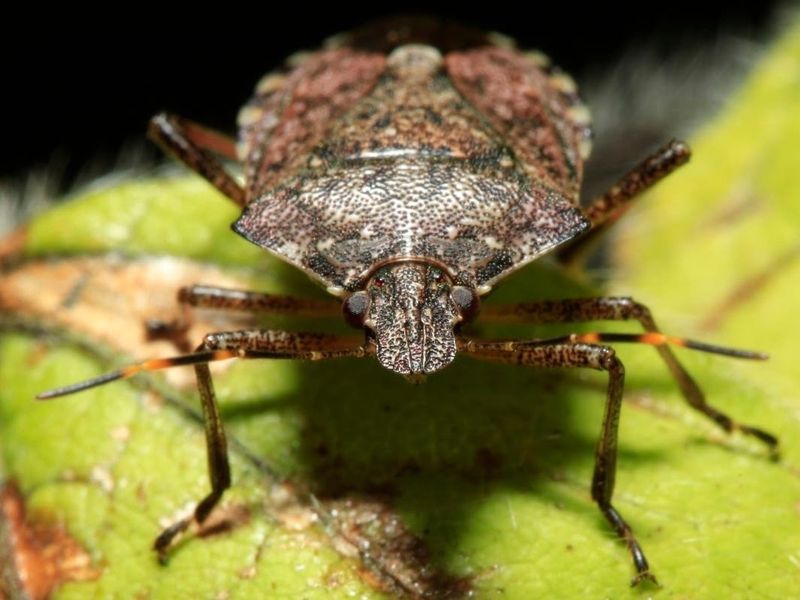
Every late summer, North Carolina homeowners start noticing a familiar, shield-shaped visitor crawling along windowsills or slipping under door gaps. Most people assume the worst, picturing a yard overrun with pests or a home under siege.
The insect behind most of these sightings is the brown marmorated stink bug, and what it actually signals is more specific, and more manageable, than it might seem at first glance.
Late-summer sightings usually mark a seasonal shift
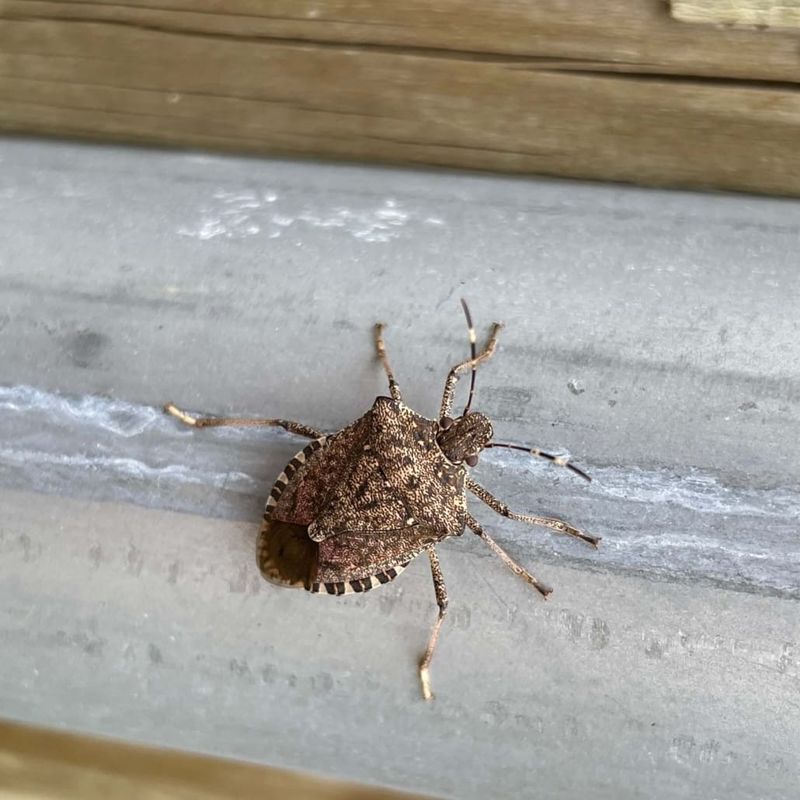
Seeing a brown, shield-shaped bug crawling across your window screen in August is unsettling, but for correctly identified brown marmorated stink bugs (BMSB), the explanation is almost always the same: the season is changing, and the insect knows it before you do. BMSB adults spend spring and summer feeding and reproducing on outdoor host plants.
As late summer arrives, shortening daylight and cooling nights trigger a behavioral shift toward finding dry, protected overwintering sites, and houses, attics, garages, and wall voids fit that description perfectly.
According to NC State Extension’s BMSB overview, the largest household invasions generally occur in September and October, making late August the preparation window rather than the peak. A late-summer sighting is a prompt to inspect your home and assess your timing, not confirmation that your yard is infested or that an invasion is guaranteed.
Local populations fluctuate with weather, host plant availability, and natural controls, so the number of bugs you see indoors can vary considerably from one year to the next.
Late summer and early fall are related but not identical in terms of risk. Before late August, you still have the best opportunity to complete preventive sealing before BMSB begins actively seeking indoor shelter.
Once September arrives and the migration is underway in earnest, the response shifts toward careful mechanical removal and thoughtful exclusion work. A bug on your wall is a signal to check entry points and act on timing, not a diagnosis of what is happening in your garden beds.
Confirm the species before changing the yard
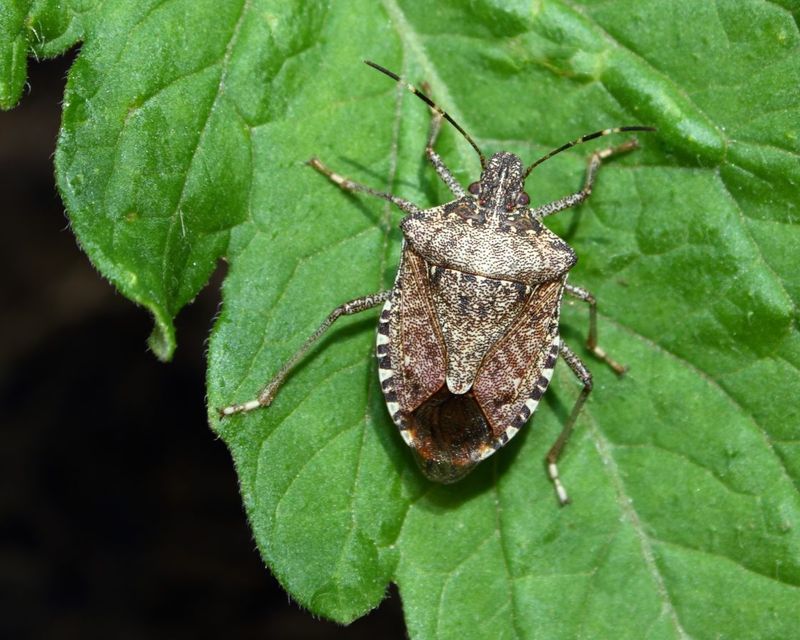
North Carolina has several stink bug species, and not every brown or green shield-shaped bug crawling through your window is the invasive brown marmorated stink bug. Acting on BMSB-specific advice before confirming the species can lead to unnecessary work, and in some cases, harm beneficial insects that are already doing useful work in your yard.
As described in NC State’s brown marmorated stink bug publication, BMSB is approximately 5/8 inch long with a distinctly shield-shaped body. Two features help separate it from lookalikes: alternating light and dark banding along the outer edges of the abdomen, and pale bands on the antennae.
Without those antenna bands and the alternating abdominal pattern, you may be looking at a different species entirely.
Native stink bugs in North Carolina include the brown stink bug, the green stink bug, and the dusky stink bug, among others. Some of these native species are actually predators that feed on caterpillars and other pest insects, making them quietly valuable in a home garden.
Others do not overwinter inside structures the way BMSB does, so the behavior you are observing, an insect actively pushing through gaps into your living space in late summer, is itself a useful clue.
If you are not confident in your identification, treat it as unresolved. Take a clear photo and compare it against published university extension resources, or contact your local NC State Cooperative Extension office.
Applying BMSB-specific exclusion and removal strategies to a native predatory stink bug does not help your home and may unnecessarily eliminate an insect that was already working in your favor.
Regional conditions change the strength of the signal
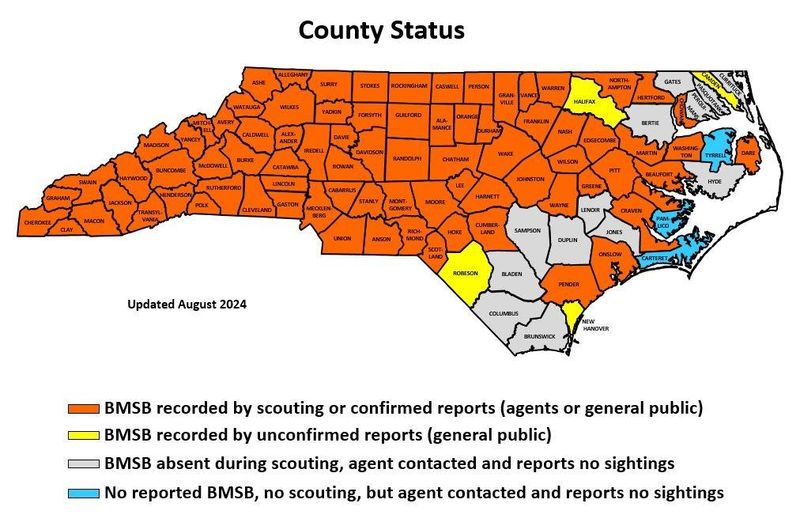
Where you live in North Carolina shapes how much weight a late-summer BMSB sighting should carry. The insect has become far more established in some parts of the state than others, and treating every region as equally affected can lead to either unnecessary alarm or a false sense of security.
BMSB has been most consistently prevalent in the Piedmont, foothills, and western mountains of North Carolina. NC State Extension reported confirmed BMSB presence in 80 of North Carolina’s 100 counties as of March 2026, but the coastal plain has generally seen lower populations, though isolated occurrences do happen.
A homeowner in Asheville or Greensboro is likely dealing with a well-established local population, while a homeowner in coastal Brunswick or Dare County faces a different level of background pressure.
Your surrounding habitat also matters. BMSB adults are mobile and may move in from woodlands, agricultural fields, roadside vegetation, orchards, or neighboring properties, not just from your own yard.
A house sitting near a tree line, a peach orchard, or a large vegetable garden at a neighbor’s property may attract insects that spent the summer feeding nowhere near your beds.
Understanding this regional and landscape context helps calibrate the response. A single sighting in a low-pressure coastal county calls for awareness and a quick look at obvious entry points.
A cluster of sightings in a Piedmont home near wooded acreage in late August is a stronger signal to move quickly through the inspection and sealing steps before September arrives.
Inspect the house and plants as separate clues
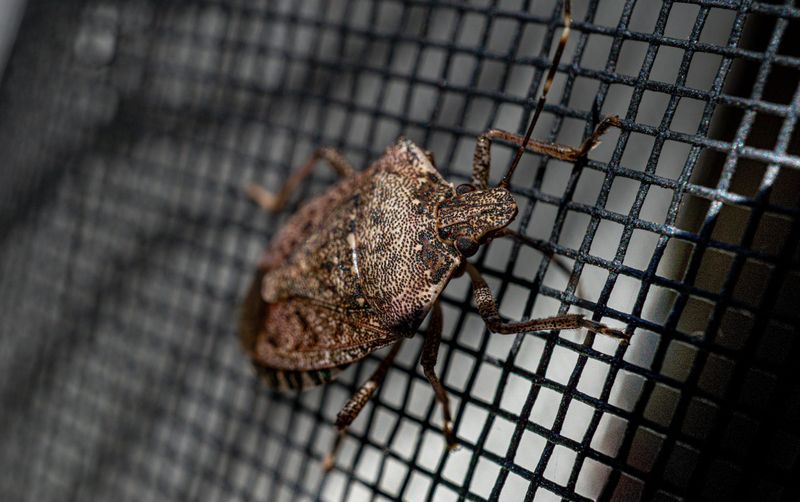
A late-summer BMSB sighting calls for two separate investigations: one focused on the structure of your home, and one focused on the plants in your yard. Mixing these together can lead to wrong conclusions, like removing a healthy tree because bugs appeared inside, or skipping the door sweep that was actually letting them in.
For the home, work your way around the exterior and look at every place where different materials meet or where something passes through the wall. EPA guidance on BMSB highlights door and window frames, damaged screens, attic vents, crawlspace openings, fascia boards, chimney areas, siding joints, foundation cracks, and gaps around pipes, faucets, and electrical wiring as the most common access points.
Any gap that lets light through is potentially large enough for a BMSB to use.
For the yard, look for feeding damage on plants rather than assuming any particular plant is a source. University of Georgia Extension’s BMSB ornamental landscape guide notes that feeding damage can appear as stippling, discoloration, distorted growth, and scarred or dimpled fruit surfaces.
BMSB feeds on tomatoes, peppers, beans, okra, corn, apples, peaches, figs, persimmons, and many ornamental and wild plants.
Finding feeding damage on a tomato plant tells you BMSB has been present in the yard. It does not tell you that the tomato plant is why bugs are entering the house, because the insects respond primarily to the availability of shelter rather than to any specific food source nearby.
Penn State Extension’s BMSB resource reinforces that overwintering movement is driven by environmental cues, not hunger. Treat the home inspection and the plant inspection as two separate sets of evidence pointing toward two separate responses.
Time exclusion work without trapping insects inside
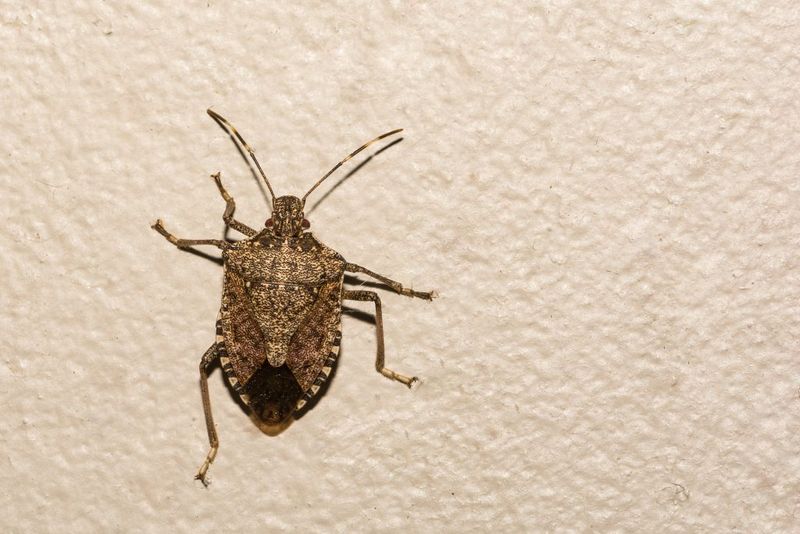
Sealing your home against BMSB works best when the timing is right, because doing it at the wrong point in the season can create a different problem: trapping overwintered insects inside the walls or attic where they cannot easily get out.
The target window for preventive sealing is before late August, when possible. NC State Extension’s BMSB FAQ specifically recommends completing exclusion work before BMSB begins its late-summer return movement toward structures, and advises against sealing during fall, winter, or early spring in a way that could trap overwintered bugs inside.
The recommended sequence is to allow overwintered insects to leave in spring, then seal before the late-August return period begins. If you are reading this in September and the migration is already underway, focus on removing accessible insects mechanically and hold off on sealing enclosed wall or attic spaces until overwintered bugs have had a chance to exit.
BMSB can squeeze through surprisingly small openings, approximately 3 by 7 millimeters, so the inspection needs to be thorough. Work through this checklist for the exterior: replace or repair damaged weatherstripping on all exterior doors; install door sweeps where light is visible at the bottom gap; repair or replace torn window and door screens; seal gaps around utility penetrations, pipes, faucets, and wiring with caulk or appropriate foam sealant; check that crawlspace access panels close fully and that vent covers are intact; examine attic louvers and gable vents for holes or gaps; and consider screening or capping chimneys if BMSB has used that route before.
Inside the attic or crawlspace, look for daylight coming through gaps at the roofline, around pipes, or at the junction of the wall and ceiling. These interior gaps matter because a bug that enters the attic space through a small exterior hole can later find its way into living areas through light fixtures, electrical outlets, or ceiling cracks.
Addressing both the exterior shell and interior weak points gives exclusion the best chance of working.
Remove indoor bugs without spreading the odor
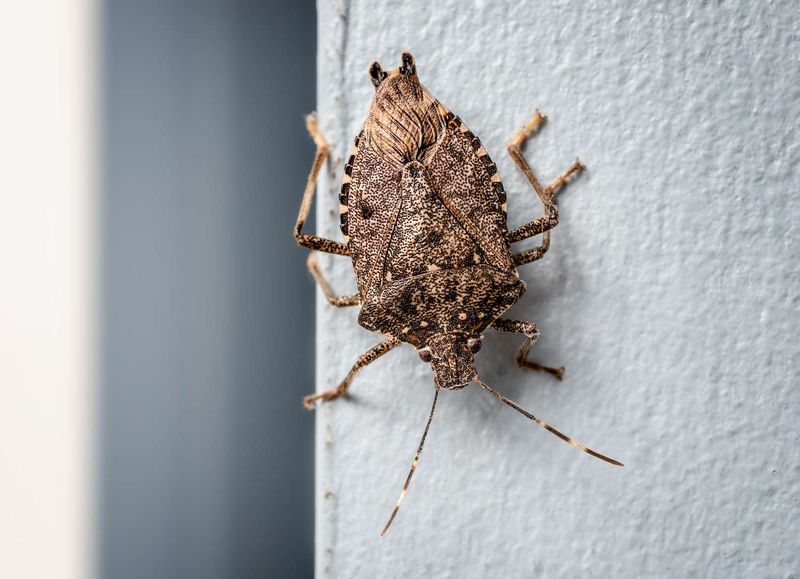
Once BMSB are already inside, the priority is removing them without triggering the defensive odor that gives them their name. Crushing or swatting a stink bug releases chemical compounds that can linger on surfaces and, in enclosed spaces, may irritate sensitive individuals.
The goal is to collect and remove them with as little disturbance as possible.
Vacuuming is the most practical approach for larger numbers. A dedicated hand vacuum or an older vacuum you do not mind retiring works best, because the odor can persist inside the machine after use.
NC State Extension recommends collecting individual bugs in a sealed jar and placing them in the freezer, or dropping them directly into soapy water to drown them. Both methods avoid agitation and keep the smell contained.
For a single bug on the ceiling, a jar and a piece of cardboard is often easier and less disruptive than pulling out a vacuum.
A few clarifications are worth keeping in mind while you work. BMSB do not bite or sting, do not transmit disease, do not feed on anything inside your home, and do not reproduce indoors.
The nuisance is real, especially if numbers are high, but the insect is not causing structural damage or posing a health threat under normal circumstances. Some sensitive individuals may react to airborne defensive compounds if bugs are disturbed in a small, enclosed space, so ventilating the room while you collect them is a reasonable precaution.
Mechanical removal addresses the bugs that are already visible, but it does not replace the exclusion work that prevents more from entering. Think of indoor collection as managing the current situation while the longer-term fix, sealing the structure at the right time, takes care of the source of the problem.
Avoid yard destruction and unreliable chemical fixes
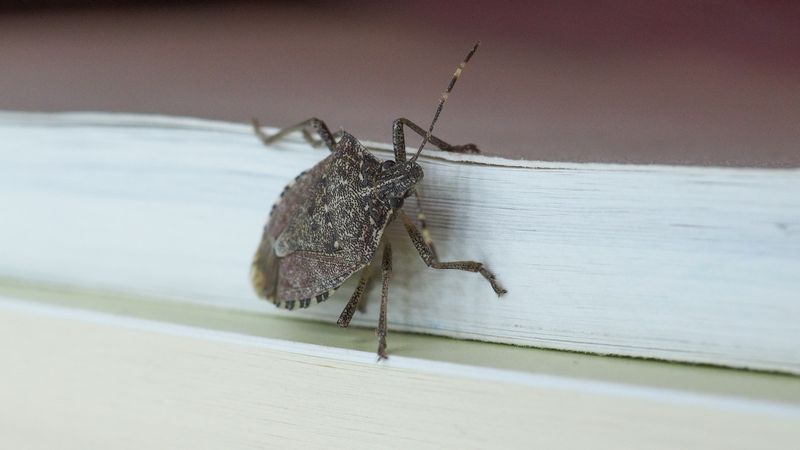
When stink bugs show up indoors, the instinct to do something big and visible in the yard is understandable. Pulling out trees, stripping foundation plantings, or reaching for a sprayer can all feel like taking control of the situation.
Most of these responses, however, are either unsupported by the evidence or actively counterproductive.
On the plant removal question, NC State Extension’s wild host plant resource specifically notes that native dogwood, maple, and walnut are generally less attractive to BMSB and does not recommend removing them solely because of stink bug concerns. These trees support native birds, pollinators, and other wildlife that belong in the North Carolina landscape.
Removing them would damage the yard’s ecology without meaningfully reducing the number of bugs entering the house, because the insects may be traveling from woods, neighboring properties, or roadside vegetation far beyond your property line.
Clearing dense debris and edible vegetation right against the foundation can reduce harborage and food sources in that immediate zone, and that is a reasonable step. But clearing alone will not stop BMSB from finding their way in if the structure itself has gaps.
Chemical treatments deserve careful scrutiny. NC State Extension notes that exterior surface sprays are rarely effective for preventing home invasions, and Penn State Extension points out that sunlight can break down residual effectiveness within days to about a week.
StopBMSB’s integrated pest management guidance and EPA guidance on pesticides and indoor air quality both caution against bug bombs, foggers, and spraying insecticide into wall voids or attics. Dead insects in wall spaces can attract carpet beetles and other secondary pests, while the spray itself does not stop additional bugs from emerging from deeper inside the structure.
If a pesticide is considered, the product label is the legal document governing its use, and nonchemical methods should be exhausted first.
Use the sighting as a decision point, not a diagnosis
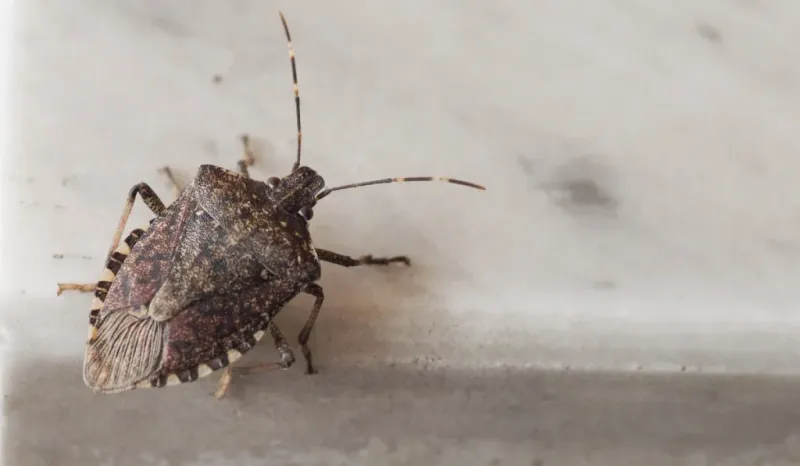
A brown marmorated stink bug on your wall in late summer is most usefully read as a prompt to act on timing, not as proof that your yard has an infestation or that a specific plant caused the problem. The insect found a route or a sheltered spot, and the population it came from may be anywhere in the surrounding landscape.
The practical sequence is straightforward. Confirm the species using the antenna bands and abdominal markings before applying any BMSB-specific response.
Inspect the home’s exterior for gaps at doors, windows, screens, utility penetrations, vents, and the foundation. Check garden plants for actual feeding damage if you want to understand local activity levels.
Then choose your exclusion timing based on where the season actually stands: NC State Extension recommends completing preventive sealing before late August when possible, while fall or winter sightings call for mechanical removal now and a plan to finish exclusion after overwintered insects leave in spring.
Skip the foggers, the tree removals, and the wall sprays. The home’s shell, sealed at the right moment, is the most consistently useful tool available.
A stink bug crossing your windowsill is not a verdict on your yard. It is a reminder that the house has an opening somewhere, and that late summer is exactly the right time to find it.