
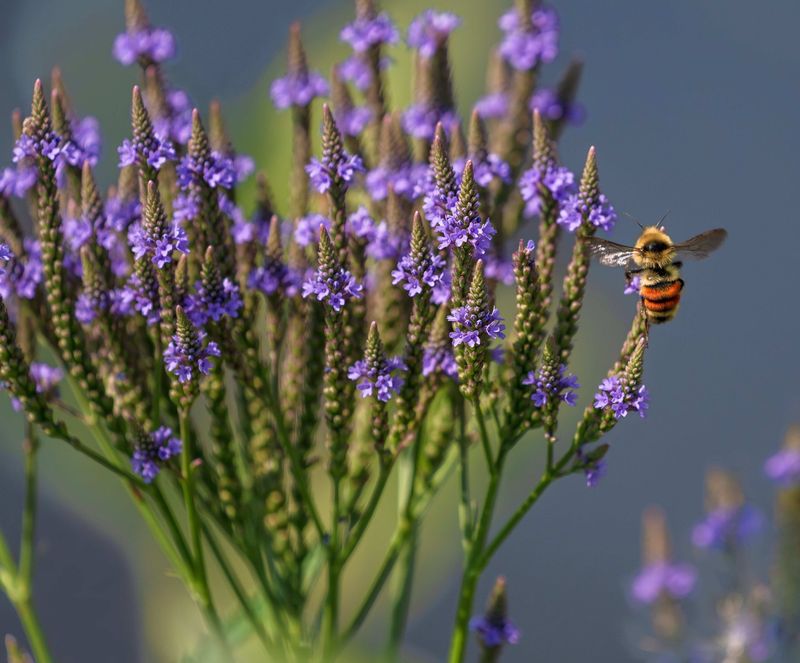
Every spring, Central Texas homeowners yank out a slender, purple-flowered plant without a second thought, assuming it is just another lawn weed. Before you pull the next one, it is worth a closer look, because that volunteer may be Texas vervain, a low-water native wildflower with real value for bees and butterflies.
Knowing what you have growing in your yard changes what you do with it, and a quick identification check takes less than five minutes.
That Purple Lawn Volunteer May Be Texas Vervain
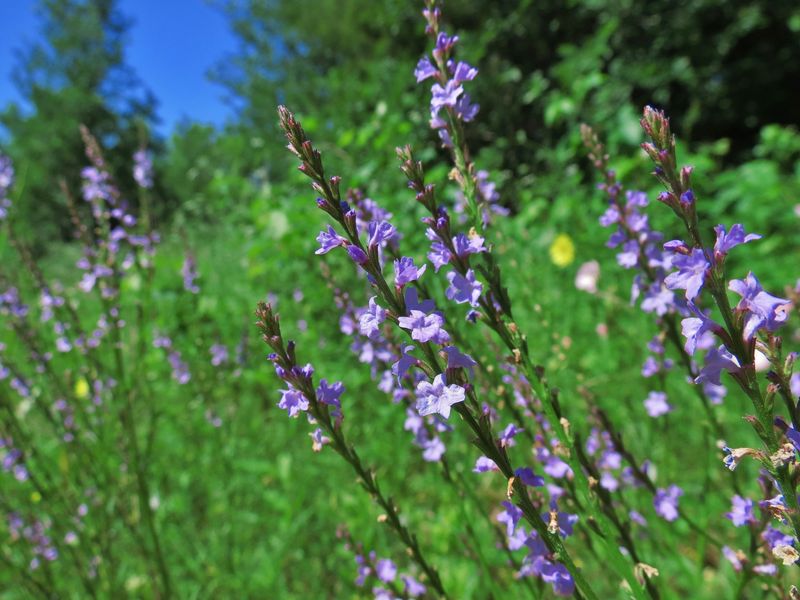
Purple flowers popping up in a Central Texas lawn in spring are easy to dismiss, but at least one common volunteer deserves a second look before it lands in the compost pile. The plant in question may be Texas vervain, also known as Texas verbena or slender vervain, with the scientific name Verbena halei.
The Native Plant Society of Texas lists it as a native perennial occurring across several Central and eastern Texas ecoregions, including the Edwards Plateau, Cross Timbers, Texas Blackland Prairies, and East Central Texas Plains.
That geographic range covers a lot of Central Texas ground, which helps explain why so many homeowners encounter it without ever planting it. The species is associated with disturbed areas, grasslands, roadsides, woodland edges, and open habitats, so its appearance in a lawn, especially one with thin or uneven turf, is entirely plausible.
That said, the fact that it can show up in those conditions does not mean disturbance caused its appearance in your specific yard.
The name-reveal here comes with an important qualifier: purple flowers and a lawn setting are not enough to confirm Texas vervain. Several unrelated plants share a similar look, and acting on a wrong identification can lead to a wasted effort at best and an unintended outcome at worst.
The smarter first move is to slow down and check the whole plant before deciding whether to remove it or give it a little room to finish blooming.
Reframing that first impulse, from automatic removal to a quick identification check, costs almost nothing. If the plant turns out to be Texas vervain, you will have more information to make a deliberate choice.
If it turns out to be something else entirely, you will still be better equipped to handle it correctly.
Check the Whole Plant Before You Name It
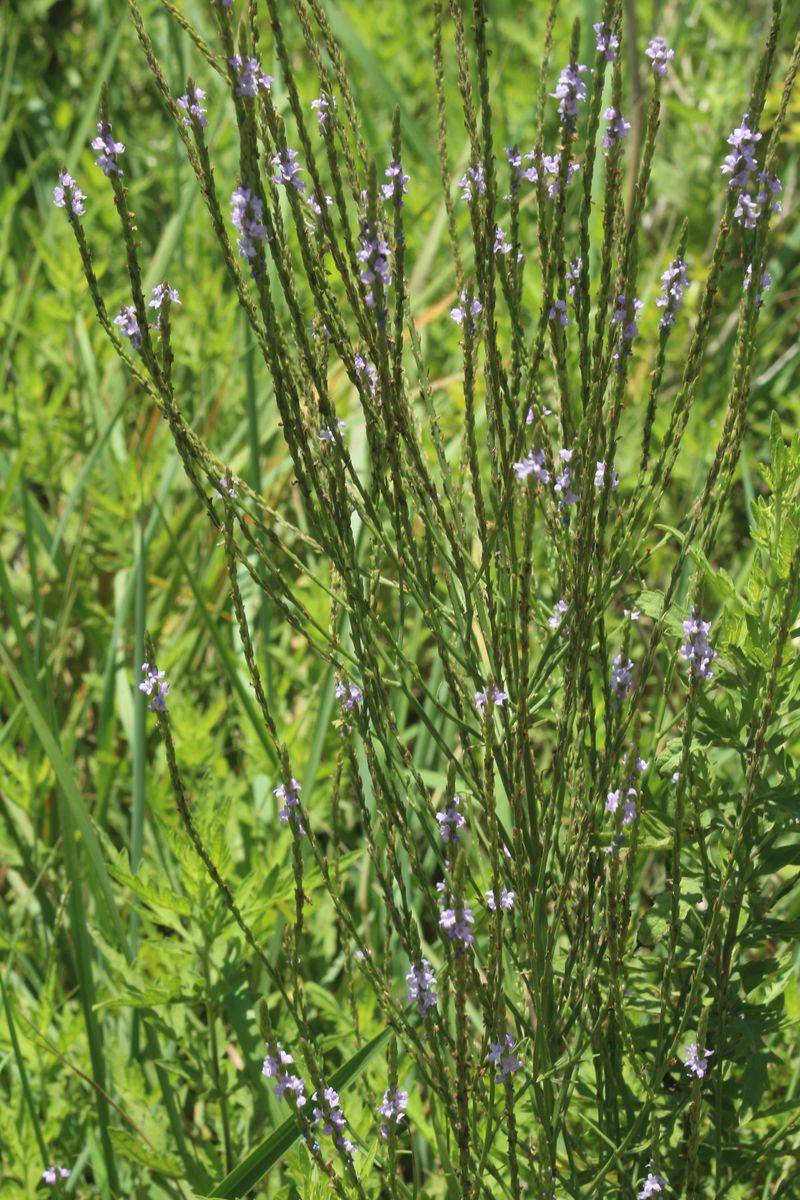
Color alone will send you down the wrong path with this one. A proper identification of Texas vervain requires checking several physical traits together, starting with the stem.
NPSOT’s species profile describes the stem as rough, hairy, and square in cross-section, a detail you can feel by rolling the stem gently between your fingers. Round stems rule out Texas vervain immediately.
Move next to the leaves. They grow in opposite pairs along the stem and can vary quite a bit in shape, from toothed edges to lobed or deeply dissected forms.
The leaf surface tends to feel rough or slightly scratchy rather than smooth. Height at maturity generally falls somewhere between one and three feet, though plants growing under mowing pressure or in thin soil may stay shorter.
The flowers themselves are small, lavender to purple or occasionally bluish, and shaped like a narrow trumpet or tube. They are arranged in slender, branched spikes that extend above the foliage rather than clustering in the leaf axils.
That spike arrangement is one of the more useful diagnostic details because it separates Texas vervain from several common lookalikes that carry their flowers differently.
Bloom timing is broader than many homeowners expect. Sources vary, but flowering can begin as early as late winter and extend into fall depending on the site, rainfall, and whether the plant has been cut back.
Calling it only a spring weed understates its season. Before pulling anything, photograph the plant from multiple angles, including a close-up of the stem, a leaf showing both sides, and the flower spike.
Comparing several traits together gives a far more reliable result than matching color alone.
Why It Can Appear in Thin or Disturbed Turf
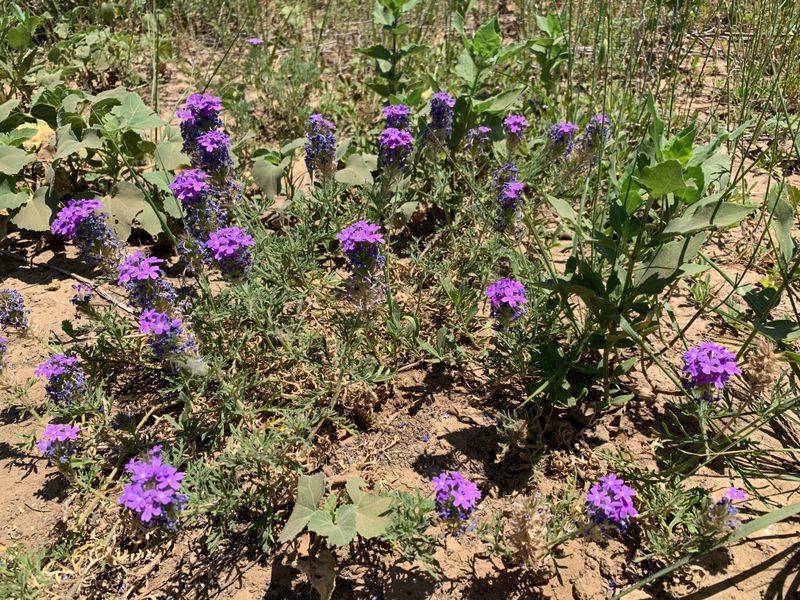
Texas vervain is not a plant that needs coddling to get started. Its natural habitat associations include disturbed areas, prairies, grasslands, open woodlands, meadows, and roadsides, which means thin or stressed turf can offer conditions similar enough to those settings for the species to establish.
When lawn grass thins out from drought, heavy foot traffic, or shade, it leaves gaps in the soil surface that give low-competition volunteers a chance to germinate.
That connection between disturbed conditions and Texas vervain’s presence is worth understanding as a pattern rather than a diagnosis. Saying that thin turf explains why a specific plant appeared in your yard goes further than the evidence supports.
The species may simply have arrived from nearby seed sources, and the open soil happened to suit it.
One practical note worth keeping in mind: NPSOT reports that Texas vervain seed appears to have a short viability window and can be difficult to germinate under typical conditions. That means allowing one plant to flower and drop seed in your yard is not a reliable recipe for building a lasting colony.
Natural reseeding is possible but not guaranteed, and persistence from one season to the next depends on mowing schedules, drought severity, soil type, and competition from surrounding turf.
For homeowners who want to encourage the species deliberately, that germination difficulty is worth factoring into expectations. A volunteer that shows up on its own is genuinely opportunistic, but counting on it to multiply and return without any management support may lead to disappointment.
Treat each plant as its own small discovery rather than the start of an automatic annual display.
Its Flowers Offer a Modest Pollinator Resource
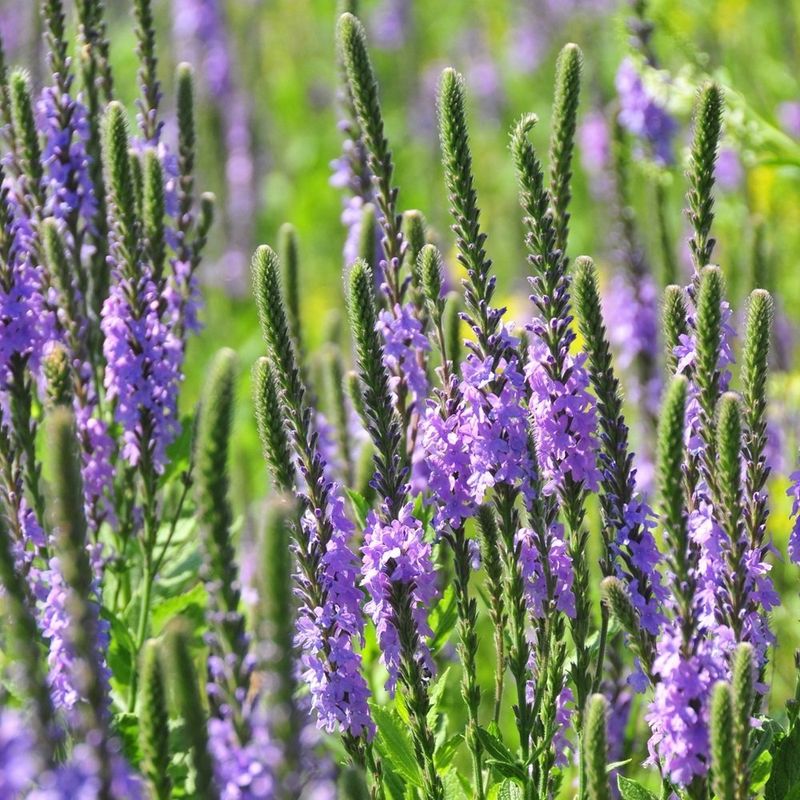
The wildlife value of Texas vervain is real, but it reads more accurately as a useful contribution than as an outsized ecological role. The USDA NRCS monarch plant guide for the Western Coastal Plain identifies Texas vervain as a nectar source for many butterfly species.
The Native Plant Society of Texas also lists bees and other nectar-feeding insects among its wildlife beneficiaries. Those are genuine credentials for a lawn volunteer that costs nothing to establish.
At the same time, a single flowering plant does not transform a yard into functioning pollinator habitat. One nectar source fills one small gap in a much larger picture.
Texas Parks and Wildlife frames effective pollinator support around a combination of factors: diverse native flowering plants that provide successive blooms from spring through fall, suitable nesting resources, and reduced pesticide exposure across the yard. No single species, however useful, substitutes for that broader approach.
Describing Texas vervain as a nectar or pollen resource is accurate and fair. Calling it indispensable or ranking it among the most ecologically important native plants in the state goes beyond what authoritative sources support.
Pollinators visiting it are taking advantage of an available resource, not depending on it exclusively.
The practical takeaway is that a correctly identified patch of Texas vervain in a low-traffic corner of your yard adds something genuinely useful during its bloom window, particularly for butterflies. That contribution is worth acknowledging without overstating it, and without treating the plant as a substitute for a more diverse and intentional planting strategy.
When Preserving a Small Patch Makes Sense
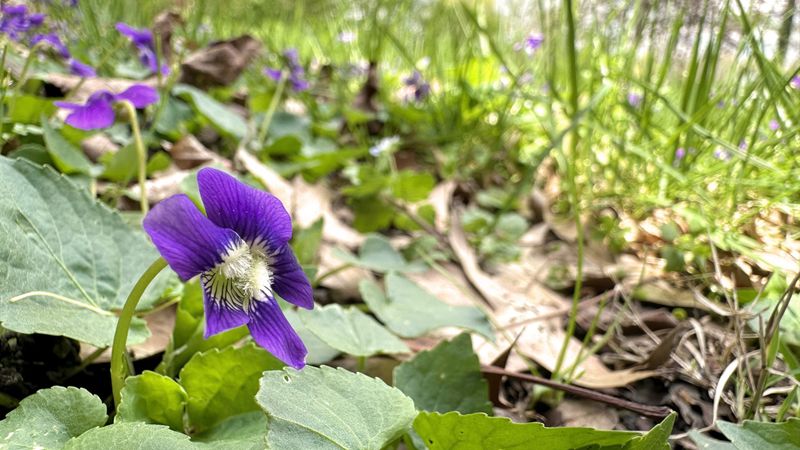
Not every yard has room for a wildflower corner, and not every homeowner wants one. Preserving a small patch of Texas vervain makes the most sense when the plant is correctly identified, located away from paths, play areas, or sight lines that matter to you, and not actively competing with turf you need to maintain.
A patch that stays out of the way and adds some bloom color during the growing season is a low-cost decision that carries a modest pollinator benefit.
If you want the plant to have a chance at reseeding, the timing of your next mow matters. Texas Parks and Wildlife guidance on native wildflower management recommends allowing plants to finish blooming, dry, and drop seed before mowing or cutting back, noting that late June or early July is a common window, though timing varies by site and year.
That schedule applies to native wildflower management contexts and may not fit a formal turf lawn where regular mowing is part of the maintenance plan.
The key distinction is between a wildlife-friendly corner and a whole-lawn conversion. Leaving one small patch to finish its cycle is a reasonable, low-effort choice.
Letting Texas vervain spread unchecked across the entire yard, especially before you have confirmed the identification, is a different decision with different tradeoffs. NPSOT’s profile notes that seed viability can be short and germination difficult, so the risk of runaway spread is lower than many homeowners might fear, but the identification step still matters before any deliberate encouragement.
A small, correctly identified patch that gets to bloom and dry before the mower passes is a practical middle ground that respects both your yard’s usability and the plant’s modest ecological value.
Lookalikes Make a Purple Lawn Color Unreliable
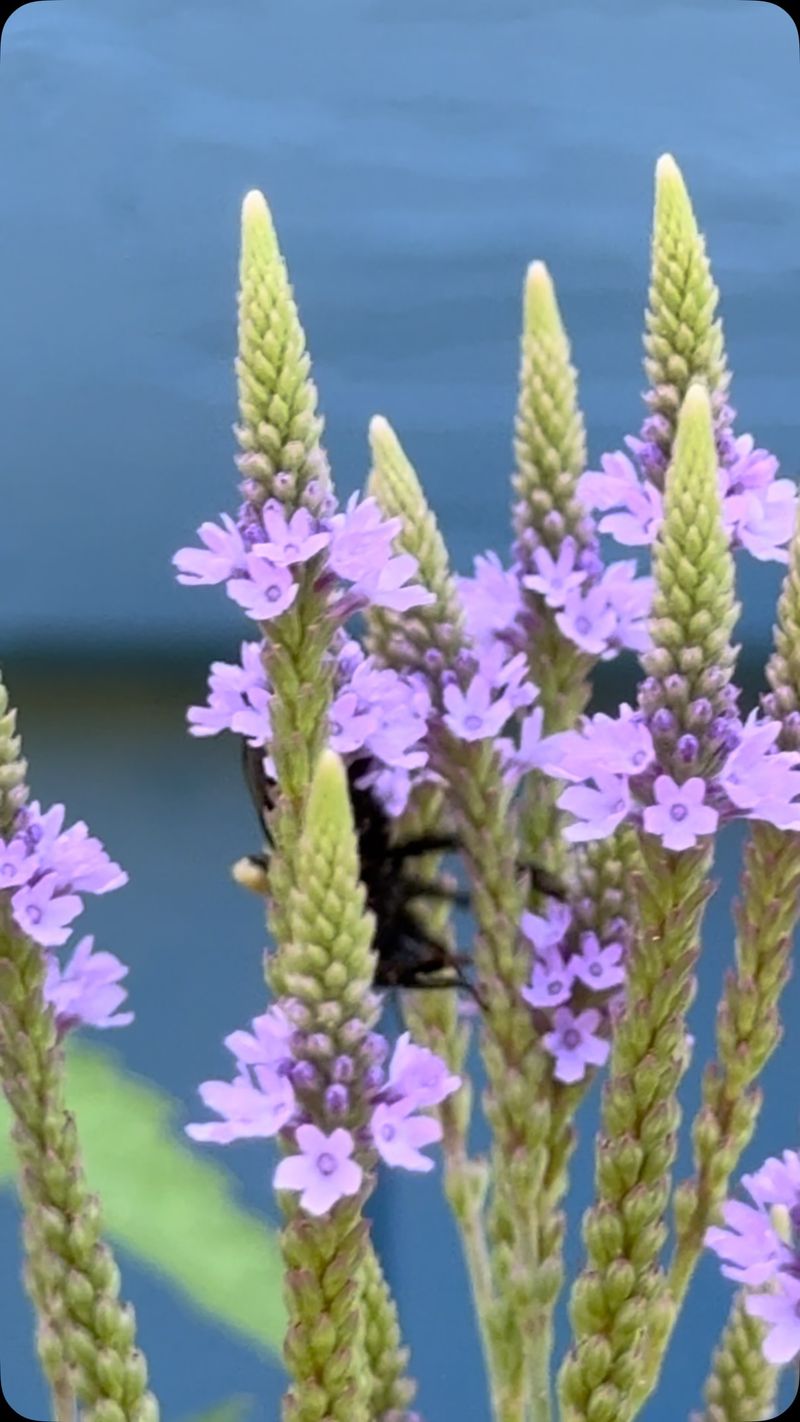
Purple flowers in a Central Texas lawn point in several directions at once, and following color alone is a reliable way to misidentify a plant. Henbit is one of the most frequently encountered purple-flowering lawn plants during late winter and spring, and it shares enough surface traits with Texas vervain to cause confusion at a glance.
Utah State University Extension’s henbit profile describes it as a winter annual with square stems, rounded or heart-shaped leaves that clasp the stem, and small dark-pink flowers tucked into the leaf axils rather than arranged along slender spikes. Its foliage typically dies back when hot weather arrives, which is a useful seasonal clue.
A more consequential lookalike is Brazilian vervain (Verbena brasiliensis), a South American species that belongs to the same genus as Texas vervain but carries a very different status. NPSOT identifies Brazilian vervain as potentially invasive and lists Texas vervain as a native alternative.
The two plants can appear similar at a distance, which is exactly why the identification step matters before deciding to encourage any volunteer.
Prairie verbena, several violet species, and oxalis can also show purple or purple-adjacent flowers in lawn settings. None of them share every diagnostic trait with Texas vervain’s combination of square hairy stems, opposite lobed leaves, and flowers on slender branched spikes, but a quick glance at color and general shape will not reliably separate them.
When you are uncertain, compare the stem cross-section, leaf arrangement, leaf shape, flower placement, and overall growth habit before drawing any conclusion. A photograph submitted to a local native plant group or a county extension office can often resolve the question quickly and without guesswork.
Remove It Carefully If Your Yard Requires It
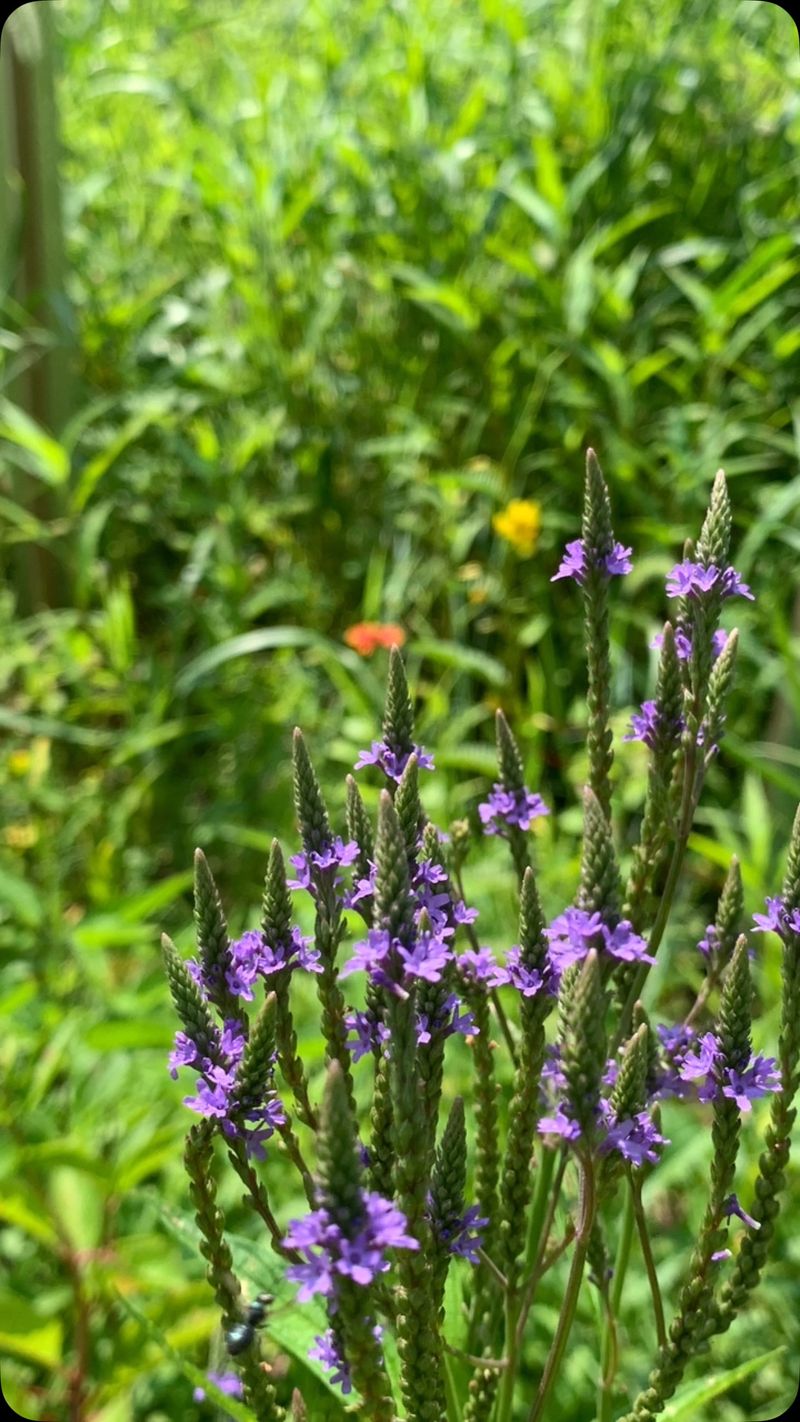
Plenty of legitimate reasons exist to remove a purple lawn volunteer, even after you have confirmed it is Texas vervain. Turf goals, path clearance, pet areas, visibility requirements, and general yard aesthetics are all valid considerations, and no article should tell you otherwise.
The plant’s modest pollinator value is real, but removing one specimen eliminates one potential nectar resource rather than causing documented broad ecological harm.
Hand-pulling and mowing are the least chemically intensive removal options and work well for isolated plants or small patches. For hand-pulling, grabbing the plant close to the soil and working the root free reduces regrowth.
Mowing before the plant sets seed prevents the possibility of reseeding, which may or may not matter depending on whether you want the species around in future seasons.
If herbicide enters the conversation, the process requires more care than a casual spray. EPA guidance on pollinator protection advises avoiding pesticide applications to plants in bloom, including flowering weeds, because blooming plants attract foraging insects that can be exposed during treatment.
Confirmed identification matters before any chemical application, and the product selected must be labeled for both your specific lawn grass type and the target weed. Following the current label is a legal requirement, not a suggestion.
A brief note from EPA’s tips for reducing pesticide impacts on wildlife reinforces that timing and product selection affect outcomes well beyond the target plant. Spot treatment of a non-blooming plant with the correct product is a far lower-risk approach than a broad application timed to a bloom period.
When in doubt, hand-pull first and reach for a chemical option only when mechanical removal is not practical.
Turn One Discovery Into a Realistic Habitat Project
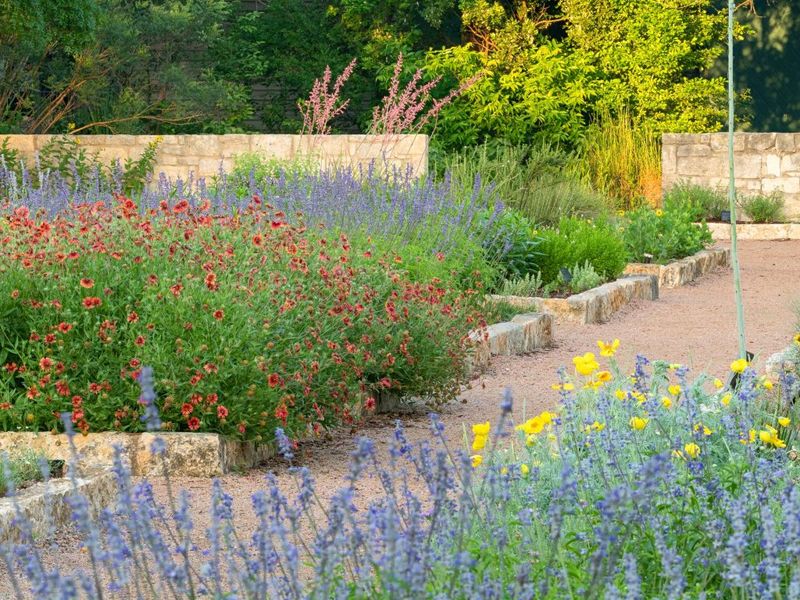
Finding a Texas vervain volunteer in your lawn is a reasonable starting point for a more intentional habitat project, as long as expectations stay grounded. One plant is a discovery, not a finished garden.
Pairing a preserved Texas vervain patch with other locally appropriate native plants that extend bloom succession is where the real habitat value begins to build.
Texas Parks and Wildlife’s native bee guidance frames effective habitat around plant diversity, successive bloom periods from spring through fall, nesting resources, and reduced pesticide use across the yard. Adding one or two species that bloom at different times than Texas vervain immediately strengthens the value of whatever corner you set aside.
For homeowners who want to convert part of a lawn to a native planting, TPWD’s wildflower seeding guidance recommends removing or avoiding existing St. Augustine or Bermuda turf before sowing, planting native seed shallowly at about one-eighth of an inch, keeping the seedbed moist during establishment, and sourcing seed from the same ecoregion when possible. Those steps matter because local soil, rainfall patterns, drought conditions, mowing history, and competition from surrounding turf all shape whether a new planting succeeds or struggles.
NPSOT notes that Texas vervain seed can be difficult to germinate, so treating the existing volunteer as a seed source for a quick, easy expansion is likely to produce mixed results. A more reliable approach is to preserve what you have, note what other native species grow well in your specific soil and light conditions, and add plants incrementally rather than attempting a full conversion all at once.
Small, well-chosen additions compound over time into something genuinely useful for the insects that visit your yard.
Identify First, Then Decide What Your Yard Needs
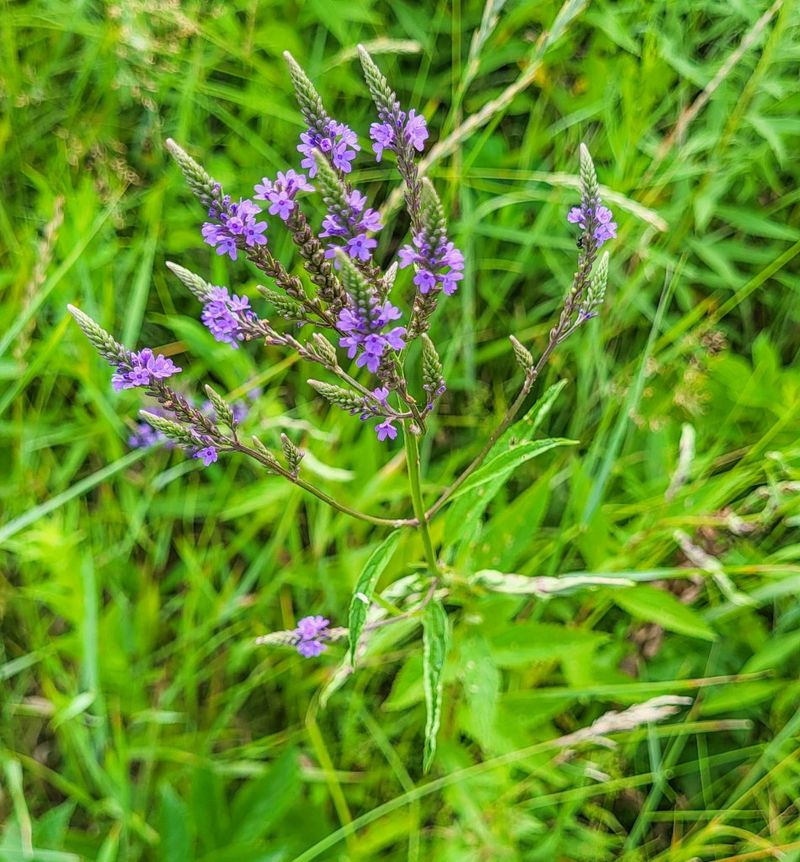
The most useful thing you can do with a purple lawn volunteer is photograph it before pulling it. Check the stem shape, leaf arrangement, leaf texture, flower placement, and overall height, then compare those traits against what NPSOT describes for Texas vervain and what the USDA NRCS monarch plant guide documents as its nectar value.
If the traits align, you have a confirmed native with a modest but genuine pollinator benefit and low-water potential that suits many Central Texas sites.
From there, the decision belongs to you and your yard. A small, correctly identified patch left to finish blooming, dry, and drop seed before mowing is a low-effort way to offer something useful to visiting insects without sacrificing the rest of your lawn.
Removal is equally valid when turf goals, access, or appearance require it, and doing it carefully before the plant blooms avoids unnecessary pollinator exposure.
A healthy Central Texas yard can hold both a tidy, functional lawn and a small corner of native volunteers without treating either as a concession. The purple plant you have been pulling every spring may turn out to be worth a second look, and that second look starts with knowing exactly what you have.