
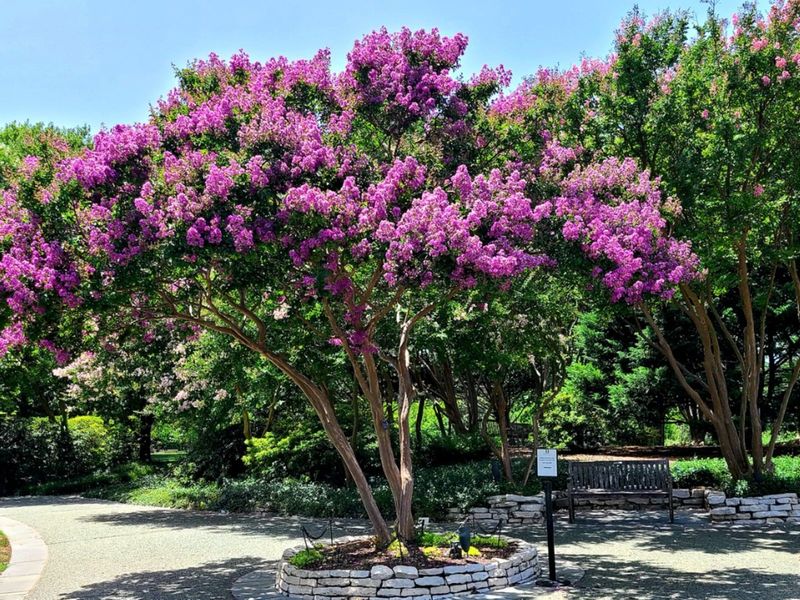
Crape myrtles are one of the most common trees in North Carolina yards, and late summer tends to bring a wave of advice about what you absolutely must do before August ends. Some of that advice is useful, but a lot of it is built on a deadline that does not actually exist.
Understanding what optional late-summer care can and cannot do for your tree will help you make smarter choices without stressing over a calendar date that no expert has actually set.
There is no universal August deadline for crape myrtles
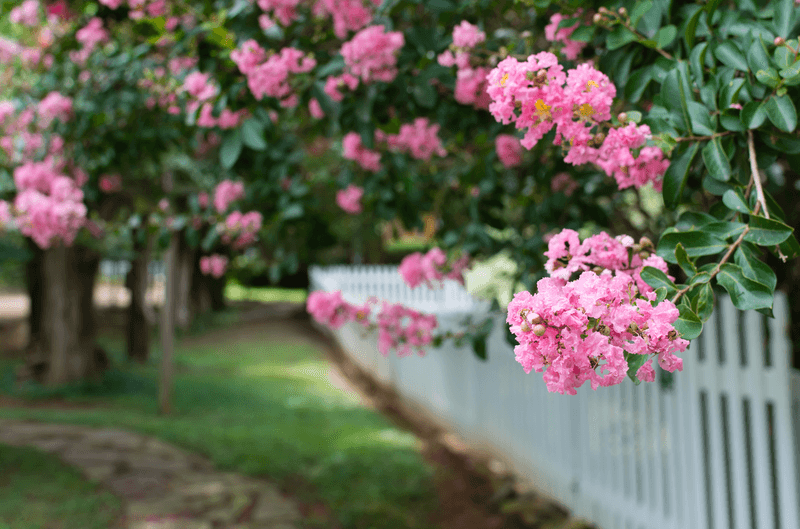
Every August, gardening articles and social media posts suggest that North Carolina homeowners have one critical crape myrtle task they must complete before the month ends or next year’s flowers will suffer. Authoritative sources from NC State Cooperative Extension, Clemson, UF/IFAS, and UGA do not support that claim.
No published evidence establishes a universal August 31 deadline or a named penalty that applies to every crape myrtle in the state.
The most useful optional action you can take in late summer is light deadheading. After a flower cluster finishes blooming, removing the spent terminal cluster or the small seed capsule forming in its place may encourage the plant to push out another round of flowers before the growing season closes.
Clemson Cooperative Extension’s crape myrtle pruning guidance confirms that crape myrtles bloom on current-season growth, which is the reason this technique has any potential at all.
That potential benefit is limited to the current growing season. Deadheading in August is aimed at a possible second flush of flowers before fall, not at protecting or improving next year’s bloom.
Whether you deadhead or skip it entirely has no meaningful effect on what your tree does next spring.
Two very different types of pruning get mixed together in most August crape myrtle advice. Optional deadheading, which involves removing only a spent flower cluster or forming seed capsule, is a light technique suited to small or early-blooming plants.
Structural pruning, which addresses size, form, dead wood, or clearance issues, belongs in late winter or early spring before new growth begins. Keeping those two jobs separate will help you avoid doing the wrong one at the wrong time.
What August deadheading can—and cannot—do
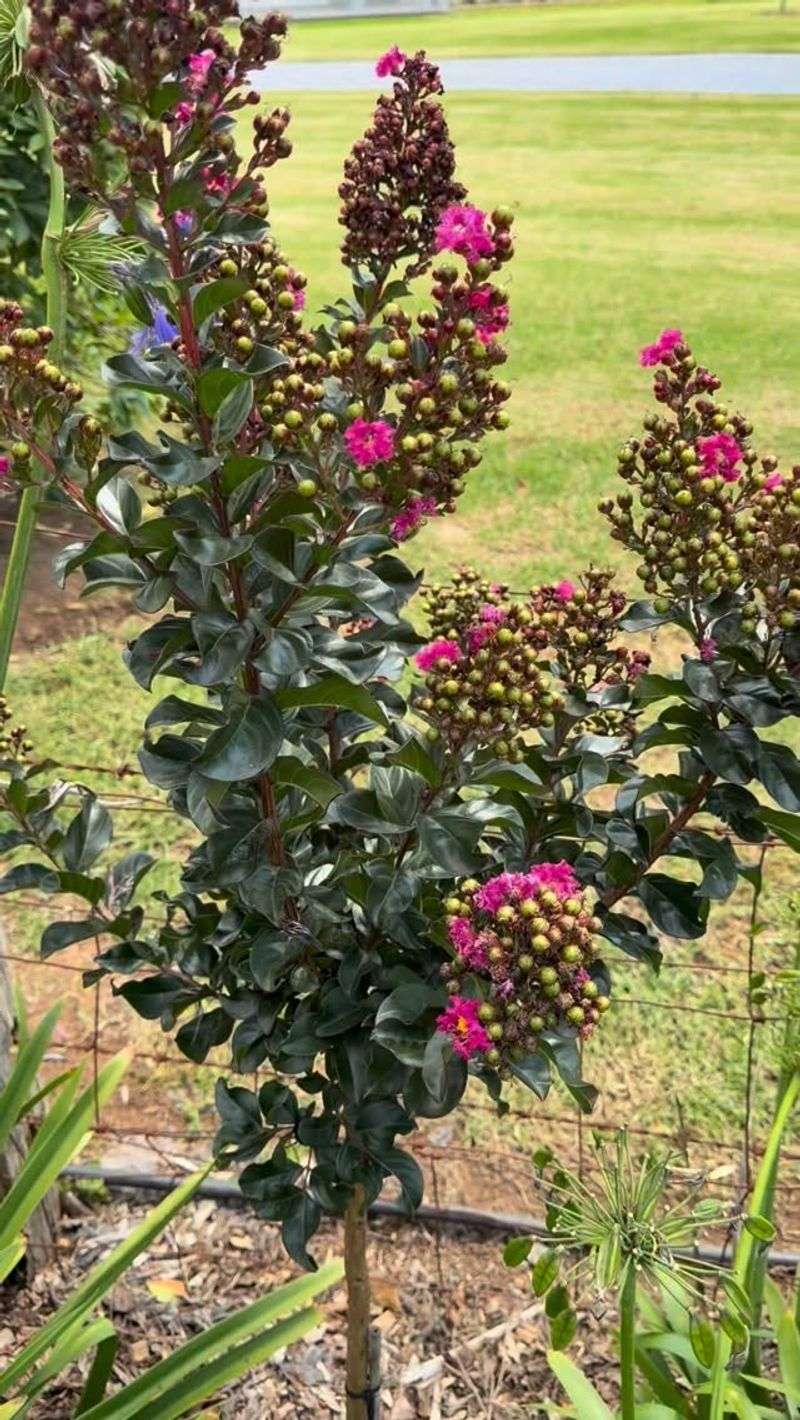
Crape myrtles produce flowers on the newest growth they push out each season. When a terminal flower cluster finishes and begins to fade, the branch that held it can either form a seed capsule and stop, or, if that spent cluster is removed, redirect its energy toward fresh growth that may carry new flower buds.
That redirection is the core reason deadheading has any value in late summer.
UF/IFAS Extension’s August landscape guidance describes a possible interval of roughly four to six weeks between a deadheading cut and a second flush of flowers under suitable conditions. That figure is a reasonable estimate, not a promise.
Whether a second bloom actually appears depends on the cultivar, how early the plant started flowering, how much warm weather remains, sunlight availability, and moisture.
What deadheading cannot do is equally worth knowing. Removing spent clusters or seed capsules in August does not determine next year’s flower production.
A crape myrtle that goes into winter with seed capsules still attached will bloom just as well next spring as one that was carefully deadheaded. The NC State Extension Gardener Plant Toolbox entry for Lagerstroemia notes that full sun and appropriate growing conditions support flowering far more reliably than any particular pruning routine.
Deadheading is also not a health maintenance requirement. A crape myrtle does not need its spent flowers removed to stay vigorous, resist disease, or grow well.
The technique is primarily an aesthetic choice or a way to pursue late-summer color on a plant that is a good candidate for rebloom. Treating it as anything more sets up expectations the plant cannot always meet.
Decide whether your plant is a good deadheading candidate
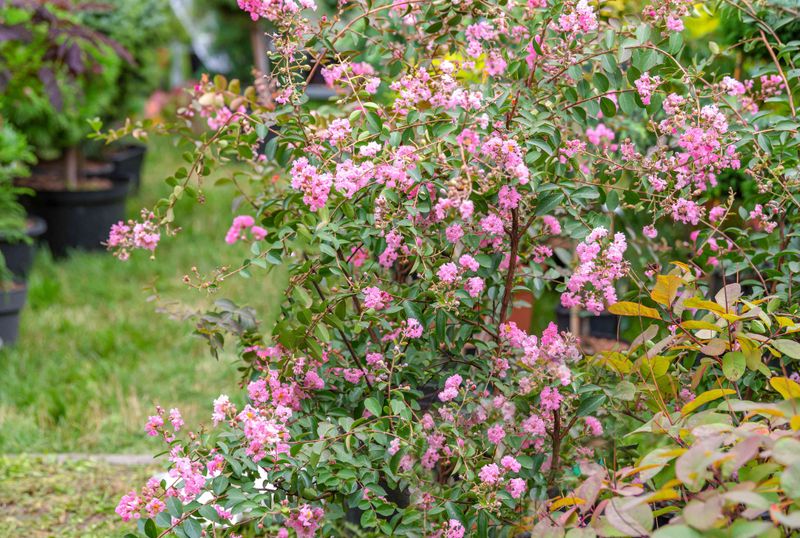
Before reaching for the pruning shears, take a honest look at the plant in front of you. Small or compact crape myrtles, the kind where you can comfortably reach the branch tips without a ladder, are the most practical candidates for optional deadheading.
On these plants, removing spent clusters is quick, safe, and worth attempting if you want to encourage late-season color.
Bloom timing matters just as much as plant size. UGA Extension’s crape myrtle pruning resource cautions that cultivars which begin flowering after mid-July may not have enough warm weather left to produce a meaningful second flush even if spent clusters are removed promptly.
If your tree just started blooming in late July or early August, the window for rebloom is narrow, and skipping deadheading is a perfectly reasonable call.
Large, mature crape myrtles present a different challenge altogether. Clemson’s crape myrtle pruning factsheet points out that deadheading a big tree is largely impractical because the flower clusters are out of reach and numerous.
Attempting to deadhead a 20-foot tree from a ladder introduces safety risks that outweigh any possible aesthetic benefit. For these plants, letting nature take its course is both sensible and acceptable.
A healthy crape myrtle growing in the right spot, with full sun and good air circulation, can flower abundantly with little or no pruning at all. If your tree bloomed well this season and the spent clusters are out of reach, the most reasonable action is to leave it alone and let it finish the season on its own terms.
Make one selective cut on each finished cluster

When you decide to deadhead a reachable crape myrtle, the cut itself is straightforward. Locate the finished flower cluster at the tip of a branch.
Just below that spent cluster, you will find either a lateral bud or a leafy side shoot growing out from the stem. That junction is your target.
Cut the spent cluster off just above that point, leaving the lateral bud or side shoot intact to carry any new growth forward.
UF/IFAS August landscape guidance specifically describes this technique: remove only the terminal spent flower cluster or developing seed capsule, cutting back to a lateral bud or leafy side shoot. The goal is one clean, selective cut per cluster, not a general shearing of the canopy.
Shearing, topping, or cutting back to uniform stubs across the whole plant is not deadheading. Those approaches cause different problems and are not appropriate for this purpose.
NC State Cooperative Extension’s crape myrtle pruning page reinforces the importance of cutting back to a suitable branch or bud rather than leaving stubs, which can invite disease and create weak attachment points. Use clean, sharp bypass pruners for cuts on stems up to about half an inch in diameter.
Wipe the blades with a damp cloth between plants if you are working in a yard where disease has been an issue.
Keep all do-it-yourself deadheading limited to branches you can reach safely while standing on the ground or from a stable step stool at low height. Any work that requires a tall ladder, roof access, or cuts near overhead utility lines should be left to a qualified arborist.
The possible benefit of a second bloom is not worth a fall or a utility contact. For tall trees, the practical answer is to skip deadheading entirely this season.
Do not remove seed capsules or fertilizer by default

Seed capsules on a crape myrtle look tidy once they dry and turn brown, but leaving them in place through fall and winter causes no harm to the following season’s flowers. UF/IFAS’s crapemyrtle pruning publication states directly that winter seed capsules do not affect the next season’s bloom.
Removing them before August ends is not required to protect next year’s flowers. The only practical reasons to remove seed capsules are appearance and, on early-blooming plants, the possibility of encouraging a late-season second flush.
Fertilizer is the other August overreaction worth avoiding. A common assumption is that feeding the tree in late summer will fuel better flowering, but the evidence points the other way.
NC State Cooperative Extension’s August gardening tips for Caldwell County advise against fertilizing shrubs from August through November. Applying fertilizer in late summer can push a flush of soft, leafy growth that does not have time to harden before cold weather arrives, leaving the plant more vulnerable going into fall.
Beyond the timing problem, excess fertility tends to favor foliage over flowers. A crape myrtle growing in overly rich soil may put out lush green growth while producing fewer or smaller flower clusters.
If your tree is already blooming well and growing in good soil, it likely does not need supplemental feeding at all.
What does support late-summer performance is basic moisture management. During dry spells, water deeply and direct it toward the root zone rather than spraying the foliage.
The NC State Plant Toolbox notes that crape myrtles perform best with full sun and consistent moisture, and that overly fertile conditions can shift growth toward leaves at the expense of blooms. Consistent, deep watering during a dry August is more beneficial than any fertilizer application.
Use late winter for structural pruning when the plant needs it
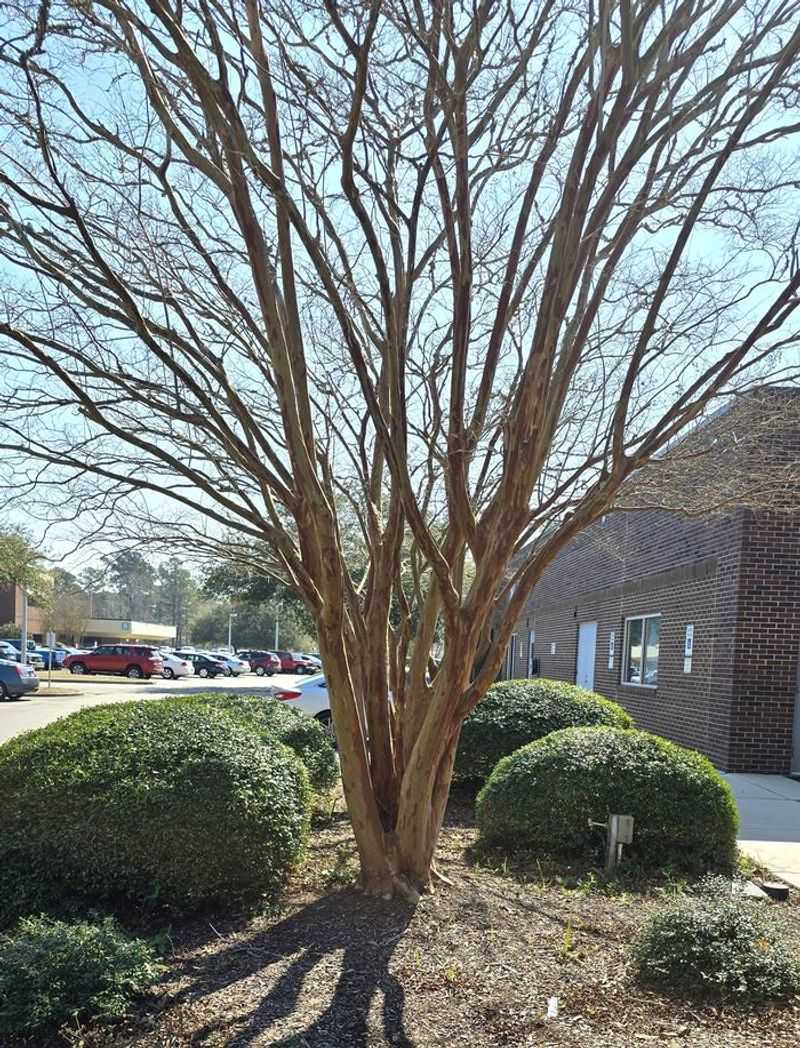
Optional August deadheading and structural pruning are not the same job, and mixing them up leads to some of the most common crape myrtle mistakes in North Carolina yards. Structural pruning addresses things like dead or damaged limbs, crossing branches that rub against each other, branches growing toward the house or a fence, and basal suckers sprouting from the base of the trunk.
These corrections belong in late winter or early spring, not in August.
NC State Cooperative Extension’s pruning timing guidance identifies late winter or early spring, before new growth begins, as the standard window for pruning summer-flowering trees like crape myrtles. In central and eastern North Carolina, that often means February.
In the mountains, where cold lingers longer, local timing may push into early March. Pruning just before the plant breaks dormancy gives cuts time to callous over as growth resumes, which supports cleaner healing and reduces disease entry points.
NC State’s crape myrtle pruning resource from Pender County Extension covers the legitimate targets: remove dead, diseased, or damaged limbs; take out branches that cross or rub; clear any growth that creates a safety or clearance problem; and pull basal suckers at ground level. Every cut should go back to a suitable branch or bud rather than leaving a stub.
Stubs heal poorly, invite rot, and create weak spots over time.
One point deserves emphasis: late-winter structural pruning is not a prerequisite for next year’s flowering. Crape myrtles flower on new growth that emerges each spring, and a healthy plant will push that growth and bloom reliably without annual pruning.
Reserve structural cuts for situations where size, form, damage, or clearance actually requires them. Clemson Extension reinforces that a well-sited crape myrtle can flower well with little or no pruning, which means the best approach for many homeowners is simply to leave a healthy, well-performing tree alone until it presents a specific reason to act.
The real pruning problem is topping, not a missed date
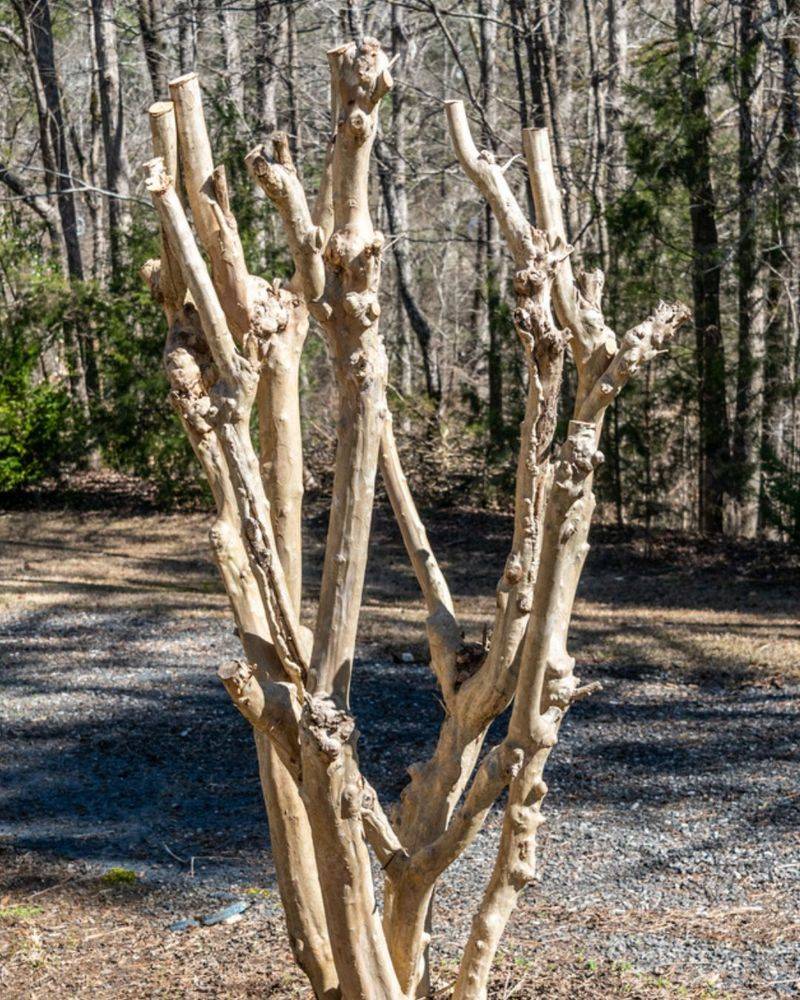
Topping a crape myrtle, cutting the main branches back to uniform stubs across the canopy, is so common in the Southeast that horticulturists gave it a name: crape murder. The practice is not triggered by missing an August deadline.
Homeowners top these trees in winter, spring, and summer, usually because they want to control height or because they saw a neighbor do it. The result is a tree that looks worse and requires more work, not less.
UF/IFAS’s crapemyrtle pruning publication explains that topping leaves large wound sites that heal slowly, promotes clusters of weakly attached shoots that grow fast but break easily in storms, and can shorten or delay the flowering period. The plant survives, but its natural vase shape and graceful branching structure are gone, replaced by knobby stubs that look unnatural year-round.
Once a tree is topped repeatedly, restoring its original form takes years of careful corrective pruning.
NC State Cooperative Extension’s crape myrtle pruning page advises against removing major limbs simply to control flowering or reduce height, noting that the right cultivar for the space is a far better solution than repeated topping. If a crape myrtle has outgrown its location, replacing it with a smaller cultivar is more effective and less damaging than cutting it back every year.
North Carolina’s climate adds another reason to avoid major late-summer cuts. NC State Extension’s guidance on preparing plants for winter cautions that late-season pruning can stimulate new growth that does not have enough time to harden before cold weather arrives, particularly in the mountains and upper Piedmont where temperatures drop earlier.
The practical decision rule is simple: deadhead lightly only when a reachable, early-blooming plant makes the effort worthwhile, and defer any major structural or size-related cuts to late winter when the timing is actually right.
Choose selective care—or leave the plant alone
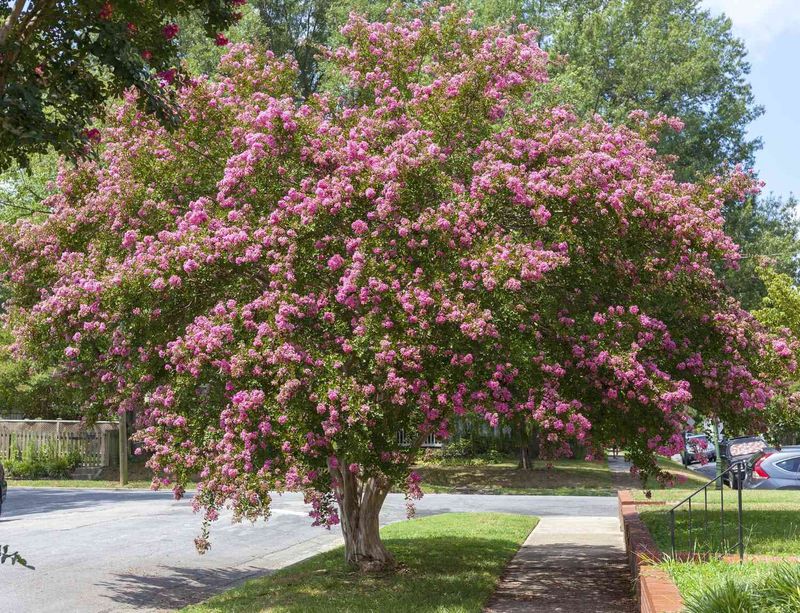
Late August care for a crape myrtle comes down to a short inspection and an honest question: does this plant actually need anything right now? If you have a small or compact tree that finished an early bloom flush and the spent clusters are within easy reach, removing them is a reasonable optional step that may encourage late-season color.
UF/IFAS August landscape guidance supports this as a possible rebloom technique, not a requirement.
If the plant is large, still actively blooming, a late-starting cultivar, or simply healthy and growing well, leaving it alone is the right call. Next year’s flowers do not depend on removing every seed capsule before the month ends.
Clemson Extension and NC State’s Plant Toolbox both support the idea that a well-sited crape myrtle in full sun with adequate moisture will bloom reliably without routine intervention.
Keep fertilizer off the schedule for now. Water deeply during dry spells, focus moisture on the root zone rather than the foliage, and hold any structural pruning until late winter when the timing actually supports it.
The crape myrtle in your yard is more resilient than the advice cycle around it suggests. Selective care when it is genuinely warranted, and a willingness to leave a healthy tree alone, will serve it far better than any invented August deadline ever could.