
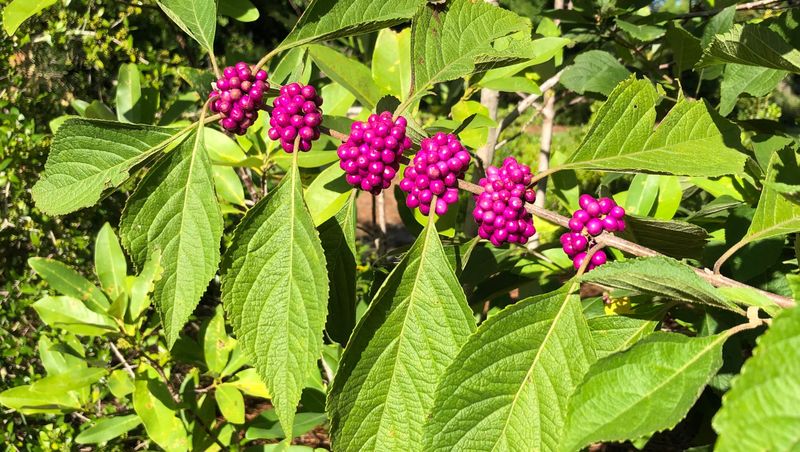
Ticks are a real problem for North Carolina families who spend time near wooded backyard edges, and most people reach for a spray can the moment they find one on a child or pet. But there is a native shrub worth knowing about that brings wildlife value, striking purple berries, and some genuinely interesting laboratory science to that exact spot where the yard meets the trees.
American beautyberry, known scientifically as Callicarpa americana, has gotten buzz as a natural tick fighter, but the full story is more nuanced and more useful than the hype suggests.
American beautyberry fits a North Carolina wooded edge
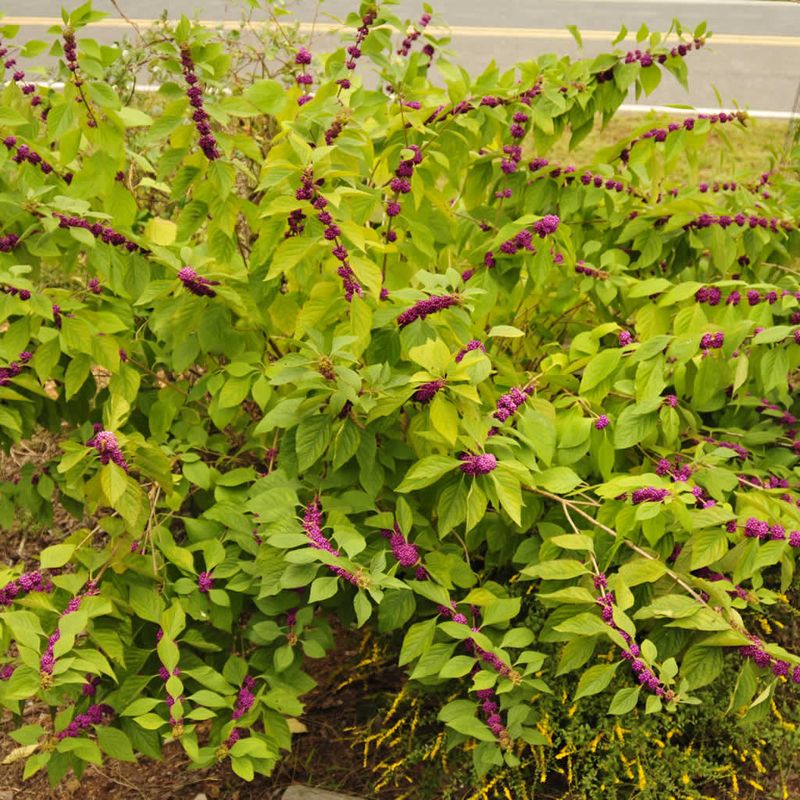
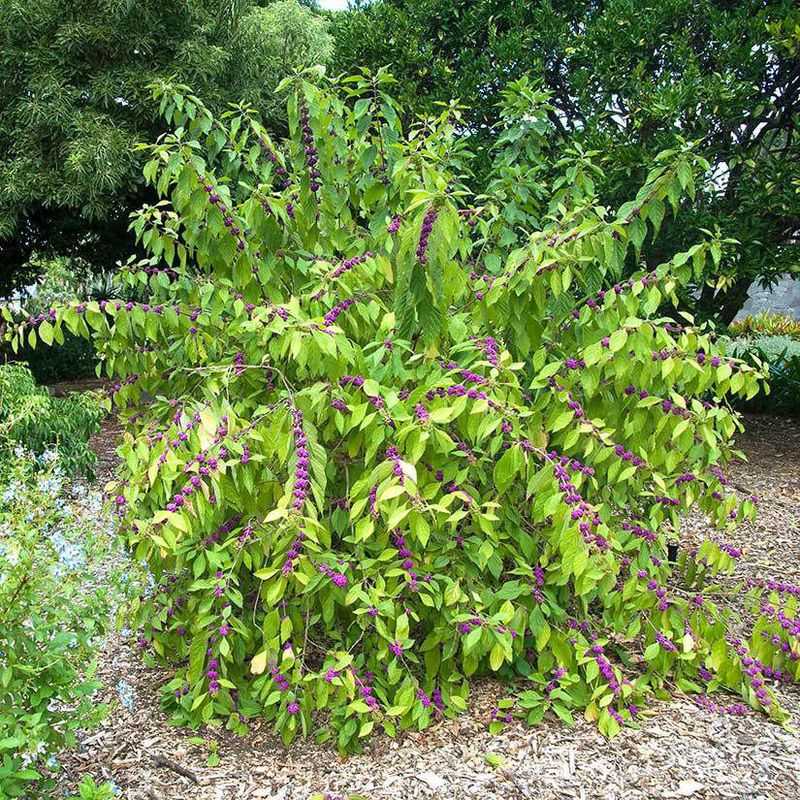
Callicarpa americana earns its place at the wooded backyard edge for reasons that have nothing to do with ticks. NC State Extension’s plant profile describes it as a deciduous native shrub that typically matures to 3-8 feet tall and 3-6 feet wide, producing some of the most eye-catching fruit in any southeastern landscape: dense, jewel-like clusters of violet-purple berries that persist from late summer into fall.
Cardinals, mockingbirds, brown thrashers, and small mammals feed on those berries, giving the plant a legitimate wildlife credential that holds up regardless of any tick-related claims.
Identifying it correctly matters, because several nonnative Callicarpa species are also sold at North Carolina nurseries. Always look for the scientific name Callicarpa americana to be sure you are getting the true southeastern native rather than an Asian ornamental cousin.
The species is adapted to the Southeast broadly, but its distribution within North Carolina is not uniform: it is common across much of the Coastal Plain, less consistent through large parts of the Piedmont, and the NC Vascular Plants database records it as rare in the southern Mountains. Buyers in the Piedmont or western counties should confirm local availability and site suitability rather than assuming the shrub will perform identically to a Coastal Plain planting.
For site fit, the shrub prefers full sun to part shade and well-drained soil, which aligns well with an open or lightly shaded wooded edge rather than a dense, perpetually damp forest understory. Its mature spread means it needs room: planting too close to other shrubs or structures recreates the kind of crowded, shaded ground cover that ticks prefer.
As a notable native option for pollinator, butterfly, and wildlife gardens, it brings real ornamental and ecological value to a backyard transition zone, provided readers understand that any tick-related benefit requires careful qualification.
What the beautyberry study actually found
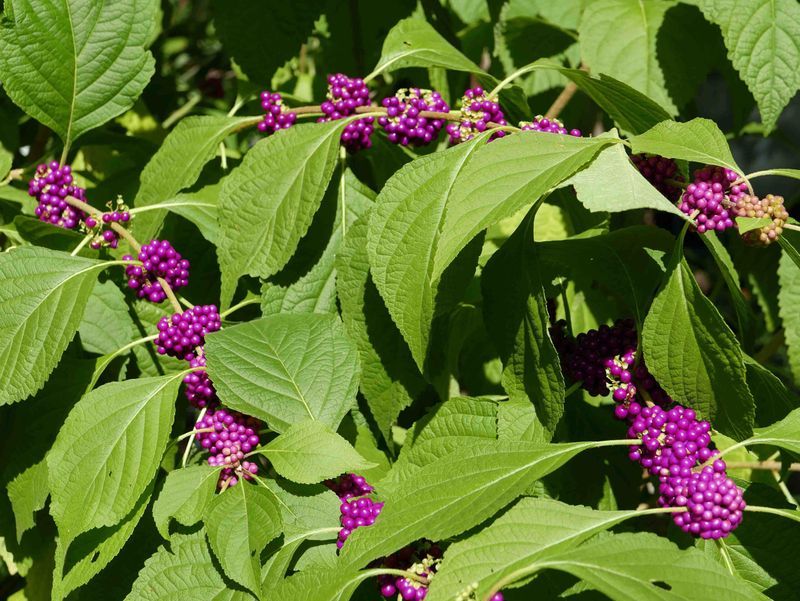
The scientific interest in beautyberry and ticks traces back to a specific piece of USDA research. Chemists isolated two terpenoid compounds from the leaves of Callicarpa americana: callicarpenal and intermedeol.
They then applied those purified compounds to cloth at a tested concentration and measured how well the treated cloth repelled tick nymphs under controlled laboratory conditions. The results for blacklegged tick nymphs (Ixodes scapularis) were striking: the published study reported 98% repellency for callicarpenal and 96% for intermedeol at the concentration tested.
Those numbers generated genuine scientific excitement, and they deserve to be taken seriously. They show that compounds naturally present in beautyberry leaves can, under carefully controlled laboratory conditions, strongly discourage blacklegged tick nymphs from crossing treated material.
That is a legitimate finding, not folklore, and it explains why researchers and popular gardening writers have continued to discuss the plant in the context of tick management.
The limitations, though, are built into the experimental design itself. The researchers worked with isolated, purified compounds applied to cloth at a specific dose, not with intact leaves, living shrubs, or anything resembling a residential landscape.
A growing beautyberry plant releases its leaf compounds into the surrounding environment in ways that are entirely different from a controlled cloth assay. The study did not measure whether a shrub in a backyard emits enough callicarpenal or intermedeol into the air or soil to affect tick behavior, how far any such effect might extend, or whether it would hold up across seasons, weather conditions, or the varied microhabitats found along a real wooded edge.
The findings provide a solid, peer-reviewed reason to continue studying beautyberry, but they do not confirm that planting one will change tick numbers in your yard.
Why laboratory activity does not create a tick barrier
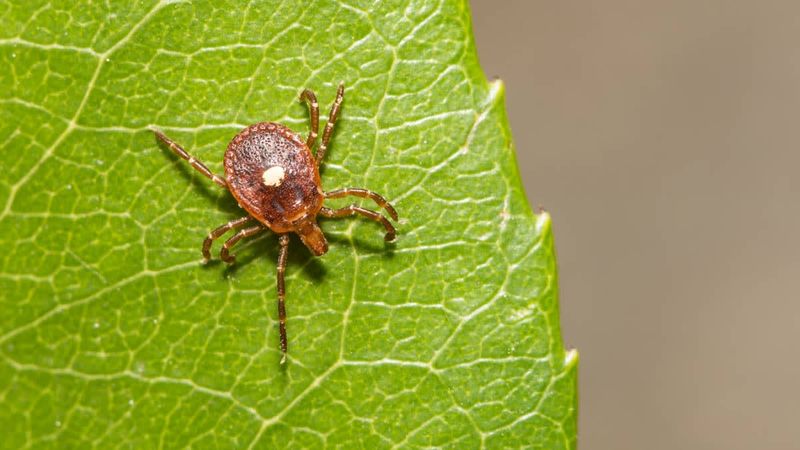
One of the most important gaps between the laboratory results and real-world tick management involves species. The 98% and 96% repellency figures apply specifically to blacklegged tick nymphs tested under controlled assay conditions.
Against lone star tick nymphs (Amblyomma americanum), the same compounds performed substantially less effectively in the same study. That distinction matters enormously for North Carolina homeowners, because CDC data on tick distribution confirms that lone star ticks are widely established across the South and are among the most aggressive human-biting tick species in the region.
Blacklegged ticks are also present in North Carolina and carry Lyme disease, but lone star ticks are not a secondary concern here – they are a primary one.
Beyond the species gap, the study simply did not measure the things that would matter most to a homeowner. Researchers did not count ticks around planted beautyberry shrubs.
They did not track whether tick populations declined near treated areas, whether people encountered fewer ticks, or whether any disease transmission changed. Those are very different questions from whether a purified compound on cloth repels nymphs in a petri dish format, and the published research makes no claims beyond what the laboratory assays actually measured.
Planting a row of beautyberry along a wooded edge does not create a chemical perimeter that ticks cannot cross. The shrub does not function as a barrier, a repellent hedge, or a substitute for the habitat-management and personal-protection steps that public health guidance actually supports.
Ticks move through landscapes on deer, rodents, birds, and people, and no single ornamental plant has been shown to interrupt that movement reliably. Understanding what the beautyberry science does and does not say allows readers to appreciate the plant honestly, without expecting it to solve a problem it has not been tested to solve.
Place beautyberry on the yard side of a managed transition
Managing the edge between your lawn and the woods is one of the most practical steps a North Carolina homeowner can take to reduce tick habitat close to the house. CDC tick-prevention guidance recommends clearing leaf litter and brush from that transition zone, keeping adjacent grass cut short, and pruning low-hanging branches and shrubs to increase sunlight and airflow at ground level.
Ticks thrive in cool, damp, shaded spots with dense ground-level cover, so opening up the edge works against those conditions.
Installing a continuous 3-foot-wide strip of wood chips or gravel between the lawn and the tree line creates a managed boundary that ticks must cross to reach the yard. This barrier is a contact-management measure, not a sealed wall.
TickEncounter at the University of Rhode Island specifically notes that ticks can be reintroduced after any yard treatment when deer, rodents, birds, pets, or people move through the property. The strip slows tick migration and marks the edge of your active management zone, but it does not make the yard tick-proof.
American beautyberry fits into this layout on the yard side of the chip or gravel strip, where it receives adequate light and stays away from the densest, dampest parts of the forest floor. NC State Extension lists its mature size as 3-8 feet tall and 3-6 feet wide, so spacing plants far enough apart to avoid a closed canopy at ground level is important.
Crowded, overlapping shrubs recreate shaded, humid conditions, which is the opposite of what a well-managed wooded-edge transition should look like. Plant beautyberry where its arching branches can spread naturally, allow sunlight to reach the ground between plants, and complement rather than undermine the open, maintained character of the transition zone.
Frame the whole layout as good habitat management that happens to include a striking native shrub, not as a beautyberry-specific tick strategy.
Maintenance protects both the planting and the edge
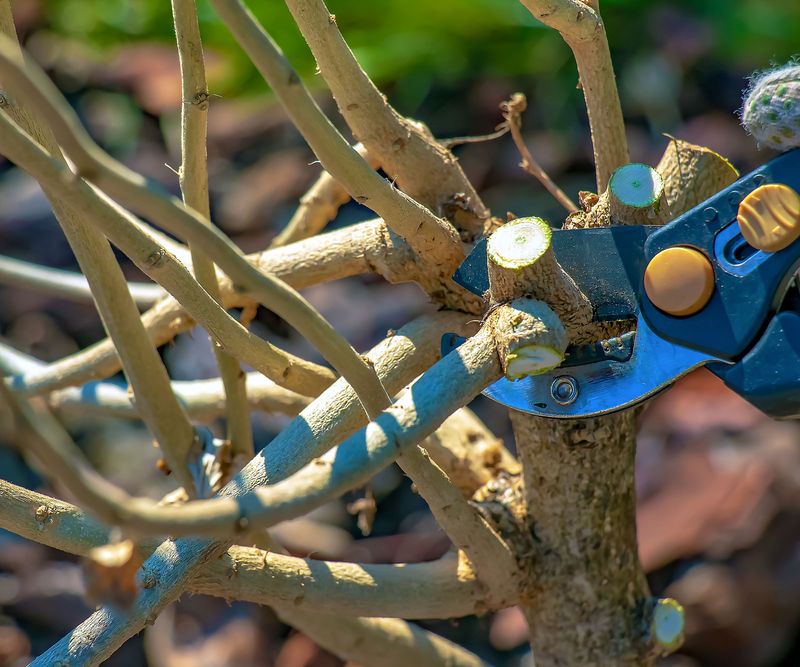
Keeping beautyberry healthy and keeping the wooded edge tick-unfriendly require the same basic habits. NC State Extension recommends pruning beautyberry in late winter, cutting plants back hard before new growth begins.
Because flowers and fruit develop on new growth from the current season, skipping this step does not just affect the shrub’s shape – it reduces berry production and the wildlife value that makes the plant worth growing in the first place. Late-winter pruning also prevents the shrub from becoming a dense, woody thicket at ground level, which is exactly the kind of cover that ticks prefer.
Beyond the annual pruning schedule, routine upkeep of the surrounding edge matters just as much. Rake out leaf litter that accumulates around the base of the shrub and along the wood-chip strip each season.
Remove any brush, fallen branches, or invasive groundcover that creeps in from the forest side. Check that the gravel or chip barrier stays continuous and wide enough to function as a managed transition rather than a patchy line of mulch.
These steps keep the edge open, sunny, and dry, which supports both the shrub’s performance and the broader goal of reducing tick-friendly habitat near the yard.
The shrub’s late-summer to fall berry display is one of its strongest selling points, attracting songbirds and small mammals to the yard during a season when many other native plants have finished fruiting. NC State also describes it as deer- and rabbit-resistant, though the CDC Tick Management Handbook notes that no plant is completely browse-resistant across all regions and conditions, and that susceptibility shifts with deer density and food availability.
Deer resistance is a landscaping characteristic, not a tick-control strategy, and readers should treat it as useful background information rather than a reason to expect fewer ticks on the property.
Pair the shrub with proven tick protection

No single plant, yard feature, or landscaping choice carries a full tick-protection plan on its own. Personal protection remains the most reliable layer.
CDC guidance on preventing Lyme disease recommends using EPA-registered repellents that contain DEET, picaridin, IR3535, oil of lemon eucalyptus or its active ingredient PMD, or 2-undecanone. Apply them according to label directions before heading outside, especially near the wooded edge where tick activity is highest.
After any time outdoors, do a full tick check on yourself, your children, and any gear or clothing that contacted vegetation.
Pets need their own protection. Dogs and cats that roam near wooded edges pick up ticks readily and carry them directly into the home, where they can transfer to family members.
A veterinarian can recommend the right tick-prevention product for each pet based on species, size, health status, and local tick pressure. CDC tick-bite prevention guidance also suggests treating clothing and gear with permethrin, which binds to fabric and retains repellent activity through multiple washes.
Some homeowners consider yard sprays as an additional layer. A randomized residential trial of bifenthrin applications found that treated properties had 63% fewer questing ticks compared with untreated properties, which sounds encouraging.
However, the published trial results showed no statistically significant reduction in human-tick encounters or tickborne disease compared with untreated properties. That finding does not mean targeted yard treatments are useless, but it does mean that counting on any single yard intervention to prevent illness is not supported by the available evidence.
Ticks can be reintroduced continuously by deer, rodents, birds, and people, so TickEncounter’s yard-protection guidance frames habitat management as an ongoing practice rather than a one-time fix. Beautyberry, yard sprays, gravel strips, and pruning all contribute to a layered approach, and personal protection ties the whole plan together.
Use beautyberry as one part of the plan
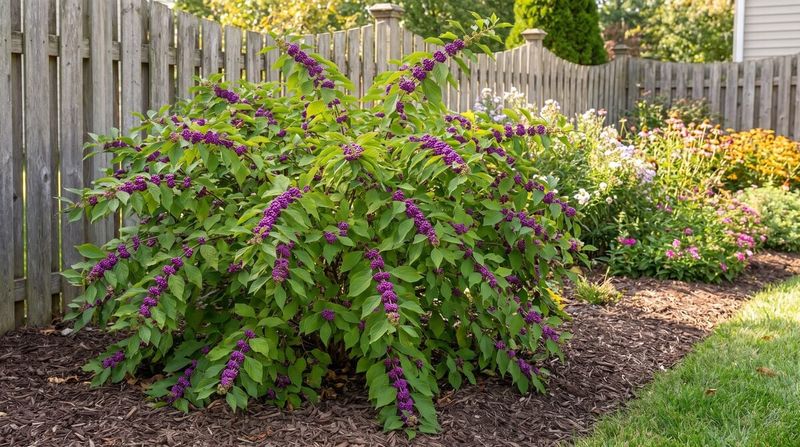
Verify that you are buying Callicarpa americana, the true southeastern native, before planting. Place it on the yard side of a maintained wooded-edge transition, give each plant enough room to spread without crowding neighbors, and make sure it gets adequate sun.
NC State Extension’s profile covers the basics of site selection and pruning timing, and following those recommendations keeps the shrub healthy and the surrounding edge open.
Pair the planting with the habitat steps that tick-management guidance actually supports: clear leaf litter, maintain the chip or gravel strip, keep grass short, and use EPA-registered personal repellents and tick checks every time you or your family comes in from the yard. The honest takeaway is that beautyberry offers genuine native beauty, real wildlife value, and intriguing but limited laboratory evidence involving isolated leaf compounds, while its real-world effect on ticks in a residential landscape remains unproven.
A yard with beautyberry, a maintained edge, and consistent personal protection is a smarter setup than a yard with any one of those things alone, and that combination is worth planting for.