
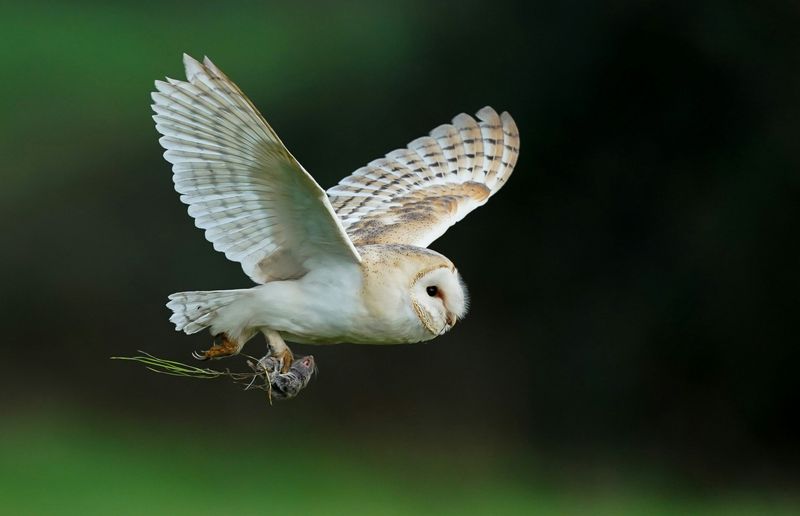
Barn owls are one of California’s most effective natural hunters of small rodents, and a well-placed nest box can give a local family a place to raise young right on your property. That said, no box comes with a guarantee: owls may not move in, and even when they do, they hunt across a wide area rather than patrolling a single yard.
The real value of a nest box is supporting wildlife while adding one meaningful layer to a broader rodent management plan.
A nest box may help, but it cannot clear a yard
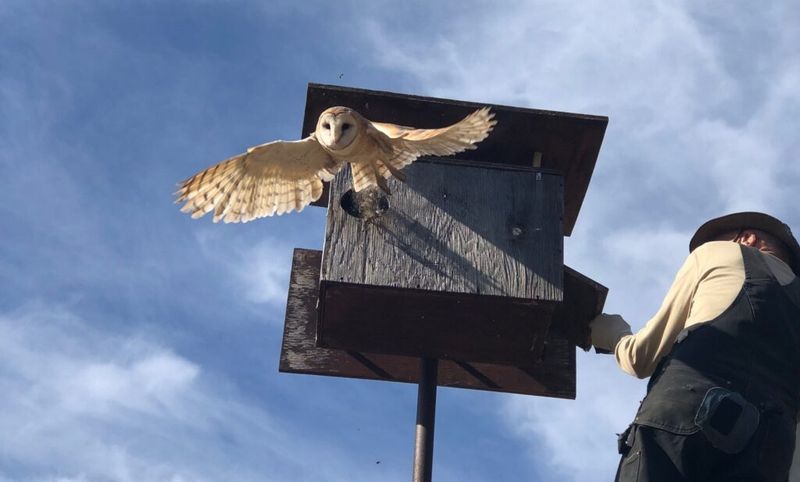
Barn owl nest boxes have a real track record in California agriculture, and the evidence is worth understanding before you set expectations. A Sacramento-area vineyard study found that gopher activity declined relative to a control vineyard after boxes were installed, and pellet analysis confirmed that Botta’s pocket gophers and California voles were primary prey.
Prey consumption research from a large California barn owl aggregation reinforces that occupied boxes can be associated with meaningful rodent predation in agricultural settings.
The numbers from Napa Valley are often cited, and they deserve careful framing. Researchers estimated an average of 616 rodents delivered to each nest box during the breeding period, and when adult consumption outside the nesting season was modeled, the estimated annual total reached roughly 3,466 rodents per family, with a range of 1,821 to 7,563.
Those figures come from vineyard conditions, not from a residential backyard, and they represent modeled estimates rather than direct counts of a local population decline.
Rodents consumed by owls are not the same as rodents subtracted from your yard. Owls hunt across a broad surrounding area that can include vineyards, riparian corridors, and grasslands, so prey deliveries to a box on your property may reflect hunting that happened well beyond your fence line.
The Napa Valley nest box study makes clear that this is agricultural-scale evidence, not a residential-property scorecard.
For active gopher damage specifically, UC IPM guidance on pocket gophers states directly that installing owl boxes is unlikely to reduce gopher numbers enough to prevent landscape damage. A box is best understood as a habitat-support measure that complements direct management rather than replacing it.
Assess the surrounding habitat before you install one
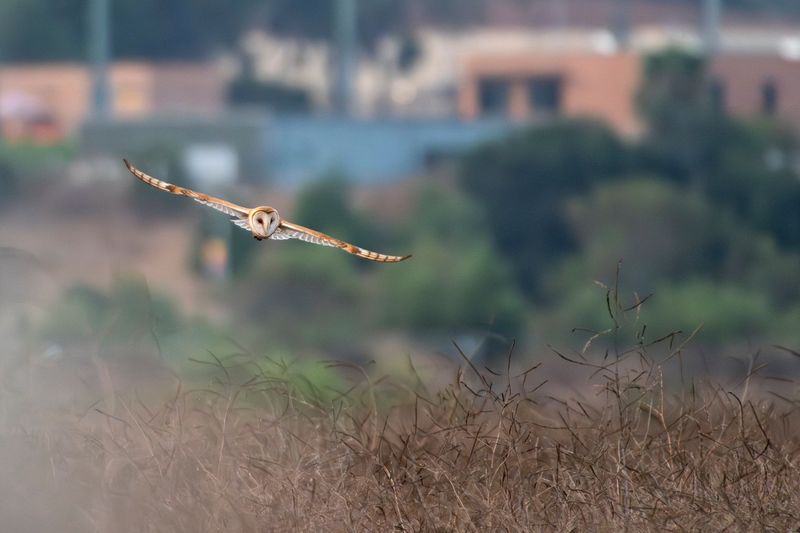
Before purchasing a box, take a realistic look at what surrounds your property. Barn owls are aerial hunters that need open space to quarter low over the ground and drop on prey.
Research on barn owl habitat selection in California wine country found that owls consistently chose uncultivated areas such as grassland margins and riparian edges for hunting rather than densely planted vineyard rows, which tells you something important: open, low-structure ground cover is where these birds do their work.
Properties that border open fields, orchards, large parks, or undeveloped hillsides are better candidates for occupancy than small, fenced, heavily landscaped suburban yards surrounded by buildings. That does not mean a yard with some open lawn or garden beds cannot contribute, but it does mean the box serves the broader neighborhood barn owl population more than it assigns a dedicated family to your specific lot.
UC ANR guidance on barn owl nest boxes notes that boxes may go unused for extended periods and that occupancy depends on habitat quality, prey availability, competition with other cavity nesters, and disturbance levels.
Heat is another factor that California homeowners in inland valleys and the Central Valley should weigh seriously. Nest boxes that face west or south and receive full afternoon sun can become dangerously hot in summer, which can kill eggs or chicks.
Disturbance from nearby roads, heavy foot traffic, or frequent yard activity also reduces the chance that a pair will settle in and stay.
Think of the box as an invitation extended to the broader local population rather than a reservation for one family. If your property sits within or adjacent to suitable open habitat with a healthy prey base, the invitation has a reasonable chance of being accepted.
If your yard is a small, enclosed patch with little connection to open ground, the box may still provide a nesting opportunity for owls that range through the area, but lower your expectations accordingly.
Install the box high, cool, open, and away from the house
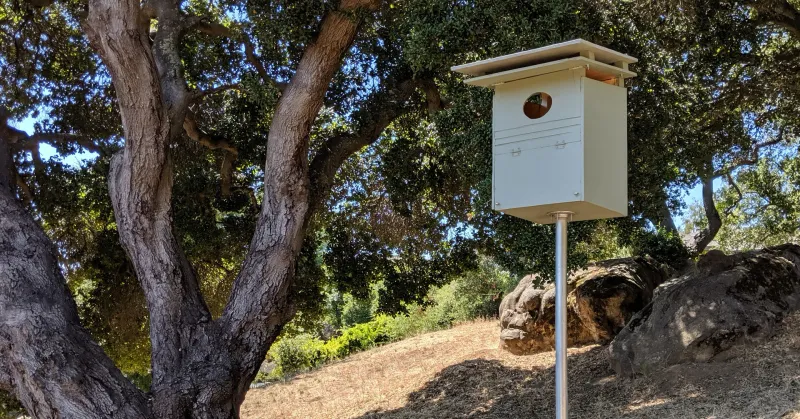
Placement decisions matter more than the box design itself, and getting them right from the start saves you from remounting hardware later. Cornell NestWatch guidance for barn owls recommends mounting boxes roughly 8 to 25 feet above the ground and spacing multiple boxes about 100 feet apart to reduce territorial conflict between pairs.
Pole mounting is generally preferred over tree mounting because it allows you to add a predator baffle below the box and keeps the entrance clear of branches that raccoons or cats could use to reach the opening.
In California’s hotter inland regions, the entrance hole should face north or east to limit direct afternoon sun exposure inside the box. California Department of Pesticide Regulation guidance on owl boxes for biological pest management recommends placing boxes in open areas away from major roads, orienting them to avoid afternoon heat, and attaching a shade board or awning if the site has no natural shade during peak summer hours.
A metal baffle on the pole below the box is a straightforward way to block climbing predators.
Keep the box away from the house itself. Barn owl nestlings are loud, especially in the weeks before fledging, and a box mounted on a wall or eave near a bedroom window will remind you of that fact every night.
California guidance consistently recommends siting boxes away from homes and busy roads, both to reduce disturbance to the owls and to reduce the noise impact on residents.
Once you have chosen a pole location in an open part of the yard or along a property edge, orient the entrance toward the open hunting area rather than toward a fence, wall, or dense planting. The owl needs a clear, unobstructed flight path in and out.
Drainage holes in the floor of the box prevent moisture buildup, and a rough interior surface below the entrance hole gives fledglings something to grip. Check that the box is level or tilted very slightly forward so rain cannot pool inside.
Barn owl diets show potential, not a property-by-property scorecard
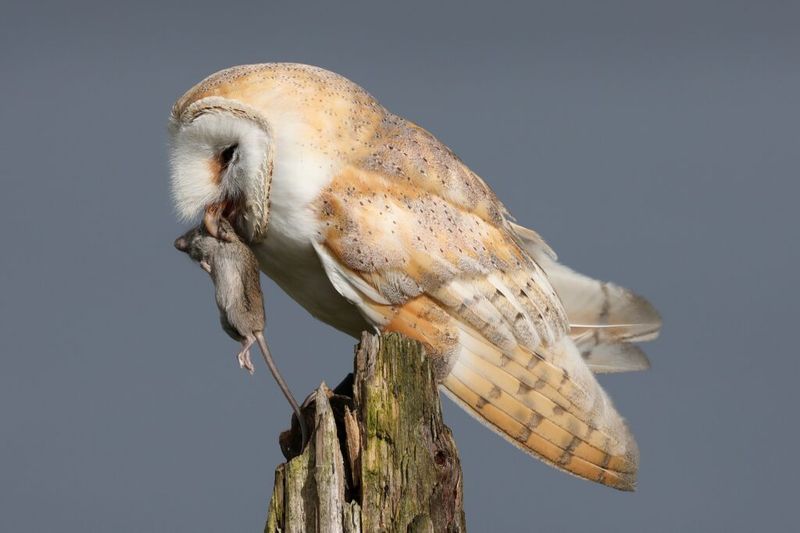
California barn owls eat what is available, and what is available changes with habitat. A Central Valley study on barn owl diet and agricultural land use found that more than 99.5 percent of identified prey items were agricultural pests, with mice making up a large share of prey by number and pocket gophers contributing significant biomass, particularly in landscapes with more perennial crops.
Voles, Norway rats, and black rats also appeared in California diet studies, but no single species should be treated as the default primary prey across every yard and neighborhood.
The proportion of gophers versus mice versus rats in a local owl’s diet depends heavily on what the surrounding landscape offers. A family hunting over open grassland edges will catch a different mix than one working the margins of a suburban neighborhood with dense plantings and abundant house mice.
Assuming that a box will specifically target the rats undermining your compost bin or the gophers tunneling through your raised bed is a reasonable hope but not a reliable prediction.
The Napa Valley figures that often appear in barn owl promotion deserve context. Researchers estimated an average of 616 rodents delivered to nest boxes during the breeding period, and a modeled annual estimate reached roughly 3,466 rodents per family, with a wide range of 1,821 to 7,563 depending on assumptions about adult consumption outside the nesting season.
Those are estimates built from prey delivery observations and consumption models under vineyard conditions, not a direct count of how many rodents disappeared from any particular property.
Prey deliveries recorded at a box also cannot tell you where each animal was caught. Barn owl habitat-selection research in Napa Valley found that owls hunted across vineyard, riparian, and grassland areas extending well beyond any single property.
A homeowner watching prey arrive at a box has no way to know how many of those rodents came from the immediate yard versus a field or drainage corridor a quarter mile away.
Avoid rodenticides where owls may feed
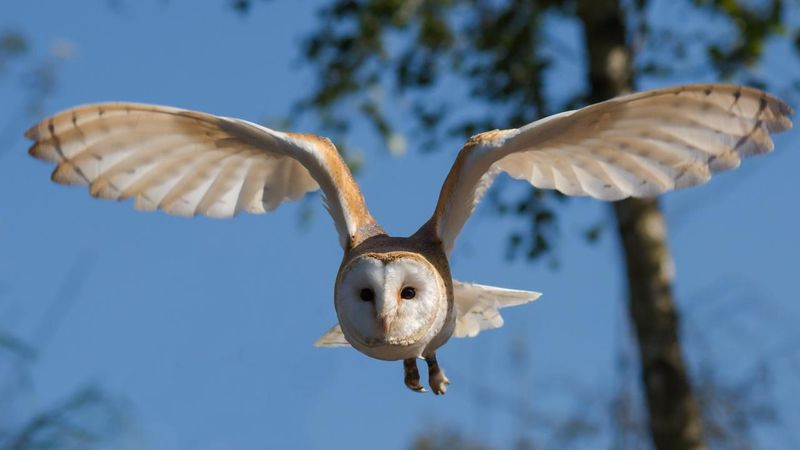
Rodenticides can reach barn owls and other predators through a straightforward chain: a poisoned rodent moves slowly and becomes easy prey, an owl catches and eats it, and the toxicant accumulates in the owl’s body. UC IPM guidance on rats warns that second-generation anticoagulant rodenticides in particular pose documented risks to raptors, owls, and scavengers.
California wildlife authorities have recorded rodenticide-related injury and impaired hunting ability in wild owls, and the concern is not hypothetical in neighborhoods where rodenticides are commonly used.
Avoiding rodenticides in areas where owls may hunt or collect prey is the clearest way to protect a family that has taken up residence in your box. That does not mean every rodent problem can be solved without any chemical intervention, but it does mean that the choice of control method matters.
Sanitation, exclusion, and structural repairs address the conditions that attract rats in the first place and carry no secondary poisoning risk.
When active infestations require more direct action, snap traps and other mechanical devices are practical options for rats and do not leave a poisoned carcass in the environment. Any pesticide that is used must be applied strictly according to the current label and in a way that minimizes exposure to children, pets, and wildlife.
Placing bait inside tamper-resistant stations reduces but does not eliminate the risk of non-target exposure, and second-generation anticoagulants remain a particular concern near any area where owls or raptors are known to hunt.
Use trapping and exclusion for damage the box cannot control
Pocket gophers present a specific challenge that barn owls are unlikely to solve on their own. Gophers spend the majority of their time underground, surfacing briefly and unpredictably, which limits how effectively any aerial predator can reduce their numbers.
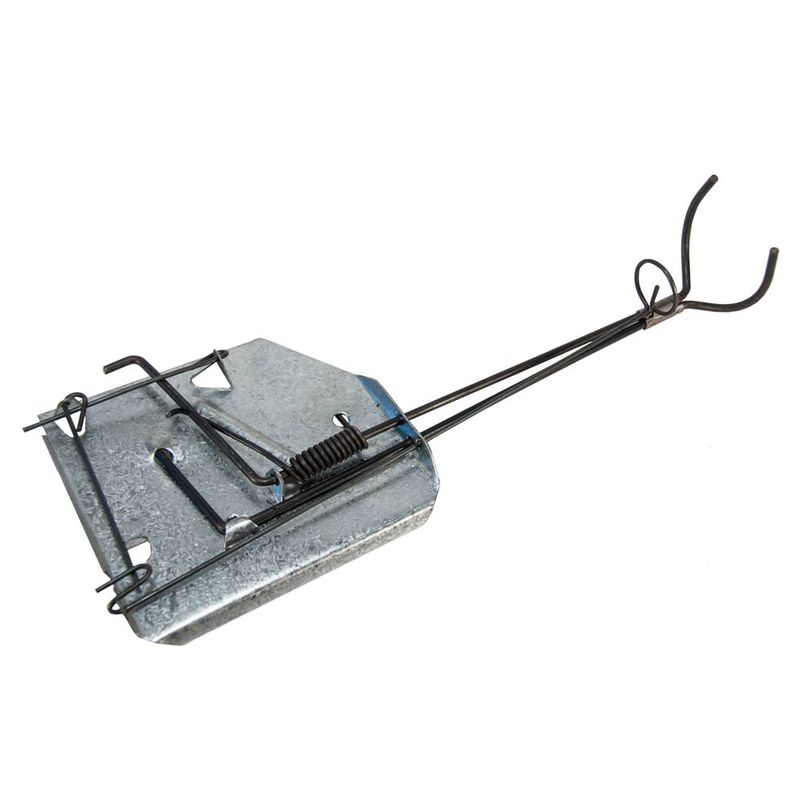
UC IPM’s pocket gopher management guidance states plainly that owl boxes alone are unlikely to reduce gopher numbers enough to prevent damage to plants and irrigation lines, and recommends trapping active burrows as a practical home-landscape method. Pincher-style traps such as the Macabee, placed in the main tunnel and covered to block light, remain one of the most reliable approaches for active infestations.
For protecting specific plantings, underground wire baskets made from hardware cloth or gopher wire are an effective physical barrier. Lining the bottom and sides of a planting hole before setting a tree, shrub, or perennial keeps roots out of reach without harming any wildlife.
Raised beds with hardware cloth floors provide similar protection for vegetables and herbs. These are permanent solutions that work regardless of whether owls are present.
Rat management calls for a different set of tactics because the entry points and attractants are different. UC IPM’s rat guidance recommends securing garbage, compost, pet food, and fallen fruit as the first step, since food availability is what draws rats to a property in the first place.
Blocking roof access by trimming tree branches away from the roofline and sealing gaps around pipes, vents, and eaves prevents roof rats from establishing inside structures. Snap traps placed along walls and fence lines, inside protective enclosures, are effective and do not create secondary poisoning risks.
UC ANR’s integrated pest management overview for owls frames continued trapping and exclusion not as a sign that the owl program failed but as the appropriate companion to habitat support. A nest box and a set of gopher traps are not competing strategies; they address the same problem at different scales and through different mechanisms.
Maintain the box only when it is vacant
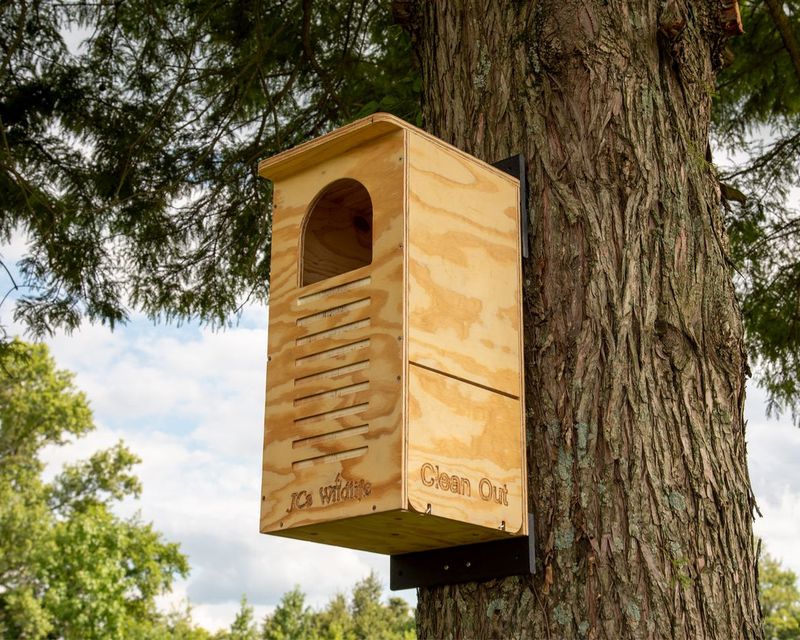
Barn owl boxes accumulate pellets, feathers, fecal material, insect debris, and the remains of prey over a nesting season, and that buildup needs to be cleared before the next pair considers moving in. UC Davis guidance on nest box maintenance identifies fall as the best time to clean a box, after the breeding season has ended and before any early-season scouting by owls begins.
Annual cleaning is recommended, and the work should only happen when you have confirmed the box is vacant, not simply when it looks like it needs attention.
Gloves and a respirator or N95 mask are necessary protective gear, not optional precautions. Owl pellets and droppings can harbor Salmonella and other pathogens, and dry material in an enclosed box can become airborne when disturbed.
Remove debris into a sealed bag, wipe the interior with a dilute bleach solution if needed, allow it to dry completely, and replace the access panel before the box goes back up.
Opening a box that may be occupied is a different matter entirely. Barn owls and their nests are protected under California Fish and Game Code, and disturbance during the nesting period can cause adults to abandon eggs or chicks.
Do not open the box during spring or summer without first confirming vacancy by observing from a distance over several days. California Department of Fish and Wildlife guidance on drones warns that flying unmanned aircraft near nesting birds constitutes disturbance and can trigger nest abandonment, so checking on the box remotely with a drone is not an acceptable substitute for patient ground-level observation.
If a chick falls from the box or appears injured, resist the urge to handle it extensively or attempt home rehabilitation. California’s native wildlife rehabilitation directory connects residents with permitted rehabilitators who have the training and legal authorization to care for wild raptors.
A healthy fledgling found on the ground near the box can sometimes be returned to the nest entrance if it can be done safely, but any bird showing signs of injury or distress should go to a licensed rehabilitator promptly. UC ANR’s owl IPM overview also notes that homeowners should consider the possibility of larger owls in the area and account for pet safety, since great horned owls in particular can pose a risk to small animals near an active box site.
Treat the box as habitat support, not a pest-control appliance
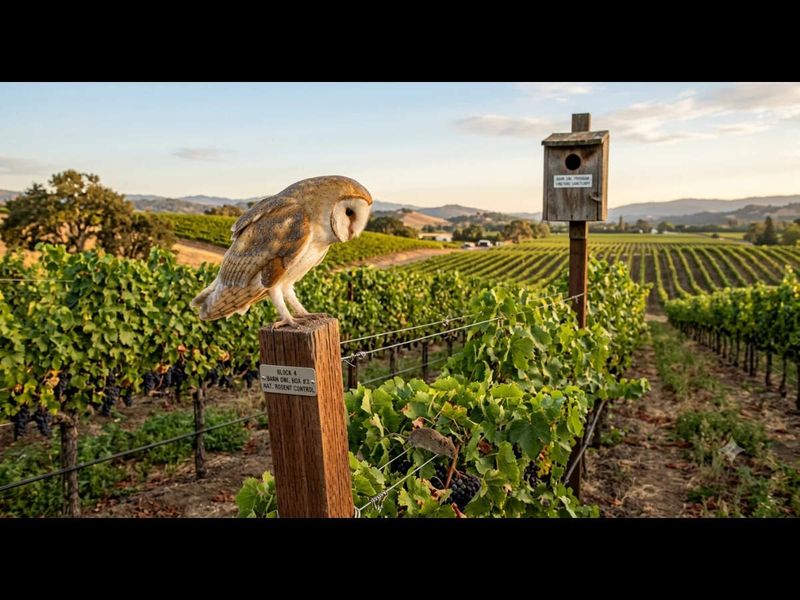
A well-sited barn owl box can do something genuinely useful: give a local family a secure place to raise young while the surrounding landscape supplies the prey and open flight paths the birds need. Vineyard research from Napa Valley shows that when those conditions exist, a resident barn owl family may remove substantial numbers of small mammals over a breeding season and beyond.
That is a meaningful contribution to rodent management when the habitat supports it.
What a box cannot do is guarantee occupancy, assign a family to hunt one specific yard, or replace the direct controls that active infestations require. UC IPM’s gopher guidance and UC IPM’s rat guidance both point toward sanitation, exclusion, structural repairs, and targeted trapping as the tools that reliably stop active damage.
The box works alongside those measures, not instead of them.
Put the full approach together and it looks like this: mount a box in open habitat away from the house, eliminate food and shelter that attract rats, protect vulnerable plantings with underground mesh, trap active gopher burrows, and keep rodenticides out of areas where owls may hunt. A barn owl family that settles in nearby will do its share of the work quietly, at night, on its own schedule.
That is worth supporting.