
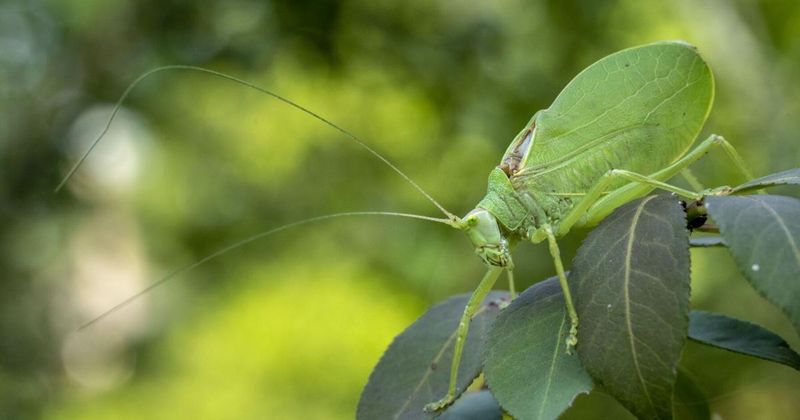
Every August and September, North Carolina yards fill up with a loud, raspy chorus that seems to come from everywhere at once. Many homeowners assume something has changed in their yard to attract so many insects, or that a swarm is moving in.
The truth is more interesting and a lot less alarming. Understanding what is actually behind that nighttime racket can help you decide whether to enjoy it, keep an eye on your plants, or take a few simple steps.
When “taking over” may just mean a seasonal chorus
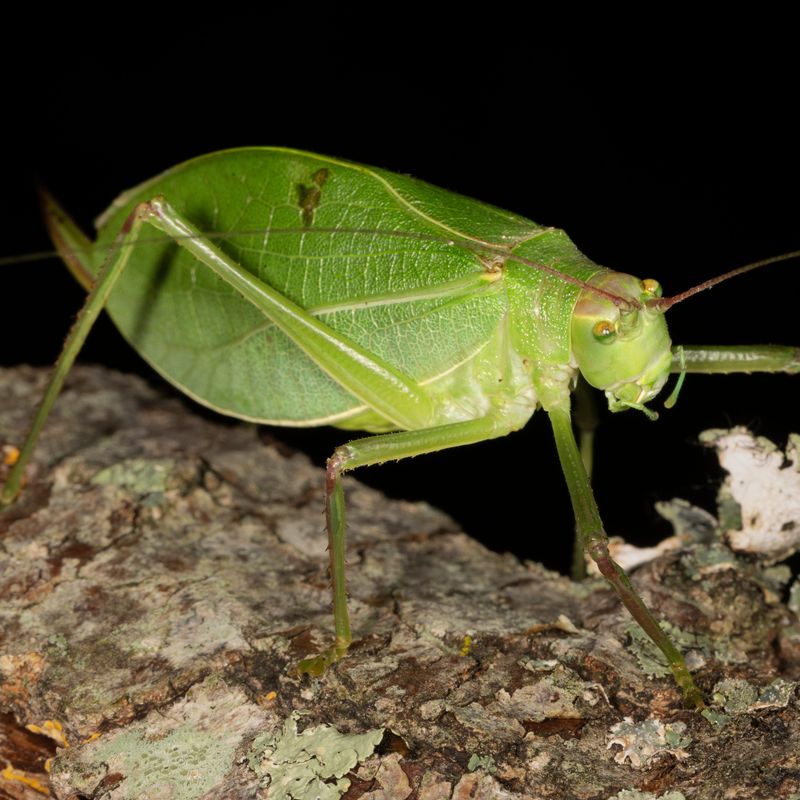
Hearing a wall of sound from your trees every night in late summer can feel like your yard has been claimed by something wild. Before drawing any conclusions, though, consider that what you are noticing may simply be the normal late-season activity of adult katydids doing what adult katydids do: calling from the canopy.
Once you have confirmed the insect is actually a katydid, the chorus makes more sense as a biological signal than as a sign of a yard problem.
In most katydid species, males produce sound by rubbing specialized structures on their forewings together, a process called stridulation. Mississippi State University Extension’s profile of the common true katydid explains that males make the familiar calls primarily to attract females.
Calls can also serve territorial, aggressive, or defensive functions in some species, so the sound alone cannot tell you exactly what is happening or which species is responsible. A nighttime chorus is not a reliable signal that your yard’s soil, watering schedule, fertilizer use, or plant health has changed in any particular direction.
Late summer is simply a normal window for noticeable adult activity. University of Massachusetts Extension landscape guidance notes that adult katydid activity typically peaks from roughly July through September, with most species overwintering as eggs.
Exact timing shifts with species and elevation: a mountain-region yard in western North Carolina may experience the peak slightly differently than a Piedmont suburb or a Coastal Plain neighborhood near the coast. What all those homeowners share is that the adults they are hearing have simply reached maturity and begun calling, right on schedule.
Why a louder yard may not contain more katydids
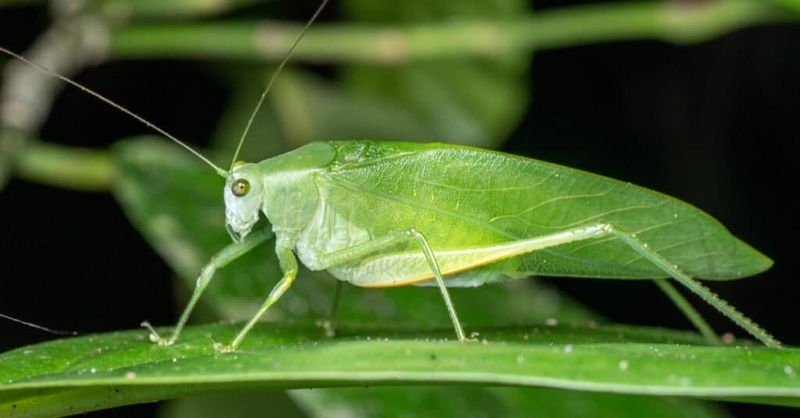
Perceived abundance and actual population size are two very different things, and a suddenly louder yard is not solid evidence that katydid numbers have spiked. Sound carries surprisingly well from tree canopies well beyond your property line.
A single large oak or sweetgum standing in a neighbor’s yard can produce a chorus that sounds like it is coming from directly overhead.
North Carolina’s Orthoptera project specifically notes that observed abundance varies with weather, moon phase, life-cycle timing, habitat, and observation method, meaning what you detect on any given night can change without the population itself changing at all. A favorable wind direction, a quiet evening with little traffic noise, or a night when you happen to stay outside longer than usual can all make the chorus feel dramatically louder or more crowded than it did a week ago.
Research adds a useful caution here. A peer-reviewed study on acoustic activity and environmental variables in orthopteran assemblages found that precipitation relationships were inconsistent among katydid species, and that wind, temperature, moonlight, and background noise can all affect calling observations.
Porch and landscape lighting may also draw some individuals closer to your house, making them more visible without increasing the overall population. UC IPM’s katydid guidance points out that many katydids rest in dense vegetation during the day and become more active after dark, which concentrates your encounters with them into the very hours when you are most likely to be sitting outside.
One late-summer chorus, no matter how loud, cannot establish that your yard has experienced a population explosion or that a specific yard condition caused one.
Identify the insect before interpreting the sound
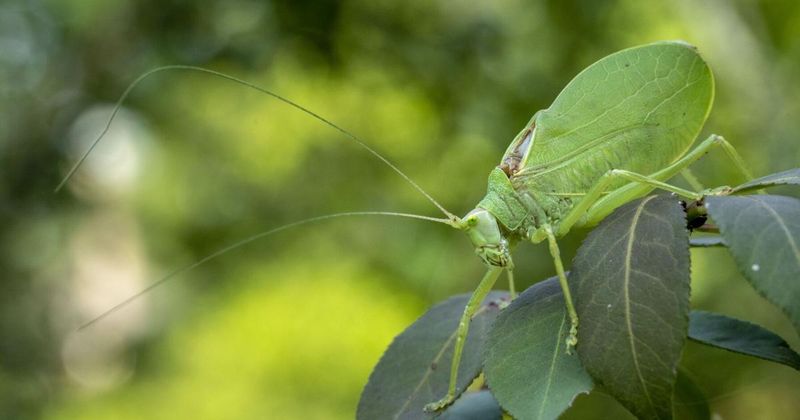
Not every green, long-antennaed insect you find in a North Carolina yard is the common true katydid, and not every loud nighttime sound comes from a katydid at all. Crickets and katydids can share the same habitat and produce sounds that overlap in timing and general character.
Relying on sound alone to identify the insect leaves a lot of room for error.
North Carolina’s Orthoptera resource documents multiple katydid species in the state, each with its own habitat preferences, seasonal timing, diet, and song. The common true katydid, Pterophylla camellifolia, is highly arboreal, meaning it spends most of its time in the canopy of trees rather than on low shrubs or garden beds.
State records for the species include choruses from remaining native trees inside developed neighborhoods across the Piedmont, Coastal Plain, and mountain regions. Because it lives so high up, you may hear it easily for weeks before you ever get a clear look at one.
To get a reliable identification, combine several approaches. Look at the insect’s shape: katydids have very long antennae, typically longer than their body, and broad, leaf-shaped wings that help them blend into foliage.
Note where you find it, whether in a tall tree, a shrub, a garden bed, or on your porch screen. Photograph it if you can, and compare the image to verified species accounts.
NC State’s insect identification resources can help you narrow down what you are dealing with. Mississippi State Extension’s katydid profile also notes that song can be a useful supplemental clue, but sound-only identification should be treated as tentative rather than definitive.
Most feeding stays minor, but inspect vulnerable fruit
Katydids are primarily plant feeders, and a yard full of them does raise a fair question about what they are eating. For most ornamental landscape plants, the answer is: not enough to matter.
UC IPM’s katydid page notes that many katydids take only a small amount of foliage before moving elsewhere, making leaf damage on established trees and shrubs generally unimportant to plant health. You may find ragged leaf edges or small holes, but the plants usually outpace the feeding without any help from you.
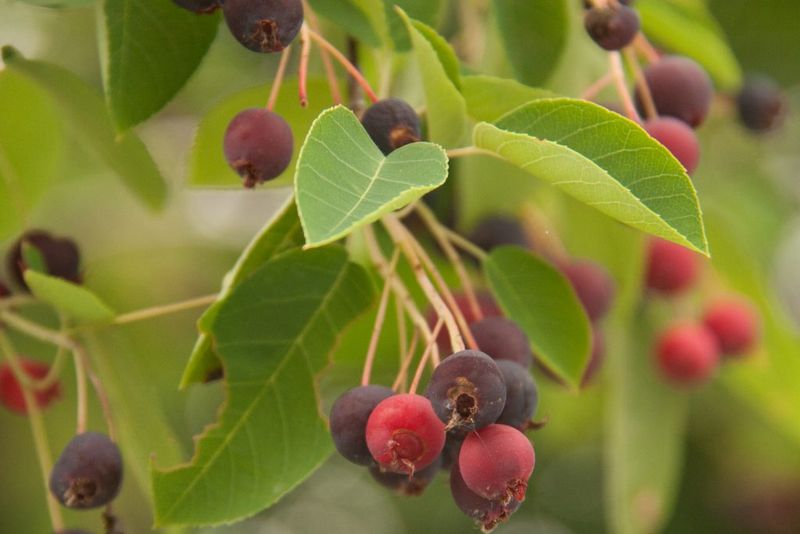
Young fruit is a different story for certain species. Some bush katydids and related species have been documented taking shallow bites from the surface of developing fruit, leaving scars that can enlarge as the fruit grows even when the interior remains unaffected.
University of Florida IFAS Extension’s guide to the broadwinged katydid documents surface scarring on citrus and related crops in Florida, where the species has been observed moving from fruit to fruit. Similar reports exist for stone fruit, blueberries, and pears in specific regions and for specific katydid species.
These are regional and species-specific examples, not a generalized warning that every North Carolina homeowner with a peach tree is at risk.
Unusual outbreaks can produce more serious consequences. Texas A&M Forest Service documentation describes a past large defoliation event involving the truncated true katydid, while also noting that such outbreaks are typically short-lived.
North Carolina’s Orthoptera records reflect species-level differences in diet and abundance that make a blanket prediction about local risk unreliable. If you grow blueberries, peaches, pears, or other fruit in your yard, inspect the actual developing fruit for fresh damage rather than assuming a threat based on the sound of a chorus alone.
Let confirmed plant damage set the action threshold
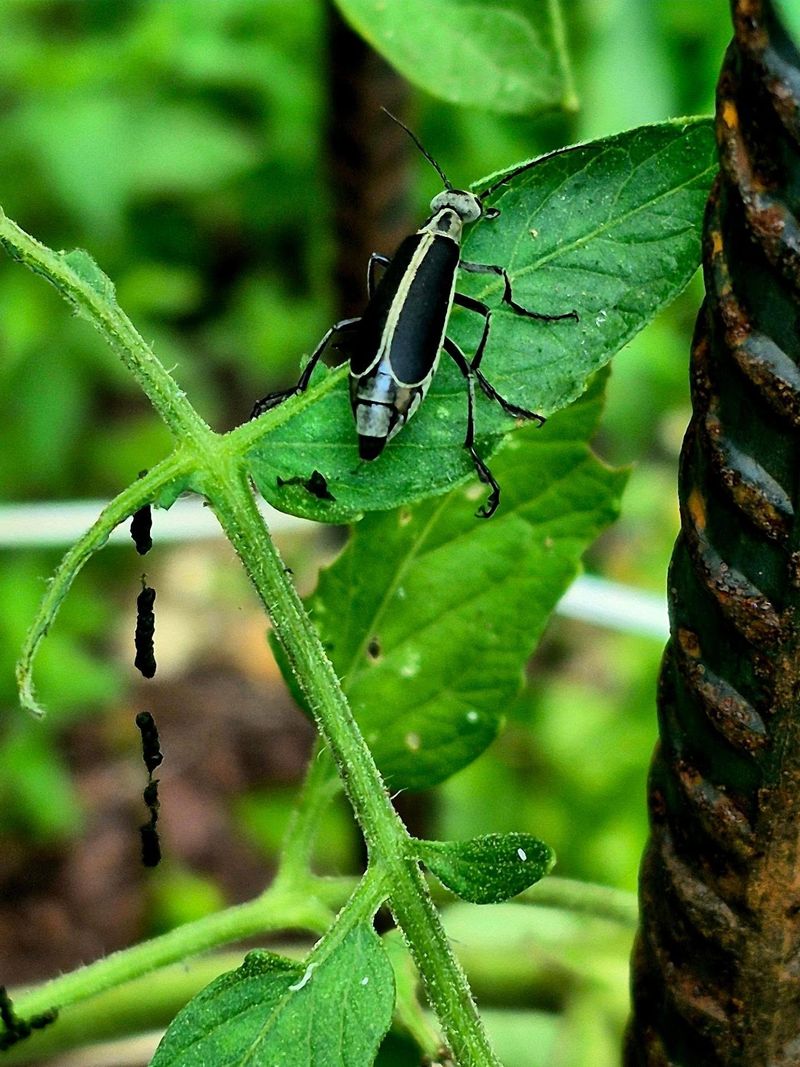
Hearing katydids every night does not automatically mean your plants need protection. The decision to act should rest on what you find when you actually look at your plants, not on how loud the chorus sounds from the porch.
A practical inspection routine takes only a few minutes and gives you real information instead of guesswork.
Check plants after dark or in the early morning, when fresh feeding is easier to spot and resting insects are more likely to be found on leaf surfaces. Look at leaf edges and undersides first, since katydids tend to chew from the margins inward.
Then move to nearby shrubs, young fruit, and any new growth that looks tender or vulnerable. UC IPM guidance notes that katydids are easier to find and capture when they are resting rather than actively moving, making early-morning checks especially useful for anyone who wants to remove insects by hand.
The key distinction is between isolated chewing and repeated fresh injury that affects appearance, plant vigor, or your expected harvest. A few notched leaves on a mature shrub do not meet that threshold.
A pattern of fresh scars appearing on multiple young fruits over several consecutive nights is a different situation worth addressing. NC State Extension’s insect chapter and its integrated pest management handbook both emphasize the same core principle: confirm the pest, assess the actual damage, determine whether the damage level warrants a response, and monitor results after any action.
Treating a yard based on insect presence or noise alone skips every step of that process and often causes more disruption than the insects themselves would have.
Use low-impact steps before considering chemicals
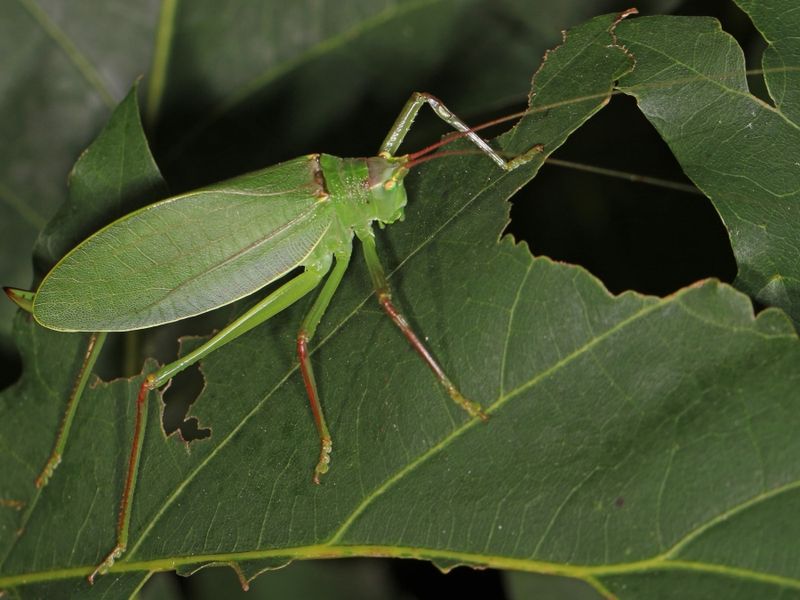
When you have confirmed that katydids are causing repeated damage to a specific plant and the injury is affecting appearance, vigor, or harvest, the most proportionate first step is also the simplest one: pick them off. Katydids are large insects, easy to spot once you know where to look, and straightforward to remove or relocate by hand.
UC IPM recommends checking for resting individuals in the early morning, when they are less active and easier to catch. Dropping them into a container and releasing them well away from your fruit trees or vegetable beds is a reasonable solution for isolated problems.
If insects are congregating on or near your porch rather than on your plants, reducing unnecessary exterior lighting may help. Bright outdoor lights can draw katydids and other insects closer to the house.
Switching to motion-activated or amber-toned lights, or simply turning off fixtures that are not needed, can reduce the congregation without harming anything. Lighting is not a universal control method and will not address insects already living in your yard’s canopy, but it is a low-effort adjustment worth trying when porch nuisance is the main complaint.
Katydids are part of the broader food web. Animal Diversity Web’s account of the common meadow katydid lists birds, bats, frogs, lizards, spiders, rodents, and predatory insects among potential predators.
That means katydids in your yard offer potential prey for wildlife that may already be visiting or nesting nearby. Broad-spectrum insecticide applications disrupt that web, killing predatory insects and other beneficials along with the target.
NC State Extension’s IPM handbook consistently recommends exhausting identification, monitoring, and low-impact physical controls before reaching for any spray.
Choose treatment only for documented, consequential injury
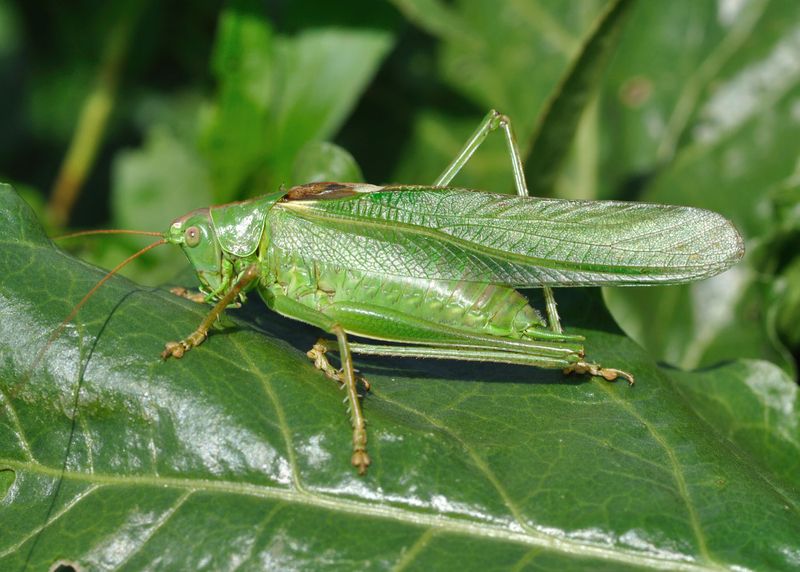
A simple decision rule covers most situations. If your plants show no meaningful damage, tolerate the chorus or enjoy it as a wildlife signal.
If chewing appears on vulnerable growth or fruit, monitor closely over several nights to confirm the insect and gauge whether the injury is progressing. Escalate only when the damage is confirmed, repeated, and consequential enough to affect the plant’s appearance, health, or your harvest.
Spraying because katydids are numerous or noisy is not a sound reason to apply any pesticide. Texas A&M Forest Service and other extension sources generally do not recommend insecticide treatment for ordinary landscape populations.
If fruit damage has been documented, is ongoing, and cannot be managed by hand removal, spinosad is one option that some IPM sources mention. UC IPM identifies spinosad only as a conditional choice for situations where fruit injury has previously been unacceptable, and warns that it is toxic to honey bees and some beneficial predators for several hours after application.
North Carolina Department of Agriculture pollinator guidance reinforces that homeowners must avoid applying any pesticide when pollinators are actively foraging. The current EPA-registered spinosad product label is the controlling document, and any application must follow it exactly.
Routine treatment is never justified by noise alone.
Most North Carolina homeowners who hear a full late-summer katydid chorus will never need to take any action at all. That nightly sound is a seasonal wildlife signal, a sign that the adult insects have matured and are doing what they evolved to do, not a verdict on what you did or did not do in your yard this year.