
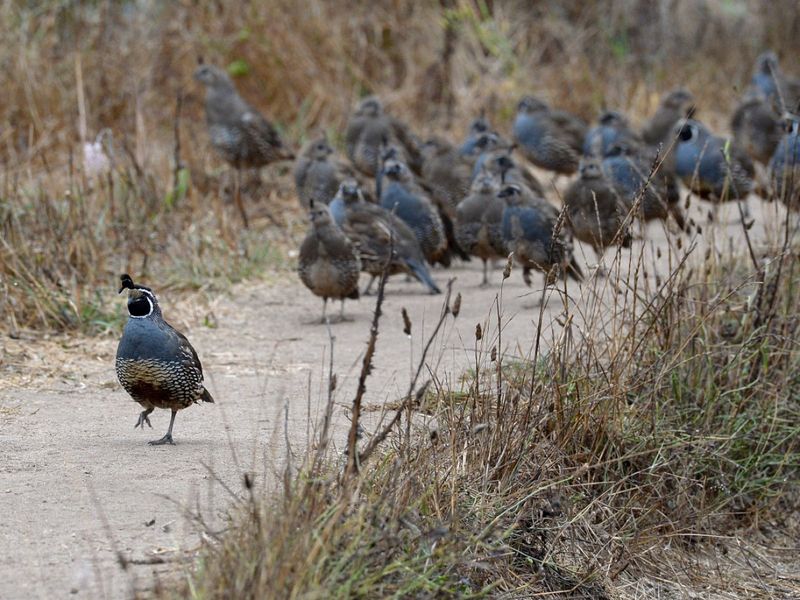
Spotting a small covey of California quail picking across your yard on a hot July morning is genuinely exciting, but it raises a question worth answering carefully: are those birds actually nesting there, or just passing through? The answer matters because the wrong assumption can lead to well-meaning actions that disturb the birds, create fire hazards, or invite disease problems.
Understanding what the visit actually signals, and what it does not, puts you in a much better position to help.
A summer covey is a habitat clue, not proof of nesting
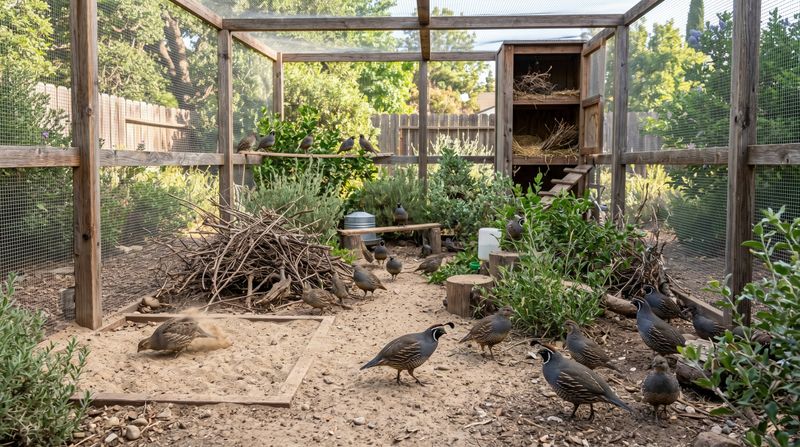
Seeing quail move through your yard on a warm summer afternoon does not mean they have set up a nest there. The birds may be feeding, drinking, sheltering from midday heat, roosting briefly, raising a recently hatched brood, or simply passing between habitat patches in the surrounding neighborhood.
Seasonal movement, rainfall-driven food availability, drought, predator pressure, and changes in nearby habitat can all push a covey toward a new area, so the visit reflects conditions across a broader landscape, not just what your property offers.
Before drawing any conclusions, confirm which species you are actually watching. California is home to three quail species: California quail, Gambel’s quail, and mountain quail.
CDFW’s Gambel’s quail life history account notes that Gambel’s quail are primarily birds of southeastern California’s desert regions, while California quail are more broadly distributed across the state. Mountain quail favor higher elevations and denser chaparral.
The habitat, plant, and water guidance that applies to California quail does not automatically transfer to the other two species, so a correct identification shapes every decision that follows.
California quail are resident birds, but they move within a local home range throughout the year. During breeding season, unmated birds may wander more widely, and a covey that appears suddenly in June may have been using an adjacent property for weeks before crossing into yours.
CDFW reporting on quail reproductive conditions confirms that population movement and abundance can shift year to year with rainfall and food availability, meaning a good regional year may explain a sudden increase just as readily as a recent landscaping change on your lot. Treat the sighting as an ecological clue worth investigating, not a verdict.
Quail use a patchwork of cover, food, and open ground
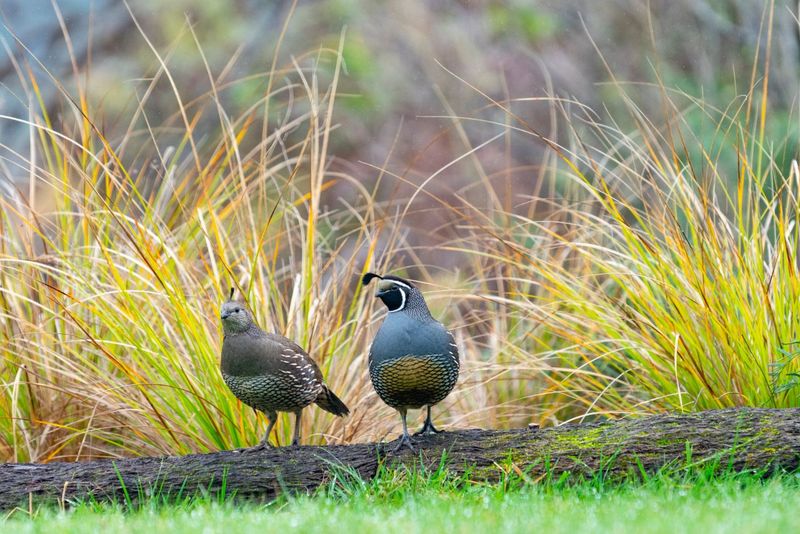
California quail are not looking for a manicured garden or a solid wall of dense brush. What draws them is a mix: brushy escape cover and roosting spots sitting close to open, low-vegetation feeding ground where seeds, green plant material, and insects are accessible.
CDFW’s guide to quail hunting in California describes their preferred habitat as brushy vegetation interspersed with more open weedy or grassy areas, a pattern that many suburban yards approximate without the homeowner realizing it.
Foraging happens almost entirely on the ground, and the birds rarely stray far from cover. A yard with a native shrub border along one fence, a stretch of shorter grass or open soil in the middle, and some seed-producing weeds or low plants at the edges can offer exactly the kind of transition zone quail exploit.
That edge between open and sheltered ground is more useful to them than either a closely clipped lawn or a dense thicket that blocks movement. Cornell Lab’s California quail life history confirms that the species regularly visits yards where ground-level food and dense shrub cover are both available within a short distance of each other.
Chicks depend heavily on arthropods, particularly insects, in their first weeks, so a yard that supports some insect life through reduced pesticide use and native plantings may be more attractive to a brood-rearing female than a heavily sprayed, monoculture lawn. Seeds, leaves, flowers, and fruits make up most of the adult diet across the year.
None of this means your yard is uniquely responsible for the covey’s presence. The birds may be using several properties, a nearby park, or a vacant lot as part of the same foraging loop, and your yard may simply be one convenient stop along a route they travel regularly.
Repeated ground-level use may point to nesting
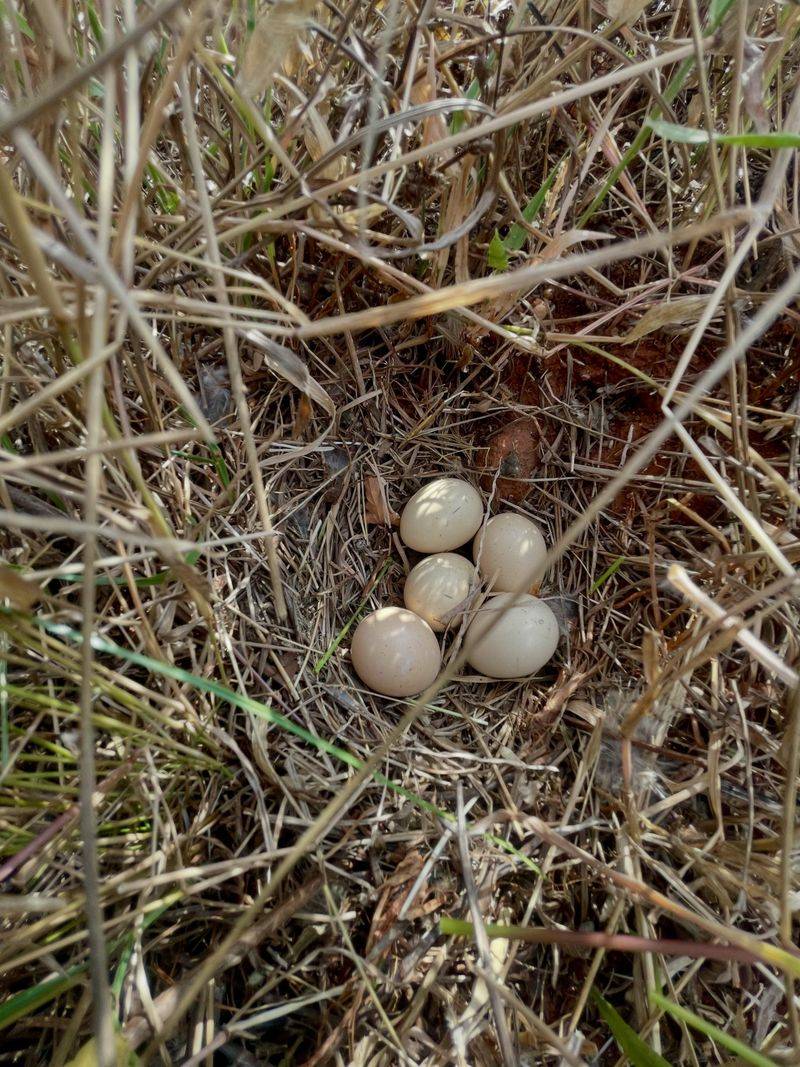
California quail nests are notoriously easy to miss. A female selects a shallow depression in the ground, lines it loosely with grasses or other plant material, and positions it beneath cover that breaks up her outline from above.
Common concealment sites include dense grass clumps, weed patches, the base of a shrub, a brush pile, a rock overhang, or the space beneath a low log. Cornell Lab’s life history account describes incubation lasting roughly 18 to 23 days, handled almost entirely by the female while the male stays nearby as a sentinel.
Nesting can occur from April through August, though peak activity falls in May and June. National Park Service documentation on California quail supports this broader window, meaning a summer sighting is well within the active nesting period rather than an unusual late event.
A covey appearing in July may represent birds that are nesting, actively raising a brood that hatched weeks earlier, or simply moving between feeding areas with no nest on your property at all.
Repeated, purposeful visits to a single concealed spot, especially by a lone female or a pair, are a reasonable behavioral clue that a nest may be nearby. That pattern is an observation-based inference, not a confirmed diagnosis.
CDFW’s guidance on nest disturbance and CDFW’s wildlife rehabilitation guidance both advise the public to avoid disturbing ground nests, and California law prohibits needless destruction of bird nests or eggs. Watch from inside or from a comfortable distance, skip the close-up photographs, do not handle any eggs you happen to find, and resist the urge to check the spot repeatedly.
Human activity near the site is a greater threat to nest success than a single quiet observation from across the yard.
Protect the suspected area with less interference
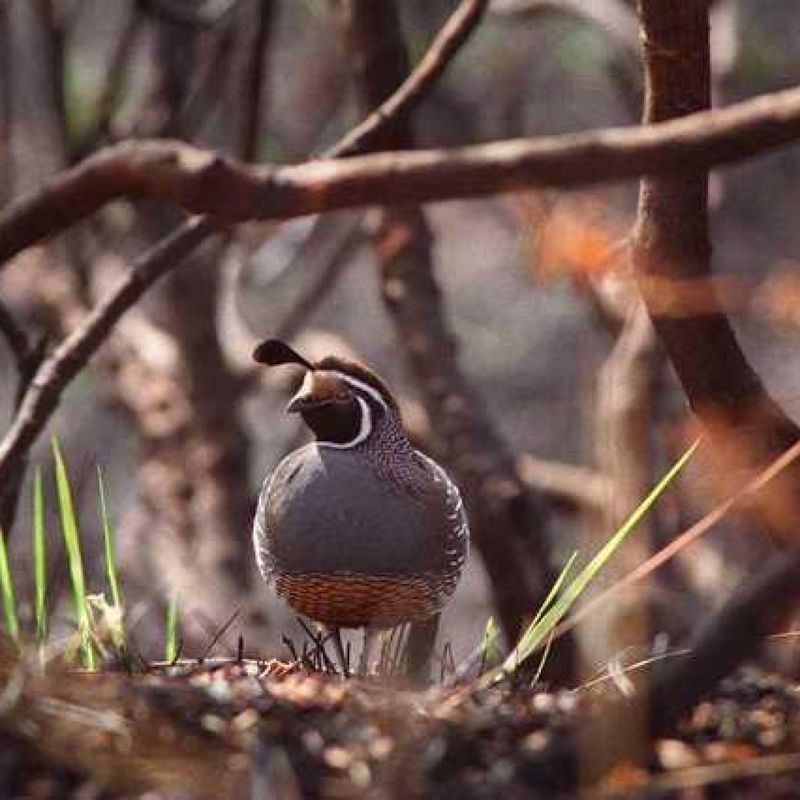
When quail repeatedly visit one brushy corner, grass clump, or shrub base, the most useful response is to reduce disturbance in that area for as long as the birds are using it. Avoid mowing, string-trimming, digging, or pruning there when you can reasonably defer the work.
Skip any pesticide applications directly over or around the spot, and hold off on heavy raking or soil disturbance nearby. CDFW’s California quail life history account identifies domestic cats and several ground predators among the primary threats to nests and young birds, so keeping pets away from the area is a straightforward and effective precaution.
Keep dogs on a leash or out of the yard section where the birds are active. Cats are a more persistent problem because they roam independently; if your cat or a neighbor’s cat frequents the yard, try to limit access to the area during the period when quail are using it most.
A brood of newly hatched chicks is particularly vulnerable in the first week or two, when the young cannot fly and the family group stays close to the ground.
Reducing disturbance in one area does not mean suspending all property maintenance. CDFW’s wildlife rehabilitation guidance advises observing from a distance and avoiding unnecessary interference, which is a practical standard rather than a demand to stop all yard work.
If maintenance in another part of the yard is necessary, proceed there normally. The goal is targeted restraint near the area the birds are actually using, not a property-wide work stoppage.
If you find a bird that appears healthy but grounded, leave it alone and watch from a distance before concluding it needs help. Attempting to handle or rescue a healthy quail causes stress and can separate a chick from its parent.
Preserve the useful pattern instead of forcing a return
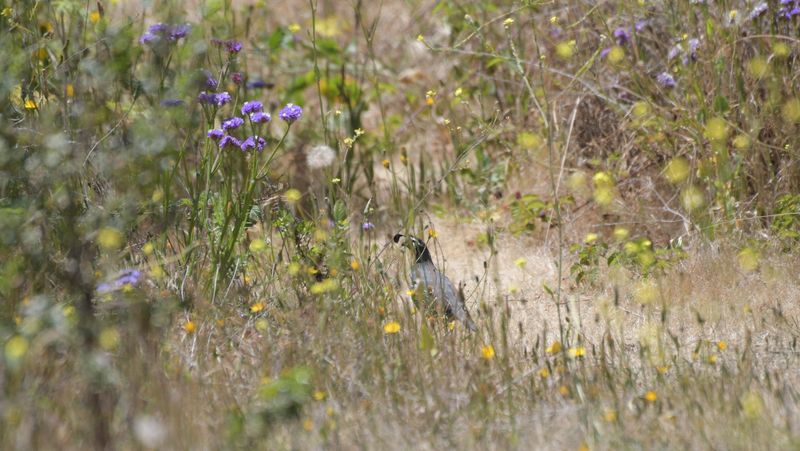
Once the immediate nesting or brood period passes, the more durable question is whether the yard can keep offering useful conditions without becoming a maintenance problem or a fire risk. The habitat pattern that may have attracted the quail, an open feeding area beside accessible brushy cover, is worth preserving as a general yard design rather than as a temporary accommodation.
CDFW’s quail hunting guide describes this as a brushy-edge mosaic, a structure that supports quail movement and feeding across a local home range.
On the plant side, CDFW’s guide to plants for attracting quail lists brittlebush, deerweed, redberry, Pacific blackberry, lupine, lotus, clover, filaree, and chickweed as examples associated with California quail food and cover. These are regional illustrations, not a universal planting prescription.
The most reliable approach is to observe which native plants quail use on or near your own property and reproduce that structure. A shrub that a local covey actively forages under or roosts in is more valuable than a species on a general list that happens not to grow well in your microclimate.
Water deserves a separate, honest assessment. CDFW’s California quail account states that the species requires free water daily during hot weather, though some coastal populations obtain moisture from dew and succulent vegetation.
A shallow, clean water source can matter during a dry California summer, but every yard does not need a pond or a dedicated birdbath to be useful. If you add one, keep it shallow enough for small birds to stand in safely, change the water regularly to prevent mosquito breeding, and place it where the birds have some nearby cover to retreat to quickly.
Avoid asserting that any particular placement is proven to be safer or more effective for quail specifically.
Feeding and spraying can undermine useful habitat
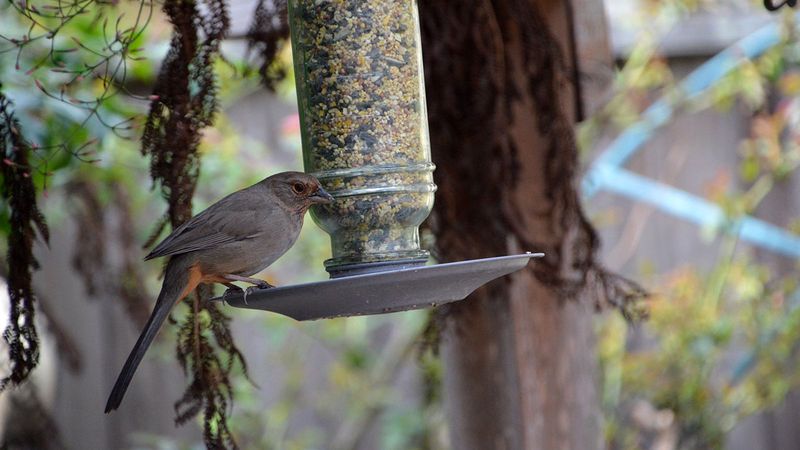
Scattering grain or birdseed to keep quail coming back sounds helpful, but supplemental feeding is not necessary when the yard already provides food through plants and natural seed sources. Cornell Lab’s California quail overview notes that the birds can be attracted by grain or seed scattered on the ground, but that concentrated feeding creates hygiene problems that work against the birds’ health.
Spilled seed rots, birdbaths accumulate waste, and a spot where many birds congregate regularly becomes a faster route for pathogens to move through a population.
The disease concern is real. CDC reporting on a Salmonella outbreak linked to wild songbirds documented illness in both birds and people connected to contaminated feeders and birdbaths, and CDC Emerging Infectious Diseases research on human salmonellosis linked to songbirds underscores that feeder hygiene protects people as well as wildlife.
CDC recommends cleaning feeders and birdbaths at least once a month, more often when visibly soiled. If you notice sick birds, birds that appear lethargic or puffed up, or any dead birds near a feeding or water station, remove the feeder and birdbath temporarily and clean them thoroughly before putting them back out.
Pesticide use around active quail habitat carries its own risks, particularly for chicks that depend on insects and spend all of their time on the ground. Broadcast applications over feeding or nesting areas can reduce the insect supply chicks need and expose adults to chemical residues through contact or ingested prey.
EPA guidance on reducing pesticide impacts on wildlife advises using pesticides only when necessary, treating only the specific affected area, following the label precisely, and taking deliberate steps to reduce exposure to birds and other non-target animals. Spot-treating a localized pest problem away from active quail areas is a more defensible approach than a routine perimeter spray that covers feeding and nesting ground.
Wildlife habitat still has to fit California fire safety
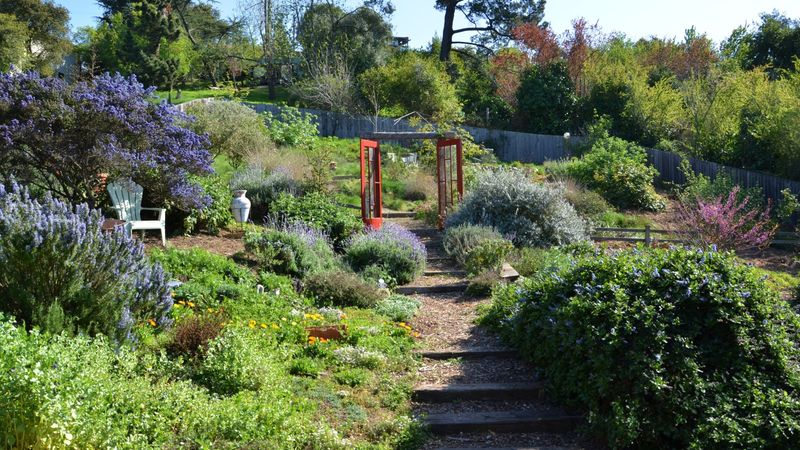
Protecting quail habitat and meeting California’s defensible-space requirements are not mutually exclusive, but fire safety takes priority, full stop. CAL FIRE’s defensible-space guidance requires homeowners to keep the first five feet around structures free of combustible vegetation and to maintain required spacing and fuel reduction in the zones extending farther from the home.
Brush piles, dense shrubs, and continuous ground cover that benefit quail can also carry fire toward a structure if they are placed or allowed to grow in the wrong location.
The practical resolution is placement and management rather than a choice between wildlife and fire safety. Brushy cover, native shrubs, and low ground-cover plantings can be positioned away from structures, in the middle or outer portions of the yard, where they meet both habitat and fire-management goals.
Vegetation in the defensible-space zone still needs to be spaced, trimmed, and maintained in compliance with local rules, even if quail are using it. A bird that roosts in a shrub two feet from a wooden fence is not a reason to leave that shrub untrimmed through fire season.
Local weed-abatement ordinances may also require mowing or clearing during summer months, which can conflict with the instinct to leave cover untouched. When mowing is required by law or by genuine fire-safety need, it takes precedence over habitat preference.
Inspect the area first, move slowly, and give any birds time to move before running equipment. Timing mowing for early morning, when quail are less likely to be sheltering in low vegetation, is a reasonable practical adjustment.
The goal is a yard that supports wildlife through thoughtful design, not one that substitutes habitat enthusiasm for the fire-preparedness that protects the home and the surrounding community.
Interpret the visit without trying to control it
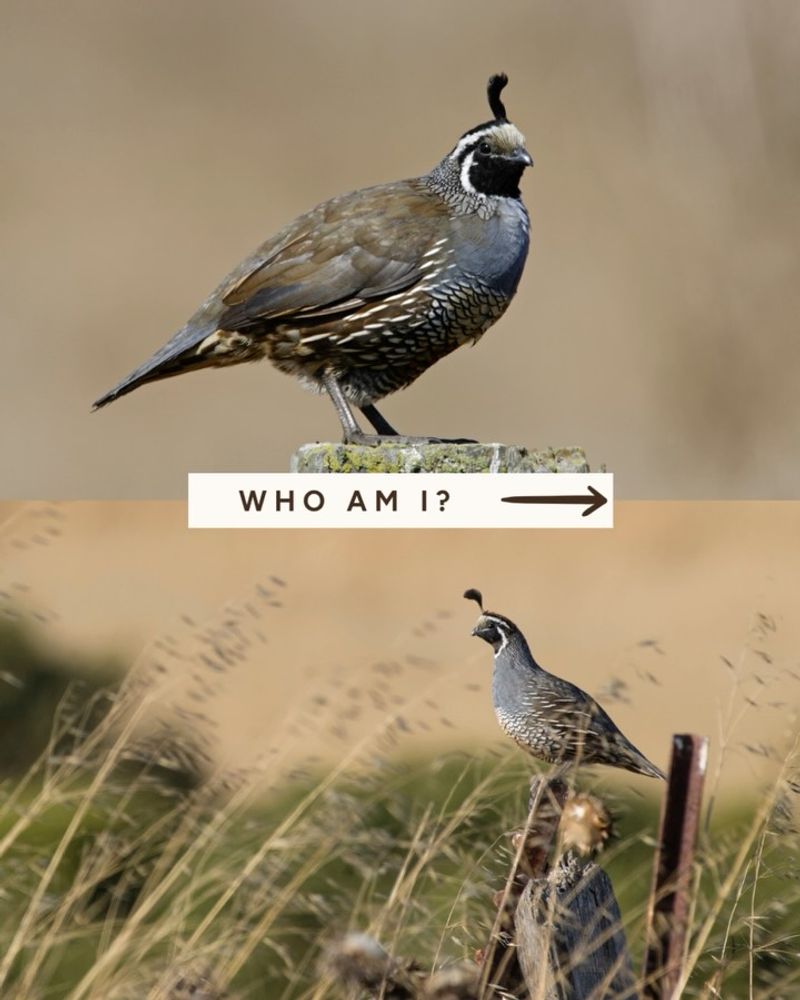
Pulling the practical threads together, the most effective response to a summer quail sighting starts with confirmation: make sure you are watching California quail and not one of the state’s other two species before applying any of this guidance. From there, treat the covey as evidence that the surrounding landscape, possibly including your yard, offers some combination of cover, food, and water that the birds find worth using.
That is a meaningful ecological signal, not a guarantee that the yard is ideal or that nesting has occurred.
Watch from a distance. Protect any area the birds repeatedly use by reducing disturbance there when feasible.
Maintain the cover-and-open-ground mosaic that makes the yard useful without letting vegetation accumulate against structures. CDFW’s quail habitat guidance and CAL FIRE’s defensible-space requirements can coexist when habitat improvements are placed and managed with both in mind.
Supply clean water during hot weather if it fits your situation, limit supplemental feeding, and keep pesticide use targeted and minimal around areas where quail are active.
The birds are not asking to be managed. They are responding to conditions that already exist in and around your yard, and the most reliable thing you can do is avoid disrupting those conditions unnecessarily.
A yard that holds its useful structure quietly, without constant intervention, gives quail the best chance of returning on their own terms.