
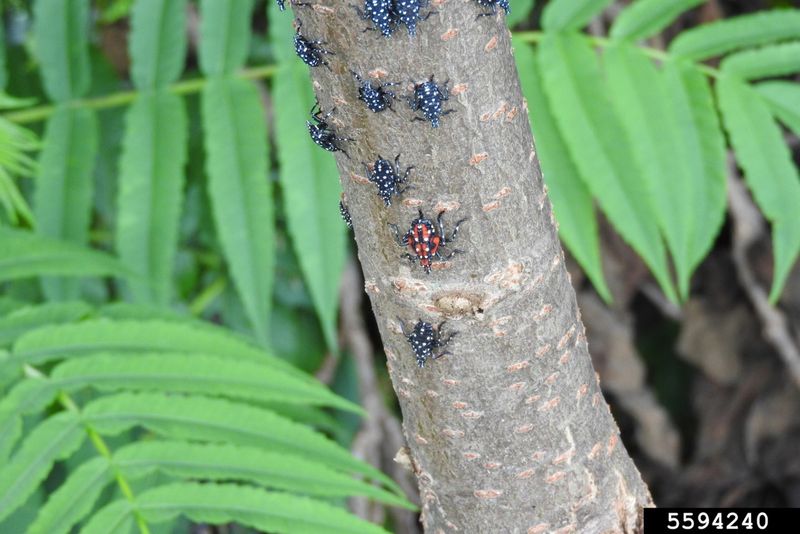
A fast-growing invasive tree called tree-of-heaven is already rooted in many North Carolina yards, and right now it is drawing spotted lanternfly adults like a magnet. If you live in or near Forsyth, Guilford, Rockingham, Caldwell, Davidson, Rowan, or Caswell County, this is the season to take a close look at your property.
Knowing what the tree looks like, how to spot the insect, and what to do next can help you protect your yard and keep this pest from spreading further.
Tree-of-heaven concentrates a pest that is established in seven North Carolina counties
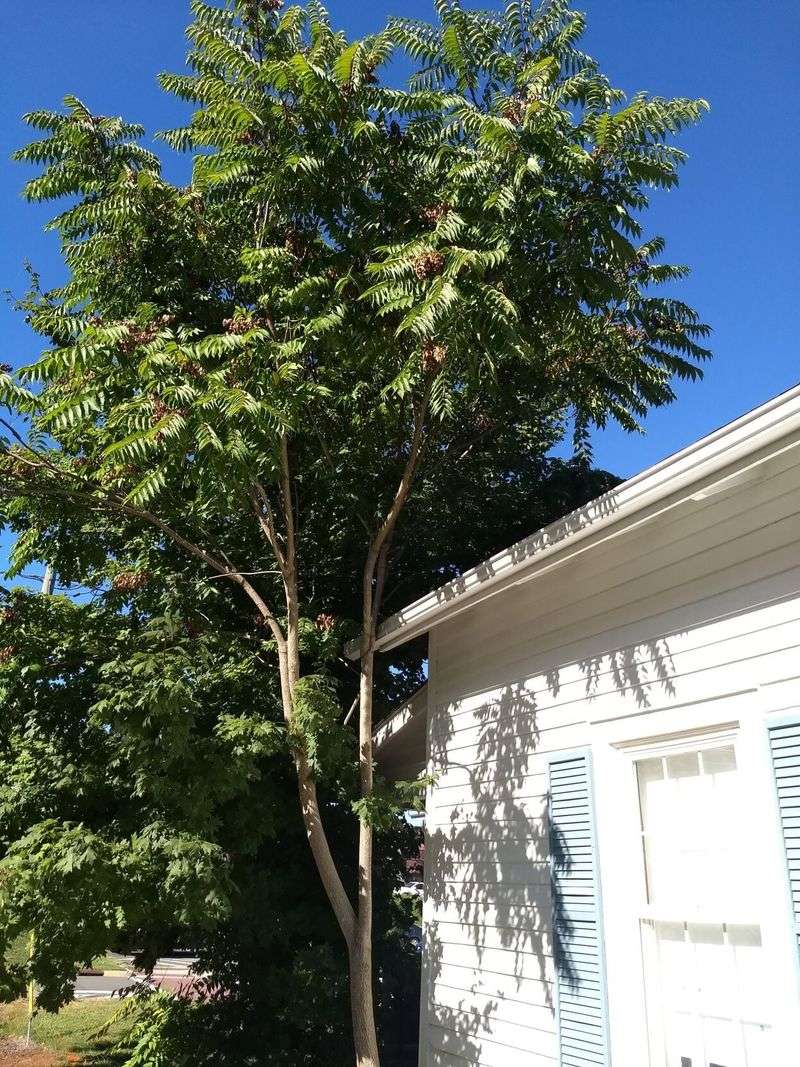
Spotted lanternfly does not need tree-of-heaven to survive, but the tree acts as one of its strongest magnets, especially for adults and late-stage nymphs. NC State Extension identifies tree-of-heaven as one of the most prevalent invasive trees in North Carolina and a major spotted lanternfly host, which means yards that already have the tree growing along a fence line or woodland edge are worth inspecting carefully right now.
The insect is not a statewide problem yet. As of February 10, 2026, the North Carolina Department of Agriculture and Consumer Services confirmed established populations in seven counties: Forsyth, Guilford, Rockingham, Caldwell, Davidson, Rowan, and Caswell.
If your property sits in or near any of those counties, the combination of tree-of-heaven in your yard and active adult populations nearby is the specific situation this article addresses.
Timing matters too. NCDA&CS lists spotted lanternfly adults as the primary active life stage from July through December, so mid-August is squarely inside the adult season.
Adults and late nymphs are the life stages most strongly associated with tree-of-heaven as a feeding and gathering site. Earlier nymphs feed on a wider range of plants, but adults tend to aggregate on tree-of-heaven in large numbers, making the tree a practical first place to look.
Removing tree-of-heaven from a yard can reduce that preferred gathering point, but the insect can use other host plants and can move in from neighboring properties or travel on vehicles and outdoor gear. The sections below walk through how to identify the tree correctly, how to confirm the insect, and what steps are proportionate and safe once you have.
Identify the tree from several features, not one suspicious leaf
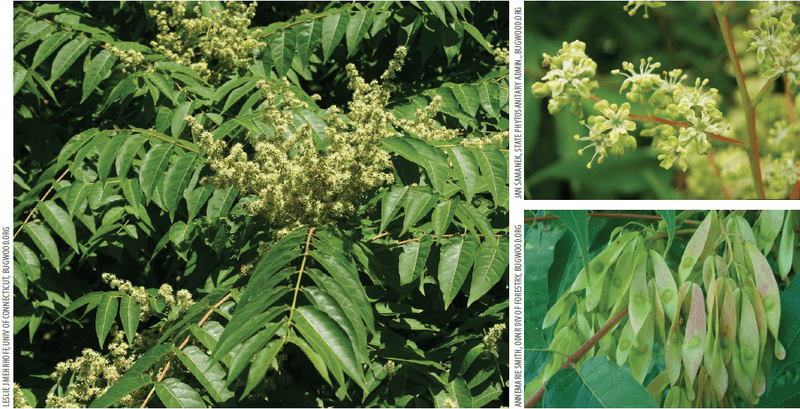
Tree-of-heaven grows fast and blends into the background so well that many homeowners have one without realizing it. North Carolina invasive plant guidance describes its leaves as large compound structures, often one to four feet long, with leaflets arranged along a central stalk and one to three coarse teeth near the base of each leaflet.
That last detail, the small rounded bumps near the base rather than along the full leaflet edge, is one of the more reliable distinguishing marks.
Crush a leaf or small twig and take a sniff. The smell is often described as rancid peanut butter or a strong, unpleasant odor that most people recognize immediately as unusual for a backyard tree.
Bark on younger stems tends to be smooth and gray-green, becoming rougher and streaked with age. In late summer you may also see large clusters of papery winged seeds, each with a single seed in the middle of a twisted wing, hanging in reddish or tan bunches.
The tree turns up in disturbed places: fence lines, the edges of driveways, vacant lots, roadsides, railroad corridors, pavement cracks, and the margins where a yard meets a wooded area. It spreads both by producing thousands of those winged seeds and by sending up underground root suckers, so one mature tree can produce a cluster of younger stems nearby.
NC State Extension notes that tree-of-heaven is commonly confused with native sumac and black walnut, both of which also have large compound leaves. Sumac leaflets typically have toothed edges all the way around, not just at the base, and lack the unpleasant odor.
Black walnut leaflets are narrower and the tree produces distinctive round green fruits. University of Maryland Extension advises confirming leaf arrangement, leaflet shape, odor, bark, and seed clusters together before deciding to remove a tree.
If you check the features and still feel uncertain, your county Cooperative Extension office can help you confirm the identification before you take any action.
Check the tree, its neighbors, and nearby hard surfaces
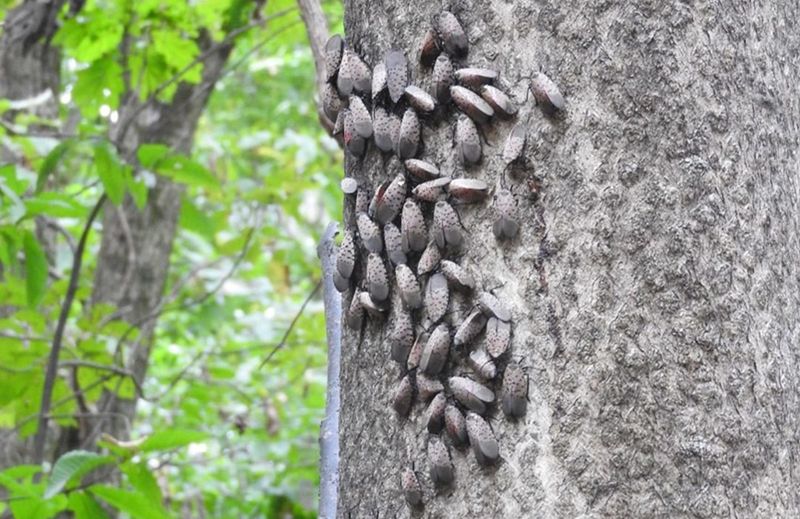
Finding tree-of-heaven in your yard does not automatically mean spotted lanternfly is present. Before you do anything else, look carefully at the tree itself and everything around it.
USDA APHIS describes adult spotted lanternflies as roughly one inch long with gray-tan forewings covered in black spots and bright red hindwings that become visible when the insect opens its wings to fly or display. Adults often rest on trunks with their wings folded flat, so the red is hidden until they move.
Younger nymphs, which emerge earlier in the season, are black with white spots. Later nymphs develop patches of red mixed with the black and white.
By mid-August, adults are the life stage you are most likely to encounter on tree-of-heaven, though nymphs may still be present on other plants nearby. NCDA&CS guidance describes egg masses as gray or brownish putty-like patches that can appear on bark, fences, bricks, stone walls, vehicles, trailers, outdoor furniture, firewood, and tools.
Fresh egg masses have a waxy coating; older ones look more cracked and dried.
Check the base and trunk of the tree first, then work outward to nearby fences, structures, and any hard surfaces within a reasonable distance. The NC Forest Service 2025 Forest Health Highlights notes honeydew from spotted lanternfly feeding can coat surfaces and promote black sooty mold growth, so sticky patches or dark mold on leaves, branches, or pavement beneath a tree can be a supporting clue.
Wasps and ants attracted to honeydew are another possible sign. None of these secondary signs alone confirms spotted lanternfly, but together with a visual sighting they build a stronger case for reporting.
Document and report a suspected sighting before moving outdoor items
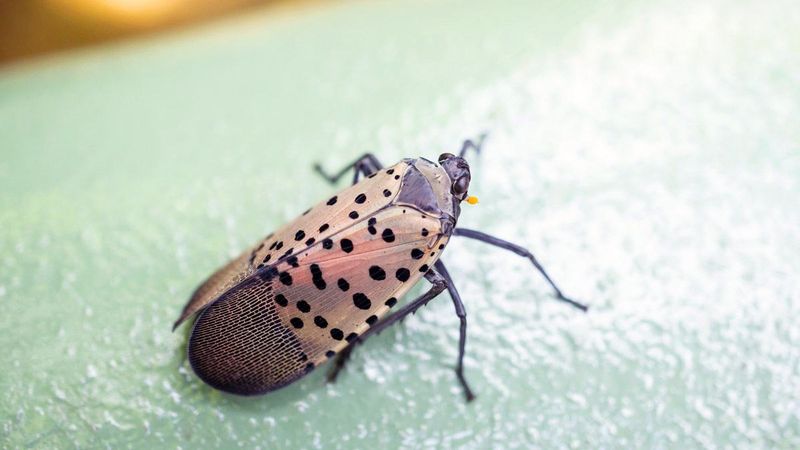
Spotted, photographed, and now what? The order of your next steps matters more than speed.
Start by taking a clear photo of the insect with a coin, pen, or other common object placed next to it for scale. Write down the date, the street address or a GPS coordinate, and a brief description of where exactly you saw it, such as on a tree trunk at fence height or on a patio chair near the back door.
NCDA&CS asks residents to report suspected spotted lanternfly sightings through its online reporting page, and that report is especially valuable if you are outside the seven established counties. Even inside an established county, documenting and reporting new locations helps officials track where populations are expanding and where resources should go.
A single report from a new neighborhood can prompt a survey that catches an infestation early.
When safely possible, kill the insect by crushing it underfoot or dropping it into a container of rubbing alcohol. Spotted lanternfly does not bite or sting people or pets, so handling or crushing one carries no personal risk beyond the mess of honeydew.
NCDA&CS has specifically urged North Carolina residents to check outdoor gear and vehicles before traveling, because egg masses and insects can hitch rides on cars, trailers, campers, and lawn equipment.
After photographing and reporting, inspect every hard surface in the area before moving anything off your property. Check vehicle wheel wells, undercarriages, and roof racks.
Look at firewood stacks, yard furniture, kids’ outdoor toys, ladders, and potted plant containers. USDA APHIS recommends scraping any egg masses you find into a bag with rubbing alcohol and sealing it before disposal, rather than simply brushing them onto the ground where they may still hatch.
Plan established-tree removal around the root system
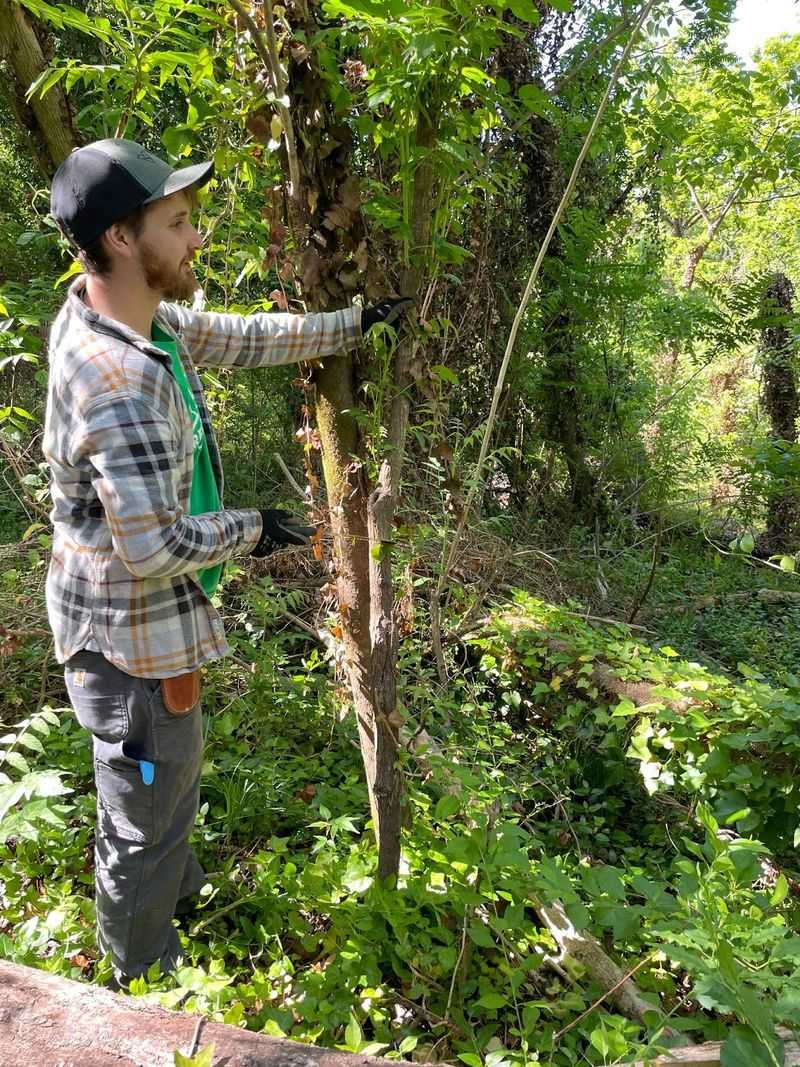
Getting rid of tree-of-heaven sounds straightforward until you understand what the roots do when you cut the trunk. A small seedling pulled cleanly from loose soil, with the entire root system intact, has a reasonable chance of not returning.
Established trees are a different matter entirely. Cut the trunk of a mature tree-of-heaven and the root system often responds by sending up a flush of new shoots from multiple points, sometimes producing more stems than were present before the cut.
NC State Extension explains that cutting alone is unreliable for established tree-of-heaven because the root system remains intact and viable, and that larger trees generally require a treatment aimed at killing the root system rather than just the visible trunk. The specific method that works best depends on the tree’s size, location, surrounding plants, soil conditions, and proximity to structures, utilities, or water features.
There is no single herbicide or technique that fits every situation.
University of Maryland Extension recommends consulting a qualified professional before removing established tree-of-heaven, particularly when the tree is near a structure, a utility line, a steep slope, or valuable native plants that could be damaged by root treatments or by falling material. A licensed arborist or pest-control professional can assess the site, recommend a legally labeled treatment option suited to the conditions, and plan follow-up monitoring for root suckers.
Your county Cooperative Extension office is also a practical first call if you want free guidance before hiring anyone.
NCDA&CS notes that its treatment priorities focus on sites with a high risk of spreading the pest, such as commercial properties and active development sites, so residential homeowners should plan their own management rather than assuming the state will handle every backyard tree. Whatever treatment is chosen must follow the product label and any applicable local or state regulations.
Plan for at least one or two follow-up seasons of monitoring, because root suckers can re-emerge even after a well-executed treatment.
Removing the preferred host will not end every infestation
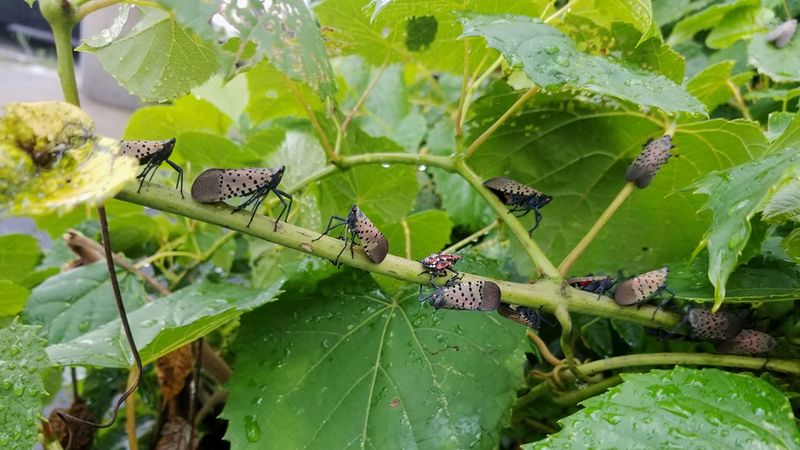
Pulling or treating tree-of-heaven removes a favored gathering spot, but it does not flip a switch that makes spotted lanternfly disappear from your yard. The insect feeds on a wide range of woody plants, including grapes, apples, stone fruits, maples, walnuts, oaks, and willows.
Research published in Environmental Entomology found that spotted lanternfly can survive, develop, and complete its life cycle on multiple host species beyond tree-of-heaven, though tree-of-heaven supported the strongest performance overall.
A separate study indexed in PubMed confirmed that spotted lanternfly can reach adulthood and reproduce without tree-of-heaven present, though fitness measures such as survival rate and development time may be reduced on alternative hosts. Practically speaking, this means that removing tree-of-heaven from your yard may reduce the number of insects you see aggregating there, but the insects can shift to a grape arbor, a maple, or a neighbor’s property and continue their season.
On the question of plant damage, spotted lanternfly does not bite or sting people or pets. The concern for homeowners is nuisance honeydew, the sticky waste the insects excrete while feeding, which coats surfaces, promotes black sooty mold, and attracts wasps and ants.
NC State Extension notes that spotted lanternfly is not generally suspected to cause tree mortality, but heavy feeding can cause wilting, dieback, oozing sap, and added stress that makes plants more vulnerable to other problems. Grapevines and heavily infested hosts face the greatest risk of serious setback.
For accessible insects in a home landscape, University of Maryland Extension describes hand-crushing, swatting, or knocking insects into soapy water as practical mechanical controls with no chemical risk to surrounding plants or wildlife. What to avoid: spraying an entire yard, using vinegar, bleach, dish soap, gasoline, or any homemade pesticide recipe.
Penn State Extension warns that household remedies can damage plants, harm beneficial organisms, and may not work reliably, and that any chemical control should use only products legally labeled for the specific crop or landscape site, following the label exactly. USDA APHIS also cautions that broad insecticide applications can harm pollinators and other beneficial insects and should not be the automatic response to a few spotted lanternflies.
Use wildlife-safe controls and keep monitoring
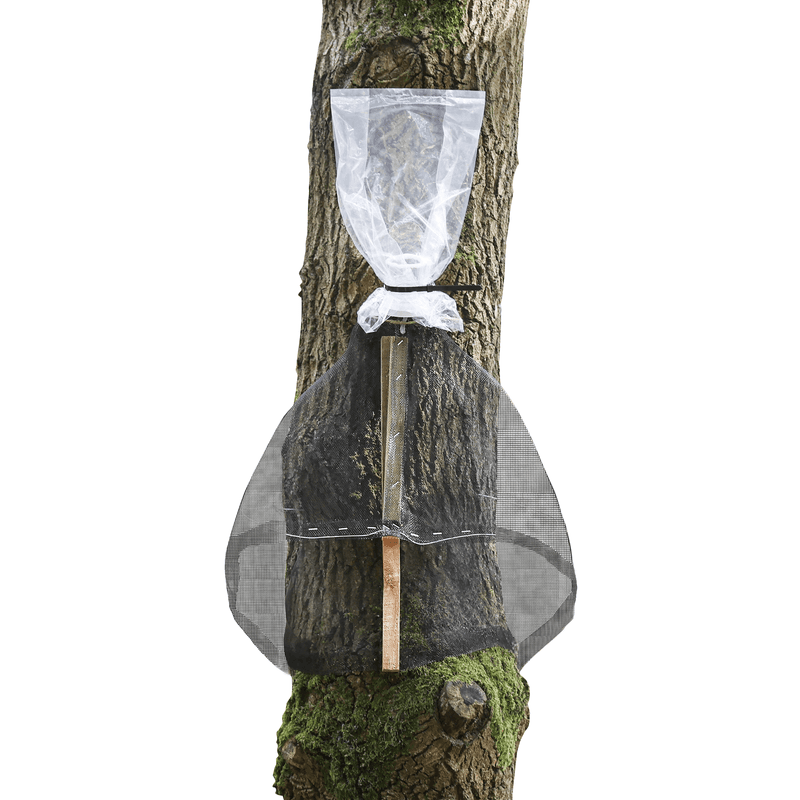
Sticky bands wrapped around tree trunks are sometimes promoted as an easy way to catch spotted lanternfly, but an unprotected band is a hazard to the yard’s other residents. Penn State Extension warns that unprotected sticky traps can catch birds, bats, squirrels, lizards, butterflies, and other nontarget wildlife, and recommends using wildlife barrier guards or more selective circle trap designs that funnel insects into a collection container rather than exposing an open sticky surface.
Any trap should be checked frequently, at least every day or two, so that nontarget animals caught accidentally can be freed quickly.
On the question of state assistance, NCDA&CS has indicated that treatment priorities go to commercial properties, nurseries, and development sites where the risk of spreading the pest is highest. Homeowners in established counties should not assume that a state crew will arrive to treat a residential tree-of-heaven.
Planning your own response, with professional guidance where needed, is the practical path.
Cornell IPM’s spotted lanternfly management guidance emphasizes an integrated approach: confirm the identification, document the sighting, report it, inspect surrounding surfaces before moving any outdoor items, and seek professional advice for established tree-of-heaven rather than improvising removal. After treatment, keep watching alternative host plants in the yard, particularly grapes, maples, and stone fruit trees, and check any vehicles, trailers, or equipment that travel in or out of established-county areas.
Spotted lanternfly is a real problem for North Carolina agriculture and a genuine nuisance in infested yards, but proportionate action beats panic. The homeowner who confirms the insect, reports it accurately, handles tree-of-heaven removal with professional help, and stays alert through December is doing exactly what the situation calls for.
Steady attention over several seasons, not a single dramatic response, is what actually slows a new infestation down.