
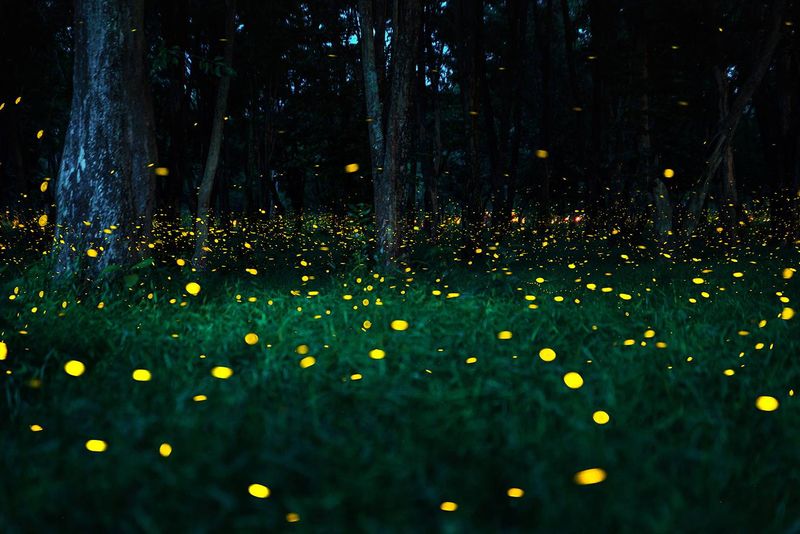
Fireflies have a way of making a summer evening feel like something worth stepping outside for, and many Central Texas homeowners remember seeing far more of them than they do today. Creating one small, sheltered corner of your yard that stays consistently damp can improve the odds that fireflies will use or even reproduce in your outdoor space.
The project is modest, manageable, and grounded in what firefly larvae actually need to survive a Texas summer underground.
Make the yard more firefly-friendly, not magically restored
Fireflies are not gone from Central Texas, but they are harder to find than they used to be in many neighborhoods. Before planning any yard project around them, it helps to be honest about what one small habitat change can and cannot do.
A single damp, sheltered corner can make your yard more suitable for fireflies, but it cannot reliably restore a population or guarantee that a particular species will show up or stay.
The reason a corner like this matters at all comes down to where fireflies spend most of their lives. Texas A&M’s firefly resource notes that larvae overwinter in soil chambers, meaning the underground stage is far longer and more demanding than the brief weeks adults spend flashing above your grass.
Supporting that hidden phase is the real work of the project.
Central Texas is also not one uniform place for fireflies. Firefly Conservation and Research’s Texas field guide describes species associated with suburban lawns, oak hillsides, riparian corridors, wet muddy creek edges, and ephemeral streams.
The Firefly Atlas species checklist confirms that Texas hosts multiple firefly species with different habitat needs, so a project that suits one may not suit another.
What this means practically is that you are building general firefly-friendly conditions rather than engineering a return of one specific species. Frame the goal as improving the odds, and you will approach the work with the right expectations.
Adult visitors may show up before there is any sign of local breeding, and a single good season does not prove the project worked any more than a quiet season proves it failed.
Support the living layer beneath the flashes
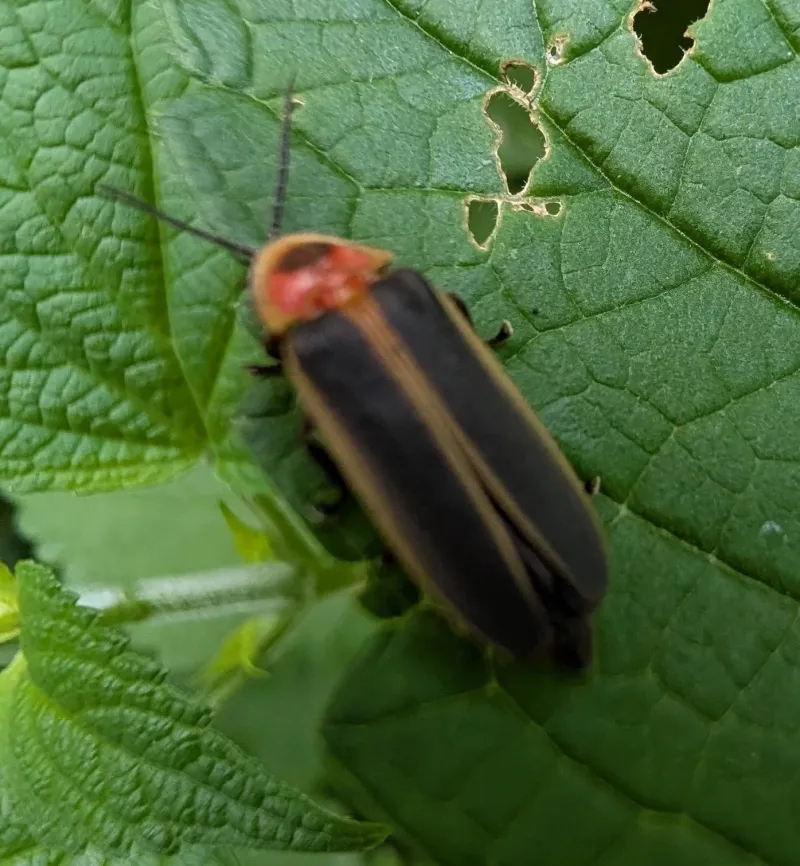
The flashing adults that draw so much attention represent only a fraction of a firefly’s life. Most of the time, a firefly is a larva living underground or under leaf litter, and understanding that stage is the key to building habitat that actually helps.
University of Missouri Extension reports that firefly eggs are laid near the soil surface and that larvae may remain in that stage for one to two years before pupating. During that entire period, they are active predators hunting through moist soil and decomposing leaf matter.
They are not plant-eating caterpillars. They eat soft-bodied prey: snails, slugs, earthworms, insect grubs, and other invertebrates they encounter in the soil layer.
That predatory diet has a direct consequence for how you set up a habitat corner. There is no single firefly plant to buy or one flower to add that will draw larvae in.
What larvae need is a functioning soil food web with enough moisture, shelter, and organic matter to support the prey they hunt. The University of Texas Biodiversity Center recommends an untilled leaf-litter area precisely because tilling destroys the layered structure that keeps soil organisms, and thus larval prey, in place.
Auburn University Extension also describes firefly larvae as beneficial predators that help regulate snail and slug populations in garden beds. A well-supported soil food web benefits the garden broadly, not just the fireflies.
Keeping a corner undisturbed, damp, and covered with leaf litter gives larvae somewhere to hunt, shelter through dry spells, and complete the slow underground work that eventually produces the adults flashing over your yard on July evenings.
Choose a cool, workable site for local conditions
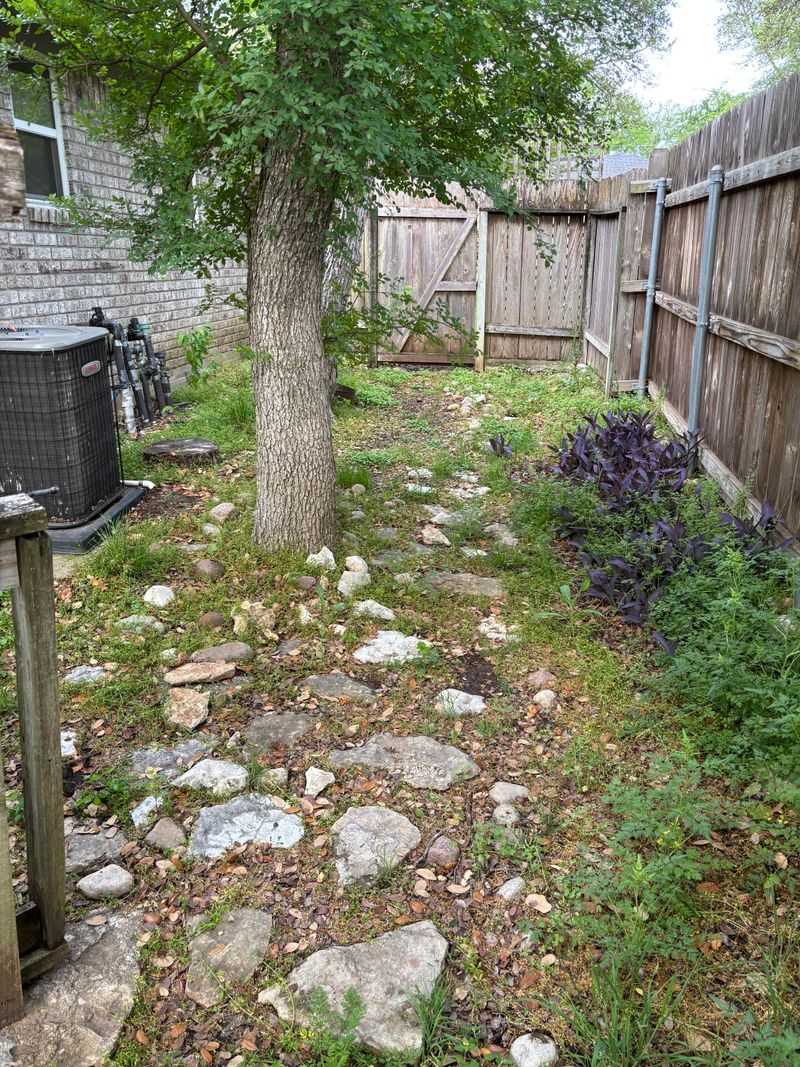
Picking the right spot in a Central Texas yard matters more than any plant list. The goal is a location that naturally stays a few degrees cooler and holds moisture longer than the open lawn, because that is where a small habitat corner can realistically stay damp through a brutal Texas summer without requiring daily irrigation.
Good candidates include the shaded side of a garage or garden shed, the ground beneath an appropriate tree canopy such as a live oak or cedar elm, or the stretch along a back fence that gets afternoon shade. A spot near an existing low area where water naturally collects after rain can also work, as long as it drains between storms rather than holding standing water for days.
That distinction matters: you want a site that benefits from natural moisture movement, not one that sits in a drainage channel or becomes a stagnant pool.
Central Texas is not uniform terrain. Hill Country yards often sit on shallow limestone with rapid drainage, while Blackland Prairie soils are heavy clay that can hold moisture but also crack and bake.
The Texas firefly field guide reinforces that different firefly species occupy different settings, so a recommendation suited to a wet creek edge may not translate to an exposed Austin or San Antonio hillside yard. Match the project to what your site actually offers.
For plant selection, Texas A&M’s WaterSmart plant search lets you filter by region, sunlight level, and soil moisture tolerance, which makes it easier to find natives that fit your specific corner rather than guessing. One example worth considering for partial shade is Texas sedge, described by Central Texas Gardener as a drought-tough native groundcover suited to shaded spots.
Use it for its practical site-matching qualities, not as a firefly-specific lure.
Build cover with damp soil, leaves, and low vegetation
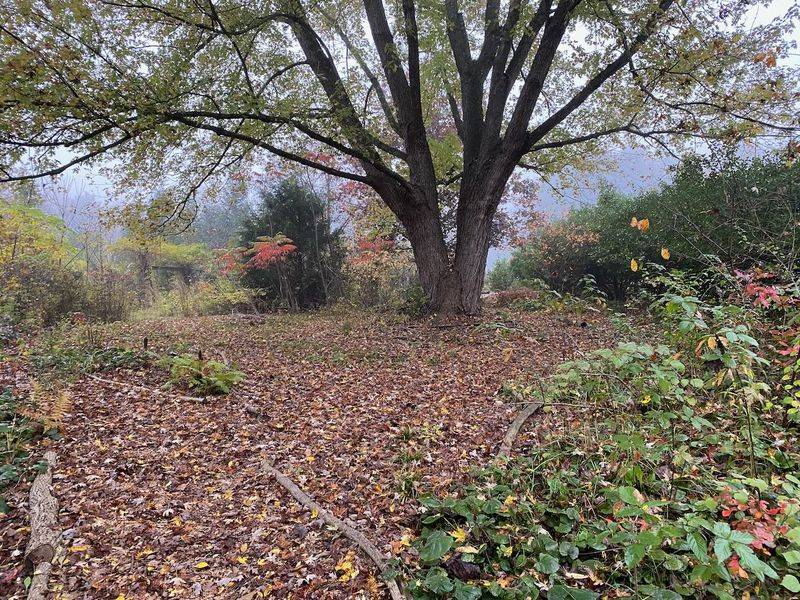
Once you have a site, the actual build is less about planting and more about restraint. The most useful thing you can do is stop removing things that are already there.
Leaf litter, low-growing vegetation, and undisturbed soil are the raw materials of larval habitat, and most yards already have some version of them in at least one corner.
The University of Texas Biodiversity Center recommends leaving an untilled leaf-litter area with low-to-mid-height vegetation, which gives larval fireflies shelter and gives adult females perches near ground level. U.S.
Fish and Wildlife Service guidance also identifies leaf litter and taller grasses as important habitat features for fireflies. Letting a corner accumulate a natural layer of fallen leaves rather than blowing or raking it clean each season is one of the simplest and most effective steps.
Avoid tilling the soil in the habitat corner. Tilling breaks apart the layered structure where larvae hunt and disrupts the soil organisms that make up their prey base.
If the soil is compacted, top-dress with a thin layer of shredded native leaf mulch rather than turning it over. Over time, leaf decomposition will improve soil texture and moisture retention on its own.
Low native vegetation adds structure above the soil surface and helps shade the ground, slowing moisture loss between rain events or supplemental watering. Firefly Conservation and Research notes that native plants support habitat through structure and moisture retention rather than acting as firefly-specific attractants.
Texas sedge is one practical option for a partial-shade spot, valued by Central Texas Gardener for its adaptability to low-light, drought-prone spots. Choose plants for what your site actually needs, and let the habitat system do the rest.
Retain moisture without creating mosquito habitat
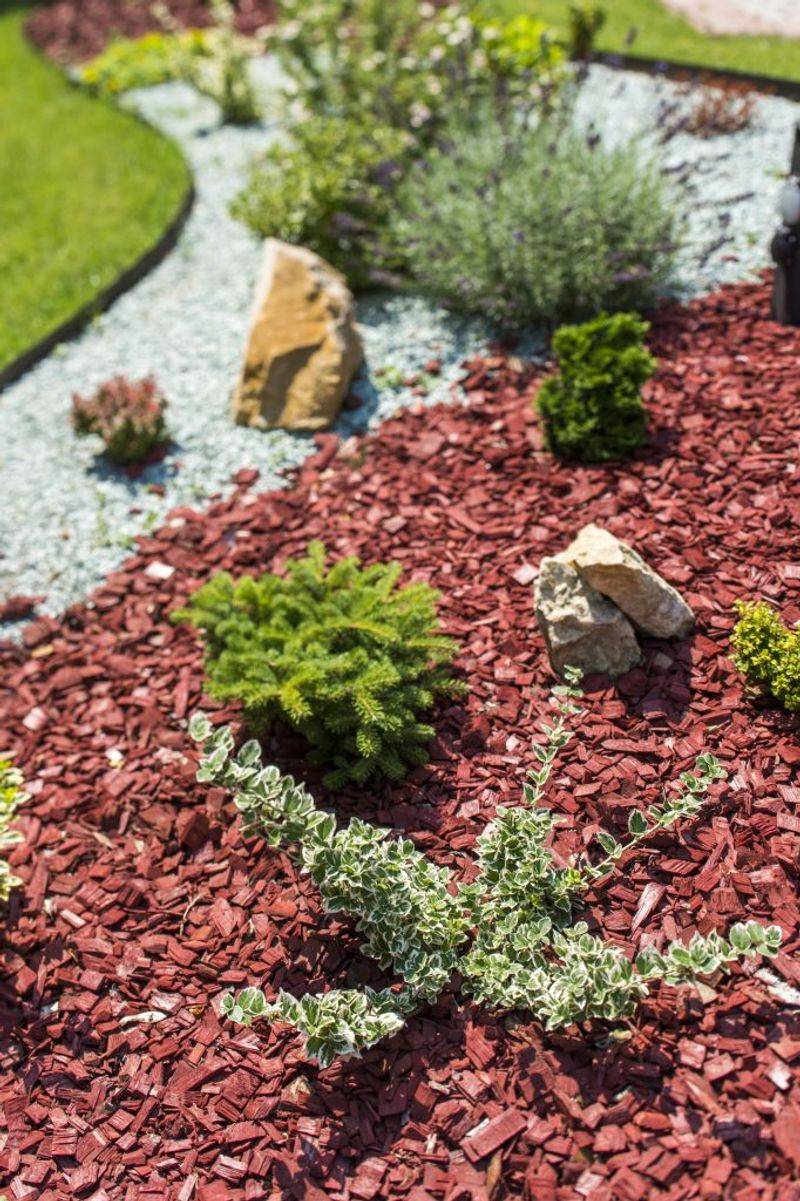
Moisture is the factor that separates a firefly-friendly corner from a patch of dry shade that supports very little. Firefly associations with wet depressions, riparian areas, and damp soil appear consistently across conservation sources, and the larval stage in particular depends on soil that stays moist enough to support both the larvae and the soft-bodied prey they hunt.
The practical target is ground that stays consistently damp or moisture-retentive, especially during the long dry stretches that define a Central Texas summer.
That is not the same as wet, flooded, or waterlogged. A firefly conservation review links fireflies to moisture without prescribing continuously saturated conditions, and Firefly Atlas habitat notes connect firefly presence to moist environments rather than standing water.
In heavy clay or limestone-based Central Texas soils, the goal is to retain natural moisture through shade, leaf cover, and vegetation, not to flood a bed or create a basin that holds water for days.
The distinction also matters for public health. Birdbaths, buckets, saucers, plant trays, old tires, clogged gutters, and any other container that holds even a small amount of still water can become a mosquito breeding site within a week.
CDC guidance on mosquito control at home recommends emptying, scrubbing, covering, or turning over anything that holds water at least once a week. Managing soil moisture in a planted corner is fundamentally different from leaving containers full outdoors, and doing the former does not require doing the latter.
Supplemental watering with a soaker hose or drip line during dry spells can help maintain soil moisture in the habitat corner without creating surface puddles. Water deeply and infrequently rather than lightly and daily, so moisture reaches the soil layer where larvae are active rather than just wetting the leaf surface.
Protect the habitat from chemicals and bright light
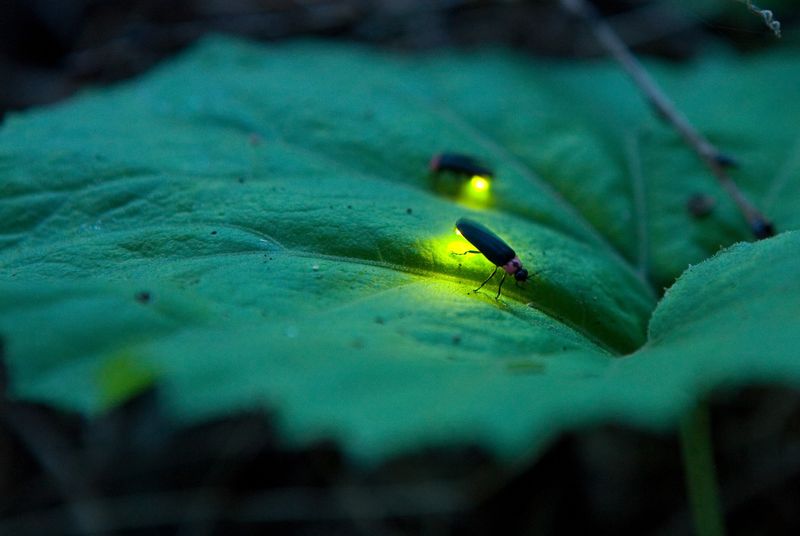
Building a good habitat corner and then spraying the surrounding yard on a routine schedule is roughly like setting a table and then locking the door. Pesticides applied near or within the habitat corner can harm fireflies at multiple life stages and can reduce or contaminate the prey that larvae depend on throughout their one-to-two-year underground phase.
A North American firefly extinction-risk assessment specifically recommends refraining from pesticides, particularly insecticides and molluscicides, in firefly habitat areas. Molluscicides deserve special attention here because they target snails and slugs, which are among the primary prey that firefly larvae hunt.
Eliminating that prey base with a bait or spray undercuts the habitat even if the chemical itself does not directly contact a larva. A broader firefly conservation review and U.S.
Fish and Wildlife Service guidance both identify pesticide exposure as a meaningful concern without claiming that every chemical has an identical effect or that pesticides alone explain observed declines.
The recommendation is to avoid routine broad-spectrum applications in and immediately around the habitat corner, not to eliminate every form of pest management in your entire yard. Spot treatments for specific problems away from the corner are a different situation than blanket spraying over the area where larvae are active.
Artificial light after dusk is the other variable worth managing. Firefly flashes are courtship signals, and disrupting them can interfere with mating.
Research on artificial light and firefly courtship found measurable effects on mating behavior in some North American species, while an earlier light-pollution study also identified courtship disruption as a concern. Effects are not identical across all species, activity periods, or light intensities, so darkening the habitat area is a prudent step rather than a guaranteed fix.
Turning off or redirecting porch lights, motion-sensor floods, and string lights that shine toward the corner during peak firefly activity hours is a reasonable and low-cost adjustment.
Look for adult visitors before judging reproduction
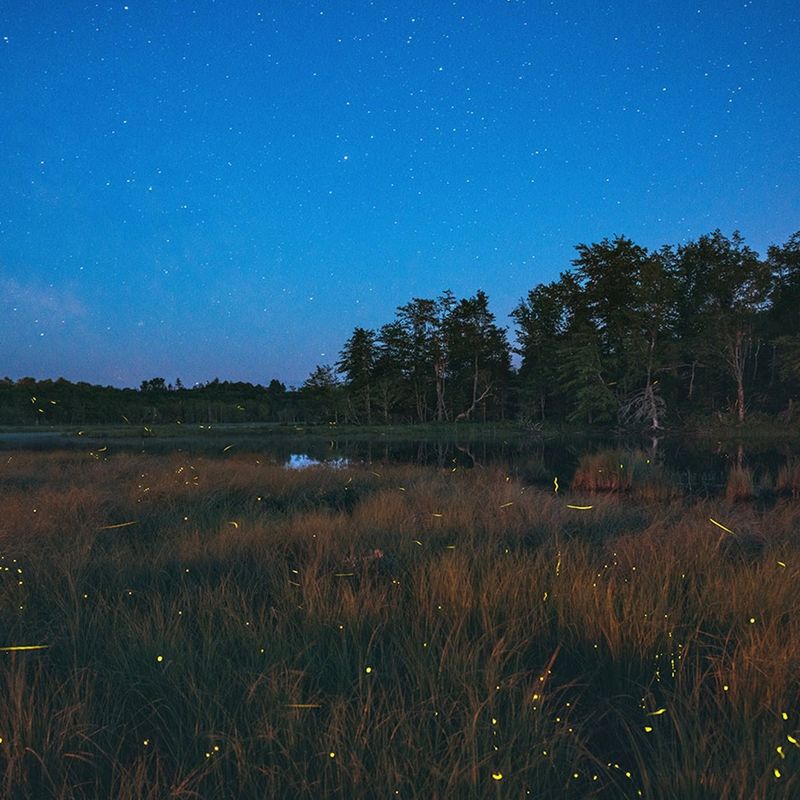
Patience is not optional with this project. Firefly larvae can spend one to two years underground before they ever pupate and emerge as adults, which means the habitat corner you build this spring may not produce local adults for a season or more.
University of Missouri Extension confirms this multi-year larval timeline, and it has a direct bearing on how you interpret what you observe.
Adults that visit your yard in the first season after you build the corner are most likely traveling from somewhere nearby, not emerging from your own soil. That is still a meaningful sign.
It means your yard is within range of an existing population, the habitat looks attractive enough to draw activity, and the conditions may be right for eventual local breeding. Treat early adult visitors as encouraging evidence, not as proof that the project worked or failed.
What you observe also depends heavily on factors outside your control. The Texas firefly field guide notes that different species have different peak activity windows, flash patterns, and habitat associations.
Drought, heat extremes, and the condition of nearby natural areas all affect whether adults are active in a given year. The Firefly Atlas species checklist is a useful reference for identifying which species are documented near your region of Central Texas, which can help set a realistic expectation for what you might see and when.
Watch for flashes after dark, starting about 20 to 30 minutes after sunset during late spring and early summer. Note the flash pattern, height above ground, and approximate location relative to your habitat corner.
Over multiple seasons, consistent observations near the corner are more meaningful than a single exciting night, and gradual changes in frequency or location may be the clearest signal you get that something is working.
Treat one corner as a refuge, not a replacement for wild habitat
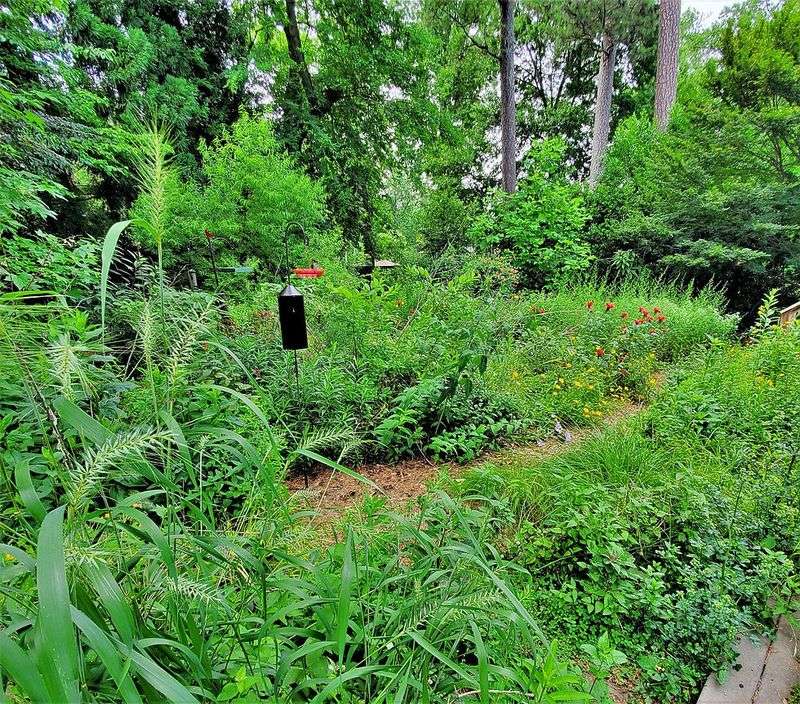
A backyard habitat corner is worth building, and it can genuinely improve conditions for fireflies that are already moving through your neighborhood. Keeping damp ground, leaf litter, suitable native vegetation, low chemical exposure, and darkness concentrated in one manageable area gives larvae somewhere to complete their slow underground development and gives adults a place to court without constant disruption.
U.S. Fish and Wildlife Service guidance frames these same elements as the foundation of firefly-friendly habitat, and that framing is the right one: you are improving odds, not issuing a guarantee.
Some Texas fireflies, though, need more than any backyard can offer. The Firefly Atlas species checklist includes Texas species with localized or specialized habitat requirements tied to wetlands, springs, and riparian corridors that no residential corner can replicate.
The Pyractomena vexillaria fact sheet and the Bicellonycha wickershamorum fact sheet both describe species with narrow, specialized habitat needs that depend on intact natural areas, not managed garden corners.
Supporting your local watershed, advocating for creek and spring protection, and reducing impervious surface runoff in your neighborhood all matter for those species in ways that a backyard project simply cannot address. The corner is a refuge within a larger landscape, and its value increases when the surrounding landscape retains some of its natural moisture, vegetation, and darkness.
Start small, observe carefully, and resist the urge to judge the project by a single summer. The most honest measure of success is a corner that stays damp, stays covered, and stays dark enough that something underground might actually choose it.