
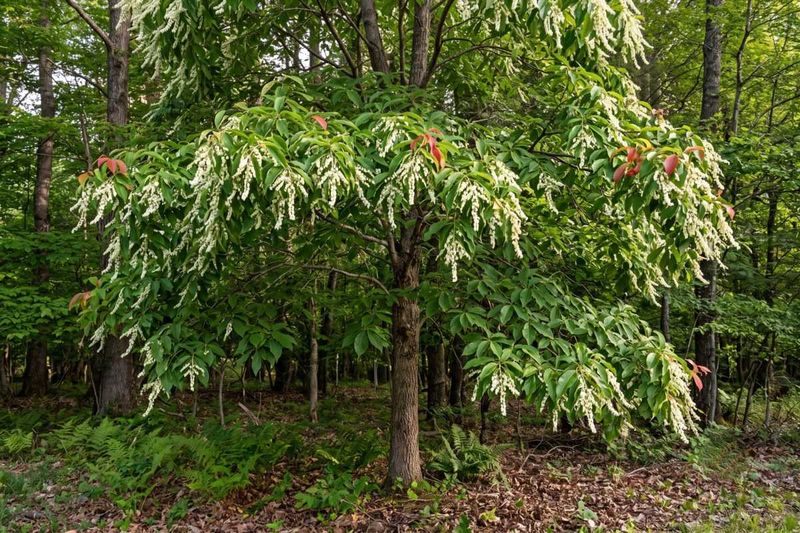
Most North Carolina homeowners drive past sourwood trees every summer without giving them a second look, but bees and butterflies know exactly where to find them. Sourwood (Oxydendrum arboreum) is a relatively small native tree that produces fragrant white flowers during the midsummer weeks when many other plants have stopped blooming and pollinator food gets scarce.
Adding one to a yard can help fill that seasonal nectar gap, though it works best as part of a broader planting plan rather than a stand-alone solution.
Sourwood strengthens the summer side of a North Carolina pollinator yard
Sourwood (Oxydendrum arboreum) shows up in North Carolina forests from the mountains to the Piedmont, yet it rarely appears in residential yards. That gap is worth closing.
Craven County Cooperative Extension specifically recommends sourwood for pollinator and butterfly gardens, describing it as a native tree well suited to North Carolina landscapes. Despite that endorsement, many homeowners still reach past it at the nursery.
Part of what makes sourwood useful is its size. NC State Extension lists it at roughly 20 to 30 feet tall and 10 to 15 feet wide under typical landscape conditions, which puts it within reach of yards that cannot accommodate a large canopy tree.
Wild trees can push toward 35 to 50 feet, so mature size does vary, but the species is generally manageable for a residential lot.
The practical value sourwood offers is concentrated in midsummer, when its flowers attract bees, butterflies, and other insects. That timing is important.
Many spring-blooming trees and shrubs have already finished, and fall-blooming natives have not yet opened, leaving a window where pollinator food can be hard to find. Sourwood fills part of that window.
It does not feed pollinators continuously from spring through fall, and it works best when paired with native plants that cover the seasons before and after its bloom. Think of it as a strong contribution to a summer planting rather than a complete pollinator garden on its own.
Its fragrant flowers deliver concentrated midsummer nectar
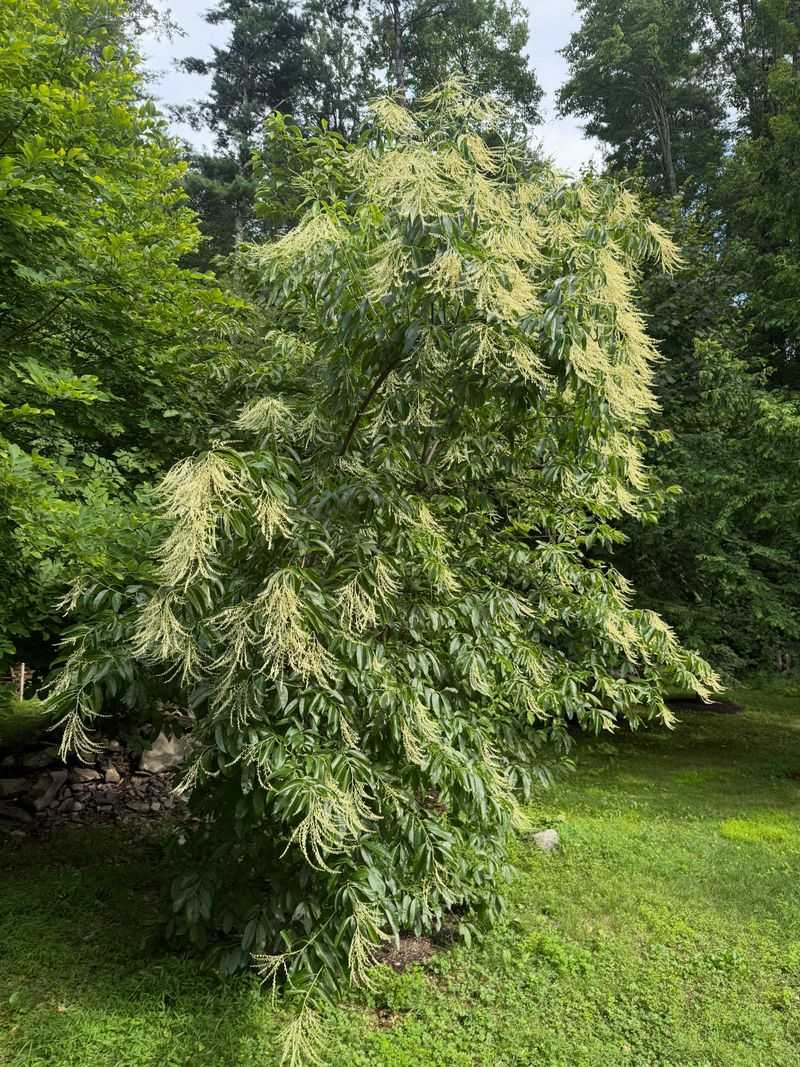
Walk past a sourwood in July and the fragrance stops you. The flowers are small, white, and urn-shaped, strung together in long drooping panicles that hang from the branch tips like strings of tiny bells.
The North Carolina Native Plant Society notes that the floral display remains showy for about three to four weeks, with the primary bloom falling in June and July.
Some Extension guidance extends that window a bit further. Lee County Cooperative Extension describes sourwood flowering from June through August, which suggests the bloom can stretch into late summer depending on the site and season.
Either way, the flowers arrive at a moment when competing nectar sources in many North Carolina yards are sparse, making the timing as valuable as the quantity.
Bees respond visibly. Honeybees and native bees work the flowers steadily during peak bloom, and adult butterflies visit as well.
Sourwood is closely associated with sourwood honey, a regionally prized product in western North Carolina, but that connection should be kept in context. Honey production depends on how many sourwood trees grow near a hive, local weather during bloom, colony strength, and beekeeping practices.
A single yard tree contributes to the local nectar pool without guaranteeing a honey harvest. The more direct homeowner benefit is the consistent bee and butterfly activity the flowers bring to the yard during those midsummer weeks when many other plants go quiet.
Adult butterflies visiting sourwood flowers are seeking nectar. That is a different benefit from host-plant support for caterpillars, which requires leaves that specific butterfly larvae can eat.
The sources confirm flower visits by adult butterflies but do not establish sourwood as a broad caterpillar host plant. Both functions matter for pollinators, but they should not be treated as the same thing.
Fall color and fruit extend the display without extending nectar
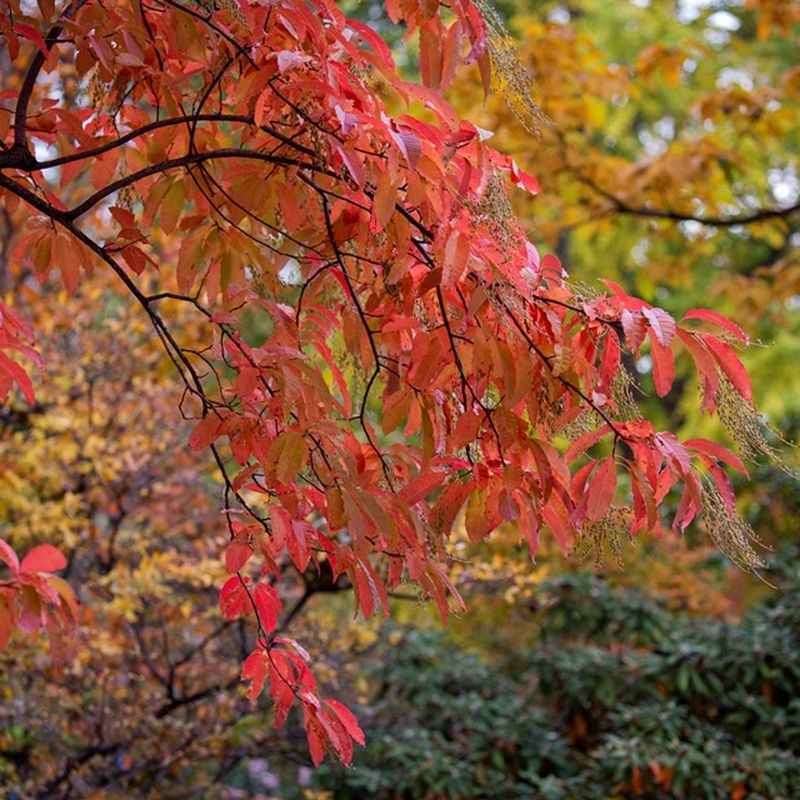
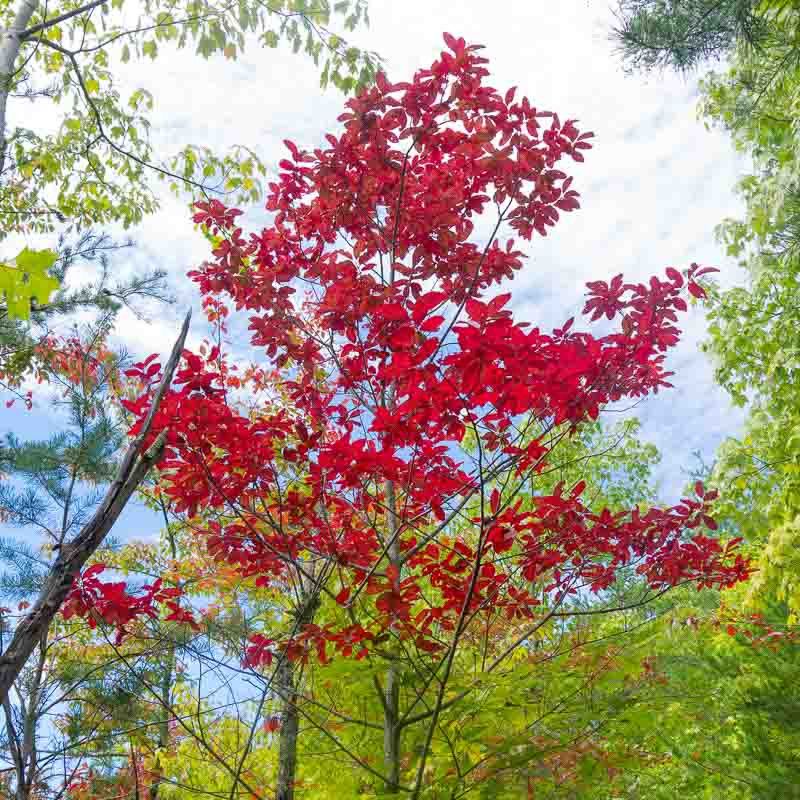
Once the flowers drop, sourwood keeps earning its place in the yard through sheer visual appeal. By September and into October, the leaves shift from green to red and reddish-purple, often producing some of the deepest fall color of any native tree in the region.
The North Carolina Vascular Plant Database documents this fall foliage as a consistent ornamental feature of the species.
At the same time, sourwood produces small dry fruit capsules that ripen in September and October. These clusters can remain on the tree well into winter, giving the bare branches a textured, sculptural look after the leaves fall.
The fruit may provide some wildlife value, though the available sources do not identify which animals consume it or in what quantity. Describing the fruit as a potential wildlife benefit is reasonable; treating it as a documented major food source for specific birds or mammals goes beyond what the evidence supports.
What the fall features do not represent is continued nectar production. Red leaves are not flowers.
Persistent fruit clusters are not a signal that bees and butterflies are still foraging on the tree. Sourwood is deciduous, and its nectar season ends with the flowers.
Homeowners who plant it expecting ongoing pollinator feeding through September and October will find instead a beautiful tree with ornamental and possible wildlife value, but not a late-season nectar source.
That distinction matters when planning a yard for pollinators. Sourwood’s fall contributions are real and worth appreciating, but they belong in a different column than midsummer nectar.
A well-designed pollinator planting will have separate native plants carrying the load in spring and fall while sourwood handles the summer stretch.
Match sourwood to the conditions it actually needs
Before buying a sourwood, check the site carefully. The tree performs best in acidic, moist, well-drained soil with full sun to partial shade, and it is far more forgiving on a woodland edge than in a typical subdivision front yard.
NC State Extension notes that sourwood is intolerant of pollution and harsh urban conditions, which rules out many roadside or high-traffic locations where homeowners might otherwise consider a small ornamental tree.
Soil chemistry matters more than many people expect. Sourwood is in the heath family, alongside blueberries and azaleas, and it shares their preference for acidic conditions.
A yard with naturally acidic soil, a woodland border, or a site where native oaks and pines already grow is a much better candidate than a lot with heavy clay fill, compacted construction debris, or a pH that has been raised by concrete foundations or lime applications. A simple soil test, available through NC Cooperative Extension offices, can confirm whether the site pH is appropriate before any money is spent at the nursery.
Size expectations also deserve a realistic look. The North Carolina Native Plant Society notes that sourwood can reach 35 to 50 feet in the wild, while NC State’s landscape estimate runs closer to 20 to 30 feet tall and 10 to 15 feet wide.
The actual size a given tree reaches will depend on soil quality, moisture, light, and competition. Plan for a tree that could eventually be larger than nursery tags suggest, and leave enough clearance from structures, utility lines, and neighboring plants.
Regional performance across North Carolina is not uniform. Sourwood is native across much of the state, but it is less common in the extreme southeastern Coastal Plain, where soils and conditions differ from the mountain and Piedmont sites where it tends to thrive.
A tree that grows easily in the Asheville foothills or the central Piedmont may require more careful siting in the Coastal Plain. Checking with a local Cooperative Extension office or a regional native plant nursery before purchasing can prevent a frustrating mismatch between tree and site.
Give a young container-grown tree a careful start

Sourwood has a reputation for being difficult to transplant, and that reputation is well earned. Wild-dug trees often fail to establish because the root system does not tolerate the disruption.
Lee County Cooperative Extension recommends starting with a young, container-grown tree from a reputable nursery rather than attempting to move a specimen from the woods or purchasing a field-dug tree. The younger and smaller the nursery tree, generally the better it adapts to a new location.
Planting technique sets the foundation for long-term success. Position the tree so the root flare, the widening at the base where trunk transitions to roots, sits at or very slightly above the surrounding soil grade.
Burying the flare invites rot and long-term decline. Dig the planting hole wide rather than deep, water the tree thoroughly at installation, and firm the backfill gently to eliminate large air pockets without compacting the soil around the roots.
Establishment watering requires real attention during the first two years. USDA NRCS guidance recommends at least 1 inch of water per week during the establishment period when rainfall is insufficient.
That figure is a general benchmark, not a fixed prescription. A week with an inch of rain needs no supplemental irrigation.
A week of dry, hot weather in July may call for a slow, deep watering rather than a quick spray. Check soil moisture a few inches below the surface before irrigating, and avoid keeping the root zone persistently saturated, which can cause root rot in a species that prefers well-drained conditions.
Mulch helps retain moisture and moderate soil temperature, which matters during North Carolina summers. Apply a 2 to 3 inch layer of wood chips or shredded bark in a ring extending out to the drip line, but keep the mulch pulled back several inches from the trunk and completely clear of the root flare.
Volcano mulching, where material is piled against the bark, traps moisture against the trunk and can cause decay over time. NC Forest Service planting guidance reinforces this practice for newly planted trees.
Sourwood is not a set-and-forget tree, especially in the first two seasons, and treating it as low-maintenance before it is well established is a common way to lose an otherwise promising specimen.
Build spring and fall bloom around the summer tree
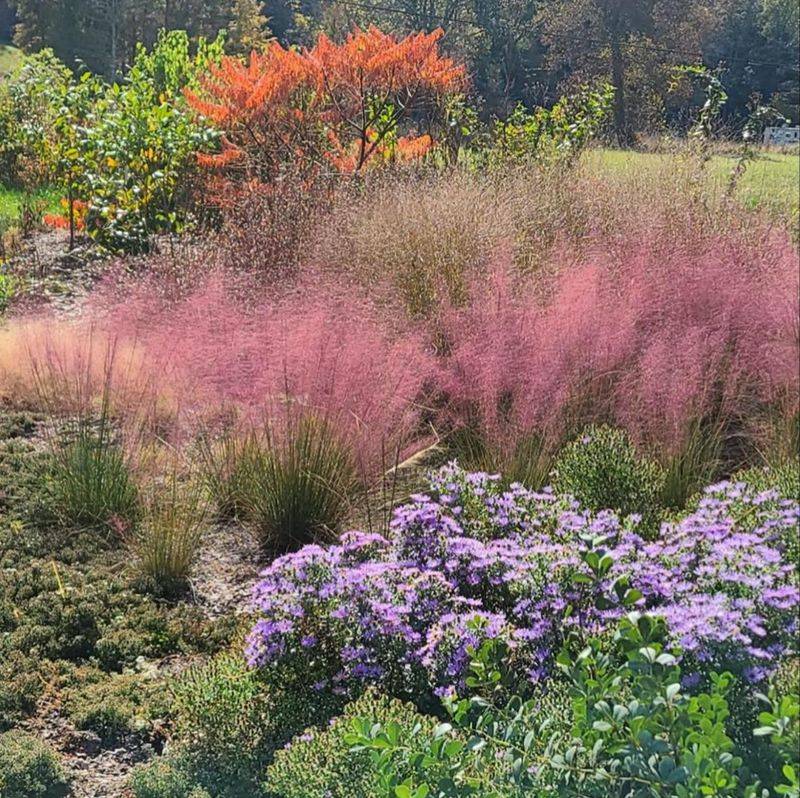
Sourwood handles the summer stretch well, but a yard that only blooms in June and July leaves pollinators without resources for most of the year. NC State Extension’s Native Plants handbook recommends using at least three different native species blooming in each of spring, summer, and fall to give pollinators a reliable, season-long food supply.
Sourwood counts as one summer species in that framework, not as a substitute for the full framework.
The North Carolina Wildlife Federation identifies March through November as the target span for staggered pollinator bloom in NC yards, which means spring and fall gaps need intentional planting to close them. Native shrubs and trees that flower in early to mid-spring can carry bees and early butterflies before sourwood opens.
Native wildflowers, grasses, and late-blooming shrubs can bridge the gap from August into October and November.
The seasonal principle matters more than any specific plant list, because the right companions vary by region, soil type, yard size, and sun exposure. A Piedmont homeowner with partial shade has different options than a mountain homeowner with a sunny slope or a Coastal Plain gardener working with sandy, well-drained soil.
Consulting the NC State Extension Gardener Plant Toolbox or a local native plant nursery will surface regionally appropriate choices faster than a generic national list.
The practical goal is continuity. Sourwood is a strong anchor for the midsummer portion of a pollinator planting, and its ornamental qualities, fragrant flowers, clean summer foliage, and vivid fall color, make it attractive even in a small yard.
Surrounding it with native plants that cover the seasons it cannot fill transforms a single good tree into part of a functioning habitat that supports pollinators from early spring through late fall.
Protect pollinators after you plant
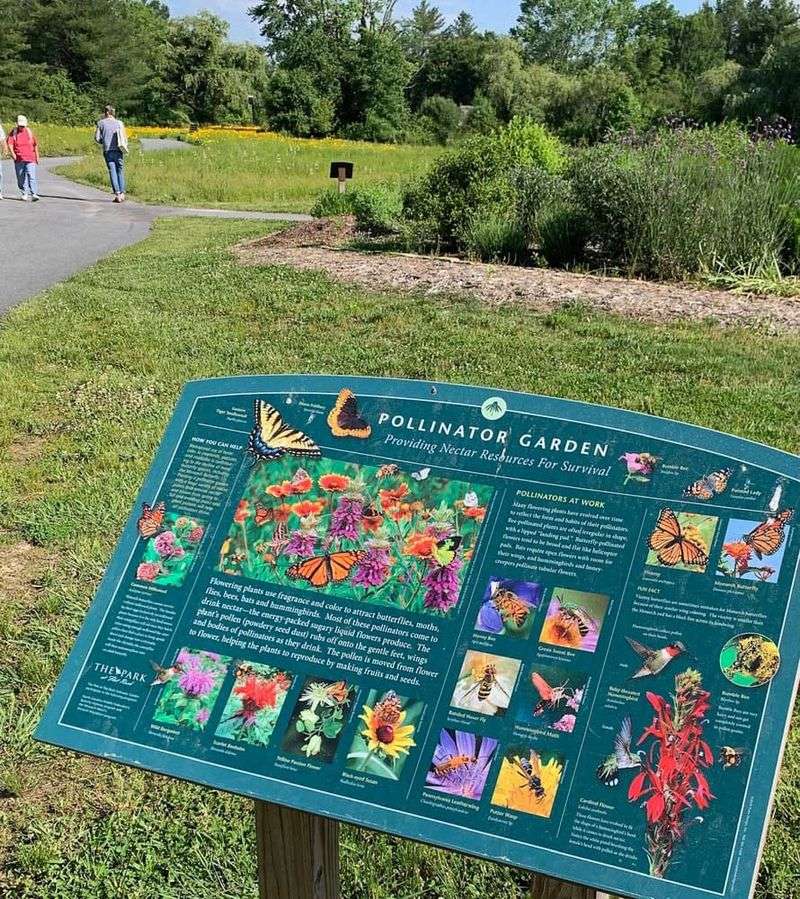
Planting sourwood improves the midsummer nectar supply in a North Carolina yard, but it does not create a pesticide-free zone. Bees and other beneficial insects remain vulnerable to insecticide exposure regardless of what native plants are growing nearby, and the responsibility for protecting them stays with the homeowner throughout the season.
EPA pollinator protection guidance identifies bloom time, time of day, and specific application restrictions as the key factors in reducing pesticide harm to bees. Avoiding insecticide applications while sourwood is in flower, while nearby plants are blooming, or while bees are actively foraging is the most direct way to reduce risk.
Early morning or evening applications, when bee activity is lower, are generally safer than midday treatments, but reading and following every product label remains the non-negotiable first step regardless of timing.
The broader point is that a sourwood tree works best as one carefully chosen component in a yard managed with pollinators in mind at every level, from plant selection to soil health to how and when any pest treatments are applied. A well-sited sourwood contributing midsummer nectar, surrounded by native companions that bloom in spring and fall, and managed without unnecessary insecticide exposure during bloom periods, gives North Carolina homeowners something genuinely useful: a yard that supports real pollinator traffic through the season rather than just looking the part.