
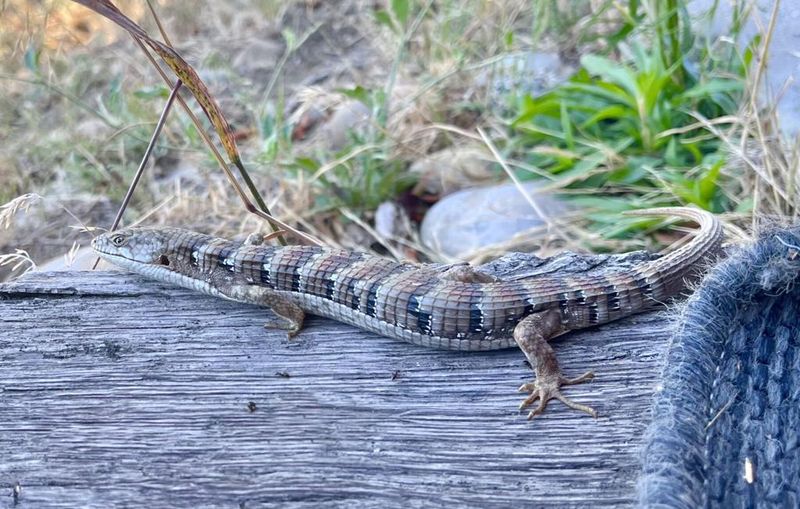
Spotting a thick-bodied, rough-scaled lizard working its way along your fence line can stop you mid-watering. Alligator lizards are native Californians that turn up in suburban yards more often than most homeowners realize, and their presence raises real questions about what the yard is offering and what the animal is actually doing there.
A summer sighting is worth understanding correctly, because the popular explanations tend to overpromise what one lizard can do for a garden.
A Summer Sighting Suggests Suitable Conditions, Not a Pest Diagnosis
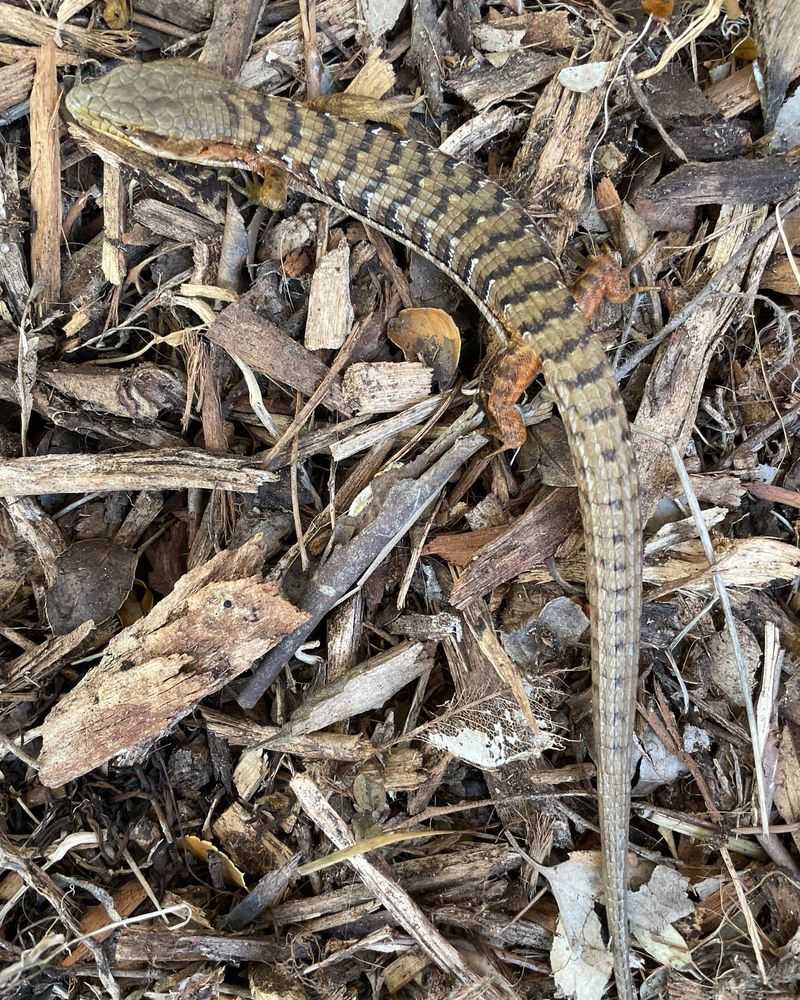
Seeing an alligator lizard along your fence during summer says something real about your yard, but probably not what you think. According to the California Department of Fish and Wildlife life history account for the southern alligator lizard, these animals are active during cooler parts of the day, and their activity can actually slow down during the hottest stretches of summer.
So a sighting in July or August may reflect a morning patrol or a shaded microclimate more than a seasonal emergence event.
A fence line is a reasonable place to encounter one because it may offer edge conditions the lizard finds useful: a shaded gap, a patch of leaf litter on one side, a stretch of warm wood or concrete nearby for temperature regulation. Describing a fence as a travel route or a preferred corridor goes further than the evidence supports.
The fence matters because of what surrounds it, not because fences themselves are documented alligator-lizard highways.
What a sighting cannot tell you is whether your yard is ecologically balanced, pest-free, or home to a resident population. Urban ecology research on southern alligator lizards describes the species as secretive and difficult to detect, which means one visible lizard is a poor indicator of how many are actually present.
The animal may be passing through from a neighboring property, drawn temporarily by a patch of cover or a concentration of invertebrates, or simply following conditions that shifted after a morning irrigation.
Treating the sighting as a yard report card sets up false expectations. The more useful reading is simpler: something about this spot, right now, meets the lizard’s minimum requirements.
That is worth knowing, and it is also about as far as a single observation can take you.
The Lizard May Be a Southern Alligator Lizard
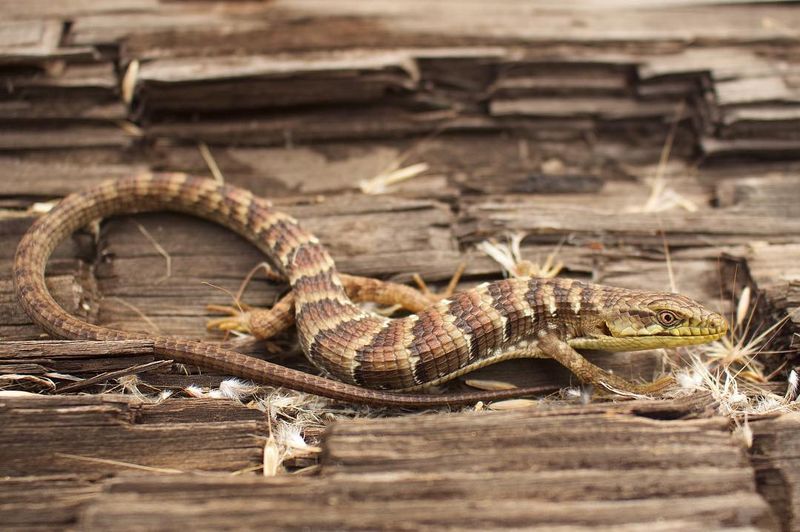
Most California homeowners who spot a large, rough-textured lizard near the fence are probably looking at Elgaria multicarinata, the southern alligator lizard. The CDFW life history account for the southern alligator lizard describes it as generally common in valley-foothill habitats, mixed chaparral, and open areas of mixed conifer forest, with a range covering much of California west of the Sierra-Cascade crest and west of the desert regions in the south.
Urban and suburban yards fall well within that footprint.
Compared to the western fence lizard (Sceloporus occidentalis), which most Californians recognize as the small blue-bellied lizard doing push-ups on patio walls, the alligator lizard looks conspicuously different. It is longer and heavier, moves with a slow, almost serpentine quality, and carries strongly keeled scales that give it a plated, armored appearance.
The resemblance to a small alligator is superficial but memorable. Calling alligator lizards and fence lizards cousins is the kind of loose shorthand that makes intuitive sense to a casual observer, but the two animals belong to different genera and different families entirely, as confirmed by the CDFW life history account for the western fence lizard.
The similarity is in size contrast and general lizard body plan, not in close shared ancestry.
Identification from a quick backyard glimpse or a blurry phone photo is not always reliable. Northern California homeowners may encounter the northern alligator lizard (Elgaria coerulea) instead, and the two species overlap in parts of the state.
The CDFW northern alligator lizard account notes differences in scale pattern and range that can help with a careful comparison, but confident species identification often requires a closer look than a fence-side encounter allows.
For most Southern California homeowners, a large, slow-moving, keeled lizard along the garden edge is a reasonable candidate for E. multicarinata. Hold the identification lightly and focus on what both species share: native status, insectivorous habits, and a preference for being left alone.
Cover, Prey, and Nearby Sunlight Make Yard Edges Useful
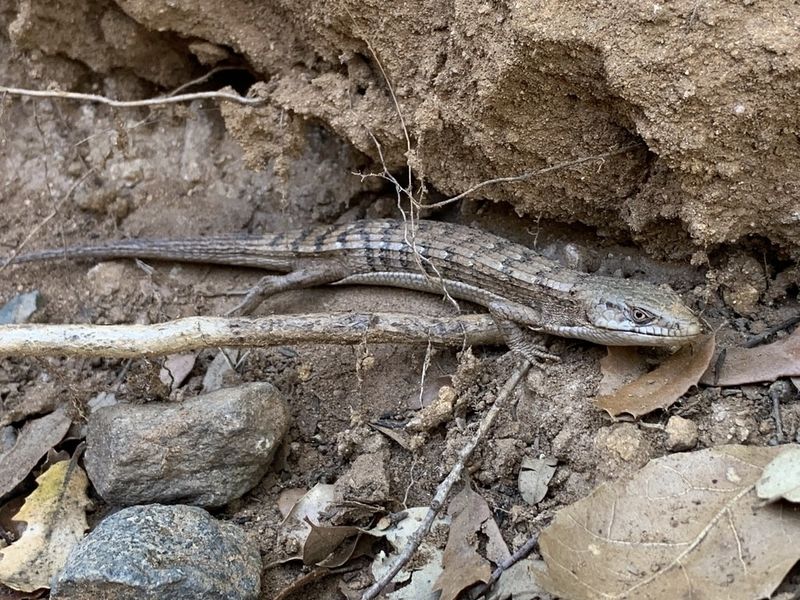
Rocks stacked along a retaining wall, a forgotten pile of flat stones near the vegetable bed, a section of fence base buried in leaf litter – these are not eyesores to an alligator lizard. They are functional real estate.
The National Park Service profile for the southern alligator lizard describes the species as relying on rocks, logs, dense vegetation, crevices, and surface debris for shelter and hunting, while preferring spots where shade and sun are both accessible nearby.
Yard edges and fence bases concentrate exactly these features. A fence board with a gap at the base, a row of ornamental boulders, or a hedge with a thick layer of dead leaves underneath can all serve as cover from which the lizard hunts invertebrates.
The animal does not need a pristine natural habitat to function; it adapts to the patchwork of cover and open ground that a typical California suburban yard provides. That adaptability is part of why sightings near homes are common.
Urban ecology research adds a useful layer here. A community-science study on southern alligator lizards in cities found that the species does use urban environments but also that tail injuries were more frequent in more urbanized areas, suggesting that the same yards offering habitat also expose lizards to cats, machinery, and other hazards.
A yard that looks hospitable from the lizard’s perspective is not automatically safe for it.
The distinction between naturally available habitat and habitat a homeowner deliberately creates matters here. Rocks and logs that already exist in your yard do not require any action on your part.
Adding new cover specifically for lizards is a different step, one that needs to be weighed against local fire-safety and defensible-space requirements before anything gets moved or piled up. CDFW notes that loose soil and surface debris also support the species, but the value of any specific feature depends on what surrounds it and what fire rules govern your property zone.
Their Insect-Eating Benefit Does Not Make Them Snail Control
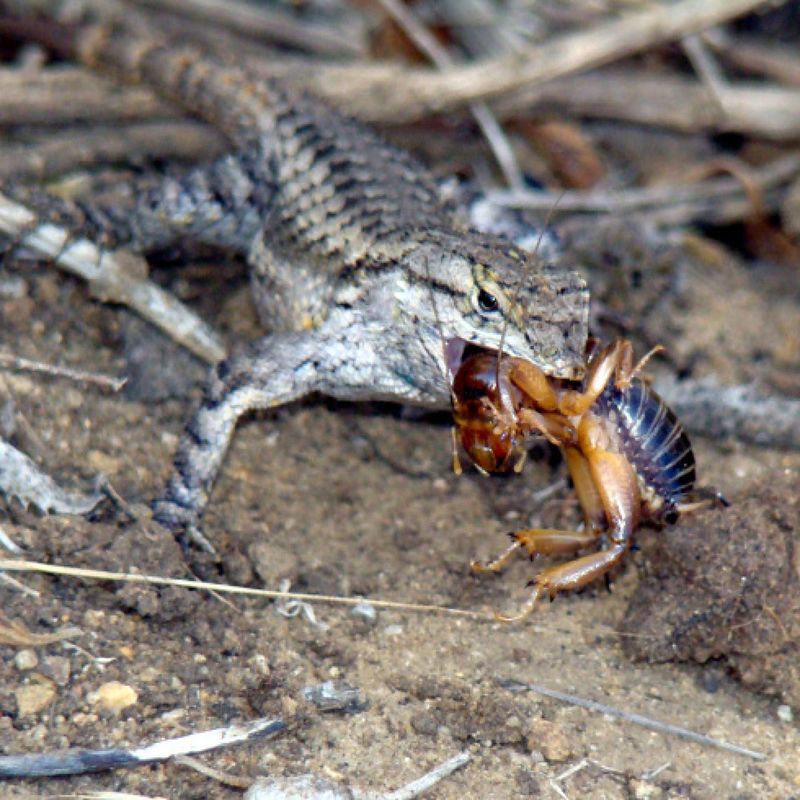
Southern alligator lizards do eat bugs, and that is genuinely useful in a garden. The CDFW southern alligator lizard account describes the diet as mostly insects and other arthropods, with larger prey taken occasionally, including other lizards.
One captive feeding observation cited in that account included grasshoppers, katydids, shield bugs, stink bugs, and spiders. That is a meaningful list of invertebrates that many gardeners would prefer not to have in large numbers.
UC IPM’s guidance on lizards supports leaving California lizards alone partly because they may consume pest insects, while also noting that documented prey includes beetles, ants, wasps, aphids, grasshoppers, and spiders. None of that makes the alligator lizard a guaranteed biological control service.
The animal hunts for its own nutritional needs, not for your garden’s benefit, and there is no published study quantifying how many pest insects a yard lizard actually removes over a season.
The snail and slug question deserves a direct answer. A widely repeated claim holds that alligator lizards hunt garden snails and slugs, making them natural pest managers for one of California gardeners’ most persistent problems.
The strongest authoritative source for the southern alligator lizard does not list snails or slugs as principal prey. The CDFW northern alligator lizard account does mention snails, but that evidence applies to a different species and should not be automatically transferred to the southern alligator lizard, which occupies most Southern California yards.
If snails or slugs are damaging plants in your garden, waiting for a lizard to fix it is not a reliable strategy. UC IPM’s snail and slug management guidance notes that natural enemies are rarely effective enough to provide satisfactory garden control on their own, and recommends identification-first approaches: hand-picking, habitat modification, resistant plant choices, and carefully selected baits when necessary.
A lizard along your fence is a welcome addition to the yard’s wildlife, not a substitute for an actual snail management plan.
Support Habitat Without Violating Fire or Pesticide Rules
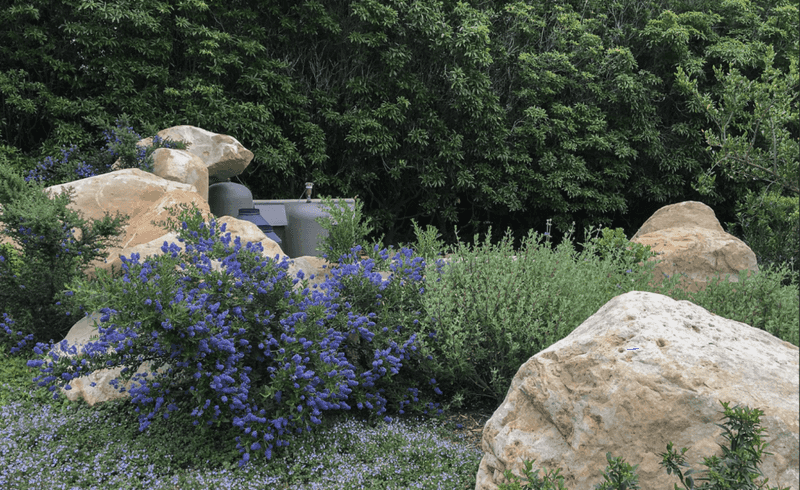
Wanting to support a native lizard in your yard is a reasonable goal, and the steps involved are mostly about restraint rather than major projects. CDFW describes southern alligator lizards as using rocks, logs, surface debris, and dense vegetation for shelter, which means existing yard features you might otherwise clear away could already be providing habitat.
Leaving undisturbed what is already there is often more valuable than adding anything new.
Pesticide reduction fits naturally into this picture. Alligator lizards depend on invertebrates for food, so broad-spectrum pesticide applications that reduce insect and arthropod populations remove the prey base the lizard depends on.
UC IPM recommends leaving lizards alone and notes that unnecessary pesticide use works against the conditions that allow them to persist in a yard. That recommendation comes from general ecological reasoning and UC IPM’s integrated pest management framework, not from a controlled alligator-lizard yard experiment, but the logic is sound and consistent with how invertebrate food webs work.
Fire safety is a non-negotiable condition for any habitat advice in California. Adding piles of wood, dense combustible debris, or heavy ground cover to support lizards is not appropriate on properties in fire-hazard severity zones or where local defensible-space rules restrict vegetation and debris within set distances from structures.
Check your local requirements before making any changes to ground cover or vegetation density, especially on hillside or wildland-interface properties. The habitat features that benefit lizards and the fire-safety requirements that protect homes are not always compatible, and fire safety takes priority.
Urban ecology research found that tail injuries in southern alligator lizards increased with urbanization, pointing to cats and other human-associated hazards as likely risks. A yard that provides cover and prey can still be a dangerous place for the lizard, which is worth keeping in mind when evaluating whether your outdoor cat’s access to garden edges is compatible with wildlife-friendly goals.
Leave Outdoor Lizards Alone and Handle Indoor Encounters Carefully
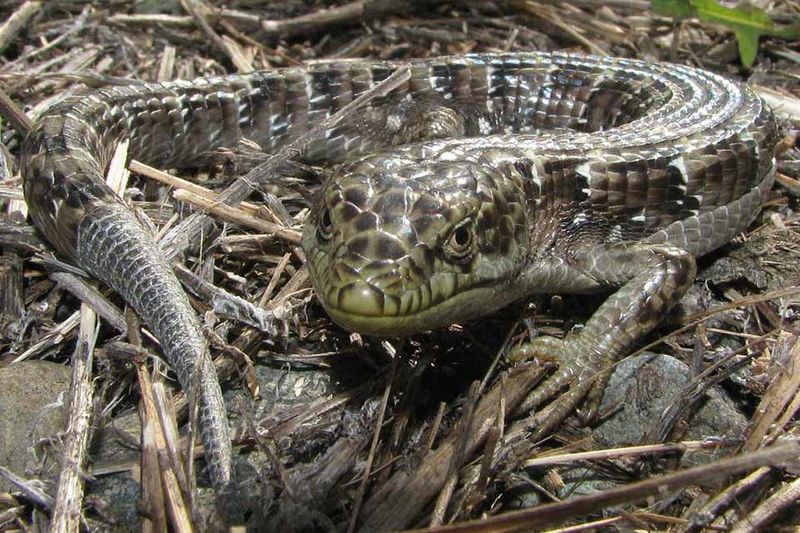
An alligator lizard outside is doing exactly what it should be doing. The correct response to one sunning near your garden bed or moving along the fence base is to observe it from a comfortable distance and leave it alone.
No intervention is needed, and none is recommended.
Indoor encounters are a different situation. UC IPM advises covering the lizard with a small box, sliding a piece of cardboard carefully underneath, and carrying it outside for release.
That method avoids direct contact and gives the animal a way out without injury to either party. Resist the urge to grab it by hand.
Alligator lizards can and do bite when they feel cornered, and the National Park Service notes that their jaws are powerful enough to make the experience genuinely painful.
Beyond the bite risk, reptiles can carry Salmonella bacteria even when they appear completely healthy. CDC guidance on reptiles and amphibians recommends washing hands thoroughly after handling any reptile or objects that have been in contact with one.
Children under five, older adults, and people with compromised immune systems face higher health risks from reptile-associated illness and should avoid direct contact entirely.
Capturing, relocating, purchasing, or keeping a wild alligator lizard as a pest-control strategy is not a legal or practical option. UC IPM is clear that taking and possessing California native lizards is regulated under state law and that native lizards cannot be sold or used commercially.
The animal in your yard belongs to California’s native wildlife community, not to the pest-management toolkit. If the lizard is outdoors and not causing a problem, the best thing you can do is nothing at all.
Use Tolerance as the Default, Not as Your Only Pest Strategy
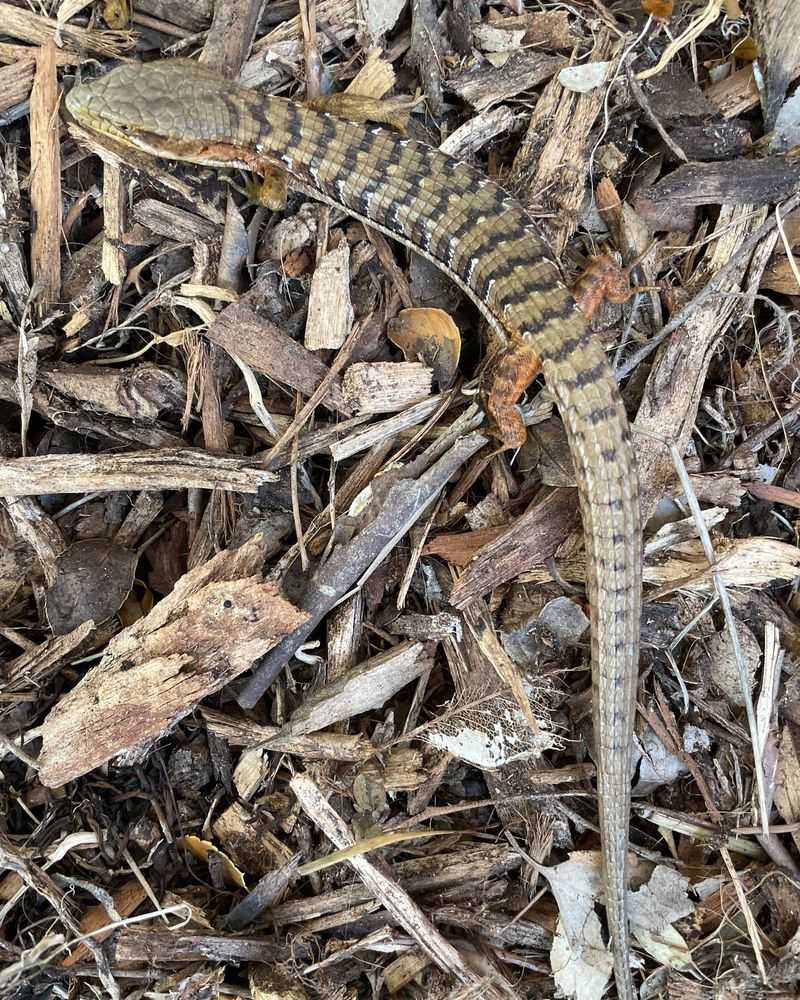
A practical decision rule covers most situations: if an alligator lizard is outside and causing no problem, leave it alone. Protect existing cover where your local fire-safety and defensible-space rules allow it, and reduce pesticide applications that would deplete the invertebrate prey the lizard depends on.
UC IPM supports this approach because California lizards may consume pest insects and cause no measurable plant damage, making tolerance the lowest-effort and most ecologically consistent response.
For active pest problems, tolerance of a lizard is not a substitute for management. UC IPM’s snail and slug guidance is clear that natural enemies alone are rarely sufficient for satisfactory garden control, so confirmed damage from snails, slugs, or other pests warrants an identification-first integrated pest management response.
Identify the pest, assess the damage level, and choose the most targeted method available before reaching for a broad-spectrum product.
What the lizard’s presence actually signals, as CDFW’s life history account and the urban ecology research both suggest, is that your yard currently offers something workable: shelter, prey, a usable temperature range, or some combination of the three. That is more about your yard’s existing conditions than about any deliberate choice you made.
A native lizard working the edges of a California garden is worth welcoming – just not worth mistaking for a full-service pest-management crew.