
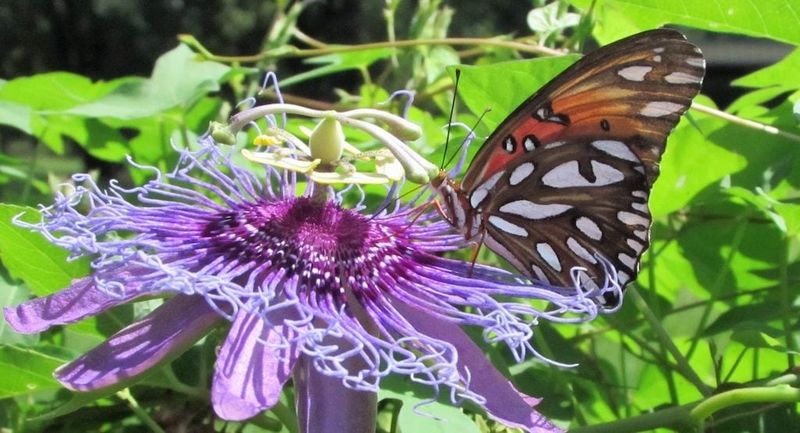
Retaining walls are practical, but most homeowners would rather not stare at a bare concrete or block face all summer long. Purple passionflower, also called maypop, is a North Carolina-native vine that can cover a supported trellis in front of that wall and pull double duty as a documented host plant for fritillary butterflies.
Before you plant one, though, there are a few important things to know: maypop needs its own climbing structure, goes dormant after frost, and offers more value to butterfly caterpillars than to adult butterflies looking for fall nectar. Get those details right and this overlooked native can quietly become one of the hardest-working plants in your yard.
Maypop offers a strong match for a seasonal wall screen
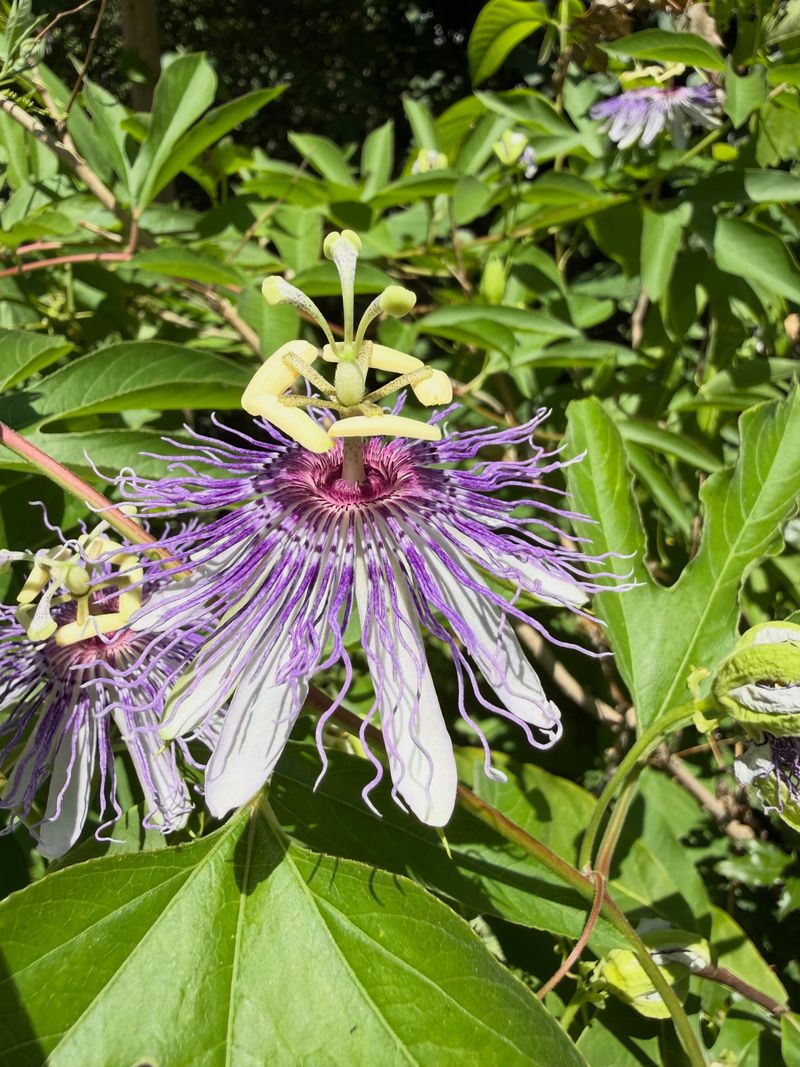
Purple passionflower, known botanically as Passiflora incarnata and colloquially as maypop, is native across all three of North Carolina’s major regions: the Coastal Plain, the Piedmont, and the mountains. That broad native range matters because it means you are not coaxing a marginal or imported plant through conditions it barely tolerates.
According to NC State Extension’s Plant Toolbox profile for Passiflora incarnata, the vine is a fast-growing, herbaceous perennial that can reach roughly 12 to 25 feet in length under favorable conditions and tolerates full sun to part shade. Those numbers make it a genuinely capable candidate for covering a trellis or wire grid positioned in front of a retaining wall.
During the growing season, maypop can fill in a vertical support with dense, attractive foliage and its unmistakable lavender blooms. That coverage is seasonal rather than permanent, and the vine works best when expectations are set accordingly.
Think of it as a summer screen with wildlife benefits rather than a year-round privacy fence.
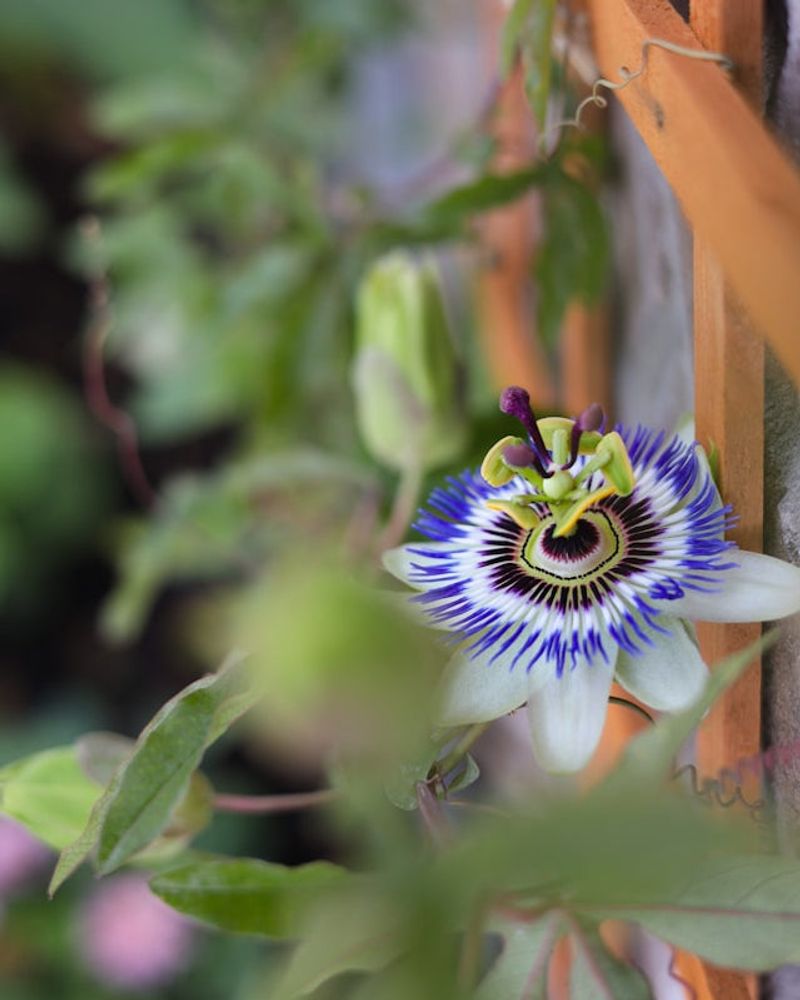
One distinction worth making before you head to a nursery: not every passionflower on the shelf is Passiflora incarnataPassiflora incarnataPassiflora lutea. As NC State’s critter-spotlight feature on passionflower notes, North Carolina has two native passionflowers – and the smaller-flowered .
Many nurseries also carry tropical or nonnative passionflower species. Always check the scientific name on the tag, and ask specifically for Passiflora incarnata if you want the vine described in this article.
Choosing the correct species is the first practical step toward getting the wall screen and butterfly habitat you are aiming for.
Give the tendrils a separate structure to climb
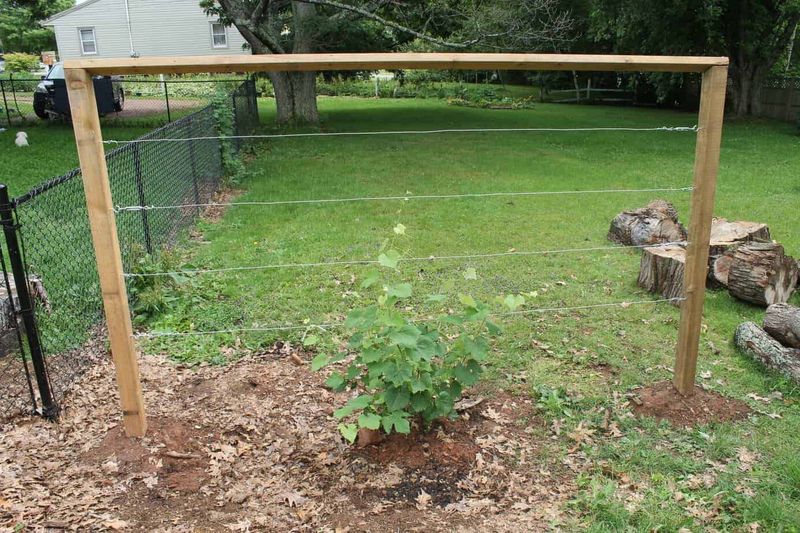
Maypop climbs by wrapping slender tendrils around whatever narrow support it can find. That mechanism works beautifully on wire, lattice, mesh, or a wood trellis – but it does not allow the vine to adhere directly to a broad, smooth masonry face the way English ivy or climbing hydrangea can.
Expecting maypop to self-attach to a flat retaining wall is the most common setup mistake, and it leads to a vine that sprawls across the ground instead of rising up to cover anything. According to Illinois Extension’s guide to vine attachment methods, tendril climbers need a support with elements narrow enough for the tendrils to grip – typically wire, twine, or thin wooden slats.
The practical fix is straightforward: install a freestanding or wall-anchored trellis, wire grid, or welded-wire panel in front of the retaining wall and train the vine onto that structure. Position the support so it stands approximately 4 to 8 inches away from the wall face.
Illinois Extension’s guidance on caring for vines recommends roughly 4 to 6 inches of clearance, while Mississippi State Extension’s green-wall planting guidance suggests 6 to 8 inches to maximize airflow and reduce moisture buildup behind the structure. Splitting that range and aiming for about 6 inches is a reasonable middle ground for most North Carolina sites.
That gap between the support and the wall serves several purposes beyond just airflow. Retaining walls need periodic inspection for cracks, shifting blocks, drainage issues, and mortar deterioration.
A wall-spaced support lets you pull the trellis forward, assess the masonry, and make repairs without ripping out the vine or its anchor points. Treating the trellis as a separate, inspectable system – rather than fusing it permanently to the wall – keeps the long-term maintenance manageable and protects both your investment in the plant and the structural integrity of the wall itself.
Match the planting site to maypop’s needs
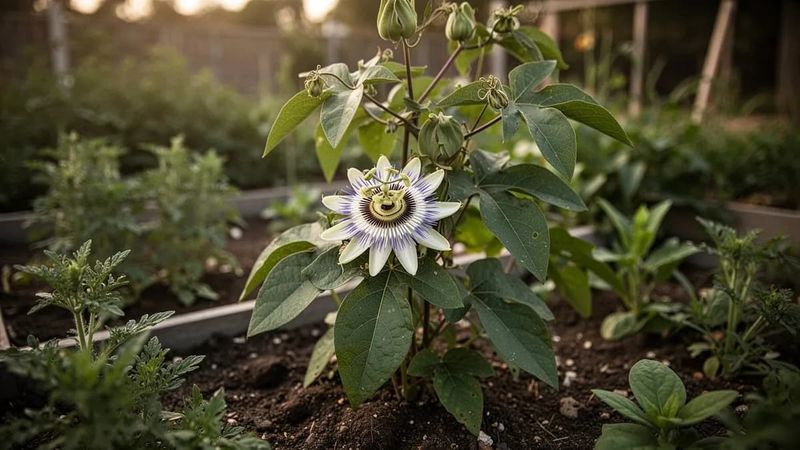
Maypop performs best in full sun but will tolerate part shade without much complaint. Average-fertility soil with reliable drainage is the target – this is not a vine that rewards heavy clay or soggy ground.
NC State’s plant profile confirms that established plants handle drought reasonably well, but notes that poorly drained winter soil can contribute to root rot. Retaining walls often have variable moisture conditions at their base, so check that water moves away from the planting area rather than pooling against the wall footing before you commit to a spot.
Space near a retaining wall can be tight. If the planting bed is narrow, prioritize a root zone with at least 12 to 18 inches of workable soil so the plant can establish and spread laterally by its natural suckering habit.
Keep the vine away from downspouts, drainage outlets, and any area where water routinely collects after heavy rain. One placement rule that is non-negotiable: do not plant maypop directly against your house or within the defensible space around your home’s foundation.
NC State Extension’s guidance on preventing fire damage assigns maypop a high flammability rating and advises against placing it in that zone. A retaining wall that sits away from the house structure is a much safer and more appropriate location.
When a vertical screen simply is not practical – perhaps the wall is too shaded, the planting space is too cramped, or a trellis would block a walkway – NC State also recognizes maypop as a capable sprawling groundcover. The plant does not need to climb in order to flower, so it can work horizontally along a slope or bank if a vertical installation is not the right fit for your site.
That flexibility makes it easier to find a workable placement even on challenging properties.
Expect summer coverage and winter dieback
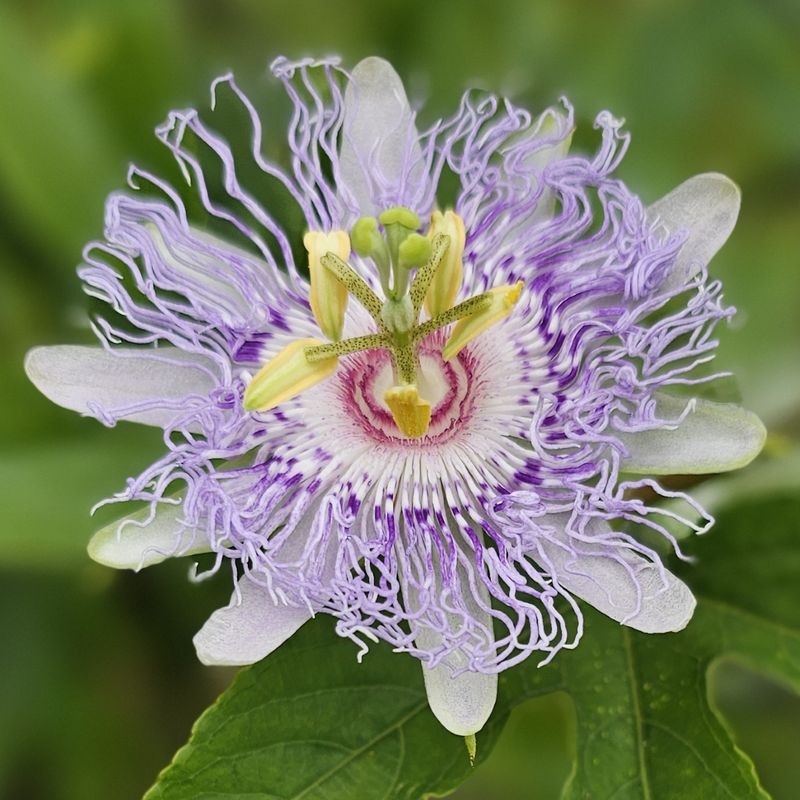
One of the most useful things you can know about maypop before planting is that it is deciduous and herbaceous. That combination means the top growth can die back completely to the ground after the first hard frost, leaving the trellis bare and the retaining wall fully visible through winter and early spring.
In the warmer parts of North Carolina’s Coastal Plain, the vine may retain some stem structure longer into the season, but gardeners in the Piedmont and mountains should expect a significant dormancy period and plan the planting around it.
The seasonal timeline for North Carolina is specific enough to be worth committing to memory. According to the North Carolina Division of Parks and Recreation’s vascular plant records for Passiflora incarnata, flowering occurs mainly from May through July, with sporadic later blooms possible.
Fruits develop from July through October. The NC State plant profile reinforces that the vine can return vigorously from its root system each spring, so dormancy is not the same as death – but the winter gap in coverage is real and predictable.
Setting this expectation before planting prevents disappointment and helps you plan a more complete planting scheme. Maypop can deliver a genuinely impressive summer screen, with dense foliage and striking purple blooms filling a trellis from late spring through midsummer.
What it cannot do is provide the kind of evergreen privacy that some homeowners picture when they imagine a wall covered in vines. If year-round screening matters, pair maypop with a low-growing evergreen shrub in front of or beside the trellis to carry the visual work through the off-season months.
Its main butterfly contribution comes from the foliage
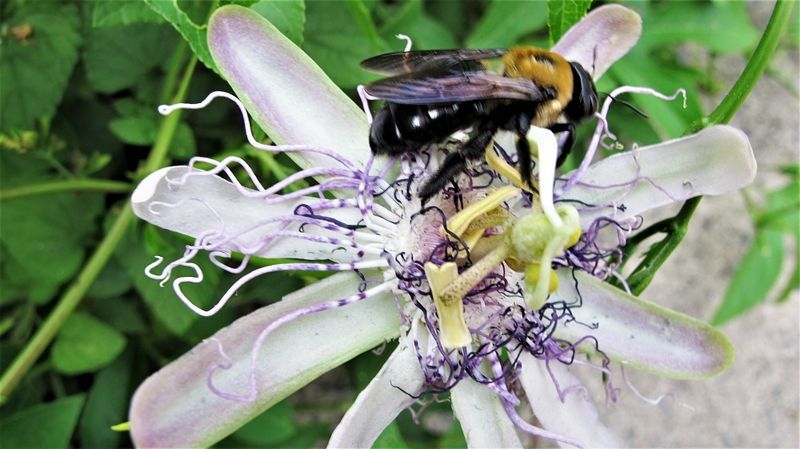
The phrase “feeding fall butterflies” in the article title needs an honest explanation. Maypop’s strongest and most documented contribution to butterfly life is as a larval host plant, not as a fall nectar source.
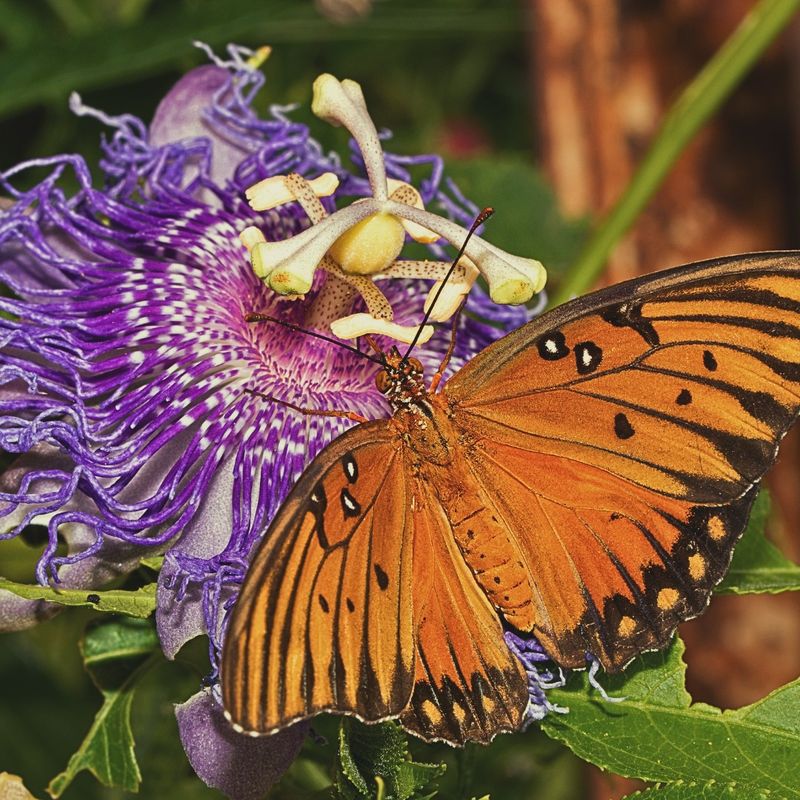
Gulf fritillary females seek out passion vines specifically to lay their eggs, and the caterpillars that hatch feed on the foliage. NC State Extension’s Butterflies in Your Backyard guide lists passionflower as a key host plant for fritillary species, and variegated fritillary caterpillars are also documented users of maypop in North Carolina.
This larval-host relationship is where the vine genuinely earns its butterfly reputation.
Adult Gulf fritillaries are a different story. According to the Gulf fritillary species account on Butterflies and Moths of North America, adult butterflies obtain nectar from a wide range of flowering plants – lantana, composites, and other flowers rather than passionflower itself.
A single maypop vine will attract females looking for an egg-laying site, but it will not serve as a complete nectar buffet for the adult butterflies flying around your yard in late summer and fall. The NC Parks plant record also confirms that maypop’s principal flowering window in North Carolina runs from May through July, which limits its direct contribution as a late-season nectar plant.
Filling the fall nectar gap requires adding separate plants alongside maypop. Native asters, goldenrods, mountain mint, and thoroughworts all bloom later in the season and provide the adult nectar that fritillaries and other butterflies actively need from August through October.
NC State’s butterfly guide recommends planting a succession of nectar sources because different species are active at different times. Maypop handles the host-plant side of the equation with real effectiveness; these fall bloomers handle the nectar side.
Together, the combination covers far more of the butterfly life cycle than either group could alone.
Manage the vine and tolerate caterpillar damage
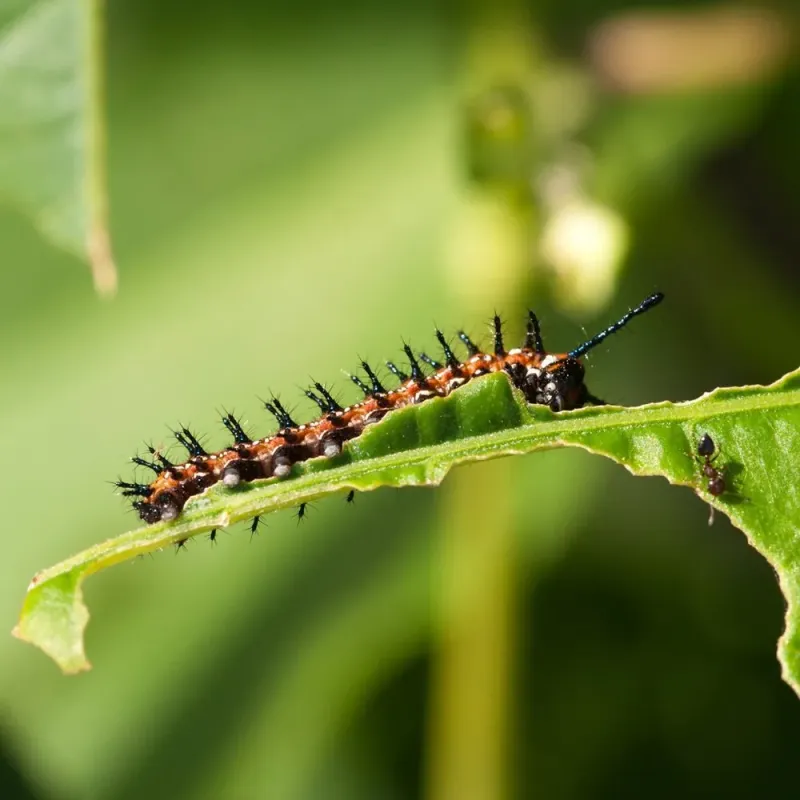
Seeing a maypop vine stripped of most of its leaves can feel alarming, especially if you spent the better part of a spring getting it established on a new trellis. Before reaching for a spray, check for orange caterpillars with black spines – those are Gulf fritillary larvae doing exactly what the plant is there to support.
Defoliation from caterpillar feeding is a sign the vine is functioning as intended wildlife habitat, not a sign that something has gone wrong. Ask Extension’s guidance on passionflower caterpillar damage and the NC State butterfly guide both discourage routine insecticide use when the goal is butterfly support.
The vine will typically refoliate after feeding pressure eases.
Root suckering is the management task that surprises most new maypop growers. The plant spreads aggressively underground and can send up new shoots several feet from the main stem, appearing in lawns, neighboring beds, and through mulch.
University of Maryland Extension’s passionflower spread advisory confirms that unwanted suckers need consistent removal to keep the plant contained. Pull suckers as soon as they appear, or use a sharp spade to sever them at the root.
Where the planting space is clearly defined, a buried root barrier can reduce lateral spread without harming the main plant.
A few additional management habits keep the vine looking its best over time. The University of Arkansas Extension’s passion flower profile notes that maypop responds well to pinching after the first growing season, which encourages a bushier, fuller form rather than a few long, sparse shoots.
Cut back dead or frost-damaged stems in late winter before new growth emerges, and retrain any stems that have wandered off the support structure. The NC State plant profile is candid that this vine rewards monitoring, not neglect.
Build a quick monthly check into your routine from spring through fall and the plant stays manageable; ignore it for a full season and the suckers will have moved into places you did not intend.
Keep the installation away from household hazards
A retaining wall and a house wall are not interchangeable planting sites for maypop. A retaining wall that stands independently in the yard – holding back a slope or defining a grade change – is generally a reasonable location for a vine on a separate trellis.
A house wall is not. NC State’s plant profile gives maypop a high flammability rating, and NC State Extension’s fire-damage prevention guidance specifically advises against planting high-flammability species within a home’s defensible space.
Keep the vine away from the foundation, siding, eaves, and any wood framing that connects to the house structure.
The wall-spaced trellis setup described earlier in this article also protects the masonry itself. Retaining walls need periodic inspection – blocks shift, mortar cracks, drainage pipes clog, and weep holes can become blocked over time.
A support structure that stands 4 to 8 inches away from the wall face lets you slide behind it or remove it temporarily for a thorough look without disturbing the vine significantly. Fusing the trellis directly to the wall or allowing stems to grow into cracks and joints creates a situation where the vine and the wall cannot be assessed or repaired independently.
Two additional cautions apply to this plant. First, do not eat the leaves or stems.
The NC State plant profile identifies leaves and stems as poisonous, with possible effects including nausea, vomiting, drowsiness, and irregular heartbeat after ingestion. Ripe maypop fruits are a separate matter and have a long history of use, but this article will not offer preparation advice – consult a qualified source if fruit edibility is your interest.
Second, if you garden in Florida or Texas rather than North Carolina, note that butterfly activity, winter survival, and vine growth patterns can differ significantly from what this article describes. University of Florida IFAS Extension’s butterfly gardening guide and the Gulf fritillary species account both reflect conditions in which Gulf fritillaries and heliconian species may be active for longer portions of the year than in North Carolina.
Build the butterfly planting around maypop
Putting the full plan together is straightforward once the individual pieces are clear. Start by sourcing correctly identified Passiflora incarnata from a reputable native plant nursery – confirm the scientific name on the tag.
Install a separate trellis, wire grid, or lattice panel in front of the retaining wall with roughly 6 inches of clearance, anchor it so it can be moved for wall inspection, and plant the vine in full sun to part shade with well-drained soil. According to North Carolina Division of Parks and Recreation records, the vine will flower from late spring through midsummer and produce fruit through October, so plan for a strong summer show with a natural wind-down as temperatures drop.
Monitor suckers monthly, accept seasonal dieback as normal, and leave caterpillar-damaged foliage alone unless the vine is under threat from a different pest. Then add a cluster of fall-blooming native nectar plants – native asters, goldenrods, mountain mint, or thoroughworts – nearby so adult butterflies have a reliable food source through October.
NC State Extension’s butterfly gardening resource makes a clear case for planting nectar sources in succession, because no single species covers the full season that North Carolina butterflies are active.
Maypop will not solve every landscape problem, and it is not a set-it-and-forget-it plant. What it can do – screen an unattractive wall for several months, host two documented fritillary species, and connect a North Carolina yard to its native plant heritage – is genuinely useful and worth the modest management it requires.
The best native plantings are not the ones that need nothing; they are the ones that give back more than they ask for.