
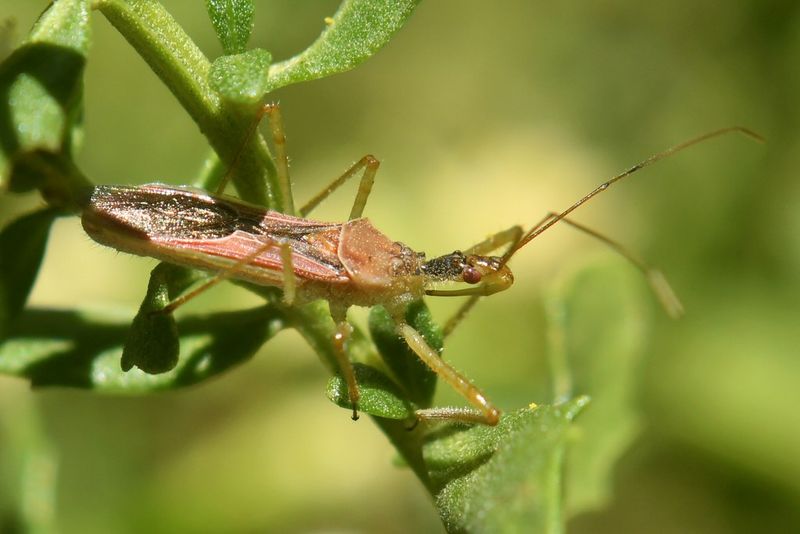
Most California gardeners who spot a long-legged, sharp-beaked bug stalking their tomato plants reach for a shoe first and ask questions later. That instinct could cost you a useful ally.
California’s leafhopper assassin bug, Zelus renardii, is a native predator that can prey on aphids, caterpillars, leafhoppers, and other insects that damage vegetable beds. Learning to recognize it, and choosing to leave it alone, is one of the simplest no-cost steps in a smarter, less chemical-dependent approach to garden pest management.
Meet California’s leafhopper assassin bug—not every assassin bug in the state
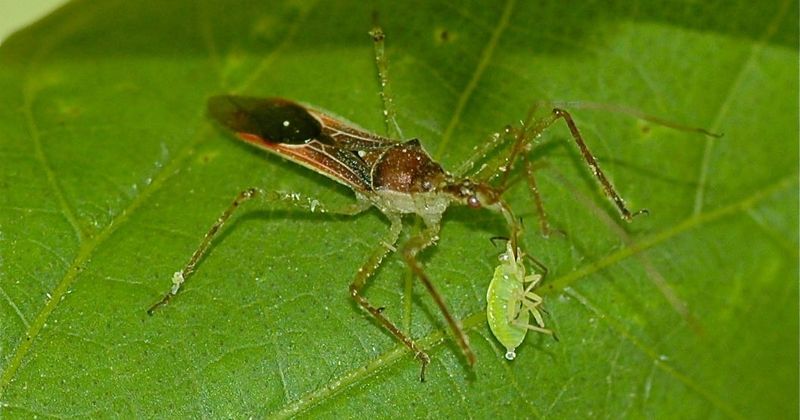
California’s vegetable gardens host a surprising number of insect predators, and one of the most easily overlooked is the leafhopper assassin bug, Zelus renardii. UC IPM’s natural enemies gallery describes it as a native, generalist predator found in gardens and landscapes throughout the state, capable of attacking many small-to-medium insects including aphids, leafhoppers, caterpillars, and beetle larvae.
Knowing this species exists is the first step toward making a better decision the next time one shows up on your pepper plants.
The article title uses the broad phrase “California assassin bugs,” but that framing needs an immediate correction. California is home to multiple assassin bug genera and several ZelusZ. renardii species, and not every fierce-looking reduviid you encounter belongs to .
The UC Riverside Heteropteran Systematics Lab catalogs a wide diversity of assassin bug lineages, including blood-feeding relatives in the subfamily Triatominae, commonly called kissing bugs or conenose bugs, that require entirely different identification and context.
Separating Z. renardii from those relatives matters for two reasons. First, kissing bugs feed on vertebrate blood and carry different health considerations than predatory garden species do.
Second, Florida’s commonly photographed garden assassin bug is the milkweed assassin bug, Zelus longipes, a larger, often orange-brown species that is not the same bug found hunting leafhoppers in California vegetable beds.
The practical takeaway for California homeowners is straightforward: observe a resident Z. renardii and conserve it when plant damage stays at a tolerable level, but treat it as one piece of integrated pest management rather than a guaranteed solution. A single predator, or even a small population, cannot promise a pest-free bed, and the species is a generalist that will eat beneficial insects as well as pests.
How to recognize Zelus renardii before deciding what to do
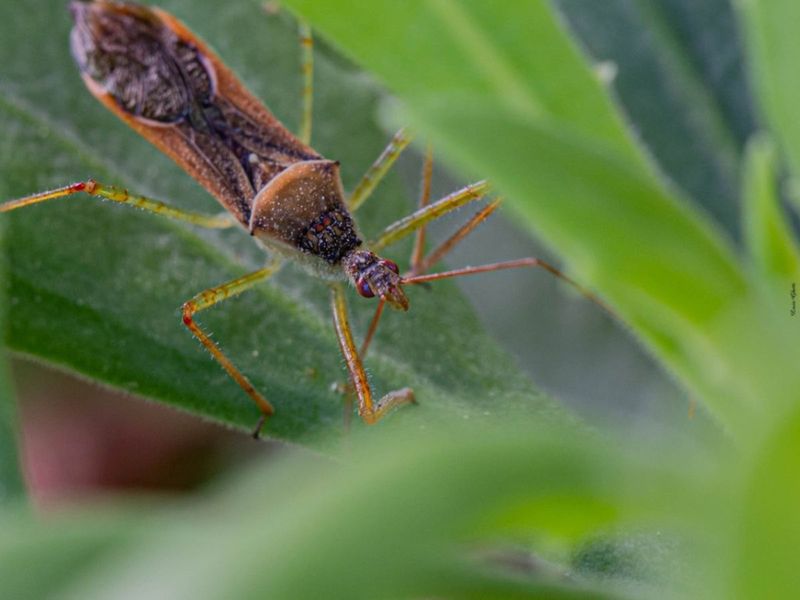
Confident identification starts with the adult body plan. UC IPM describes Z. renardii adults as slender, long-legged bugs roughly one-half to three-quarters of an inch long, with a narrow head and a prominent, curved piercing beak folded beneath the body when not in use.
Coloration is variable, ranging from reddish-brown to yellowish-green, so color alone is not a reliable field mark. Look instead at the overall silhouette: narrow waist, elongated legs, and a beak that is clearly thicker and more robust than a plant-feeding bug’s stylet.
Nymphs, the immature wingless stages, are where most misidentifications happen. Young Z. renardii nymphs can look similar to young leaf-footed bugs, which are plant feeders you generally do not want to encourage on squash or tomatoes.
The key visual difference is leg and antenna color. Assassin bug nymphs typically have pale legs and pale antennae, while young leaf-footed bugs generally show darker legs and antennae.
If you are uncertain, photograph the insect and compare your image to UC IPM’s natural enemies gallery before acting.
Egg clusters are the third identification target, and they deserve special attention because they are easy to dislodge accidentally during weeding or pruning. Z. renardii eggs are dark, barrel-shaped, and capped with a pale white top.
They are deposited in tight clusters attached directly to plant surfaces, often on stems or the undersides of leaves. The clusters can look unusual enough that a gardener’s first instinct is to wipe them off, but doing so eliminates the next generation of predators before they hatch.
A practical rule: if you find an unfamiliar egg cluster and cannot confirm what laid it, take a photograph and leave it in place for at least a week. Observation costs nothing, and removing a cluster of assassin bug eggs is a one-way decision you cannot reverse.
When genuine uncertainty remains, your local UC Cooperative Extension office or a master gardener program can help with identification from a clear photograph.
Its hunting method explains both its value and its limits
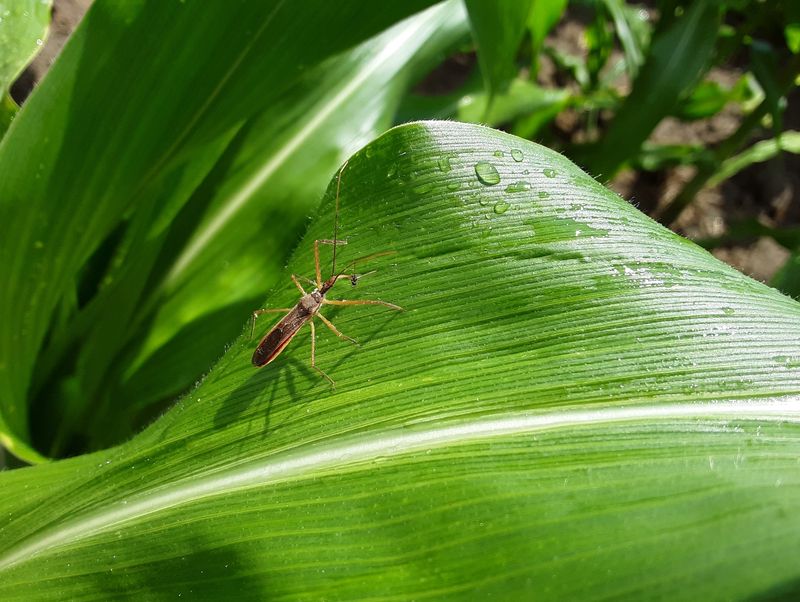
Watching a Z. renardii feed is a quick lesson in why the species earns its common name. Adults and nymphs stab prey with their stout beak, inject digestive saliva that liquefies internal tissue, and then draw the dissolved contents back out.
The process is fast and effective against a wide range of prey sizes, which is part of what makes this predator interesting to vegetable gardeners.
UC IPM lists the prey range as including caterpillars, leaf beetle and sawfly larvae, aphids, leafhoppers, thrips, and beetles. That list covers several of the most common complaints in California vegetable beds: aphid colonies on brassicas, caterpillars on tomatoes and peppers, and leafhoppers on beans.
Agricultural observations from Texas reinforce the broad prey capacity. Texas AgriLife’s field guide to cotton predators identifies Z. renardii as capable of capturing relatively large caterpillars and even adult boll weevils, prey that is substantially bigger than an aphid.
That documented prey range is real, but it describes what the bug can do under observed conditions, not what a few individuals will reliably accomplish in a home vegetable bed. A 2022 study documenting Z. renardii in southern Italy confirmed the species’ capacity to establish and prey on local insects in new environments, which speaks to its adaptability, but adaptability is not the same as guaranteed pest suppression.
UC IPM is explicit that assassin bugs are not considered among the most important biological-control predators in home gardens. Groups such as bigeyed bugs and minute pirate bugs receive higher marks for consistent pest reduction.
A resident Z. renardii may help reduce pest pressure on your tomatoes or squash, but counting on it to clear a heavy aphid infestation or stop a caterpillar outbreak is expecting more than the evidence supports. Think of it as one active participant in a larger food web, not a hired exterminator working your specific beds.
A generalist predator can help while disrupting other allies
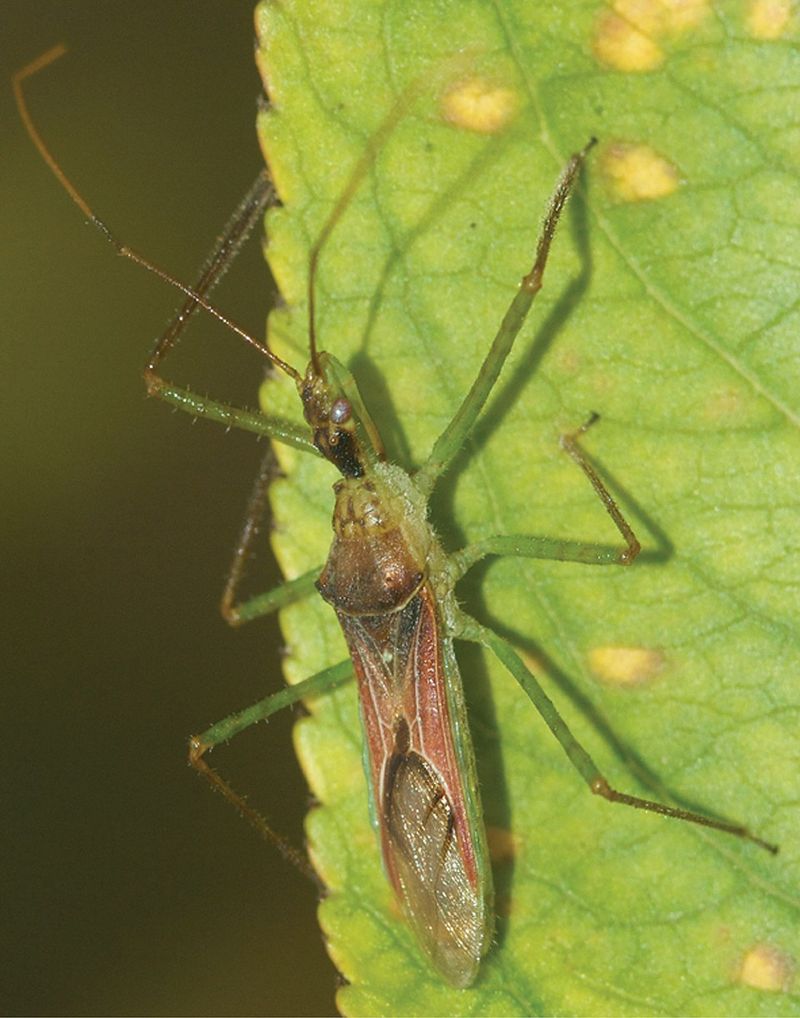
Before settling on a conservation plan, gardeners need to understand the ecological tradeoff that comes with any generalist predator. Zelus renardii does not sort insects into “pest” and “beneficial” categories before striking.
UC IPM notes that assassin bugs may consume bees, lacewings, lady beetles, and other natural enemies alongside the aphids and caterpillars gardeners want controlled. A bug that eats your aphids on Monday can eat a visiting pollinator or a lacewing larva on Tuesday.
The lacewing example is particularly instructive. Research published in Ecological EntomologyZ. renardiiZ. renardii and reviewed through Zendy found that and lacewing larvae both prey on aphids, but also attacked the lacewings themselves.
When assassin bug numbers were high enough to suppress lacewing populations, the net effect on aphid control could actually worsen, because the lacewings were doing meaningful aphid suppression that the assassin bugs then disrupted. That finding is a meaningful counterweight to any framing of Z. renardii as straightforwardly beneficial.
None of this means the species should be treated as a garden villain. The point is that maximizing assassin bug numbers is not a sound strategy, and that a diverse food web with many predator types is more resilient than one dominated by a single generalist.
Lady beetles, parasitic wasps, ground beetles, and minute pirate bugs all contribute to pest suppression, and protecting them matters as much as protecting any one assassin bug.
For a California homeowner, the practical framing is to accept tolerable pest damage while supporting overall predator diversity. When aphids appear on your kale, check whether natural enemies are already present and active before reaching for a spray.
A mixed community of predators, including the occasional Z. renardii, is more likely to keep pest populations in check over a full growing season than any single species working alone.
Create habitat that supports resident predators generally

Habitat is the foundation of any conservation strategy for native predators, and the good news for California gardeners is that useful habitat improvements often double as attractive garden design. UC IPM explains that insectary plants, flowering species grown to attract and support natural enemies, can provide nectar, pollen, and prey for predatory insects, but their effectiveness varies with the specific garden and pest situation.
No single plant is a guaranteed magnet for Z. renardii or any other assassin bug.
A UC ANR hedgerow study in California documented assassin bugs, including Z. renardii, among the natural enemy communities present in plantings of native shrubs and perennial grasses bordering agricultural fields. That finding supports habitat diversity as a reasonable conservation approach, but it reflects a research setting with established multi-species plantings, not a controlled experiment proving that a particular flower will draw assassin bugs into your backyard.
UC Davis entomologists have observed Z. renardii on plants including cosmos, passionflower, nectarine, and Cleveland sage, as noted in a UC Davis garden article on assassin bugs. Those are observational records collected during garden monitoring, not controlled attraction trials, so treat them as reasonable starting points rather than reliable prescriptions.
Growing a variety of flowering plants with staggered bloom times is a sounder strategy than chasing a specific species list.
Practical habitat steps for California vegetable gardeners include maintaining a border of mixed flowering annuals and perennials near vegetable beds, leaving some plant structure standing through the off-season to provide overwintering shelter, and avoiding heavy cultivation that strips away ground-level refuges. A hedgerow of native shrubs along a fence line, even a modest one, adds both shelter and a prey base that can sustain a wider community of beneficial insects.
The goal is a yard that keeps multiple predator species present and active across the growing season, not one optimized for a single bug.
Use pesticides selectively so one treatment does not erase the food web
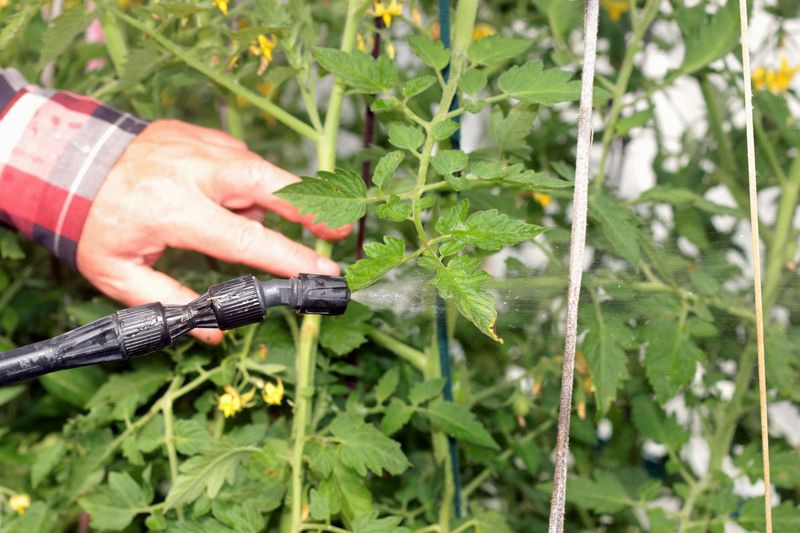
Pesticides are a legitimate tool in integrated pest management, and the goal is not to eliminate them but to use them precisely enough that they solve a specific problem without collapsing the predator community you are trying to support. The first step is accurate identification: confirm what pest is actually causing damage before choosing any response.
Spraying for the wrong target wastes money and harms insects that were doing nothing wrong.
UC IPM’s guidance on protecting natural enemies and pollinators identifies carbamates, organophosphates, pyrethroids, and some systemic neonicotinoids as product classes capable of harming beneficial insects, including predators and pollinators. Broad-spectrum and persistent products applied across an entire vegetable bed can eliminate resident assassin bugs, lady beetles, parasitic wasps, and other natural enemies in a single application, leaving the garden without its natural defenses when the next pest wave arrives.
Spot treatment is the practical alternative. When aphids cluster on one corner of your brassica row, treat that section rather than the whole bed.
UC IPM’s biological control guidance for ornamental nurseries recommends preserving unsprayed areas where predators can reproduce and disperse back into treated zones after the product dissipates. Even a narrow unsprayed strip along a fence or a pot of flowering herbs left untreated can serve as a refuge and recolonization source.
When a spray is genuinely necessary, choose the least-disruptive effective option for the confirmed pest. Insecticidal soap and narrow-range horticultural oils, for example, break down quickly and have lower residual effects on natural enemies than synthetic pyrethroids.
Whatever product you select, read the label completely and follow it exactly. The label is a legal document, and it contains information about application timing, re-entry intervals, and pollinator protections that matter for the safety of your garden’s food web as well as your own household.
Monitoring is the habit that makes selective treatment possible. Walk your vegetable beds every few days during the growing season, check the undersides of leaves for pest colonies and egg masses, and look for evidence of predator activity at the same time.
Catching a problem early, when it is still localized, almost always gives you more lower-risk options than waiting until damage is widespread.
When you find one, observe it instead of picking it up
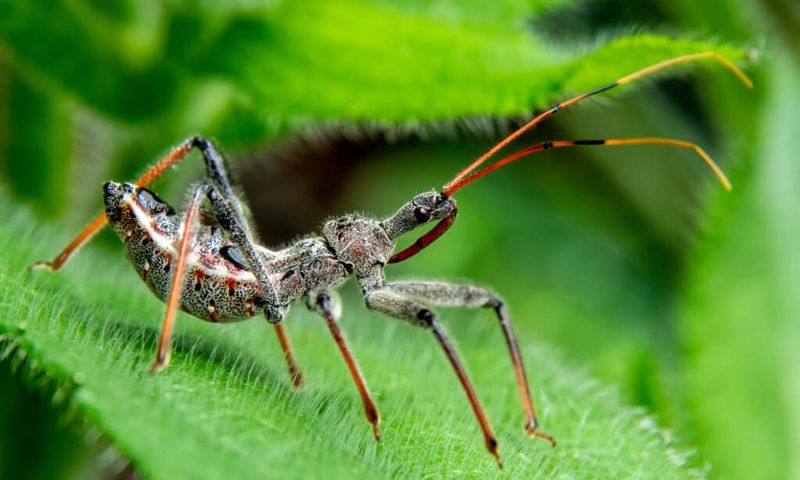
Spotting an assassin bug on your zucchini or bean plants is genuinely exciting once you know what you are looking at, and the right response is simple: photograph it and leave it where it is. A clear photograph from multiple angles gives you a record for later identification and lets you compare the insect against UC IPM’s natural enemies gallery or share it with a local master gardener program without disturbing the bug or the plant.
After photographing, inspect the surrounding plant for context. Are there aphids, caterpillars, or other insects nearby that the predator may be hunting?
Is the plant itself showing damage that goes beyond what you can tolerate? UC IPM’s biological control guidance consistently recommends conserving naturally occurring predators rather than purchasing or releasing beneficial organisms, and that preference starts with simply leaving resident bugs undisturbed when the pest situation is manageable.
Handling is the step to skip. UC Davis Extension has flagged that assassin bugs can bite when grabbed or trapped, and the bite can be painful.
Florida Extension documentation on Zelus longipes describes burning and swelling after mishandling, and Texas Extension gives similar warnings for assassin bugs generally. Children are especially likely to pick up an interesting-looking insect without thinking about the risk, so a brief conversation about “look but do not touch” is worth having before a garden walk.
Routine purchase and release of assassin bugs is also not recommended here. The available evidence supports conserving the predators that already live in your garden, not importing and releasing unfamiliar individuals that may not establish, may disperse immediately, or may be a different species than advertised.
If you genuinely cannot confirm whether a reduviid in your garden is Z. renardii, a harmless garden predator, or a different species requiring different handling, contact your local UC Riverside Heteropteran Systematics Lab or a UC Cooperative Extension advisor for a qualified identification from your photograph.
Support the hunter without making it your only line of defense
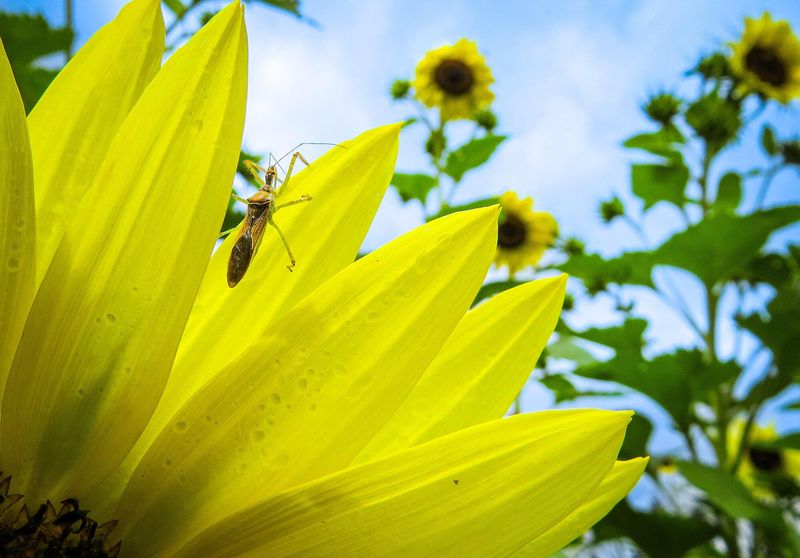
Pulling together the practical steps is straightforward. When you spot what looks like Z. renardii in your vegetable beds, try to confirm the identification with a photograph before doing anything else.
If the bug and its egg clusters check out, leave them alone and monitor the surrounding plants for pest activity and plant damage over the following days. Conserving the predators already living in your garden is the better-supported, lower-risk approach compared to purchasing or releasing insects from outside sources.
Habitat investment pays dividends across the whole food web. A border of mixed flowering plants, some native shrubs, and a patch of perennial grasses near your vegetable beds gives multiple predator species places to shelter, find prey, and reproduce.
UC IPM’s guidance on protecting natural enemies and pollinators reinforces that reducing disruptive insecticide use and preserving unsprayed refuges keeps that community intact through the growing season.
UC IPM is clear that assassin bugs can prey on aphids, caterpillars, and leafhoppers, but they are generalists that may also consume beneficial insects, and they are not ranked among the most reliable biological-control agents for home vegetable gardens. A healthy garden food web, built from many overlapping predator species and supported by smart pesticide choices, is more durable than any single hunter working alone.
The leafhopper assassin bug earns its place in that web, but it works best as one voice in a chorus rather than a soloist expected to carry the whole performance.