
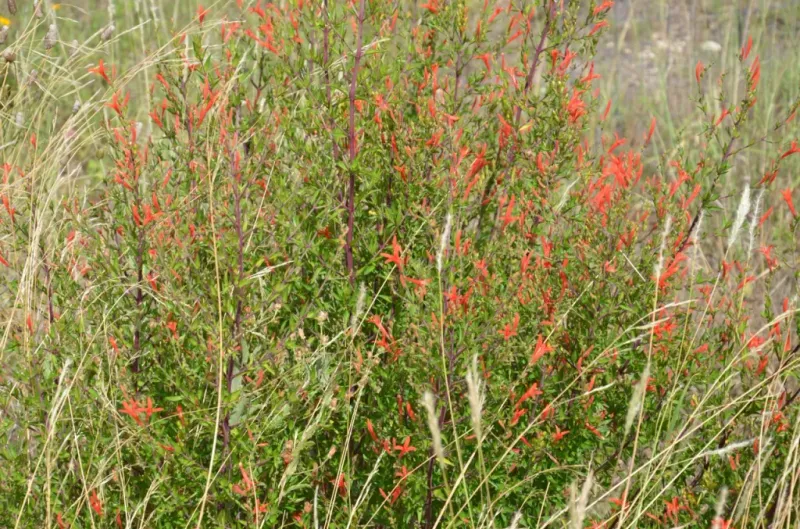
If you have a sunny fence line in Central Texas and want to draw hummingbirds into your yard, one native shrub deserves a close look: flame acanthus. Known for its bright orange-red tubular flowers that appear from summer into fall, this tough, heat-tolerant plant fits naturally into an informal fence-line planting.
It won’t guarantee that hummingbirds show up every single summer, but it gives them a reliable reason to stop when they’re in your neighborhood.
Flame Acanthus Fits an Informal Central Texas Fence Line
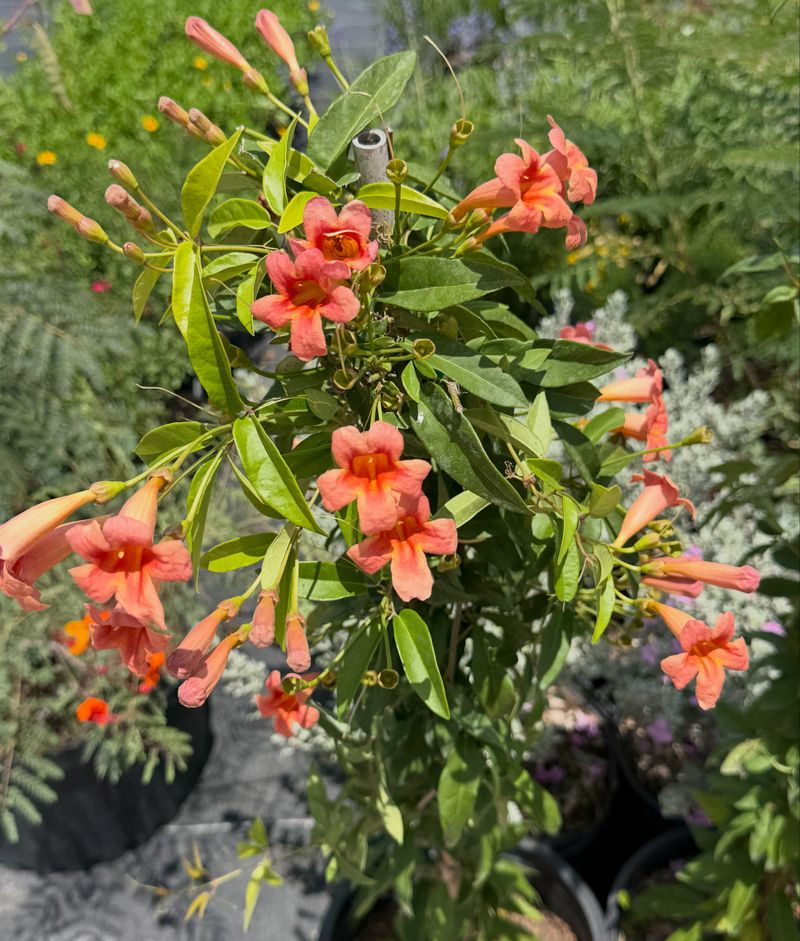
Flame acanthus goes by several names, and knowing them helps when you’re shopping at a Texas nursery. The current botanical name is Anisacanthus quadrifiduswrightiiAnisacanthus wrightii var. , though older references and many plant tags still use .
Common names include hummingbird bush and Texas firecracker, which tell you something useful about both its wildlife value and its color.
This is a Texas-native shrub, but “native to Texas” covers a lot of ground. The Native Plant Society of Texas identifies its natural distribution in the Edwards Plateau, Southern Texas Plains, and Chihuahuan Desert ecoregions, which makes it a genuinely well-suited option for Central Texas landscapes rather than a plant forced into an unfamiliar climate.
Mature plants typically reach 3 to 5 feet tall with a spread of roughly 3 to 4 feet. The orange-red tubular flowers appear in summer and can continue into fall, giving the shrub a long season of visual interest along a fence.
Austin’s official plant guide describes it as suitable for use as a low hedge, which confirms that a fence-line planting is a practical choice.
One point worth setting clearly before you dig: flame acanthus is a shrub, not a vine or a climber. Planted in front of a fence, it can form a soft, informal low hedge that adds color and wildlife value.
It will not cover a tall privacy fence on its own, and crowding it against the fence boards limits air circulation and spread. Think of it as a living border that sits in front of the fence rather than replacing it.
The loose, arching form looks best in a casual native border or wildlife-friendly planting. If you’re expecting a sharply trimmed formal hedge, this plant will disappoint.
If you want a heat-tough Texas native that blooms when almost nothing else does and gives hummingbirds a reason to investigate your yard, it fits the bill.
Its Flowers Can Support Seasonal Hummingbird Visits
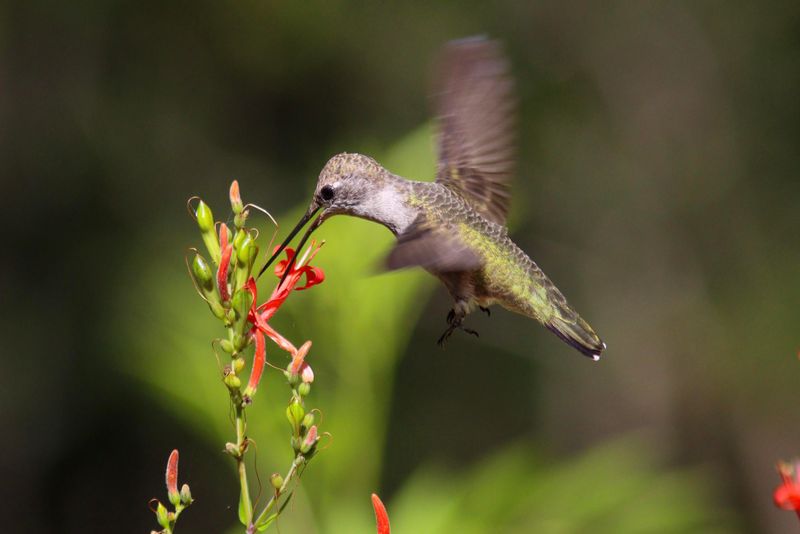
Tubular flowers in orange and red shades are exactly the shape and color that hummingbirds navigate toward when they’re hunting nectar, and flame acanthus produces them steadily from summer into fall. Texas Parks and Wildlife lists flame acanthus among recommended hummingbird plants for Texas, and field observations have recorded hummingbirds feeding from it.
Those observations come with an honest qualification. The TPWD Hummingbird Roundup, a statewide citizen-science survey, collected reports of hummingbirds using various plants including flame acanthus, sages, Turk’s cap, coral honeysuckle, and lantana.
The Hummingbird Roundup final report explicitly notes that the data cannot establish plant preference because observers did not record how many of each plant type were available at each site. Flame acanthus is a well-suited option for attracting hummingbirds to a Central Texas fence line, but calling it the single best hummingbird plant in Texas goes further than the evidence allows.
The hummingbird species most likely to visit a Central Texas yard during the warm season is the black-chinned hummingbird. TPWD describes the black-chinned hummingbird as a common spring and summer resident across much of Texas, including the Hill Country and surrounding areas.
These birds are already present in the region during the months when flame acanthus is in bloom, which is why the pairing works.
Other hummingbird species may also pass through or linger seasonally. Ruby-throated hummingbirds move through Texas during migration, and rufous, broad-tailed, and calliope hummingbirds can appear depending on the season and location.
TPWD’s Hill Country hummingbird coverage confirms that multiple species occur in the region, so a well-stocked yard may see more than one type over the course of a season.
Planting flame acanthus gives visiting hummingbirds a productive nectar source during the hottest, driest months of the Central Texas year. That’s a meaningful contribution, even if it can’t promise a specific bird on a specific day.
Plant It in Sun and Leave Room to Spread
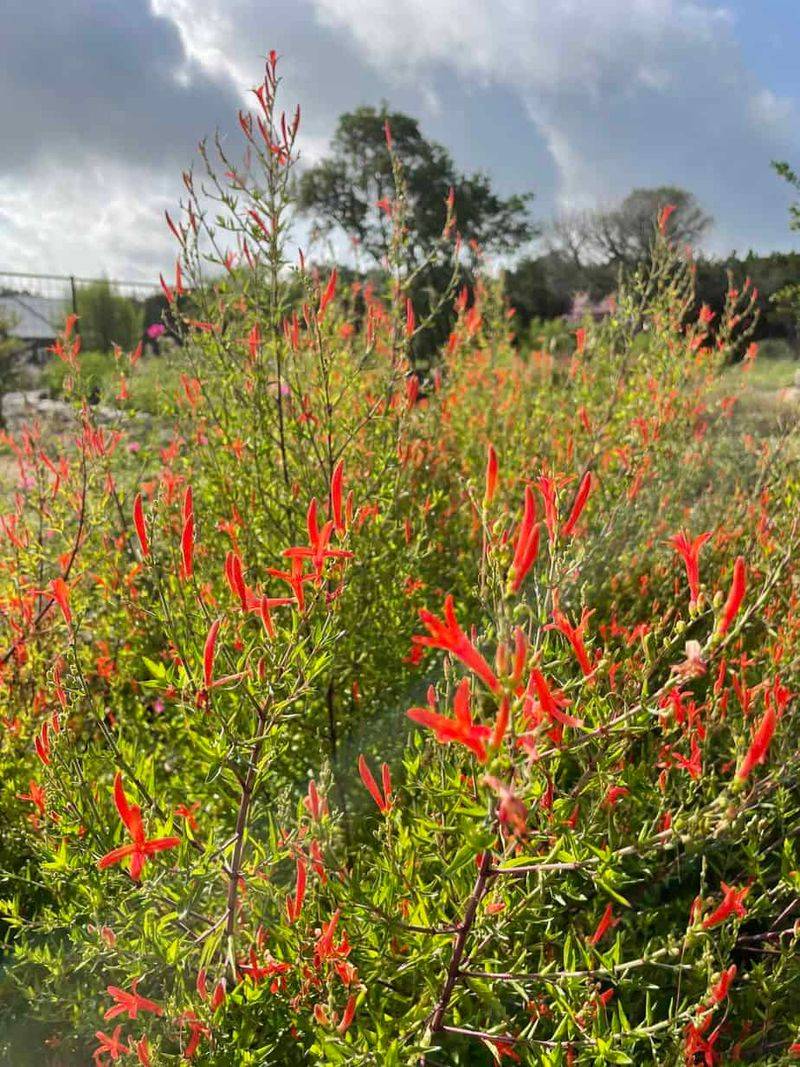
Full sun gives flame acanthus its best chance at a heavy, prolonged flower display. Austin’s plant guide rates it for sun or part shade, so the shrub won’t die if it gets some afternoon shadow, but flowering tends to be strongest when the plant receives direct sun for most of the day.
Along a south- or west-facing fence in Central Texas, that’s rarely a problem.
Texas Tech’s plant resource database confirms the shrub’s high heat tolerance, low water requirements, and preference for well-drained soil, all of which align with typical Central Texas fence-line conditions. Rocky, caliche-heavy, or sandy soils that frustrate many landscape plants are generally fine for flame acanthus as long as water doesn’t pool at the roots.
Spacing matters more than most gardeners expect with this plant. Allow roughly 3 to 4 feet of open space between the fence and the center of each plant.
That room lets the shrub develop its natural arching form without the stems pressing into the fence boards or losing airflow, which can invite fungal problems during humid stretches. Planting multiple shrubs along a fence run?
Space them about 3 to 4 feet apart center to center for a continuous informal hedge effect.
The plant’s loose, slightly floppy silhouette is part of its character. Stems arch outward rather than growing straight up, which creates a relaxed, wildlife-friendly look that suits a native border or casual backyard planting.
That same form makes it a poor candidate for a sharp, formal hedge line. If the goal is a tidy clipped edge, flame acanthus will require constant trimming that cuts off flower buds and defeats the purpose of planting it.
For readers hoping to screen a tall fence, one row of flame acanthus won’t do the job on its own. Pairing it with taller native shrubs or ornamental grasses behind or alongside it gives the fence line more visual weight while keeping the acanthus where hummingbirds can reach it easily.
Establishment Care Sets Up the Summer Bloom
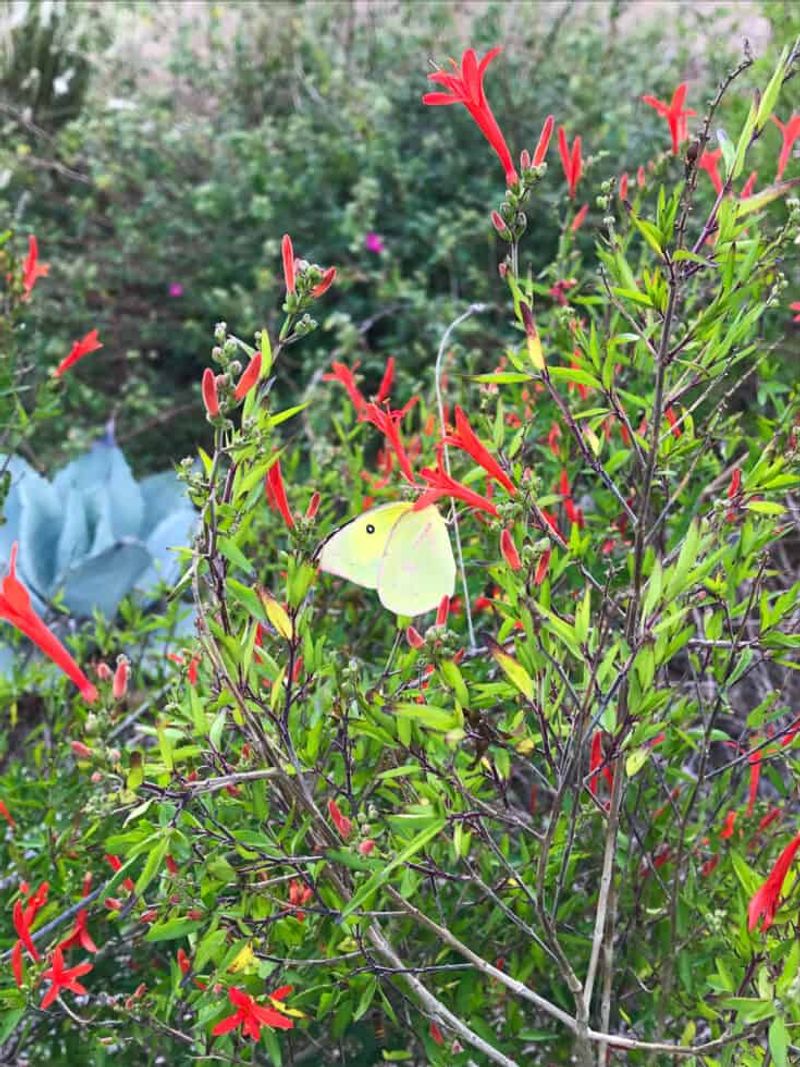
Drought tolerance is one of flame acanthus’s most-cited selling points, and it’s genuine, but it applies to established plants with a developed root system. A shrub you put in the ground this spring is not yet established, and treating it like a xeriscape veteran from day one is the fastest way to lose it.
Plan to water new plants regularly for the first growing season, roughly every few days during hot, dry stretches, tapering off as you see strong new growth and the plant settles in. Texas Tech’s landscape data sheet rates the plant’s water needs as low once established, and Austin’s guide echoes that rating.
Getting to “established” takes time and consistent early-season attention.
Even after roots are well set, a few conditions can push the plant back into stress territory. Reflected heat from a metal or dark wood fence raises the temperature around the shrub well above air temperature.
Prolonged drought, compacted or clay-heavy soil with poor drainage, and extended stretches without rain can all cause wilting, reduced flowering, or leaf drop even in a mature plant. Supplemental irrigation during those periods keeps the bloom going and keeps the shrub from looking ragged.
TPWD’s Hill Country Wildscapes guide notes a flowering period of approximately June through November for flame acanthus under typical conditions. That’s a long bloom window, but the actual start and end dates shift based on your specific site.
A plant in well-drained soil with good sun exposure and occasional deep watering during dry spells will generally flower earlier, longer, and more heavily than one in poor soil with no supplemental care.
Mulching around the base, keeping a few inches clear of the main stems, helps hold soil moisture and moderates soil temperature through the hottest months. Austin’s plant guide recommends well-drained soil as a baseline condition, so if your fence line sits in a low spot that collects runoff, amending the soil or adjusting the grade before planting will save trouble later.
Manage Frost Dieback Before Spring Growth
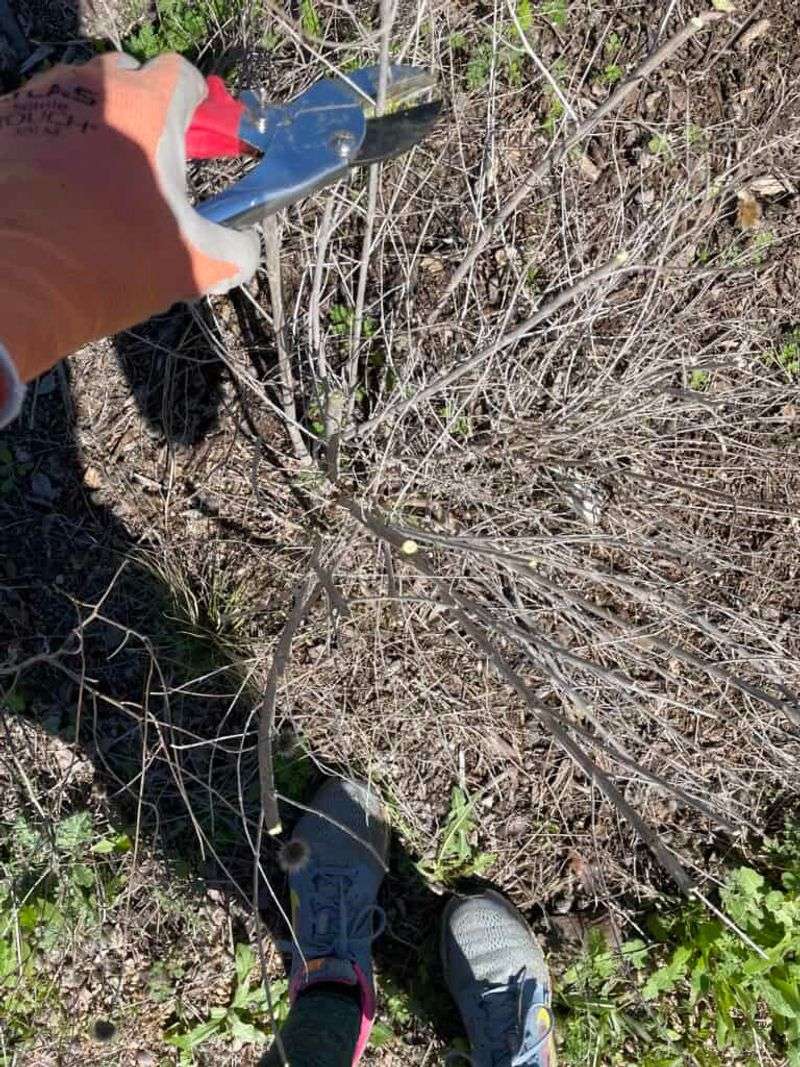
Flame acanthus is deciduous, which means it drops its leaves in winter, and in Central Texas, a hard frost can brown the foliage quickly or cause stems to die back partway to the ground. First-time growers sometimes assume the plant has died and pull it out, which is the most common and most avoidable mistake with this shrub.
If frost browns the foliage or kills back the upper stems, leave the plant alone until late winter or very early spring, just before new growth begins to push from the base. At that point, Austin’s plant guide recommends cutting the plant back by one-third to one-half to remove dead or frost-damaged wood and encourage vigorous new growth.
The cut should be made just above a healthy bud or node if you can identify one, or simply to a height where the stem still shows green inside when nicked with a fingernail.
The Native Plant Society of Texas suggests a lighter one-third cutback in early winter for gardeners who prefer a more compact form going into the next season. Either approach works; the key difference is timing and how aggressively you want to reduce the plant’s overall size before it leafs back out.
Winters that stay mild may leave the plant semi-evergreen with some foliage intact through February. In those years, a modest cleanup trim, removing any obviously dead tips and crossing branches, is enough to keep the shrub tidy and positioned for a strong spring flush.
Resist the urge to cut the plant to the ground in a panic after the first cold snap. Flame acanthus roots are resilient, and even a plant that looks completely dead above ground in January can push strong new growth by March or April.
Give it until you see consistent overnight temperatures above freezing and no new growth appearing before you decide a plant is truly gone.
Create Hummingbird Habitat Around the Shrub
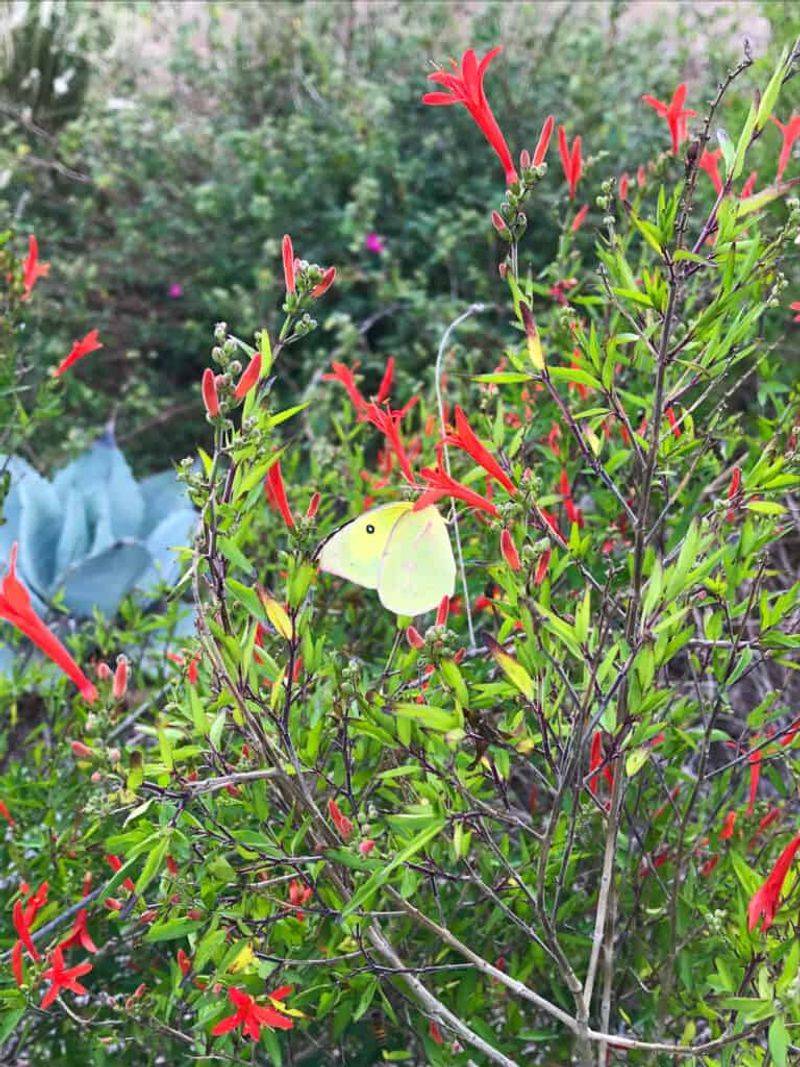
A single flame acanthus shrub along your fence is a good start, but hummingbirds use a yard more consistently when it offers several things at once: overlapping nectar sources, food at different heights, shelter, perches, and water. Building that layered habitat around the shrub turns a seasonal attraction into a more dependable resource.
TPWD’s hummingbird habitat guide recommends plantings with overlapping bloom periods, food sources at multiple heights, shelter from wind and predators, perching spots, and shallow or moving water. Pairing flame acanthus with Turk’s cap, coral honeysuckle, native salvias, or red yucca gives hummingbirds nectar options before and after the acanthus peaks and keeps them exploring your yard longer.
Hummingbirds are not strictly nectar feeders. They also eat small insects and spiders, which provide protein they need for flight, feather condition, and raising young.
Audubon recommends minimizing pesticide use around flowering plants specifically because broad insecticide spraying reduces the insect populations that hummingbirds and many other birds depend on. Spot-treat problem areas if necessary, but avoid routine spraying across your planting bed.
Audubon also connects native plant choices directly to insect diversity, noting that native plants support the local insect communities that feed birds up the food chain. Choosing native nectar plants alongside flame acanthus serves hummingbirds twice over: nectar from the flowers and insects from the habitat.
Supplemental feeders can extend your yard’s usefulness, especially during gaps between bloom periods. Use a 1:4 ratio of plain white granulated sugar dissolved in water.
Skip honey, artificial sweeteners, and red dye, all of which can harm hummingbirds or promote dangerous bacterial growth. Clean feeders every two to three days, and more often during the hottest summer weeks.
Discard any nectar that looks cloudy or milky without waiting to see if it clears up.
Feeders also come with two risks that sugar-water hygiene alone won’t solve. Windows near feeders can cause fatal collisions; Audubon’s bird-friendly backyard guidance covers window treatments and feeder placement that reduce strike risk.
Outdoor cats are the other serious threat. Even a well-fed cat will ambush a hummingbird hovering at a low feeder or perching nearby, so keeping cats indoors or away from active feeding areas protects birds that your plants and feeders worked hard to attract.
Set a Realistic Expectation for Annual Visits
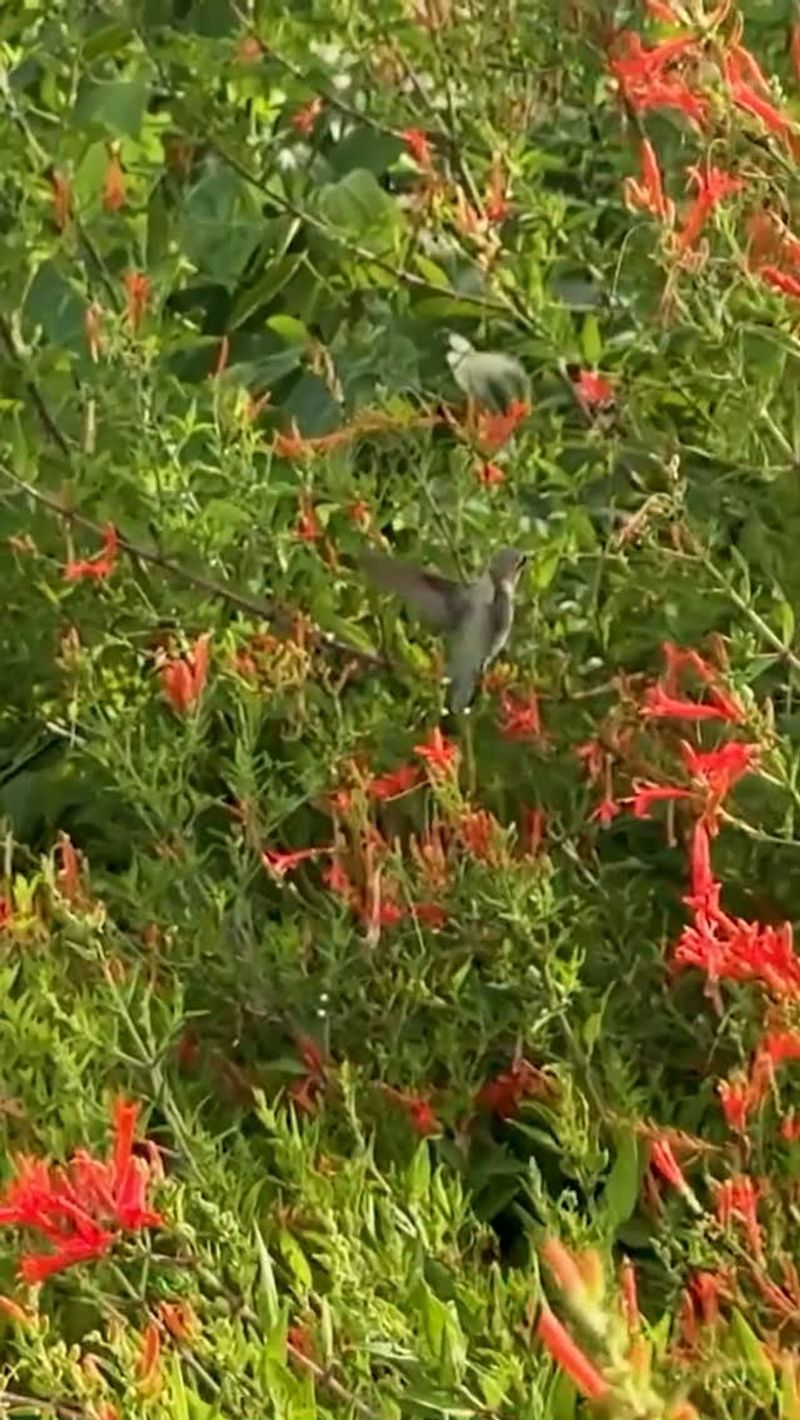
Flame acanthus earns its place along a Central Texas fence line, but one thing it cannot do is guarantee hummingbirds will appear in your yard every summer. Whether any hummingbird shows up on a given day depends on migration timing, weather patterns, the availability of insects and water, competition from other yards, predator pressure, and whether hummingbirds are already present in your immediate neighborhood.
TPWD notes that hummingbirds are opportunistic feeders that may draw from many plant types when nectar is available, which means flower color and tube shape increase the odds of a visit but don’t lock one in. The plant improves your yard’s chances; it doesn’t control the bird’s itinerary.
“Return” is also a word worth reading carefully. Black-chinned hummingbirds return to Central Texas as a species each spring and summer, as shown in Cornell Lab’s Black-chinned Hummingbird range maps.
Whether the same individual bird revisits your specific yard is a different question. Cornell’s research on backyard bird return behavior documents that some individuals do show site fidelity, but annual survival, migration hazards, and changing habitat conditions mean you cannot count on recognizing a returning bird without scientific banding data.
What you can count on is the shrub itself. Give it room to spread, support it through the first season with consistent watering, manage frost dieback with a timely late-winter cutback, and pair it with other native nectar plants and a clean water source.
Do those things, and flame acanthus will bloom reliably from summer into fall, year after year, which is the strongest honest promise any plant can make. The hummingbirds, when they come, will find exactly what they were looking for.