
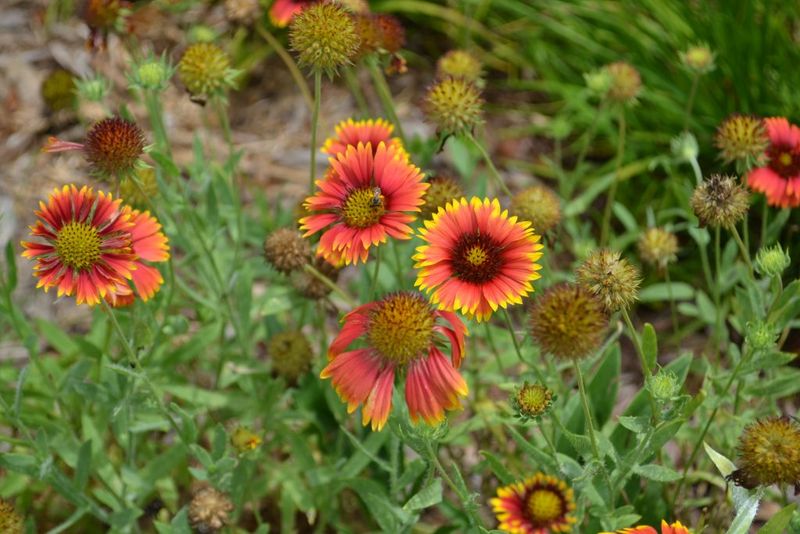
Florida summers can be rough on gardens, but the right native plants know how to handle the heat. Many of them bloom through sticky days, sandy soil, and sudden rain while feeding bees, butterflies, and hummingbirds.
If you want more life in your yard without constant watering and fussing, these plants are a smart place to start. Here are dependable Florida natives that work hard while asking very little from you.
1. Firebush
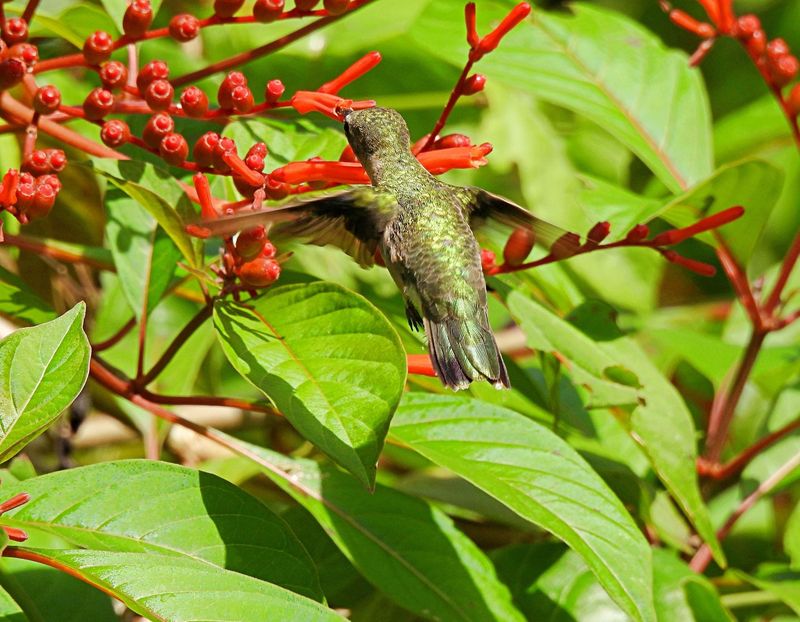
Few plants announce themselves in a Florida summer like firebush. The orange-red flowers look like tiny sparks at the tips of the branches, and hummingbirds often find them before you finish planting.
Firebush stands out because it handles heat, sun, and periods of dry weather with the calm confidence of a true Florida native. Once established, it usually needs little more than space, occasional shaping, and decent drainage.
In South Florida it can grow into a large shrub, while freezes may knock it back in North and Central Florida before it returns in warm weather.
Pollinators visit it for different reasons. Butterflies come for nectar, bees work the blooms, and hummingbirds favor the tubular flowers.
Plant it where you want motion near a patio, fence, or sunny back corner.
For a tidy home landscape, give firebush room instead of crowding it against a walkway. It is a strong choice for gardeners who want color that feels tropical but still fits a wildlife-friendly Florida yard.
2. Simpson’s Stopper
A neat shrub that feeds pollinators and still looks dressed for the neighborhood is harder to find than it should be. Simpson’s stopper fills that gap beautifully, especially for gardeners who want wildlife value without a messy look.
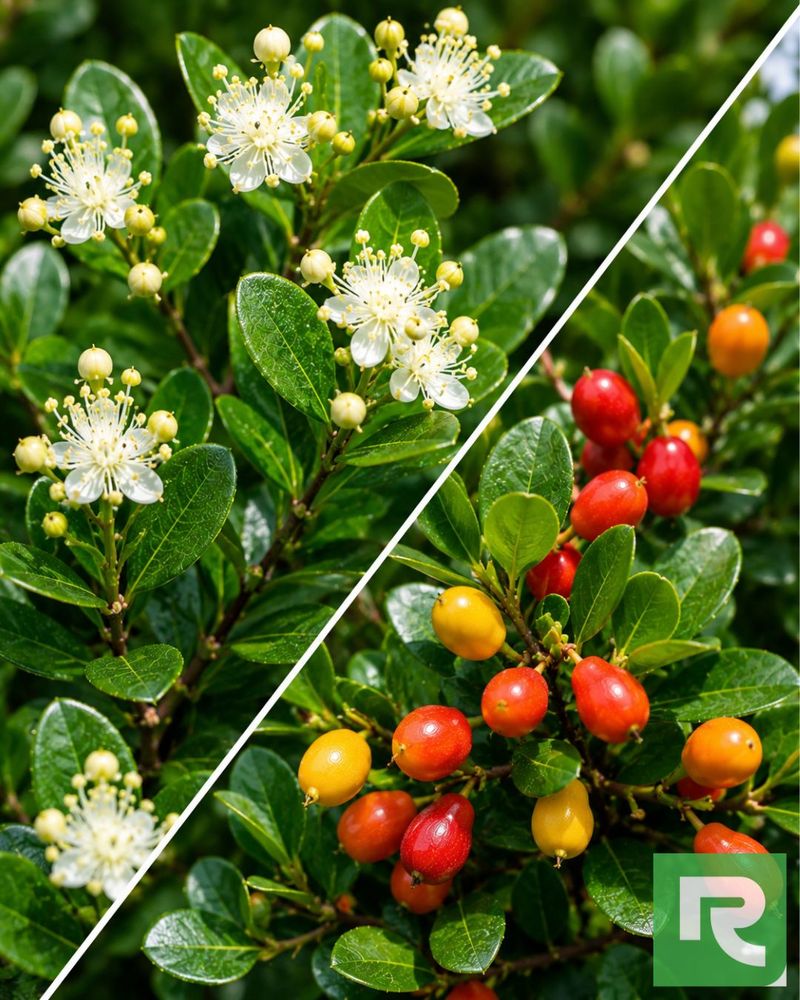
Small white flowers appear in warm weather and bring in native bees and other tiny pollinators. Later, the red-orange berries can attract birds, giving the plant a second job after the bloom show fades.
The glossy leaves keep it handsome enough for front-yard beds, foundation plantings, or a living screen.
What makes Simpson’s stopper different is its polished, flexible habit. It can be left looser for a natural look or clipped lightly into a hedge.
In many Florida yards, it tolerates sandy soil once established and does not demand rich garden conditions.
Use it where you need structure as much as flowers. A row along a driveway or side yard can create privacy while quietly supporting small pollinators all summer.
3. Blanketflower
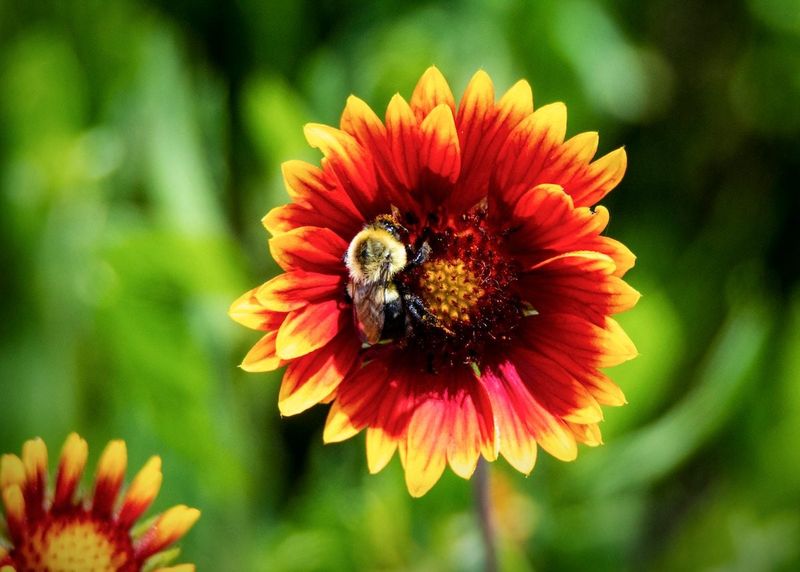
Hot, sandy spots that punish tender flowers can feel like home to blanketflower. Its red, orange, and yellow daisy-like blooms bring a cheerful beach-road feeling to even the plainest strip of soil.
Blanketflower earns its place because it thrives where many bedding plants sulk. Full sun, lean soil, and dry spells are not deal breakers once the plants are settled.
That makes it especially useful near mailboxes, sidewalk edges, coastal gardens, and open borders where irrigation is limited.
Bees and butterflies visit the open flowers easily, which is one reason this plant works so well in casual pollinator patches. Deadheading can keep the show going longer, but gardeners who skip a few rounds are not ruining the plant.
Some seed heads can also support natural reseeding in suitable spots.
The look is informal, bright, and a little wild in the best way. If your yard needs a low-growing native flower that can take Florida sunshine without daily attention, blanketflower is a practical crowd-pleaser.
4. Muhly Grass
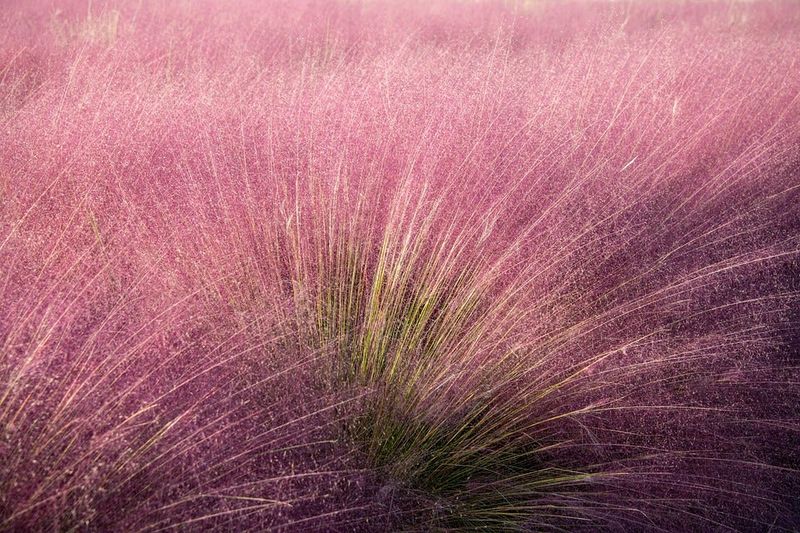
Clouds of pink grass in fall may be the famous part, but muhly grass works hard long before the camera moment arrives. Through summer, its fine green blades create soft texture while asking for very little.
Muhly grass is not a nectar plant in the same flashy way as firebush or blanketflower, yet it belongs in a pollinator-friendly yard because it builds habitat. Clumps give small insects shelter, soften harsh beds, and pair well with flowering natives that feed bees and butterflies.
It also offers a low-care alternative to thirsty ornamental grasses that may not belong in Florida landscapes.
Its biggest advantage is toughness. Muhly grass handles sun, sandy soil, and dry periods once established.
It is also useful in storm-aware landscapes because the flexible blades move with wind rather than snapping like brittle stems.
Plant several together for the best effect. Around a driveway island, along a sunny path, or behind low wildflowers, muhly grass gives the garden a finished look while supporting the bigger pollinator planting around it.
5. Spotted Beebalm
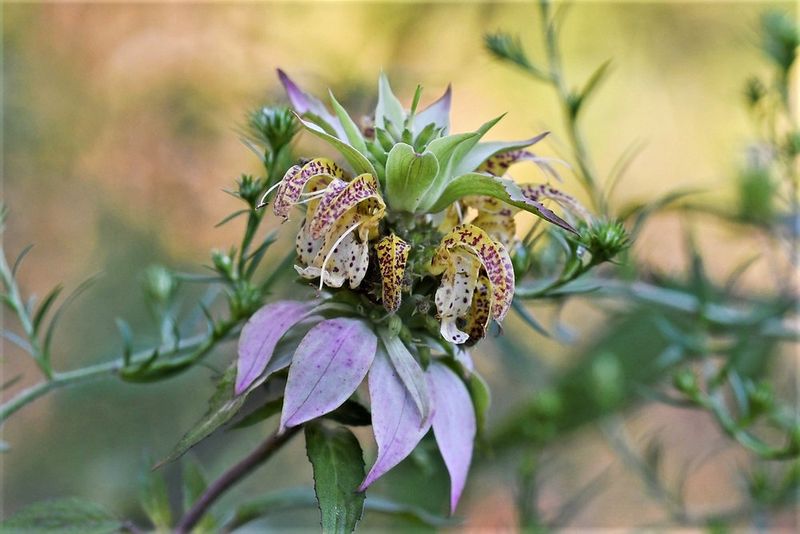
At first glance, spotted beebalm looks like a garden prank. The stacked blooms, speckled flowers, and pale bracts seem almost too odd to be real, which is exactly why pollinators notice it.
Spotted beebalm is a standout for native bees, wasps, and butterflies, especially in sunny, well-drained areas. Unlike lush plants that want pampering, it prefers leaner conditions and can fit nicely into sandy Florida beds.
The aromatic foliage also gives it a rugged, wildflower personality.
What separates it from more polished natives is its unusual bloom structure. It adds detail up close and texture from a distance, making it useful in naturalistic borders rather than formal clipped beds.
In the right spot, it can reseed, which is a bonus if you want a larger pollinator patch over time.
Give it sun and drainage, then avoid overwatering it into weakness. Spotted beebalm is best for gardeners who enjoy a lively, slightly quirky planting that looks like it belongs beside pines, grasses, and other Florida natives.
6. Coral Honeysuckle
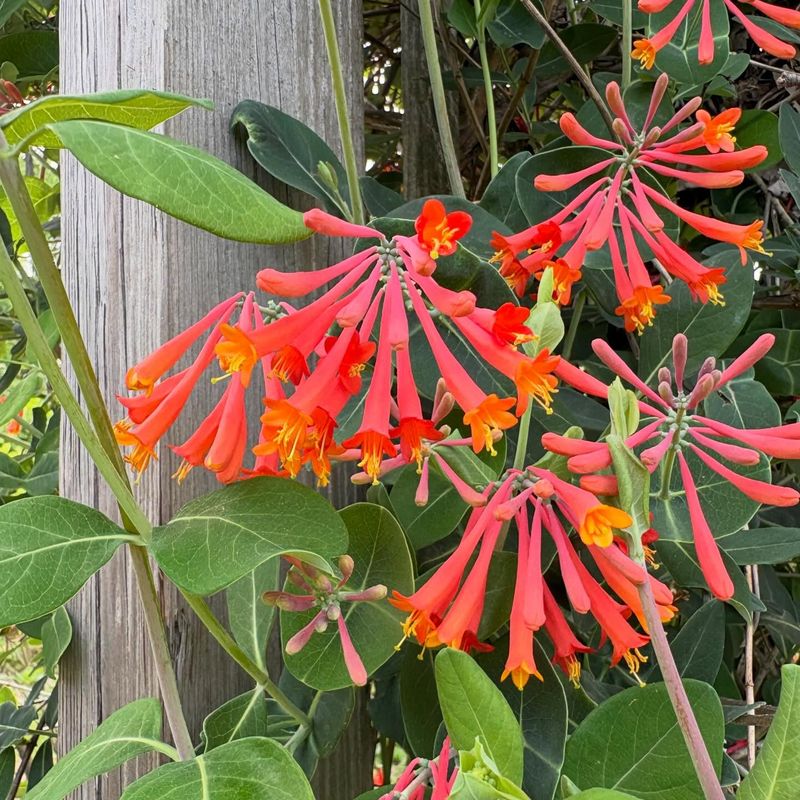
A fence can become a hummingbird route when coral honeysuckle is allowed to climb it. The coral-red tubular flowers are bright without being loud, and they bring vertical color to spaces where shrubs would take up too much room.
Coral honeysuckle is different from aggressive nonnative honeysuckles because it is a Florida native with a better fit for wildlife gardening. Hummingbirds are especially drawn to the flowers, while bees and butterflies may also visit.
It works well on a trellis, arbor, fence, or sturdy mailbox post.
Once established, the vine is not fussy in the right location. It prefers sun to part sun and reasonably drained soil.
A little pruning helps guide its shape, but it does not need the constant rescue care that many showy vines demand in Florida heat.
Use coral honeysuckle where you want height without building a large shrub wall. It is a smart pick for small yards, side gardens, and patio edges where pollinator action at eye level makes the space feel alive.
7. Dune Sunflower
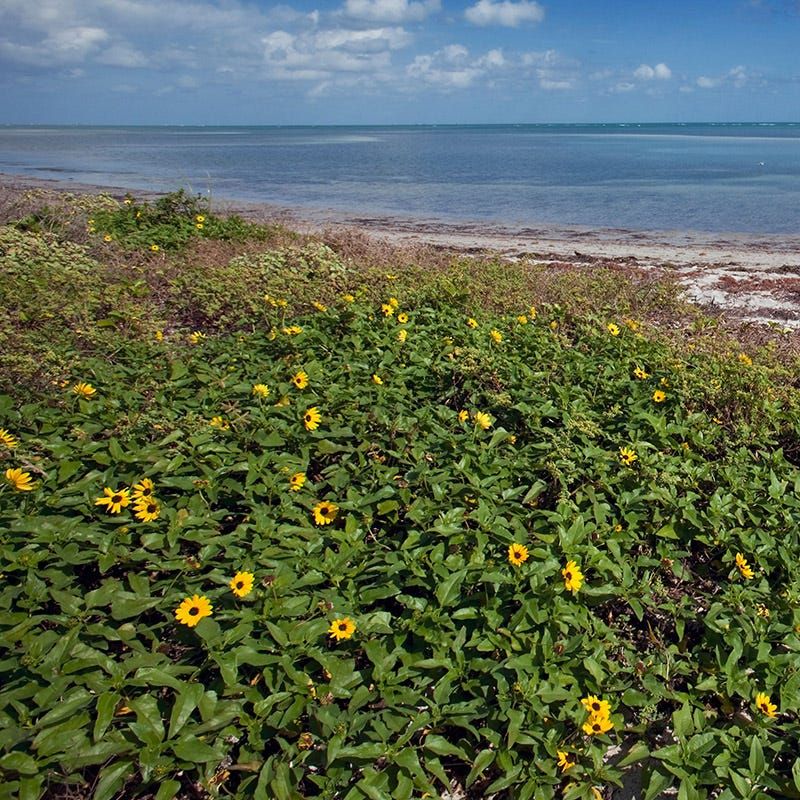
Some yards have that one blazing patch where mulch dries out, turf thins, and annuals give up by lunch. Dune sunflower often treats that same spot like prime real estate.
This low, spreading native is especially useful for sandy, sunny areas. Yellow flowers appear over a long warm season and provide easy landing pads for bees and butterflies.
Its growth habit helps cover bare ground, which can make a bed look fuller while reducing the amount of open sand that weeds love.
Dune sunflower is not the plant for a tiny formal border where every stem must stay in line. Its charm is relaxed and beachy, with a tendency to move and fill space when conditions suit it.
That makes it valuable for slopes, coastal yards, mailbox beds, and broad sunny edges.
Water it while it establishes, then let it prove why Florida natives are worth using. If you want a ground-hugging flower that brings color without a complicated care routine, dune sunflower is one of the easiest native choices to try.
8. Tropical Sage
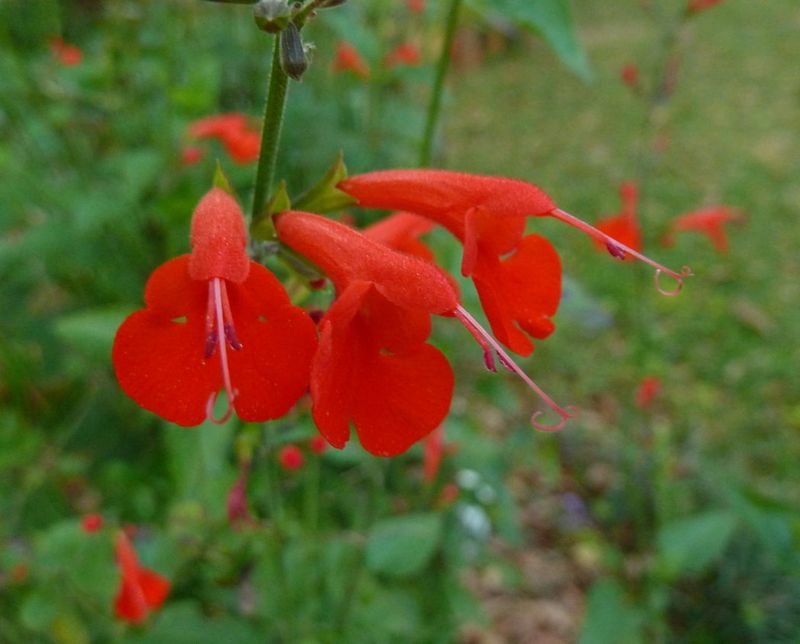
Red tropical sage has a way of popping up like it remembers where the party was last year. In many Florida gardens, it reseeds gently enough to feel generous rather than troublesome.
The small red flowers are loved by hummingbirds and butterflies, and bees make use of them too. Tropical sage is especially handy because it can bloom in warm months when many ornamental flowers are struggling.
It fits into cottage beds, native plant borders, and semi-shaded edges with a loose, friendly look.
Its special strength is adaptability. While it flowers best with decent light, it can handle part shade better than many sun-baked wildflowers.
That gives gardeners a pollinator option for the bright edge of an oak canopy or the side of a house that gets morning sun.
Cut it back if it gets leggy, and allow a few seed heads if you want more plants. Tropical sage is a low-pressure choice for gardeners who like seeing wildlife show up without treating the yard like a full-time project.
9. Frogfruit
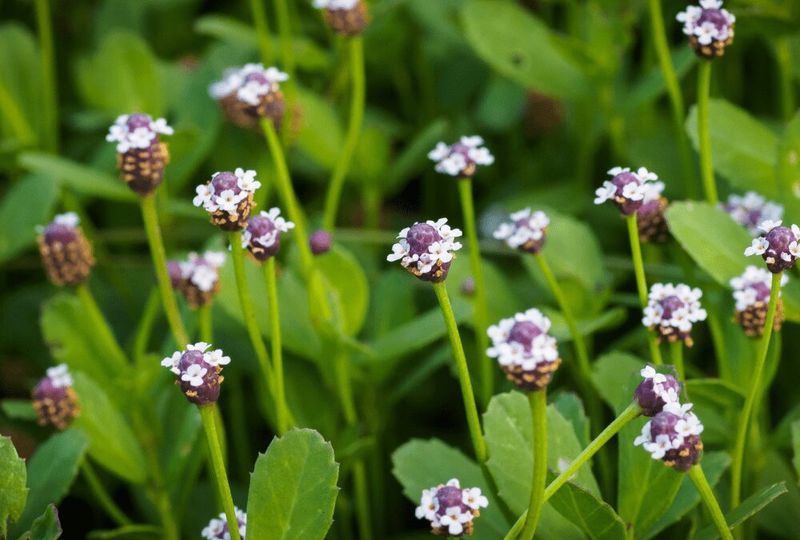
Tiny flowers can do big work, and frogfruit proves it close to the ground. Look carefully and you may see small butterflies and bees visiting blooms that sit just above the leaves.
Frogfruit is one of the most useful native options for gardeners who want a living groundcover with pollinator value. It can spread into a low mat, tolerate mowing in some settings, and handle sun with occasional wet or dry swings better than many delicate groundcovers.
In the right yard, it can soften edges between lawn, paths, and planting beds.
Its reason for being on this list is simple: it feeds small pollinators where taller flowers will not fit. It is also a host plant for several butterfly species, which means it can support more than just adult nectar visits.
Use frogfruit where a tidy but natural look makes sense, such as around stepping stones or in low-traffic lawn alternative areas. It may not replace every patch of turf, but it can turn difficult open ground into a more useful part of the pollinator garden.
10. Seaside Goldenrod
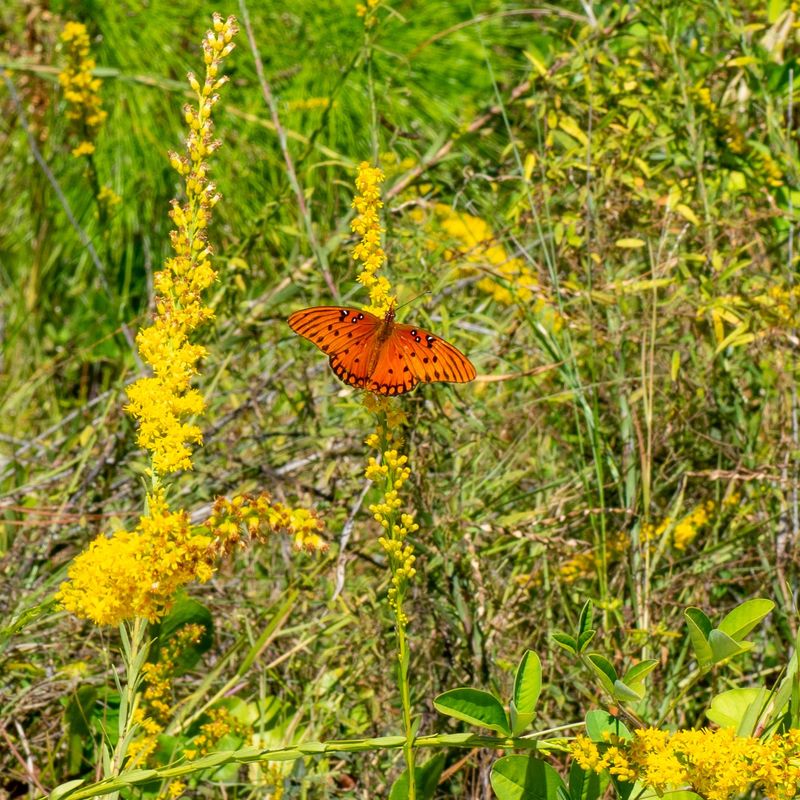
When late summer beds start looking tired, seaside goldenrod can stride in with bright yellow confidence. Its blooms are a welcome food source when many pollinators are still active and looking for nectar.
Seaside goldenrod is especially valuable in sandy and coastal-influenced landscapes. It tolerates tough sun and lean soil once established, making it a good match for Florida gardens that do not stay evenly moist.
Bees, butterflies, and other beneficial insects are drawn to the flower clusters.
Goldenrod often gets blamed for allergies, but the real culprit is usually wind-pollinated ragweed blooming around the same time. Goldenrod pollen is heavier and is carried mainly by insects, which is exactly why it buzzes with activity.
Give this plant room, because it has a taller, wilder shape than compact bedding flowers. It works best in the back of a sunny border, along a fence, or in a naturalized corner where its late-season color can shine without crowding the walkway.
11. Walter’s Viburnum
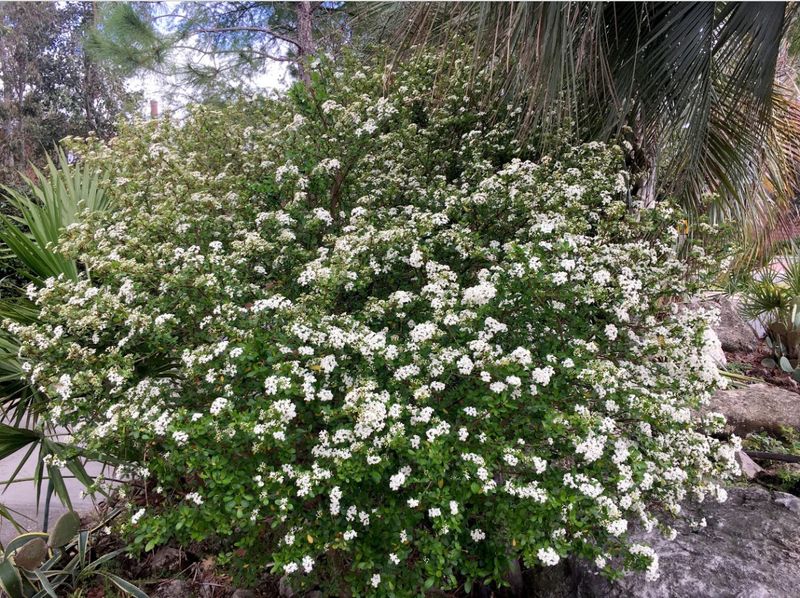
A good hedge can do more than hide the neighbor’s trash cans. Walter’s viburnum brings privacy, evergreen structure, spring to warm-season flowers, and wildlife value in one dependable native shrub.
The clusters of small white blooms are attractive to bees and other pollinators, while berries can later support birds. Compared with short-lived flowers, Walter’s viburnum gives the yard a permanent backbone.
That makes it a strong choice for homeowners who want pollinator benefits without replanting beds every season.
Its main difference is scale and structure. Some forms can grow into large shrubs or small trees, while compact selections fit smaller spaces.
In Florida landscapes, it can be used as a screen, specimen, or mixed native hedge.
Choose the right form for your space before planting, because mature size matters. Once established in a suitable site, Walter’s viburnum is the kind of low-drama plant that quietly makes the whole garden look more intentional while giving insects and birds something useful.
12. Partridge Pea
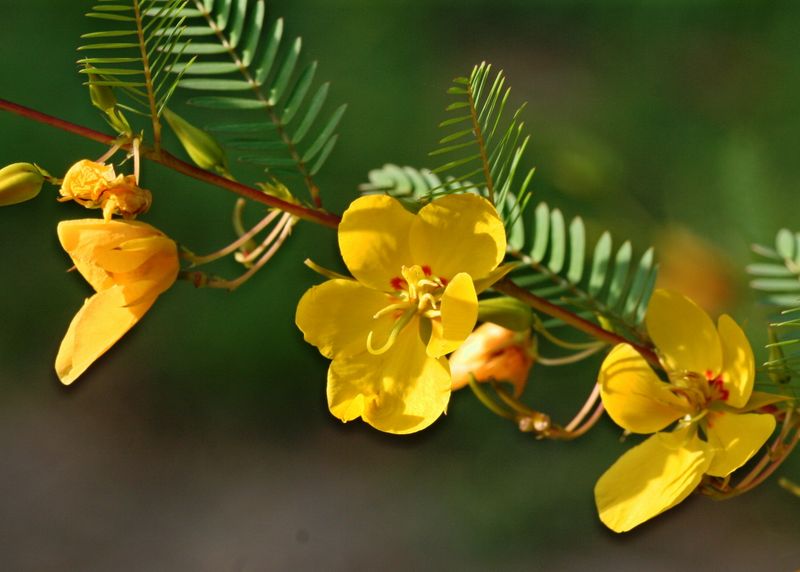
There is a cheerful, meadow-like energy to partridge pea that makes a bare sunny patch feel less forgotten. The yellow flowers with reddish centers look delicate, but the plant is tougher than it appears.
Partridge pea is especially useful because it supports bees and serves as a host plant for certain butterflies, including sulphurs. It is an annual, but it can reseed in favorable conditions, returning as part of a relaxed native planting.
That makes it a good fit for gardeners who do not mind a more natural rhythm in their beds.
Its special role is soil-friendly toughness. As a legume, it can contribute to the natural nitrogen cycle, and it handles sandy, sunny areas well once growing.
It is not meant to be a clipped, formal plant. It belongs in pollinator strips, meadow corners, and sunny restoration-style gardens.
Pair it with grasses, blanketflower, spotted beebalm, or dune sunflower for a layered look. If your goal is a low-cost, low-fuss patch that buzzes with life through warm weather, partridge pea earns its space.