
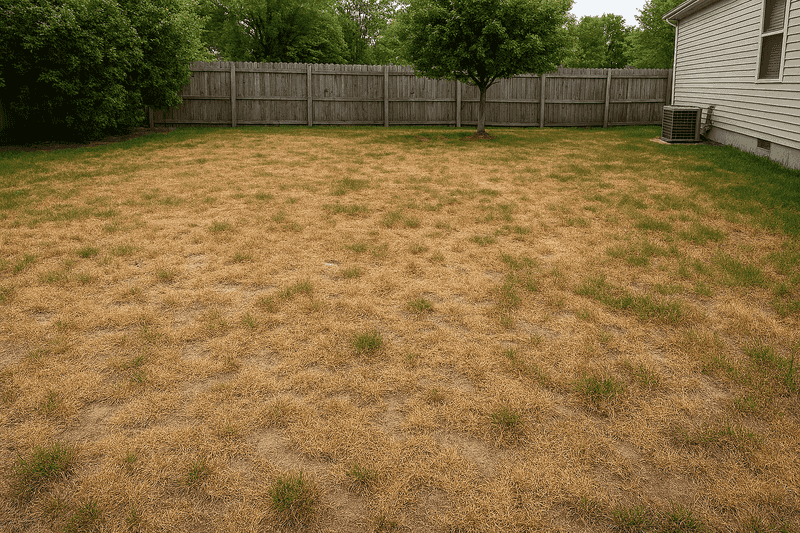
Late summer heat can turn a once-green North Carolina lawn into a patchwork of brown and gray almost overnight. Seeing that color change is alarming, but browning grass is not always a death sentence for your turf.
The strategy that gives drought-stressed lawns the best chance is deep, slow watering applied at the right time and in the right amount, though how well it works depends on your grass type, your soil, how long the drought has lasted, and what your local water utility currently allows. Understanding what your lawn is actually telling you, and how to respond, is the first step toward protecting it.
Browning Signals Stress, but It Does Not Prove the Lawn Is Dead
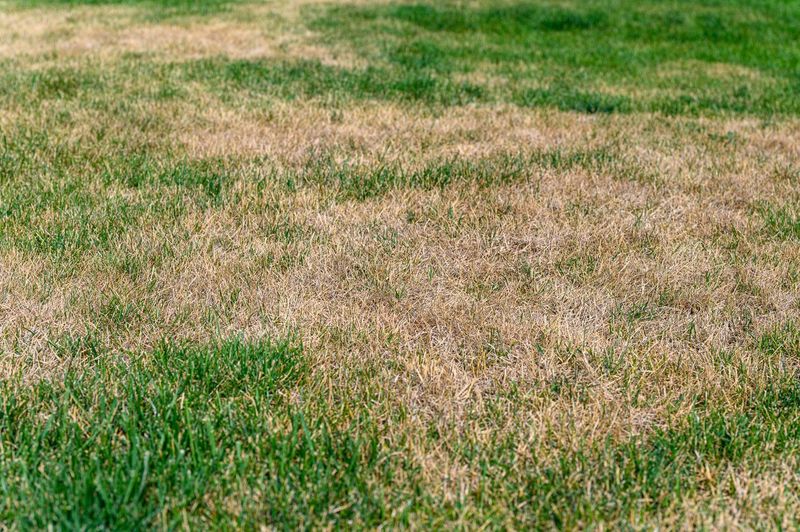
Grass that has lost its deep green color can look alarming, but color alone does not confirm that the turf is gone. Before assuming the worst, walk across the lawn and look behind you.
If footprints stay pressed into the grass for more than a minute rather than springing back, that persistent imprint is one of the clearest early signs of moisture stress. A bluish-gray cast across the lawn surface and blades that appear wilted, folded, or curled lengthwise are additional signals that the turf is struggling and deserves a closer look, according to NC DEQ guidance on lawn watering.
These signs show up before the grass turns uniformly brown, which means attentive homeowners have a window to act before severe damage sets in. Waiting until the whole yard looks straw-colored can narrow your options considerably, especially for cool-season grasses like tall fescue.
Brown turf is not automatically dead turf. Grass enters dormancy as a survival response, slowing growth and conserving resources when heat and drought become extreme.
Many established turfgrasses can remain dormant for weeks and still recover once moisture returns. However, dormancy is not an unlimited buffer.
Prolonged drought, extreme heat, heavy foot traffic, shallow rooting, and poor overall lawn health can push dormant grass past the point where recovery is possible, particularly for tall fescue under severe summer conditions.
Recovery also depends heavily on grass species, soil depth, how well-established the lawn is, and how long the dry period lasts. NC State Extension’s lawn handbook notes that most established turfgrasses can handle several weeks without rain or irrigation with minimal damage under typical conditions, but outcomes vary widely.
Deep, slow watering can help some lawns withstand drought stress when local rules allow it, yet no single watering session can guarantee that an entire lawn will survive a prolonged dry period.
Water Deeply and Slowly When the Lawn Shows Moisture Stress
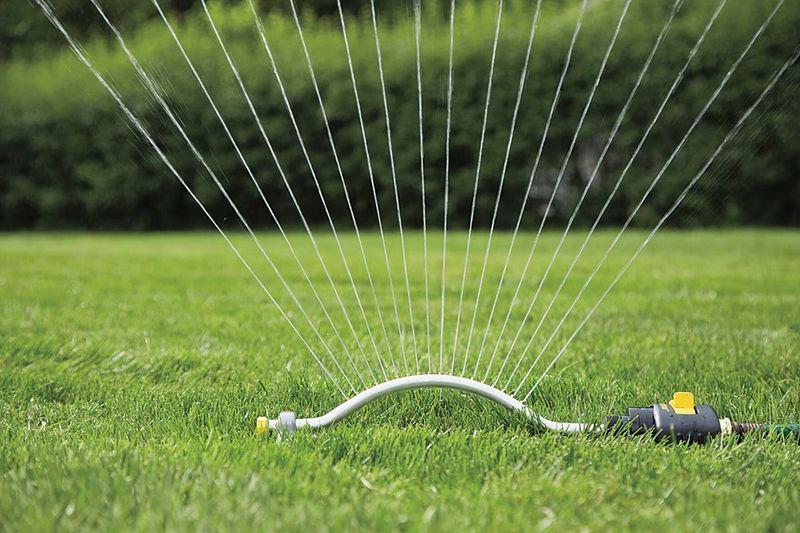
When you spot those early stress signals and your local water utility permits irrigation, the most effective response is to apply water slowly enough that it soaks down into the root zone rather than pooling on the surface and running off. Shallow sprinkles that wet only the top inch or two of soil do not reach the roots where the grass actually draws moisture.
The practical target is to moisten the soil to roughly 4 to 6 inches deep, which is where most established lawn roots are actively working.
Deep watering encourages roots to follow moisture downward, which builds the kind of root system that handles future dry spells more effectively than grass kept alive by daily light sprinkling. Frequent shallow irrigation, by contrast, trains roots to stay near the surface, leaving the lawn more vulnerable every time rain stops for more than a few days.
A useful starting benchmark for many established North Carolina lawns is approximately 1 inch of total water per week, counting both irrigation and any rainfall that falls during that period. NC State Extension notes that 0.5 inch applied every three to four days is adequate in many situations, while sandy soils may need smaller applications delivered a bit more often.
That weekly inch figure is a starting point, not an exact requirement for every lawn in every part of the state.
Rainfall counts toward that total, so check a rain gauge or weather app before running the sprinkler. Applying a full inch of irrigation on top of a half-inch of recent rain wastes water and can contribute to runoff and disease problems.
The goal is a consistent, adequate supply of moisture reaching the root zone, not a fixed schedule that ignores what nature has already provided. Deep watering can help a drought-stressed lawn withstand dry conditions, but results depend on grass type, soil, rooting depth, and how advanced the stress already is.
Measure Soil Moisture and Sprinkler Output Instead of Guessing
Running a sprinkler for 20 minutes and calling it done leaves too much to chance. The only way to know whether water is reaching the root zone is to check the soil directly.
Push a standard screwdriver or a thin soil probe into the ground after a watering session. If it slides in easily to about 4 to 6 inches, the soil is moist enough at root depth.
If it meets firm resistance within the first inch or two, the water did not penetrate far enough, and the roots are still dry even though the surface looks wet.
Sprinkler output is equally unpredictable without measurement. Precipitation rates vary depending on sprinkler head type, water pressure, spacing, and whether the system is working evenly.
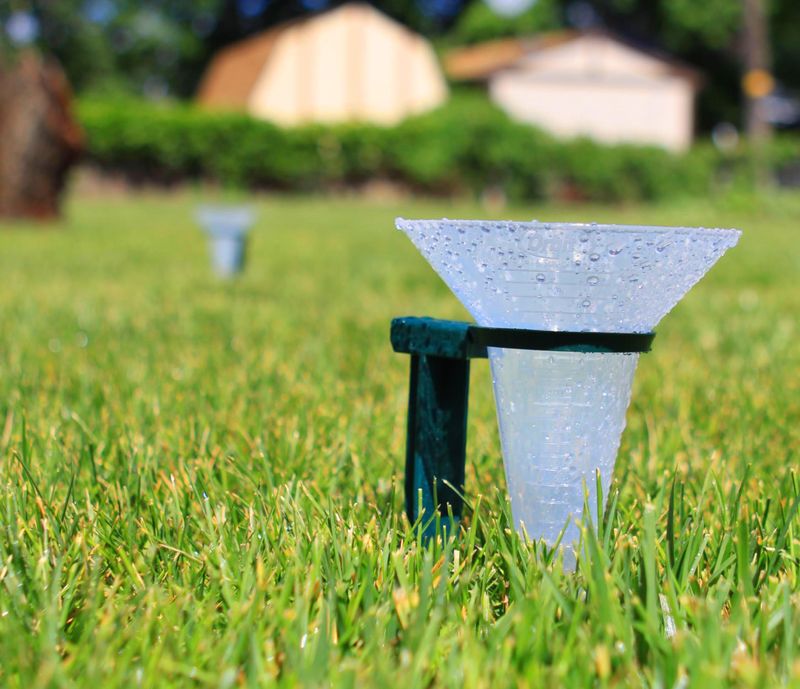
Runtime alone tells you nothing reliable about how much water actually landed on the grass. The practical fix is simple: set several tuna cans, pet-food cans, or a shallow rain gauge around the sprinkler zone before you run the system.
After the cycle ends, measure the depth of water collected in each container.
Averaging those measurements tells you how much water the lawn actually received and how evenly it was distributed. Significant variation between cans often points to a clogged head, a pressure problem, or poor overlap coverage.
NC State Extension’s lawn handbook recommends this can-measurement approach specifically because runtime is not a reliable proxy for water volume.
Once you know your sprinkler’s output rate, you can calculate how long to run it to approach the roughly 1 inch per week starting benchmark, then adjust that figure based on recent rainfall, the soil type in your yard, slope, grass species, and visible stress. NC State’s fescue lawn calendar confirms that sandy soils drain faster and may need more frequent but smaller applications, while heavier clay soils hold moisture longer and require pauses to prevent runoff.
Measuring is what turns a general guideline into a plan that actually fits your lawn.
Use Early-Morning Watering and Cycle-and-Soak Techniques
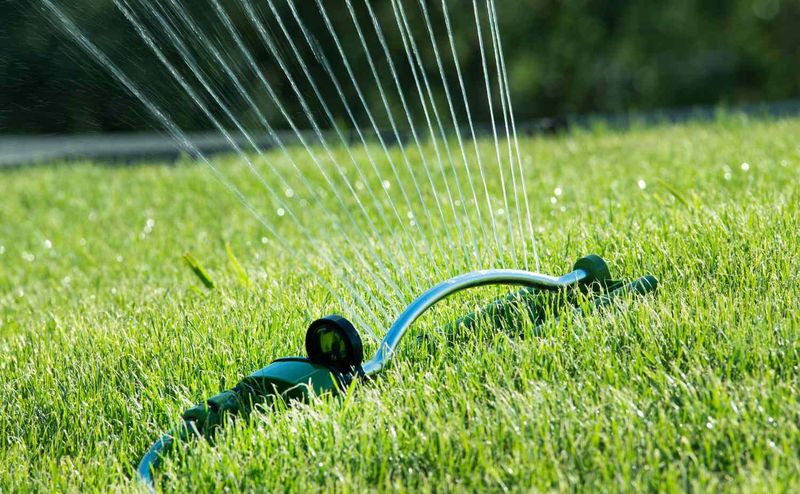
Timing matters almost as much as quantity when it comes to getting water where the lawn needs it. Watering early in the morning, ideally before 10 a.m., reduces the amount lost to evaporation before it can soak into the soil.
Morning watering also gives grass blades time to dry as temperatures rise through the day, which is preferable to wet foliage sitting through the night. NC State Extension’s water quality and lawn care guide recommends early-morning irrigation for both efficiency and foliage health, though morning watering reduces disease risk compared with evening irrigation rather than eliminating it entirely.
Clay soils, compacted ground, and sloped areas present a separate challenge: water tends to run off the surface before it can penetrate, even when applied at a moderate rate. The cycle-and-soak method addresses this directly.
Run the sprinkler until you see water beginning to move across the surface or pool, then shut it off and wait 30 to 45 minutes while that water infiltrates. Resume for another cycle, pause again if needed, and repeat until the soil reaches the target moisture depth of roughly 4 to 6 inches.
Splitting the total application across two or three short cycles rather than one long run gets significantly more water into the root zone on problem soils and slopes. NC DEQ also highlights that runoff carries fertilizer, pesticides, and sediment into local waterways, so reducing runoff through cycle-and-soak watering is both practical for the lawn and better for the surrounding environment.
Frequent, light watering delivered at any time of day is the pattern to avoid. Light applications wet only the top layer of soil, roots concentrate near the surface chasing that shallow moisture, and the lawn becomes more fragile with every dry spell that follows.
Committing to less frequent but deeper sessions, timed for early morning, gives established turf a much better foundation for handling drought stress.
Match the Strategy to the Grass Type
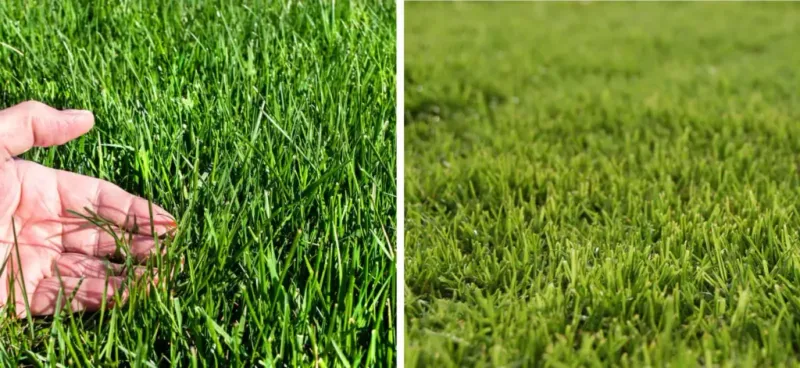
North Carolina is one of the few states where homeowners commonly grow both warm-season and cool-season grasses, and those two groups behave very differently under drought. NC State Extension’s turfgrass water requirements guide explains that warm-season grasses such as bermudagrass, zoysiagrass, centipedegrass, and St. Augustinegrass reach their peak root growth and activity during the hottest months of summer.
That timing gives them a natural advantage during late-season dry spells: their root systems are at full strength when drought hits, and many warm-season varieties can tolerate short dry periods or slip into dormancy and recover without permanent damage.
Tall fescue operates on a different calendar. As a cool-season grass, it grows most vigorously in fall and spring, and it tends to slow down significantly under summer heat even without drought.
Add a prolonged dry spell and tall fescue faces a double stress. NC State notes that some tall fescue may be permanently lost when drought extends beyond roughly three weeks, particularly when heat is intense and the lawn was not well-rooted or healthy going into the summer.
That does not mean every brown fescue lawn is gone, but the risk of actual turf loss is real and worth taking seriously.
The distinction between maintaining green color and keeping turf alive is also important here. Warm-season grasses that go dormant and turn tan or light brown are often conserving energy rather than dying.
Forcing them to stay green through aggressive irrigation during restrictions may waste water and put the homeowner out of compliance with local rules, with little benefit to the lawn’s long-term health.
For lawns that cannot be irrigated regularly, NC State Extension offers a conditional dormancy option: apply approximately 0.25 inch of water every three weeks during drought to help prevent heat and drought injury to dormant turf. That minimal application is not enough to keep the lawn green, but it may help prevent the crowns and roots from dying completely.
This is a water-conservation compromise, not a universal prescription, and its effectiveness still depends on grass species, soil, and the severity of the drought.
Avoid Shortcuts That Increase Drought Damage
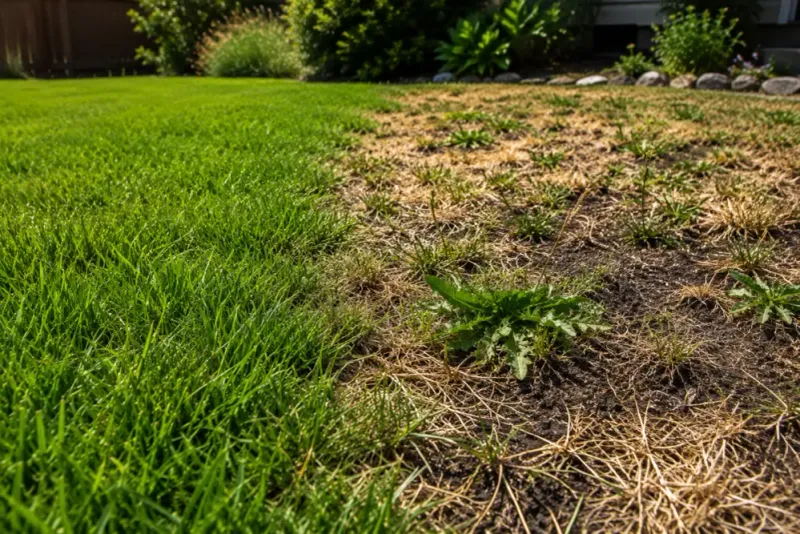
Several common reactions to a struggling lawn can make the situation significantly worse. Daily light watering is one of the most tempting but counterproductive habits.
Applying a thin layer of water every morning keeps the top inch or two moist while leaving the deeper soil bone-dry. Roots follow moisture, so they cluster near the surface, and a lawn with shallow roots is far more vulnerable to the next dry spell than one with roots reaching 4 to 6 inches deep.
NC DEQ’s lawn watering guidance specifically warns that frequent, shallow irrigation promotes shallow rooting and increases runoff, weeds, and disease problems.
Relying on a set-and-forget irrigation timer without adjusting for rainfall or visible conditions is another shortcut that backfires. A timer that runs the same schedule every week regardless of whether it rained three days ago wastes water, can keep soil too wet in some spots, and may put you in violation of local watering restrictions if your utility has imposed limits.
Always factor recent rainfall into your irrigation decisions and verify that your schedule complies with current local rules.
Mowing height deserves careful attention during drought. Cutting grass too short removes the leaf area the plant uses to produce energy and exposes the soil to direct sun, raising soil temperatures and accelerating moisture loss.
NC State Extension’s water quality and lawn care publication gives species-specific ranges to follow: keep tall fescue at approximately 2.5 to 3.5 inches and bermudagrass or zoysiagrass at roughly 0.75 to 1.5 inches. Mowing at the upper end of the appropriate range for your grass type during drought helps shade the soil and reduces heat stress on the turf.
Adding extra nitrogen fertilizer to try to green up a drought-stressed lawn is genuinely risky. Nitrogen pushes new leaf growth, which increases the plant’s water demand at exactly the moment water is scarce.
UGA Extension’s lawn recovery guidance specifically warns against late-season nitrogen applications to warm-season lawns, noting that excess nitrogen can also elevate disease and insect pressure and delay dormancy in ways that increase winter injury risk. Hold off on fertilizer until the lawn has recovered and conditions have returned to normal.
Check Current Local Water Rules Before Irrigating
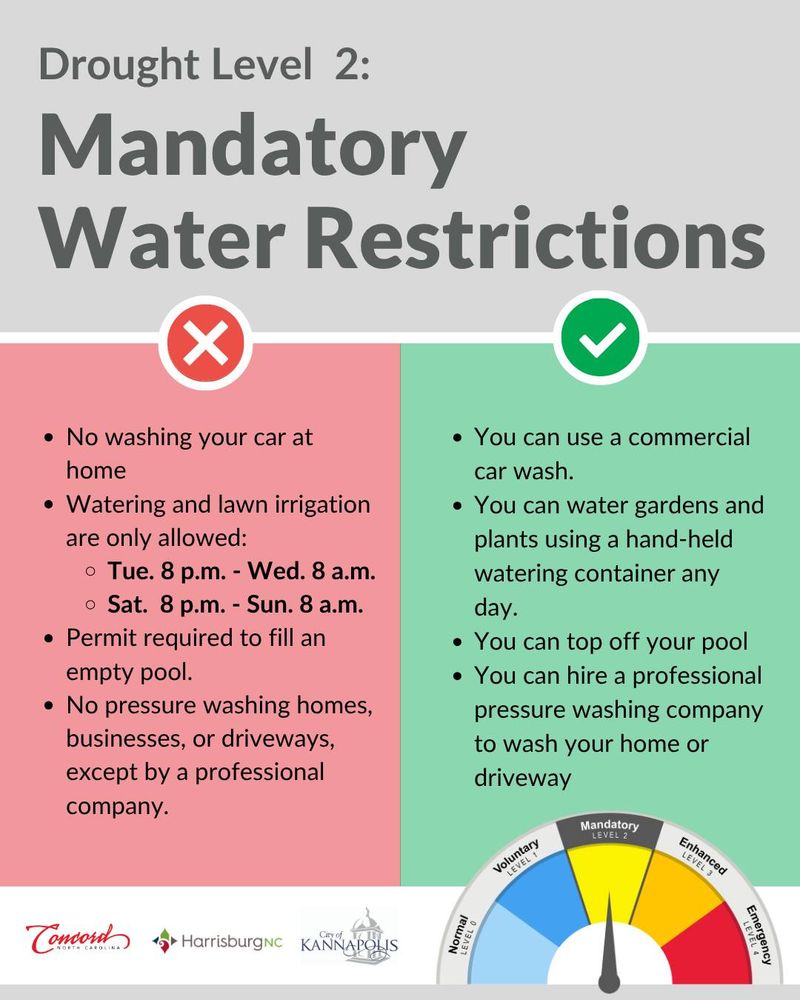
General lawn-care advice about how much to water and when becomes secondary the moment your local water utility posts restrictions. North Carolina water systems set their own conservation levels and mandatory watering rules based on local reservoir levels, well conditions, and population demand.
Those rules vary from one utility to the next and can change quickly as drought conditions shift across the state. What is permitted in one county may be restricted or prohibited in another, and ignoring those rules carries real penalties.
As of August 13, 2026, drought had improved across much of North Carolina, but some areas remained in severe to exceptional drought conditions, according to NC DEQ’s August 2026 drought update. That snapshot illustrates how variable conditions can be across the state at any given time and how quickly the picture can change.
It does not represent current statewide conditions, which may be different by the time you read this.
Before turning on a sprinkler, go directly to your local water provider’s website or call their customer service line to find out what stage of conservation they are currently enforcing. Some systems permit irrigation on specific days or during specific hours only.
Others may ban non-essential outdoor watering entirely during severe drought declarations. NC DEQ’s statewide water conservation resources can help you locate your utility’s contact information and current guidelines if you are unsure where to start.
Following local restrictions is not just a legal requirement. It is also the responsible choice when the state’s water supply is under pressure.
Even the best watering strategy for your lawn has to work within the boundaries your utility sets, so confirming those rules before you act is a non-negotiable first step.
Wait for Recovery Before Replacing Brown Turf

Brown turf does not automatically require a trip to the garden center for sod or seed. Many established lawns that look uniformly straw-colored during a drought are dormant rather than dead, and they can return to acceptable condition once rain or irrigation resumes.
Replacing grass too soon wastes money and disrupts soil that may still have living root crowns just below the surface. Give the lawn adequate recovery time after drought conditions ease before making any decisions about replacement.
Uniform browning across a large area is more likely to reflect dormancy than dead turf. Irregular brown patches, on the other hand, can point to something other than drought.
Brown patch disease produces circular or irregular dead-looking areas in tall fescue during warm, humid weather and can look remarkably similar to drought damage. Insect feeding, heat injury concentrated in a low spot, or a failed irrigation zone can all create patchy browning that mimics drought stress.
Applying pesticides or fertilizer without knowing the actual cause can worsen the problem.
When the source of damage is unclear, contact your county’s Cooperative Extension office. Extension agents can help identify whether the problem is drought, disease, insects, or a combination, and they can recommend appropriate next steps specific to your grass type and local conditions.
NC State’s tall fescue maintenance calendar and Carolina Lawns both offer region-specific guidance on distinguishing stress types and timing recovery efforts appropriately.
The practical takeaway across this entire article comes down to two connected actions: watch for early stress signals and apply deep, slow water when the lawn shows those signs and local rules allow it, then give the turf time to respond before drawing conclusions. A lawn that looks lost in August may surprise you by September.
Patience, combined with accurate diagnosis, is often what separates a recoverable lawn from an unnecessary renovation.