
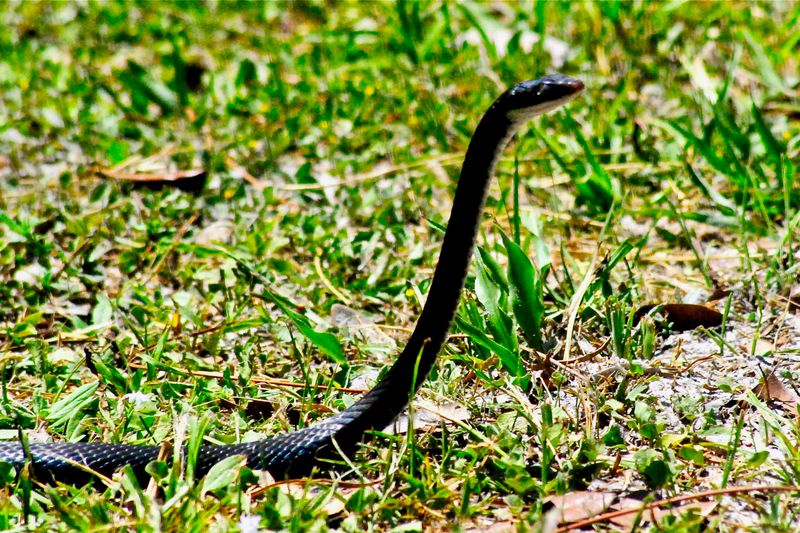
Spotting a slender black snake cutting across your Florida lawn can stop your heart for a second. Most homeowners either freeze or scramble for a shovel, but that reaction is worth reconsidering.
A southern black racer is a native, nonvenomous species found from the Panhandle to the Keys, and its presence in your yard tells a more interesting story than simple alarm. Understanding what actually drew it there can change how you think about your outdoor space.
A Black Racer Can Be a Native Florida Neighbor
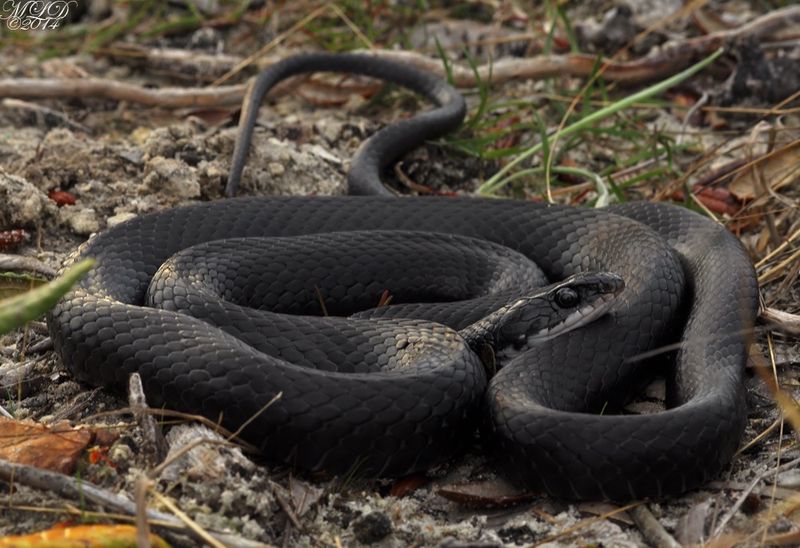
Most Florida homeowners who glimpse a fast-moving black snake assume the worst, but the southern black racer deserves a second look before panic sets in. According to the Florida Museum’s North American racer profile, adults are typically slender with a black or bluish-black body, a noticeably pale chin or throat, and large, alert eyes.
That slim build and rapid movement are two of the most reliable field clues you can observe from a safe distance.
Juveniles look completely different and can throw off even experienced observers. Young racers are gray with reddish-brown blotches along their backs, so a juvenile in your yard may not match the all-black adult you were picturing.
Color alone, at any age, is not enough to make a confident identification.
Florida also has other dark-colored snakes that share suburban spaces, including rat snakes, indigo snakes, and cottonmouths. The Florida Museum’s snake identification tool and UF/IFAS guidance on Florida snakes both recommend using photographs taken from a safe distance rather than handling or approaching the animal.
Never pick up a snake to get a closer look, regardless of how certain you feel about what species it is.
Southern black racers live throughout mainland Florida and the Florida Keys, moving through nearly every habitat the state offers. A sighting in a residential yard is entirely normal for this species.
What it does not automatically tell you is that your entire yard is ecologically healthy or that your landscaping choices deserve a gold star. The narrower and more honest conclusion is that your property or the surrounding area offers something the snake can use, and that distinction matters.
Why a Racer Uses Suburban Yards
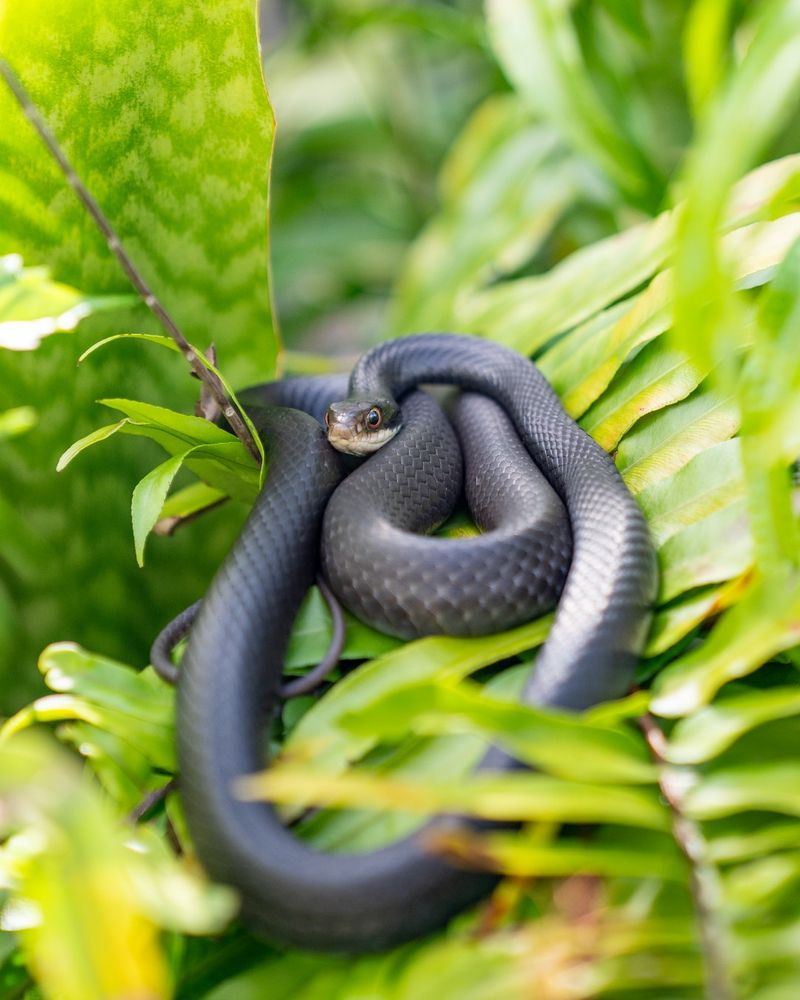
A racer showing up between your garden beds is not random. These snakes are generalists, meaning they move through and use a wide range of environments, from pine flatwoods and wetlands to agricultural fields, parks, and residential neighborhoods.
The Florida Museum notes that racers occupy nearly every habitat type in Florida, which explains why suburban sightings are so common even in areas that feel far removed from wild spaces.
Several specific conditions can draw one onto your property. Prey is the most direct pull: if frogs, lizards, or small rodents are active in your yard, a passing racer has a reason to stop and hunt.
Basking opportunities matter too, since racers are cold-blooded and need warm, open surfaces to regulate their body temperature. Ground-level cover such as brush piles, low shrubs, or dense vegetation gives the snake a place to shelter and hunt from concealment.
Travel routes are another factor that gets overlooked. Research on racer movement in Florida landscapes shows that these snakes range across relatively large areas and may simply be crossing your yard on the way to or from other habitat patches nearby.
The snake you see may be a regular resident of a neighboring lot, a retention pond edge, or a preserve corridor, and your yard is part of its route.
None of these mechanisms require that you have done anything exceptional with your landscaping. Florida Fish and Wildlife Conservation Commission guidance specifically notes that frequent snake sightings near homes can indicate rodents or other attractants, so the presence of a racer is not automatically a sign of a pristine or carefully managed yard.
The honest read is that your property participates in a functioning local food web, and that is genuinely worth something, even if it falls short of a full ecological report card.
Its Food-Web Role Is Not Guaranteed Pest Control
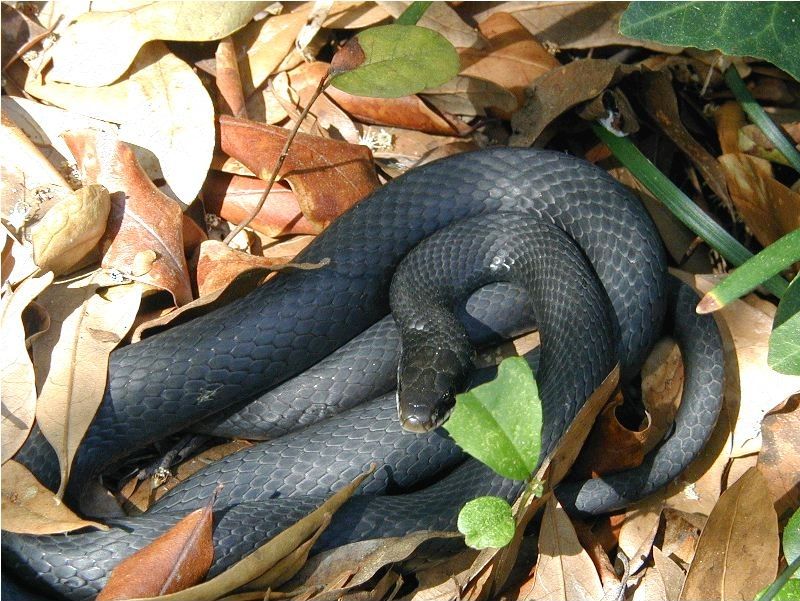
Racers hunt during the day, which sets them apart from many other Florida snakes and makes them more visible to homeowners. They are active, fast-moving predators rather than ambush specialists, chasing down prey across open ground and through low vegetation.
That hunting style means they cover a lot of ground and encounter a wide variety of animals in a typical Florida yard.
Their documented diet includes frogs, lizards, small snakes, insects, rodents, and birds’ eggs. UF/IFAS notes that black racers consume a broad range of prey, and the Florida Museum adds that frogs, lizards, and small snakes make up much of their diet in Florida specifically.
Rodents and insects round out the menu, which is why so many homeowners assume a racer is quietly solving their pest problem.
The reality is more nuanced. A single racer moving through a yard will eat what it finds, and some of those prey items will overlap with what homeowners consider pests.
That is a genuine contribution to the local food web. What the evidence does not support is the idea that one snake will reliably clear out a rodent population, eliminate insects, or meaningfully reduce mosquitoes.
The FWC guide to nonvenomous snakes describes diet in broad terms without making pest-control promises, and homeowners should read that caution the same way.
Treating a racer as a biological pest-control service also creates a temptation to encourage it to stay near the house, which is not good advice for people with children, pets, or an unidentified snake they cannot safely confirm. The food-web contribution is real and worth recognizing, but it is a byproduct of the snake living its life, not a service it provides on demand.
Support Habitat Without Bringing It to the Door
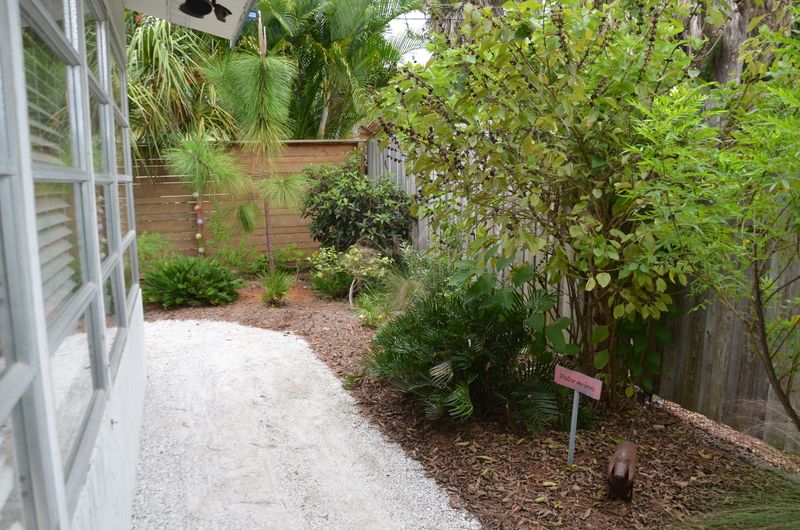
One of the most common overcorrections after a snake sighting is stripping the yard of everything that could possibly provide cover. Pulling out every native plant, raking up all the leaf litter, and cutting down brush piles does reduce snake habitat, but it also removes the habitat that supports the food web those snakes belong to.
The better approach is more selective.
Native plants, leaf litter, fallen logs, brush piles, small ponds, and dense vegetation do something valuable: they support the insects, frogs, lizards, and small animals that make a Florida yard ecologically alive. UF/IFAS habitat and exclusion guidance and extension coexistence advice both acknowledge this trade-off directly.
Those same features also provide cover and prey for snakes, so the goal is placement rather than elimination.
Keep habitat features in areas of the yard where wildlife activity is welcome, such as back corners, fence lines near natural areas, or garden sections you do not use daily. At the same time, maintain a clearer, less-cluttered buffer immediately beside the house, around play equipment, along pathways, and near sheds or garages.
That buffer does not need to be a sterile zone; it just needs to avoid piling up the ground-level debris that gives a snake a reason to linger right next to a door.
One more honest qualifier: FWC points out that frequent snake sightings close to a dwelling can indicate rodents or other attractants rather than exceptional yard management. If a racer is showing up near your foundation repeatedly, the yard habitat question is worth asking alongside a separate question about what else might be drawing it in.
Keep Your Distance When the Snake Appears
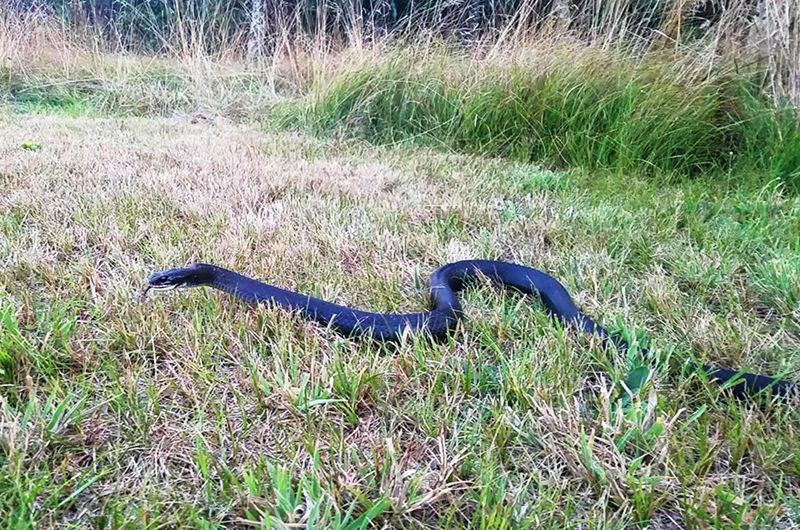
Black racers are not aggressive by nature. When a person approaches, the typical response is rapid retreat into vegetation or cover.
That speed is actually one of their most recognizable traits, and most encounters end before the homeowner has time to do anything at all. The situations where a racer becomes defensive are predictable: cornering the snake, blocking its exit, or attempting to handle it.
A cornered or handled racer may vibrate its tail, release a musky odor, strike, or bite. The bite is not venomous, but it is painful and carries infection risk, and the behavior is a reasonable defensive response from the snake’s perspective.
UF/IFAS snake safety guidance and the UF/IFAS nonvenomous snake publication are consistent on this point: do not pick up, corner, or crowd any snake, regardless of what species you think it is.
Keep children and pets away from the area while the snake is present, and give it a clear, unobstructed route out of the space. Observe from a comfortable distance if you want to watch it leave.
If the snake cannot be confidently identified from a safe distance, treat it as potentially dangerous and contact a wildlife professional rather than making assumptions based on color alone. FWC’s snake coexistence page reinforces this advice for any unidentified snake near a home.
If a bite does occur and there is any chance the snake was venomous, seek prompt medical attention without delay. CDC guidance on venomous snakebites and CDC travel health recommendations both state clearly that you should not cut the wound, attempt to suck out venom, apply ice, use a tourniquet, or try to catch the snake.
Get to emergency care and let medical professionals handle the rest.
Reduce Close Encounters With Basic Maintenance
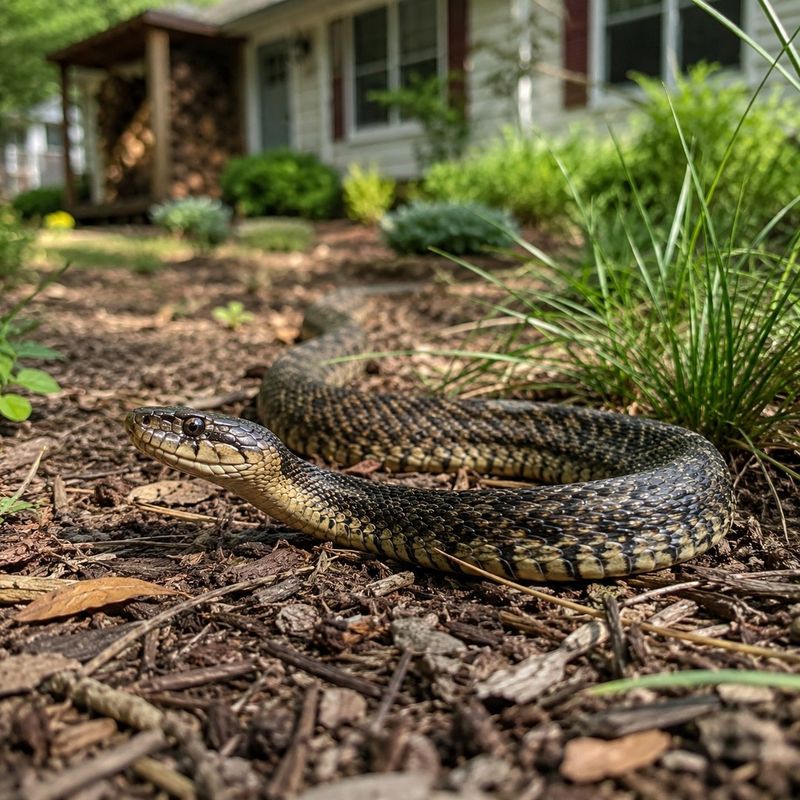
Yard maintenance is the most practical tool homeowners have for reducing how often snakes show up in high-use spaces. The goal is not to make the yard inhospitable to all wildlife but to remove the specific conditions that give snakes a reason to linger near doors, walkways, and play areas.
Most of these steps also reduce rodents, which is a meaningful side benefit since rodents can themselves attract snakes.
Start with ground-level clutter. UF/IFAS guidance on preventing snake problems recommends organizing or removing boards, lumber, brush piles, and firewood stacked directly on the ground near the house.
Keep grass and low vegetation trimmed away from the foundation, and seal gaps under sheds, around pipes, and along the base of buildings where a snake could slip inside. Store birdseed and pet food in sealed, rodent-proof containers to cut off one of the most common attractants.
When a snake appears in the yard, the simplest response is often patience. A racer will usually move on if left alone and given time.
A gentle spray from a garden hose, applied from a safe distance, can encourage the snake to leave an area without requiring any direct contact. That is the appropriate level of intervention for most yard encounters.
Two narrower exceptions apply. If a small snake is visibly trapped in a pool and cannot get out on its own, a long-handled leaf skimmer can be used from a safe distance to lift it out without touching it.
That is the only situation where this tool is appropriate; it is not general permission to capture or relocate snakes. UF/IFAS exclusion and habitat management resources and FWC snake guidance both advise contacting a professional when a snake is inside a building or cannot be safely identified, rather than attempting removal yourself.
Skip Unproven Repellents and Casual Relocation
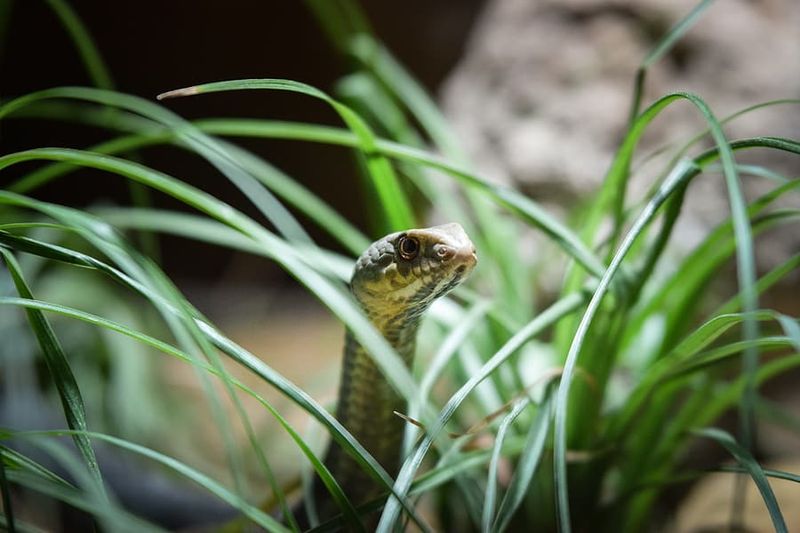
After a snake encounter, the instinct to reach for a product is understandable. Hardware stores and online retailers sell a range of sprays, granules, and devices marketed as snake repellents, and the promise of a simple fix is appealing.
The problem is that these products do not reliably deliver on that promise.
UF/IFAS research on snake repellents states directly that no repellents, toxicants, or fumigants are registered for use against snakes in Florida, and that commonly promoted home remedies have questionable effectiveness. Mothballs, sulfur powder, and ultrasonic devices fall into this category.
Beyond being ineffective, mothballs pose real risks to children, pets, and soil when used outdoors, and chemical treatments scattered around a yard can harm the same nontarget wildlife that makes a yard ecologically functional.
Casual relocation is another approach that seems reasonable but creates problems. Catching a snake and releasing it at a nearby park may feel like a humane solution, but FWC’s wildlife relocation guidance describes relocation as stressful for the animal, potentially harmful, and generally a last resort after prevention measures have been tried and failed.
A racer dropped in an unfamiliar location loses its established territory and knowledge of local resources, and it may simply wander back or encounter new hazards.
Exclusion fencing is a legitimate option for specific situations, but it is not routine garden advice. UF/IFAS describes snake exclusion fencing as a specialized, costly measure with strict requirements for mesh size, height, depth of burial, gate design, and ongoing maintenance.
It is most relevant for protecting a specific area from venomous snakes, not for general yard perimeter use. Habitat modification and structural exclusion around buildings remain the more practical and evidence-supported starting points.
What One Racer Sighting Really Tells You
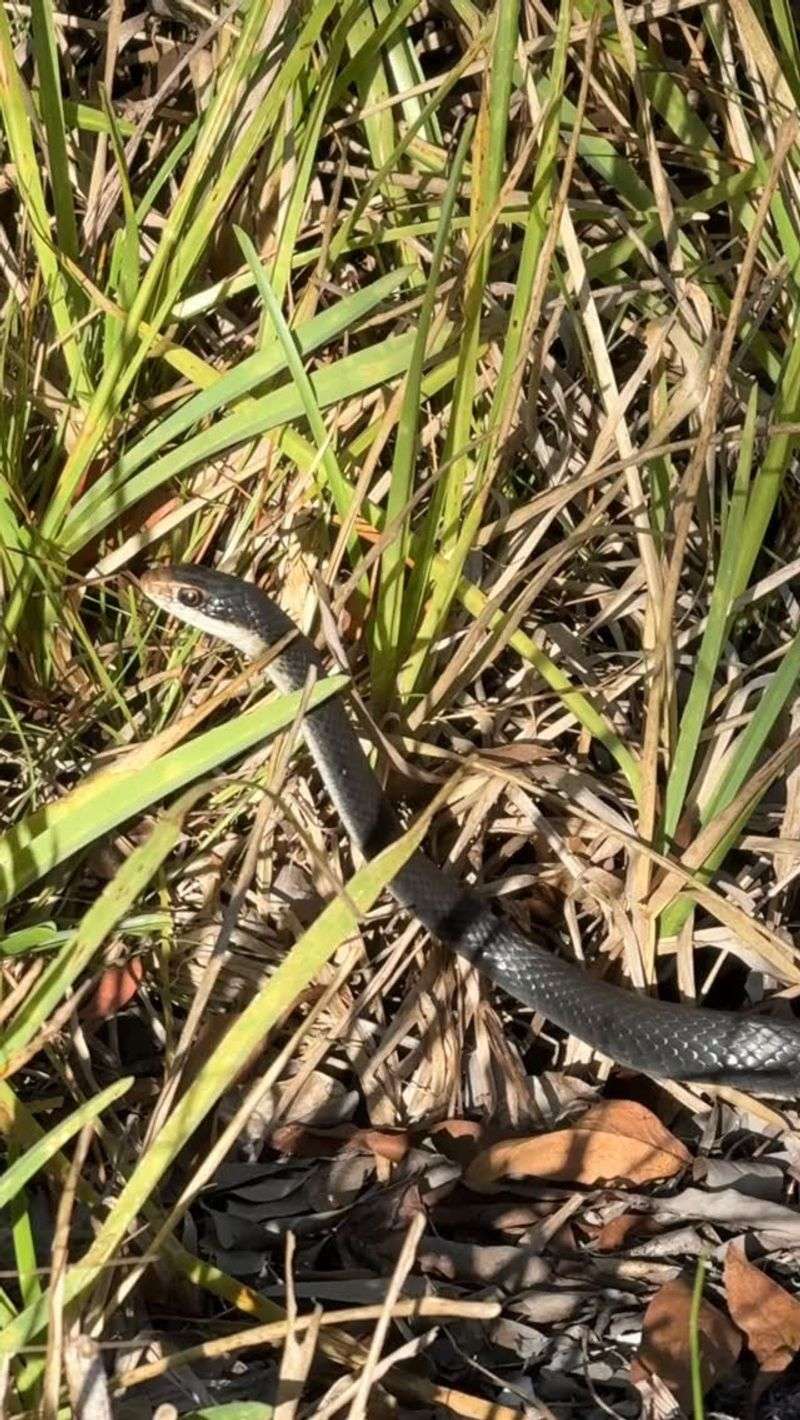
A black racer crossing your yard is not a warning sign, but it is also not a performance review. What it genuinely indicates is that your property or the surrounding landscape offers something usable: prey, cover, a warm surface to bask on, or a corridor connecting one patch of habitat to another.
That is a real and encouraging signal about local ecological function, not a complete health certificate for your yard or your management choices.
The Florida Museum and UF/IFAS both frame racers as adaptable generalists that move through natural and heavily modified suburban environments alike. One sighting does not confirm that every corner of your property is thriving, and it does not mean you have earned the right to skip maintenance near the house.
What it does suggest is that your yard is not ecologically isolated, and that matters in a state where habitat fragmentation is a genuine conservation concern.
The practical takeaway is straightforward. Keep people and pets at a safe distance, give the snake room to leave, retain habitat features where they fit the landscape, and maintain a tidy buffer around high-use spaces near the home.
Treat the racer as wildlife rather than framing it as either a threat to eliminate or a pest-control employee to retain. A native snake moving through a Florida yard is, at its core, a yard doing what Florida yards are supposed to do.