
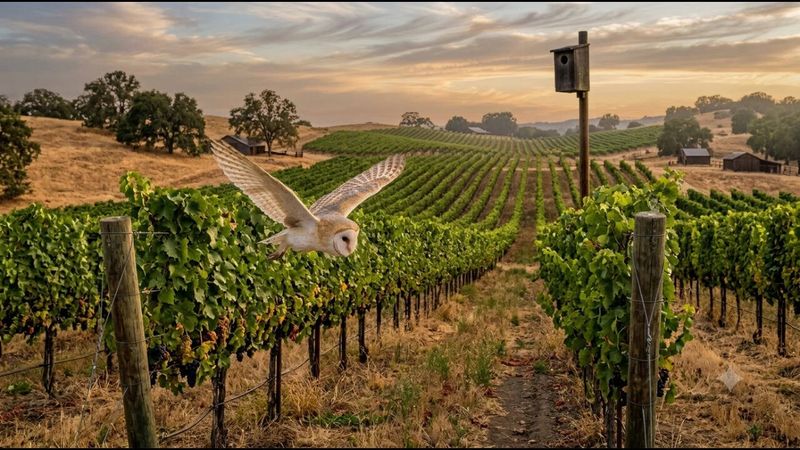
Spotting a barn owl nesting in your California yard feels like something out of a nature documentary, and it raises an obvious question: does this mean your property is crawling with rats and gophers? The honest answer is more nuanced than the dramatic version.
A barn owl chose your yard because it found a safe place to nest near a landscape where small mammals are accessible, but that does not mean it zeroed in on your specific rodent problem or that your pest troubles are over.
A nesting owl signals habitat, not a targeted pest-control visit
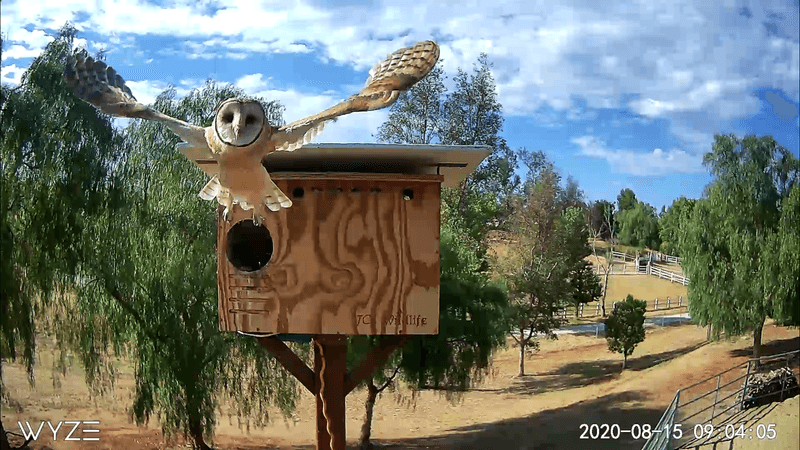
Barn owls do not scout individual homeowners’ yards looking for rat infestations. What actually happened when one settled into your eave, barn, or nest box is simpler and more ecological: the owl found a usable cavity near a broader landscape where nocturnal small mammals were accessible.
According to the California Wildlife Habitat Relationships System profile for barn owls, the species favors open habitats such as grassland, pasture, marsh, and agricultural land, and it nests in structures ranging from hollow trees and cliffs to barns and purpose-built boxes.
The sighting tells you that your property or surrounding neighborhood forms part of a viable hunting territory. That is genuinely good news, but it is different from proof that your yard is the nightly hunting ground or that the owl has confirmed rats and gophers on your lot.
Cornell Lab’s barn owl life history describes the species as a wide-ranging hunter that selects open landscapes rather than specific properties.
A 2021 California habitat-selection study tracked nesting owls across the Napa Valley and found that owls selected grassland, riparian, and oak-savanna habitats most strongly, crossing developed and agricultural land as part of a larger mosaic. The nest location reflects where a safe cavity existed, not necessarily where the best prey is concentrated.
The rest of this article separates what the presence of a nesting barn owl actually tells you from what it does not. That means looking at documented prey, uncertain residential pest effects, and the practical steps you can take to support the owl without abandoning sensible rodent management.
The owl needs a cavity near workable hunting habitat
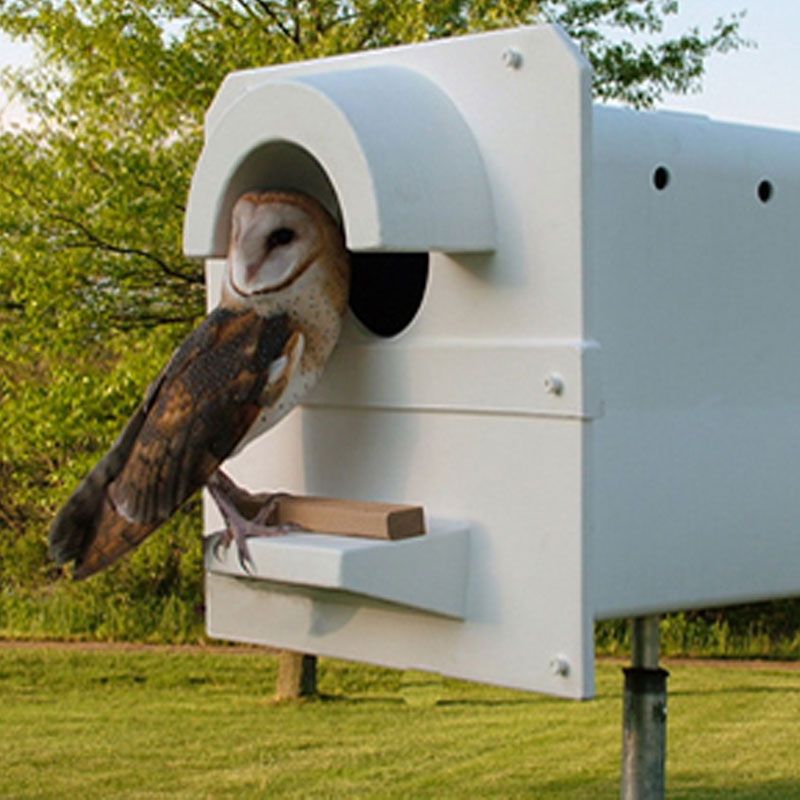
Barn owls are cavity nesters by necessity. They do not build their own nests but instead rely on pre-existing spaces: hollow trees, the upper corners of barns, abandoned buildings, culverts, cliff ledges, and purpose-built nest boxes.
A residential yard that offers any of these structures, even a simple wooden box on a fence post, can become a nesting site if the surrounding landscape provides enough open ground to hunt.
That last condition matters as much as the cavity itself. Barn owls are strongly associated with open, low-obstruction environments rather than dense woodland or tightly packed urban blocks.
Grassland, pasture, marsh, riparian corridors, oak savanna, and the weedy margins of agricultural land all provide the low ground cover that makes small mammals visible and catchable to a low-flying owl.
California’s varied landscape creates a patchwork where suburban lots, drainage channels, creek corridors, and remnant open space sit next to each other. A yard in that kind of mosaic can serve as a secure nesting anchor even if the prime hunting ground is a nearby park, a neighbor’s pasture, or a grassy flood-control basin.
The California Wildlife Habitat Relationships System notes that barn owls use suburban edges where open habitat is accessible.
A Napa Valley nest-box selection study confirmed that boxes near grassland, riparian, and oak-savanna habitat were occupied at higher rates, reinforcing that the surrounding landscape quality drives nest-site selection as much as the box or cavity itself. Your residential lot may be only one tile in a larger habitat mosaic the owl uses each night.
Understanding this distinction is useful. The owl is not a sign that your specific yard is uniquely rodent-rich.
It is a sign that your property sits within a landscape the owl can work with, and that the cavity you offered, intentionally or not, was safe enough to accept.
The prey list includes more than the rodents you notice
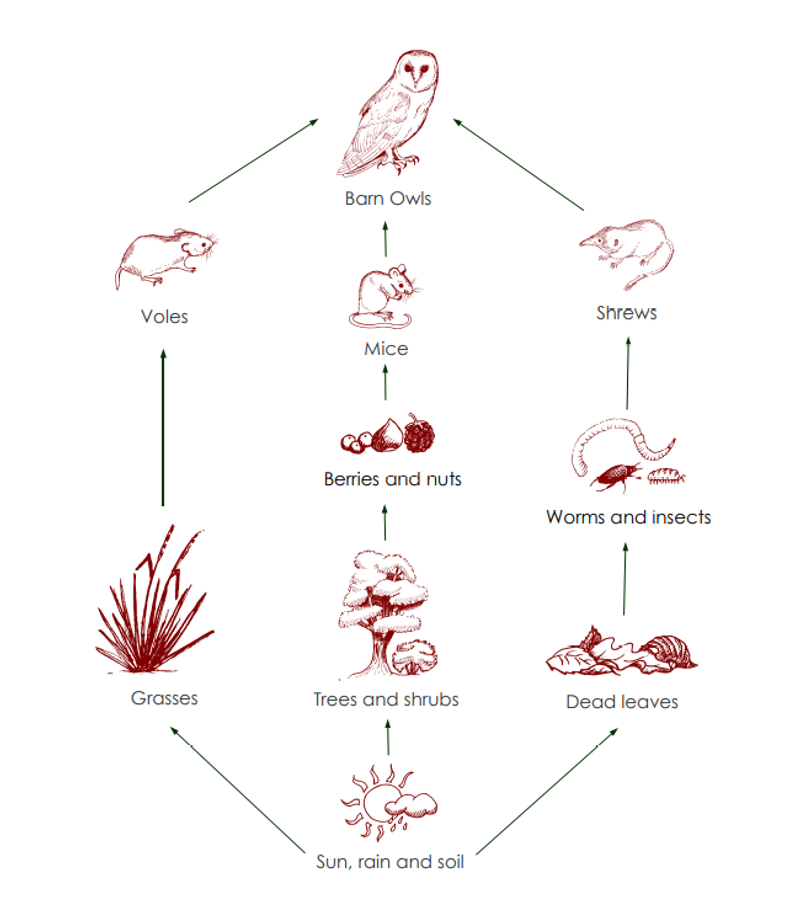
When people hear “barn owl,” they often picture a silent predator systematically clearing out rats and pocket gophers. The real prey picture is broader and more conditional.
Cornell Lab’s life-history account describes barn owls as hunters of small mammals, with mice and voles making up the core of the diet across most of their range. Rats appear in the diet, and so do pocket gophers, but neither is a guaranteed staple.
A California diet and pest-control implications study found that prey composition shifts with local habitat and prey availability. An owl nesting near a grassy drainage corridor will eat what moves across that corridor at night, which is mostly small mice and voles.
An owl in a more agricultural area may take a different mix. The individual bird nesting in your yard may or may not be taking the rodents you are most concerned about.
Pocket gophers present a particular challenge. Unlike mice and voles, they spend the overwhelming majority of their time underground, which sharply limits the moments when an owl can detect and catch one.
A California review published through eScholarship concluded that while barn owls may help under some conditions, the available evidence does not establish reliable control of pocket-gopher populations, especially where densities are high.
UC IPM’s pocket-gopher guidance reinforces this point: aerial predation is not listed among the practical management tools for gopher problems. If mounds are appearing in your lawn, the owl is unlikely to resolve the issue on its own, regardless of how active it appears at night.
The practical takeaway is to avoid assuming the owl’s diet matches your pest priority list. Barn owls eat what is catchable and abundant in their territory, and that may or may not overlap with the rats or gophers troubling your garden beds.
The nest may sit in your yard while the hunting happens elsewhere
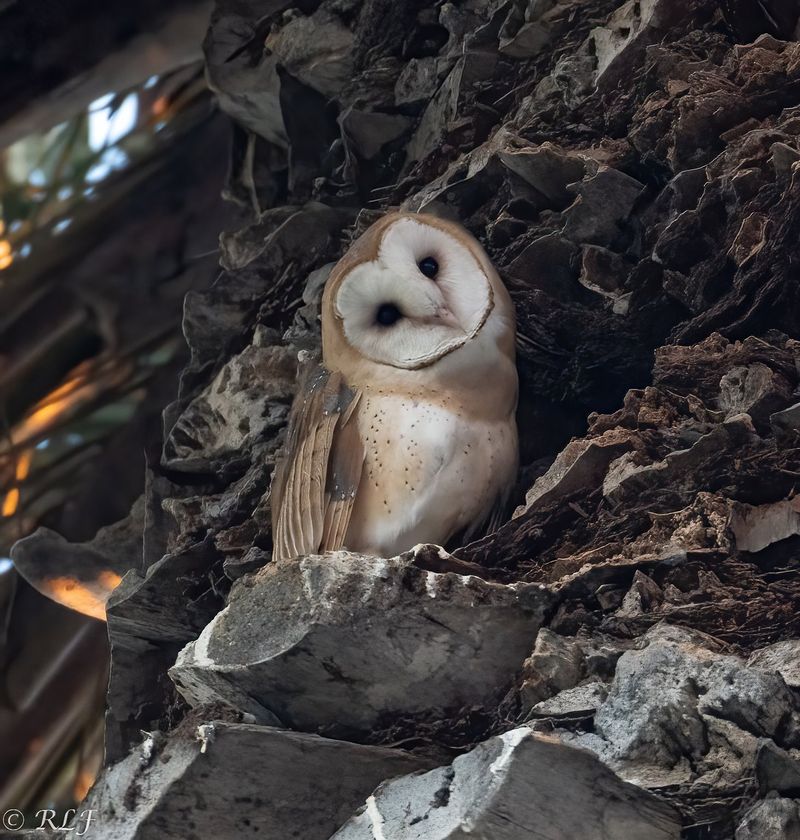
A nest box on your property feels personal, but the owl treats it as a home base rather than a feeding station. Barn owls range across multiple properties each night, and the nest’s location does not tell you where the owl is actually catching prey.
A tracking study conducted in California’s Napa Valley found that 50 percent of recorded hunting locations fell within 500 meters of the nest box and 73 percent within 1,000 meters, but that still leaves a substantial portion of hunting activity happening well beyond a single residential lot.
Newer California research extends that picture further. A 2026 Napa Valley study reported hunting distances extending several kilometers from nest sites, particularly when owls were feeding young and needed to cover more ground.
A residential yard, even a generous one, covers a fraction of that territory.
What this means practically is that the owl nesting in your outbuilding may be spending most of its hunting time in a neighbor’s weedy back corner, a nearby park, a drainage easement, or a strip of grassland along a road. Cornell Lab’s barn-owl nest cam FAQ notes that the nest location and the hunting location are often separate, and that owls select cavity sites for safety rather than proximity to a specific prey patch.
For a homeowner watching rodent activity in the yard, this matters. A visible nest does not confirm that the owl is hunting your lawn, and a drop in rodent signs cannot automatically be credited to the owl.
The owl may simply be commuting through on its way to better hunting ground nearby.
Rodent benefits remain possible, local, and unproven as cause and effect
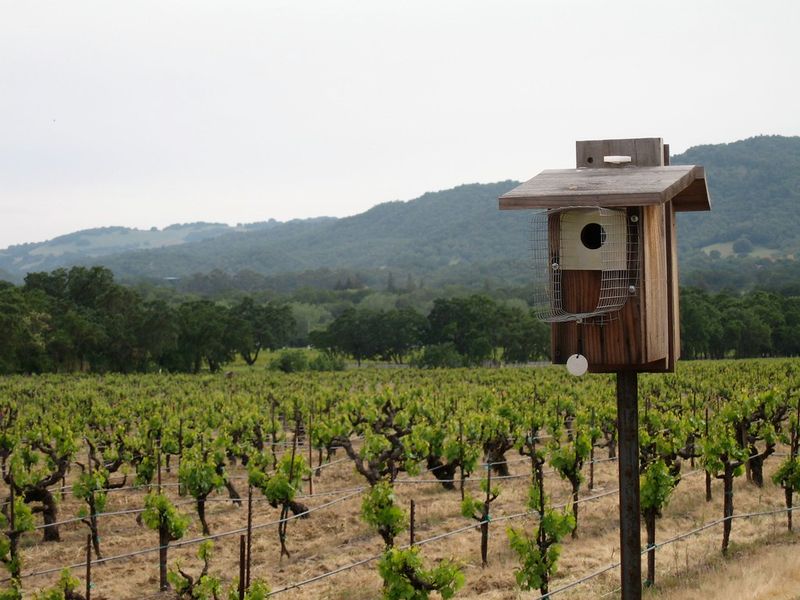
Barn owls can affect rodent activity in the areas they hunt, but the strength and reliability of that effect depends heavily on where you are and which rodents you are counting. The most detailed California evidence comes from vineyards, not backyards, and the results should be read with that context in mind.
A 2026 Napa Valley study found 38 to 52 percent lower measured rodent abundance across the observed range of barn-owl hunting pressure. That is a meaningful association, but the study’s authors did not claim the owls caused the difference.
The rodents detected were predominantly deer mice, the study took place across vineyard landscapes rather than residential lots, and the study’s cameras detected no pocket gophers at all. Translating those numbers into a promise about your backyard rats or lawn gophers is a stretch the data does not support.
A separate California review through eScholarship examined barn-owl predation on agricultural rodent pests more broadly and reached a similarly cautious conclusion: owls may help in some settings, but the evidence does not establish dependable population control, especially for species that reproduce quickly or live underground.
Diet research also shows that prey composition varies considerably by habitat and season, meaning an owl that takes mostly deer mice in a vineyard corridor may take a different mix in a suburban neighborhood with different vegetation and prey communities.
Other factors can change rodent signs independently of any owl. Seasonal breeding cycles, weather, neighboring trapping or pest-control activity, construction that displaces rodent colonies, and changes in vegetation cover can all raise or lower the number of rodents you notice.
Crediting or blaming the owl for those shifts is rarely supportable without controlled monitoring.
Support the owl without creating new risks
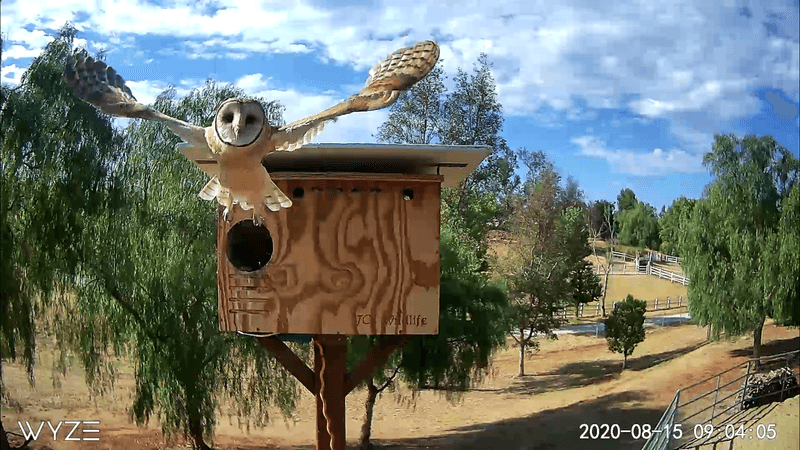
The most effective way to support a nesting barn owl is to make its environment safer, not to try to engineer a rodent supply for it. Two actions stand out above everything else: preserve open, low-obstruction hunting areas where your property allows, and stop using rodent poison.
Rodenticide use near barn-owl territory is a genuine hazard. California research on barn-owl rodenticide exposure found that risk can be higher in urbanized landscapes, where poisoned rodents are more likely to be encountered and consumed.
Not every poisoned rodent will sicken an owl, and risk varies with product type, dose, and exposure frequency, but UC IPM’s rat management guidance recommends exclusion, sanitation, and trapping as first-line tools precisely because rodenticides carry secondary-toxicity concerns for wildlife.
If you want to add a nest box where one does not already exist, placement matters as much as the box itself. Cornell NestWatch recommends mounting barn-owl boxes approximately 8 to 25 feet above ground, with an elliptical entrance measuring about 3 and 3/4 by 4 and 1/2 inches, and leaving at least 100 feet between boxes to avoid crowding territories.
NestWatch’s barn-owl box guidance also advises placing boxes far enough from frequently used parts of the home to account for nighttime noise: hungry barn-owl chicks are loud, and a box directly above a bedroom window will make that clear quickly. UC Agriculture and Natural Resources’ California nest-box plans describe structural specifications and siting considerations for boxes intended to attract nesting pairs near open habitat.
One approach that does not work is deliberately creating or tolerating a rodent problem to attract the owl. That strategy increases disease risk, invites more pests, and does not reliably draw owls to a specific location.
The owl found you because the habitat fit, not because you offered bait.
Use integrated control when rodent signs continue
A barn owl sharing your property does not change the basic math of rodent management. Rodents reproduce faster than a single nesting pair can hunt, and the owl’s territory extends well beyond your yard.
If you are seeing chewed wiring, burrow mounds, or droppings, the owl is not a substitute for addressing those signs directly.
For rats and house mice, the foundation of effective control is removing what attracts them. UC IPM’s rat management page recommends sealing openings in walls, foundations, and utility penetrations; securing garbage containers and removing accessible pet food; and reducing dense vegetation, wood piles, and clutter that provide harborage near buildings.
Snap traps placed in locations inaccessible to children and pets are the recommended population-control tool when sanitation alone is not enough.
UC IPM’s house-mouse guidance follows the same hierarchy: exclusion first, then trapping, with rodenticides reserved for situations where other methods have failed and used only in tamper-resistant stations away from wildlife access. Neither rat nor mouse management assumes that a nearby owl will handle the problem.
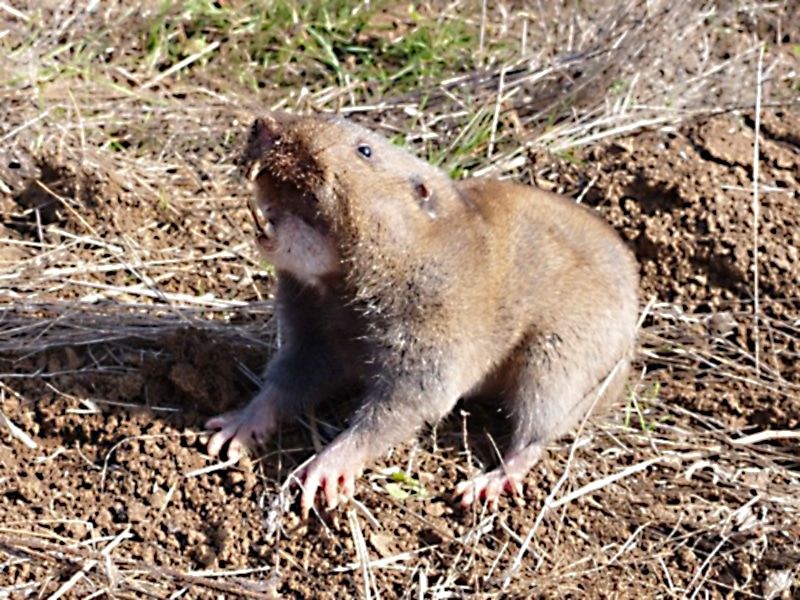
Pocket gophers require a different approach. UC IPM’s pocket-gopher management guidance recommends early identification of active mounds, trapping as the most reliable control method, and underground wire barriers to protect garden beds and young trees.
Toxic baits can threaten the owl, other wildlife, pets, and children, particularly in backyard settings, so they should be approached with caution and used only as directed when other methods have not worked.
UC IPM’s vole guidance similarly emphasizes habitat modification and trapping over chemical controls. The owl may reduce vole activity in the surrounding landscape, but visible vole runways in your lawn still need a direct response.
Monitoring, acting on early signs, and using appropriate tools together is the approach that actually works.
Avoid disturbing an occupied nest
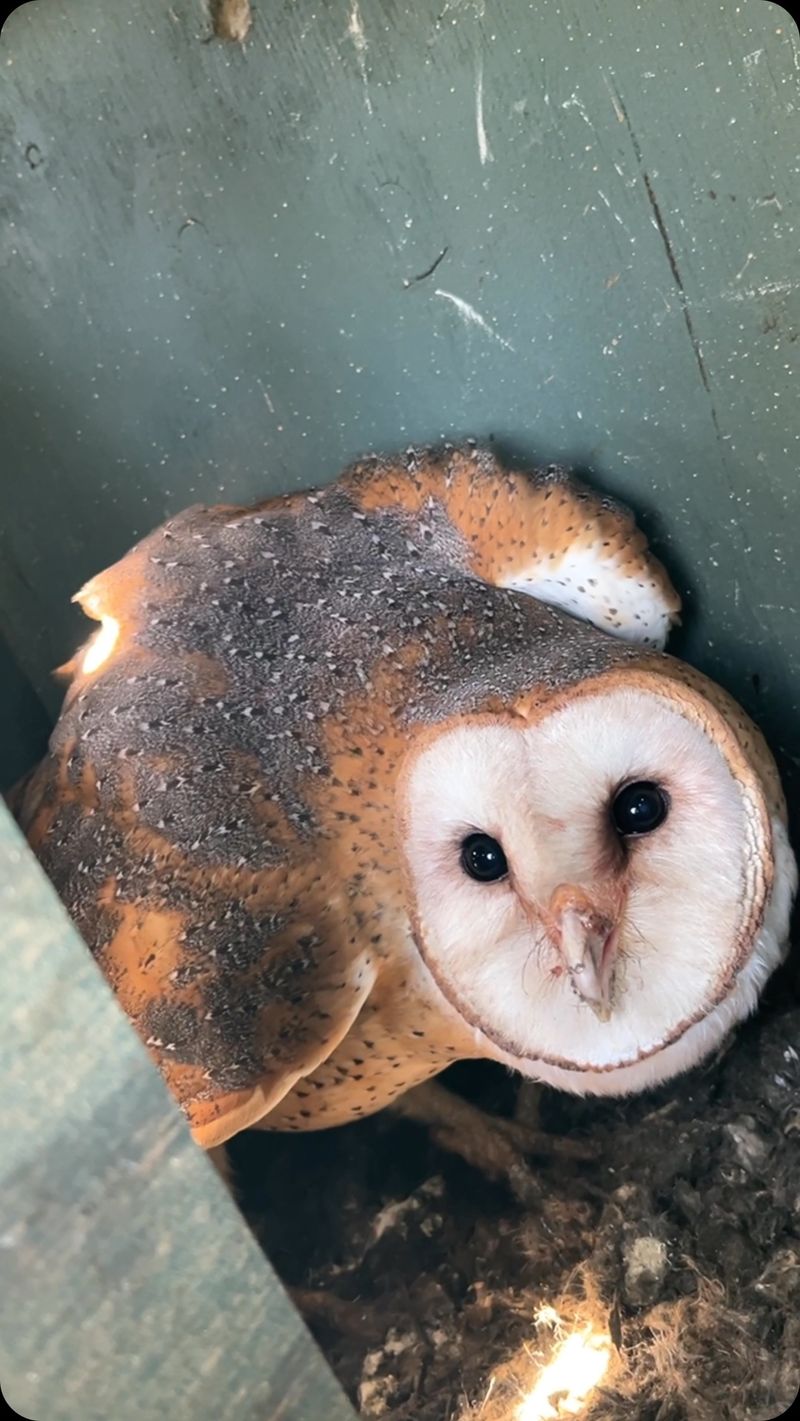
Once a barn owl is actively nesting in a box or cavity on your property, the most important rule is straightforward: leave it alone. Do not inspect the interior, clean out old material, move the box, make repairs to the structure it sits on, or attempt to relocate it while eggs or young are present.
Cornell NestWatch’s barn-owl guidance notes that barn owls are particularly sensitive during early nesting and that disturbance can cause nest abandonment.
UC Agriculture and Natural Resources’ California nest-box plan advises that maintenance should only happen when owls are absent, typically late summer through fall after fledglings have departed. At that point, remove accumulated pellets if needed, replace them with a thin layer of wood shavings, check the box for structural deterioration, and wear an N95 respirator during cleanup.
CDC rodent cleanup guidance recommends similar respiratory precautions when handling accumulated droppings or biological material from any wildlife.
The legal dimension is real but should be understood accurately. California Fish and Game Code Section 3503 makes it unlawful to take, possess, or needlessly destroy the nest or eggs of any bird.
Barn owls also receive protection under the federal Migratory Bird Treaty Act in specified circumstances. These statutes do not automatically prohibit every maintenance action in every situation, but they do mean that any work affecting an active nest carries legal risk and should be approached carefully.
If an active nest creates a genuine safety problem or blocks necessary building maintenance, contact a licensed wildlife rehabilitator or your local California Department of Fish and Wildlife office before taking any action. Acting on qualified advice protects both the owl and the homeowner.
What the sighting means for your California yard
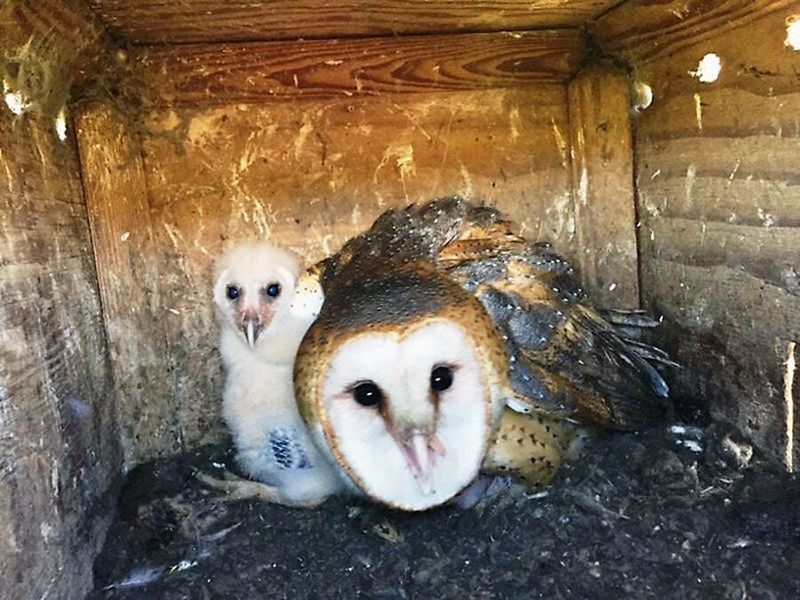
A barn owl nesting in your yard has found two things: a safe cavity and access to a hunting landscape large enough to support it. That combination reflects something positive about your property and its surroundings, but it is not a pest-control guarantee.
California tracking research shows that owls range across a mosaic of habitats rather than concentrating on one homeowner’s lot, and the strongest California evidence for rodent-abundance associations comes from vineyard landscapes, not residential yards.
Your next steps are concrete. Protect the active nest by leaving it undisturbed.
Avoid rodenticides, which can harm the owl through its prey. Maintain open habitat where your property allows.
And if rodent signs persist, use sanitation, exclusion, and trapping alongside the owl rather than instead of them. The same goes for pocket gophers, where aerial predation has not been shown to deliver reliable control.
A nesting barn owl is a quiet indicator that your California landscape still has room for a top-order nocturnal predator. That matters more than any rodent-count promise.