
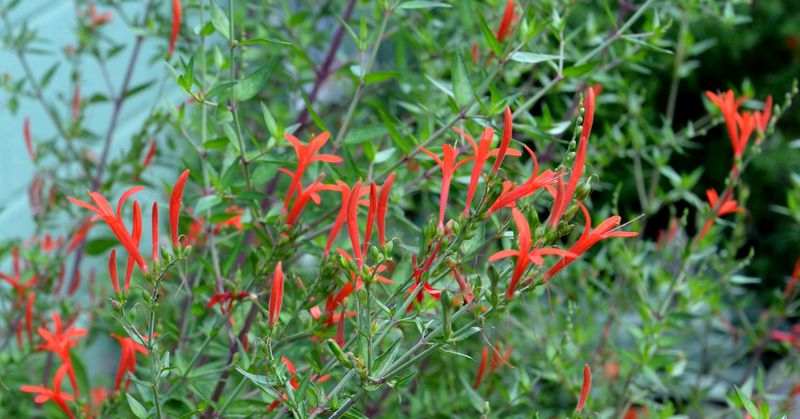
When a Texas summer turns brutal and most of the yard looks scorched and spent, finding a plant that keeps pushing out fresh blooms feels like a small miracle. Flame acanthus, a native Texas shrub, can do exactly that, continuing to flower through the hottest stretch of summer and well into fall.
For homeowners with a hot, sunny bed that needs late-season color without constant watering, this compact, wildlife-friendly plant is worth knowing. Getting the most from it means choosing the right spot, watering correctly during establishment, and doing a little pruning to keep it looking its best.
Flame acanthus can carry color through Texas summer
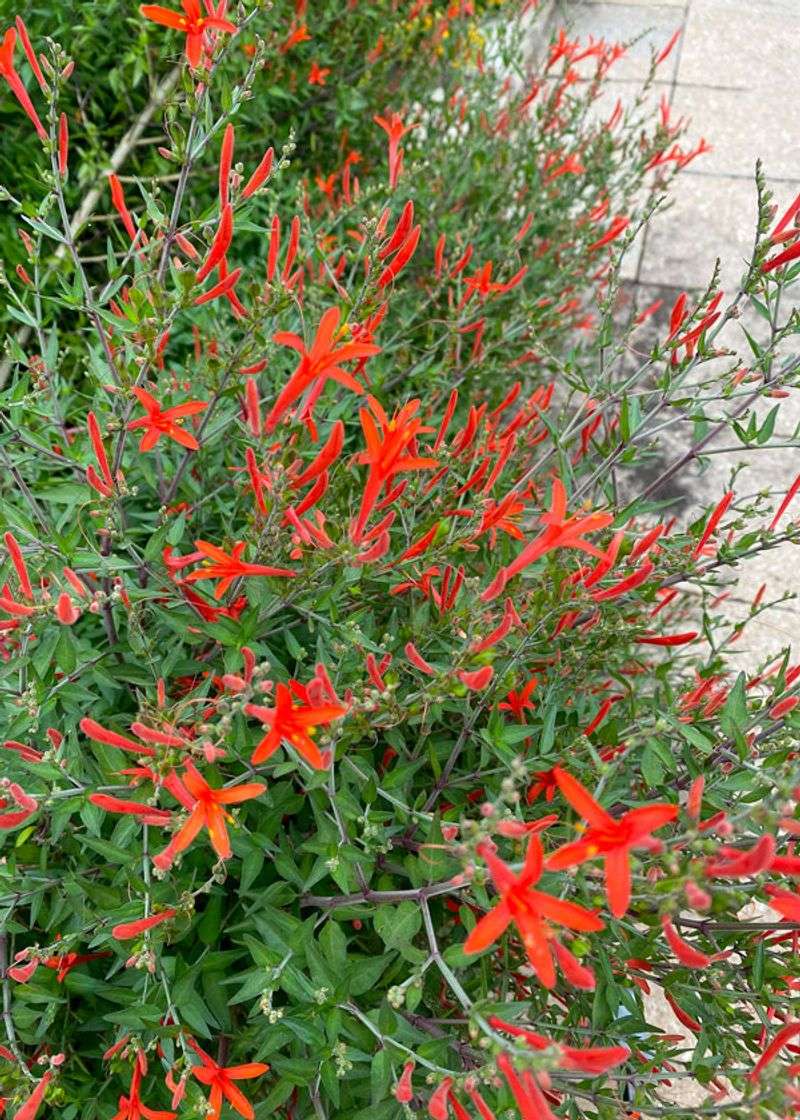
Most gardeners in Texas know the gut-punch of late July: the salvias are spent, the spring perennials have gone dormant, and the beds look like they gave up weeks ago. Flame acanthus, known botanically as Anisacanthus quadrifiduswrightii var. , is one of the Texas natives that refuses to quit during that stretch.
You may also see it sold or listed under the synonym Anisacanthus wrightii, which still appears in older nursery catalogs and plant lists, but the accepted current name is the varietal form.
Common names for this plant include flame acanthus, Wright’s anisacanthus, and hummingbird bush, and all three refer to the same woody, multi-stemmed shrub. That last detail matters: this is not a bedding annual or a soft herbaceous perennial you yank out at the end of the season.
It is a small flowering shrub with a persistent woody framework, and that structure is part of what allows it to perform reliably when summer temperatures climb.
Texas A&M’s native and adapted plant materials identify flame acanthus as very drought tolerant, suited to hot summer conditions, and capable of producing steady flower color through the season. Texas Tech’s plant resource database lists its bloom period as summer through fall and its heat tolerance as high.
The honest promise is not that it peaks hardest in August above every other plant in your yard, but that it is one of the more dependable Texas shrubs for carrying flower color through the hottest part of the growing season and into fall, when many other plants have long since finished.
Its tubular flowers extend the garden’s late-season show
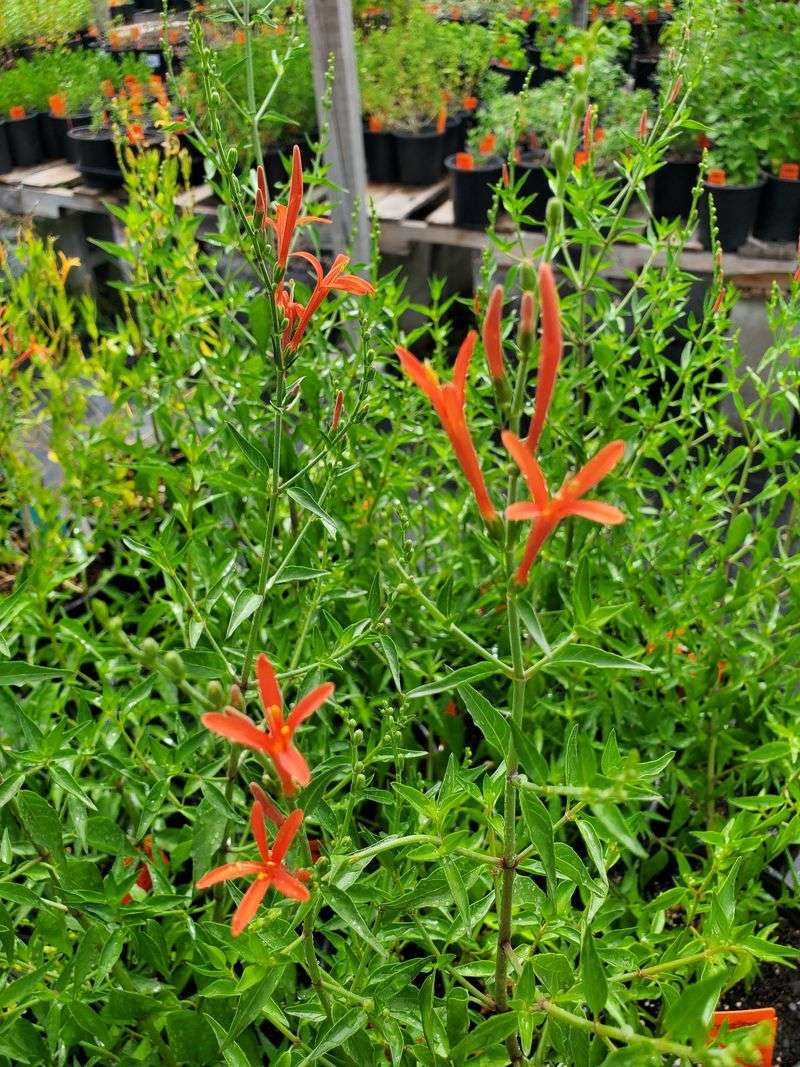
The flowers on flame acanthus are hard to miss. They are narrow, tubular, and a vivid orange to red-orange, arranged in clusters that stand out clearly against the shrub’s green foliage even from across the yard.
That tubular shape is not just decorative: it is well-matched to the bill of a hovering hummingbird, which is why the plant earns its common name of hummingbird bush in so many Texas nurseries.
Texas Tech’s landscape information sheet confirms the summer-to-fall bloom window and describes the flowers as orange to red-orange and tubular in form. That timing is genuinely useful for a Texas homeowner, because by the time midsummer arrives, most spring-blooming perennials have finished and the garden can look thin on color for weeks before cooler weather triggers a second wave of fall bloomers.
Flame acanthus fills part of that gap without requiring the constant attention that summer annuals often do.
Wildlife value is real but should be kept in perspective. Texas Parks and Wildlife publications list flame acanthus among plants that hummingbirds use, and the tubular flower form is consistent with hummingbird-pollinated plants across many genera.
However, Texas hummingbird roundup data explicitly notes that observational records cannot establish plant preference because plant abundance and availability at each site were not controlled. In plain terms: hummingbirds may visit your flame acanthus, and that is worth planting for, but no data proves they prefer it above every other flower or that a visit is guaranteed in every garden.
What the bloom period does guarantee, based on consistent reporting across Texas horticultural sources, is a shrub that can keep producing color through the summer-to-fall window when many other plants in a Texas bed have gone quiet.
Choose a sunny, well-drained place before planting
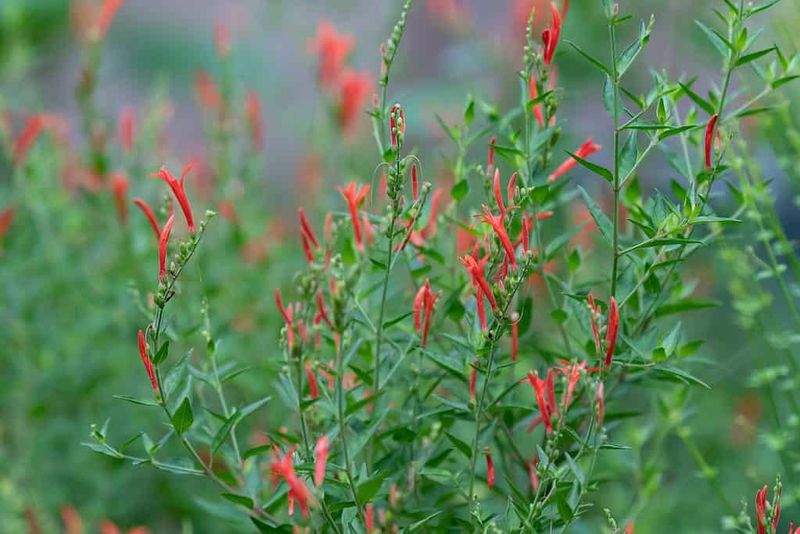
Before you buy a plant, look at the bed you have in mind. Flame acanthus performs best in full sun to light shade, and stronger light generally means stronger flowering.
A south- or west-facing border that bakes most of the day is exactly the kind of spot where this shrub tends to shine, because the heat and intensity that exhausts many other plants does not slow it down.
Good drainage is equally important. Texas Tech’s plant database describes flame acanthus as tolerant of a range of soils, including alkaline soils, and notes that it can handle some heavier soil types when drainage remains adequate.
Texas SmartScape identifies poor drainage as one of the leading causes of landscape plant failure, and that warning applies here: a plant that is well-suited to dry, rocky, calcareous settings in its native range is not going to thrive sitting in standing water after a summer thunderstorm.
Practical placement options go beyond a single border. Flame acanthus works well as an informal hedge along a fence line, a specimen plant near a patio where its color is visible from seating, a pollinator planting anchoring a wildlife-friendly corner of the yard, or a massed grouping in a large, open bed.
Texas Parks and Wildlife’s Wildscapes plant list includes it among recommended native shrubs for wildlife plantings, which confirms its value in a habitat-conscious garden design.
One thing Texas nativity does not guarantee is that the plant will succeed in every Texas yard. Site conditions still determine outcomes.
Evaluate the light, drainage, and available space at your specific location before planting, rather than assuming that a Texas native will automatically adapt to whatever you have.
Build drought tolerance during establishment
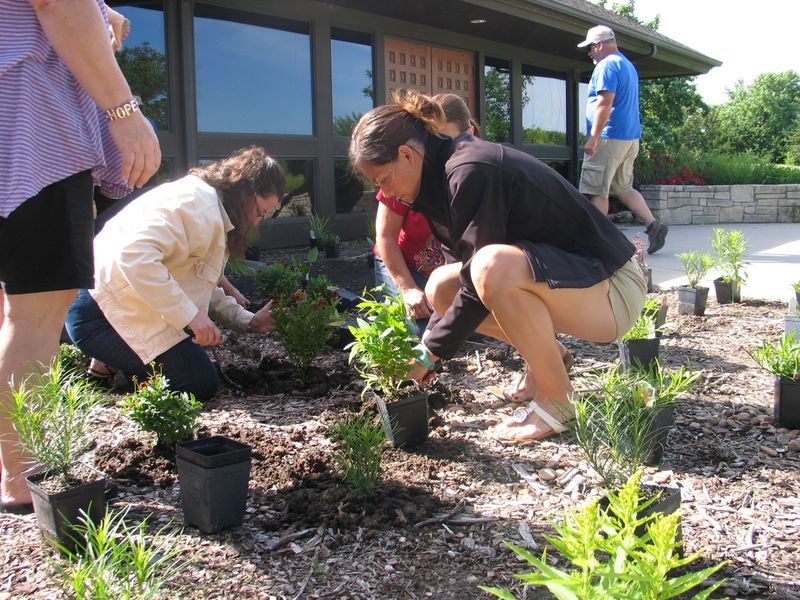
Drought tolerance is one of the reasons gardeners reach for flame acanthus, but that tolerance develops over time as roots grow outward and downward into the surrounding soil. A newly planted shrub does not yet have that root system, and planting it in a Texas summer without a watering plan is a reliable way to lose it.
During establishment, water deeply enough to wet the entire root zone, then allow the soil to drain before watering again. The Texas Urban Landscape Guide from Texas A&M AgriLife Extension emphasizes matching irrigation to plant establishment, soil type, and current weather rather than applying a fixed watering schedule to plants labeled drought tolerant.
A newly planted shrub in August heat is under transplant stress and may need water every few days depending on soil, slope, and how hot and dry conditions are.
Sandy soils drain faster and may require more frequent watering during establishment; clay soils hold moisture longer but can stay waterlogged if drainage is poor. Texas A&M’s gardening guidance for Texas consistently points to adjusting irrigation for local conditions rather than applying blanket rules.
Slope, rainfall totals, and any municipal watering restrictions in your area will also shape how you manage irrigation during those first months.
Texas SmartScape’s perennial care guidance warns against keeping plants constantly wet, which can damage roots and invite disease even in plants that are otherwise tough. The goal during establishment is consistent moisture without waterlogging: wet the root zone, let it drain, and check the soil before watering again.
Once roots are well established, flame acanthus can handle drier conditions, though extended drought or unusually shallow or sandy soil may still call for occasional supplemental irrigation even in a mature plant.
Prune for a fuller, better-shaped shrub
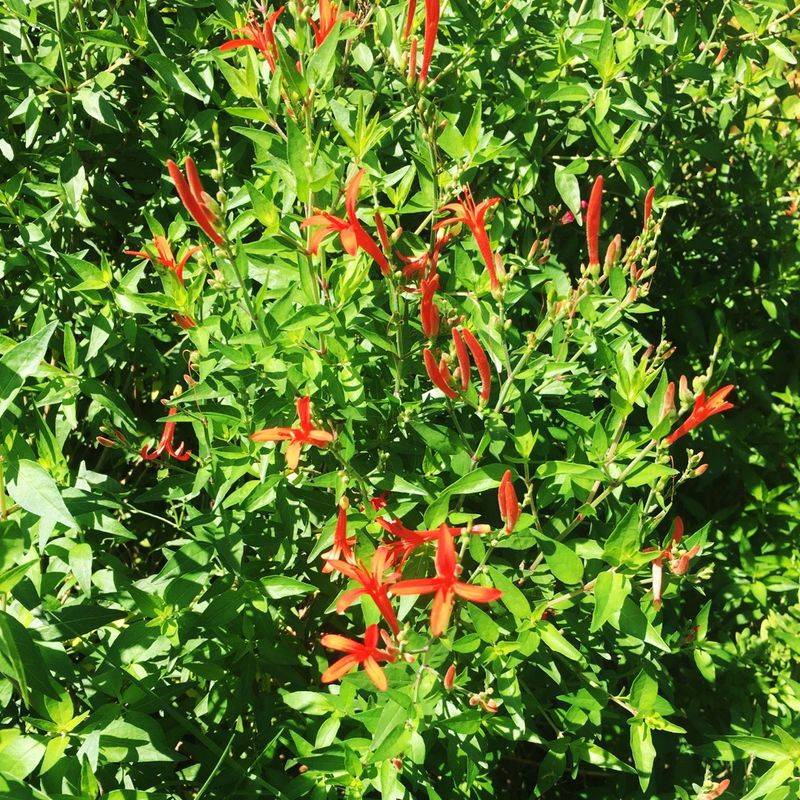
Left entirely to its own devices, flame acanthus can get leggy, meaning stems stretch out and the plant starts to look open and irregular rather than full and tidy. That is not a flaw unique to this shrub, but it is something to plan for if you want a neat planting.
Texas Tech’s plant resource sheet recommends occasional shearing during the growing season to improve the shrub’s shape and encourage a denser branching habit. Light shearing in early summer or midsummer, before the main flush of late-season blooms, can help the plant fill in without sacrificing too much of the flowering display.
Think of it as a light trim rather than a heavy cutback.
The more significant pruning comes in late winter or very early spring. Because flame acanthus roots are considerably more cold hardy than the stems, the aboveground framework can sustain damage during a hard freeze even when the root system survives intact.
Cutting the shrub back close to the ground in late winter encourages a fresh flush of growth from the base and cleans up any cold-damaged wood before new growth begins. This renewal pruning also gives you a chance to manage the plant’s mature size.
Speaking of size: expect a mature flame acanthus to reach roughly 3 to 4 feet tall and 3 to 5 feet wide, though actual dimensions will vary with soil, water, pruning frequency, and regional climate. For individual plants in a border, a spacing of approximately 3 to 5 feet gives each shrub room to spread naturally without crowding its neighbor’s root zone.
For a mass planting or informal hedge, use the same spacing range and allow the plants to fill in gradually rather than forcing them together.
Expect different results across Texas
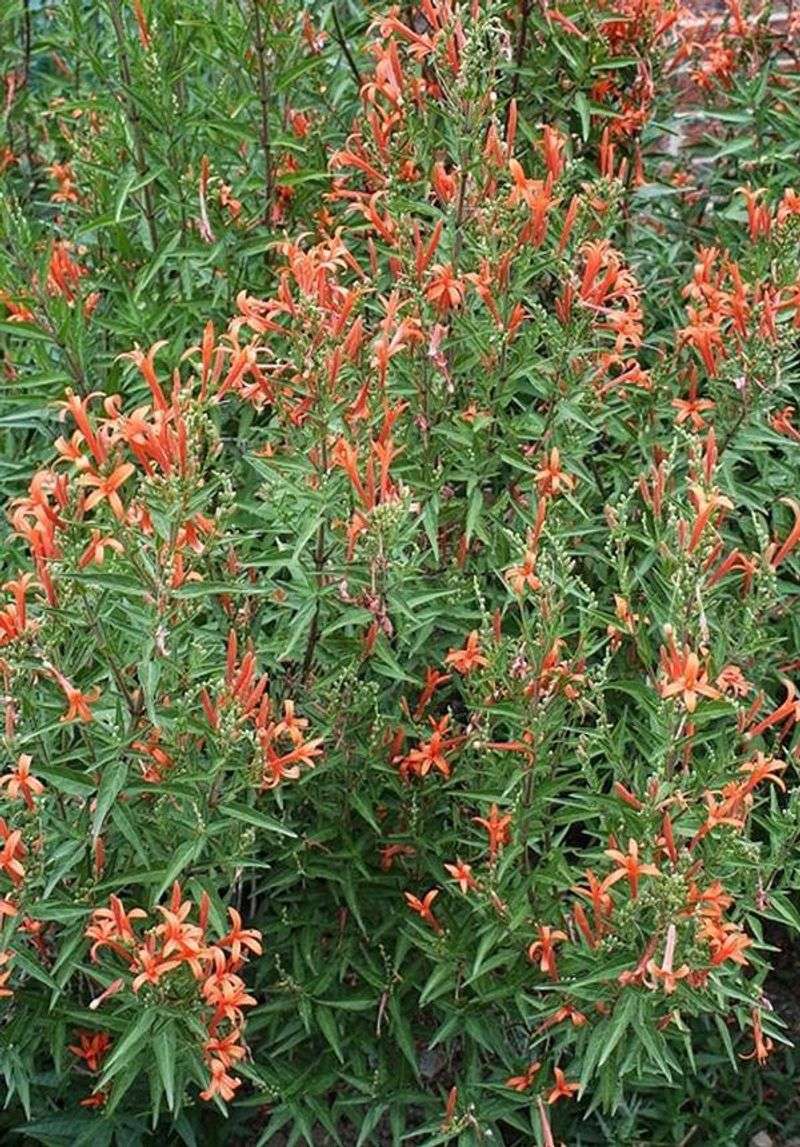
Texas is a large and climatically varied state, and a plant that thrives effortlessly in San Antonio may behave quite differently in Amarillo or even Dallas. Flame acanthus is native from Texas into Mexico, a range that reflects its origins in warm, dry, and often rocky terrain.
Kew’s Plants of the World Online confirms the accepted botanical name and native distribution for this species.
Texas Tech’s database draws a useful distinction between root hardiness and stem hardiness: the roots can survive through approximately USDA Zone 7, while the stems are reliably cold hardy mainly through Zones 8 to 10. For gardeners in northern Texas, that means winter stem dieback is a real possibility after a hard freeze.
The plant may appear dead in late winter, but if the roots have survived, new growth will eventually emerge from the base in spring, often later than you might expect. Patience matters in colder parts of the state.
The practical site comparison worth making is between flame acanthus and Turk’s cap, Malvaviscus arboreusdrummondii var. , which is another Texas-friendly native shrub with summer-to-fall flowers. The key difference is light requirement.
Flame acanthus generally needs full sun to light shade for its strongest flowering, making it the better fit for an exposed, hot, open bed. Turk’s cap, by contrast, can flower well even in shade, which makes it the more appropriate choice when heat is accompanied by limited direct sunlight.
Texas Superstar’s Turk’s cap profile describes it as flowering from summer until frost, with flowers heaviest in fall, and notes that foliage is more attractive with some shade. Oklahoma State Extension’s plant profile adds that Turk’s cap flowering is especially profuse during hot weather at the end of summer and into early fall.
If your shady bed needs late-season color, Turk’s cap is the stronger recommendation; if your bed is sunny and exposed, flame acanthus is the better call.
Match the shrub to the job your bed needs
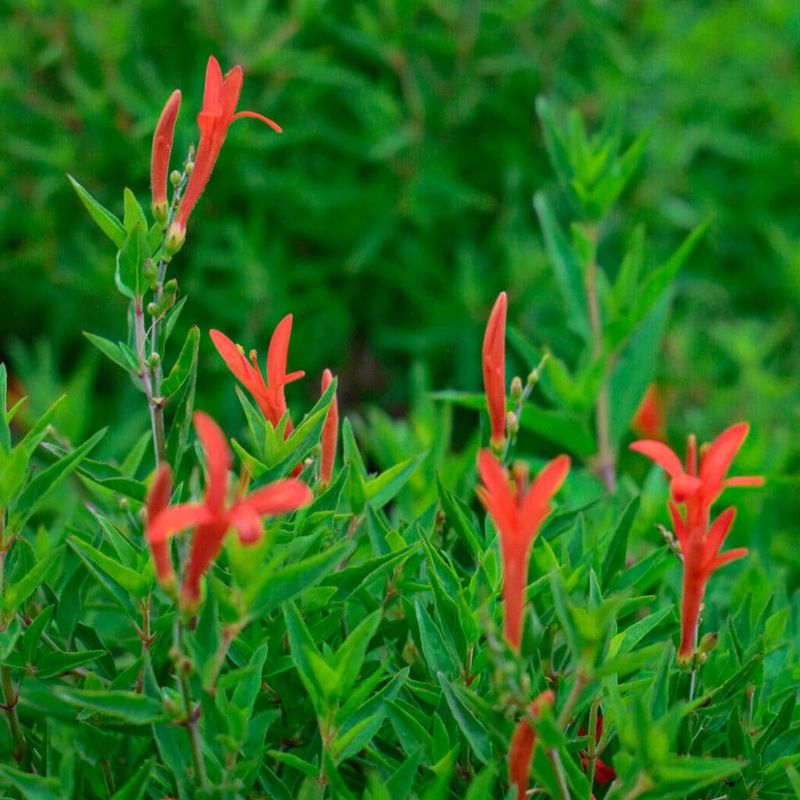
Hot, sunny Texas bed with thin late-season color? Flame acanthus is a strong candidate.
Texas Tech’s plant profile and Texas A&M AgriLife’s urban landscape guidance both support it as a heat-tolerant, drought-adapted native shrub that can carry flower color through the summer-to-fall window with lower water demand after establishment.
The qualifications from earlier sections still apply when you make that choice. Plan to irrigate regularly during establishment, confirm that your soil drains well, give the plant enough space to reach its mature spread of roughly 3 to 5 feet, and schedule a late-winter pruning to clean up any cold-damaged stems and encourage fresh growth from the base.
In northern parts of Texas, expect slower spring regrowth and the possibility of stem dieback after a hard freeze.
For a shaded bed, reach for Turk’s cap instead. Texas Superstar’s profile confirms it as a summer-to-frost bloomer that handles limited light well, making it the right tool for a different job.
Matching the plant to the actual conditions of your site, rather than counting on native status alone to carry it through, is what separates a garden that looks good in August from one that just looks hopeful.