
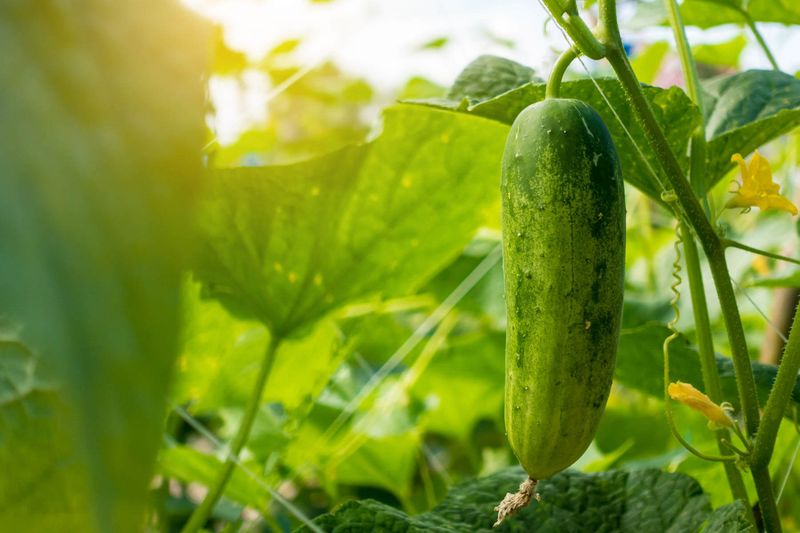
Cucumber vines can look perfectly green and healthy while quietly failing to produce fruit during a long stretch of summer heat. If your Southern garden has been baking for weeks and the cucumbers are flowering but not following through, you are not alone.
The problem runs deeper than a missed watering here or there, and understanding why it happens is the first step toward giving your vine a real chance to recover.
Why Heat Can Reduce Fruit Set on a Healthy-Looking Vine
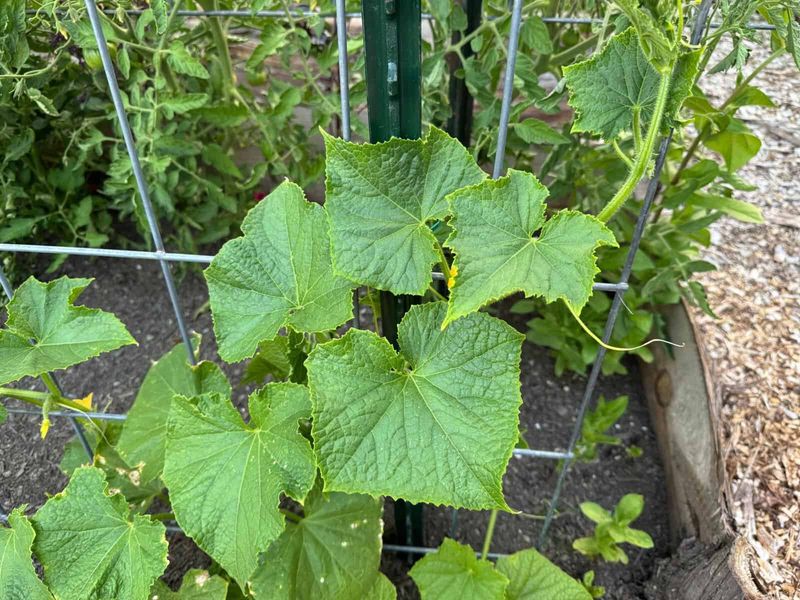
Cucumber vines are remarkably good at looking fine on the outside while struggling with reproduction on the inside. Leaves stay green, stems keep reaching, and flowers keep opening, yet the fruit count drops sharply.
Prolonged heat is one of the most common reasons this happens in Southern gardens, and it works through several pathways at once.
Temperatures hovering near or above 90 degrees Fahrenheit are repeatedly associated with declining fruit set in cucumbers and related crops. Penn State Extension’s guidance on cucumbers in high tunnels connects extended high temperatures to reduced pollen viability, female-flower abortion, and a shift toward producing a higher proportion of male flowers.
That shift matters because male flowers cannot become cucumbers regardless of how well the vine is watered.
Bee activity also tends to drop during the hottest parts of the day, which means fewer pollinator visits to the flowers that do open. Ask Extension’s cucumber troubleshooting resource notes that heat can encourage flower or tiny-fruit abortion even when the plant appears vigorous.
On top of all that, heat accelerates soil moisture loss, so a vine already under reproductive stress can quickly add drought stress to its problems.
The 90-degree figure is a useful warning point rather than a hard universal cutoff. Duration, nighttime temperatures, humidity, wind, soil type, cultivar, and reflected heat from pavement or walls all shape how severely a vine responds.
University of Delaware’s crop update on cucurbit fruit set reinforces that heat stress and drought stress are related but distinct problems. Keeping the root zone moist can prevent additional moisture stress, but it cannot undo pollen that has already been damaged or female flowers that have already aborted.
Read the Flowers Before You Change the Routine
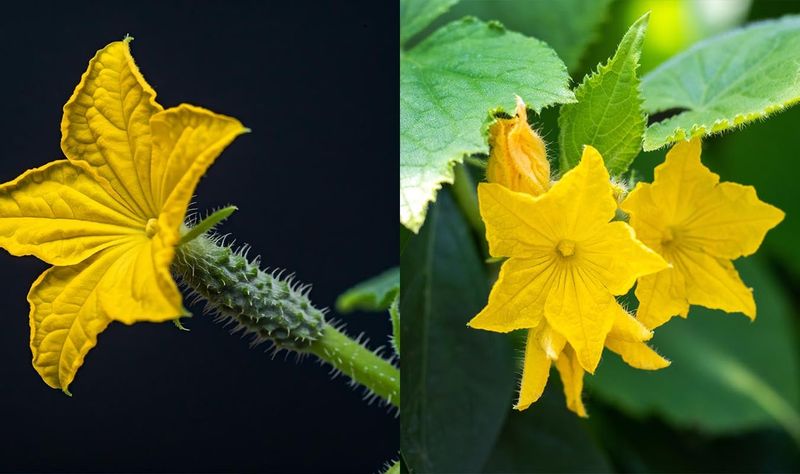
Before adjusting anything in the garden, spend five minutes looking closely at the flowers on your vine. Cucumber plants produce two distinct flower types on the same plant, and knowing which ones you are seeing tells you a lot about what is actually going wrong.
Female flowers have a miniature cucumber-shaped swelling directly behind the petals. That small, rounded bump is the ovary, and it is what develops into the fruit after pollination.
Male flowers lack that swelling entirely. According to UGA Cooperative Extension’s cucumber production guide, male flowers commonly appear first on a new vine, and their dropping without producing fruit is completely normal behavior, not a sign of failure.
A vine covered in flowers is not necessarily struggling if most of those flowers are male. The question to ask is whether female flowers are opening at all, whether they are dropping before or shortly after opening, and whether the tiny cucumbers that do form are shriveling or aborting within a few days.
Those patterns point toward different problems: too few female flowers can reflect a heat-driven shift in flower ratio, while aborted young fruit often signals poor pollination or flower abortion caused by stress.
Penn State Extension’s cucumber pollination resource explains that a female flower is only receptive for a short window, usually a single morning, so timing between male and female flower opening matters. If male and female flowers are not open at the same time, even healthy pollen cannot do its job.
Tracking the flower types on your vine over several days gives you a clearer picture than any single observation.
Keep the Root Zone Consistently Moist
Consistent soil moisture at the root zone is the most defensible single change a Southern gardener can make when cucumber fruit set declines during prolonged heat. The goal is not to soak the plants repeatedly throughout the day, but to keep the soil evenly moist through the entire period when the vine is flowering, setting fruit, and enlarging those fruit.
Letting the soil swing between soggy and bone-dry adds moisture stress on top of whatever heat stress is already present.
UMN Extension’s cucumber growing guide gives approximately one inch of water per week as a general baseline for cucumbers. That figure is a starting point, not a fixed rule.
Sandy soils, which are common across much of Florida and coastal Texas, lose moisture faster and typically need more frequent irrigation than heavier clay-based soils. Containers dry out faster than in-ground beds.
High heat, persistent wind, and a lack of mulch all accelerate moisture loss as well.
Rather than watering by calendar alone, check the actual soil beneath any mulch layer before irrigating. Push a finger or a thin stick two to three inches into the soil near the root zone.
If it comes back dry, it is time to water. If it comes back damp, wait and check again the next day.
Oklahoma State extension guidance recommends applying water slowly and thoroughly, wetting the root zone deeply rather than giving frequent, shallow surface sprinkles that encourage roots to stay near the surface.
Slow, thorough irrigation that reaches the full root zone is more useful than quick, frequent passes that wet only the top inch of soil. Adjust the schedule whenever significant rainfall occurs, and revisit it whenever temperatures climb noticeably higher or lower than the week before.
The vine’s needs shift with the conditions around it, so the irrigation schedule should shift too.
Use Mulch and Root-Zone Irrigation to Hold That Moisture
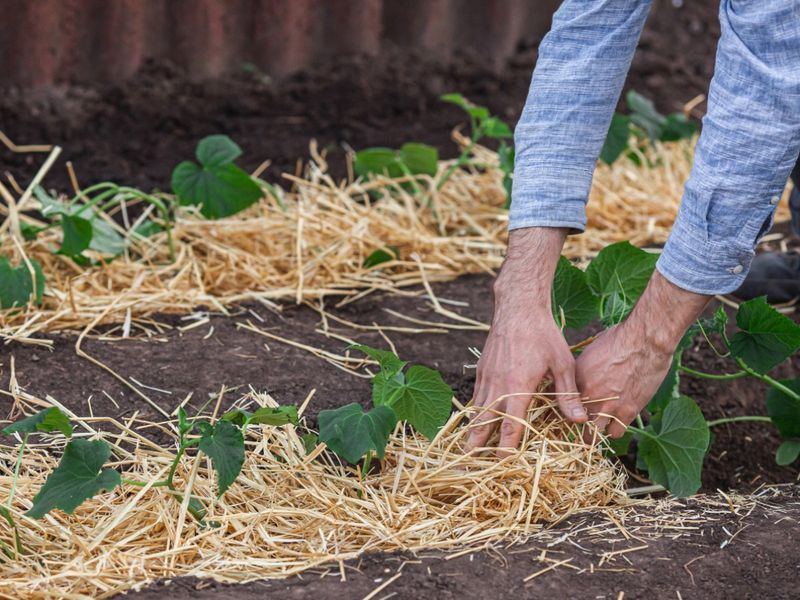
Knowing that consistent root-zone moisture matters is only useful if the setup in the garden can actually deliver it. Two practical tools make that goal much easier to reach: mulch and low-to-the-ground irrigation.
A two-to-three inch layer of organic mulch, such as straw, shredded leaves, or wood chips, placed around the base of the plant slows moisture evaporation from the soil surface dramatically. UGA Cooperative Extension notes that mulch also suppresses weeds that compete for moisture, reduces soil compaction from rain impact, and keeps developing cucumbers off the bare soil where they can rot or pick up soilborne disease.
Keep the mulch a couple of inches away from the main stem so the base of the plant stays dry and well-ventilated.
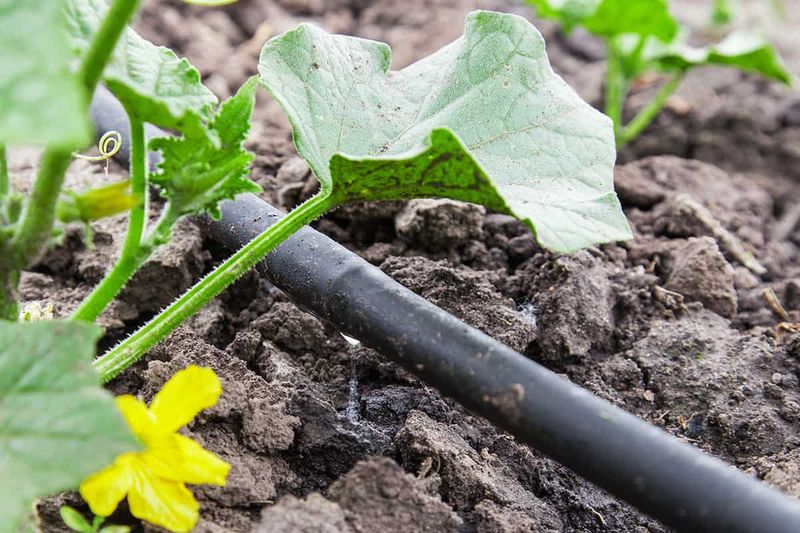
For irrigation, a drip line or soaker hose placed along the base of the vine is preferable to overhead sprinklers. UMN Extension’s cucumber guide points out that root-zone irrigation keeps the foliage drier, which reduces the likelihood of foliar diseases taking hold.
Many cucumber diseases, including powdery mildew and angular leaf spot, spread more readily on leaves that stay wet. Delivering water directly to the soil sidesteps that risk while also using water more efficiently.
Overhead sprinklers are not ideal for cucumbers during flowering and fruit set, and repeated daytime misting of the leaves is not an equivalent substitute for root-zone irrigation. Wet foliage during warm, humid Southern summers creates conditions where fungal and bacterial diseases can gain a foothold.
The combination of mulch plus drip or soaker-hose irrigation addresses both moisture conservation and disease prevention at the same time.
Protect Pollination While the Weather Stays Hot
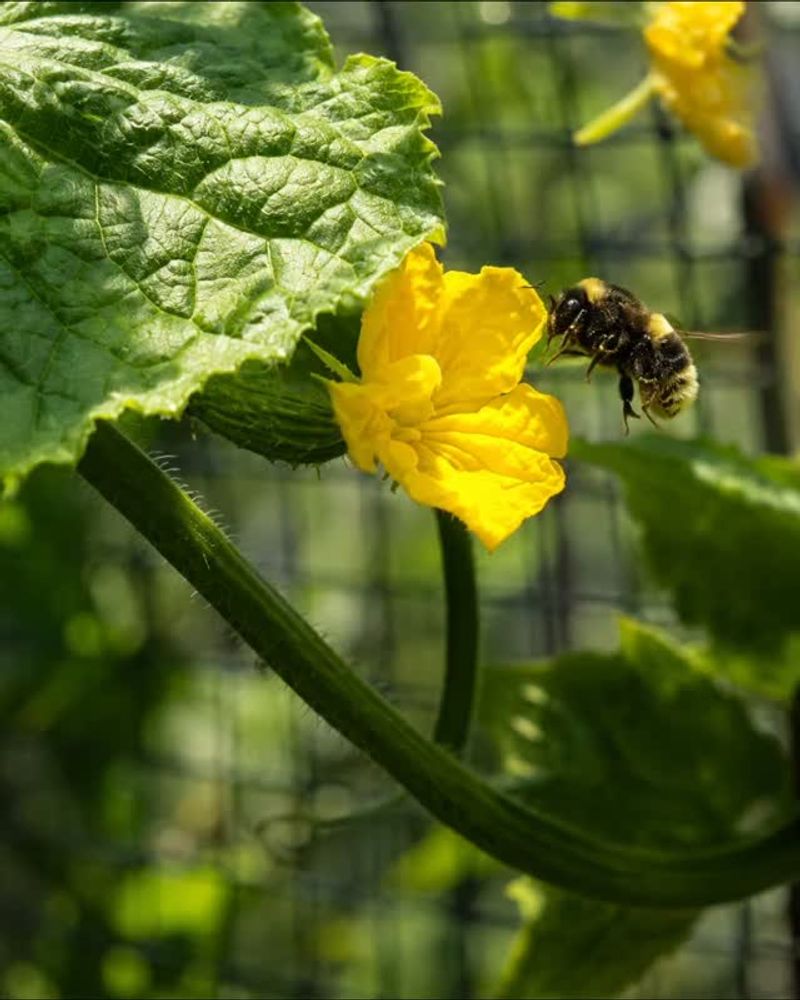
Steady root-zone moisture removes one source of stress, but it cannot replace the pollination that cucumbers need to set fruit. Most standard field cucumber varieties depend on bees and other insects to carry pollen from male flowers to female flowers.
When that transfer does not happen reliably, fruit either fails to form or begins developing and then stops, producing the crooked, pinched, nub-shaped, or shriveling young cucumbers that gardeners often find on stressed vines.
Southeastern vegetable extension guidance identifies poor pollination as one of the causes of misshapen or aborted cucumbers, though it is worth noting that heat-driven flower abortion and pollen damage can produce similar-looking results. Seeing a few shriveled young fruit does not automatically confirm a pollination problem; heat and moisture stress can cause the same symptoms.
Protecting the bees that do visit the garden is one of the most practical steps available. Avoid applying insecticides to flowers or to plants in active bloom, particularly during the morning hours when bees are most active.
UF/IFAS insect management guidance for cucurbits advises following product labels carefully and avoiding applications when pollinators are foraging.
Oklahoma State Extension’s cucumber production guide warns that overhead irrigation between sunrise and around 11 a.m. during flowering can interfere with bee activity. Scheduling any overhead watering for the afternoon or evening during bloom reduces that conflict.
Hand pollination can serve as a limited backup when male and female flowers are open at the same time and bee visits appear scarce. Transfer pollen from a freshly opened male flower to the stigma of a receptive female flower using a small brush or a cotton swab, ideally in the morning.
Penn State Extension is clear that hand pollination only works when viable pollen is available; it cannot correct heat-damaged pollen or create female flowers that heat has already caused to abort.
Avoid Shortcuts That Can Add New Problems
When fruit set drops, the instinct to do something more is understandable. Adding extra fertilizer, misting the leaves, rigging up shade cloth, or switching to a different pollination strategy can all seem like reasonable responses.
Some of these can make things worse or introduce entirely new problems.
Extra nitrogen is one of the most common well-meaning mistakes. University of Maryland Extension’s resource on poor blossom and fruit set explains that excess nitrogen tends to push vegetative growth, lush foliage, and male flowering rather than fruit production.
Fertilizing should follow a soil test or established crop guidance, not serve as a diagnostic reaction to heat-related fruit-set problems.
Repeated daytime misting of cucumber foliage is not a reliable cooling strategy for outdoor Southern gardens. Wet leaves during warm, humid conditions invite powdery mildew, angular leaf spot, and other foliar diseases that can further reduce plant health and productivity.
Root-zone irrigation remains the safer and more effective option.
Shade cloth can reduce heat load in some high-radiation or protected growing environments. Utah State Extension’s high-tunnel production guide references benefits from roughly 20 to 30 percent shade in those specific settings, but the evidence is strongest for protected systems rather than open outdoor Southern gardens.
Too much shade can reduce flowering and overall yield, and outdoor gardens also need adequate air movement and pollinator access.
Cultivar type matters here as well. UMN Extension’s pollination requirements guide explains that parthenocarpic or seedless cucumber cultivars can set fruit without bee pollination and may actually produce misshapen fruit if they are pollinated.
Advice about protecting bees and hand pollination applies mainly to standard field types. If you are growing a parthenocarpic variety, the pollination strategies in the previous section do not apply in the same way, and checking the seed packet or catalog description for your specific cultivar is always a good first step.
Know When Heat Does Not Explain the Whole Crop
Heat is a reasonable first suspect when cucumber fruit set drops during a prolonged Southern summer, but it is not the only explanation, and it should not be used to dismiss symptoms that point somewhere else. Visible damage, persistent decline despite steady watering, or symptoms that do not fit the heat-stress pattern are reasons to look more carefully at the plant.
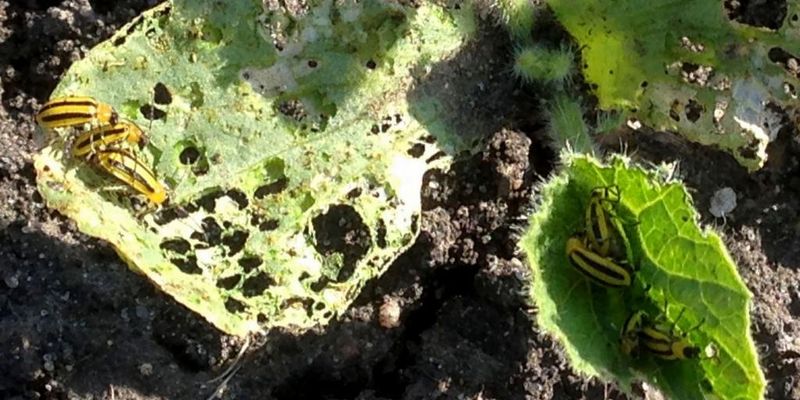
Cucumber beetles chew on leaves, flowers, and stems and also transmit bacterial wilt, which can cause vines to collapse even when soil moisture is adequate. Aphids and mites can weaken plants and distort new growth.
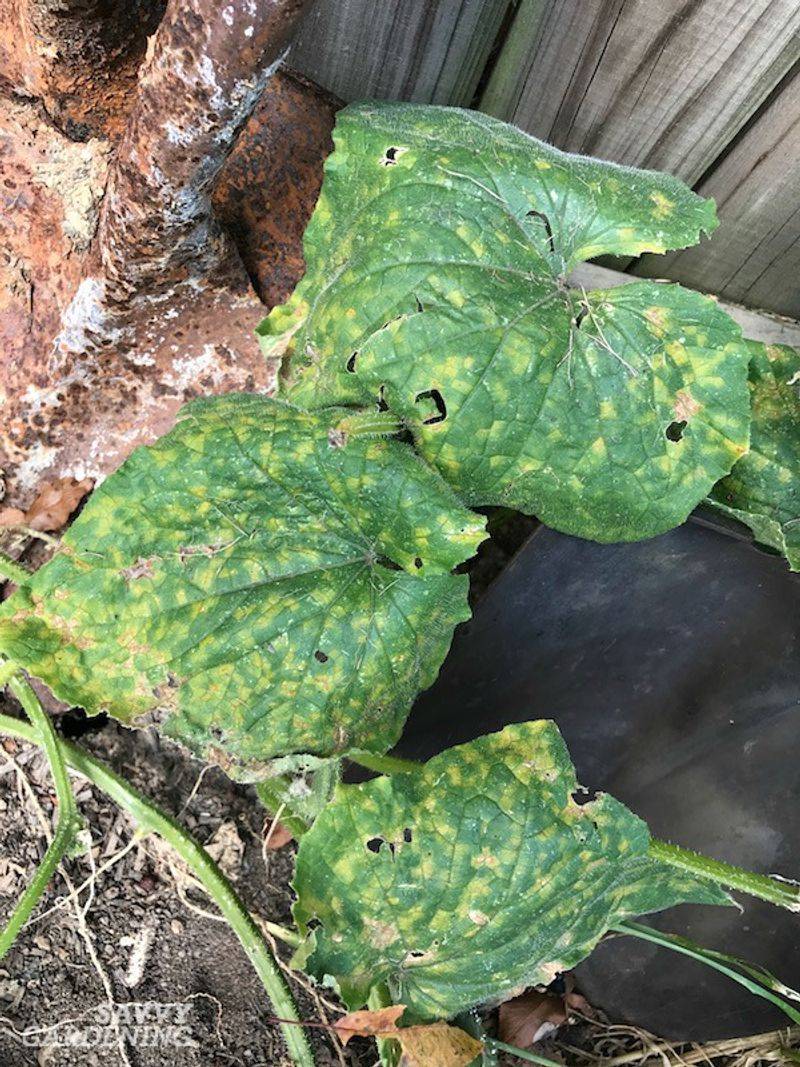
Viruses spread by insects produce mottled or distorted leaves that look nothing like simple heat stress. Powdery mildew, angular leaf spot, and other fungal or bacterial diseases show up as visible coating, spots, or lesions.
Poor drainage causes roots to suffocate, leading to wilting even in wet soil. Low light from nearby structures or overgrown trees reduces flowering and fruit set independently of temperature.
UGA Cooperative Extension’s cucumber guide covers many of these issues and is worth consulting when visible symptoms do not match a straightforward heat explanation.
Harvesting cucumbers that have already reached a usable size also matters during any production period. Oklahoma State Extension recommends harvesting every two to three days, or even daily during strong production, to maintain fruit quality and support continued production as new fruit sets.
Cucumbers left to grow oversized on the vine can reduce the quality of what is already there and may slow the plant’s focus on new fruit.
When extreme heat makes recovery in the current planting unlikely, a fresh start timed to cooler conditions can be more productive than waiting for a stressed vine to turn around. UF/IFAS planting guidance lists outdoor cucumber windows that include August through September in North and Central Florida and September through February in South Florida.
Texas A&M AgriLife extension tables treat cucumbers primarily as spring and fall crops across much of the state. Timing varies by location and year, so these windows are a starting framework rather than a fixed schedule.
Sometimes the most honest answer is that the current planting window has run its course, and the next crop will have a better chance from the start.