
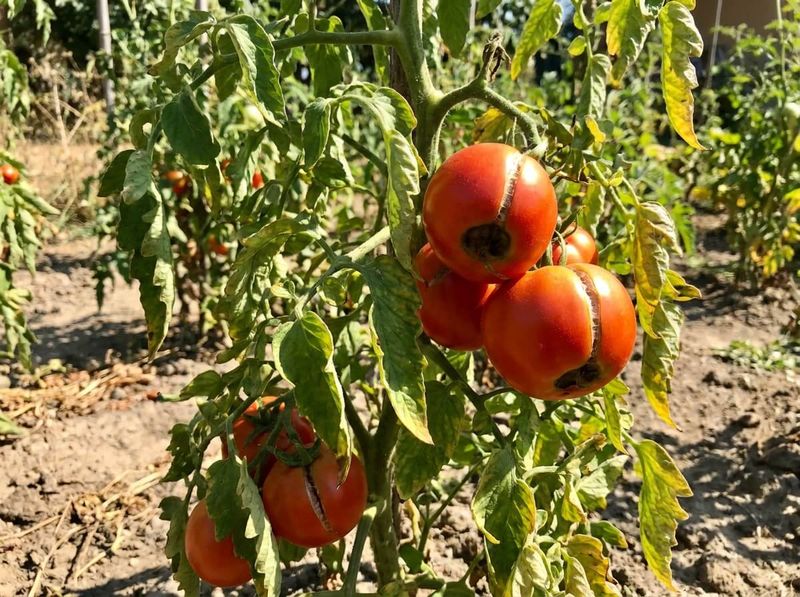
Late summer is the cruelest season for tomato gardeners in the South. Plants look healthy and green, but the blossoms fall off, new fruit refuses to set, and anything still on the vine seems frozen in time.
Heat is usually the culprit, and while there is no single switch that flips a stalled plant back into full production, there are targeted steps that can reduce the stress and give your tomatoes a better shot once conditions improve.
Heat can stall tomato flowers, fruit set, and ripening
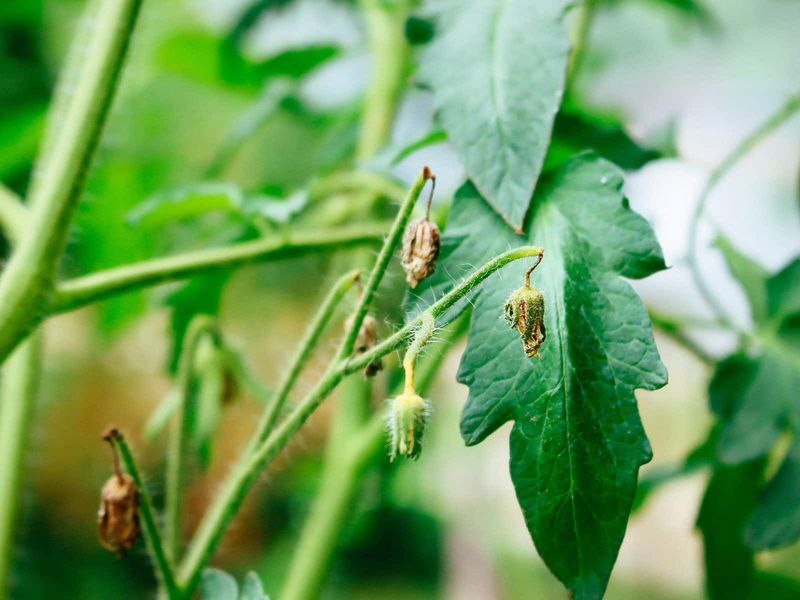
Gardeners sometimes search for a magic fix when their tomatoes go quiet in late summer, but the honest answer is that no single treatment guarantees a restart. What heat stress typically looks like is a plant that stays alive and reasonably leafy while blossoms drop before they can open fully, little or no new fruit appears, and green tomatoes already on the vine seem stuck.
That pattern, combined with a stretch of genuinely hot days and warm nights, points toward heat as a likely cause.
Common signs include leaves that curl inward during the hottest part of the day, flowers that abort before they can be pollinated, and ripening that slows to a crawl even on fruit that formed earlier in the season. Penn State Extension’s overview of heat stress in tomatoes notes that sustained high temperatures can interfere with every stage of reproduction, from pollen development through fruit set and ripening.
Keep the diagnosis provisional, though. Similar symptoms show up with drought, root problems, and certain diseases.
The care steps covered here apply most directly when the symptoms line up with a clear stretch of hot weather, and the plant otherwise looks structurally sound and free of pest damage or disease signs.
Hot days and nights disrupt tomato reproduction
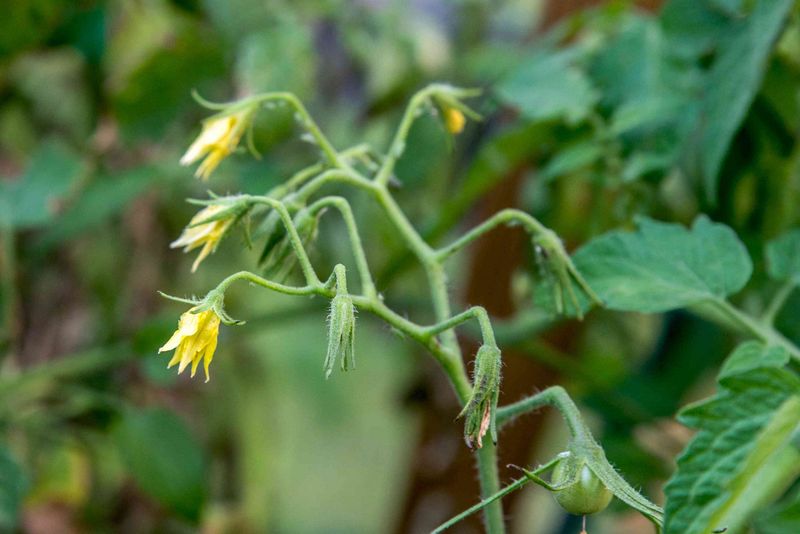
A tomato plant can look perfectly vigorous while its reproductive system quietly shuts down. Photosynthesis slows under intense heat, so the plant produces less energy for flowering and fruit development even when the foliage appears lush.
More critically, pollen becomes less viable when temperatures climb into the upper range, and flowers that open during the hottest part of the day may simply fail to set fruit regardless of how healthy the rest of the plant appears.
University of Maryland Extension’s resource on vegetable pollination in a changing climate explains that daytime temperatures above roughly 85-92 degrees Fahrenheit and nighttime temperatures staying above about 70 degrees Fahrenheit create conditions where tomato pollination and fruit set become increasingly unreliable. Those ranges are useful warning signals, not universal cutoffs, since cultivar tolerance and local conditions both play a role.
Nights matter as much as days. When temperatures stay elevated after dark, the plant cannot cool down and recover from daytime heat load.
University of Minnesota Extension’s vegetable IPM blog points out that warm nights compound the problem by preventing the overnight recovery that would otherwise help the plant resume normal reproductive activity. That connection explains why targeting the plant’s overall heat load, rather than adding fertilizer or increasing water alone, is the more logical first step.
Use temporary overhead shade to lower heat load
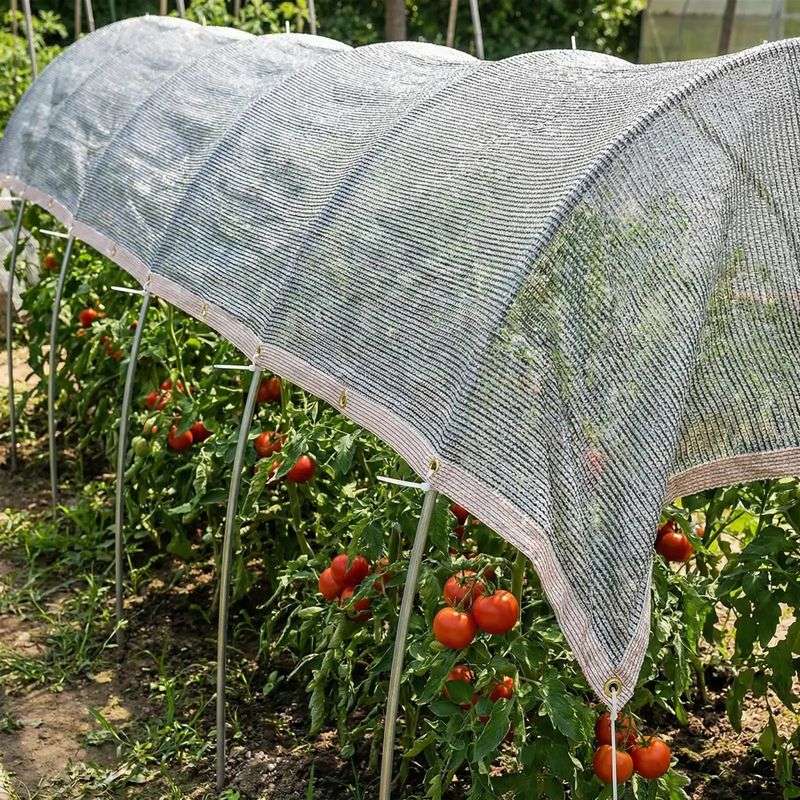
Shade cloth is the most practical tool for cutting heat load on a stalled tomato planting, and the key word is temporary. Suspending approximately 30% shade cloth above the plants on a frame, rather than draping it directly on the foliage, allows air to move around the plants while blocking a meaningful portion of intense afternoon radiation.
That setup keeps the cloth from trapping heat against the leaves or physically stressing branches.
University of Maryland Extension’s guide to vegetable garden weather and pest protection specifically recommends 30% shade cloth for heat-stressed warm-season crops and notes that shade can reduce heat-related flower and fruit drop. Afternoon is the most critical window in most Southern gardens, where the sun angle and accumulated daily heat combine to push plant temperatures well above air temperature.
If your garden gets some natural morning shade but bakes from midday onward, that afternoon exposure is where shade cloth earns its keep.
Thirty percent is the target density because it still allows substantial light to reach the leaves. Heavier shade cloth or permanent deep shade can reduce photosynthesis enough to suppress flowering on its own, trading one problem for another.
University of Arizona Cooperative Extension’s tomato guide cautions that excessive shade creates its own limitations for fruiting crops. Remove the cloth once a heat event passes or temperatures moderate into a more manageable range.
The realistic benefit is a reduction in heat stress and an improved chance that the plant continues to flower and set fruit as conditions improve, not an immediate reversal of any damage already done.
Maintain even moisture at the roots
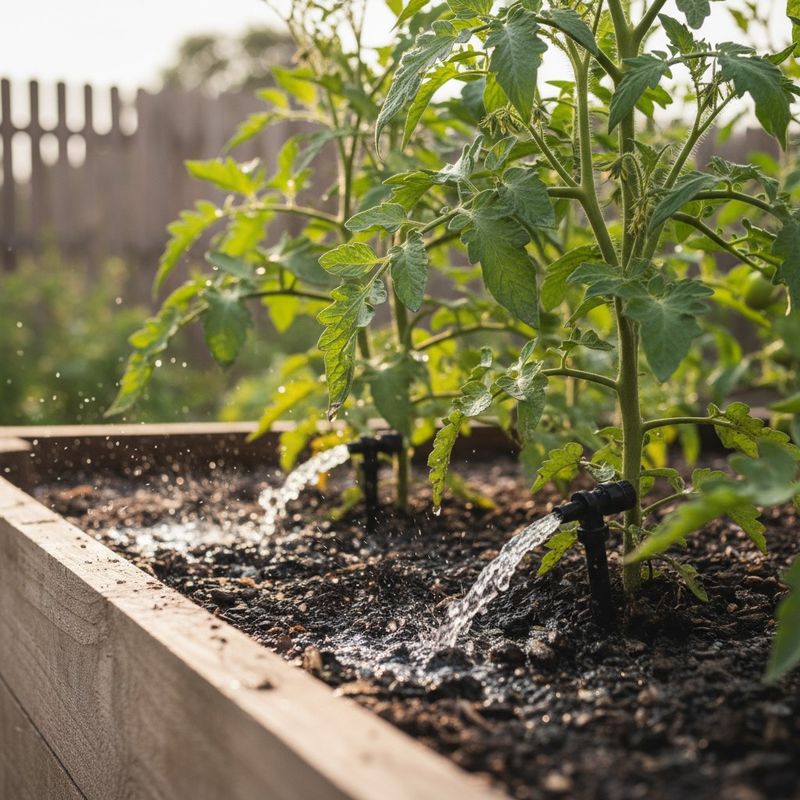
Shade alone does not carry a stalled tomato through a heat stretch. Consistent root-zone moisture is the companion practice that makes shade more effective.
Checking soil moisture at root depth, typically six to eight inches down, gives a more accurate picture than a glance at the surface, which can look dry while deeper soil still holds adequate moisture. Water thoroughly when that deeper zone is dry, rather than sprinkling lightly every day.
UF/IFAS guidance on tomato production recommends consistent irrigation as a foundation of Florida tomato culture, particularly during heat stress periods when evaporation and plant demand both spike. A layer of mulch two to three inches thick over the root zone slows moisture loss from the soil surface and helps buffer soil temperature swings, giving roots a more stable environment during extreme heat.
Drip irrigation or soaker hoses are worth considering because they deliver water directly to the root zone without wetting foliage, which can reduce disease pressure on leaves and fruit. University of Arizona’s tomato growing resource highlights targeted root-zone irrigation as a best practice for hot-climate tomato production.
Consistent moisture supports normal plant function and helps reduce drought-related complications, but it cannot undo pollen damage that has already occurred or guarantee fruit set while extreme heat continues.
Avoid fixes that add stress or solve the wrong problem
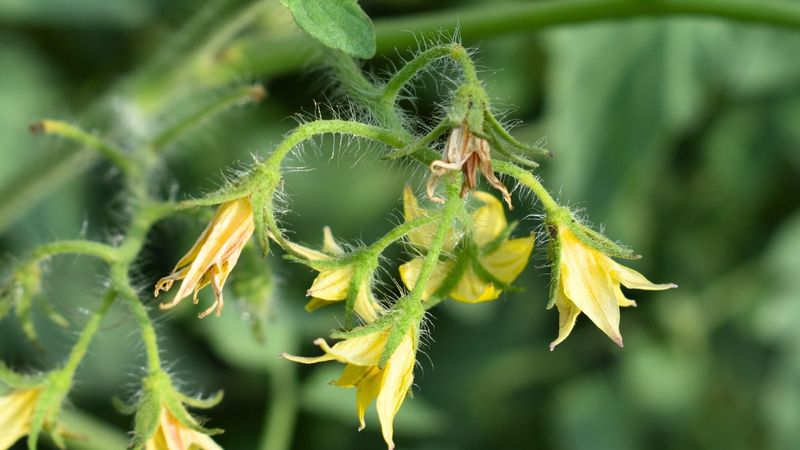
A stalled tomato plant can trigger the urge to do something dramatic, but several common reactions make the situation worse. Adding extra nitrogen fertilizer is one of the most frequent mistakes.
Unless a soil or tissue test shows a real deficiency, extra nitrogen pushes the plant toward producing more leaves and stems rather than flowers and fruit. Oklahoma State University’s fact sheet on tomato blossom drop identifies excessive nitrogen as a contributing factor to poor fruit set, separate from heat stress entirely.
Heavy pruning is another response to avoid during extreme heat. Removing healthy leaves to expose fruit or “open up” the plant strips away the natural shade that protects developing tomatoes from sunscald.
Texas A&M AgriLife Extension’s tomato problem solver on sunscald notes that the condition appears when fruit is suddenly exposed to intense direct sun, most often after foliage is removed. Remove badly damaged or clearly diseased leaves, but leave healthy foliage in place.
Calcium sprays and blossom-set products also get reached for when flowers drop, but neither addresses heat as a cause. Oklahoma State Extension’s mid-season horticulture tips clarify that calcium amendments do not fix heat-induced blossom drop, and Oklahoma State’s tomato guidance elsewhere notes that blossom-set sprays have little effect when high temperatures are the cause of flower failure.
Check for problems shade cannot cure
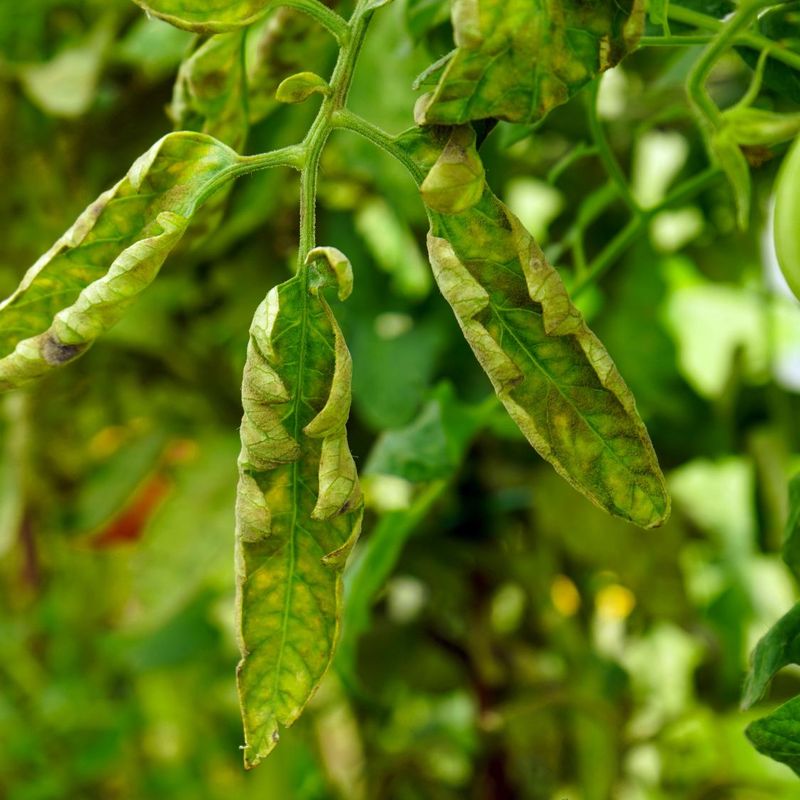
Shade cloth and steady watering address heat stress specifically. They will not help a plant that is struggling for a different reason, and some of those other reasons look similar at first glance.
Leaf curl is a good example. Heat-related inward leaf roll can look alarming, but University of Minnesota Extension’s tomato disorders guide notes that this type of leaf roll generally requires no treatment and often improves on its own when conditions moderate.
However, similar curling can result from drought, root damage, herbicide drift, or viral infection, each of which calls for a different response.
Utah State University Extension’s resource on curly top disease describes a viral condition spread by leafhoppers that causes severe leaf curl, stunting, and fruit failure with no cure once established. Shade will not reverse curly top, wilt diseases, severe root problems, or active pest infestations.
If symptoms persist after temperatures drop or appear alongside yellowing, mottled leaves, wilting that does not recover overnight, or visible insect damage, a separate diagnosis is needed.
Blossom-end rot deserves its own mention because it is often confused with blossom drop. Blossom-end rot appears as a dark, sunken, leathery area on the bottom of developing fruit and is linked primarily to inconsistent water availability and impaired calcium movement inside the plant, not simply a lack of soil calcium.
It is a different condition from heat-induced blossom drop and requires a different management approach centered on steady moisture.
For Florida gardeners, UF/IFAS guidance on Florida tomato production notes that July or early August plantings in north Florida may need hot-set cultivars specifically bred for fruit set under extreme heat. Texas A&M’s tomato production guide similarly recognizes that temperatures above about 92 degrees Fahrenheit impair pollination and that fall production is marginal in much of the state.
Hot-set cultivars are a planning consideration for future seasons, not a fix for a plant already struggling this summer.
Reduce stress, then give the plant time
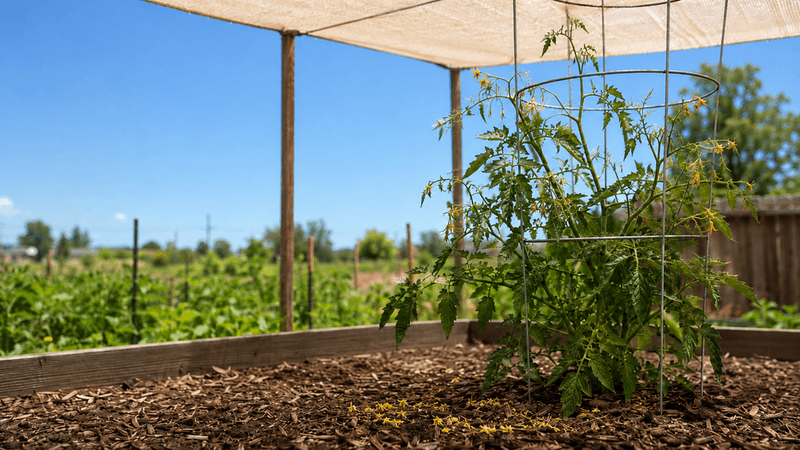
When flower drop, poor fruit set, or stalled ripening lines up with a stretch of hot days and warm nights, the practical sequence is straightforward. Install temporary 30% overhead shade on a frame, check and maintain even root-zone moisture, and leave healthy foliage in place to protect developing fruit.
Then reassess as temperatures moderate. University of Maryland Extension’s resource on beating heat in vegetable production systems frames this kind of intervention as stress reduction rather than a guaranteed restart, which is the right expectation to carry into the process.
The goal is to lower the plant’s heat load enough to improve the chance of continued flowering, fruit set, and ripening once conditions shift, not to promise an immediate flush of new growth. Penn State Extension and University of Georgia Extension both note that cooler temperatures and time remain necessary, especially when nights stay warm.
If symptoms do not match heat stress, or if the plant shows signs of disease, root damage, or pest injury, that pattern calls for a different diagnosis entirely. Sometimes the most useful thing a gardener can do is give a stressed but otherwise healthy plant a cooler week and a little patience.