
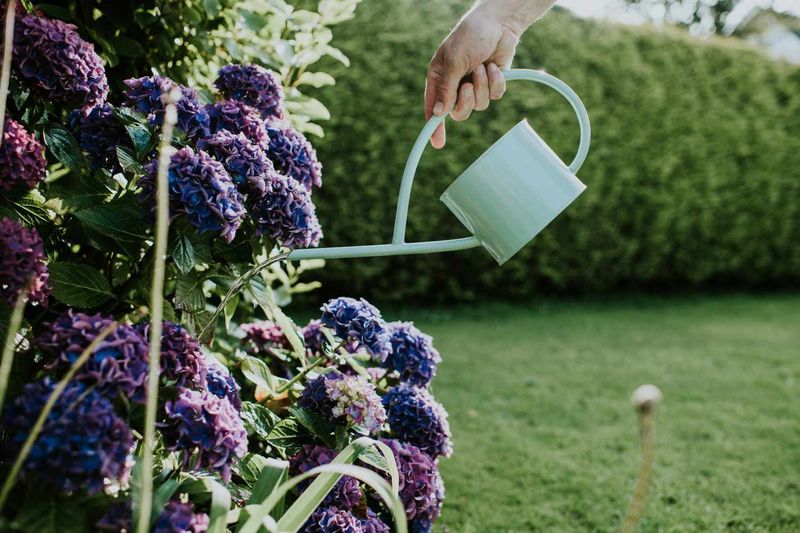
Watching a hydrangea droop in the afternoon heat is enough to make any gardener reach for the hose. But if you water every day and still see limp leaves, the problem may not be how often you water – it could be how you water.
A common habit of quick, shallow sips keeps moisture right at the soil surface, where it dries fastest and does the least good for roots. Understanding what is actually happening underground can change how you care for your plants all summer long.
The root problem starts with shallow daily sips
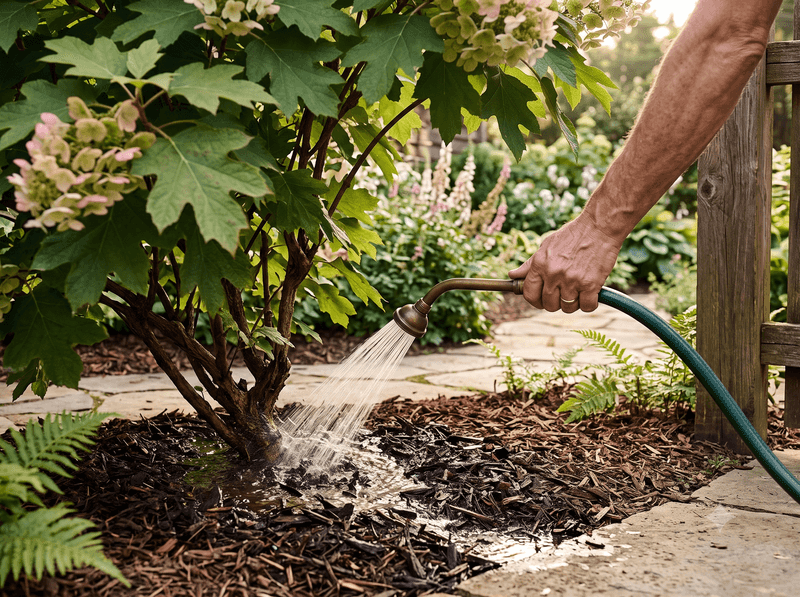
Quick, repeated watering sessions that wet only the top inch or two of soil are the most common and least obvious way to stress hydrangea roots during hot weather. When water never reaches below the surface, roots have little reason to grow deeper.
They stay concentrated in the zone that heats up fastest and dries out first – exactly where they are most vulnerable during a Southern summer.
Texas A&M AgriLife Extension guidance on efficient landscape watering recommends wetting soil roughly 5 to 6 inches down for established in-ground plants rather than applying light sprinkles every day. That depth is a target for suitable, established shrubs – not a rule for containers or newly planted hydrangeas, which have smaller root balls that need their own checks.
University of Minnesota Extension similarly warns that light, frequent watering encourages shallow roots that are more exposed to summer heat and drought stress. A surface sprinkle looks like effort, but it may be doing little more than wetting a thin crust of soil before evaporating.
The fix is not necessarily watering more often – it is watering deeply enough that moisture actually reaches the root zone, then waiting until that zone dries before going again.
Why hydrangeas show heat stress so dramatically
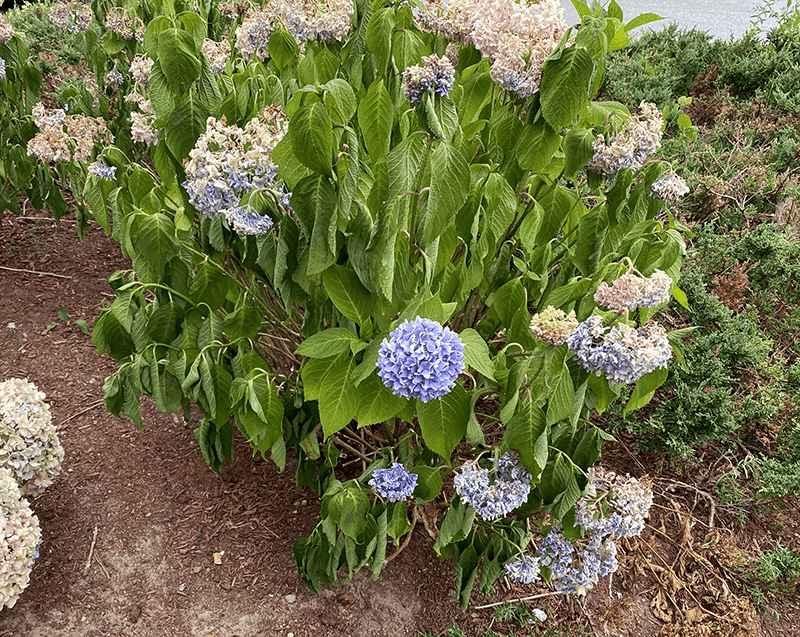
Few garden plants make their distress as visible as a hydrangea. Those broad leaves and heavy flower clusters are beautiful, but they also lose water rapidly through transpiration on hot, sunny, or windy days.
When roots cannot keep pace with that demand, the whole plant goes limp fast.
Bigleaf hydrangeas carry a particular reputation for this. University of Georgia Cooperative Extension describes bigleaf hydrangea as a water-demanding plant, and Oregon State University Extension notes that bigleaf hydrangeas are less tolerant of heat and drought than some other hydrangea species.
Oakleaf and panicle types can handle more sun and warmth, but no hydrangea should be treated as fully drought-tolerant without knowing the specific cultivar and site.
Shallow roots make all of this harder to manage. A plant drawing moisture from only the top layer of soil has a smaller buffer against heat spikes, afternoon sun, and dry winds.
When that thin layer dries out mid-afternoon, the plant reacts immediately – and dramatically. Recognizing that the visible wilt is connected to root depth, not just air temperature, helps redirect the fix toward the right place: the soil, not the clock.
Check the root zone before you reach for the hose
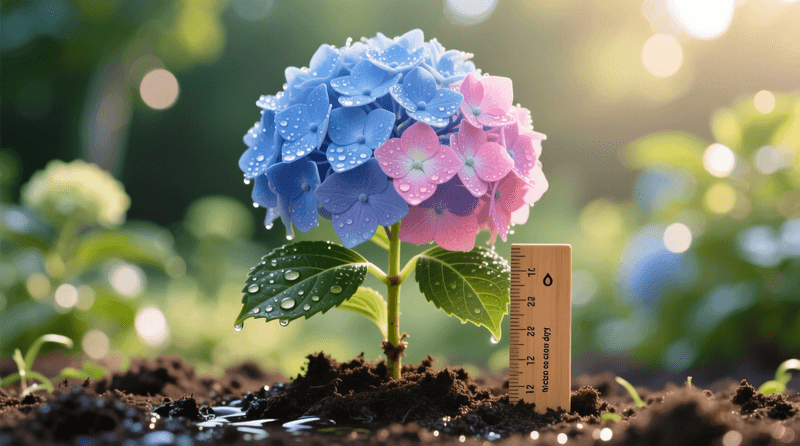
Afternoon droop on a hydrangea is not automatic proof that the soil is dry. Heat can push a plant to lose water faster than its roots can supply it, even when the ground holds adequate moisture.
A hydrangea that recovers on its own by evening or overnight may be experiencing temporary heat wilt – and adding more water to already moist soil will not help it.
Before turning on the hose, probe the soil near the plant. For an established in-ground shrub, dig or push a finger or thin probe roughly 5 to 6 inches down, a few inches away from the stem rather than directly against it.
Extension specialists advise checking soil moisture at depth before irrigating, since surface dryness can be misleading. If the soil at depth feels genuinely dry, water slowly and thoroughly.
If it feels moist, hold off and check again in the morning.
Soggy soil is its own warning sign. Waterlogged conditions deprive roots of oxygen, and damaged roots cannot absorb water effectively – so a plant can wilt even while sitting in wet soil.
UF/IFAS Extension notes the importance of distinguishing heat wilt from permanent wilt caused by root problems or saturated soil. Containers and small new plantings work differently: check the root ball or potting medium at a shallower, appropriate depth and confirm that the pot or bed drains freely before applying more water.
Water slowly enough to wet the root zone
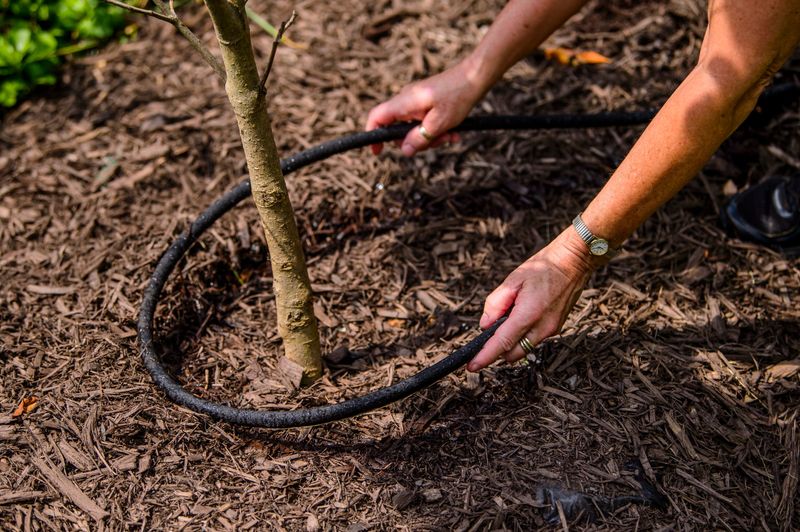
Once the soil check confirms the root zone is dry, the goal is to get water there without flooding the plant or letting most of it run off before it can soak in. Applying water slowly at the soil surface around the base of the plant gives it time to infiltrate rather than sheet off the top.
A quick blast from a hose nozzle, especially aimed at dry or compacted soil, often wets a thin crust and runs sideways before reaching any meaningful depth.
Soaker hoses, drip irrigation lines, and slow hand watering with a low-flow wand or a hose set to a gentle trickle are all practical options. OSU Extension recommends watering slowly at the base during heat events to penetrate the root zone effectively.
The UC IPM program notes that slow application reduces runoff and improves water infiltration for trees and shrubs. Each method’s performance still depends on your soil type, how compacted it is, and how the system is set up.
Evaporation is a separate concern from infiltration. Directing water at the soil rather than spraying it overhead, watering in the morning when practical, and keeping a mulch layer in place all help reduce water loss – but through different mechanisms.
The endpoint you are looking for is thoroughly moist soil with adequate drainage, not a set number of minutes on the timer or standing water pooled around the crown.
Morning helps, but timing is not the culprit
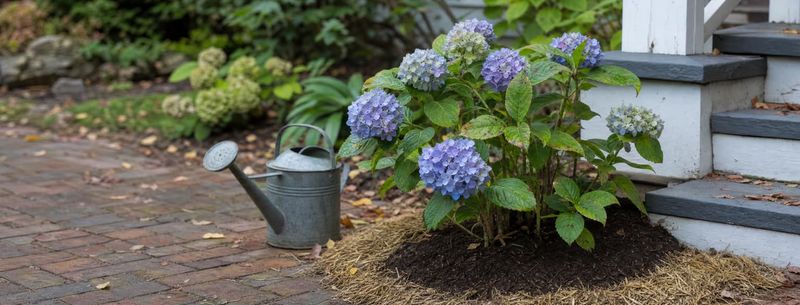
Morning watering gets recommended for good reasons. Water applied early has time to soak into the soil before peak heat arrives, and any moisture that splashes onto leaves has hours to dry before nightfall.
Those are real advantages worth taking when your schedule allows.
That said, morning is not a hard rule, and watering at a different time does not automatically stress your hydrangea’s roots. UC IPM guidance on irrigating trees and shrubs emphasizes soil conditions and delivery method over a strict time-of-day requirement.
Penn State Extension similarly focuses on adequate soil moisture and avoiding drought stress rather than a rigid morning-only window. Late afternoon or evening watering can work fine when water is directed at the soil – particularly with drip lines or soaker hoses that keep foliage dry throughout.
The concern with routine overhead watering later in the day is not that water droplets burn hydrangea leaves in sunlight. The stronger issue is that wet foliage left damp overnight creates conditions where fungal leaf spot diseases can take hold more easily.
Overhead irrigation also delivers water less efficiently to the root zone. If a sprinkler is your only option in the evening, that is not an emergency – just avoid making it a nightly routine, and keep the focus on getting water to the soil where roots can actually use it.
Soil, plant age, and pot size determine the next check
No single watering schedule works for every hydrangea in every yard. Sandy soils drain and dry quickly, meaning the root zone may need checking more often after a hot, windy day.
Heavy clay or compacted soil holds water longer and can stay poorly aerated even when the surface looks dry. Local rainfall, shade versus full sun, wind exposure, and whether the bed is mulched all shift how fast moisture leaves the root zone.
Plant age matters just as much as soil type. Penn State Extension guidance on planting ornamentals explains that newly planted shrubs require closer monitoring during the establishment period because their root systems have not yet spread into surrounding soil.
UF/IFAS Florida-Friendly Landscaping guidance reinforces that newly installed plants need more frequent attention, while established plants generally benefit from less frequent but deeper irrigation. A hydrangea planted this spring is not the same situation as one that has been in the ground for three years.
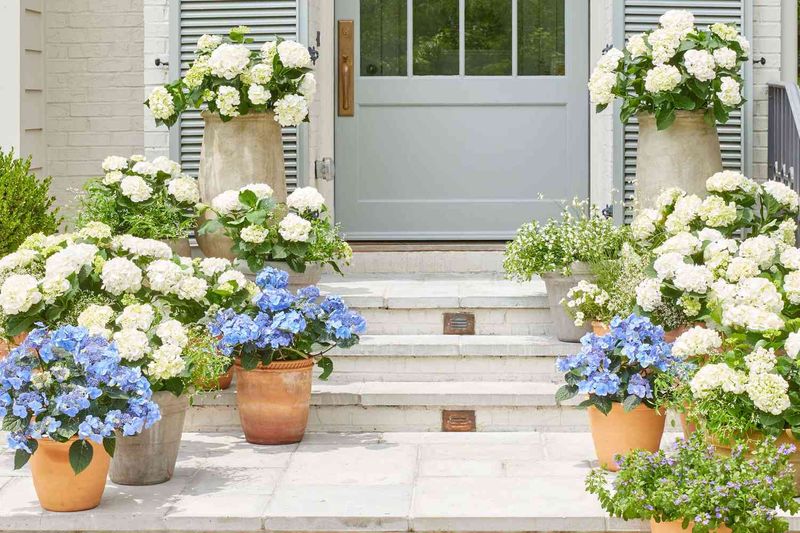
Containers are a separate case entirely. Pots can dry out within a day or two during a Southern summer heat spell, so they need more frequent checking – but they also require functioning drainage holes.
Texas A&M principles of irrigation management note that container size, medium type, and drainage all affect how quickly a pot becomes waterlogged. A potted hydrangea sitting in a saucer full of water can develop the same oxygen-starved roots as one overwatered in the ground.
Check the medium a few inches down and make sure water moves freely through the pot before adding more.
Mulch protects the moisture you put in
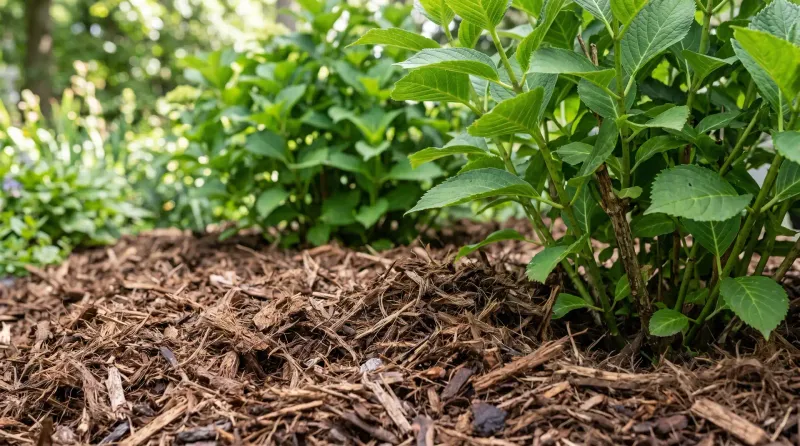
After correcting the watering pattern, mulch is one of the most practical follow-up steps for keeping roots in better shape through summer heat. A 3- to 5-inch layer of organic mulch – shredded bark, wood chips, or pine straw – slows moisture loss from the soil surface and helps buffer root-zone temperature against the kind of afternoon heat that dries shallow soil fast.
University of Georgia Cooperative Extension recommends 3 to 5 inches of organic mulch for bigleaf hydrangea, and OSU Extension advises applying bark mulch before heat events to help retain soil moisture. Keep the mulch pulled back a few inches from direct contact with the stems to avoid trapping moisture against the crown, which can invite rot.
Mulch supports the moisture you put in through deep, slow irrigation – it does not replace it. A thick layer cannot compensate for shallow watering, a sun-baked location the plant is not suited for, poor drainage underneath, or roots that are already damaged.
Think of it as a tool that makes good watering work better and last longer, not a standalone solution for a struggling plant.
Persistent wilt points beyond watering technique
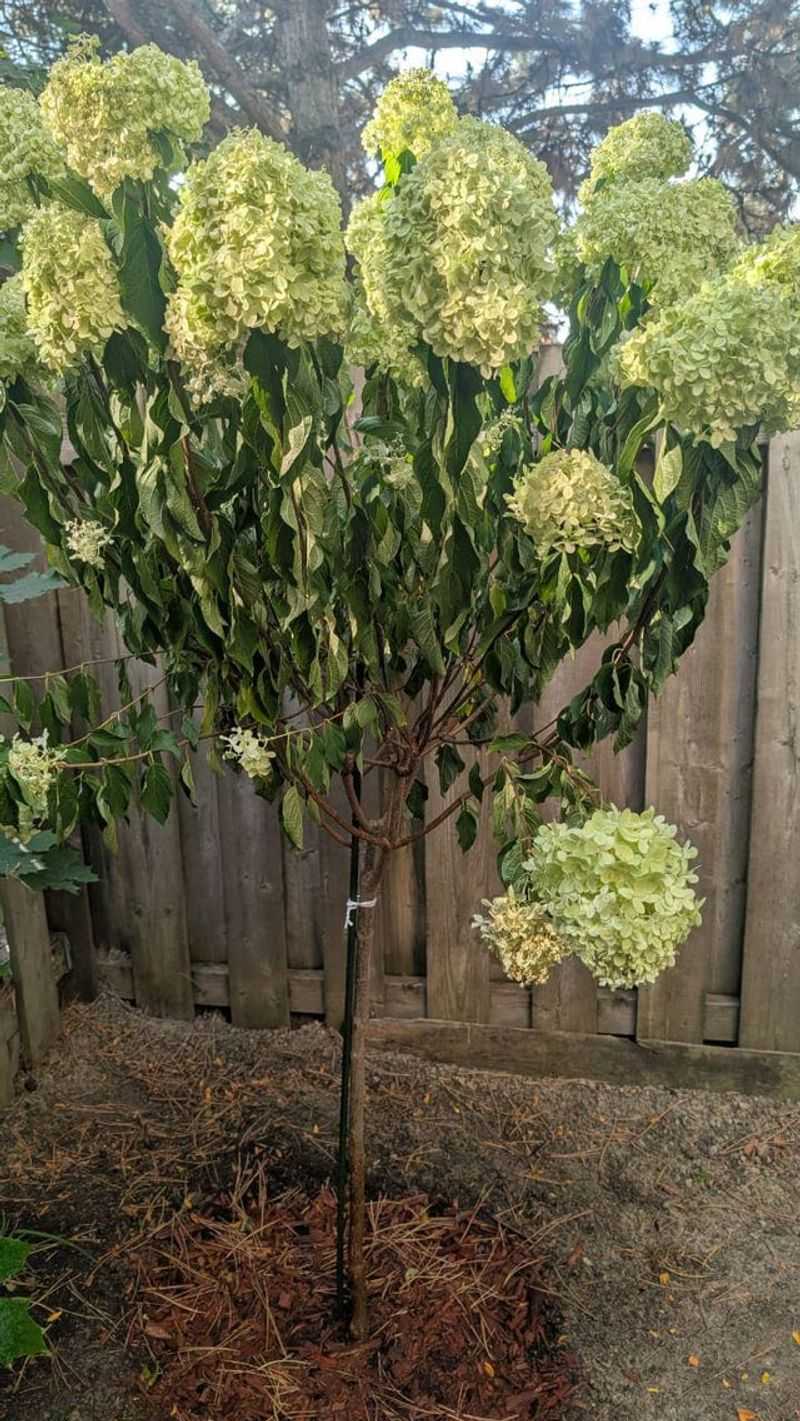
Most afternoon wilt on hydrangeas responds to corrected watering – deeper applications, a soil check before each session, and some patience while the root system adjusts. When wilt persists into the morning hours after the air has cooled, that pattern deserves a closer look rather than another round of watering.
Saturated soil is one possibility. Roots sitting in waterlogged conditions lose access to oxygen, and extension plant diagnostics flag dark or mushy roots as a sign of root rot rather than drought.
Penn State Extension’s overview of hydrangea diseases covers fungal and bacterial problems that can mimic drought symptoms, including stem-base lesions and progressive dieback that watering adjustments alone will not fix. Compacted soil, excessive sun exposure, and physical root damage from construction or digging are other contributors that show up as wilt but do not respond to irrigation changes.
Warning signs that call for closer diagnosis include: wilt that continues well into the morning, soil that stays soggy days after rain or watering, roots that appear dark or soft when you carefully unearth them, lesions or discoloration at the stem base, and leaves or stems dying back progressively. When those symptoms appear, contacting your local extension service or a certified professional is a better next step than doubling the water schedule.
Avoid the impulse to water twice daily as an automatic rescue, and hold off on heavy pruning during active heat stress – OSU Extension cautions that severe pruning during heat can trigger tender new growth that is even more vulnerable to further damage.
Give the root zone a thorough drink, then check again
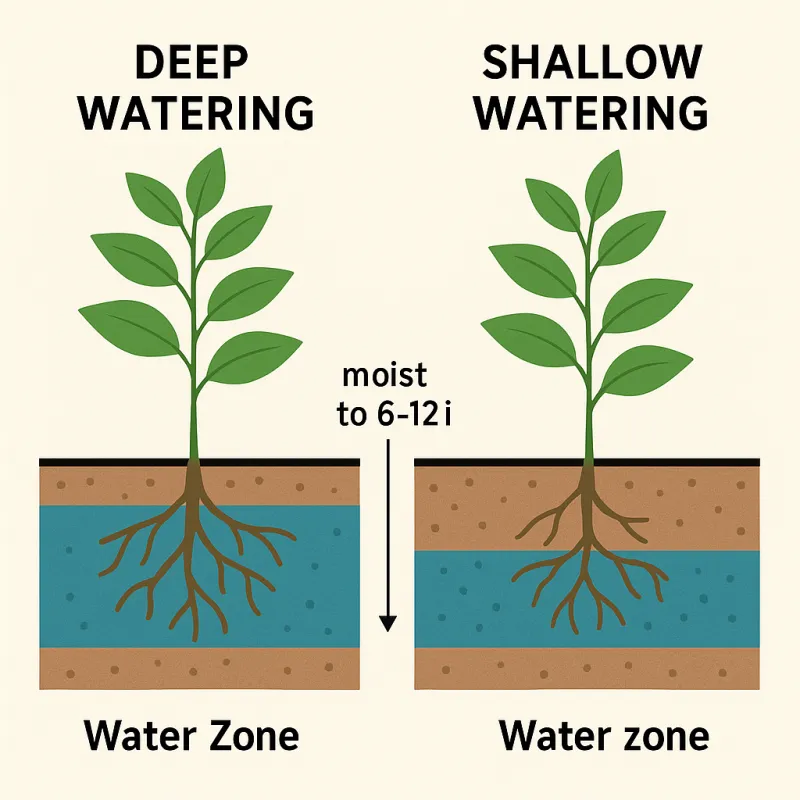
The action sequence is straightforward once you have the habit. Before watering, probe the soil near the plant – a few inches away from the stem – and check for actual dryness at root depth.
For an established in-ground shrub, that means several inches down. For a container or newly planted hydrangea, check the root ball or potting medium at an appropriate shallower depth and confirm that drainage is working.
When the soil is genuinely dry, water slowly at the base until the root zone – not just the surface – is thoroughly moist. UC IPM irrigation guidance and University of Minnesota Extension both support allowing adequate drainage before watering again rather than returning on a fixed daily or weekly schedule.
Morning is a useful default when it fits your routine, but soil moisture and plant conditions – not the clock – should make the call.
Roots that reach deeper into the soil have a larger buffer against heat and dry spells. Building that buffer starts with one unhurried watering session at a time.