
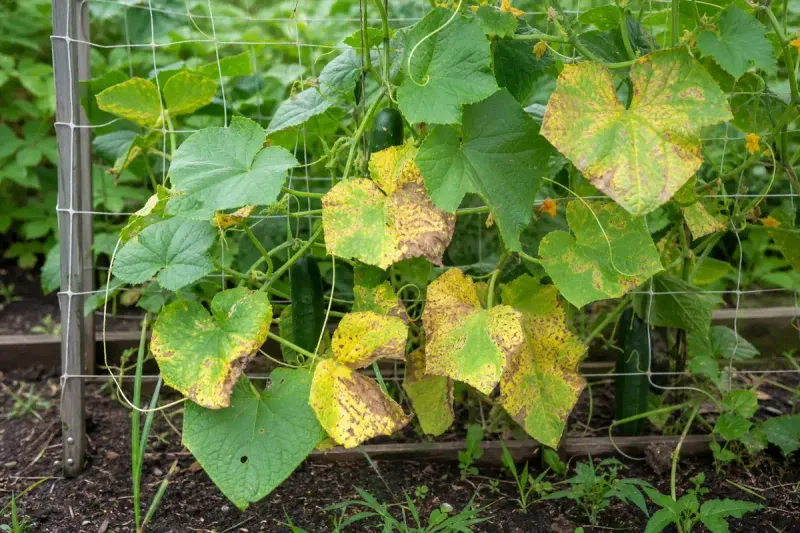
Late-summer heat can turn a healthy cucumber vine into a puzzling tangle of yellow leaves and stalled growth almost overnight. Before you reach for the fertilizer bag, pause — because adding nutrients to a stressed plant can sometimes make things worse, not better.
Yellowing and slow growth have several possible causes, and the right response depends on figuring out which one is actually happening in your garden.
Yellowing does not prove a feeding problem
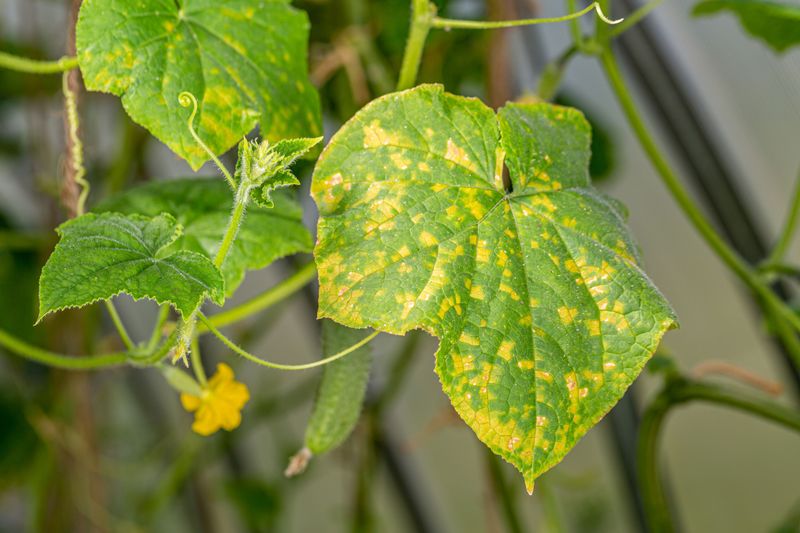
Late-summer cucumber yellowing gets blamed on a missing nutrient more often than the evidence supports. University of Minnesota Extension’s cucumber diagnostic guide lists moisture problems, pests, disease, natural aging, and nutrient deficiency all as possible reasons for discolored leaves, with no single cause standing above the rest.
Yellow leaves are a symptom, not a diagnosis.
Heat alone can stall cucumber growth without any nutrient shortage involved. University of Minnesota yard and garden guidance notes that cucumbers may shed blossoms around 90 degrees F, and extension sources from Oregon and Iowa confirm that prolonged high temperatures can slow plant growth independently.
A vine that has stopped growing in a heat wave may simply be waiting out the weather, not signaling a fertilizer shortage.
Reaching for fertilizer as a first response is a habit worth questioning. Iowa State Extension’s heat management guidance recommends postponing fertilizer on heat- or drought-stressed plants unless a deficiency has been confirmed.
University of Georgia Cooperative Extension echoes that approach, emphasizing measured, timed feeding over repeated emergency applications. The safer path is to check moisture, drainage, leaf patterns, and pests before opening any bag or bottle.
Improper fertilizer can add salt stress
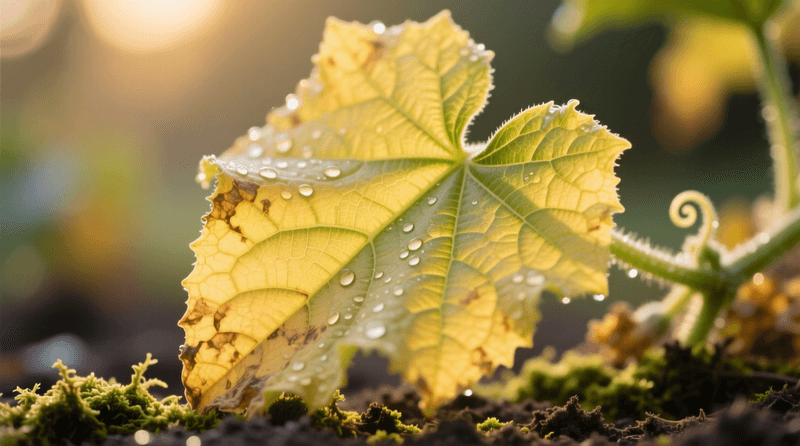
One concrete reason to pause automatic feeding is the risk of soluble-salt injury. When fertilizer is applied to bone-dry soil, placed too close to roots, or used in excess, the salt concentration around the root zone rises.
UF/IFAS cucumber production guidance and WSU’s fertilizer-burn fact sheet both describe how high soluble-salt levels can impair the ability of roots to take up water, leading to wilting, slowed growth, leaf scorch, and yellowing.
Those salt-injury symptoms overlap almost exactly with what heat stress and drought look like from the outside. A gardener who applies fertilizer to a heat-stressed vine, sees continued yellowing, and then applies more is compounding the problem rather than solving it.
Ohio State Extension’s hot-weather fertilizing tips specifically caution against feeding during periods of heat and drought stress for this reason.
None of this means fertilizer caused the original yellowing. Salt injury is a risk introduced by improper or poorly timed application, not evidence that feeding habits were behind the vine’s initial decline.
The important takeaway is that adding more fertilizer to an already-struggling plant can introduce a second problem on top of whatever started the yellowing in the first place. Sorting out the original cause before feeding protects against that outcome.
Use leaf patterns as clues, not diagnoses
Leaf color and pattern can narrow down the list of suspects even when they cannot name the culprit outright. Uniform, pale yellowing that starts on the oldest lower leaves while newer growth remains green and overall plant growth has slowed is a pattern consistent with nitrogen deficiency.
That is a starting point for investigation, not a confirmed diagnosis.
Other patterns point in different directions. Texas A&M’s nutrient deficiency diagnostic resource explains that yellowing between green veins on older leaves can suggest magnesium deficiency, while the same interveinal pattern on young leaves may indicate iron or another micronutrient problem.
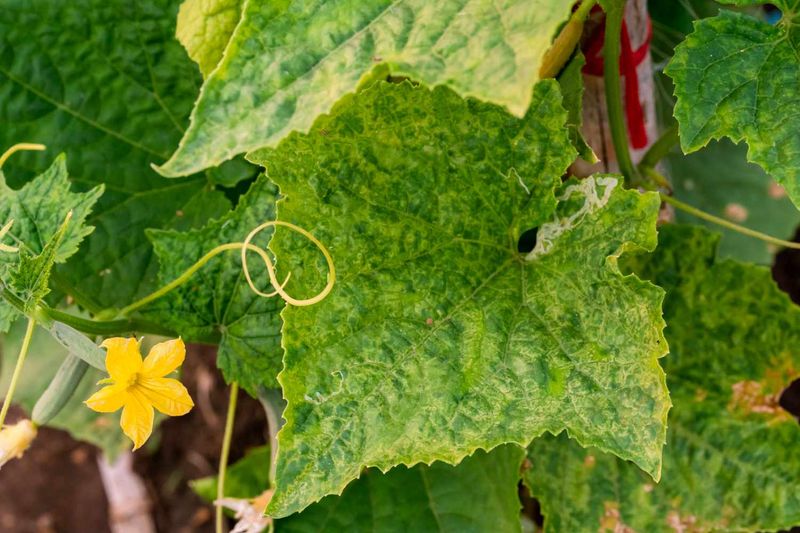
Texas A&M’s cucurbit problem-solver notes that yellow margins, browning edges, cupping, or abnormal fruit can fit a potassium shortage. Irregular yellow-and-green mosaics, leaf distortion, or stunting are different signals entirely and lean more toward viral disease than a simple nutrient gap.
A few yellowing lower leaves on a mature vine are not automatically a cause for alarm. Extension ask-an-expert records confirm that some older, shaded lower leaves naturally yellow and dry as a cucumber vine ages.
If the newest growth is green and the plant is still flowering or fruiting, limited lower-leaf yellowing alone does not justify fertilizer. Pattern recognition narrows the possibilities, but soil or plant testing is what confirms whether a nutrient correction is actually needed.
Check soil, drainage, and leaf undersides
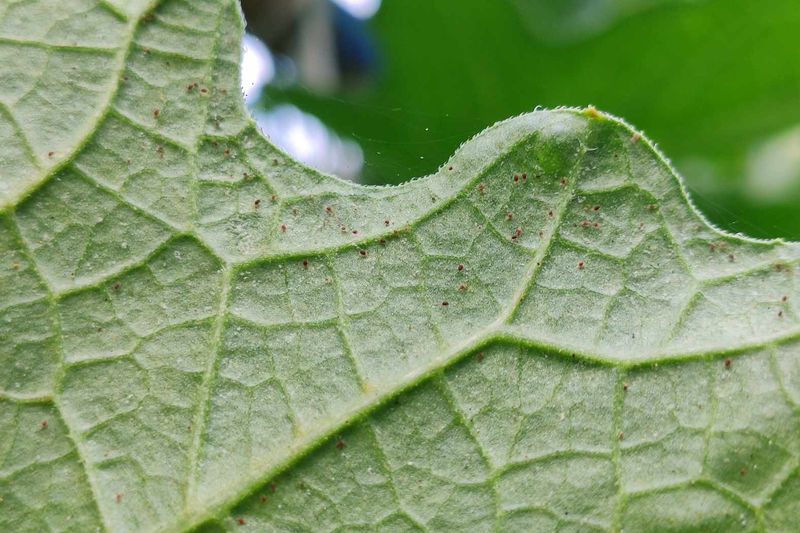
Before drawing any conclusions from leaf color, spend a few minutes on a hands-on inspection. Push a finger or a small trowel a few inches into the soil near the root zone and feel for moisture.
Cucumbers need consistently available water, but they do not perform well in saturated soil either. UC IPM’s cucumber cultural tips and Oklahoma State Extension’s cucumber production guide both note that poor drainage and waterlogged conditions can disrupt nutrient uptake and produce yellowing or stunted growth, symptoms that look nearly identical to drought stress from above.
After checking the soil, flip a few leaves over and look closely at the undersides. Spider mites are tiny and easy to miss, but their damage shows up as pale, dusty stippling across the leaf surface, and heavy infestations may produce fine webbing near leaf junctions.
UF/IFAS entomology guidance confirms that hot, dry conditions are prime spider-mite weather, which matches exactly the late-summer conditions most Southern gardeners are dealing with right now.
Aphids and whiteflies are worth looking for as well. Extension ask-an-expert records note that both pests can cause yellowing directly and that whiteflies can transmit viruses to cucurbit crops.
Finding a pest colony on the underside of a leaf changes the response completely – no fertilizer application addresses a mite or whitefly problem, and applying nutrients to a pest-stressed vine adds no benefit while leaving the real issue untreated.
Stabilize the vine before you feed it
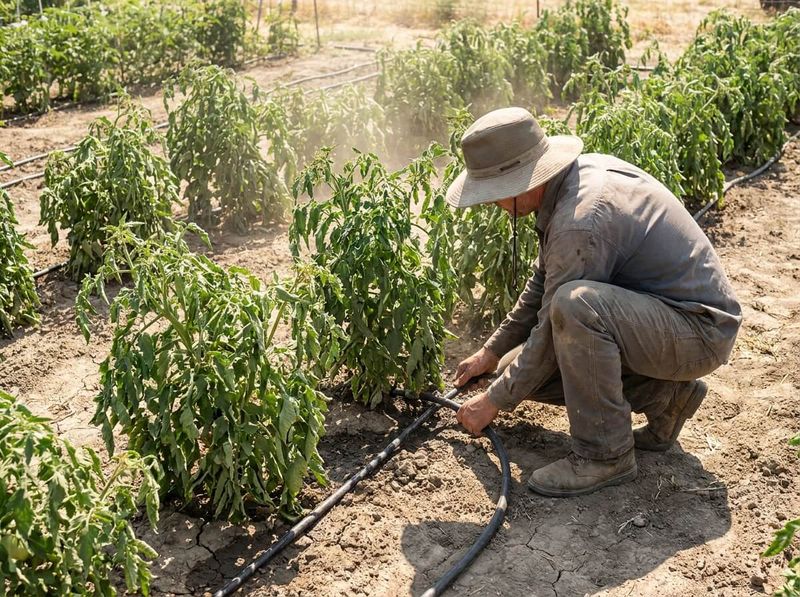
When the soil feels dry and the vine is visibly stressed, the first move is water, not fertilizer. Oregon State Extension’s heat-wave garden guide recommends giving the root zone a deep soak rather than repeated shallow watering, which wets only the surface and leaves deeper roots dry.
Slow, thorough watering that reaches the full root zone gives the plant a genuine chance to recover from heat stress before any other intervention.
Mulch is a practical partner to deep watering. A two-to-three inch layer of organic mulch around the base of the plant, kept a few inches back from the stem, slows evaporation, buffers soil-temperature swings, and helps keep moisture available between watering sessions.
Utah State Extension’s cucumber guide and Oklahoma State’s production fact sheet both point to mulching and consistent soil moisture as foundational practices for cucumber health in warm conditions.
Drip or soaker irrigation is preferable to overhead watering because it keeps foliage dry and reduces disease pressure. If drainage is the problem rather than drought, address that before adding anything to the soil.
Any pesticide or spray treatment for pests must follow the product label, including temperature restrictions – some products can injure foliage at high temperatures, and UGA’s IPM fungicide guidance underscores that label compliance is not optional. Correct watering and drainage problems first, then reassess whether anything else is needed.
Resume measured feeding only when evidence supports it
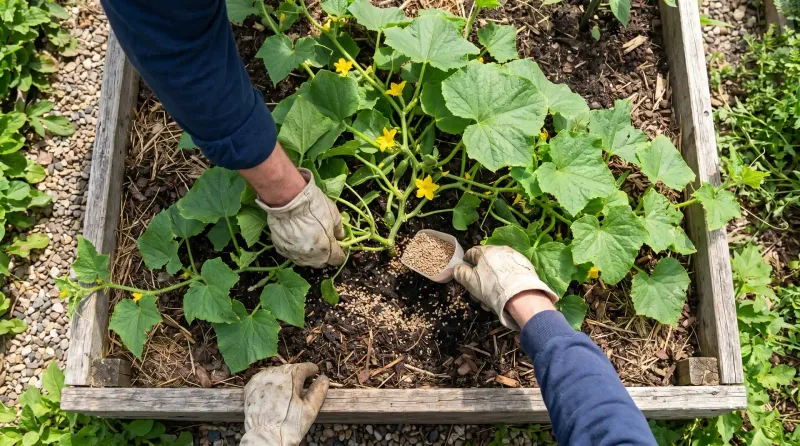
Cucumbers are productive plants that can benefit from supplemental nitrogen during the growing season, but the timing and method matter as much as the nutrient itself. UGA Cooperative Extension’s cucumber production guide recommends a preplant fertilizer program followed by side-dressing with nitrogen after blooming begins and again several weeks later, and it specifically warns that overfertilization encourages excessive vine growth while retarding fruiting.
Repeated emergency applications are not part of that framework.
The right time to resume feeding is after acute heat or drought stress has eased and the plant is showing signs of stability. UF/IFAS cucumber fertilization guidance and UC IPM’s cucumber cultural tips both emphasize confirming a likely deficiency before adding nutrients.
Soil testing is the most reliable way to do that. A basic test from your county extension office or a certified lab tells you what the soil actually contains rather than what the yellowing leaves might suggest.
When a treatment is confirmed and conditions are right, apply a label-directed product in a band several inches away from the plant base and water it in thoroughly. WSU’s fertilizer-burn fact sheet advises against applying dry fertilizer to dry soil or directly against stems.
NC State Extension’s soils and plant nutrients handbook reinforces that nutrient selection should match a confirmed deficiency, not a guess. High-phosphorus bloom boosters, Epsom salts, banana peels, coffee grounds, and similar household amendments are not supported as general cures for late-summer cucumber yellowing.
Recognize pests, viruses, and natural decline
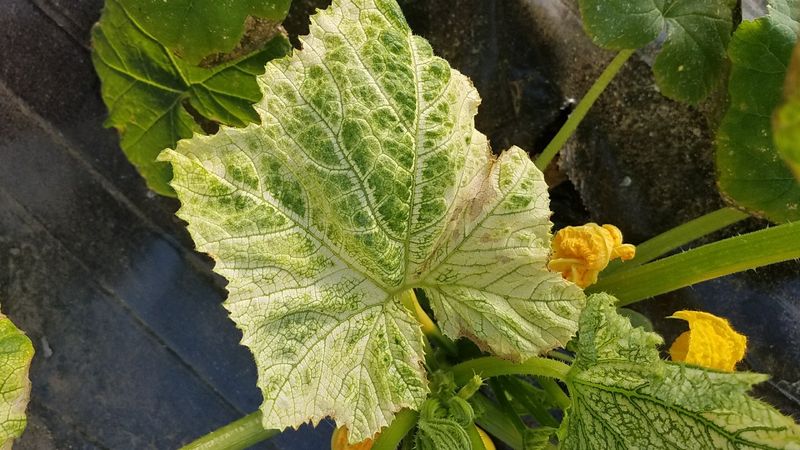
Some yellowing patterns fall outside what fertilizer can fix. Irregular mosaics of yellow and green across the leaf surface, leaf distortion, brittleness, stunting, or declining fruit quality are warning signs that virus pressure may be involved.
UF/IFAS guidance on cucurbit viruses and Texas A&M AgriLife’s resource on yellowing viruses in Texas cucurbits both make clear that whitefly-transmitted viruses can closely mimic nutritional deficiency or water stress, especially when yellowing appears between veins, leaves curl, or fruit quality drops sharply.
Fertilizer will not cure a virus. UF/IFAS plant disease management guidance is direct on this point: once a cucurbit virus is established in a plant, no nutrient application changes the outcome.
Florida and Texas gardeners face meaningful whitefly pressure during summer, making virus a realistic possibility when yellowing is accompanied by the visual clues above, not just an edge case to mention and dismiss.
Heat-related blossom drop and production pauses are also distinct from nutrient deficiency. A vine that stops setting fruit during a stretch of 95-degree days is responding to temperature, not necessarily signaling a soil problem.
Mature vines naturally lose older lower leaves as the season progresses. Minnesota Extension’s cucumber diagnostic tool reinforces that multiple causes can produce overlapping symptoms.
When disease or root problems remain plausible after a home inspection, the most useful next step is contacting your county extension office or sending a sample to a diagnostic laboratory rather than cycling through more products.
Harvest often and follow a diagnosis-first routine
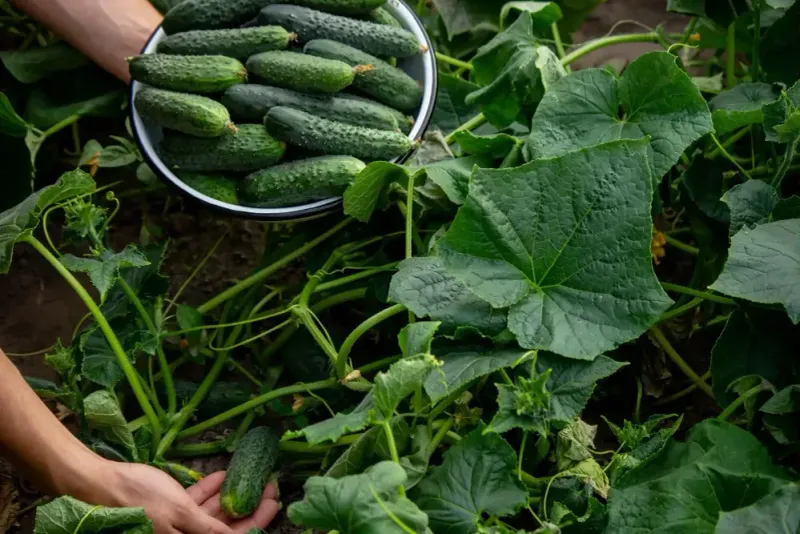
A simple routine goes a long way toward keeping cucumber problems from compounding. Pause fertilizer first.
Check soil moisture and drainage before drawing any conclusions about nutrients. Inspect leaf patterns and undersides for pest activity.
Address heat and watering stress with a deep soak and mulch before considering any other input. If a deficiency pattern still looks likely after conditions stabilize, test before treating.
UGA Cooperative Extension and Texas A&M AgriLife’s cucumber growing guide both recommend harvesting cucumbers frequently and removing oversized or yellowing fruits promptly. Overmature cucumbers signal the plant to slow production, and yellow fruits on the vine are generally past their prime rather than proof that the plant needs more fertilizer.
Keeping up with harvest is one of the most straightforward ways to maintain productivity.
Measured feeding can be appropriate once stress passes and evidence supports it, but yellow leaves alone do not justify another application, and no treatment guarantees recovery for a vine that is old, severely heat-stressed, or carrying a virus. The most useful habit a Southern gardener can build is checking before feeding – because the answer is sometimes water, sometimes patience, and only occasionally fertilizer.