
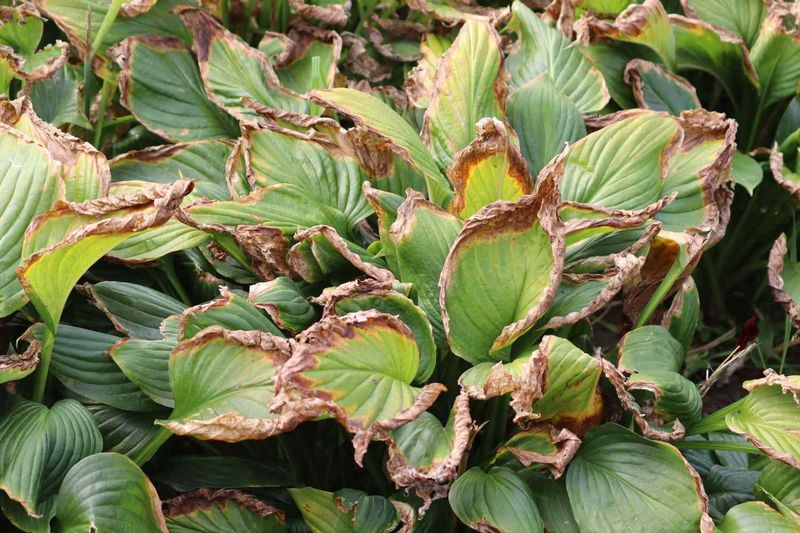
Few things are more discouraging than watching a plant that thrived all spring suddenly droop and die in the middle of summer. For North Carolina gardeners across the Piedmont, Coastal Plain, and mountains, this pattern shows up every year, and it rarely means you did something wrong.
Midsummer heat raises water demand fast, and that pressure can expose problems that mild spring weather kept hidden. Understanding what is actually happening gives you a clear path forward instead of a guessing game.
Summer heat can reveal problems that spring growth concealed
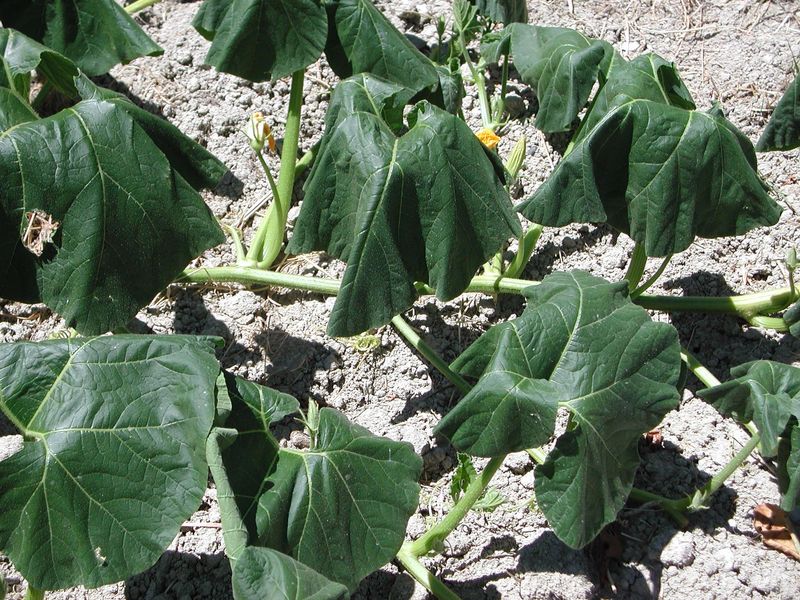
A plant that looked unstoppable in April can drop in a matter of days once midsummer heat arrives, and the speed of that change makes it feel like the heat alone is to blame. What is actually happening is more complicated.
Higher temperatures sharply increase the water a plant needs to keep its tissues cool and its processes running, and that surge in demand can expose a root system or water-conducting tissue that was managing just fine in the gentler conditions of spring.
Shallow or damaged roots, compacted soil, recent transplanting, poor drainage, and unsuitable site conditions are all examples of weaknesses that spring’s moderate temperatures can mask. NC State Extension’s disease and disorders guidance specifically notes that root rot may begin during wet weather but not become visibly apparent until hot, dry conditions create a water demand the damaged roots simply cannot meet.
That timing makes the heat look like the villain when the real trouble started weeks earlier.
Extreme heat can also directly injure or kill some plants, particularly those that are poorly suited to the exposure they are growing in or that have already been weakened by other stressors. UMN Extension’s heat gardening guidance confirms that leaf scorch, crisp margins, and even dieback can result from high temperatures alone when the species or cultivar is not well matched to the site.
The reassuring part is that most sudden late-summer collapses point to something correctable: a root-zone problem, a site mismatch, or a disease that was already present.
Root or vascular diseases are worth considering when a plant collapses quickly without obvious drought signs nearby. NC State’s drought survival guidance emphasizes checking actual soil moisture before drawing conclusions, because the symptoms of overwatering and underwatering can look nearly identical from above ground.
The sections that follow walk through how to tell those situations apart and what to do next.
Separate temporary afternoon wilt from persistent decline
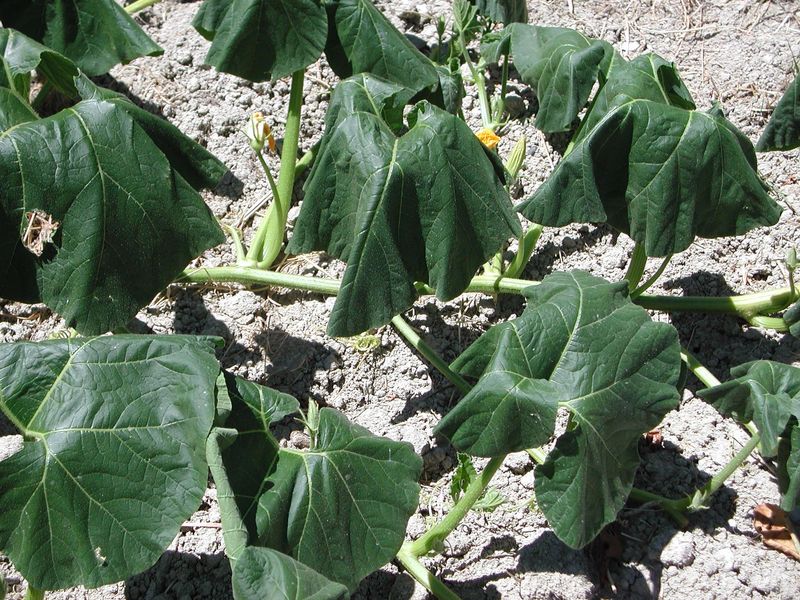
Afternoon drooping can send a gardener straight to the hose, but not every wilt is a cry for water. On a hot, windy summer afternoon, leaves can lose moisture through transpiration faster than even a healthy root system can pull water up from moist soil.
The plant looks distressed, but the problem is temporary physics, not a failing root system.
The most useful first check is simple: go back out the next morning before temperatures climb. NC State’s landscape drought guidance notes that plants are more likely to be genuinely drought-stressed when they remain wilted by morning, while overnight recovery points toward normal heat-related water imbalance rather than a fatal problem.
A plant that stands back up by sunrise may not need any intervention at all.
Persistent morning wilt, wilt that worsens day after day, or a plant that never fully recovers overnight is a different situation. Those patterns suggest the water-transport system is not working as it should, whether from dry soil, damaged roots, saturated and oxygen-starved roots, or a vascular disease.
Symptoms like leaf curl, scorched brown margins, and flower drop can also appear during heat waves, and UMN Extension’s heat stress overview cautions that these signs reflect nonfatal stress in many cases and do not by themselves reveal the underlying cause.
Cool-season flowers such as pansies, snapdragons, and dianthus naturally slow or stop blooming during high summer heat. Reduced flowering on those plants is a normal seasonal response, not a sign of collapse.
Keeping that distinction in mind prevents unnecessary interventions on plants that simply need the season to shift before they resume growing.
Check the soil, roots, and lower stem before adding water
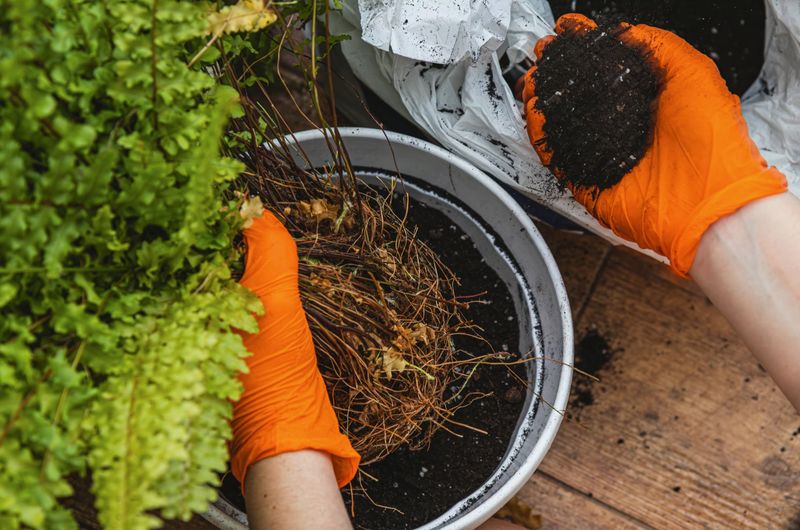
Reaching for the hose the moment a plant droops is one of the most common midsummer mistakes, and it can make things worse rather than better. Before adding any water, push a finger, a wooden dowel, or a screwdriver several inches into the root zone and feel what is actually there.
Soil that feels damp at depth does not need more water, even if the surface looks dry and the leaves are hanging.
Both dry soil and waterlogged soil can produce the same drooping symptom above ground, which is why looking at the leaves alone is not enough. When roots sit in saturated, oxygen-starved soil, they lose the ability to absorb water efficiently, and the plant wilts just as it would during drought.
NC State’s diseases and disorders chapter identifies poor drainage and root disease as important causes of wilt and collapse in North Carolina landscapes, and adding irrigation to an already wet root zone can accelerate decline rather than reverse it.
When decline persists after ruling out simple thirst, inspect the roots and lower stem directly. Carefully remove a small amount of soil near the crown and look at the root color and texture.
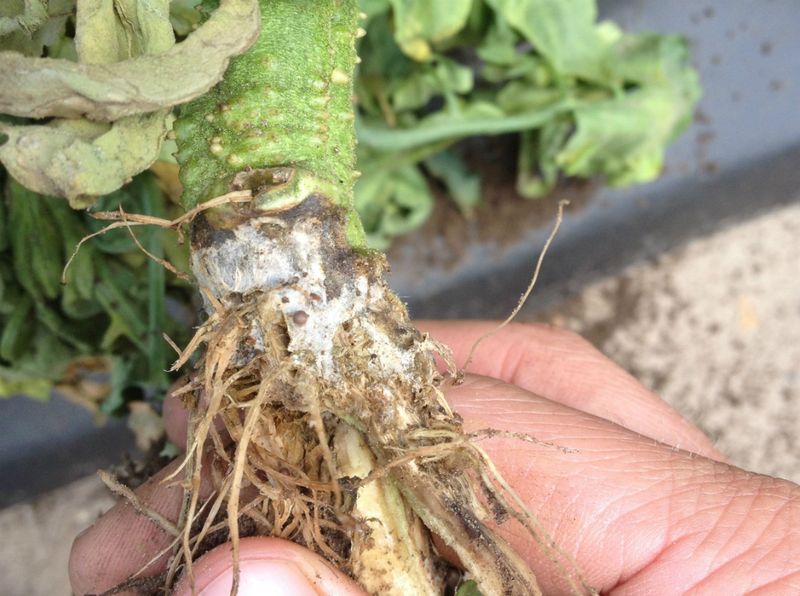
Healthy roots are typically firm and white to tan; dark brown or black mushy roots, soft crowns, or lesions on the lower stem suggest a disease process rather than drought. NC State’s Phytophthora blight and root rot publication describes how these pathogens can cause rapid crown and root decay that mimics drought stress, often appearing or worsening during warm, wet conditions followed by heat.
Keep conclusions provisional at this stage. Discoloration, softness, or lesions narrow the possibilities but do not pinpoint a single cause on their own.
NC State’s diagnostics handbook chapter recommends documenting what you observe, including where symptoms appear on the plant, how quickly they progressed, and what the surrounding soil conditions look like, before deciding on a response. That record will also be useful if you need to bring a sample to a local Extension office.
Water only when the root-zone evidence points to thirst
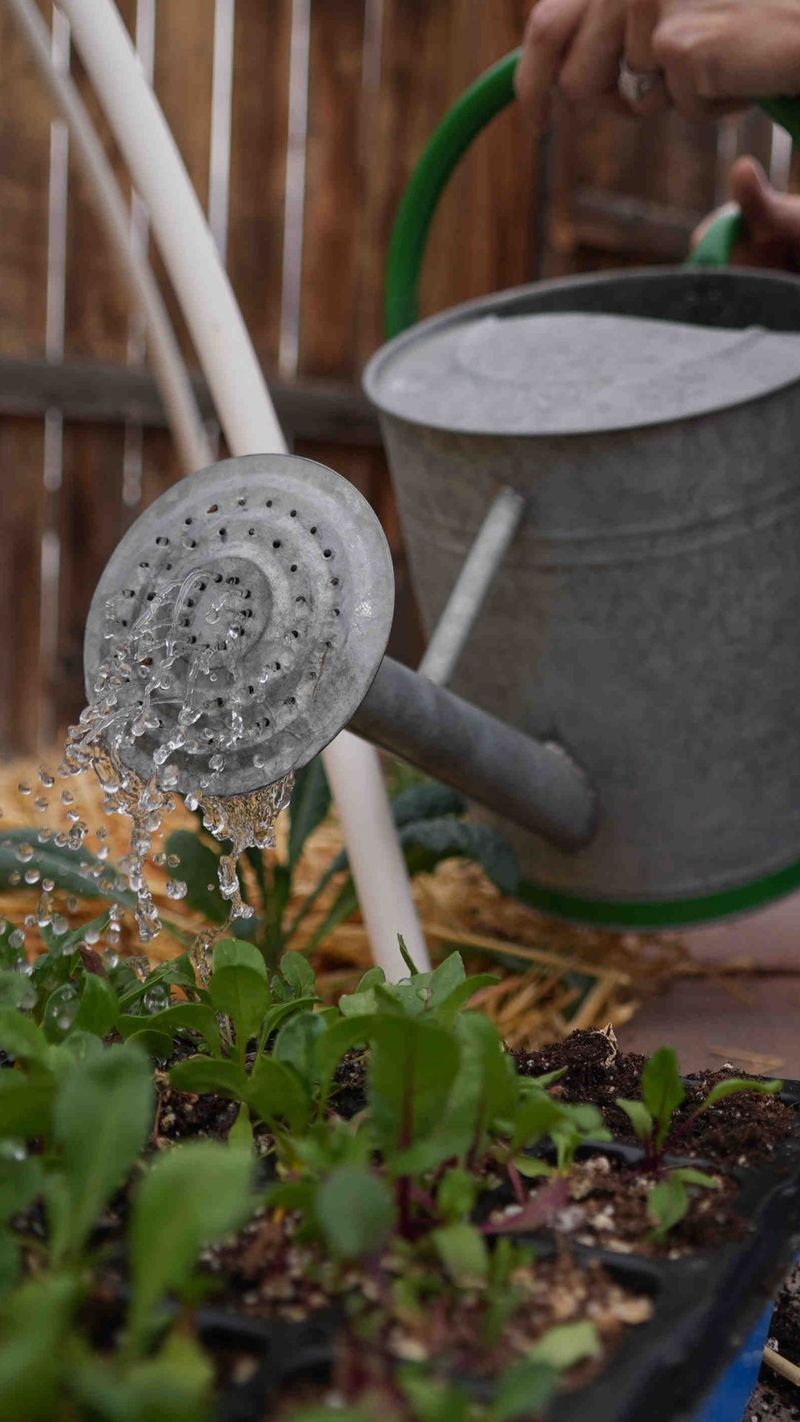
Once the root-zone check confirms that soil is genuinely dry, the goal is to replace that moisture without creating new problems. Water slowly and directly at the soil surface so it can move down to the root zone rather than running off.
A soaker hose, drip line, or careful hand watering at the base of the plant works better than overhead sprinklers during hot weather because it puts water where roots can reach it and keeps foliage dry.
NC State’s drought survival guidance recommends watering deeply and infrequently rather than giving plants a shallow daily sip, and notes that supplementing vegetable crops to roughly 1 inch of water per week is a reasonable starting point, adjusted for actual rainfall, soil type, plant maturity, sun exposure, and heat. That figure is a reference point, not a rigid schedule, and it does not apply the same way to every plant or every site.
Sandy soils common in the Coastal Plain drain quickly and may need water more often than the heavier clay soils found across much of the Piedmont. Plants on slopes, in full afternoon sun, or exposed to hot drying winds also lose moisture faster than the same species would in a sheltered or partially shaded spot.
A newly planted shrub needs more frequent attention than a well-established one, and a large container dries faster than an in-ground bed of similar size.
If overhead watering cannot be avoided, morning is generally the better time. Foliage has the rest of the day to dry, which can reduce some disease pressure compared with wetting leaves in the evening.
NC State’s herbaceous ornamentals chapter notes that drip irrigation and base watering reduce evaporation and keep foliage drier, which matters for plants prone to fungal issues. Adding more water to a plant with root rot or poor drainage will not fix the underlying problem and can push the roots further into oxygen-depleted conditions.
Containers and recent transplants reach stress limits sooner
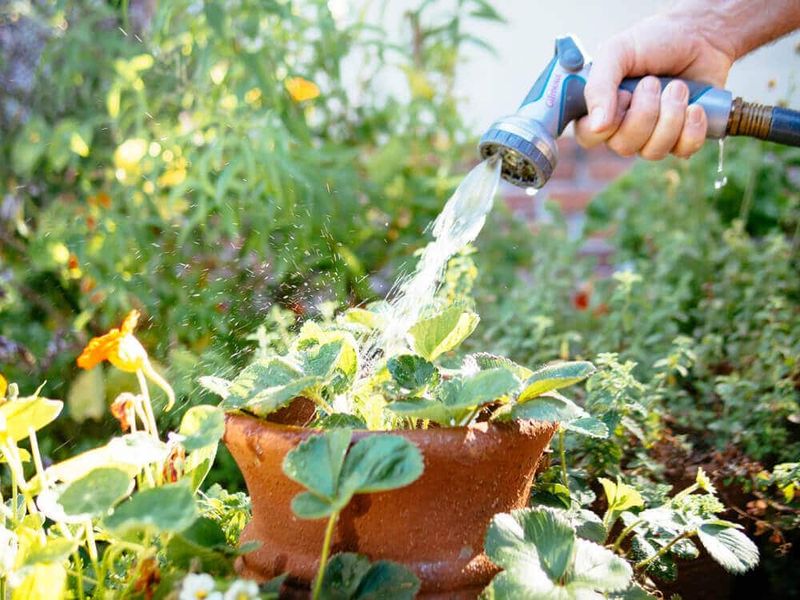
Containers and newly transplanted trees or shrubs have less buffer than established in-ground plants, and midsummer heat hits them harder for reasons that are easy to see once you know what to look for. A small or dark-colored pot sitting in full afternoon sun can heat rapidly, sometimes reaching temperatures that damage roots directly, and the limited volume of potting mix dries far faster than garden soil.
A plant that seems fine at breakfast can be in serious distress by early afternoon if the container runs dry.
NC State’s container plant handbook chapter advises checking the top 2 to 3 inches of potting mix and watering when that layer is dry, continuing until water drains freely from the bottom of the pot. Two opposite mistakes can both cause trouble: letting the mix dry out completely stresses roots and can make the mix hydrophobic, while leaving water standing in a saucer keeps roots saturated and creates conditions for rot.
Empty saucers after watering, or choose containers without them in rainy periods.
Recent transplants, particularly trees and shrubs moved into the ground in late spring or early summer, carry a related vulnerability. Their root systems have had weeks rather than years to spread into the surrounding soil, so they depend heavily on the small root ball that came with them.
When heat and water demand spike, that limited root mass cannot always keep up.
NC State’s woody ornamentals chapter notes that late-spring and summer transplants are especially vulnerable and advises avoiding routine transplanting during June through August when possible. If a tree or shrub was planted recently and is showing wilt, check the root ball itself: sometimes the ball dries out even when surrounding soil is moist, because water moves slowly between different soil textures.
Water directly over the root ball until the plant has had a full season to establish.
Persistent green wilt may need containment and diagnosis
Some plants keep wilting no matter how carefully you water, and that persistence is a signal worth taking seriously. When a plant, especially a tomato, collapses rapidly while the foliage stays green rather than yellowing or scorching, that combination points away from simple drought and toward a water-transport problem inside the plant itself.
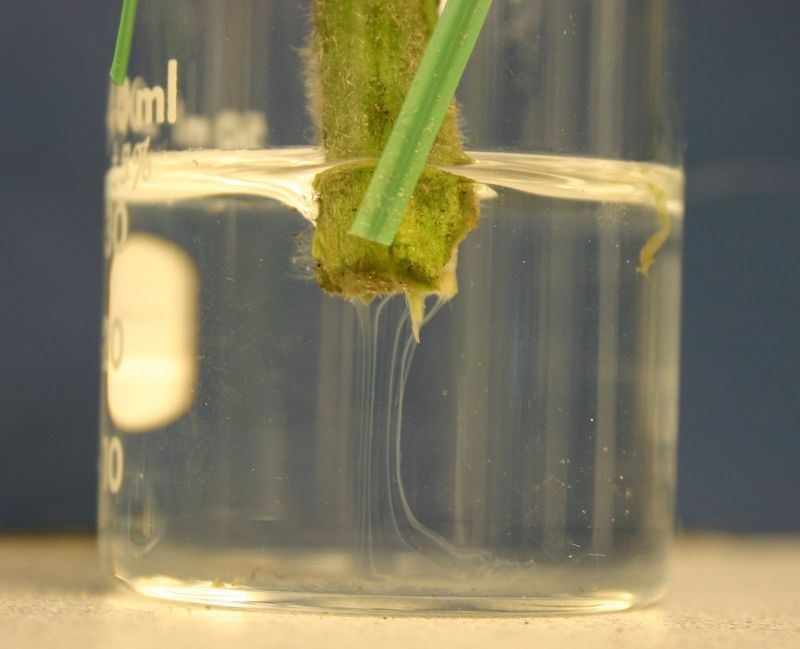
Tomato bacterial wilt caused by Ralstonia solanacearum is one of the more dramatic examples of this pattern in North Carolina vegetable gardens. NC State’s bacterial wilt of tomato publication describes rapid wilting while foliage remains green, possible brown discoloration in the vascular tissue when the stem is cut, and a milky or stringy bacterial streaming visible when a cut stem is held in water.
These clues are useful, but they are not definitive on their own. Other pathogens and some environmental problems can produce similar symptoms, so a single observation should not lead to a firm diagnosis.
The look-alike list is long. Root rots caused by Phytophthora and related pathogens, southern blight, Fusarium wilt, Verticillium wilt, root-knot nematodes, and even herbicide drift or chemical injury can all produce rapid wilt with various combinations of green or yellowing foliage.
NC State’s diseases and disorders chapter emphasizes that these causes can overlap visually and that wilt alone is not enough to distinguish them reliably.
When bacterial wilt is suspected in a tomato or related plant, NC State advises removing the plant promptly and sealing it in a garbage bag before disposal to avoid spreading contaminated soil and the bacteria it carries. There is no reliably effective chemical treatment for established southern bacterial wilt in the home garden, so containment is the most practical response.
For any persistent wilt with an unclear cause, NC State’s diagnostics chapter recommends contacting your local Extension office or submitting a sample to the NC Plant Disease and Insect Clinic rather than treating blindly.
Match each plant to its actual site conditions

Watering can relieve heat stress temporarily, but it may not reliably overcome a situation where the plant is fundamentally in the wrong place. A shade-lover planted in reflected afternoon sun, a moisture-dependent species in fast-draining sandy soil, or a drought-tolerant native sitting in poorly drained clay will keep struggling no matter how attentive the watering schedule is.
The site conditions set a ceiling on what water alone can fix.
NC State’s native plants chapter points out that even North Carolina native species are not automatically drought-tolerant or maintenance-free. Native plants can have highly specific requirements for soil moisture, drainage, pH, and sun exposure, and two natives from the same region can have completely different needs.
Swamp milkweed, for example, is native to moist bottomlands and will struggle in dry, well-drained soil, while butterfly weed thrives in exactly those dry conditions. Treating them interchangeably leads to preventable failure.
The differences between North Carolina’s regions matter here. Piedmont clay soils hold moisture longer and drain more slowly than the sandy soils typical of the Coastal Plain, while mountain sites bring cooler temperatures, different rainfall patterns, and slope-driven drainage that can vary dramatically from one yard to the next.
NC State recommends evaluating the actual site rather than relying on a broad label like “full sun” or “adaptable” on a plant tag.
Correctly placed mulch is one of the most practical preventive tools available. A roughly 2-inch layer of organic mulch conserves soil moisture, moderates root-zone temperature, and reduces weed competition.
NC State’s drought landscape guidance recommends keeping mulch pulled back from trunks and stems in a doughnut shape, with about 6 inches of clearance from tree trunks, because mulch piled against wood can hold moisture against bark and encourage rot. Mulch handles the small daily stresses; site selection handles the larger ones.
Let the pattern of collapse determine the next step
Faced with a collapsing plant in the middle of summer, the most useful thing to do is slow down and read what the plant is telling you before taking action. Start by checking whether the wilt resolves overnight.
Recovery by morning suggests temporary heat-related water imbalance; wilt that persists or worsens by the next day calls for deeper investigation.
If the plant stays wilted, check the root zone before adding water. Dry soil at depth calls for slow, deep watering at the base.
Wet or saturated soil, or roots that look dark and mushy, means more water will make things worse. Inspect the lower stem and crown for lesions, discoloration, or soft tissue.
When symptoms overlap and the cause is not clear, NC State’s diagnostics chapter and NC State’s drought landscape guidance both point toward getting a proper diagnosis rather than applying fertilizer, pesticides, or heavy pruning without knowing what you are treating. Those interventions can injure an already stressed plant and delay effective action.
For containers, apply the moisture check described earlier and adjust watering to match what the mix actually needs rather than a fixed daily habit. For plants suspected of bacterial wilt, remove and bag them promptly.
NC State’s disease and disorders guidance is clear that wilt from disease, drought, root rot, and chemical injury can look alike, and that a qualified diagnosis is the safest starting point when you are not certain.
A summer collapse, as frustrating as it is, often reveals the one condition a plant could not tolerate. That information is genuinely useful: it tells you what to change about the site, the species choice, or the drainage before next season arrives.
The best gardens in North Carolina are full of plants that were chosen to match where they grow, and sometimes it takes one hard summer to learn exactly what that match requires.