
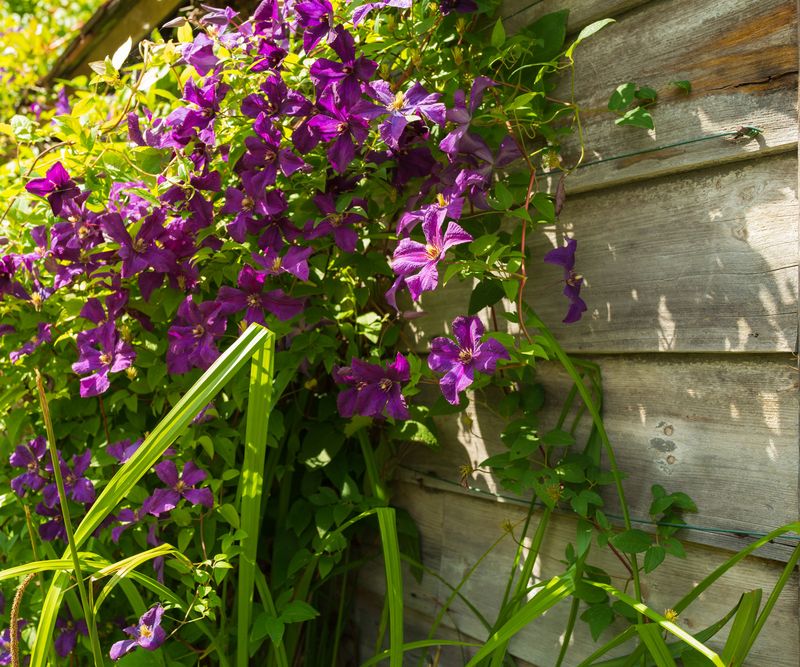
Few garden frustrations match watching a clematis vine race up a fence or trellis, full of lush green leaves, only to produce little or nothing in the way of flowers. If that sounds familiar, a late-summer or fall pruning cut may have removed the stems your vine needs to bloom – but that explanation only holds for certain types of clematis, not all of them.
Understanding which pruning group your vine belongs to is the fastest way to get your answers and protect next season’s flowers.
A late-summer cut may have removed next year’s flowers
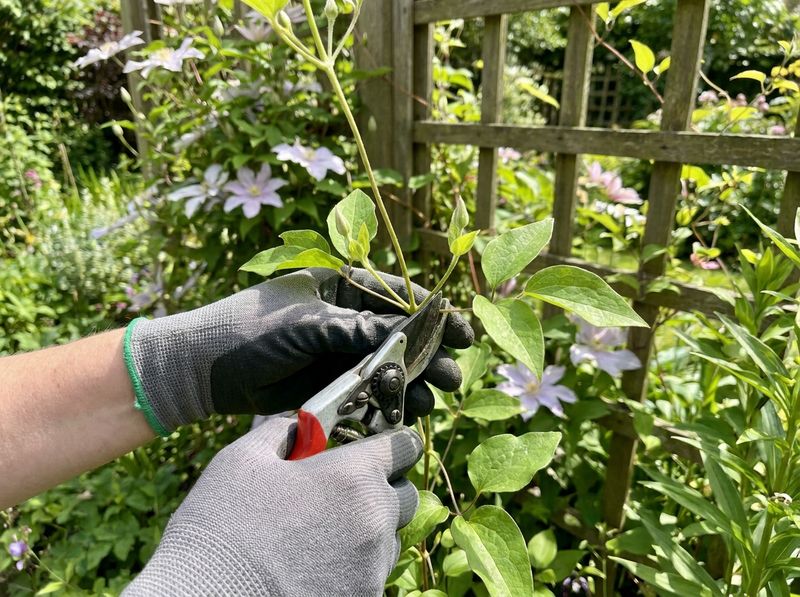
Reaching for the pruning shears in late summer feels like responsible garden maintenance, but for certain clematis, that one cut can quietly cancel the following season’s flowers. Some clematis form next year’s flower buds on older stems well before those buds open, so cutting back those stems removes the flowering potential along with the foliage.
The mistake is real, but it is conditional – it mainly applies to old-wood and repeat-blooming types, not every vine in the yard.
Clemson Cooperative Extension guidance on clematis explains that Group 1 clematis flower on previous-season growth, meaning a late-summer or fall cut can strip away the wood carrying next year’s buds. Group 2 repeat bloomers rely on older stems for their main early flush, so aggressive late-season cutting carries a similar risk.
Group 3 clematis, by contrast, flower on current-season growth and follow a different pruning schedule entirely, so this particular mistake simply does not apply to them.
Before assuming pruning is the culprit, consider that Iowa State University Extension’s clematis overview lists insufficient sunlight, excessive nitrogen, plant immaturity, winter damage, water problems, and disease as equally credible reasons a clematis might grow vigorously while refusing to bloom. A healthy-looking vine with no flowers could have any one of those issues working against it, or a combination of several.
Identify the pruning group before using the shears
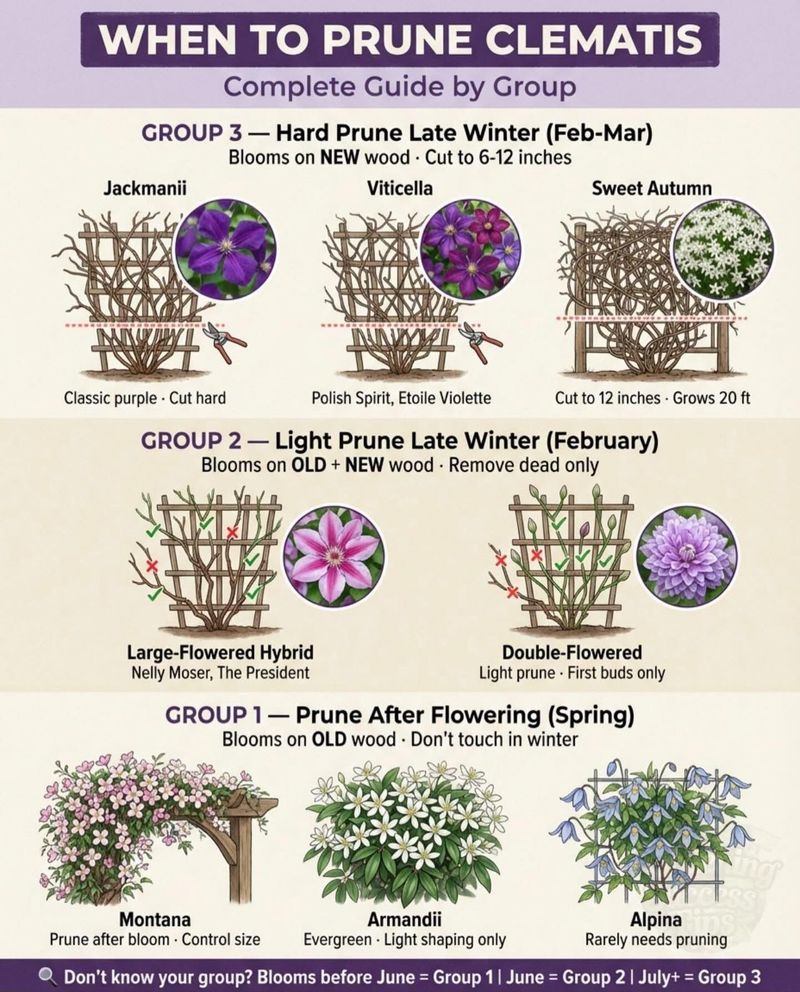
The single most useful thing a gardener can do before making another cut is figure out which pruning group the vine belongs to. The plant tag or nursery label is the most reliable starting point – if it lists the cultivar name, that name can be looked up to confirm the group.
University of Illinois Extension’s clematis guide notes that the three broad groups reflect bloom timing and whether flowers form on old wood, new wood, or both, and that the plant tag or cultivar name is the best identification tool available.
When no tag survives, flowering behavior offers a preliminary clue. A vine that blooms before early summer is likely an old-wood type in Group 1 or Group 2.
A vine that flowers from late June onward is more likely a new-growth type in Group 3. Repeat bloomers complicate that shortcut because they can produce flowers in both periods, which can make them look like either group depending on the time of year the gardener is watching.
Royal Horticultural Society pruning guidance recommends saving the plant label when possible and using the vine’s flowering pattern as a preliminary clue while searching for cultivar confirmation. If the group remains genuinely unknown, avoid a blanket hard cut in late summer – that kind of cut carries the highest risk of eliminating the next season’s flowers from an old-wood or repeat-blooming vine.
Group 1 needs selective pruning after flowering
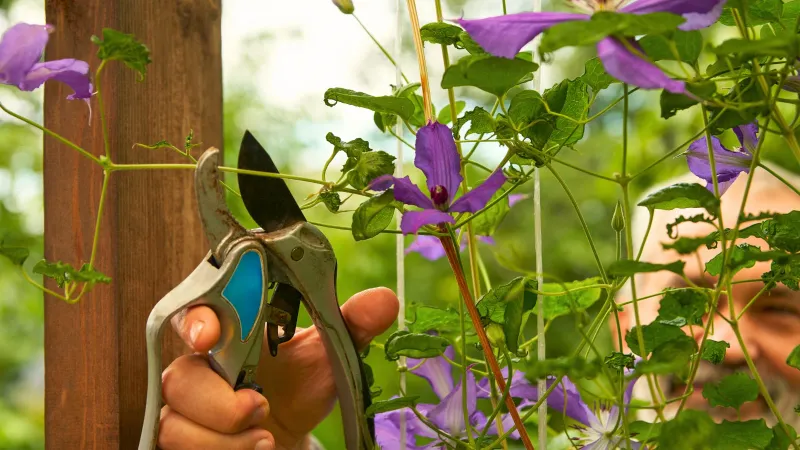
Group 1 clematis are the earliest bloomers in the garden, typically opening in late winter or early spring on stems that grew the previous season. Because the flowers depend on that older wood, any pruning that removes those stems before or during bloom directly reduces the current season’s display.
The window for corrective work opens after the flowers have finished, not before.
Clemson Cooperative Extension advises completing necessary pruning on Group 1 plants by the end of July. A late-summer or fall cut made after that window closes risks removing the older wood that will carry next year’s buds.
The recommended approach is selective rather than a hard renewal cut – remove dead or damaged stems, shape lightly where needed, and leave healthy older wood in place to develop the buds that will open the following spring.
Southern gardeners in Florida and Texas should treat the July guideline as approximate rather than absolute. The reliable trigger is the plant’s own growth stage: prune after flowering ends and before the vine begins setting the next round of buds on its older stems.
In warm climates, that post-bloom window can arrive earlier in the year than it would in northern regions, so watching the plant rather than the calendar is the more dependable approach.
Group 2 preserves older stems for its main bloom
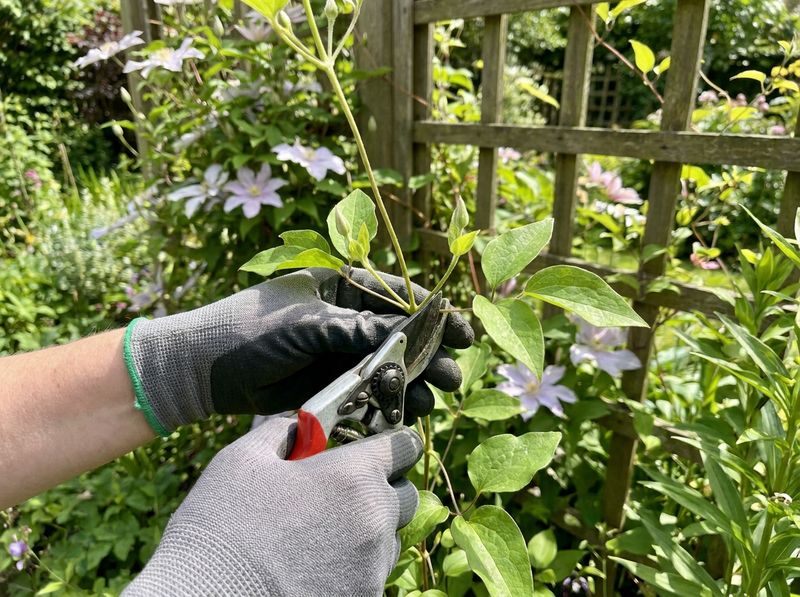
Group 2 clematis are the large-flowered showstoppers that many Southern gardeners plant specifically for dramatic early-season color. Their main flush of blooms opens on older stems that carried growth from the previous season, which means those stems need to remain intact going into the new growing year.
A second, smaller flush can follow later in summer on current-season growth, but that repeat performance depends on the cultivar and growing conditions rather than being a guarantee.
According to Clemson Cooperative Extension’s clematis factsheet, late-winter or early-spring maintenance for Group 2 involves removing dead or weak stems and cutting remaining stems back to strong, healthy buds – not cutting the vine to the ground. After the first flush of flowers, the appropriate response is light and selective: trim spent blooms back to a strong bud or make limited cuts to tidy the vine.
An indiscriminate late-summer cut that removes the older, thicker stems sacrifices the wood the plant needs for its best bloom the following spring.
Gardeners who made a heavy cut in late summer and are now seeing mostly foliage are likely experiencing exactly this outcome. The vine is healthy enough to push new vegetative growth, but the older stems that would have carried the early-season flowers are gone.
Patience through the current season, combined with correct timing on the next pruning, gives the plant the best chance to recover its flowering rhythm.
Group 3 can take a hard cut before new growth begins
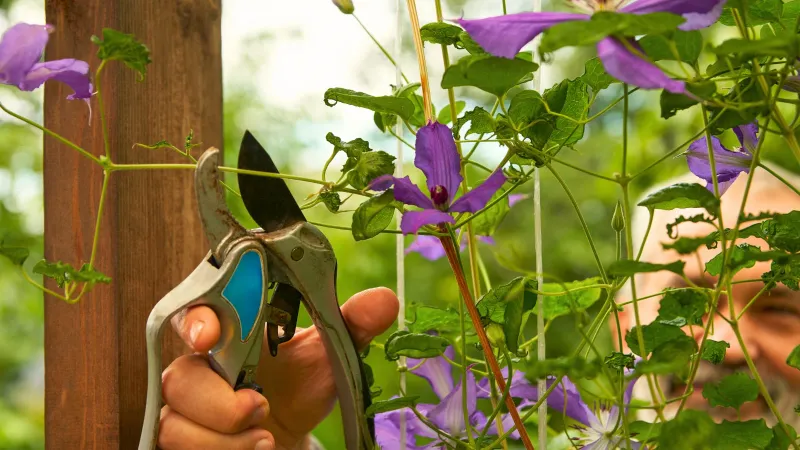
Group 3 clematis operate on a completely different schedule from the first two groups, and understanding that difference prevents a common misapplication of pruning rules. These are the late-summer and fall bloomers – varieties like sweet autumn clematis and many of the viticella and texensis cultivars – and they produce all of their flowers on stems that grow fresh each season.
Older wood from the previous year plays no role in their flowering, which is why they can tolerate a hard cut that would ruin a Group 1 or Group 2 vine.
University of Illinois Extension and Clemson Cooperative Extension both describe cutting Group 3 clematis back hard in late winter or early spring, typically to approximately 6 to 12 inches above the ground or to a low pair of strong buds, depending on the cultivar and the guidance being used. That hard cut clears away last season’s spent stems and gives the new growth a clean start before vigorous growth begins.
Florida and Texas gardeners should replace a fixed February date with growth-stage cues. The right moment is near the end of dormancy, just before the vine begins pushing new shoots in earnest.
In warm climates, that point can arrive noticeably earlier than it would in a northern garden. Applying this method to an unidentified vine without confirming the group first is still a risk – if the unknown vine turns out to be a Group 1 plant, the hard cut will cost a full season of flowers.
Check light, roots, fertilizer, and plant age
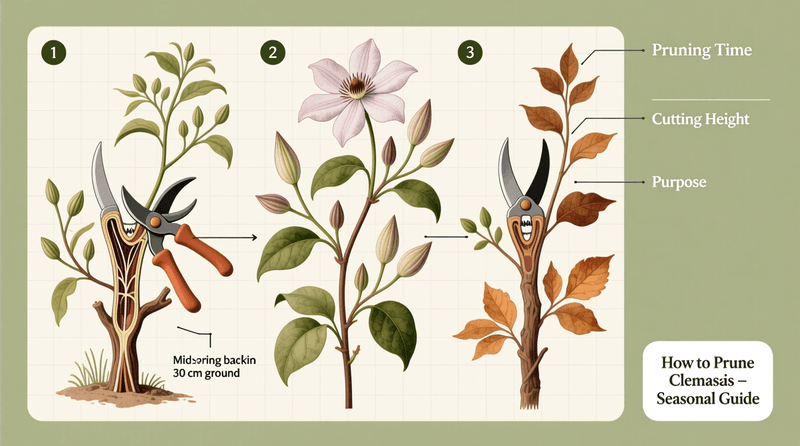
Once pruning has been assessed and the group identified, a secondary checklist covers the growing conditions most likely to explain persistent bloom failure. Light is the first place to look.
Clematis generally need about six hours of direct sun to flower reliably, and a vine growing in too much shade will push foliage at the expense of blooms. Clemson Cooperative Extension specifically notes that South Carolina clematis can benefit from afternoon shade in hot weather, with the foliage in sun and the root zone kept cool and moist – meaning the solution in Southern gardens is often shade for the roots, not the leaves.
Root conditions matter just as much as light. UC IPM’s clematis guidance recommends well-drained soil and consistent moisture without leaving roots waterlogged, along with a 2 to 3 inch layer of mulch to moderate root-zone temperature.
Keep that mulch pulled back from direct contact with the stems to avoid rot and disease issues at the crown.
Fertilizer deserves careful thought rather than an automatic application. Extension guidance on clematis bloom problems cautions that excess nitrogen is specifically associated with abundant vegetative growth and poor flowering – more fertilizer can make the problem worse rather than better.
Where fertilizer is genuinely needed, a low-nitrogen or balanced slow-release product applied according to label directions is a safer choice than a high-nitrogen formula.
Plant age is also worth considering. Iowa State University Extension notes that some clematis can take up to three years to establish enough of a root system to bloom reliably.
A young vine with lush foliage may simply need another season or two before it has the energy reserves to flower consistently.
Some no-bloom symptoms point beyond pruning
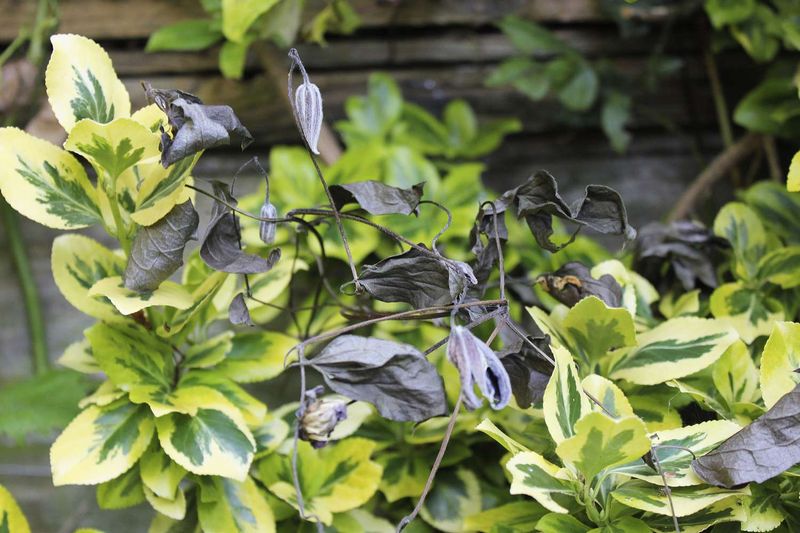
Pruning timing explains a lot, but not every flowerless clematis has a pruning problem. A healthy vine may simply be outside its expected bloom window – a Group 3 cultivar that flowers from mid-summer into fall will look like a non-bloomer earlier in the season, and a Group 2 plant producing its smaller, later flush may seem to underperform compared to its spring showing.
Before drawing conclusions, confirm when the vine is actually expected to flower for its group and cultivar.
Iowa State University Extension lists winter damage, drought, waterlogging, and plant immaturity as alternative explanations for a vine that grows vigorously but fails to flower. In Florida and Texas, winter damage is less common but drought stress and waterlogging from heavy rain events are real seasonal concerns that can suppress blooming without any pruning error involved.
Certain symptoms fall outside the category of ordinary pruning effects and need a separate diagnosis. Sudden wilting of otherwise healthy stems, foliage that collapses or turns black quickly, visible stem lesions, or progressive dieback moving down from the tips can indicate clematis wilt or another fungal disease rather than a timing problem.
UMass Extension’s clematis fact sheet and University of Maine Cooperative Extension both note that affected stems should be removed and sanitation improved rather than treating the situation as a pruning recovery. A vine that was incorrectly pruned but otherwise healthy will typically reduce or delay flowering rather than show these kinds of acute symptoms.
Identify the vine, observe its growth, and prune accordingly
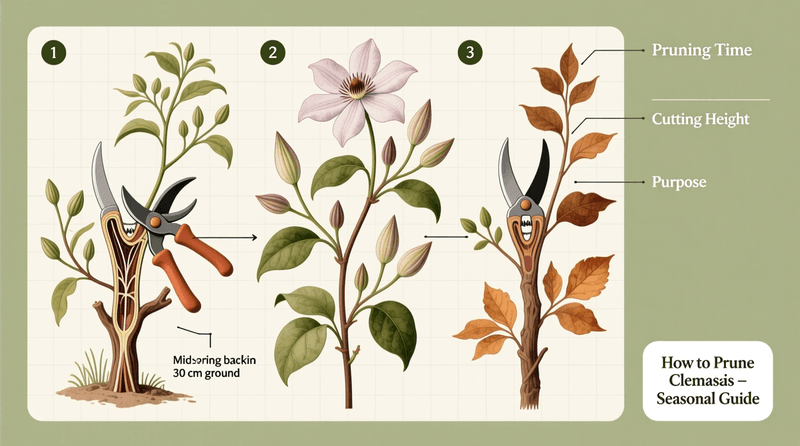
Moving forward starts with one straightforward commitment: keep the plant label, record the cultivar name, or photograph the tag before it fades. That information removes the guesswork from every future pruning decision.
University of Illinois Extension confirms that the plant tag or cultivar name is the most reliable way to determine pruning group, and that single piece of information is worth protecting.
While waiting for confirmation or observing an unknown vine through a full season, hold off on another indiscriminate late-summer or fall cut. Watch when the vine flowers, note whether it blooms on older stems or fresh new growth, and use that behavior to narrow down the group.
Clemson Cooperative Extension and other Extension sources consistently frame pruning timing around flowering, dormancy, and active growth rather than fixed calendar dates – a practical advantage for Southern gardeners whose seasons shift earlier than northern guides assume.
An incorrect cut does not mean the plant is lost. University of Maine Cooperative Extension notes that improper pruning generally reduces or delays flowering rather than killing a clematis outright, provided the crown and roots remain healthy.
One missed bloom season is a setback, not a death sentence. Matching the next pruning cut to the correct group is what reopens the path to flowers – and knowing the group is the only way to make that match with confidence.