
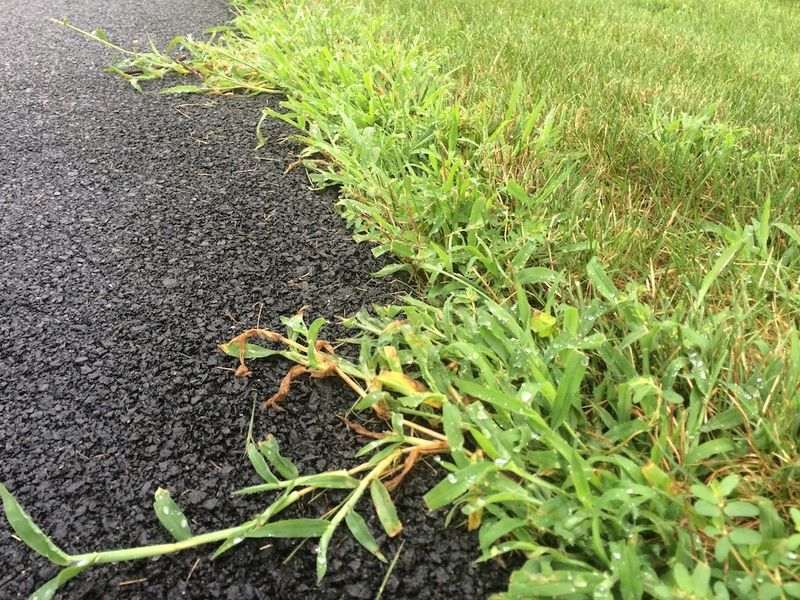
Crabgrass has a way of showing up right when your lawn looks its best, then spreading into patches that seem impossible to stop. Many Southern homeowners mow more and more, hoping to beat it back, only to watch it keep winning.
The real problem usually is not how often you cut, but how low you are cutting and how much green leaf you are removing each time. Understanding that one distinction can change everything about how you manage your lawn this season.
The real mowing mistake is scalping the lawn
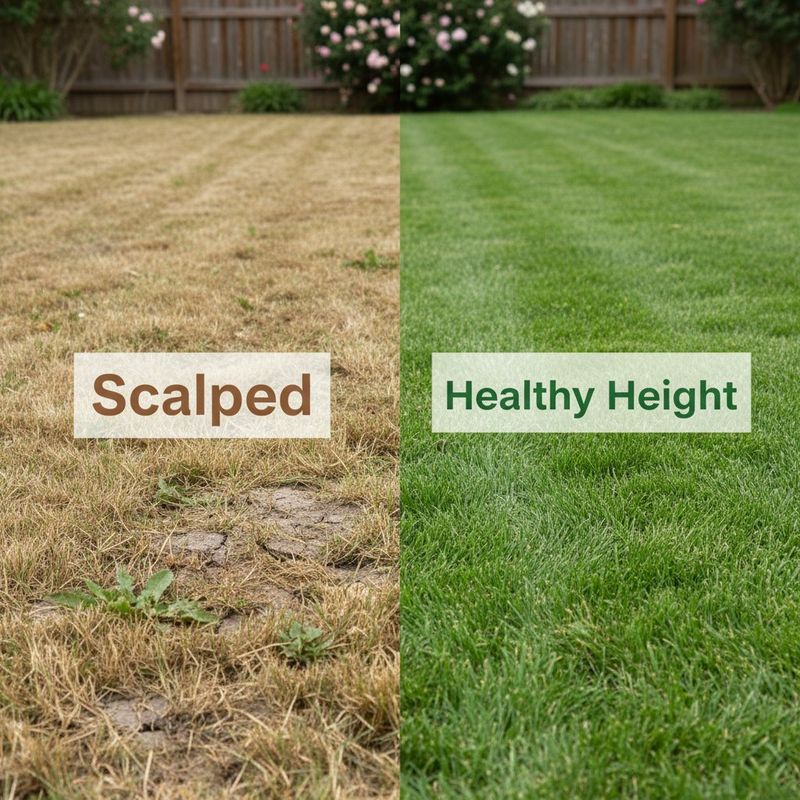
Frequent mowing is not the enemy. The mistake that genuinely opens the door for crabgrass is scalping, which means cutting the desirable turf so short that you remove an excessive amount of green leaf tissue in a single pass.
Texas A&M AgriLife mowing guidance describes scalping as the removal of so much leafy green material that the plant loses its ability to photosynthesize and produce energy efficiently.
When desirable grass loses that capacity, it cannot recover quickly. Roots weaken, the canopy thins, and bare or sparse areas appear, giving crabgrass exactly the kind of opening it needs to move in.
Scalping is the mechanism behind the problem, not the frequency of your mowing schedule.
Mowing less often is not the fix, either. When a lawn grows tall and is finally cut back to a short height in one pass, that single cut becomes a scalping event.
UC IPM crabgrass management guidance and Penn State Extension both point to proper mowing height and turf density as key factors in limiting crabgrass pressure. Regular mowing at the right height can actually support turf competition and may prevent some crabgrass plants from completing their seed cycle.
A thin canopy gives crabgrass room to establish
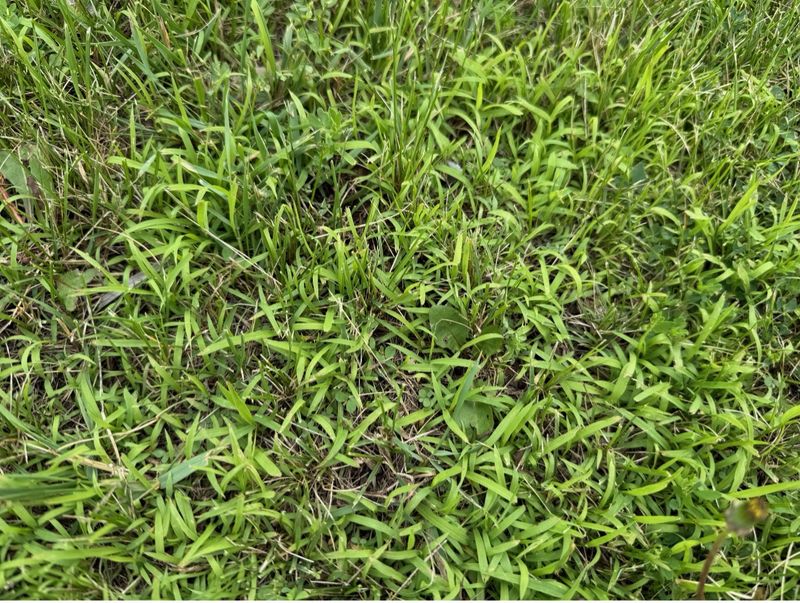
Every time you cut desirable turf shorter than its recommended range, the grass spends energy trying to rebuild leaf area instead of pushing roots deeper and spreading laterally. Repeated short cuts compound the damage, and the canopy gradually opens up.
Texas A&M AgriLife notes that a dense, healthy turf canopy is one of the most reliable defenses against weed establishment because it limits resources available to invaders.
Crabgrass is a summer annual, meaning it germinates, grows, produces seed, and dies within a single warm season. It is especially good at colonizing weak or bare areas quickly.
Mowing too short does not cause every infestation on its own, but it creates conditions where an already present seedbank can capitalize on the stress your desirable grass is under.
A 2025 peer-reviewed study published in Crop Science found that dense turfgrass canopy shade suppressed smooth crabgrass seedling development and establishment, though light quantity and quality alone did not determine germination in the experiments. The practical takeaway is that a thicker canopy reduces the resources available to young crabgrass plants after they sprout, making establishment harder.
Describing that as “seeds need sunlight to germinate” oversimplifies the mechanism, but keeping the canopy dense and competitive is still a sound goal.
Use the one-third rule to protect turf density
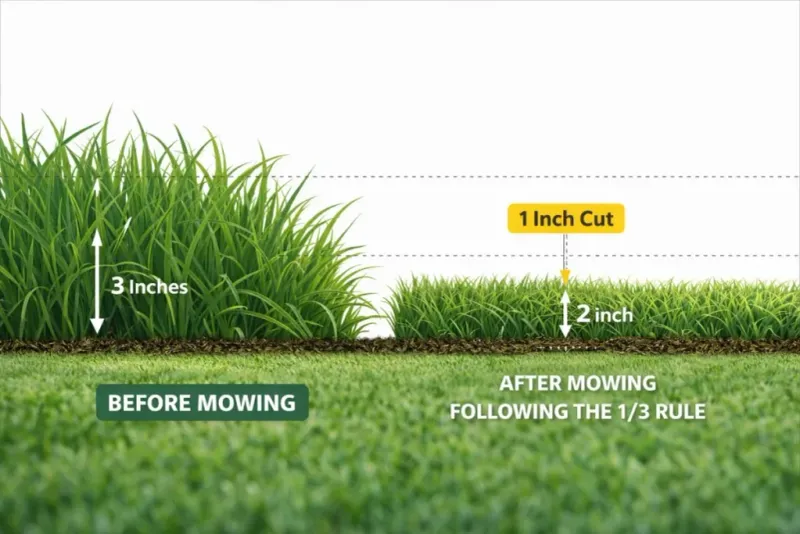
The one-third rule is straightforward: never remove more than one-third of the leaf blade in a single mowing. If your St. Augustinegrass is supposed to sit at four inches and you let it reach six, cutting it back to four in one pass removes a full third of the blade, which is right at the limit.
Cutting it to three inches in that same pass crosses into scalping territory.
Texas A&M AgriLife mowing recommendations make clear that mowing frequency should follow the lawn’s actual growth rate, not a fixed calendar schedule. During the peak of a Southern summer, warm-season grasses can grow fast enough to need cutting twice a week to stay within the one-third limit.
Stretching to a ten-day or two-week interval during rapid growth almost guarantees you will remove too much in the next cut.
If the lawn has already gotten away from you and grown well above the target height, resist the urge to bring it down in one session. UC IPM and other extension sources consistently recommend lowering the height gradually over several mowings to avoid the canopy shock that weakens turf and invites weeds.
The one-third rule is a practical standard for protecting turf density, not a complete crabgrass solution on its own.
Let the turf species set the mowing height
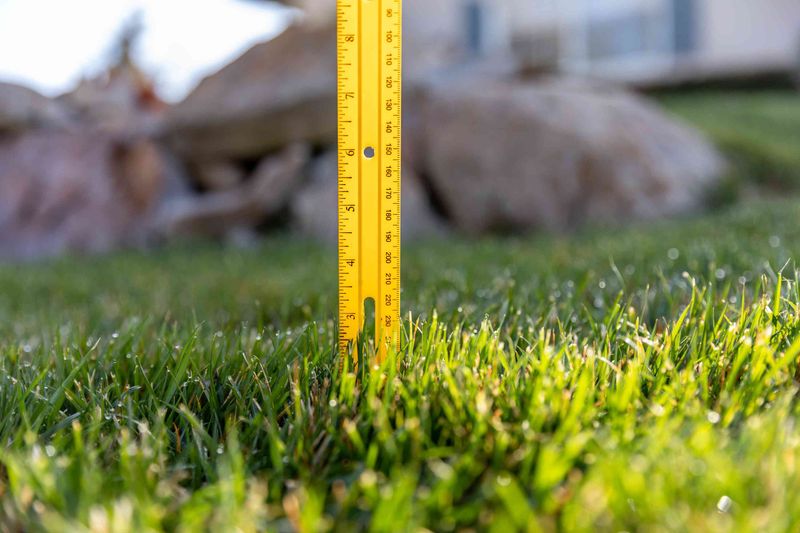
There is no single mowing height that works for every Southern lawn. The right target depends on which grass species you have, the cultivar, whether you use a rotary or reel mower, and local site conditions.
Using the wrong height, even a well-intentioned one, can put your turf under the same stress as scalping.
For Florida lawns, UF/IFAS mowing guidance for Florida provides these general ranges: standard St. Augustinegrass at roughly 3.5 to 4 inches, with dwarf cultivars around 2.5 inches; bahiagrass at about 3 to 4 inches; centipedegrass at about 1.5 to 2 inches; and bermudagrass at about 0.5 to 1.5 inches depending on cultivar. UF/IFAS St. Augustinegrass guidance notes that taller heights within the appropriate range generally produce a more competitive, stress-tolerant lawn.
Texas recommendations differ and should not be treated as interchangeable with Florida numbers. Texas A&M AgriLife and the AgriLife mowing publication list common bermudagrass at roughly 1 to 3 inches, St. Augustinegrass at about 2.5 to 4 inches, centipedegrass at about 1.5 to 2.5 inches, and zoysiagrass at about 1 to 2.5 inches.
Hybrid bermudagrass cultivars often require lower, more precise cutting than common types. During heat or drought, using the upper end of the appropriate range for your species can reduce stress and support root depth.
Contact your local extension office or check AggieTurf’s Texas turfgrass resources to confirm your species and the current local recommendation before adjusting your deck.
Manage crabgrass seedheads before they mature
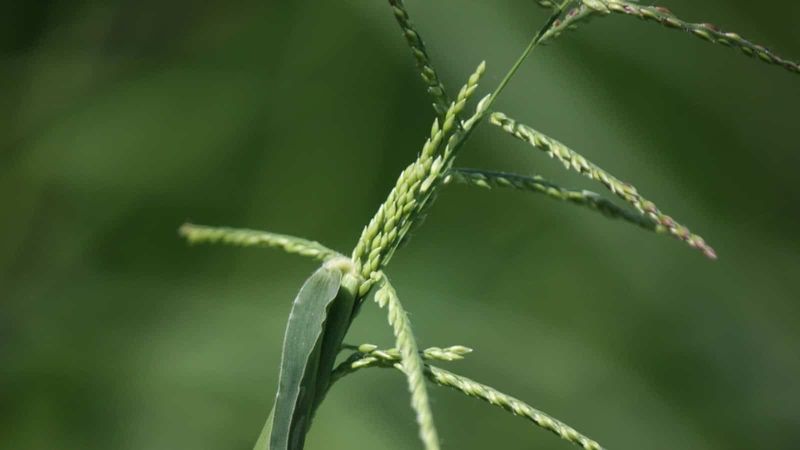
Crabgrass reproduces entirely by seed, and a single large crabgrass plant can produce more than 100,000 seeds in one season. That seed can remain viable in the soil for several years, which is why stopping new seed production matters so much for long-term control.
Regular mowing at the correct height can prevent some plants from completing their seed cycle, but crabgrass is adaptable and can form seedheads low enough to escape the mower deck entirely.
University of Maryland Extension and Rutgers NJAES crabgrass research both recommend hand-pulling or digging isolated young plants before seedheads develop. Once seedheads have matured and seeds have dispersed, removing the parent plant does not reverse what is already in the soil.
Early intervention on small patches is far more useful than pulling mature plants after the fact.
When you mow an area with visible, mature crabgrass seedheads, cleaning the mower deck and undercarriage afterward reduces the chance of spreading seed to cleaner parts of the yard. UF/IFAS bermudagrass lawn guidance supports the practice of returning properly mulched clippings to the lawn as a way to recycle nutrients, so bagging every clipping is not necessary.
Collection becomes more practical when clippings are heavy with mature weed seedheads or are forming thick clumps that could smother the turf underneath.
Build a dense lawn that competes with crabgrass
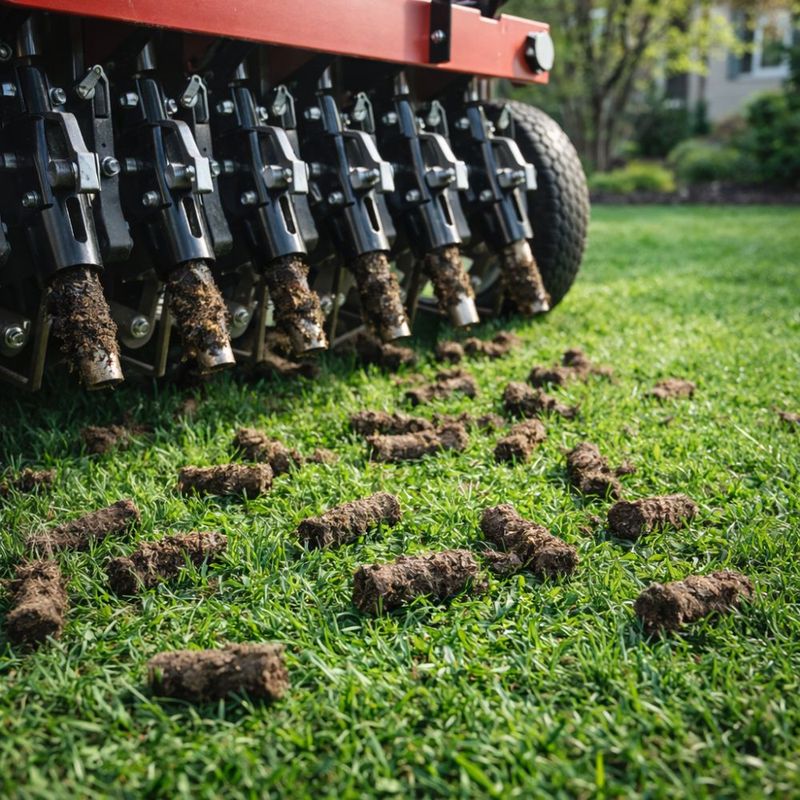
Correcting the mowing height is a strong first step, but a lawn that stays thin because of other problems will keep giving crabgrass opportunities. Bare spots, compacted soil, shallow and frequent irrigation, and nutrient imbalances all work against turf density.
Filling bare areas with sod or plugs of the correct species removes the open soil that crabgrass seeds land on.
UC IPM crabgrass management and UC IPM lawn weed management guidance both emphasize that frequent light watering encourages shallow-rooted weeds, including crabgrass, while deeper and less frequent irrigation supports stronger desirable turf roots. The Texas A&M bermudagrass management calendar reinforces the value of matching irrigation to actual turf need rather than running a fixed daily schedule.
Sharp mower blades make a real difference. Dull blades shred leaf tissue rather than cutting cleanly, and that ragged edge increases the turf’s vulnerability to disease and stress.
UF/IFAS lawn establishment guidance and Texas A&M mowing recommendations both note that mowing dry grass when possible and avoiding heavy equipment on saturated soil help protect turf health. These practices do not guarantee a crabgrass-free lawn, but together they support the density that makes your desirable grass a stronger competitor.
Match crabgrass control products to timing and turf
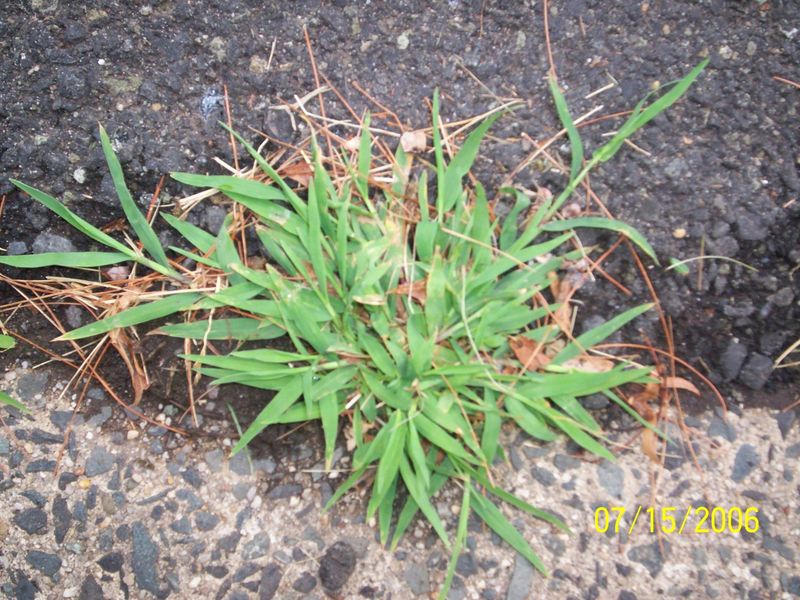
Chemical control works best when it fits the situation precisely, and two types of products serve very different purposes. Preemergence herbicides are applied before crabgrass seedlings emerge and work by preventing establishment, not by killing existing plants.
If you can already see crabgrass growing, a preemergence product will not rescue you this season.
Postemergence herbicides target plants that are already growing and are generally more effective on young crabgrass than on mature plants. In Texas, AggieTurf herbicide selection guidance links spring preemergence timing to soil temperatures, with roughly 50 to 55 degrees Fahrenheit used as an approximate benchmark for applications in that region.
That range is Texas-oriented guidance, not a universal Southern rule. Florida timing, for example, depends on local climate patterns, turf species, and the specific product label.
University of Georgia Extension lawn weed control guidance reinforces that timing must account for local conditions and product requirements.
Identifying both the weed and your desirable turf species before buying any product is non-negotiable. Safety profiles differ substantially among bermudagrass, St. Augustinegrass, centipedegrass, zoysiagrass, and individual cultivars.
Texas A&M St. Augustinegrass maintenance guidance specifically flags herbicide injury risk on that species and its cultivars. The EPA pesticide label system provides access to current product labels, which are the legal and practical authority on application rates, timing, and turf compatibility.
Check AggieTurf turfgrass weed resources to confirm weed identification before selecting a product.
Follow a season-by-season recovery plan
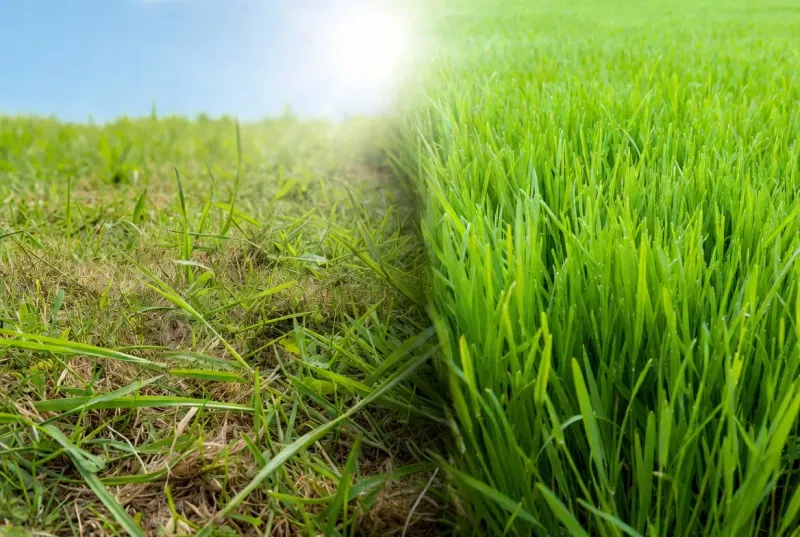
Getting crabgrass under control is a multi-season project, not a single-weekend fix. Start by identifying your turf species and confirming the correct mowing height range for it.
Set the mower deck to that height, then commit to mowing often enough that you never remove more than one-third of the blade in a single cut. If the lawn has grown too tall, bring it down gradually over several sessions rather than scalping it back in one pass.
Pull or dig isolated crabgrass plants while they are still young and before seedheads form. Clean the mower deck after cutting any area with mature seedheads to avoid moving seed around the yard.
Address bare spots, compaction, and irrigation habits that keep the turf thin, because UC IPM and UMass Extension crabgrass biology and management research both note that reducing an established infestation typically requires several seasons of limiting new seed production while steadily improving turf density.
The goal is not to mow less or to cut crabgrass brutally short. Texas A&M AgriLife puts it plainly: the lawn that wins the competition is the one that stays thick, healthy, and consistently managed at the right height.
A crabgrass seedbank built over years will not disappear in one summer, but each season you prevent new seeds from forming is a season closer to a lawn that can hold its own.