
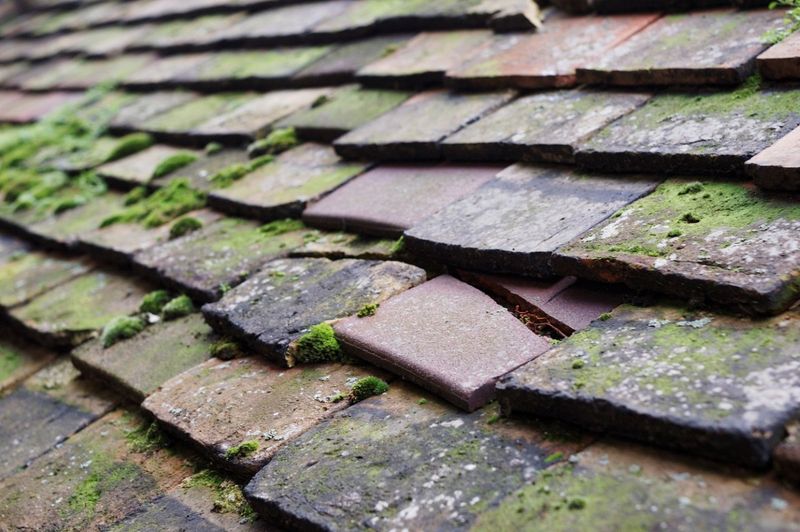
That green, fuzzy coating creeping across your porch roof or patio is more than an eyesore. Depending on where it shows up, it can be a slip hazard underfoot or a sign that moisture is lingering where it should not.
Knowing what you are actually dealing with, and which cleaning method fits your specific surface, is the difference between a fix that works and one that causes damage. This guide walks through how to identify the growth, choose the right approach, and stay safe while doing it.
Green growth points to damp, slow-drying conditions—not humidity alone
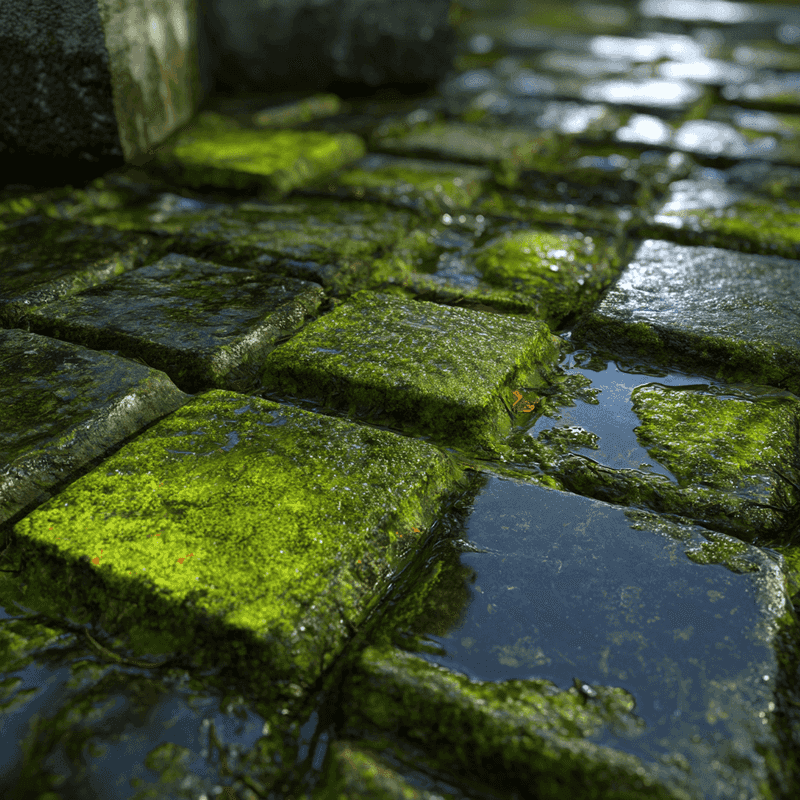
Shade, trapped moisture, and surfaces that stay wet long after rain are the real drivers behind that green or black coating on your porch roof or patio. The ARMA Residential Roofing Manual identifies slow-drying surfaces, blocked gutters, overhanging branches, and north-facing exposures as conditions that encourage biological growth on roofs.
Humidity plays a role, but it is the combination of moisture, shade, poor airflow, debris buildup, and inadequate drainage that lets growth take hold and spread.
The green or dark coating you see is not always the same organism. It could be algae, moss, lichen, mildew, or a mix of all four, and telling them apart matters.
UC IPM’s guide on algae, lichens, and mosses notes that algae typically appears as a thin, slimy green or black film, while moss forms a thicker, spongy mat and lichen grows as a crusty, tightly bonded layer that is harder to remove. Each behaves differently and may respond differently to treatment.
Where the growth appears also changes how serious the problem is. ARMA’s algae discoloration bulletin describes algae staining on asphalt shingles as primarily a cosmetic concern, while substantial moss can trap moisture against the shingle surface and interfere with water shedding.
On a patio, walkway, or other hard surface at ground level, algae or moss creates a genuine slip hazard that makes cleaning a safety priority, not just an appearance fix.
Choose the treatment by surface, product, and manufacturer instructions
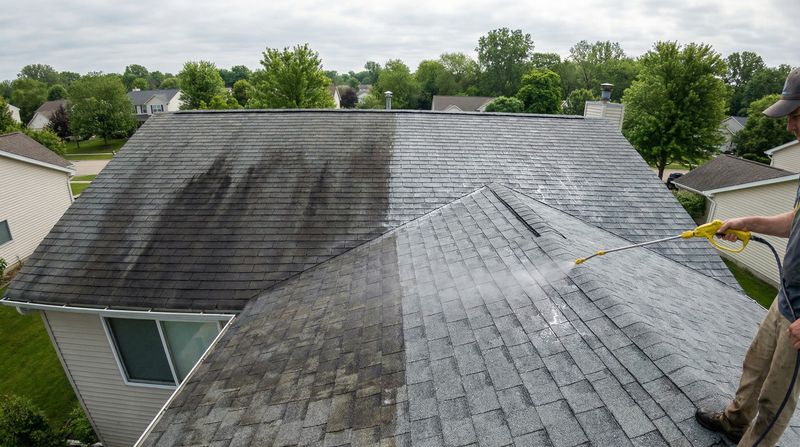
Diluted liquid chlorine bleach is one documented, commonly available option for treating biological growth on compatible outdoor surfaces, but the right concentration, dwell time, and physical-cleaning approach depend entirely on what surface you are treating. There is no single recipe that works everywhere, and applying the wrong method can damage the surface or void a manufacturer warranty.
The first step before mixing anything is to read the instructions that came with your roofing material and the label of any product you plan to use.
ARMA’s algae discoloration technical bulletin describes a typical 1:1 bleach-to-water mixture as an example treatment for asphalt shingles, applied with a low-pressure sprayer. For a hard patio surface, one EPA-registered product label directs users to mix 3/4 cup of bleach per gallon of water, a noticeably weaker ratio intended for that specific product on its covered surfaces.
These two directions are not interchangeable.
Owens Corning’s guidance on algae resistance is a useful reminder that individual shingle manufacturers may specify different mixture strengths or proprietary cleaners, and their instructions override any general industry example. Metal, tile, slate, painted wood, coated surfaces, and older or damaged shingles each have their own requirements.
Do not transfer either the roof recipe or the patio recipe to a material it was not written for.
Treat compatible asphalt shingles gently—or hire a professional
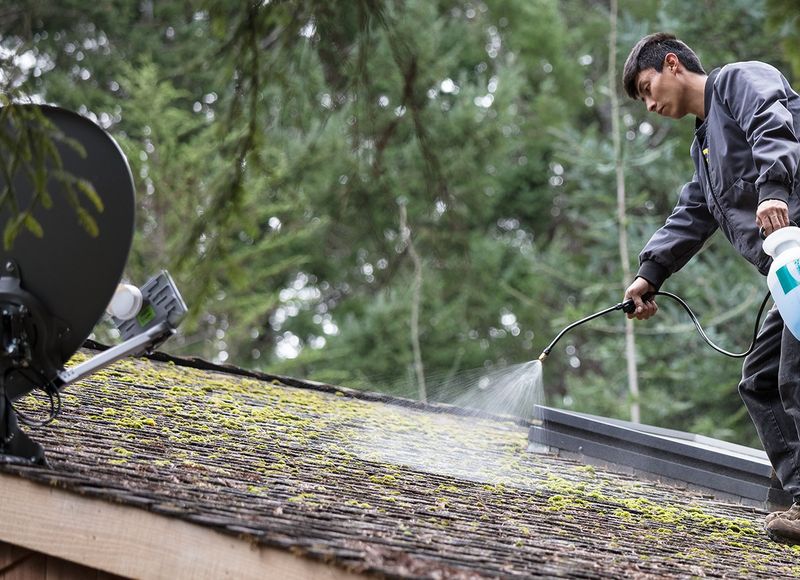
Before any solution touches a shingle, clear away loose leaves and debris without scrubbing or scraping. Keeping gutters clean and free-flowing is equally important because standing water in gutters contributes to the damp conditions that feed regrowth.
Once the area is clear, check the shingle manufacturer’s care instructions first. Owens Corning’s cleaning guidance notes that some manufacturers specify their own approved methods, and following those directions protects both the material and the warranty.
If the manufacturer’s instructions are consistent with it, ARMA’s bulletin describes a typical approach for asphalt shingles: mix equal parts household bleach and water, apply only enough to wet the affected area using a low-pressure pump sprayer, allow the solution to sit for approximately 15 to 20 minutes, and rinse gently with a garden hose at low pressure. That is the full sequence.
Scrubbing, brooms, and pressure washers are specifically off the table because they strip the granules that protect asphalt shingles, shortening roof life and potentially affecting warranty coverage. The ARMA Residential Roofing Manual reinforces that abrasive cleaning methods can cause irreversible granule loss.
Treatment may lighten or reduce discoloration, but it does not guarantee a spotless result, and regrowth is possible when damp conditions persist. Fall protection is not optional.
A roof that looks dry from the ground becomes significantly more slippery once wet with bleach solution. OSHA’s residential fall-protection guidelines make clear that safe footing, fall-arrest equipment, and stopping work in hazardous conditions are non-negotiable requirements.
If you do not have safe access, proper training, or the right equipment, hire a qualified roofing professional rather than attempting the work yourself.
Follow the cited EPA label for a compatible hard patio surface
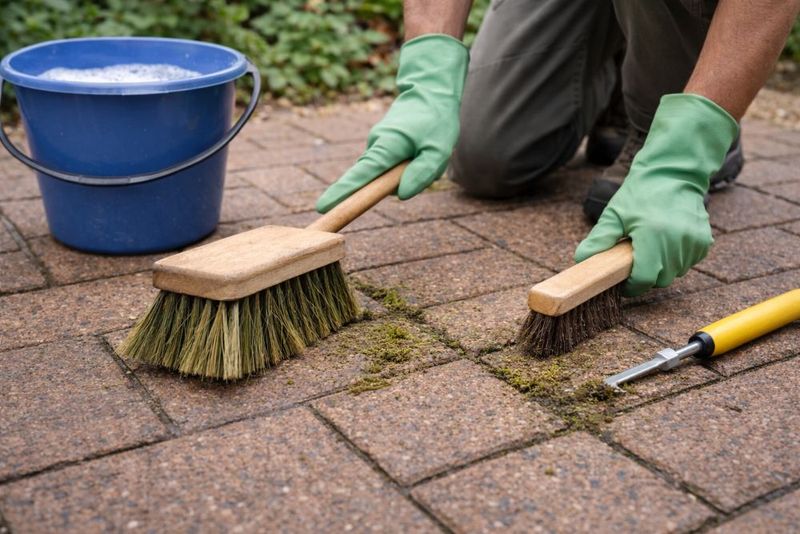
Hard surfaces at ground level, such as concrete, brick, or similar patio materials, allow for a more hands-on approach than asphalt shingles do. Start by sweeping away leaves, dirt, and loose debris before applying any solution.
Organic material on top of the surface can absorb the treatment and reduce its effectiveness, so clearing the area first gives the bleach solution direct contact with the growth underneath.
One EPA-registered product label for hard-surface patio cleaning directs users to mix 3/4 cup of bleach per gallon of water, apply the solution to the affected area, keep the surface wet for at least five minutes, brush as needed after the solution has acted, and then rinse thoroughly. That sequence, confirm coverage, apply, dwell, brush, rinse, is specific to that labeled product on its covered surfaces.
It does not set a universal standard for every bleach brand, every patio material, every paver type, or every coated or painted deck surface.
UC IPM notes that lichen, in particular, bonds tightly to hard surfaces and may not respond fully to a single bleach treatment. Porous concrete can also retain staining even after the growth is killed.
Always confirm that the product label lists your specific surface type before applying, and use physical brushing only in this ground-level context, never on asphalt shingles. If the label does not cover your surface, look for a product whose label does.
Protect plants, waterways, and people from bleach exposure
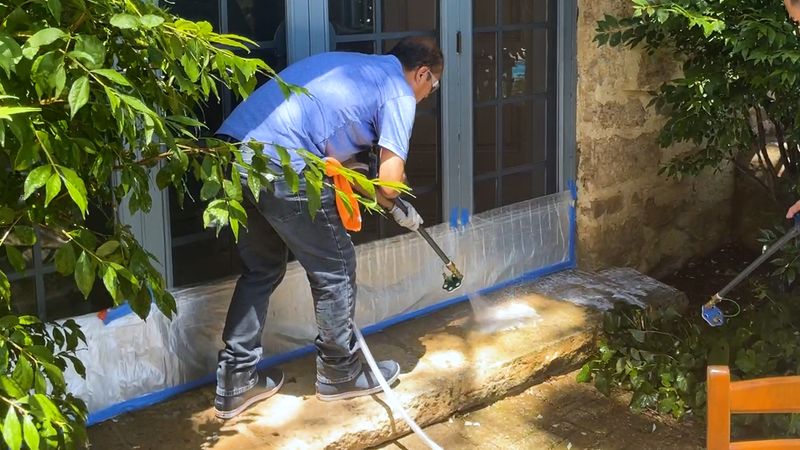
Water the plants, grass, and shrubs immediately surrounding the treatment area before you apply any bleach solution. Saturating the soil and foliage ahead of time dilutes any bleach that drifts or drips onto them.
Ask Extension’s lichen identification guidance confirms that bleach can damage foliage, even in diluted form, so shielding nearby plantings with plastic sheeting and rinsing any accidental exposure promptly are both necessary steps, not optional precautions.
Runoff control matters just as much as plant protection. Bleach solution that washes across the yard and into a storm drain, pond, stream, or other waterway can harm aquatic life.
Avoid applying treatment before rain, keep the solution only on the target surface, and rinse thoroughly in a direction that moves water away from any drainage inlet or water body. EPA flood-cleanup guidance is unambiguous: bleach must never be mixed with vinegar, ammonia, acids, hydrogen peroxide, detergents, or any other cleaner.
Combining bleach with these substances can release toxic gases or cause dangerous chemical reactions.
Some homeowners consider chlorine-free moss and algae products when bleach poses too much risk to nearby plants, drainage areas, or sensitive surfaces. The EPA label for one registered chlorine-free moss killer shows that these products carry their own surface restrictions, hazard statements, and runoff precautions.
Chlorine-free does not mean harmless. Any alternative product must be used strictly according to its own label, applied only to the surfaces it covers, and handled with the same attention to plant protection and runoff prevention that bleach requires.
Reduce regrowth and know when cleaning is not enough
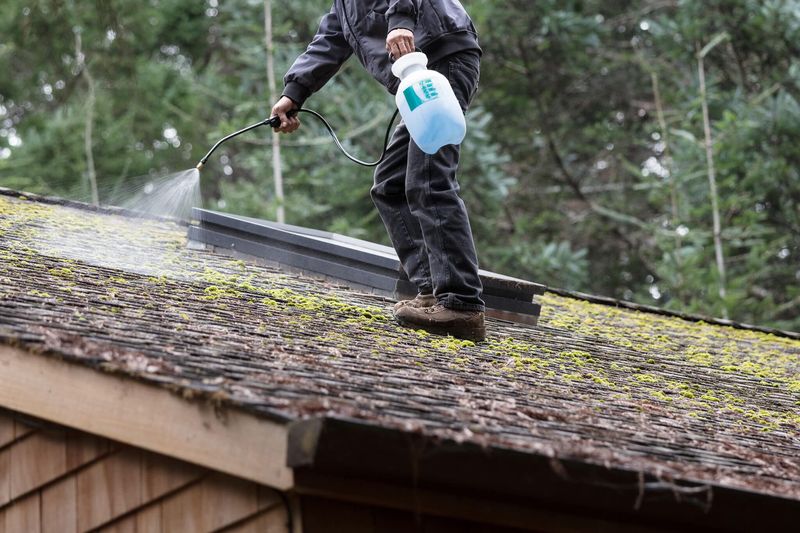
Cleaning removes or lightens what is already there, but the growth comes back when the conditions that caused it remain unchanged. ARMA’s algae discoloration bulletin acknowledges that treatment results on asphalt shingles can be temporary and that discoloration may recur.
Addressing the underlying environment is the only way to reduce how quickly growth returns after treatment.
Practical steps that may slow recurrence include clearing leaf buildup from the roof and patio regularly, keeping gutters clean so water drains instead of sitting, and pruning branches that cast persistent shade over the affected surface. The ARMA Residential Roofing Manual recommends trimming overhanging limbs to improve airflow and sunlight exposure, which can make the surface dry faster after rain.
Oregon State Extension’s roof moss guide adds that zinc or copper strips installed at the ridge can reduce future moss development on compatible roof materials, though results vary and installation should follow manufacturer guidance.
Some situations call for professional assessment rather than another round of cleaning. Thick moss that has lifted shingle edges, persistent moisture that does not dry between rain events, shingles that are older, damaged, or made of an uncertain material, and any roof that cannot be reached safely are all conditions that warrant a trained eye before any further treatment.
Use only the method that the label and the material manufacturer specifically allow, and go in expecting improvement rather than a guaranteed, permanent result. A surface that dries faster stays cleaner longer.