
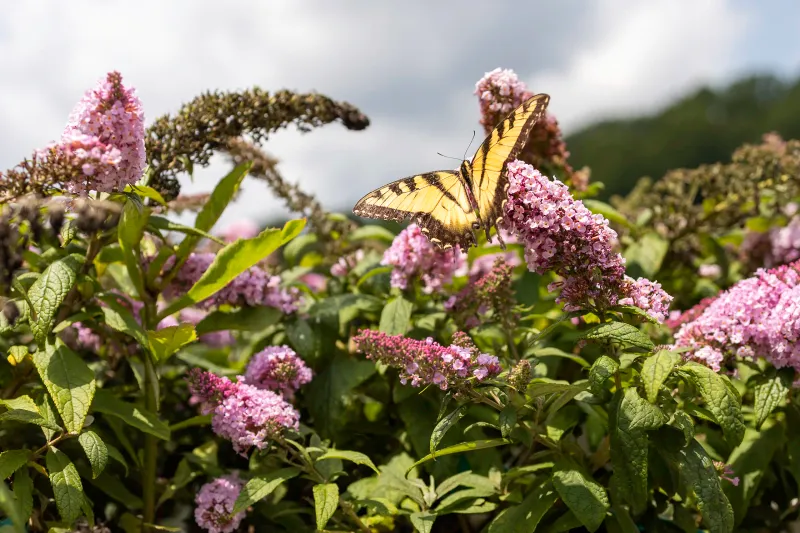
A butterfly bush drooping in the August heat can send a gardener straight for the hose, but watering without checking the soil first can actually make things worse. The real rescue starts with a quick dig around the root zone, not a reflex sprinkle.
Whether your shrub is in a Piedmont clay bed or a sandy coastal yard, the soil tells you what to do next.
Check the root-zone soil before reaching for the hose
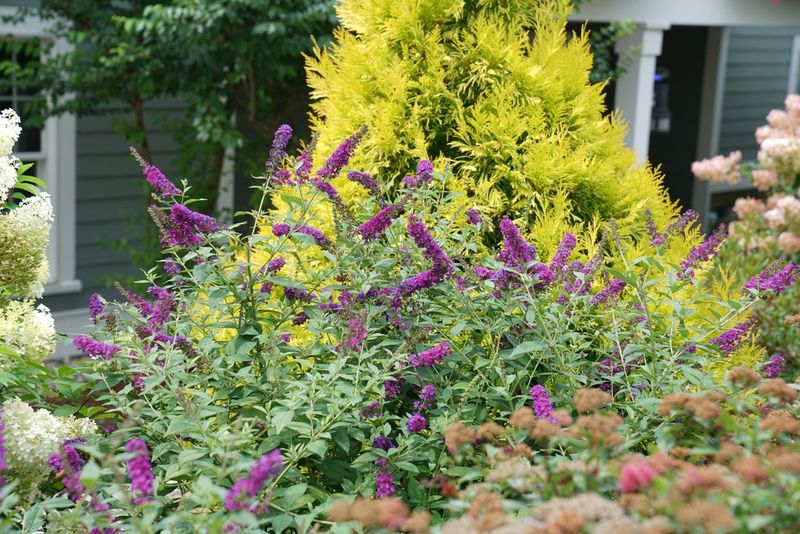
Afternoon drooping on a butterfly bush can look alarming, but it does not automatically mean the plant is thirsty. Plants respond to intense midday heat by temporarily wilting even when the soil holds plenty of moisture, then bouncing back as temperatures drop toward evening.
Reaching for the hose before confirming the root zone is actually dry can do more harm than good.
The smarter first move is a simple soil check. Push a finger or a narrow trowel into the ground around the plant, staying a few inches away from the main stems so you avoid cutting through roots, and go down roughly 6 inches.
That depth is where the roots doing the most work actually live, and it is the depth UGA Extension heat-wave watering guidance points to for distinguishing real drought stress from surface dryness. Dry, powdery, or crumbly soil at that depth is a clear signal the plant needs water.
Cool, dark, and noticeably damp soil at that depth is a signal to hold off.
The timing of the wilting matters too. Temporary afternoon drooping that disappears by morning is far less concerning than persistent limpness that is still visible early in the day.
University of Illinois Extension heat-stress guidance notes that plants can exhibit temporary wilt during intense heat even with adequate soil moisture, while morning wilting or wilting that does not recover overnight warrants closer attention. Browning leaf edges, progressive leaf drop, or branch dieback alongside morning wilt point toward prolonged drought or root damage rather than a passing heat response.
Turning the symptom into a diagnosis before taking any action keeps you from compounding a stressed plant’s problems. A quick soil check takes less than a minute and tells you whether you are dealing with temporary heat wilt, genuine drought, or something else entirely that more water will not fix.
Give a dry root zone a slow, deep soak
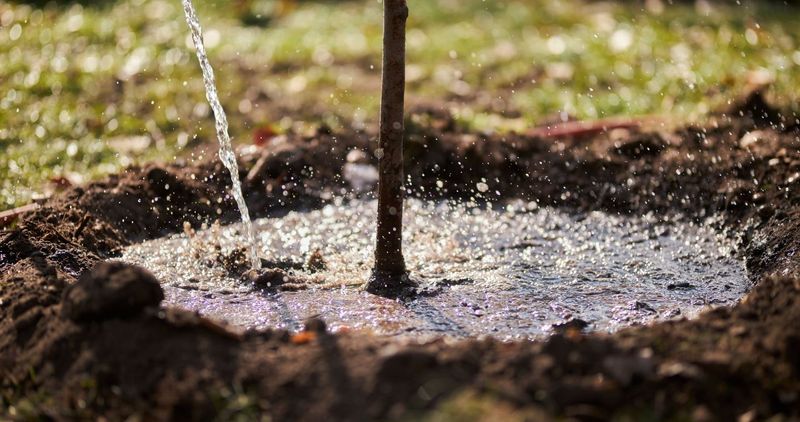
Once you confirm the soil is dry about 6 inches down, the goal is to get water all the way to the roots, not just dampen the top layer. A short burst from a regular spray nozzle can wet the surface and make it look like you have watered, while the deeper root zone stays parched.
The method that actually rehydrates the root zone is slow, thorough application that gives water time to move down through the soil profile before it runs off or evaporates.
A soaker hose looped around the plant’s drip line, a drip emitter, or a standard hose with a water-breaker or bubbler nozzle set to a gentle flow all work well. The point is to keep water moving into the soil rather than pooling on the surface.
NC State Extension’s woody ornamentals guidance recommends watering established shrubs deeply and infrequently, allowing the soil to dry somewhat between irrigations, because this pattern encourages roots to grow deeper and makes the plant more resilient during the next dry stretch. Frequent light watering does the opposite, pulling roots toward the surface where they are most vulnerable to heat and drought.
Direct the water at the soil, not the foliage. Wet leaves in hot weather do not benefit the plant and can invite fungal problems if they stay damp.
University of Arizona Cooperative Extension guidance on watering trees and shrubs reinforces that root-zone application is what counts, not overhead sprinkling.
Avoid setting a fixed number of gallons or a fixed run time and applying it regardless of conditions. How long you need to run water depends on your soil type, how dry it became, recent rainfall, drainage, and the size of the plant.
After watering, wait a day and check 6 inches down again. If the soil is moist at that depth, you applied enough.
If it is still dry further from the plant, extend the soaking area outward toward the drip line where feeder roots are most active.
Use morning timing to limit evaporation and leaf wetness
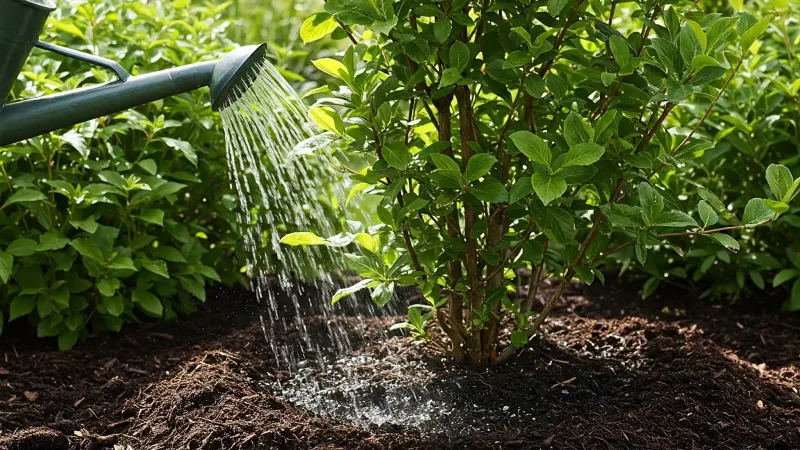
Early morning is generally the best time to water a butterfly bush, though not for the reason most people assume. Cooler air and lower wind speeds in the morning reduce the amount of water lost to evaporation before it reaches the root zone.
If any water lands on leaves, morning timing also gives foliage several hours of daylight to dry before evening, which lowers the risk of fungal problems that thrive on prolonged leaf wetness.
UGA Extension’s smart irrigation guidance supports morning watering for both of these reasons, and notes that soil-level drip or soaker irrigation sidesteps the leaf-wetness issue entirely since water goes directly into the ground. If a soaker hose or drip line is your method, the timing matters less than it does with overhead watering, but morning is still a reasonable default when scheduling is flexible.
What morning timing cannot do on its own is rehydrate a dry root zone. That job belongs to slow, thorough application regardless of the hour.
A quick morning sprinkle that only wets the top 3 or 4 inches of soil gives the appearance of watering without delivering meaningful moisture to the roots. UGA Extension’s heat-wave overwatering caution specifically flags shallow surface watering as a common mistake, because it wets the ground just enough to look adequate while leaving the deeper root zone dry and encouraging roots to stay near the surface where conditions are harshest.
Think of morning timing as a practical scheduling preference, not a technique that changes how deep water travels. Pair it with slow application and the root-zone focus described in the previous section, and it becomes a genuinely useful habit rather than just a gardening myth.
Use mulch to slow moisture loss after watering
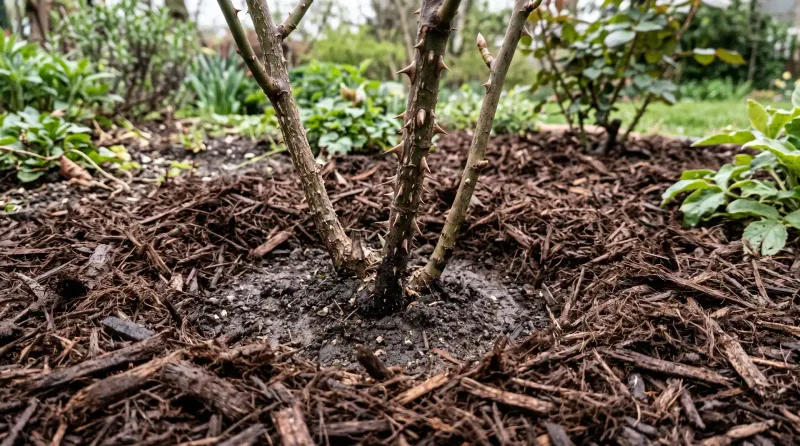
After a successful deep soak, the soil will not stay moist indefinitely on its own, especially during North Carolina’s late-summer heat. A 2- to 3-inch layer of organic mulch spread over the root zone can meaningfully slow evaporation and keep the soil temperature lower than bare ground, which helps the moisture you just delivered last longer before the next check is needed.
Shredded bark, wood chips, or pine straw all work well. Spread the mulch out to roughly the drip line of the plant, which is the area under the outermost branches, since that is where the feeder roots are most active.
Leave a gap of a few inches between the mulch and the main stems. Piling mulch directly against the stems traps moisture against the bark and can create conditions that encourage rot or pest problems at the base of the plant.
NC State Extension’s woody ornamentals chapter lists mulch as a standard moisture-conservation practice for established shrubs, noting that it can extend the interval between waterings by reducing surface evaporation. UGA Extension’s smart irrigation resources echo this, pointing out that mulched beds require less supplemental irrigation than bare soil during hot, dry stretches.
Mulch is an aftercare step, not a substitute for diagnosing and correcting a dry root zone. If you skip the soil check and just add mulch over dry ground, you are insulating dryness rather than conserving moisture.
Apply it after a confirmed deep soak, and it becomes a genuine tool for stretching the benefit of that watering through the rest of late summer.
Adjust monitoring for soil type and plant age
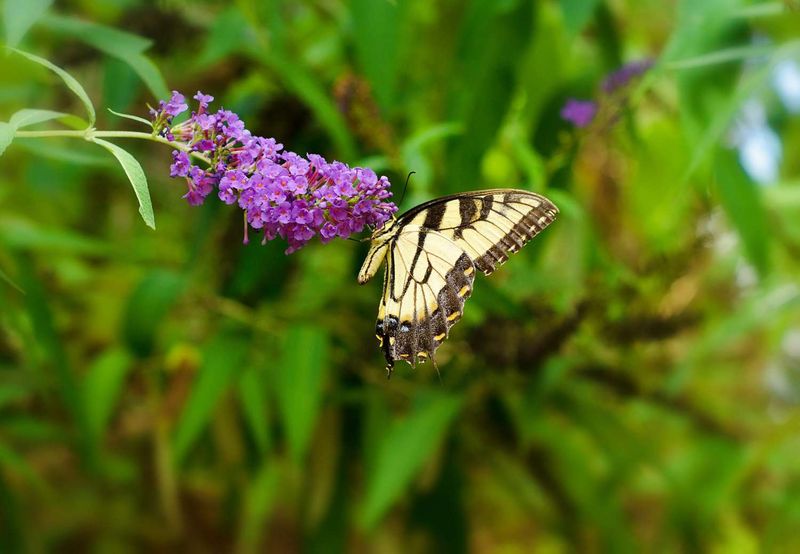
A single statewide watering schedule does not account for the real differences in North Carolina soils and microclimates. A butterfly bush growing in a sandy coastal bed drains water quickly, meaning the root zone can dry out faster after rain or irrigation than most gardeners expect.
The same shrub in a Piedmont clay bed holds moisture longer but absorbs water slowly, so fast application often runs off the surface before it can penetrate to root depth.
NC State Extension’s woody ornamentals guidance specifically identifies soil type, drainage, rainfall, plant age, and exposure as the variables that should drive watering decisions, not a fixed calendar or a set number of days between irrigations. In sandy soils, checking root-zone moisture more frequently during dry stretches makes sense.
In clay soils, applying water slowly over a longer period allows it to soak in rather than sheet off the surface, and leaving more time between waterings prevents the saturation that clay holds onto longer than sandy ground.
Plant age changes the equation significantly. A butterfly bush planted or transplanted within the past year has had limited time to push roots outward and downward before summer heat arrived.
That means its water reserves are shallower, and it can reach drought stress faster than an established shrub that has spent multiple growing seasons extending its root system. Newly planted shrubs benefit from more frequent soil checks, not necessarily more water at each check, but a shorter interval before you verify whether the root zone has dried again.
Mountain, Piedmont, and coastal gardeners also deal with different rainfall patterns. A week of afternoon thunderstorms in the Asheville area may keep the root zone adequately moist while a Wilmington yard with sandier soil and different storm tracks dries out faster.
Use your own soil, your own rainfall, and your own plant’s age as the guide rather than a uniform statewide prescription.
Treat moist soil as a warning to investigate, not water more
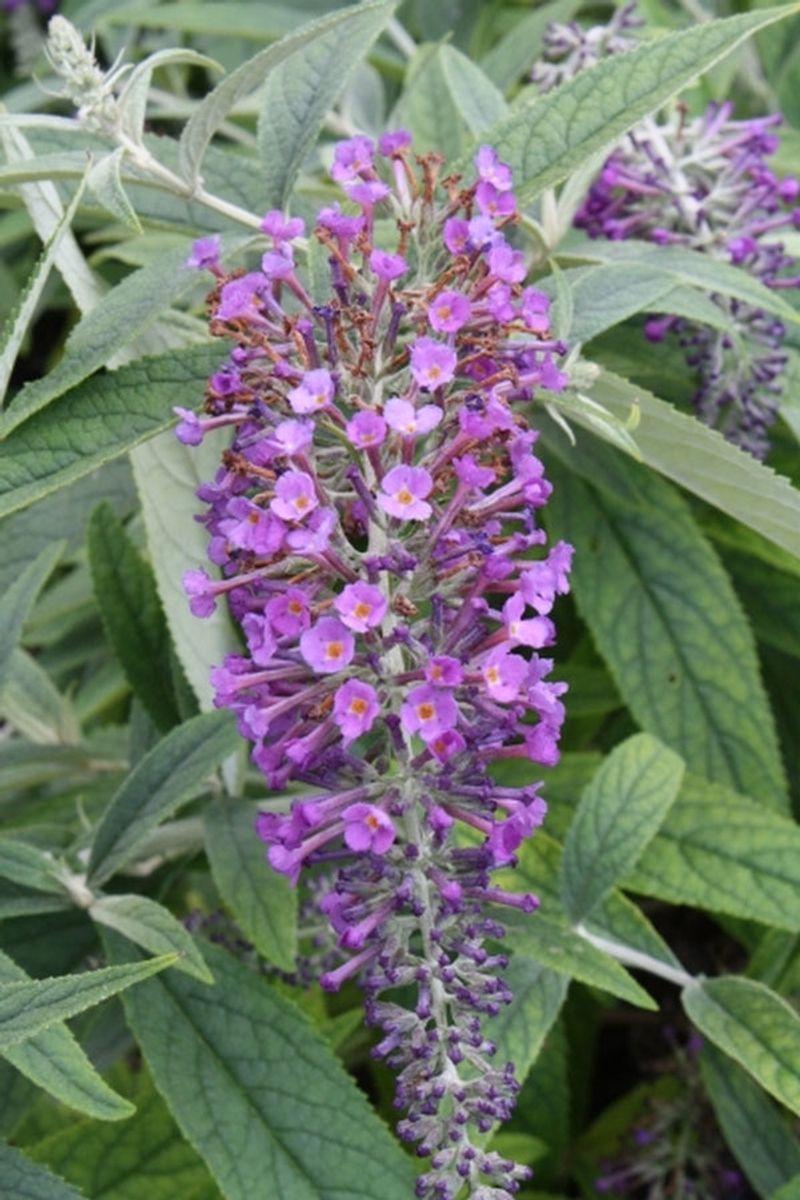
Finding moist soil 6 inches down when your butterfly bush is wilting or declining is not a green light to add more water. It is a signal that something other than drought is causing the problem, and adding water to an already moist root zone can make conditions worse rather than better.
Saturated or chronically damp soil deprives roots of oxygen, and roots that cannot breathe begin to break down. The resulting root damage causes wilting, yellowing, and general decline that looks almost identical to drought stress from above ground.
UGA Extension’s heat-wave overwatering guidance notes that overwatered plants and underwatered plants can present with nearly the same visible symptoms, which is exactly why the soil check matters so much before any treatment decision. Signs that point toward excess moisture rather than drought include consistently damp soil that never seems to dry between rains, standing water or slow drainage after irrigation, algae or moss growing on the soil surface, mushrooms appearing nearby, or roots that feel soft and discolored when you carefully expose them.
When the soil is moist and the shrub still looks stressed, the next step is a closer inspection of the plant itself. NC State’s butterfly bush plant profile specifically identifies spider mites as a drought-associated problem on this species, but mites can also build up during hot, dry periods even if you have been irrigating.
Check the undersides of leaves carefully. Stippling, a fine bronze or silver speckling across the leaf surface, fine webbing in angles between leaves and stems, or tiny moving specks when you hold a white sheet of paper under a branch and tap it are all signs of mite activity.
University of Minnesota Extension’s spider mite guidance describes these same diagnostic signs and recommends confirming an infestation before treating.
Other possibilities when the soil is moist but the shrub declines include transplant stress in a recently moved plant, physical root damage from digging or soil compaction, and poor drainage that keeps the lower root zone waterlogged even when the surface feels manageable. Each of these calls for a different response, and none of them improves with more water.
University of Arizona Cooperative Extension’s shrub watering guidance reinforces the point: moist soil is the cue to pause irrigation and investigate, not to apply more.
Skip late-summer pruning and fertilizer as emergency fixes
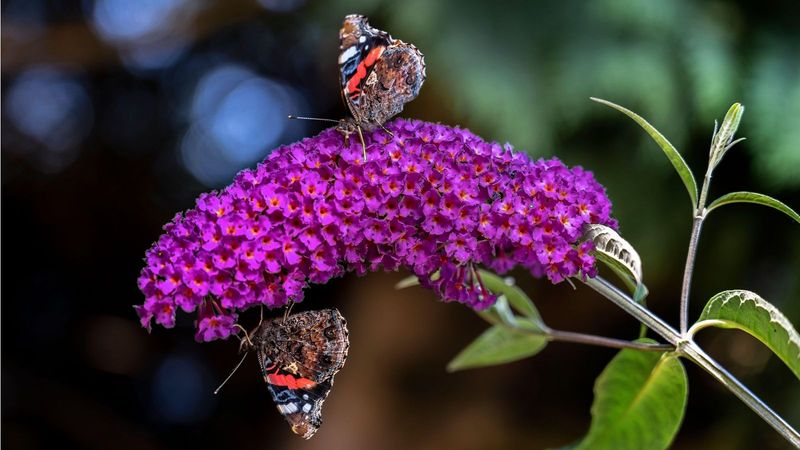
When a shrub looks stressed, the instinct to cut it back hard or feed it something is understandable, but neither heavy pruning nor fertilizer addresses what is actually wrong with a butterfly bush struggling in late-summer heat.
Butterfly bush blooms on new growth, which is why it responds well to pruning. However, the timing for major pruning is late winter or very early spring, before the growing season begins.
Penn State Extension’s pruning guidance for flowering shrubs places significant cuts in that dormant-to-early-growth window, and NC State’s butterfly bush plant profile aligns with that recommendation. Cutting the plant back hard during a late-August heat stretch is not a recognized emergency treatment and should not be presented as one.
Deadheading, which means removing individual spent flower spikes rather than cutting back the whole plant, is a different and more limited task. It can tidy up the plant’s appearance and may encourage additional blooms, but it does not treat wilting or drought stress.
Before removing old flower heads, keep in mind that NC State Extension’s butterflies-in-your-backyard resource cautions that clearing away dead foliage and flower material can accidentally remove butterfly eggs or pupae that may be resting there. If supporting adult butterflies is part of your reason for growing the shrub, look closely before trimming.
Fertilizer carries its own risk during heat stress. It is not a substitute for correcting a moisture problem, and NC State Extension’s woody ornamentals chapter notes that plants with depleted water reserves can suffer root damage from fertilizer application.
A shrub that is already struggling to move water through its system does not benefit from a nutrient push it cannot process. Save fertilizer for appropriate seasonal timing when the plant is healthy and actively growing, not as a rescue measure during a late-summer stress event.
Let the soil determine the next move
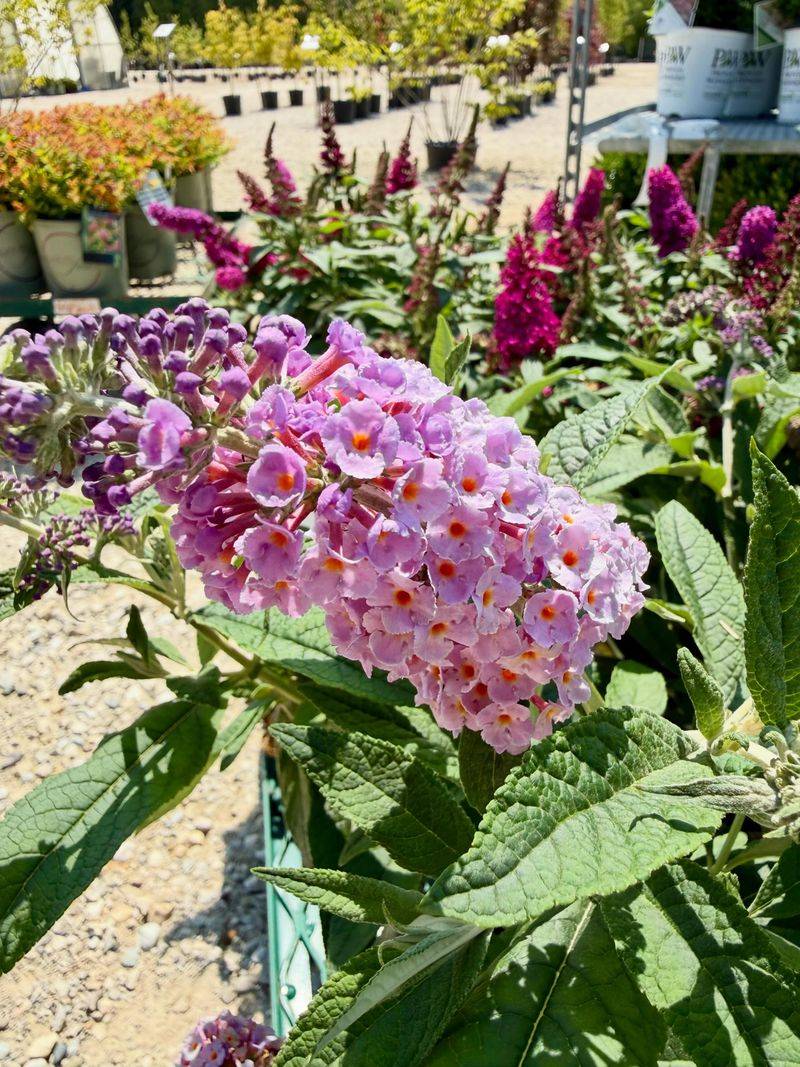
The repeatable decision for a butterfly bush that looks off in late summer comes down to one physical check. Dig around, not through, the root zone to about 6 inches.
Dry, crumbly soil at that depth supports a slow, thorough soak delivered at root level with a soaker hose or drip line. Moist soil at that depth means hold off on watering and look elsewhere for the cause.
When the soil is already moist and the shrub is still struggling, the path forward runs through drainage, root condition, transplant history, and a close look at leaf undersides for spider mites rather than through the spigot. UGA Extension’s heat-wave guidance and NC State Extension’s woody ornamentals chapter both point to this same diagnostic logic: match the response to what the evidence shows, not to what the plant looks like from a distance.
Light daily sprinkling is not a substitute for this process. It wets the surface without rehydrating the root zone and can keep roots shallow and vulnerable through the rest of the season.
A shrub that gets one confirmed, thorough soak when the soil is genuinely dry, followed by a mulch layer and a follow-up check a few days later, is in a better position than one that gets a little water every afternoon without anyone knowing what the soil actually needs. The soil is the most honest indicator in the garden, and checking it first costs almost nothing.