
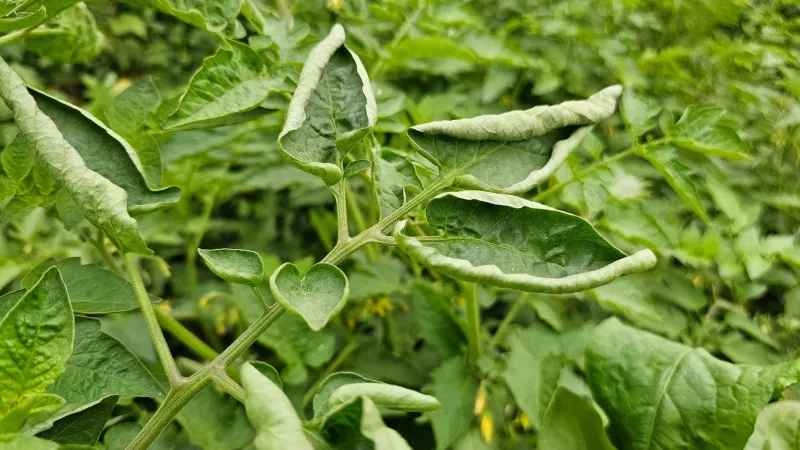
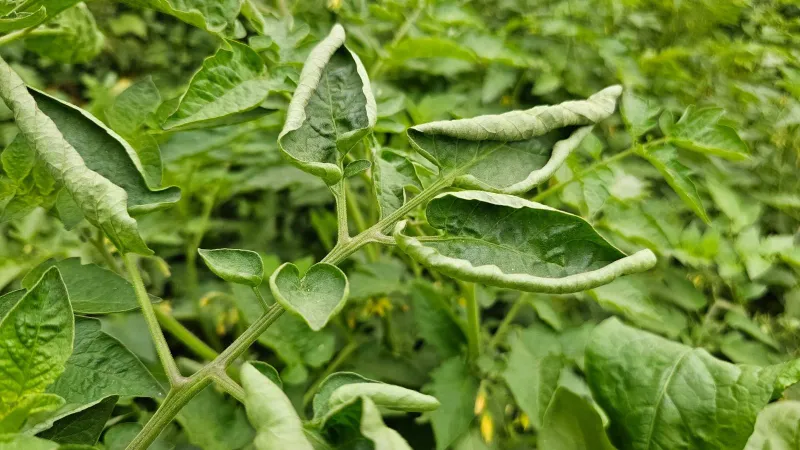
Stepping outside on a sweltering August morning to find your tomato leaves rolled up tight is enough to make any gardener panic. Before you grab the hose, though, the curl itself is not always telling you what you think it is.
Late-summer heat can cause tomato leaves to curl for several different reasons, and watering more is not always the right answer. Knowing what you are actually looking at changes everything about how you respond.
Tight curl can be a harmless heat response—but it is not a diagnosis
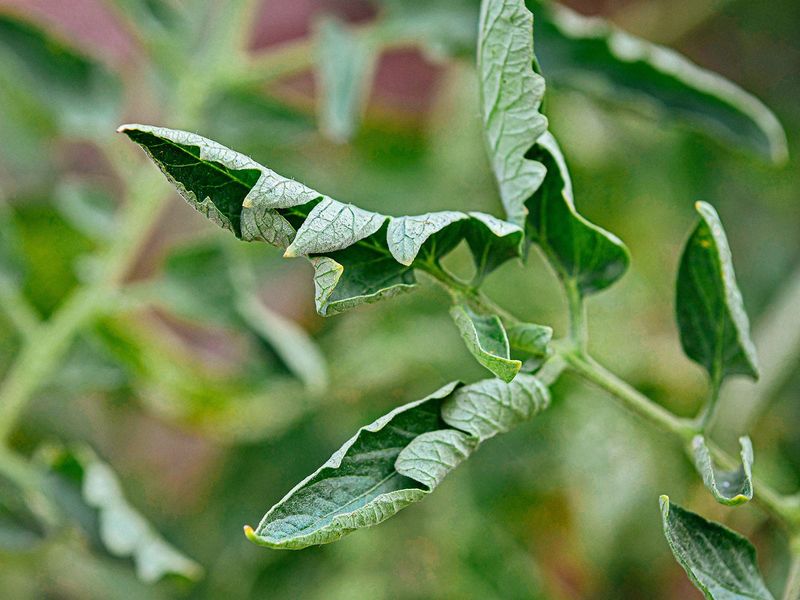
Not every curled tomato leaf signals a crisis. When older or lower leaves on your tomato plant roll upward or fold inward along the midrib, stay green and firm or feel slightly leathery, and the rest of the plant continues to grow, flower, or set fruit normally, you are likely looking at physiological leaf roll.
University of Minnesota Extension’s plant diagnostic guide lists physiological leaf roll as a common response in tomatoes that is generally harmless and does not typically reduce growth, yield, or fruit quality.
The pattern matters. Physiological leaf roll tends to appear first on the lower, more mature leaves rather than on tender new growth at the top of the plant.
The plant keeps pushing out new leaves, flowers, and fruit without missing a beat. That combination, curled older leaves plus an otherwise normal plant, is the version most likely to be benign.
Even so, curl alone is not a complete diagnosis. Extension guidance on tomato disorders notes that the same upward or inward rolling can accompany heat, drought, excessive moisture, pruning, root disturbance, rapid growth, variety characteristics, insects, viruses, or herbicide exposure.
Reaching for the hose before inspecting the plant and checking the soil can make some of those problems worse rather than better.
Heat can trigger curl even when the soil still holds moisture
On a 95-degree afternoon with a stiff breeze, a tomato plant can lose water through its leaves faster than its roots can replace it, even when the soil is not dry. The plant responds by closing the tiny pores on its leaf surface, called stomata, to slow that water loss.
Research on tomato heat and drought responses confirms that stomatal closure and reduced transpiration are real physiological reactions to heat and water stress, helping the plant conserve moisture when demand is outpacing supply.
The practical takeaway is that heat alone does not prove your soil is dry. High temperatures, intense sunlight, low humidity, and wind all increase evaporative demand, pulling moisture from leaves even when the root zone still has adequate water.
A plant wilting or curling at two in the afternoon may look completely different by eight the next morning, once the heat has backed off and the plant has had a chance to recover.
Oklahoma State University Extension also points out that excessive soil moisture is itself associated with physiological leaf roll, meaning overwatered plants can curl just as underwatered ones do. Other contributors include pruning wounds, root disturbance from cultivation, periods of especially rapid growth, and variety differences.
Knowing that heat is in the picture is useful context, but it is not a watering prescription on its own.
Check the root zone before you change the watering schedule
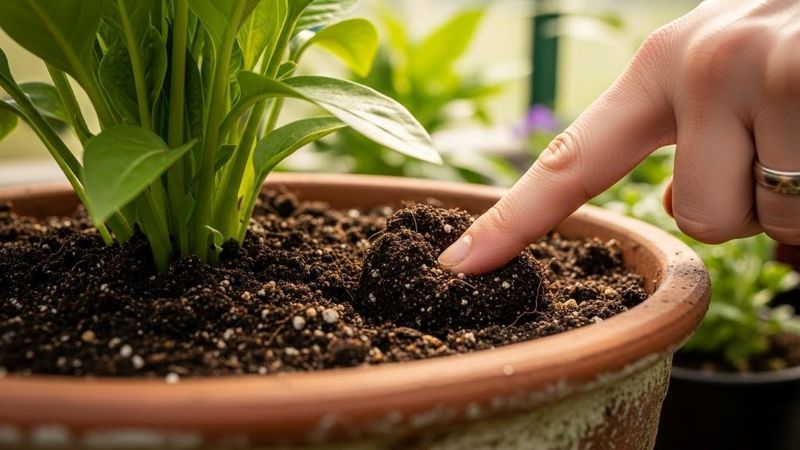
The most reliable way to decide whether your tomato actually needs water is to check the root zone directly. Push your finger two to three inches into the soil near the base of the plant.
Dry or barely damp soil at that depth tells you irrigation is warranted. Soil that still feels cool and moist suggests the plant may be reacting to heat rather than a shortage of water.
University of Minnesota Extension’s hot-weather gardening guidance specifically warns that heat can cause wilting and curl in plants with adequately moist soil, and recommends checking plants in the morning or evening rather than during peak afternoon heat. If your tomato looks distressed at noon but perks back up by evening with no change in watering, that is a strong sign the soil moisture is fine and the heat is doing the talking.
Also check whether water can actually drain away from the roots. Compacted soil, poorly draining raised beds, or containers sitting in standing water can keep the root zone waterlogged even while the surface looks dry.
Extension irrigation guidance for vegetables emphasizes assessing both moisture and drainage before adjusting a watering schedule. A plant with soggy, oxygen-poor roots does not need more water; it needs better drainage and, possibly, time to recover.
Use a slow, thorough root-zone reset—not a flood
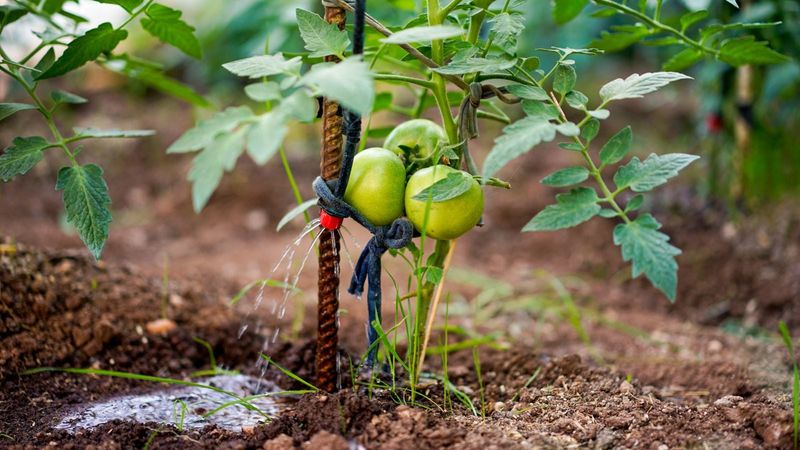
When the root zone is genuinely dry, the correction is not one dramatic flood but a return to slow, thorough watering delivered directly to the soil. Apply water at the base of the plant and let it soak in gradually so it reaches the full depth of the active root zone, which can extend six inches or more into the ground for an established tomato.
Repeated shallow sips wet only the top inch or two of soil, training roots to stay near the surface where they are most vulnerable to heat and drying.
University of Minnesota’s vegetable irrigation strategies recommend drip irrigation or soaker hoses as the most efficient delivery method, keeping water at the root zone and foliage dry. Wet leaves held against warm, humid conditions can invite fungal problems, so directing water to the soil rather than spraying overhead is a practical disease-management step as well.
UGA Extension’s home vegetable garden disease management guidance reinforces this, noting that avoiding prolonged leaf wetness is a core principle for reducing foliar disease pressure.
Flooding the soil is not the goal. Saturating the root zone drives out oxygen, which roots need to function, and excess runoff carries away whatever moisture you were trying to deliver.
Water slowly enough that the soil absorbs it without puddling. The target is restored, even moisture throughout the root zone, not a one-time dramatic soak that leaves the soil swinging between soaked and bone dry.
Existing curled leaves may not uncurl right away, and some may not uncurl at all. Judge progress by how the soil feels and how the plant behaves over the next several days, not by whether yesterday’s rolled leaves have relaxed.
Match frequency to soil, weather, and the growing setup
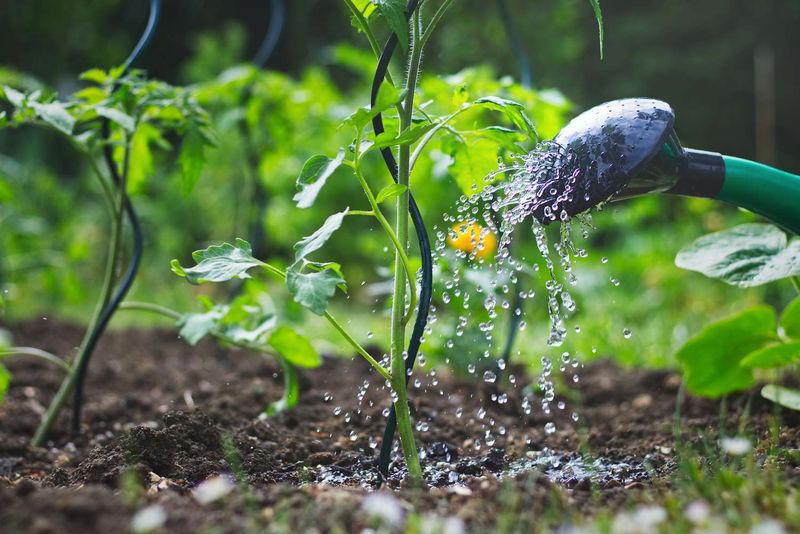
Roughly 1 to 2 inches of water per week, counting rainfall, is a widely cited starting point for tomatoes in a home garden. UGA Cooperative Extension’s guide to Georgia homegrown tomatoes uses a similar range, but frames it as a general benchmark rather than a fixed rule.
Your actual schedule should flex with conditions on the ground.
Sandy soils drain quickly and dry out faster than clay or loam, often requiring more frequent watering during hot stretches. Raised beds dry from multiple sides and can need water more often than in-ground beds, especially when they are shallow or filled with a fast-draining mix.
Hot, windy weather, large fruiting plants, and long dry spells all push water demand higher. Clay soils and rainy weeks push it lower.
Water early in the day when possible so the soil absorbs it before peak heat and any incidental leaf splash has time to dry.
Containers are a separate situation entirely. A five-gallon pot sitting in full Southern sun can go from moist to bone dry in a single afternoon.
University of Minnesota Extension’s container watering guidance notes that containers may need daily or even twice-daily attention during extreme heat, but the growing medium should feel moist rather than continuously saturated. Check container soil by feel each morning and water when the top inch or two is dry, rather than following a fixed daily schedule regardless of conditions.
The unifying principle across all setups is consistency. Tomatoes handle steady moisture far better than sharp swings between dry and drenched, and keeping that balance steady is what the watering reset is really after.
Use mulch and heat protection to reduce moisture swings
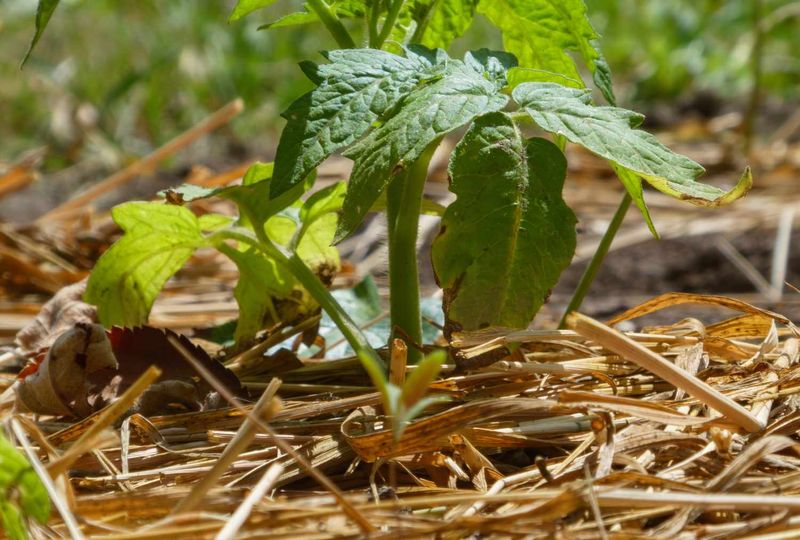
A layer of organic mulch around your tomato plants does quiet but meaningful work during late-summer heat. UGA Cooperative Extension’s home gardening guidance recommends applying roughly 2 to 4 inches of organic material, such as straw, shredded leaves, or wood chips, around the base of the plant while keeping it a few inches away from direct contact with the stem.
That buffer prevents moisture from sitting against the stem where it could encourage rot.
Mulch slows evaporation from the soil surface, moderates soil temperature, and reduces the sharp wet-to-dry swings that stress tomato plants during hot weather. University of Minnesota Extension’s heat-gardening tips also suggest temporary afternoon shade and wind protection as practical options when the root zone is already moist and additional water is not what the plant needs.
A piece of shade cloth rigged over the plant during the hottest part of the day, or even a strategically placed lawn chair, can reduce heat load without adding unnecessary irrigation.
Consistent soil moisture also matters for fruit quality. Erratic wet-dry cycles are associated with blossom-end rot, fruit cracking, and flower drop.
Extension guidance on tomato disorders is clear that steadier moisture can help reduce future moisture-related fruit problems, but watering cannot repair blossom-end rot or cracking that has already appeared on existing fruit. Mulch and consistent irrigation work as prevention, not as a cure for damage already done.
Look for warning signs that watering will not fix
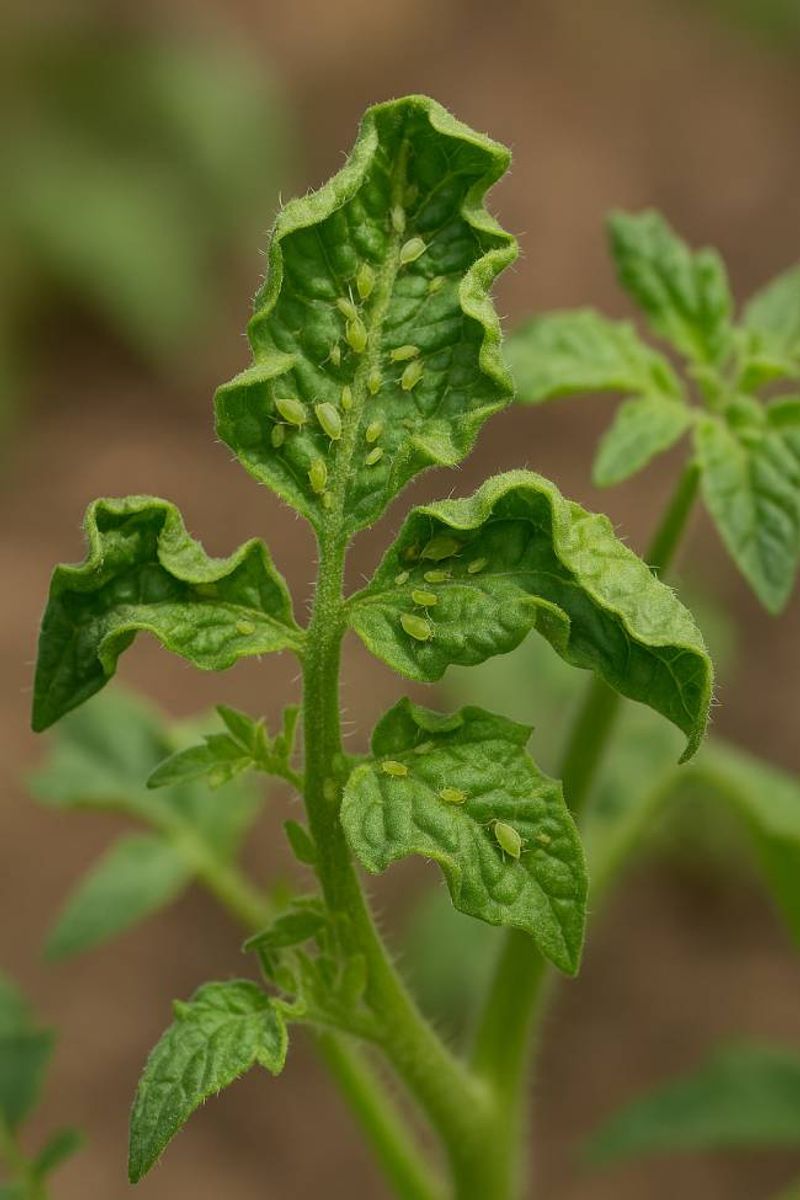
Physiological leaf roll has a recognizable profile: older lower leaves curl upward or inward, stay green and firm, and appear on a plant that is otherwise growing normally. When the symptom looks different from that description, watering is unlikely to be the fix, and adding more water could delay the right diagnosis.
University of Minnesota Extension’s tomato leaf curl diagnostic guide and their tomato disorders page both flag several patterns that call for a different investigation. Yellowing, mosaic or mottling patterns, stunted growth, reduced leaf size, or cupping and distortion concentrated on new growth are among them.
Tomato yellow leaf curl virus, which is common in Florida and transmitted by whiteflies, typically affects newer leaves rather than older ones and can cause yellow margins, cupping, and flower or fruit drop. UF/IFAS Extension’s guidance on common tomato diseases in Florida notes that irrigation will not resolve a viral infection.
Insect damage follows its own patterns. Broad mites often target young growth and can produce curling accompanied by bronzing, darkening, or stunting that looks nothing like simple heat roll.
The Texas Plant Disease Diagnostic Laboratory’s notes on broad mite damage describe distorted, thickened, or downward-cupping new leaves as a key clue. Aphid colonies can also cause leaf curl when populations are heavy enough.
Herbicide injury is another possibility, especially if symptoms appear suddenly after a neighbor sprays or after using a weed-and-feed product nearby. Downward cupping, twisted growth, thickened veins, or bleaching concentrated on one side of the plant are signals to look for an exposure source rather than adjusting irrigation.
Oklahoma State University Extension also reminds growers that saturated soil can cause root and crown problems that mimic drought stress, so more water is not the answer unless the root zone is confirmed to be dry.
Measure recovery by new growth, not by instant uncurling
Once you have checked the root zone and confirmed the soil is dry, the action sequence is straightforward: water slowly at the base, let it soak in thoroughly, and then build a steadier routine adjusted for your soil type, weather, and growing setup. Add mulch if you have not already, and consider temporary shade on the hottest afternoons if the soil is already moist.
Those steps address the conditions most likely to be driving heat-season stress.
What they may not do is uncurl the leaves you are staring at right now. University of Minnesota Extension’s tomato disorders guidance states plainly that rolled leaves may remain rolled even after conditions improve, and that the plant can continue growing normally despite that persistent curl.
Irrigation guidance for vegetables reinforces that the goal of consistent moisture is supporting plant function over time, not producing an immediate cosmetic change.
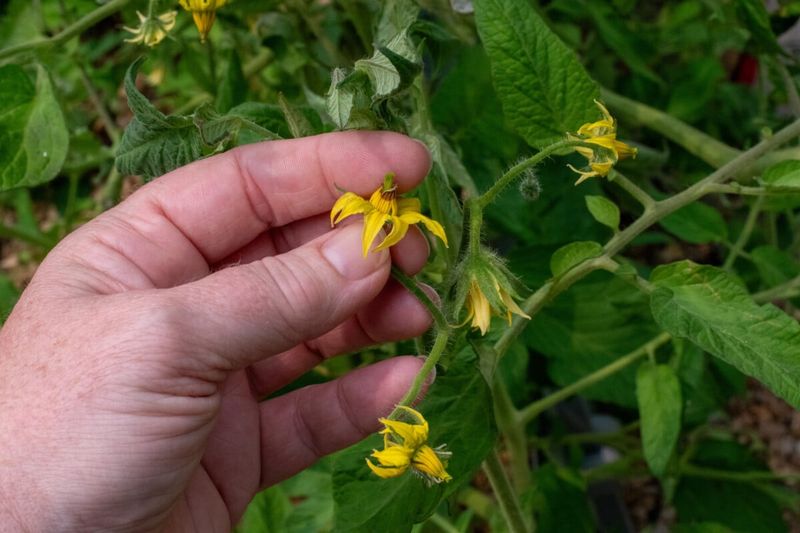
Watch new growth instead. Fresh leaves emerging at the top of the plant that look normal in size, color, and shape are a reliable sign the plant is not under severe ongoing stress.
Continued flowering and fruit development tell the same story. The Minnesota plant diagnostic guide notes that worsening symptoms, unusual patterns, or whole-plant decline are the signals to pursue a different diagnosis rather than continuing to adjust irrigation.
A tomato plant that keeps growing, flowering, and setting fruit with a few curled lower leaves is, most of the time, a tomato plant that is doing just fine.