
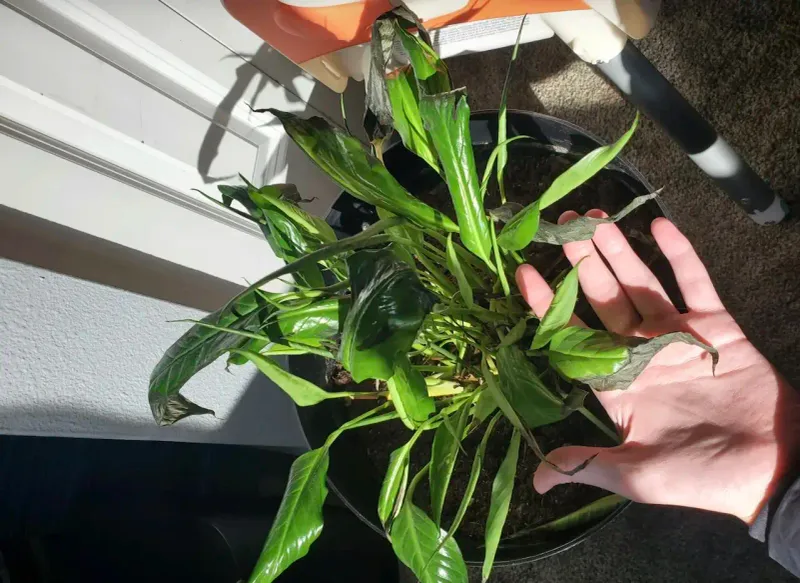
Peace lilies are some of the most forgiving houseplants around, but black or blotchy leaves can stop a gardener cold. That dark discoloration is the plant signaling that something went wrong, and the tricky part is that several very different problems can produce almost identical symptoms.
Before reaching for a watering can or a bottle of fertilizer, take a closer look at where the damage sits, how it feels, and what else has changed in the plant’s environment.
Black blotches are a symptom, not a verdict
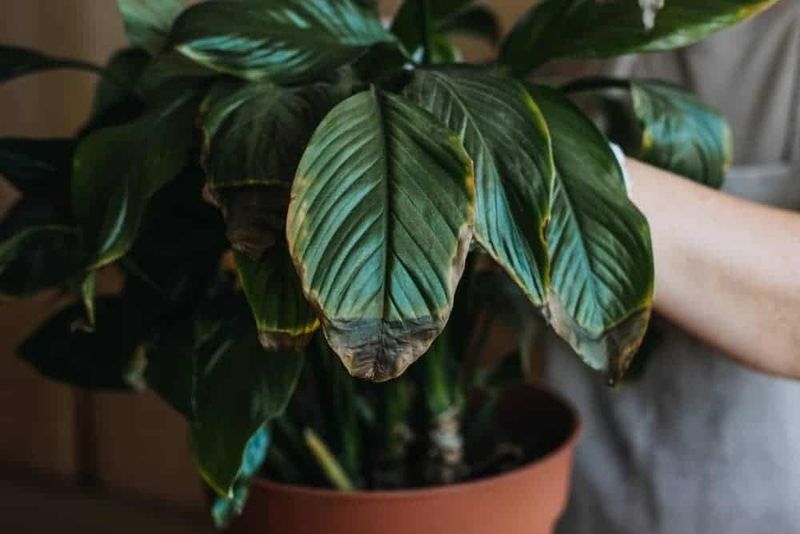
Seeing black patches spread across a peace lily leaf is alarming, but those marks are the beginning of a question, not the end of one. Black or blotchy tissue tells you the plant experienced real stress – it does not tell you which kind.
Overwatering gets blamed most often, and a saturated root zone can absolutely damage a peace lily, so inspecting the root zone early makes sense. But that inspection is a starting point, not a conclusion.
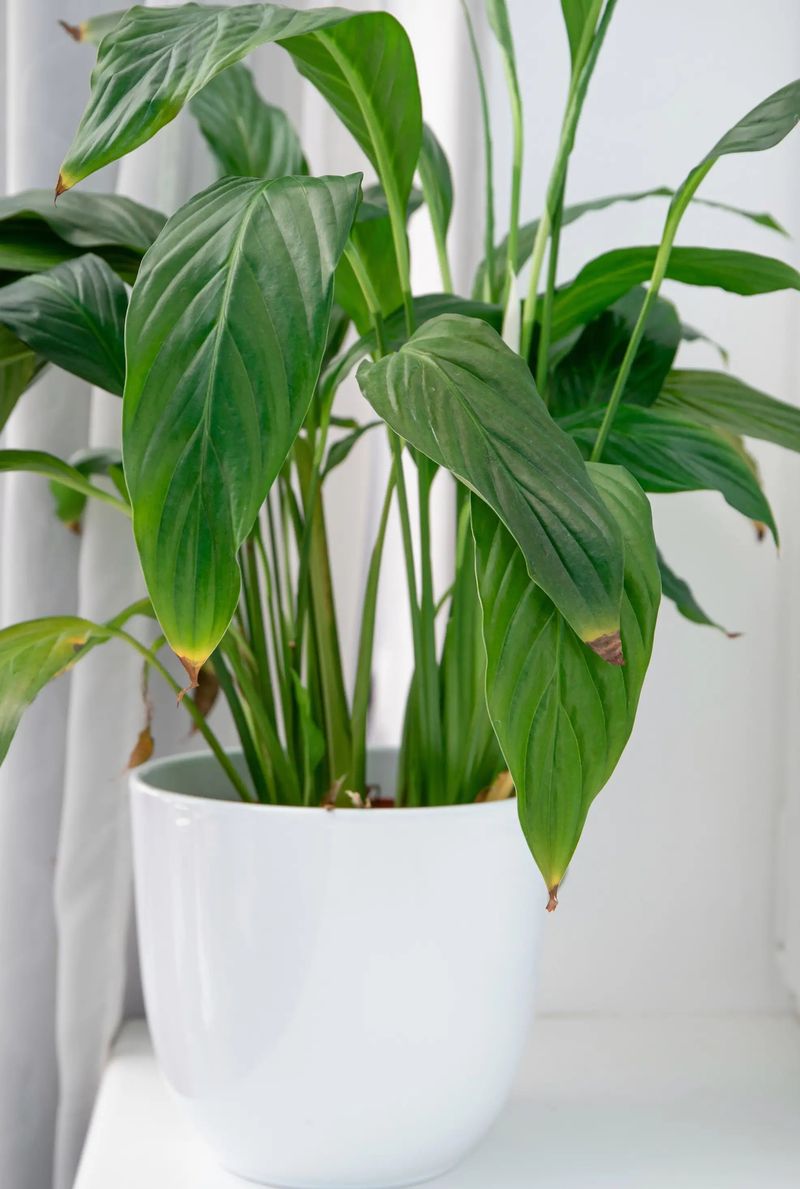
Where the damage sits offers a useful first clue. Black or dark brown tips and margins are more consistent with cold injury, salt or fluoride accumulation, fertilizer burn, or dry root conditions.
Black blotches appearing in the middle or body of the leaf are more concerning for leaf-spot disease, chemical injury, sun scorch, or water-related physiological stress. Neither pattern is a locked-in diagnosis, but location narrows the field before you touch the soil or check the roots.
Several causes deserve equal consideration: cold drafts, direct sunlight, salt buildup from fertilizer or softened water, chemical splash, edema (a noninfectious water-balance disorder), and fungal or bacterial leaf spot can all produce dark tissue that looks similar at first glance. UF/IFAS commercial production guidelines for Spathiphyllum list environmental and cultural stressors alongside root-zone problems as causes of foliage damage.
Treating the symptom as a verdict rather than a clue is what leads most gardeners to the wrong fix.
Check the root zone before changing the watering routine
Prolonged saturation in the potting mix cuts off the oxygen supply to roots. When roots cannot breathe, they begin to break down, and the plant loses its ability to move water and nutrients upward.
The result can show up as wilting, yellowing, browning, or eventually blackening of the foliage – even while the soil feels soaking wet. That chain of events is why the root zone deserves an early look whenever peace-lily leaves turn dark.
The preferred condition for a peace lily is consistently moist potting mix, not saturated. There is a meaningful difference between those two states.
Moist mix has some give when pressed and does not release standing water; saturated mix stays cold and heavy for days, sometimes developing a sour or stale smell. A plant sitting in that condition long enough will show the stress on its leaves.
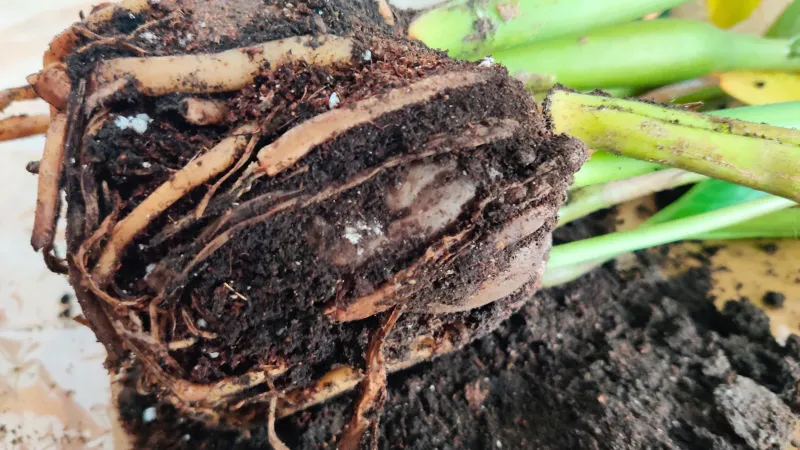
One important limit applies here: leaf color alone cannot confirm root rot or establish that overwatering is the most common cause of black peace-lily leaves. Iowa State University Extension’s root rot guidance describes healthy roots as firm and light-colored, while rotted roots are typically brown or black, soft, and mushy.
Supporting signs – a sour odor, wilting despite wet soil, and blackening at the crown or lower stems – strengthen the diagnosis considerably. Without those additional clues, the root zone remains a question rather than an answer.
Let the soil, drainage, and roots provide evidence
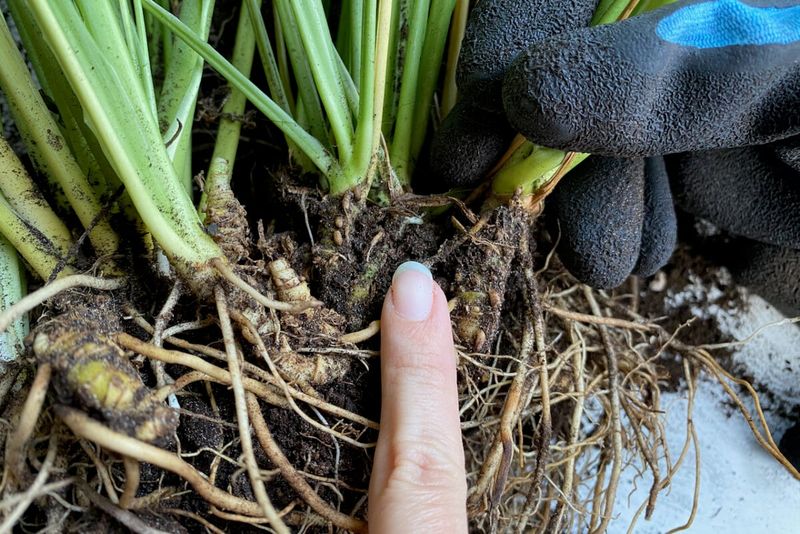
Start the inspection above the soil line before you remove the plant from its pot. Press a finger about one to two inches below the surface and hold it there for a moment.
If that zone feels cold, heavy, and wet several days after the last watering, drainage or watering frequency may be the problem. If the mix is barely damp or bone dry, the plant may be underwatered, which can also stress roots and cause dark foliage.
Next, check that the drainage holes are open and functional. Tip the pot slightly and look for blockage.
If water pools in a saucer or decorative cachepot and the pot sits in it, the bottom of the root ball stays saturated even when the top of the mix looks acceptable. Iowa State University Extension’s houseplant care guide advises allowing excess water to drain completely rather than leaving the pot standing in water.
When the surface moisture and drainage check both point toward waterlogging, slide the plant out of its pot and examine the root ball. Healthy roots should be firm and pale – white, cream, or light tan.
Roots that are brown or black, soft, and mushy, especially when paired with a sour odor, wilting despite wet soil, or dark discoloration at the crown or lower stem, support a waterlogging or root-rot diagnosis. University of Maryland Extension’s indoor root rot resource notes that these physical clues – root color, texture, and odor – are more informative than leaf color alone.
Reserve any repair steps until this inspection is complete.
Reset a waterlogged plant without overcorrecting
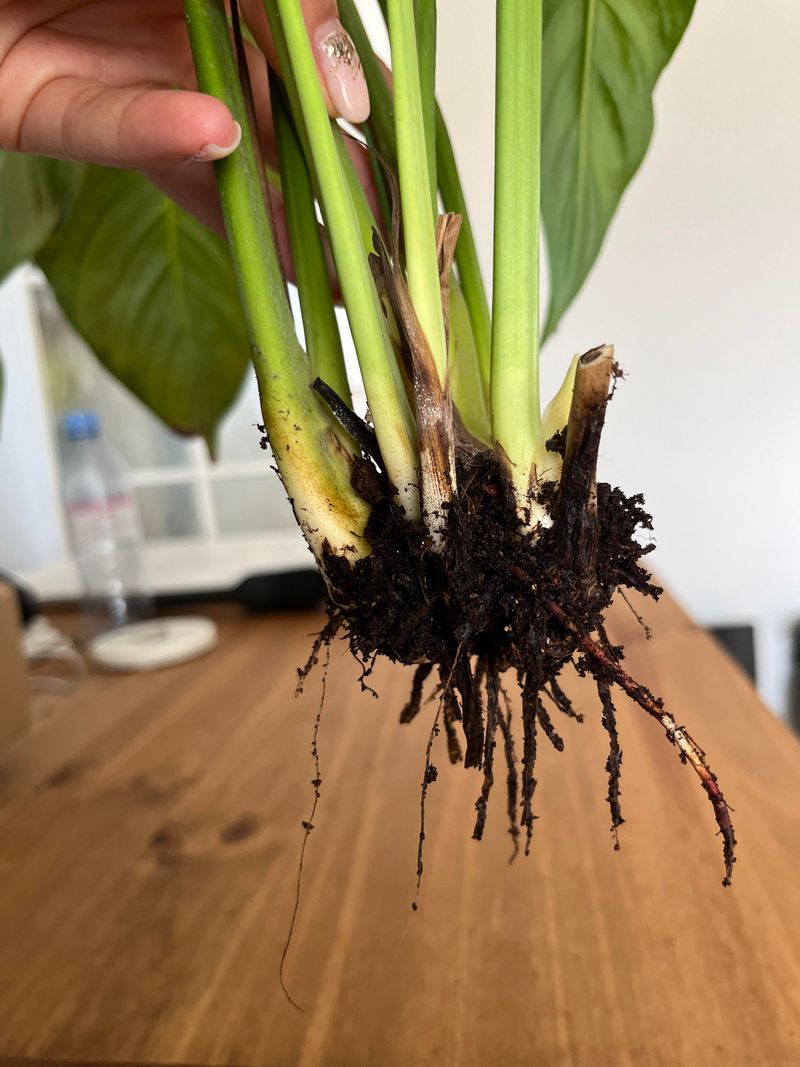
Once soil inspection, drainage check, and root examination all point toward waterlogging, a targeted rescue makes sense. Begin by removing any standing water from the saucer or cachepot and move the plant to a container that has working drainage holes.
If the current pot lacks them entirely, repotting is not optional – it is the correction.
Slide the root ball free and rinse it gently under lukewarm water so you can see what you are working with. Trim only the roots that are clearly dead or mushy – dark, soft, and collapsing when touched.
Use clean scissors or pruning shears, and wipe the blades with rubbing alcohol between cuts to avoid spreading any pathogens. University of Maryland Extension recommends discarding severely infected plants rather than attempting rescue, because heavily rotted root systems rarely recover and nearby plants can be exposed.
If the majority of roots are healthy and only a small portion are damaged, repotting into fresh, well-drained potting mix gives the plant a reasonable chance.
Going forward, check the upper one to two inches of the mix before each watering and water thoroughly only when that zone has dried out. After watering, let excess drain completely and empty the saucer within an hour.
Drying speed changes with the season, light level, and room temperature – a peace lily in a warm, bright Florida room in July dries faster than the same plant in a cooler, dimmer space in winter. UF/IFAS Spathiphyllum production guidelines specifically note that watering needs decrease during cold weather, which raises the risk of saturated soil if the same schedule continues year-round.
Fixed watering schedules and improvised remedies – including household chemicals – should be set aside entirely.
Use location and lesion shape to assess cold, sun, and buildup
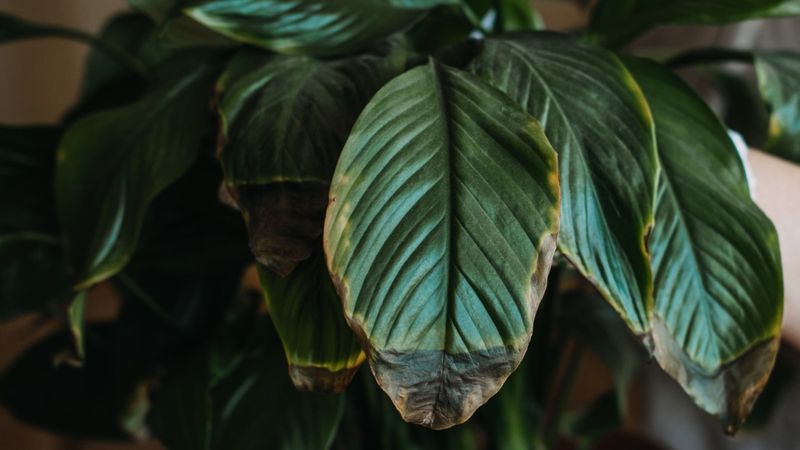
When the soil is appropriately moist, drainage works, and the roots look firm and pale, the cause of dark leaves is almost certainly something other than waterlogging. That narrows the field to cold exposure, light intensity, salt or fluoride accumulation, or chemical contact – and the lesion’s location and texture help sort them out.
Cold injury in peace lilies tends to begin at the tips and edges of leaves, then progress inward, eventually producing tissue that turns necrotic, black, and dry. UF/IFAS research on chilling injury in Spathiphyllum documented damage after prolonged exposure to temperatures as low as 38 degrees F, with some growth effects appearing even at 52 degrees F, and notes that cultivar sensitivity varies.
Critically, cold symptoms can continue developing for about a week after the exposure ends, so a plant moved away from a drafty window may still deteriorate temporarily before stabilizing. Check for proximity to exterior doors, cold glass panes, and air-conditioning vents, which can all push temperatures well below what the surrounding room feels like.
Direct sunlight produces a different kind of injury: irregular scorched patches, often bleached at first and then darkening, that appear on the leaf surfaces most exposed to the sun. UF/IFAS Florida foliage care guidance for Spathiphyllum recommends bright, indirect light rather than direct exposure.
NC State Extension lists approximately 68 to 85 degrees F as the suitable daytime temperature range for peace lilies, reinforcing that warmth and shade protection matter together. Salt or fluoride injury more typically affects leaf tips and margins rather than producing random central blotches; a white crust on the soil surface or the rim of the pot supports salt accumulation as a contributing factor.
UF/IFAS Nassau County Extension suggests running clean water through the mix several times and allowing it to drain fully as a way to reduce salt buildup, provided the plant is draining properly and root rot is not already suspected.
Treat expanding lesions as a disease possibility
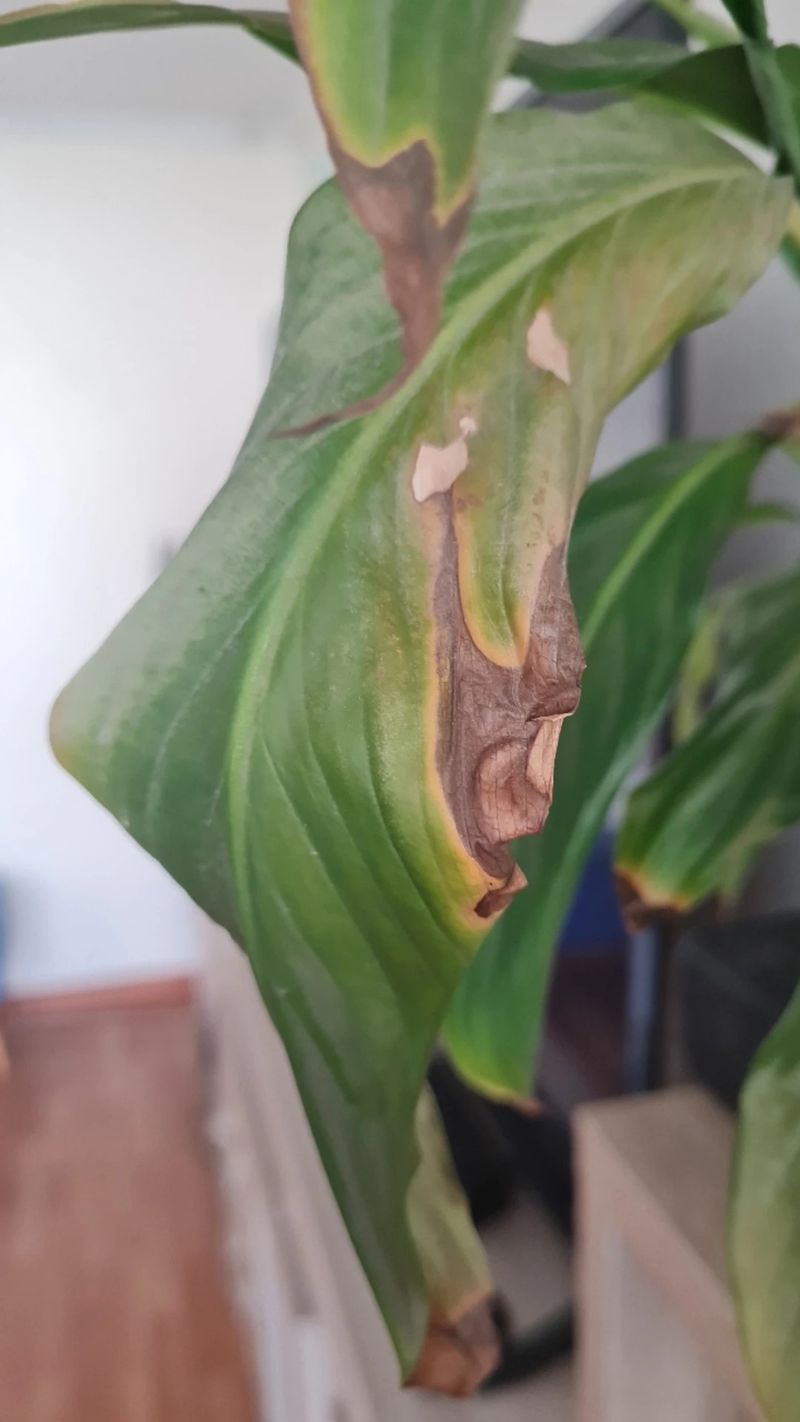
Leaf-spot disease moves differently from cold or salt injury. Rather than starting at the edges and working inward uniformly, fungal or bacterial spots often appear as discrete, roughly circular or irregular marks that can show up anywhere on the leaf surface.
They may be surrounded by yellow halos, have water-soaked margins, or merge into larger blighted areas as they enlarge. Lesions that keep expanding, multiply across multiple leaves, or cross leaf veins are worth treating as a disease concern rather than a simple environmental stress.
UF/IFAS Orange County Extension has specifically documented Cercospora leaf spot on Spathiphyllum, describing one pattern in which symptoms begin on older, lower leaves and appear progressively higher on the plant over time. That progression is one possible behavior of this particular pathogen, not a universal feature of every fungal or bacterial leaf spot.
Other pathogens can produce spots that appear scattered or concentrated without any clear upward movement.
Cultural and sanitation steps come before any fungicide consideration. Isolate the affected plant from other houseplants right away.
Iowa State University Extension’s houseplant disease guide advises keeping foliage dry, improving airflow around the plant, avoiding overhead watering, and preventing soil from splashing onto leaves during watering. Remove badly affected leaves cleanly and discard them – do not compost infected material.
Wipe pruning tools with alcohol before and after use. If a fungicide is considered after diagnosis, it must be labeled for the specific plant, pathogen, and setting; sanitation and cultural changes remain the foundation of any disease response.
Check for wipeable black film and raised marks
Not every dark marking on a peace lily is dead or diseased leaf tissue. Two lookalikes are worth ruling out before committing to any treatment plan, and both can be identified by texture and surface behavior rather than color alone.
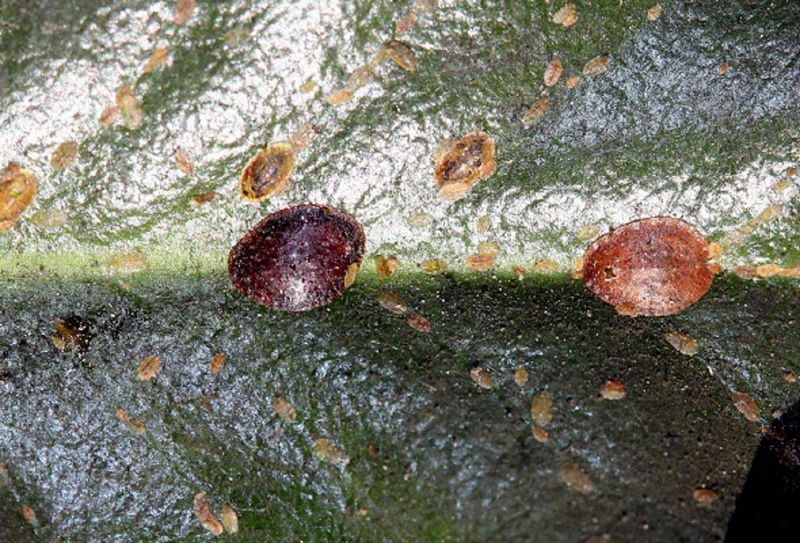
A black film or powder that wipes away cleanly with a damp cloth is not blackened plant tissue – it is likely sooty mold, a fungus that grows on the sticky honeydew secreted by sap-feeding insects. Ask Extension guidance on sooty mold points toward scale insects, mealybugs, and similar pests as the source.
Flip the leaves over and inspect their undersides, as well as the stems and the points where leaves attach. Look for small brown or tan bumps (scale), cottony white clusters (mealybugs), or sticky residue.
Treating the insect infestation removes the food source for the mold.
Raised blisters, bumps, or corky marks on the leaf surface that do not wipe away and feel rough or firm may indicate edema rather than a fungal disease. University of Maryland Extension’s edema resource describes this as a noninfectious water-balance disorder in which cells absorb more water than they can release, causing them to rupture and form raised, corky tissue.
Edema is well documented on a range of houseplants, but it should not be assumed to explain every blotchy mark on a peace lily without checking texture and surface height first.
Judge recovery by clean new growth
Once a cause has been identified and corrected, the temptation is to watch the damaged leaves for signs of improvement. That watch will disappoint every time.
Blackened tissue does not recover its color or function – those cells are gone. Pruning the damaged leaves removes the dead material and improves the plant’s appearance, but cutting leaves off does not confirm that the underlying cause has been resolved.
If the stress continues, new leaves will show the same damage.
Real recovery shows up in the new growth emerging from the plant’s center. University of Maryland Extension’s indoor plant diagnosis guide frames recovery in terms of whether conditions have genuinely changed, not just whether damaged tissue was removed.
Clean, fully green new leaves and a stable growth rate are the markers that matter. If new leaves arrive already spotted or blackened, the original stress is still present and the diagnosis needs another look.
Work through the checklist in order: root zone first, then temperature and light exposure, then salt or chemical accumulation, then lesion spread and texture for disease. UF/IFAS Spathiphyllum guidelines reinforce that correcting the growing environment – moisture balance, warmth, light quality, and drainage – is what allows a peace lily to stabilize.
A plant that pushes out clean new leaves has found its footing again; that first unmarked leaf is a more honest progress report than any amount of pruning.