
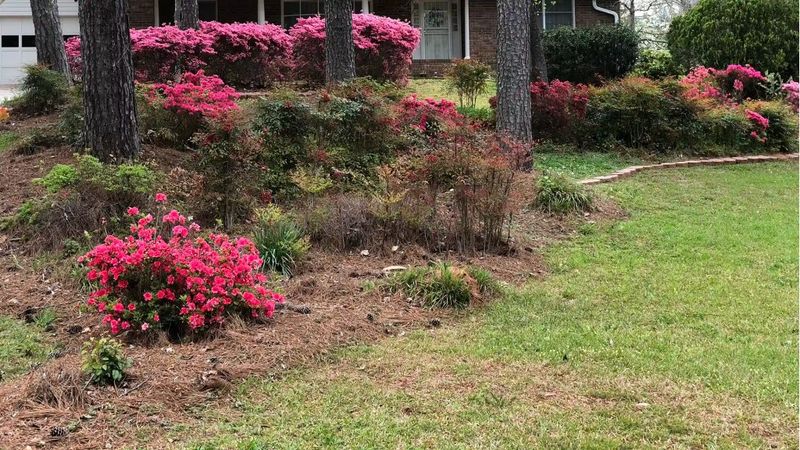
Picking the right mulch for your North Carolina yard is less about brand loyalty and more about reading your beds carefully. Pine straw works beautifully in some spots and quietly causes problems in others, and the same is true for wood mulch.
Neither material wins every situation, but knowing which one fits each bed can save you money, protect your plants, and keep your yard looking sharp season after season.
Let the bed—not the mulch label—make the decision
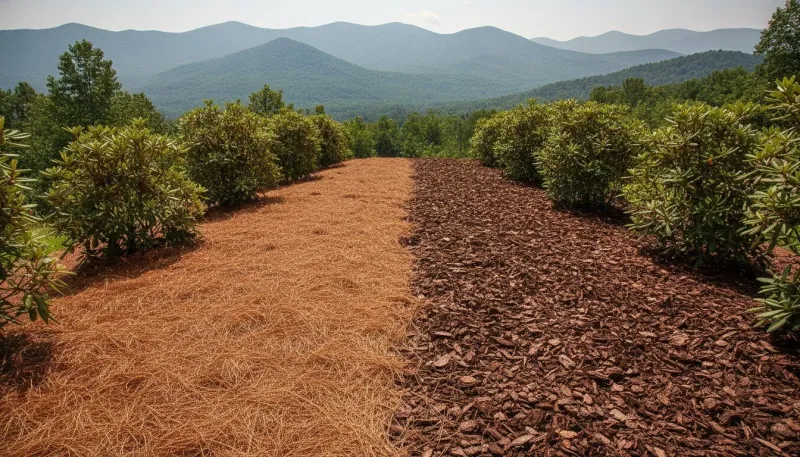
Before you load the truck with bales or bags, spend a few minutes reading the bed itself. Slope, drainage, sun and wind exposure, fire proximity, foot traffic, plant type, desired appearance, and how often you want to refresh the bed all shape which material actually performs there.
A mulch that works perfectly along a shaded woodland path may be a poor match for a flat foundation bed baking in afternoon sun.
Both pine straw and wood mulch share a solid set of benefits. NC State’s Extension Gardener Handbook on herbaceous ornamentals notes that organic mulches conserve soil moisture, moderate soil temperature, reduce erosion, suppress many annual weeds by blocking light, and gradually add organic matter as they break down.
Those benefits belong to both materials, so the question is never which one does the job and which one does not. The real question is which one fits this particular bed.
Weed suppression is a good example of where expectations need calibrating. Mulch blocks light and slows germination for many annual weeds, but some weeds still push through or germinate in the mulch itself.
University of Georgia Extension specialists confirm that both pine straw and wood products are acceptable for perennial beds, with no clear universal performance winner between them. Hand-weeding and other integrated methods remain part of any realistic maintenance plan regardless of which mulch you choose.
Treating this as a site-by-site decision rather than a brand preference protects you from buying the wrong material twice. Run through the checklist before you buy: slope, drainage, wind, fire risk, traffic, plant type, and how much time you want to spend maintaining the bed each year.
The sections that follow match each material to those conditions one by one.
Pine straw earns its place on slopes and light, informal beds
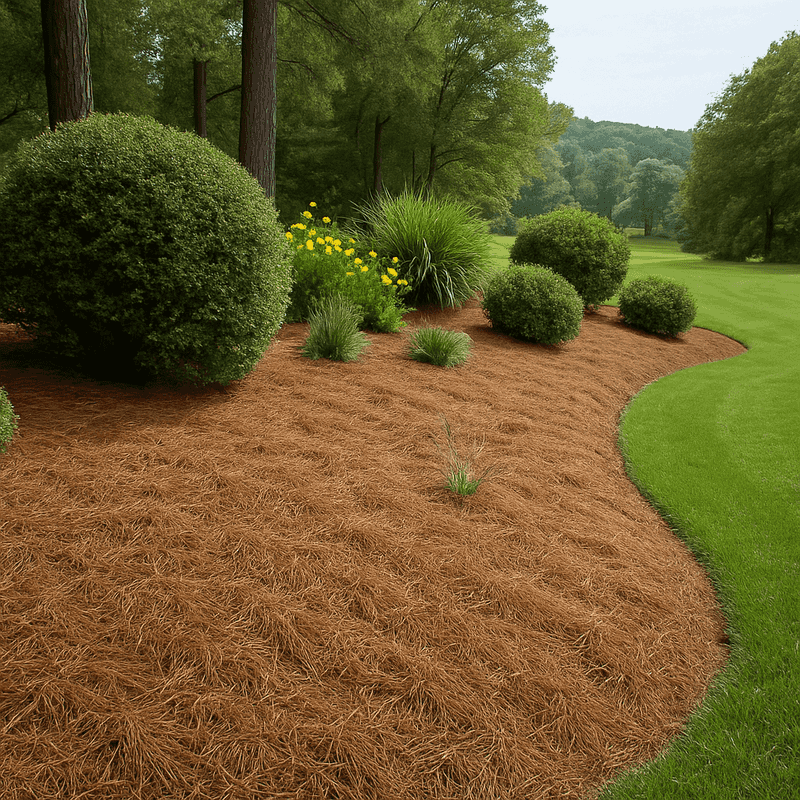
On a sloped bed after a hard summer rain, the difference between pine straw and loose bark nuggets becomes obvious fast. Pine straw’s fibrous needles interlock as they settle, forming a mat that resists being pushed downhill by runoff.
NC State’s herbaceous ornamentals guidance specifically highlights this interlocking habit as the reason pine needles can help stabilize slopes and allow water and air to penetrate the surface rather than running off.
That porosity matters in beds with shallow-rooted plants. Groundcovers, native ferns, and woodland perennials that sit close to the soil surface benefit from a mulch that lets rainfall soak in quickly without compacting over the root zone.
Pine straw stays loose enough to let oxygen move through, which suits roots that need both moisture and air.
Woodland-style plantings and informal naturalized areas are another natural fit. The look of pine needles blends with a relaxed, organic aesthetic that coarse wood chips sometimes overpower.
NC State’s longleaf pine straw management publication describes pine straw as a widely used decorative cover, erosion-control layer, and weed barrier in natural areas across the North Carolina coastal plain, where longleaf pine is native and straw is locally abundant.
Weight and handling are practical advantages that rarely show up in comparison charts. Pine straw is lightweight enough to carry in large bales without straining, spread without heavy equipment, and tuck around delicate stems without crushing them.
For homeowners managing a long sloped border or a hillside bed alone, that ease of handling is a real benefit.
The one honest caveat: pine straw’s interlocking structure holds reasonably well on slopes, but an open, windy site can scatter loose needles. Exposed beds may need refreshing more often than sheltered ones, so factor that maintenance reality into your choice before committing to the material.
Level foundation beds often favor substantial, longer-lasting wood mulch
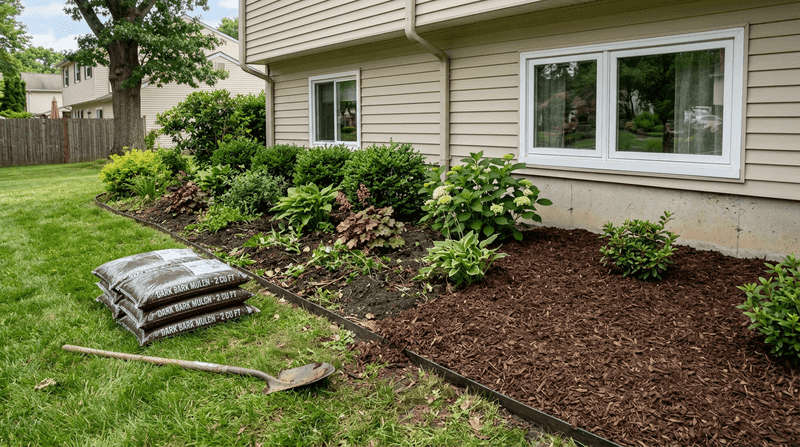
A flat foundation bed running along the front of a house asks different things from a mulch than a sloped woodland border does. There is no slope to knit across, no runoff to resist.
What matters here is staying power, coverage depth, and a tidy appearance that holds up through summer heat, fall rains, and foot traffic near the entry. Aged wood chips, bark, or coarse shredded hardwood generally deliver that better than pine straw does in this setting.
A University of Georgia Extension master gardener resource describes wood chips and bark as longer-lasting choices compared to pine straw, which may need more frequent refreshing. Longevity is not a fixed number, though.
Particle size, moisture level, local climate, and decomposition rate all affect how long a wood mulch holds its volume and appearance. Finely shredded hardwood breaks down faster than coarse bark nuggets, so the product you choose within the wood mulch category matters almost as much as choosing wood mulch over pine straw.
Weed suppression in a level foundation bed is often better served by a more substantial layer that stays put. That said, no organic mulch eliminates weeds entirely, and NC State’s ornamentals guidance makes clear that hand-weeding remains part of any realistic maintenance plan.
Tie the recommendation to longer service life and solid coverage rather than expecting the mulch to do all the weed work.
Not all wood mulch performs the same way, and sourcing deserves attention. Fresh wood chips with high carbon content can temporarily draw nitrogen from the soil surface as they decompose.
University of Minnesota Extension research on mulch alternatives notes that this nitrogen tie-up is most relevant when high-carbon material is incorporated into soil, not when aged chips are applied on the surface around established plants. Ask your supplier whether the material is aged, and avoid recycled wood from pallets or construction debris when the source is difficult to verify.
Some conditions call for caution, reduced mulch, or a different surface
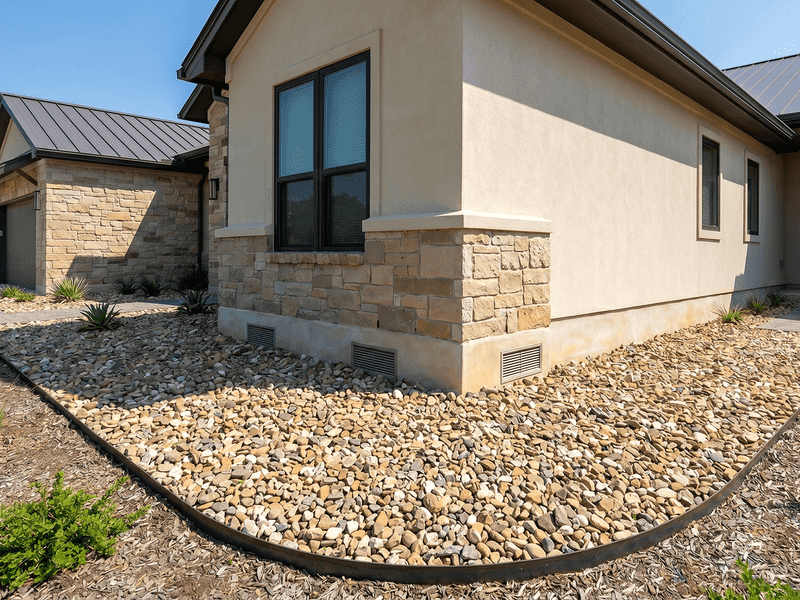
Fire exposure is the most serious reason to change your mulch plan entirely. NC State’s fire-resistant landscaping guidance recommends removing combustible mulch and organic debris within 5 feet of a home and using nonflammable materials such as gravel or crushed stone in that immediate zone.
Pine straw is particularly flammable, but wood mulch is also combustible. Neither belongs against the foundation in fire-prone conditions.
Local ordinances may add their own requirements, especially for multifamily properties or high-density neighborhoods, so check with your municipality before you mulch that inner zone.
Poorly drained beds are a quieter problem that homeowners often try to mulch through. Adding more organic material on top of soil that already stays wet keeps the root zone wetter longer, which can promote root rot and disease.
UGA’s shade and street tree care guidance advises correcting drainage rather than compensating with mulch. Use less material in a wet bed, improve the drainage, and then reassess whether mulch makes sense at the adjusted depth.
Foot-traffic areas call for a different approach as well. Pine straw compresses, scatters, and breaks down quickly underfoot, making it a poor choice anywhere people regularly walk.
UGA’s mulching in the landscape resource identifies pine straw as unsuitable for foot-traffic areas, while coarse wood mulch or bark can handle informal, low-traffic paths. Neither material substitutes for a hard, stable walkway where traffic is consistent.
Windy sites round out the list of conditions that change the normal recommendation. An open, exposed bed on a ridge or along a coastal property can scatter pine needles faster than they settle, requiring more frequent reapplication to maintain coverage.
NC State extension guidance acknowledges that wind can disperse pine straw even when its interlocking habit provides slope stability. On exposed sites, coarser wood mulch may hold position better, or windbreaks and plant spacing may need adjustment before any mulch performs reliably.
Plant type and soil goals can override the usual recommendation
Slope and drainage are useful starting points, but plant type can flip the recommendation even in a bed that otherwise fits the standard profile. NC State specifically warns against using pine straw around pansies and violas.
NC State’s weed management guidance for annual color beds identifies pine straw as a mulch that can reduce growth and flowering quality in these popular cool-season annuals. That caution applies to pansies and violas specifically and should not be stretched to cover every annual or perennial, but it illustrates why plant response belongs in the decision.
Vegetable beds deserve their own conversation, separate from ornamental-bed advice. UGA’s guide to weed control for home vegetable gardeners does not broadly recommend pine straw for vegetable beds, though it may suit some fruit plants.
Straw, wood chips, or other materials may perform better depending on the crop, bed design, and seasonal timing. Treat edible and ornamental beds as separate categories rather than applying one mulch rule across the entire yard.
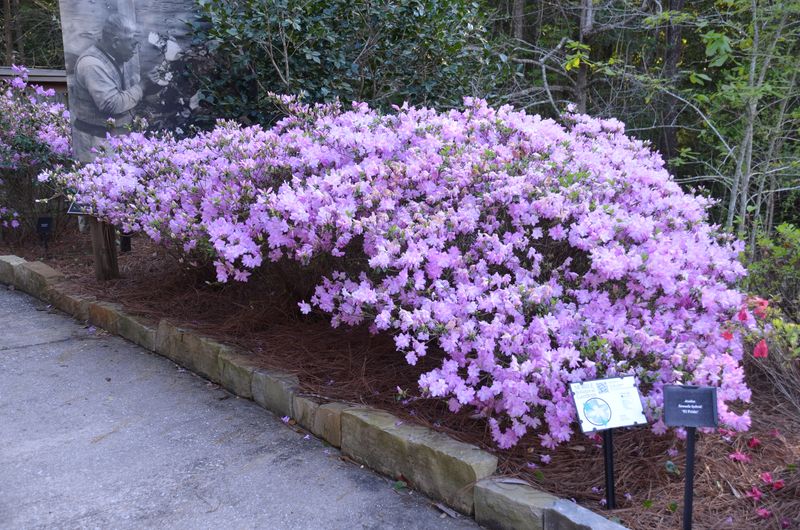
The pH question comes up constantly around acid-loving plants like blueberries and azaleas, and it is worth addressing plainly. Pine needles do not reliably acidify soil in the way many gardeners expect.
NC State’s herbaceous ornamentals handbook notes that mulch has little effect on soil chemistry below about 2 inches, and any pH shift from pine needles happens only very gradually over many years. If your blueberries or azaleas need a lower pH, a soil test and a calculated amendment such as elemental sulfur are the reliable path.
NC State’s acidifier rate calculator helps homeowners determine how much amendment their specific soil actually needs.
Regional soil texture adds one more layer to the decision. NC State research on NC soil types confirms that Coastal Plain soils tend to be sandy and drain quickly, while Piedmont and mountain soils are more commonly clay loams that hold moisture longer.
A mulch choice that works well in a fast-draining sandy Coastal Plain bed may stay too wet in a heavy clay Piedmont border. Adjust depth and material to the drainage behavior of the specific bed, not just to your general region.
Install either mulch carefully and keep expectations realistic
Clean material is the first requirement for either choice. Inspect pine straw bales for mold, heavy dirt, or obvious contamination before spreading them.
For wood mulch, ask your supplier about the source. Penn State Extension’s mulch survey notes that recycled wood from pallets or construction debris can be difficult to verify and may carry contamination concerns, especially around edible crops.
Aged, coarse material from a traceable source is a safer starting point than bargain-priced recycled wood of unknown origin.
Depth guidance is material-specific rather than one universal number. NC State’s planting guidance recommends roughly 3 to 4 inches of organic mulch for established perennial landscape beds and advises against exceeding 4 inches total.
Pine straw-specific guidance from NC State runs a bit shallower, around 2 to 3 inches, because the needles pack down less than shredded wood and maintain coverage at a lighter depth. Apply the depth that matches your material and bed conditions rather than defaulting to the thickest layer you can manage.
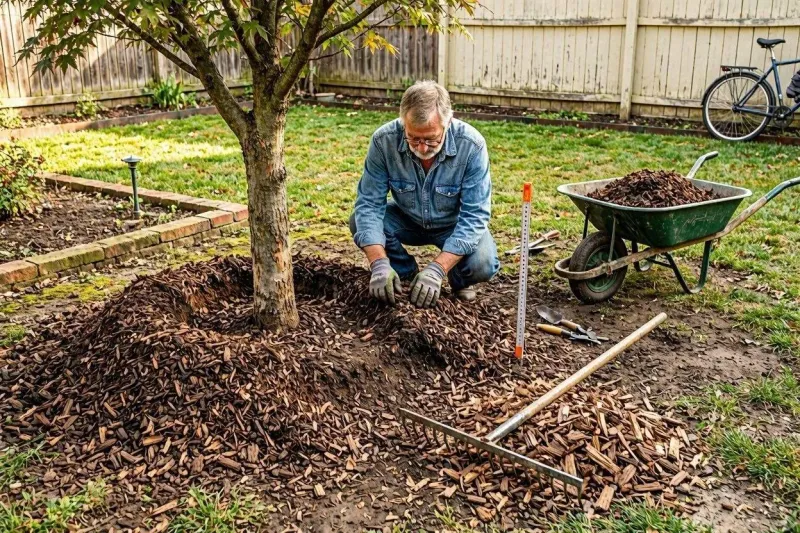
Trunk and stem clearance is non-negotiable with either material. Spread mulch broadly across the root zone to capture the moisture and temperature benefits, but keep it pulled back from trunks, root flares, stems, and crowns.
NC State’s woody ornamentals handbook recommends at least 6 inches of clearance around tree trunks and shrub crowns. Mulch piled against bark holds moisture against the wood, promotes decay and disease, and gives voles and mice a sheltered runway to the base of your plants.
The classic mulch volcano is one of the most common yard mistakes in North Carolina neighborhoods, and it harms trees slowly enough that many homeowners never connect the cause to the decline.
Weed control expectations need calibrating too. NC State’s ornamentals guidance confirms that mulch suppresses many annual weeds by blocking light, but some weeds germinate in the mulch layer itself or push through from below.
An integrated pest management approach that combines mulch with periodic hand-weeding keeps beds cleaner than mulch alone. Set that expectation before the first growing season and the maintenance routine feels routine rather than disappointing.
Choose the material you can maintain in each bed
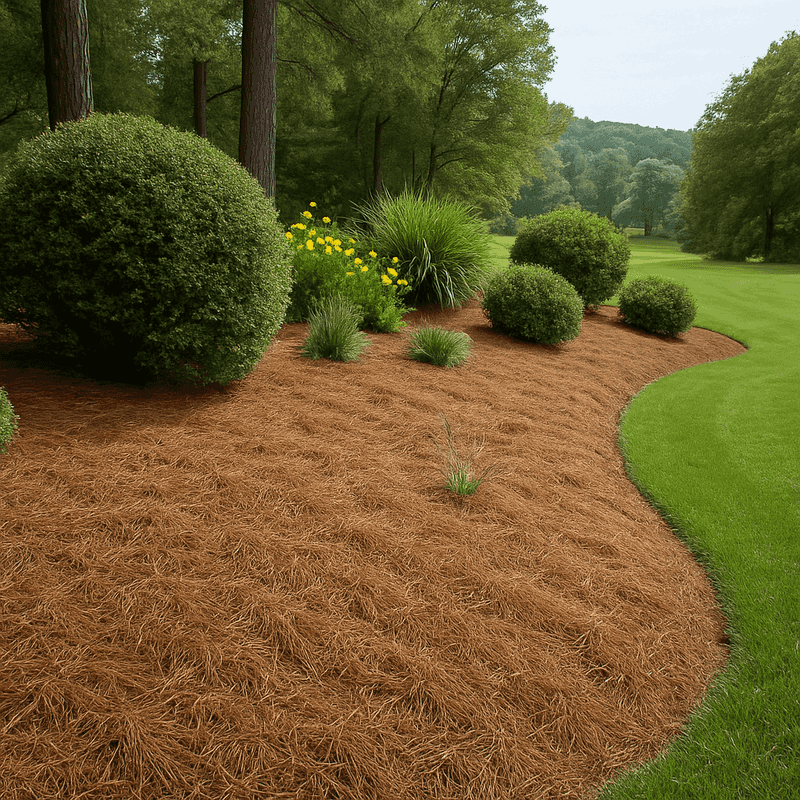
A simple decision rule covers most North Carolina beds. Reach for pine straw on stable slopes, porous informal beds, and plantings with shallow-rooted perennials or native groundcovers where periodic refreshing fits your schedule.
Choose aged wood chips, bark, or coarse shredded hardwood for level shrub borders, foundation beds, and tree rings where longer coverage and a more substantial surface matter more than light weight or easy handling.
Near the house, neither organic mulch belongs in the immediate 5-foot zone. NC State’s fire-resistant landscaping guidance is clear: use gravel, crushed stone, or another nonflammable surface there, and check local requirements before you plant or mulch that zone.
In poorly drained beds, fix the drainage before you worry about which mulch to use. In beds that receive regular foot traffic, plan for a proper path surface rather than expecting any organic mulch to hold up.
Depth, clearance, and clean material matter as much as the choice between pine straw and wood mulch. NC State’s ornamentals guidance ties good results to matching material, application depth, and trunk clearance to the specific bed rather than following a single rule across the yard.
The best mulch decision is the one you can actually maintain, season after season, in the bed in front of you.