
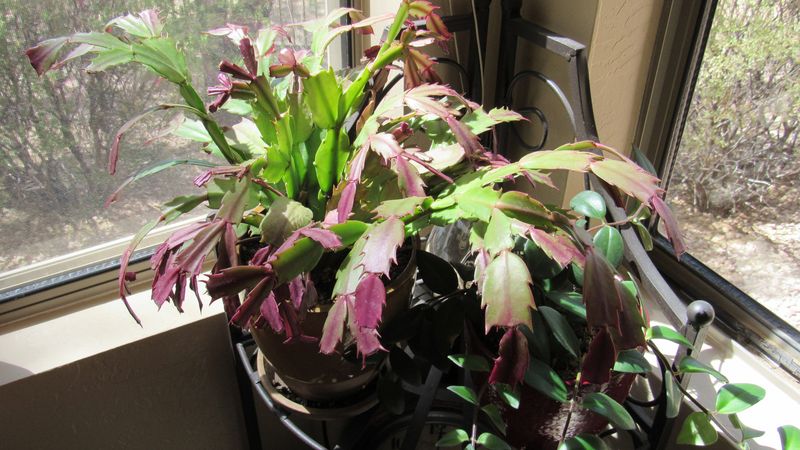
When a houseplant starts turning purple or developing strange blotchy patches, it is easy to panic and assume the worst. That color change can mean several different things, and jumping to the wrong fix can actually make the problem worse.
Knowing how to read the pattern, location, and timing of the color change puts you in a much better position to help the plant recover.
Purple leaves and purple blotches are different clues
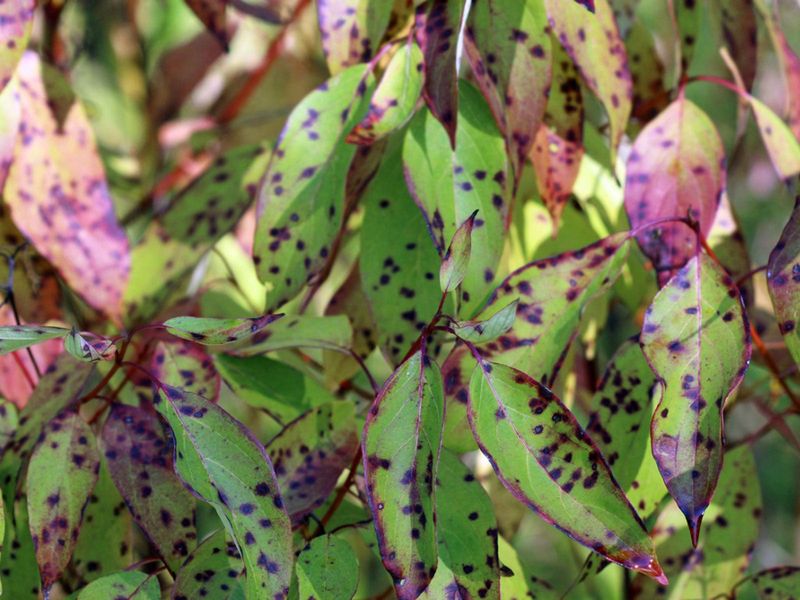
Color alone cannot tell you what is wrong with a houseplant, and the shape of the color change matters as much as the color itself. Broad, fairly even purple or reddish-purple tones across a leaf are produced by anthocyanins, the same pigments that create red, blue, and purple hues in many plants.
Michigan State University Extension research on purple leaves explains that this kind of coloration can be a normal varietal trait in some cultivars, or a reversible response to environmental conditions like cool temperatures or strong light.
Distinct blotches tell a different story. Expanding spots that appear water-soaked, target-shaped, angular, or sunken – or areas of dead tissue ringed by a different color – point toward injury, disease, or pest feeding rather than a whole-plant anthocyanin response.
University of Maryland Extension guidance on fungal leaf spots notes that these lesions have specific shapes and borders that help separate them from general discoloration.
Anthocyanin coloring can shift depending on conditions. Published plant pigment research confirms that some naturally purple-leaved plants become greener under lower light, while green-leaved plants can develop purple tones under high light or cool conditions.
Because nutrient, root, light, temperature, pest, and disease symptoms can look alike, Penn State Extension’s plant problem diagnosis guide recommends treating visual observation as a screening step rather than a final answer.
Several stresses can produce purple coloration
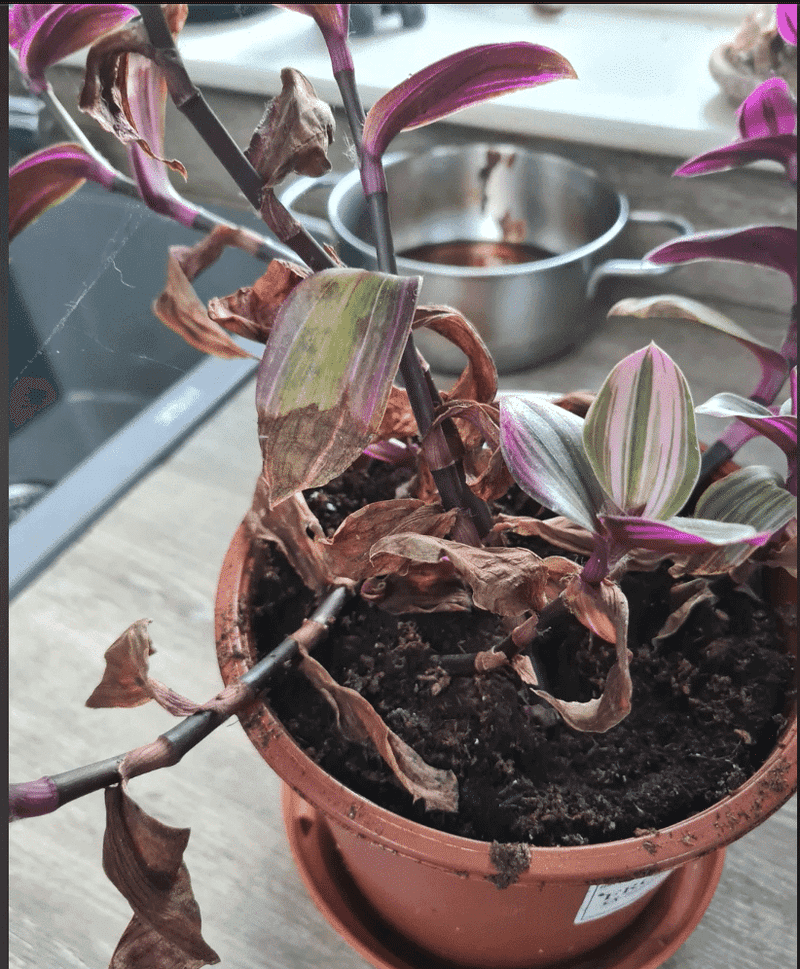
Purple or reddish tones in houseplant foliage can come from more than one direction at once, which is part of what makes a single-color diagnosis unreliable. Cold temperatures, strong or sudden light exposure, drought stress, and nutritional pressures can all trigger anthocyanin production.
MSU Extension’s purple leaves overview lists these as competing environmental triggers rather than a ranked list with one dominant cause.
Genetics also play a role. Some cultivars are bred or selected specifically for purple foliage and will hold that color under a wide range of conditions.
Others develop purple tones only when stressed and return to green once conditions improve. Research on anthocyanin biosynthesis shows that the same pigment pathway responds to multiple signals, so two plants showing the same purple color may be responding to completely different pressures.
Root-zone problems add another layer. Cold, persistently wet, compacted, or damaged roots lose their ability to absorb oxygen and nutrients efficiently.
Penn State plant science documentation on phosphorus deficiency points out that a plant can display phosphorus-stress symptoms even when the potting mix contains phosphorus, simply because impaired roots cannot take it up. Penn State’s diagnostic framework recommends checking environmental and root-zone conditions before concluding that a nutrient is missing from the mix.
Check temperature and light before changing the feed
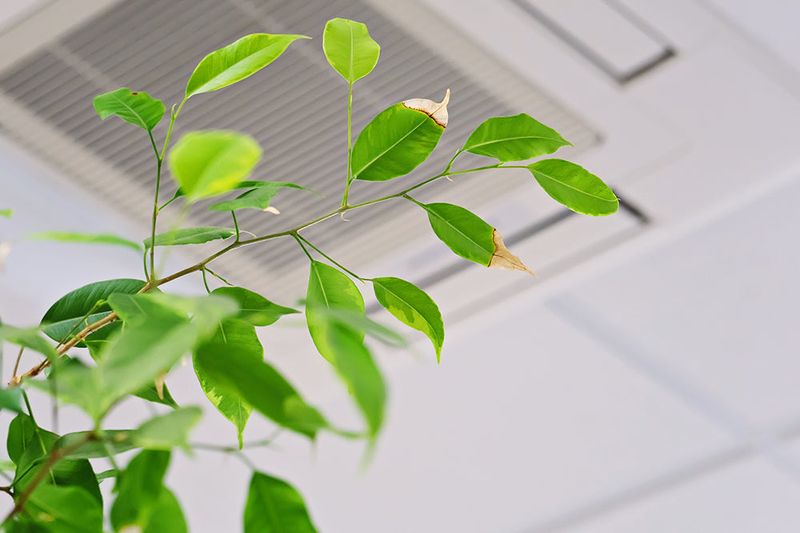
Start the inspection at the plant’s location rather than the fertilizer shelf. Many common houseplants can be injured by temperatures at or below about 50 degrees F, and Iowa State University Extension temperature guidance for houseplants notes that rapid temperature swings and cold drafts can cause damage even when the average room temperature seems fine.
Foliage that is actually touching cold window glass is especially vulnerable.
Southern homes present specific cold-exposure points that are easy to overlook. Air-conditioning vents can push cool air directly onto nearby plants during long cooling seasons in Florida and Texas.
Exterior doors that open frequently, drafty window frames, and rooms kept unusually cool can all expose plants to temperature stress that reads as purple or reddish discoloration. UConn Extension’s houseplant growing guide and UC IPM’s houseplant problem overview both flag placement near drafts and cold surfaces as common contributors to leaf discoloration.
Light is the second check. If the plant moved recently to a sunnier windowsill, a patio during warm months, or a spot closer to a grow light, abrupt light exposure can stress the foliage.
University of Missouri Extension’s houseplant care publication recommends acclimating plants gradually to higher light rather than moving them all at once. University of Arkansas Extension’s sunburn notes confirm that bleaching, scorching, or discoloration from abrupt light changes can mimic other stress symptoms.
Timing the color change to a recent move is a useful clue worth writing down.
Inspect wet soil, drainage, and roots
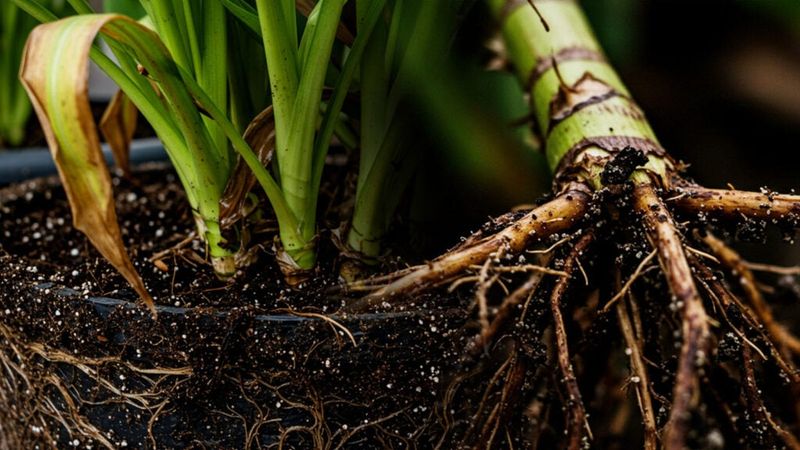
Before reaching for any fertilizer, check what is happening below the soil surface. Persistent wet conditions, poor drainage, or compacted mix can quietly damage a root system over weeks.
West Virginia University Extension’s houseplant care resource explains that waterlogged roots lose access to oxygen, which impairs their ability to absorb nutrients and water even when both are technically present in the mix.
Press a finger about an inch into the potting mix and note how it feels. If the mix stays wet or muddy for days between waterings, check whether the drainage hole is blocked, whether the pot is sitting in standing water, and whether the mix has compacted into a dense mass that sheds water rather than absorbing it.
Iowa State Extension’s poor culture diagnosis guide lists these conditions as common contributors to discoloration, wilting, and slow growth. When it is safe to do so without damaging fragile roots, gently slide the root ball out and look at the root color and texture.
Firm, light-colored roots are healthy; brown, mushy, or foul-smelling roots indicate rot.
Watering by a fixed calendar often causes more problems than it solves. For many foliage houseplants, UC ANR’s watering guidance and Iowa State’s houseplant care how-to recommend letting the upper inch or so of mix begin to dry before watering, then soaking the root ball thoroughly and letting excess water drain completely.
Succulents, cacti, and other drought-adapted plants need a substantially drier cycle between waterings. Matching the watering approach to the species matters as much as the watering amount.
A note from UConn Extension’s Monstera care guide illustrates how even popular tropical plants can suffer from overwatering when owners follow a rigid schedule.
Use blotches to investigate pests, injury, and disease
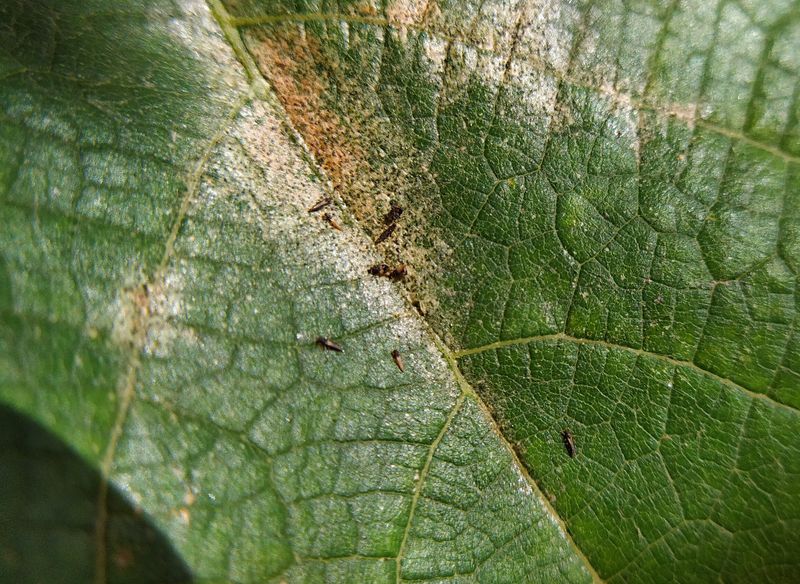
Spots and blotches need their own investigation, separate from the question of why a plant looks uniformly purple. Pull out a hand lens or use a phone camera zoomed close to examine both sides of affected leaves carefully.
Fine pale stippling across the upper surface, a bronzed or dusty appearance, or fine webbing on the undersides can all suggest spider mites. University of Minnesota Extension’s spider mite guide notes that populations can build quickly on stressed or drought-stressed plants, making thorough inspection of the leaf undersides especially important.
Thrips leave a different signature. Silvery streaking or scarring on the leaf surface, slight distortion of new growth, and tiny dark specks of frass on the leaves or nearby surfaces are common signs.
University of Maryland Extension’s indoor plant insect resource covers both thrips and mites along with other common houseplant pests and their distinguishing marks.
Spreading spots with defined borders, water-soaked edges, or concentric rings point more toward fungal or bacterial leaf disease. Sunburn, chilling injury, overwatering, and chemical damage from fertilizer salts or pesticide residue can create marks that look similar.
UC IPM’s houseplant problem overview and Clemson Extension’s houseplant disease factsheet both list these overlapping causes. When spreading spots or pest signs are present, move the plant away from others, remove badly affected leaves, and improve air circulation around the plant.
Avoid wetting the foliage, since wet leaves and crowded conditions favor many fungal and bacterial pathogens. These steps reduce risk and slow spread, though they cannot guarantee recovery in every situation.
Phosphorus becomes plausible only when the pattern fits
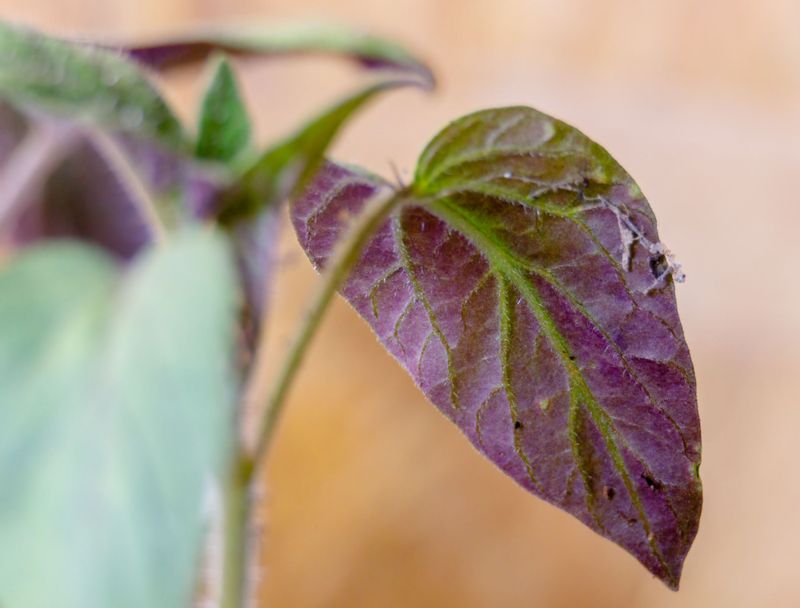
Phosphorus stress has a recognizable pattern when it genuinely is the issue. Purpling that starts on older, lower leaves while younger leaves remain dark green, combined with stunted growth, unusually small leaves, or sluggish development overall, makes phosphorus stress a more plausible explanation.
Iowa State University Extension’s phosphorus deficiency identification page describes this older-leaf-first progression as a characteristic feature because phosphorus moves from older tissue to support new growth when supplies are limited.
Even that pattern comes with an important qualifier. Penn State plant science documentation makes clear that cold, wet, compacted, or damaged roots can produce the same phosphorus-stress appearance without the potting mix actually being depleted.
The plant looks deficient because impaired roots cannot absorb what is already there. Fixing the root-zone problem – improving drainage, correcting temperature, or repotting into fresh mix – can sometimes resolve the purpling without adding any phosphorus at all.
When the pattern does fit and the plant is actively growing, a soil or growing-media test is the most reliable next step before adding nutrients. Alabama Cooperative Extension’s phosphorus basics resource explains sufficiency ranges and why testing matters before supplementing.
If testing is not practical and fertilization seems appropriate for the species, UConn’s houseplant fertilizing guidance recommends using a complete, balanced houseplant fertilizer according to its label rather than automatically reaching for a high-phosphorus product. Excess fertilizer salts can injure roots and cause browning, wilting, or a white crust on the soil or pot rim, which would worsen the problem rather than solve it.
Follow a low-risk sequence and know when to escalate
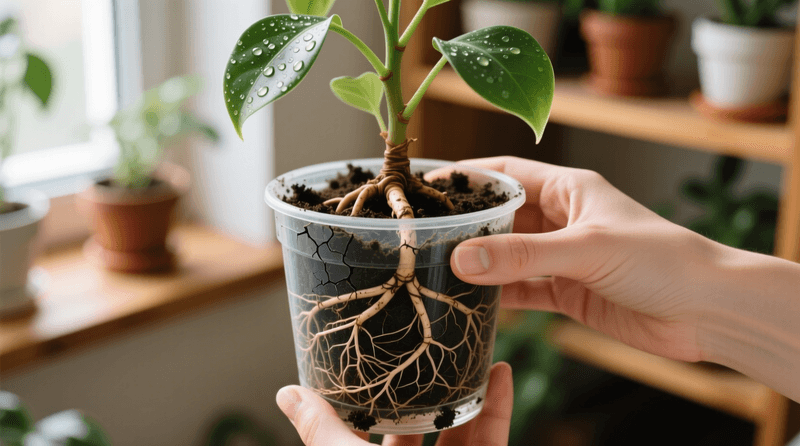
Working through a short, ordered sequence keeps you from treating the wrong problem. Start by writing down what you see: which leaves are affected, whether the change is uniform or spotty, when it first appeared, and whether anything changed recently – a move, a temperature drop, a new fertilizer application, or a watering schedule shift.
Penn State Extension’s plant problem diagnosis guide treats this kind of documentation as the foundation of any reliable diagnosis.
From there, correct the most obvious environmental mismatches first. If the plant is sitting near an air-conditioning vent, a drafty door, or cold glass, move it to a more stable location.
If it recently shifted to stronger light, ease it back to its previous spot and reintroduce light gradually. Then assess the root zone: check soil moisture, drainage, and root health before adding anything to the mix.
Virginia Cooperative Extension’s houseplant care publication reinforces that correcting cultural conditions often resolves discoloration that looks like a nutrient problem.
If spreading spots or pest signs appear, isolate the plant and remove badly affected leaves. Avoid misting the foliage, since wet leaves in crowded or poorly ventilated spaces can encourage fungal and bacterial diseases.
University of Maryland Extension’s fungal leaf spot resource and NC State Extension’s container plant chapter both caution against routine pesticide or fungicide use before the pest or pathogen is identified, the plant species is considered, and indoor-use labeling is confirmed. UF/IFAS Extension’s houseplant diagnosis guide notes that severe wilting, rapid dieback, expanding lesions, or advanced root rot may call for a more careful diagnosis or, in some cases, disposal of the plant to protect others nearby.
Only after environmental and root-zone conditions are addressed should fertilization be considered, and only when the species is actively growing and the label supports it. UConn’s fertilizing guidance warns that blind phosphorus applications can injure already-stressed roots through salt buildup.
Let the evidence behind the color guide the next step
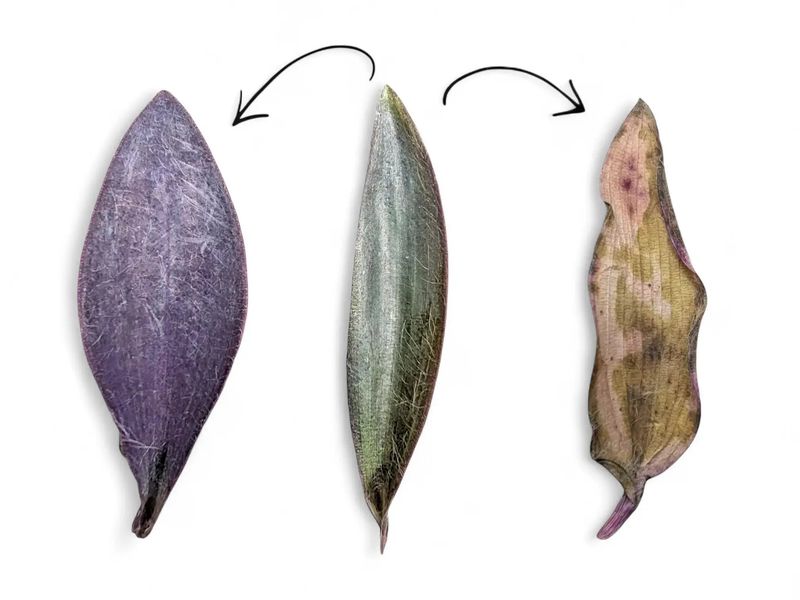
Purple coloration in a houseplant does not point to one hidden cause, and blotchy spots require a separate look entirely. UC IPM’s houseplant problem overview lists cold injury, light stress, water problems, nutrient stress, pests, fungi, bacteria, and chemical injury as distinct possibilities – not a single underlying issue.
Environmental and root-zone conditions are worth checking first because they are common, actionable explanations that can often be corrected without products or treatments.
Pattern, timing, placement, and species all shape what the color actually means. Penn State Extension’s diagnostic framework and MSU Extension’s purple leaf research both support matching any correction to the observed evidence rather than reacting to the color alone.
A plant that turns purple near a cold vent and a plant with expanding lesions on its leaf undersides are telling different stories, and they need different responses.