
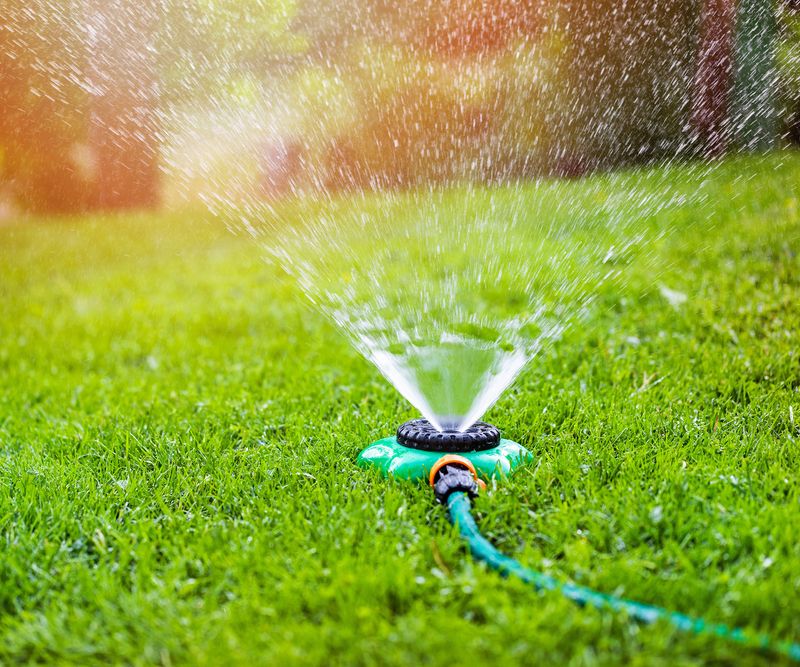
Many Southern homeowners have heard that watering a lawn in full sun will scorch the grass, and that fear can leave stressed turf without the water it desperately needs. The real picture is more straightforward: available evidence does not support ordinary sprinkler droplets in sunlight as a credible cause of widespread lawn scorch.
Getting the facts right means your lawn gets water when it needs it most, and you can still make smart choices about timing and technique to stretch every drop.
The Evidence Does Not Support the Lawn-Burning Water-Drop Myth
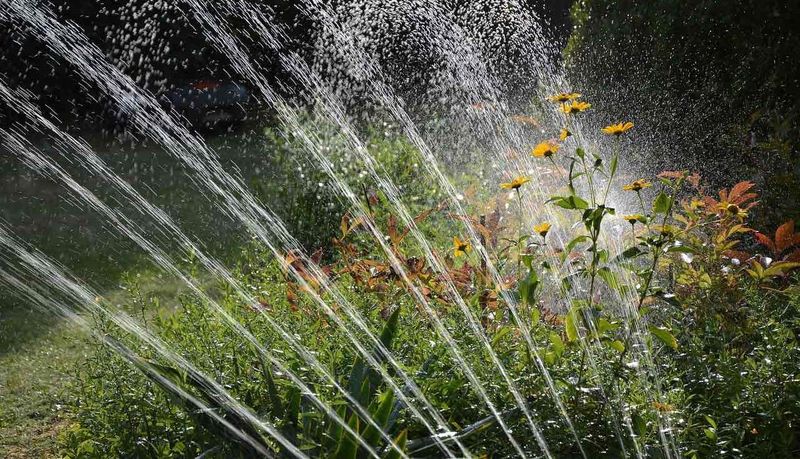
Somewhere along the way, a persistent piece of lawn-care folklore took hold: water your grass while the sun is shining and the droplets will act like tiny magnifying glasses, focusing light onto the blades and burning them. Homeowners across Florida and Texas have let stressed turf go without water on hot afternoons because of this idea.
The problem is that a peer-reviewed study examining how sunlight interacts with water droplets on leaves found no visible sunburn on smooth, hairless leaf surfaces under ordinary conditions.
Damage did appear in one narrow scenario: when droplets were physically held above a leaf by tiny surface hairs or specialized structures, the geometry changed enough to produce localized injury in the lab. That is a very different situation from a standard sprinkler wetting a lawn.
The study also did not exhaustively test every turfgrass species, every sprinkler type, or every possible combination of heat and humidity, so the practical takeaway is carefully scoped: ordinary full-sun lawn watering is not a credible explanation for widespread grass scorch.
What does that mean for a homeowner staring at a wilting lawn at noon in July? UF/IFAS guidance on watering Florida lawns recommends irrigating established turf on an as-needed basis.
Do not delay necessary irrigation simply because the sun is out. Drought stress is a real and immediate threat; the magnifying-glass mechanism is not.
Full-Sun Watering Can Waste Water Without Burning the Grass
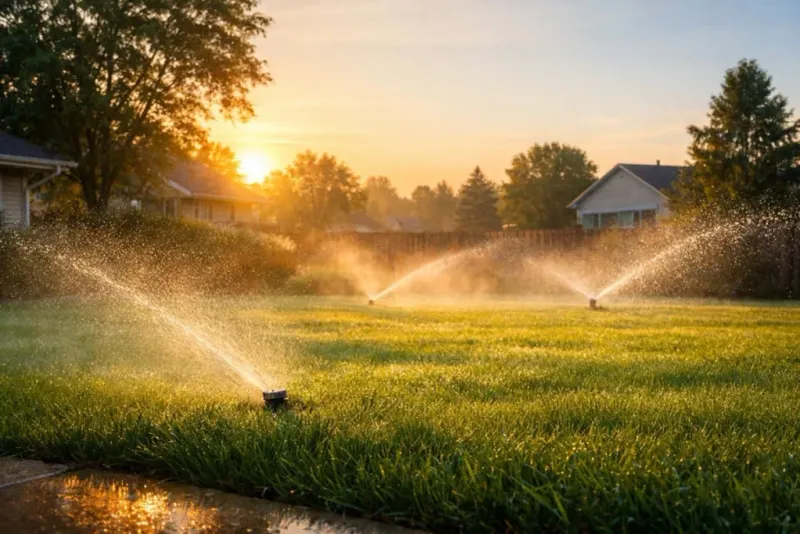
Replacing one myth with a vacuum does not help anyone, so here is what actually goes wrong when you run sprinklers in the heat of the day. Heat, sunlight, and wind all speed up evaporation, meaning a portion of the water your system puts out may never reach the root zone.
EPA WaterSense notes that watering during the hottest part of the day can increase water loss and reduce the amount actually absorbed by the soil.
Beyond evaporation, poorly adjusted sprinkler heads, overspray onto pavement, and high application rates that exceed the soil’s absorption speed all contribute to wasted water. On a windy afternoon, fine mist from rotary heads can drift several feet off target before it ever touches the turf.
None of these problems involve sunlight burning the grass; they are mechanical and atmospheric inefficiencies that reduce how much usable water your lawn actually receives.
UF/IFAS turf irrigation guidance points out that timing, system calibration, and application rate all affect how efficiently water reaches the root zone. Midday watering may underperform on hot, breezy days for those reasons, but it does not inherently kill or scorch turf.
The distinction matters: fixing the real problem means adjusting your system and timing, not avoiding the hose out of fear of nonexistent grass fires.
Choose Early Morning When Conditions and Rules Allow
Early morning has earned its reputation as the preferred irrigation window for many Southern lawns, and the reasons are practical rather than mythological. Temperatures are lower, wind is usually calmer, and the sun has not yet begun driving evaporation at full speed.
UF/IFAS turf irrigation guidance identifies approximately 4 to 6 a.m. as an efficient window for Florida lawns, though that is a Florida-specific recommendation, not a universal rule that applies identically to every Southern state, grass type, or irrigation setup.
One additional advantage of early-morning watering is that foliage has the entire sunny day to dry. That matters most for susceptible turf.
UF/IFAS guidance on gray leaf spot in St. Augustinegrass specifically cautions against late-afternoon or early-evening irrigation in humid conditions because prolonged wet foliage raises disease pressure. If your lawn is St. Augustinegrass in a humid Florida climate, that caution carries real weight.
Evening irrigation is not automatically a bad choice everywhere. EPA WaterSense lists both early morning and evening as generally efficient windows, and in drier or less humid conditions, evening can work well.
The key qualifier is whether foliage stays wet for a long stretch overnight. Most importantly, UF/IFAS lawn watering guidance makes clear that a genuinely drought-stressed lawn should not be left without water just because the clock has not reached an ideal hour.
Water a stressed lawn, then work toward a better schedule.
Use Drought-Stress Signs Instead of a Rigid Timer
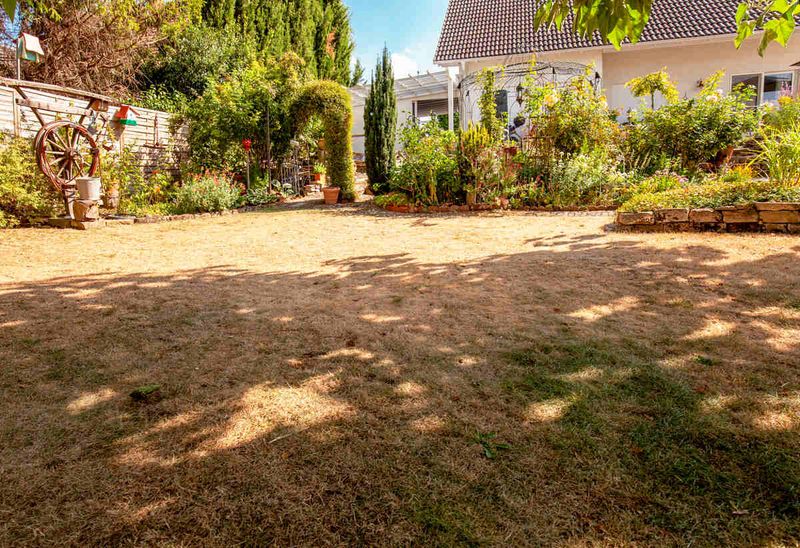
A timer alone cannot tell you whether your lawn actually needs water today. Rainfall, shade, soil type, recent temperatures, and the specific grass species all change how quickly turf depletes available moisture.
Learning to read the grass itself gives you a more reliable signal than any fixed schedule.
Three classic signs point to drought stress in established turf. Leaf blades that fold or roll inward are protecting themselves from moisture loss.
A blue-gray or dull green cast replaces the lawn’s usual bright color. Footprints that stay visible for several minutes after you walk across the grass show the blades lack the turgor pressure to spring back.
UF/IFAS homeowner best management practices for Florida lawns describe these same indicators as cues to irrigate. Texas A&M AgriLife guidance for bermudagrass offers similar stress-based cues for Texas homeowners managing that species.
Before you run the system, factor in what has happened recently. Did your area get meaningful rain in the last day or two?
Is part of the lawn in dense shade where it dries more slowly? Is the soil sandy and fast-draining or heavy clay that holds moisture longer?
These details shift the answer. UF/IFAS watering guidance consistently frames irrigation as a response to actual conditions rather than a rigid calendar event, and that framing serves every Southern lawn better than a one-size schedule.
Measure Water and Wet the Root Zone
Established turf generally does better with less frequent, deeper irrigation than with daily shallow sprinkling. When water soaks down to the root zone, roots follow it downward and develop the depth they need to buffer against heat and short dry spells.
Frequent shallow watering keeps roots near the surface, where they are more vulnerable to heat and drought.
UF/IFAS homeowner best management practices and UF/IFAS lawn watering guidance both reference approximately one-half to three-quarters of an inch per irrigation event as a conditional range for established Florida turf. That figure is not a universal prescription.
Sandy soils drain faster and may need adjustment. Shaded areas dry more slowly.
Grass species differ in root depth and water demand. Rainfall that week changes the calculation entirely.
Use that range as a starting point and adjust it to your specific conditions.
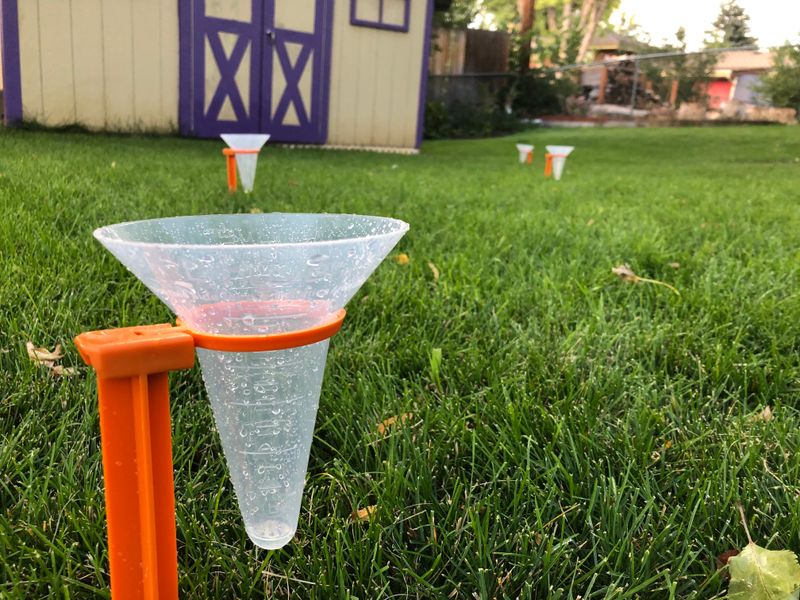
The most reliable way to know how much water your system actually delivers is to measure it directly. Place several straight-sided cans, tuna or soup cans work well, at different spots within one irrigation zone.
Run that zone for a set amount of time, then measure the water depth in each can. UF/IFAS bermudagrass lawn guidance and broader UF/IFAS irrigation resources both recommend this catch-can method because different zones often have different output rates and coverage patterns.
Adjust each zone’s run time independently based on what the cans show, not on a guess from the clock.
Use Cycle-and-Soak When Water Runs Off
Runoff is one of the most common reasons a lawn stays dry even after the sprinklers run. When water hits the soil faster than the soil can absorb it, the excess flows off the lawn and down the street rather than soaking into the root zone.
Compacted soils, clay-heavy ground, and slopes all slow infiltration. High-output sprinkler heads, particularly older pop-up rotors or fixed spray heads set to long run times, can apply water faster than even healthy soil handles.
The solution is cycle-and-soak irrigation. Instead of running one long continuous cycle, divide the total run time into two or three shorter segments with a pause of 30 to 60 minutes between each one.
During the pause, water that has already entered the soil moves deeper and makes room for the next application. EPA WaterSense guidance on cycle-and-soak irrigation explains how this approach reduces runoff and improves soil absorption, particularly on slopes and in compacted areas.
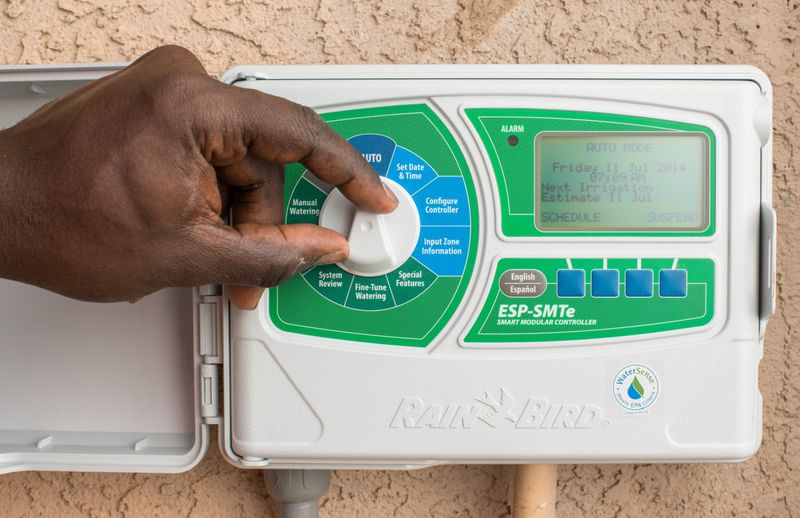
Texas A&M AgriLife’s landscape irrigation cycling quick guide walks through the same principle for Texas homeowners, where heavy clay soils in many regions make runoff a routine challenge. Many modern irrigation controllers include a cycle-and-soak or multiple-start-time setting that automates this without requiring you to be home to manually restart the system.
If yours does not, setting two separate start times for each zone accomplishes the same result.
Investigate Brown Turf Before Calling It Sunburn
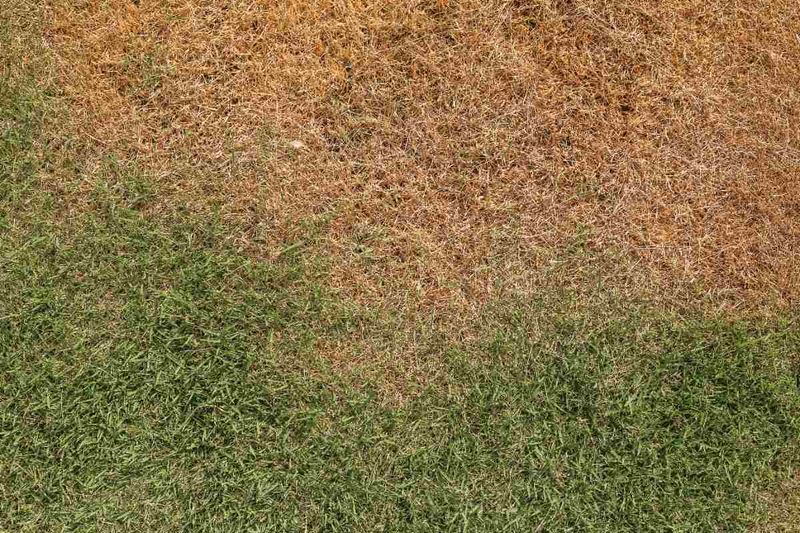
Brown turf in summer is alarming, but the color alone does not tell you what caused it. Jumping to the conclusion that sprinkler droplets focused sunlight onto the blades skips past a long list of far more likely explanations.
Getting the diagnosis right matters because the fix for each cause is different.
Drought dormancy is one of the most common and least alarming possibilities. UF/IFAS bermudagrass lawn guidance notes that bermudagrass can go dormant during extended dry periods and recover once adequate moisture returns.
A lawn that browns during drought and greens back up after rain or irrigation is showing a normal survival response, not sunburn. Disease is a separate concern.
UF/IFAS guidance on gray leaf spot in St. Augustinegrass describes how fungal diseases can produce brown or gray lesions, particularly after periods of warm, wet weather or excessive nitrogen fertilization.
Other causes worth investigating include fertilizer or herbicide injury, which can produce brown streaks or patches that follow application patterns. Mowing stress from cutting too low or with a dull blade can brown tips across wide areas.
Compacted soil limits root development and reduces drought tolerance. Uneven sprinkler coverage leaves dry pockets that brown while the rest of the lawn stays green.
Penn State Extension guidance on irrigation water quality for turfgrass also points out that water high in sodium or other salts can cause foliar or soil-related injury through a completely different mechanism than sunlight focusing through droplets. A local extension office or certified turf professional can help narrow down the actual cause when the pattern is unclear.
Reduce Summer Demand With Mowing and Schedule Adjustments

Good watering habits carry more weight when paired with a few supporting practices that reduce how much water your lawn loses in the first place. Mowing height is one of the most accessible adjustments a homeowner can make.
Keeping grass at the taller end of the recommended range for your specific species allows the blades to shade the soil surface, which slows evaporation and keeps the root zone cooler. UF/IFAS homeowner best management practices and EPA WaterSense landscaping tips both connect taller mowing height with reduced water demand and improved turf resilience during heat stress.
Automatic irrigation controllers deserve attention beyond the initial setup. A system programmed in spring and left alone through August will often overwater during rainy stretches and underwater during dry ones.
UF/IFAS lawn watering guidance recommends turning automatic irrigation off after meaningful rainfall and adjusting schedules as seasons and conditions change rather than running a fixed program year-round.
Overwatering carries its own costs beyond wasted water. EPA WaterSense and UF/IFAS both connect excessive irrigation with shallower root systems, increased thatch accumulation, and greater susceptibility to disease.
Turf that receives more water than it needs becomes dependent on that supply and less resilient when conditions shift. Matching irrigation to actual demand, rather than running a generous default schedule, builds a healthier lawn over time.
Adjust the Plan for New Lawns and Local Regulations
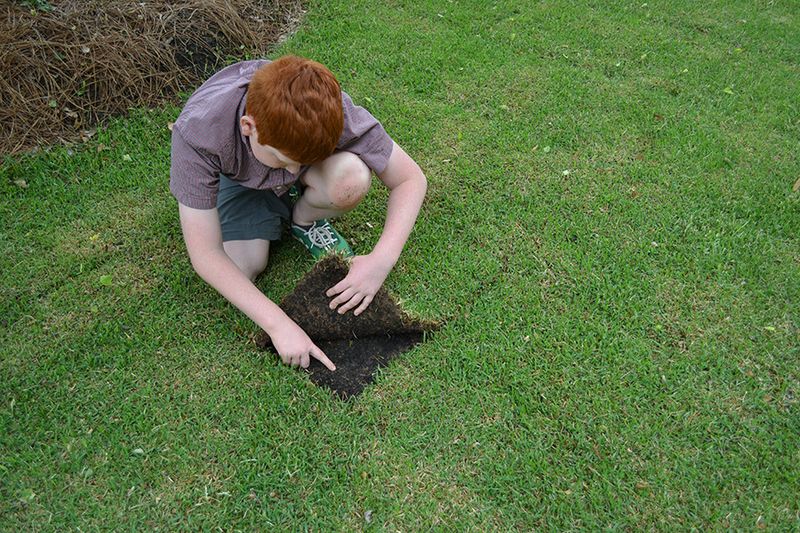
Everything covered so far applies to established turf, and newly seeded or newly sodded lawns operate by different rules. During the establishment period, the root system is shallow and cannot draw on deep soil moisture.
UF/IFAS guidance on establishing a Florida lawn explains that new sod typically needs frequent, shorter irrigation cycles to keep the seedbed or sod surface from drying out, sometimes multiple times per day during the first week or two depending on heat and wind. As roots develop and begin anchoring into the soil, the frequency should decrease and the depth of each application should increase, gradually transitioning toward the established-lawn approach.
UF/IFAS bermudagrass lawn guidance and UF/IFAS homeowner best management practices both reinforce that no single schedule fits every lawn across Florida and Texas. Soil type, grass species, rainfall patterns, local humidity, and irrigation system output all differ enough that a recommendation calibrated for sandy coastal Florida soil may not translate to heavy clay in the Dallas area.
Local watering regulations add another layer that cannot be ignored. Many Florida and Texas municipalities restrict irrigation to specific days, times, or amounts, and those rules can tighten significantly during drought conditions.
The Texas A&M AgriLife Water My Yard program and Texas A&M AgriLife bermudagrass management guidance both direct homeowners to check current local rules before setting any irrigation schedule. A well-timed, correctly measured watering plan only works if it stays within the rules your community has set, so confirming those restrictions is always the right first step.