
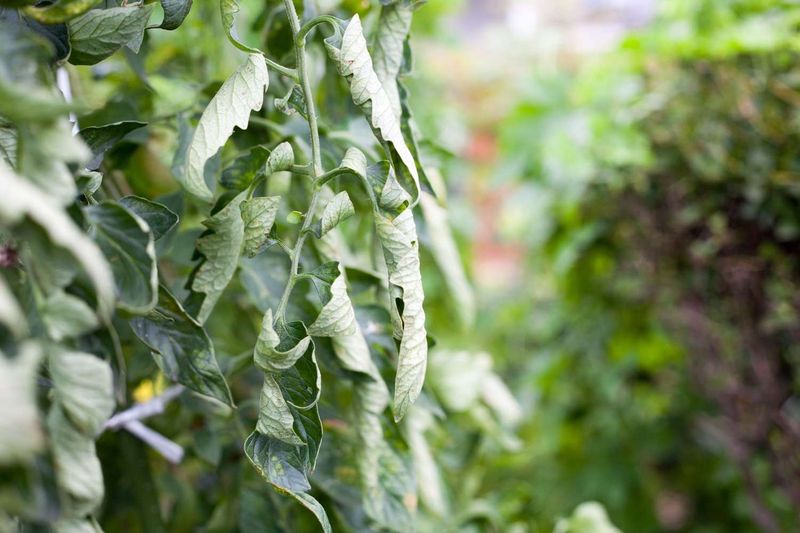
Walking out to your tomato bed and finding the leaves rolled up tight can feel like something went badly wrong overnight. Before you grab the hose or start pulling plants, take a breath.
Leaf curl in late summer has several possible explanations, and the fix depends entirely on what is actually happening in the root zone, not just what you see on the foliage.
What healthy-looking leaf roll can mean
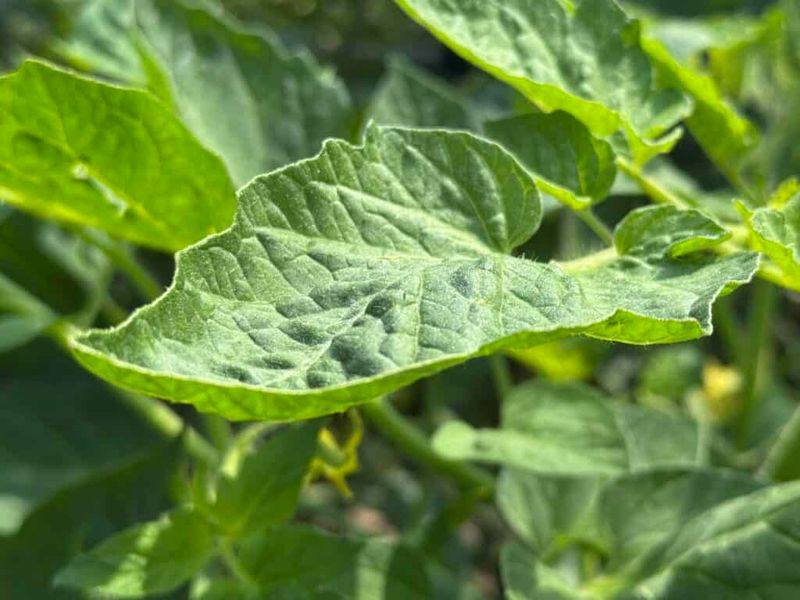
Older leaves on the bottom third of a tomato plant that cup upward and roll inward toward the midrib are showing a pattern that plant scientists call physiological leaf roll. University of Minnesota Extension guidance on tomato disorders describes this as a noninfectious response, meaning no pathogen is involved.
The affected leaves often feel thick, firm, or leathery, and they stay green without spotting or yellowing.
The plant may look otherwise healthy, continuing to push new growth from the top. Washington State University Extension research on physiological leaf roll identifies heat, high rates of water loss through the leaves, uneven soil moisture, root stress, and heavy pruning as factors that can all contribute.
Counterintuitively, prolonged wet or saturated soil can also be associated with this pattern.
Physiological leaf roll by itself generally causes little to no direct yield reduction. That said, the heat and other stresses that accompany it can separately affect blossom drop, fruit set, ripening, and fruit quality, as Penn State Extension notes on heat stress and tomatoes makes clear.
The curl is a signal worth investigating, not an automatic emergency, and the next step is checking growing conditions rather than reacting to the leaf shape alone.
Heat and moisture extremes can stress the plant in opposite ways
Late-summer afternoons in the South can push air temperatures well past 95 degrees, and hot, dry wind compounds the problem. Utah State University Extension research on plant heat stress explains that leaves can lose water through transpiration faster than roots can pull it up from the soil, even when the gardener watered recently.
Rolling the leaf reduces exposed surface area and slows that water loss, which is why the curl can show up on a plant growing in soil that still feels reasonably moist.
On the other end, allowing the root zone to dry out completely and then soaking it heavily creates a different kind of stress. WSU Extension’s physiological leaf roll guide and Oklahoma State University Extension’s fact sheet on non-infectious tomato diseases both note that prolonged soil saturation impairs root function, limiting the plant’s ability to take up water even when plenty is available.
Adding more water to already-wet soil does not help and can deepen root problems.
Framing this as a moisture investigation rather than a single watering mistake matters. A gardener in central Florida after a heavy afternoon storm and a gardener in west Texas during a dry stretch may see identical leaf curl from opposite soil conditions.
Check what is actually in the root zone before changing anything about your routine.
Check the root zone before watering
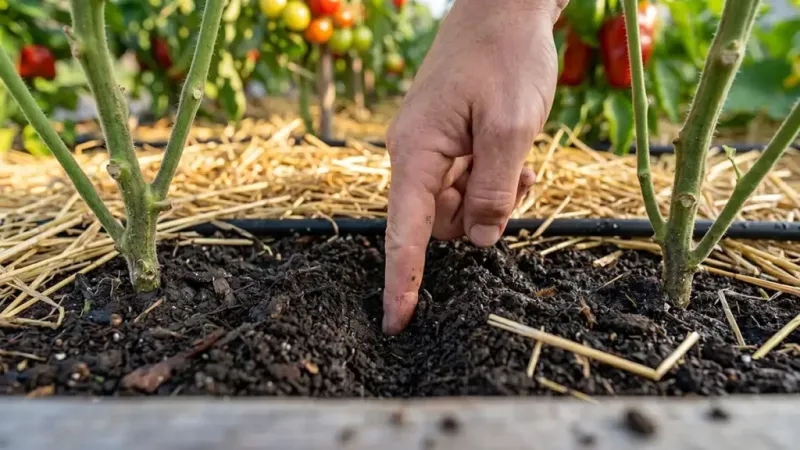
Pull back the mulch near the base of the plant and press two or three fingers several inches into the soil. What you feel there tells you more than the leaves can.
University of Minnesota Extension guidance on watering vegetable gardens recommends checking soil moisture at root depth rather than relying on surface appearance, because the top inch can dry quickly while the root zone stays adequately moist.
If the soil feels dry and crumbly several inches down, the plant needs water. Apply it slowly and thoroughly at the base so it can soak down to where the roots are, rather than wetting only the top layer with repeated shallow passes.
University of Minnesota Extension’s irrigation strategies for vegetables emphasizes that deep, infrequent watering encourages roots to grow downward rather than staying near the surface where they are more vulnerable to heat and drought.
If the soil feels soggy or water pools when you press down, pause irrigation entirely. University of Florida IFAS Extension production guidance highlights that over-irrigation and poor drainage are real contributors to root problems in warm-season tomatoes.
Compacted soil, low spots in the bed, or insufficient drainage holes in a container can all trap water around roots. Address the drainage issue before adding more water, because the curled leaves are not a reliable signal that the plant is thirsty.
Build a steadier irrigation routine
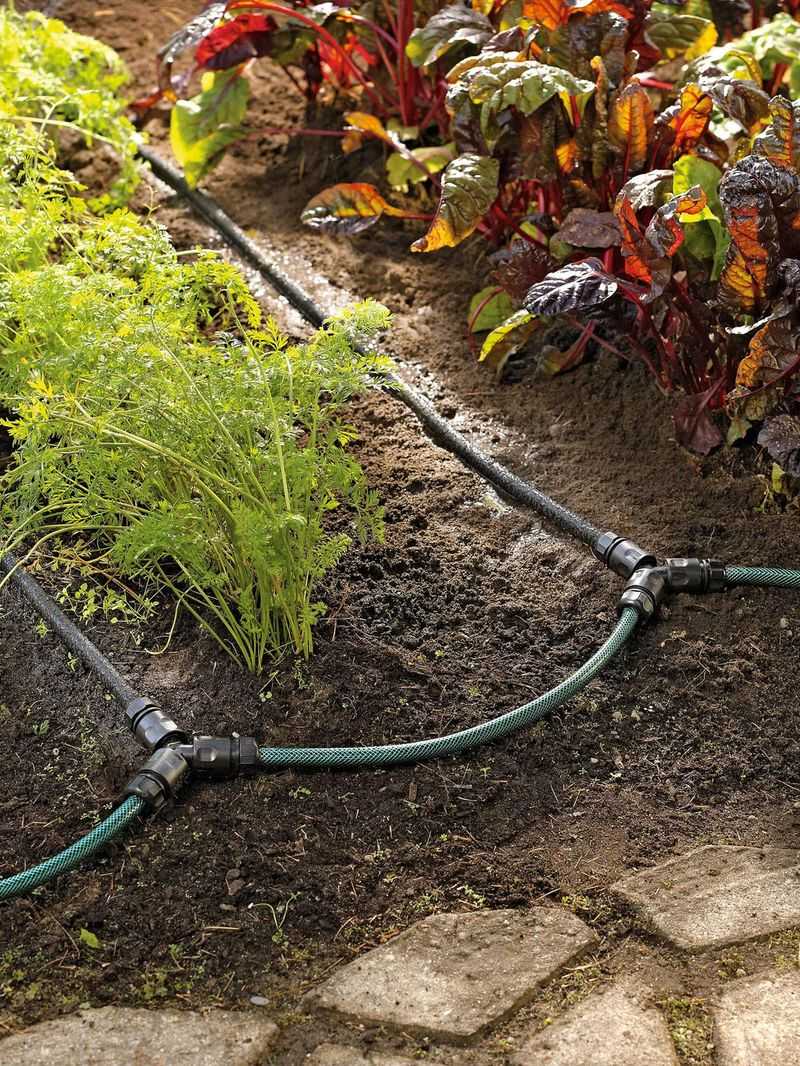
Drip irrigation or a soaker hose laid at the base of the plant delivers water directly to the root zone without wetting the foliage. University of Georgia Extension’s disease management guide for home vegetable gardens recommends keeping foliage as dry as possible to reduce the risk of fungal diseases and to prevent soil splash from carrying pathogens up onto the canopy.
Early morning is a practical default for watering because the plant has time to absorb moisture before peak heat and any wet foliage dries before nightfall.
If evening watering is unavoidable, aim at the soil rather than the leaves. The concern with nighttime watering is prolonged leaf wetness, not the clock by itself, so base-level watering at any hour is far less problematic than overhead sprinklers that soak the canopy after dark.
A 2 to 3 inch layer of organic mulch such as straw or wood chips helps hold moisture, moderates soil temperature, and limits evaporation between waterings. UGA Extension Camden County advice on summer tomato care suggests keeping mulch a few inches away from the stem to prevent rot at the base.
As a starting reference, Texas A&M AgriLife Extension’s home vegetable gardening guide uses roughly 1 inch of water per week as a general benchmark, but sandy soils, raised beds, containers, high heat, and wind all push that number higher. Heavy clay or poorly drained ground may need less frequent irrigation.
Let the soil, the weather, and the plant guide the schedule rather than the calendar. UGA Extension good watering practices reinforces that consistency at the root zone matters more than hitting a fixed volume each week.
Adapt care for containers and protect stressed roots
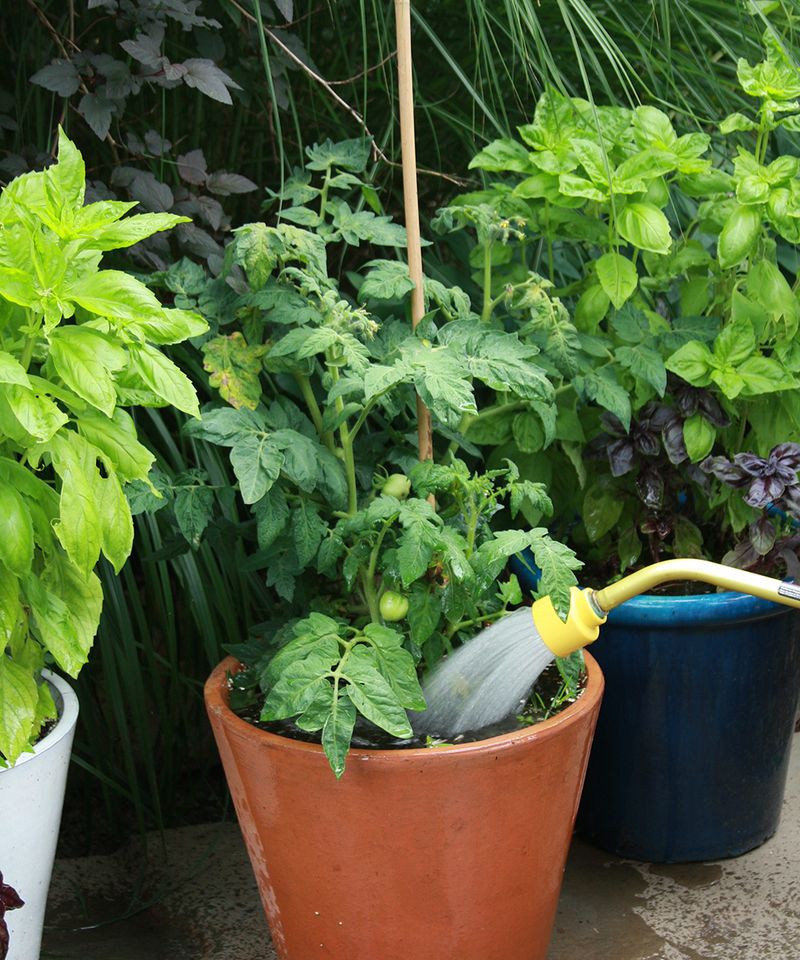
Container tomatoes play by different rules than in-ground beds. A 5-gallon pot in direct afternoon sun can go from adequately moist to bone dry in a single day during a heat wave.
University of Minnesota Extension guidance on watering container plants notes that pot size, plant size, temperature, and wind all influence how quickly the growing medium dries out, and some containers may need daily or even twice-daily checks during extreme heat. The rule still applies, though: check before you water, and make sure the pot drains freely so roots are never sitting in standing water.
Utah State University Extension water recommendations for vegetables and WSU Extension’s leaf roll guide both identify root injury as a recognized trigger for physiological leaf roll. Deep hoeing, rough cultivation near the base, or disturbing the root zone during hot weather can set off curling even when water is adequate.
Heavy pruning during a heat spell carries a similar risk. Texas A&M AgriLife’s fall vegetable gardening guide cautions against aggressive pruning when plants are already under heat stress, and Oklahoma State University Extension lists severe pruning alongside root damage as repeated contributors to the disorder.
Correct the surrounding stress conditions first, and resist stripping leaves that are curled but still green and firm.
Use the leaves and fruit to rule out other problems
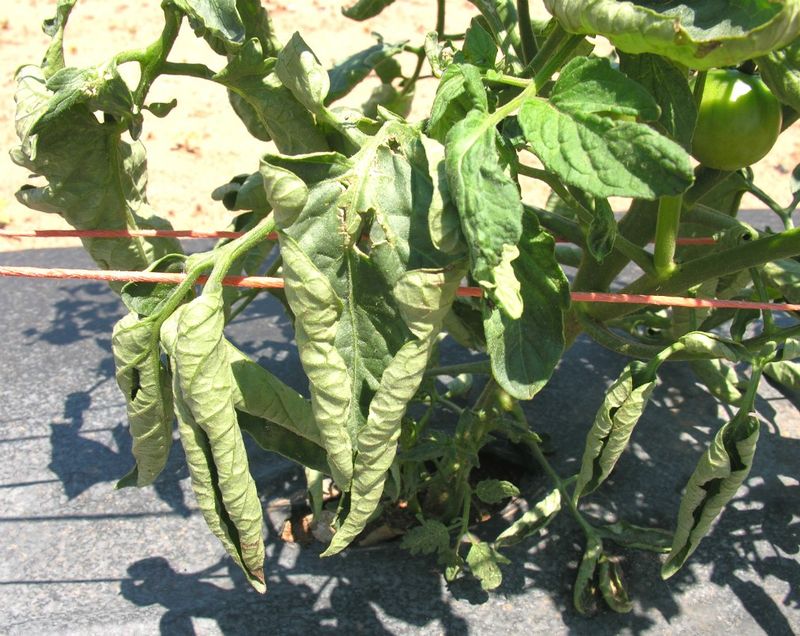
Older leaves rolling upward and inward on an otherwise vigorous green plant, with no yellowing, spotting, or distorted new growth, fits the pattern of physiological leaf roll. A broader set of symptoms calls for a broader diagnosis.
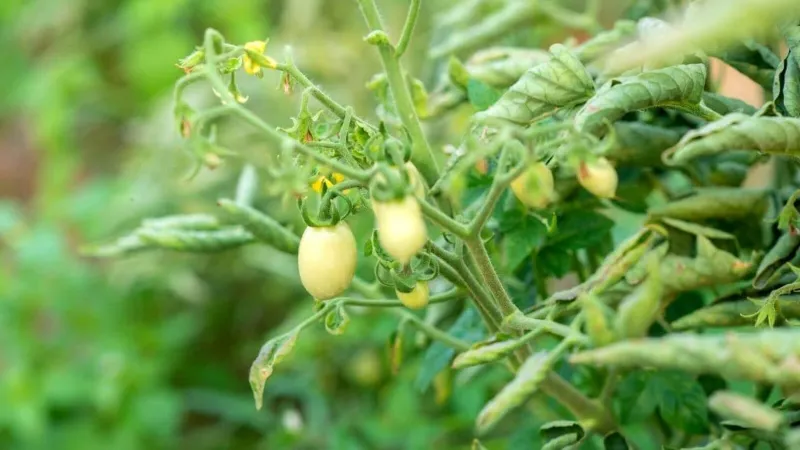
University of Minnesota Extension’s tomato leaf curl diagnostic tool and Clemson HGIC’s tomato leaf rolling fact sheet both list stunting, yellowing, mottled or mosaic patterns, shoestring-like narrow leaves, distorted new growth, unusual fruit markings, and progressive decline as signs that something other than heat and moisture stress is at work.
Tomato yellow leaf curl virus is worth knowing by name if you garden in Florida or other warm Southern states. University of Florida IFAS Extension’s guide to tomato yellow leaf curl virus explains that it is spread by silverleaf whiteflies and typically affects new growth first, causing upward cupping, yellow leaf margins, reduced leaf size, stunting, and flower or fruit loss.
Watering adjustments cannot cure a viral infection. UGA Extension’s disease management bulletin reinforces that virus management centers on vector control and resistant varieties, not irrigation changes.
Herbicide exposure is another possibility when curling, twisting, thickening, or bleaching appears suddenly and concentrates on the side of the plant nearest a recently treated lawn or neighboring yard. Drift, vapor movement, contaminated compost, or sprayer residue are all documented routes.
Oklahoma State University Extension’s tomato growing guide flags herbicide injury as a common look-alike for other leaf problems. Finally, resist adding calcium supplements, Epsom salts, or extra nitrogen as default responses to curled leaves.
Utah State University Extension nutrient management guidance and University of Arizona Extension’s tomato challenges publication caution that excess salts and unneeded nutrients can damage plants rather than help them.
Judge recovery by new growth and overall vigor
Start with the soil check today. Move mulch aside, press several inches into the root zone, and water only if it is genuinely dry, soaking slowly at the base until moisture reaches the roots.
If the soil is wet, hold off and look for drainage problems. Mulch the bed to keep moisture more consistent going forward.
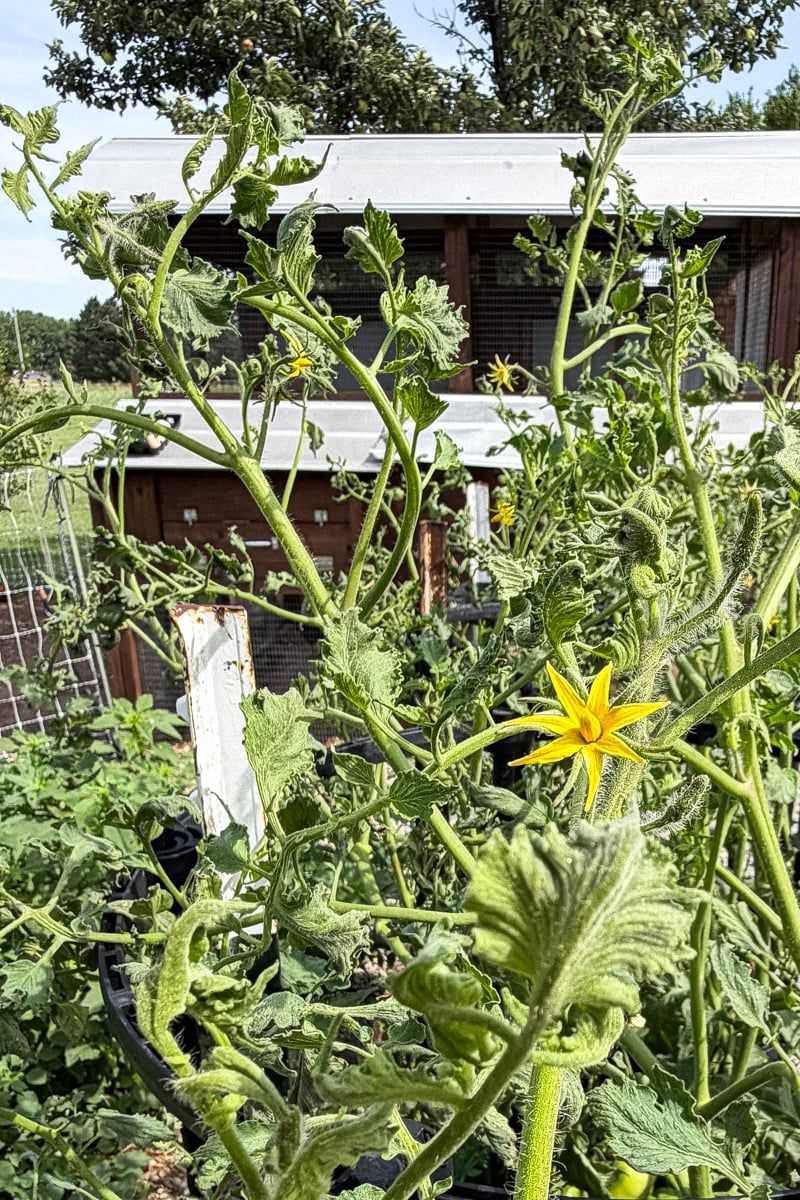
Once conditions improve, watch the new growth at the top of the plant rather than the older leaves lower down. WSU Extension’s physiological leaf roll guide and University of Minnesota Extension’s tomato disorder guidance both note that already-rolled leaves may stay curled even after stress eases, while new leaves can emerge looking normal.
Do not judge the plant’s recovery by whether the curled leaves straighten out.
Keep fruit development in view as a separate thread. Penn State Extension’s heat stress and tomatoes guidance explains that blossom drop, slow ripening, sunscald, and uneven ripening are heat-related problems that watering alone cannot fully prevent.
A plant with curled leaves may still set and ripen fruit well if the broader stress is manageable. The most useful decision rule is this: diagnose the soil and the whole plant before adding water or applying any treatment, because the leaves are a starting clue, not a final answer.