
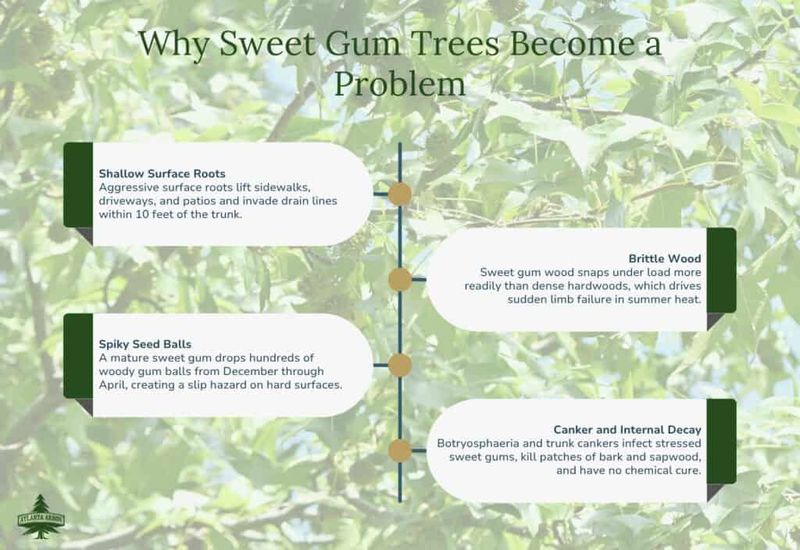
A familiar street tree is disappearing from some California neighborhoods, and most homeowners have no idea why. American sweetgum trees, once planted widely along curbs and sidewalks across the state, are being removed in certain cities because of spiny seedpods, cracked pavement, and aging trunks that no longer fit their planting spots.
The story is more local and more complicated than the headlines suggest, and if you have one of these trees near your driveway or sidewalk, understanding the real reasons matters. Here is what the evidence actually shows, and what you can do about it.
Some California communities are replacing problem sweetgums—not banning them statewide
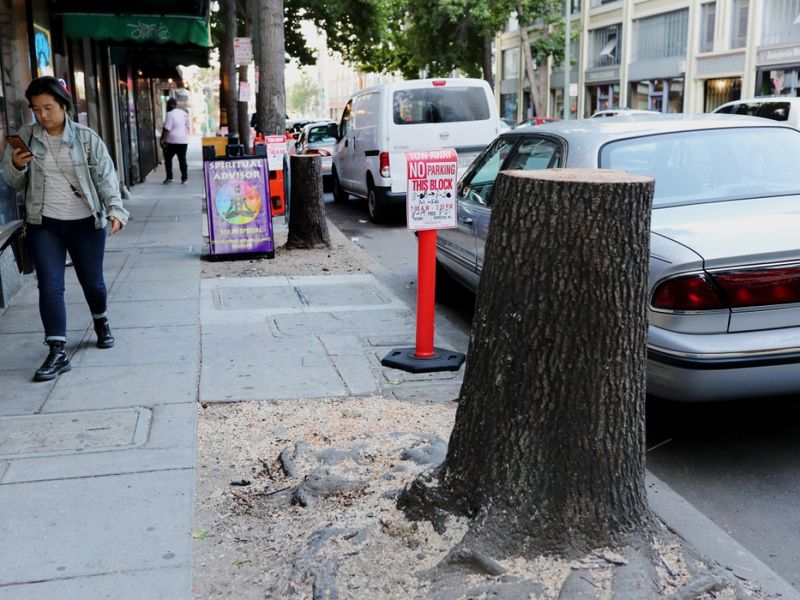
Headlines about sweetgum trees being “ripped out” across California make a good story, but the reality on the ground is narrower and more useful to know. A handful of California cities have funded limited removal programs or drafted phased-replacement plans for specific sweetgum plantings.
That is meaningfully different from a statewide campaign against the tree.
Two of the clearest documented examples come from Sunnyvale and Alameda. Sunnyvale’s street tree program has set aside funding to remove certain Liquidambar trees because their hard, spiny seedpods create tripping hazards on sidewalks.
The city’s concern is specific: pedestrian safety on paved surfaces, not a general objection to the species. That distinction matters when you are trying to figure out whether your own tree is at risk.
Alameda’s situation is more layered. The city’s master tree plan and its Gibbons Drive assessment identify a combination of factors: root damage to pavement, large mature size in tight planting strips, declining tree condition, structural risk, and long-term canopy planning goals.
Alameda is not removing every sweetgum it finds. The plan specifically recommends keeping healthy trees as long as possible while phasing out those that are declining or creating infrastructure problems.
The more useful question for a California homeowner is not whether sweetgums are being banned statewide, but why a tree that was planted enthusiastically along so many streets decades ago can become a poor fit for a particular block. Size, seedpod output, root behavior, and the narrow strips of soil between curb and sidewalk all play a role.
Those are the factors worth understanding before deciding what to do with the tree in your own yard.
Hard seedpods can turn a familiar tree into a sidewalk problem
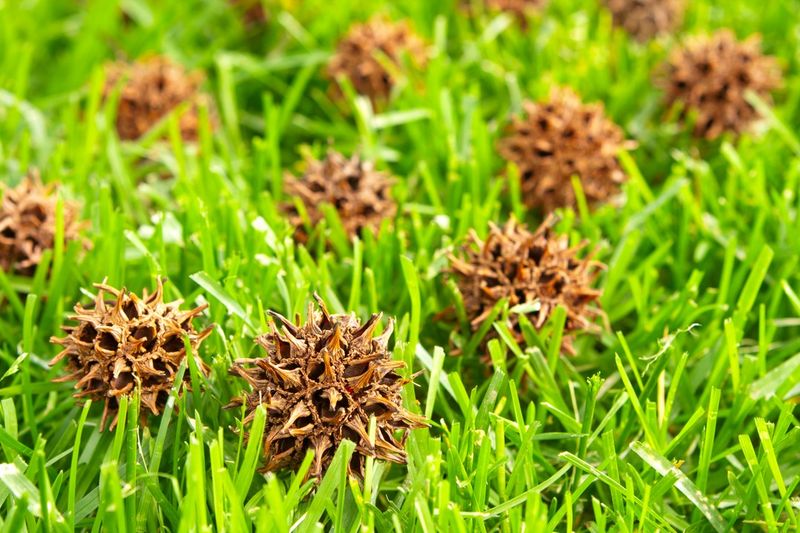
American sweetgum produces round, spiky fruiting structures that most people call gumballs or seedpods. Each one is roughly an inch across and covered in hard, pointed projections.
When they fall onto grass or a soft garden bed, they are mostly an annoyance at cleanup time. When they land on concrete, they become something more serious.
On a hard surface, a single pod underfoot can roll like a ball or compress unevenly, creating a real slip or trip risk, especially for older adults or anyone moving quickly. Sunnyvale’s street tree program identifies this hazard as the primary reason the city funds Liquidambar removals.
A mature sweetgum can drop hundreds of pods over a season, and a narrow sidewalk corridor with no lawn buffer means those pods land directly on the path pedestrians use every day.
That said, seedpods are not the whole story for every removal, and they are not purely a problem. USDA Forest Service research on Liquidambar styraciflua notes that birds, squirrels, chipmunks, and other wildlife eat sweetgum seeds through the winter months.
A mature tree dropping pods in a yard with open soil or mulch is providing a food source that disappears when the tree comes down.
The practical distinction is location. A sweetgum overhanging a lawn, a mulched bed, or an unpaved path presents a manageable cleanup task.
The same tree positioned directly over a sidewalk, driveway, or pedestrian corridor creates a recurring safety concern that no amount of raking fully solves. Before deciding either way, consider where the pods are actually landing and how heavily the path is used.
A large tree can outgrow a narrow planting strip
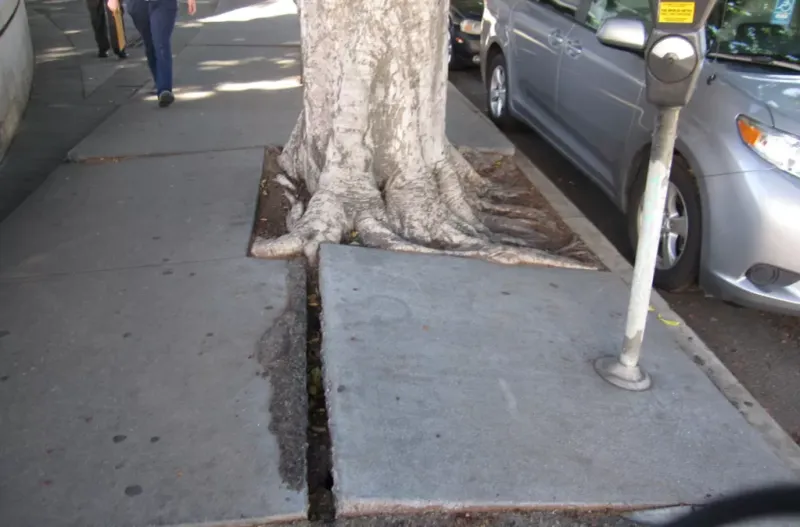
American sweetgum is a genuinely large tree. UC ANR water-wise guidance describes mature California specimens reaching roughly 50 to 60 feet tall with a spread of 20 to 25 feet, accompanied by surface roots that can crack concrete or create hazards in lawns.
When that growth happens in an open yard with plenty of soil, the roots spread gradually and rarely cause serious problems. Plant the same tree in a two-foot strip of compacted soil between a curb and a sidewalk, and the situation changes.
The Alameda Gibbons Drive assessment documented exactly this scenario. A row of 117 mature sweetgums planted in a narrow strip showed widespread displacement of sidewalks, curbs, and streets.
The roots were not doing anything unusual for the species; they were simply doing what large tree roots do when they run out of room to grow downward and spread laterally instead.
Root and pavement conflicts are not a simple case of roots breaking concrete by force. Peer-reviewed research on urban tree root and pavement interactions shows that soil depth, compaction, moisture availability, pavement design, and planting-strip width all shape how and where roots develop.
Shallow or compacted soil pushes roots toward the surface, where they encounter pavement. Thin pavement or older concrete with existing gaps gives roots an easier path through.
Iowa State Extension guidance on trees near sidewalks reinforces that the planting site matters as much as the species. A tree with adequate rooting space, deeper soil, and flexible or well-designed pavement nearby is far less likely to produce visible displacement.
And UF/IFAS guidance on tree root problems notes that while sweetgum roots can cause issues near hardscape and septic systems, they are not documented as a routine cause of house foundation damage. The UF/IFAS sweetgum profile similarly distinguishes between infrastructure conflicts and the kind of structural damage people sometimes fear.
Pavement displacement in a tight planting strip is a real and documented problem; claiming that sweetgum roots routinely destroy foundations goes further than the evidence supports.
Tree condition and canopy planning can justify phased removal
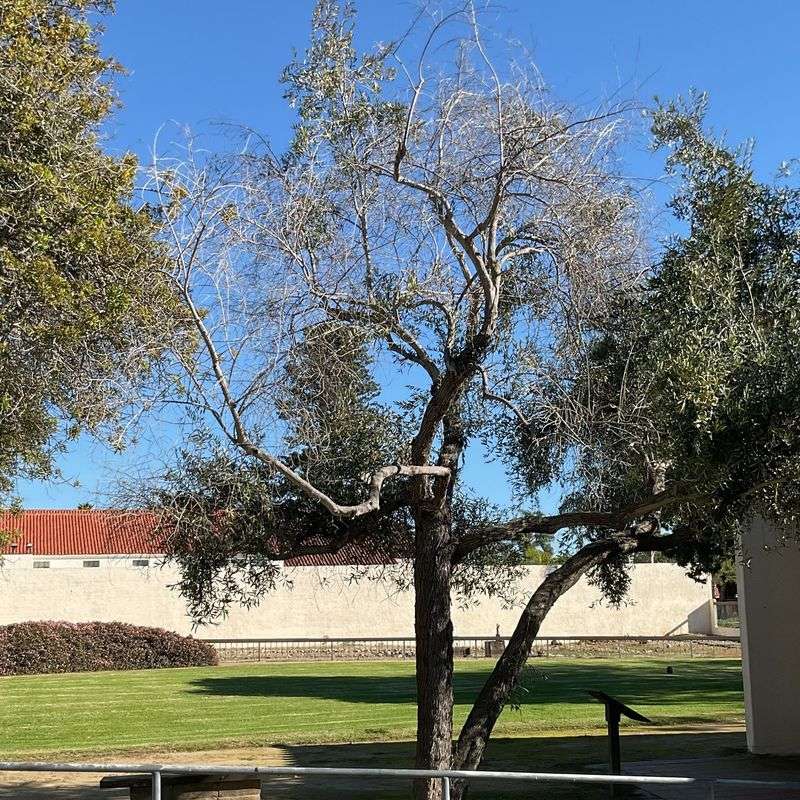
Pavement damage and seedpod hazards get most of the attention, but they are not the only reasons a city might decide a sweetgum’s time has come. Mature trees develop structural problems over time, including internal decay, co-dominant stems that increase branch-failure risk, crown dieback from drought stress, and general decline that makes the tree less stable than it looks from the street.
Alameda’s master tree plan addresses this directly. The city’s approach is not to remove every sweetgum on sight.
The plan recommends retaining healthy specimens as long as possible, using community cost-sharing, streetscape modifications, and careful root management to extend their useful life. Declining trees, those with significant structural defects, or trees posing genuine safety risks are the candidates for phased removal.
The Gibbons Drive project documentation also connects individual-tree decisions to longer-term urban forest goals. Replacing a block of aging, single-species sweetgums with a mix of better-sited trees serves two purposes: it reduces the risk of losing large sections of canopy to a single pest, disease, or weather event, and it allows cities to plant species better matched to current soil conditions, water availability, and climate expectations.
Even a justified removal carries real costs. Taking down a mature tree means losing shade, wildlife habitat, stormwater interception, and the visual character of a block, often for years while replacements establish.
Alameda’s plan specifically calls for planting the largest suitable replacement trees available precisely to limit that gap. Any homeowner or city program weighing removal should account for what the canopy loses in the short term, not just what the sidewalk gains.
Nonnative does not automatically mean invasive or unsuitable everywhere
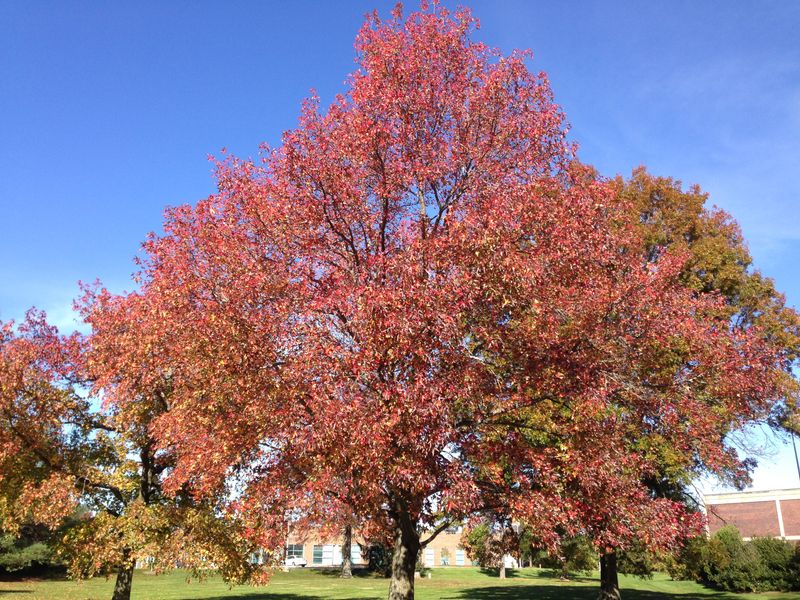
American sweetgum, Liquidambar styraciflua, is native to the southeastern United States, including central Florida and eastern Texas. California is outside its natural range entirely.
USDA Forest Service silvics research and the USDA NRCS plant guide both document its native distribution and ecological role in that region. Being nonnative to California is a relevant fact, but it does not automatically make a tree invasive or harmful.
The terms “nonnative” and “invasive” have distinct meanings. The National Invasive Species Information Center defines invasive species as those that cause economic harm, environmental harm, or harm to human health in the areas where they are introduced.
Nonnative simply means the species did not originate in that region. Sweetgum planted along a California street does not meet the threshold of a listed invasive species, and the California Invasive Plant Council’s inventory does not list it as a California invasive plant.
Climate fit is a separate and legitimate consideration. UC ANR water-wise guidance characterizes sweetgum as a moderate-to-regular water-use tree, which matters in a state where summer irrigation is expensive and sometimes restricted.
It is not a drought-tolerant species, and treating it as one sets up problems during dry years.
In Southern California, the fit gets narrower. Los Angeles County’s Do Not Plant list flags American sweetgum as poorly suited to Southern California’s climate and notes concerns about its root system and susceptibility to bacterial scorch.
That is a local Southern California planting recommendation based on climate and performance data, not a statewide prohibition. A sweetgum growing in a Bay Area neighborhood with deeper soil, more rainfall, and cooler summers faces a very different set of conditions than one planted in the San Fernando Valley.
Redesign the site before removing a healthy tree
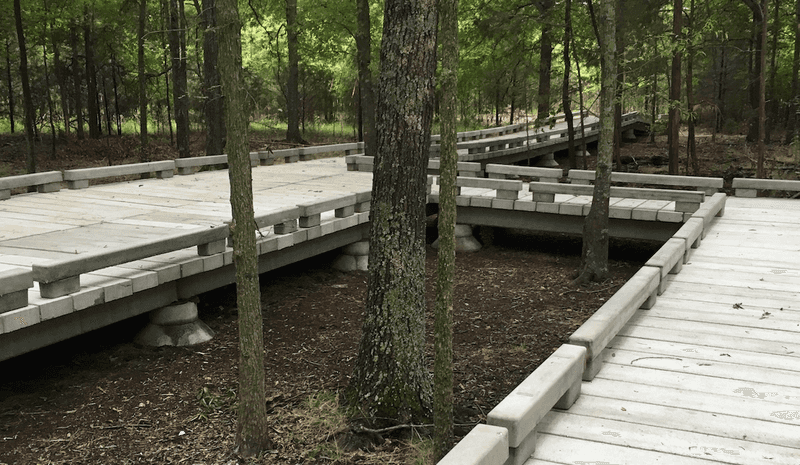
A cracked sidewalk next to a healthy sweetgum is not an automatic removal order. Before calling a tree service, it is worth knowing that several design alternatives exist, and some of them cost less and preserve more than starting over with a new tree.
Iowa State Extension’s guidance on managing trees near sidewalks outlines options that sidewalk contractors and arborists can work through together. Rerouting or narrowing a sidewalk around a significant root zone is sometimes feasible where the right-of-way allows it.
Expanding the planting area by widening the soil zone gives roots more room and reduces the pressure that pushes them under pavement. Where the sidewalk must stay in its current position, bridging over roots with a raised or supported walkway can protect both the tree and the path.
Flexible pavement materials, including certain paving blocks and permeable surfaces, can accommodate minor root movement without cracking the way poured concrete does.
The right combination depends on the specific site, and that is why the first step should be bringing in a certified arborist and a sidewalk contractor who have worked together before. The arborist can assess the tree’s health and structural condition, identify which roots are critical for stability, and flag whether the tree is a good candidate for retention at all.
The contractor can evaluate what the pavement repair or redesign actually requires. Getting both perspectives before any construction begins prevents the most common mistake: cutting roots that the tree depends on for stability because nobody checked first.
Root pruning deserves a specific warning. Cutting a major root, generally anything over two inches in diameter, can cause crown dieback, weaken the tree’s structural anchor, or in some cases trigger a faster decline toward failure.
The guidance is clear: do not attempt major root work yourself. An arborist can identify which roots can be managed safely and at what distance from the trunk, and that assessment should happen before any shovel goes into the ground near a tree you want to keep.
Check permits, manage seedpods cautiously, and choose replacements for the site
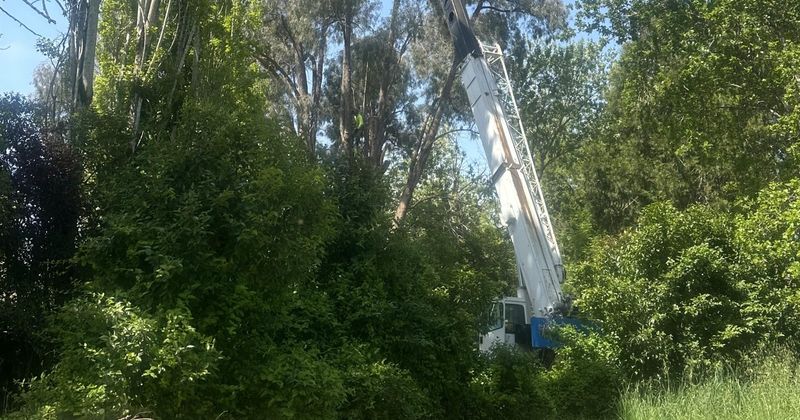
Before making any decision about a sweetgum growing in or near the street right-of-way, check whether the city considers it a public tree. Many California municipalities treat street trees, those growing between the curb and the sidewalk, as city property even when they sit in front of a private home.
Removing or significantly altering one without permission can result in fines or a requirement to replace the tree at the homeowner’s expense.
Sunnyvale defines street trees as trees within the city right-of-way and requires permits for removal or replacement work. San Jose’s tree removal permit program lists Liquidambar among the species subject to its removal-permit requirements.
Requirements vary by city, so contacting your local public works or urban forestry department before doing any work is the right first move.
For seedpod management short of removal, options exist but come with real limits. Spreading a thick layer of mulch under the tree gives falling pods a softer landing and makes raking or blowing them up easier and safer.
Chemical fruit suppression using ethephon or professional trunk injection treatments can reduce pod production, but the window for effective application is narrow. NC State Extension guidance on sweetgum fruit prevention explains that timing, dosage, temperature, and tree size all affect whether treatment works, and that large established trees are generally better handled by a professional arborist rather than a homeowner applying product from the ground.
When removal is genuinely the right call, replacement planning matters as much as the removal itself. Alameda’s master tree plan recommends replacing sweetgums with a mix of species rather than replanting the same tree in the same constrained space.
Matching the replacement to the actual site means thinking about mature height and canopy spread, rooting width, irrigation needs in a California summer, soil conditions, pavement clearance, and local climate zone. A tree that works well in a Bay Area planting strip may be a poor choice for a Southern California parkway.
Species diversity also matters: a block planted with multiple species is far less vulnerable to losing its entire canopy to a single pest or disease outbreak.
Judge the individual tree, not the headline
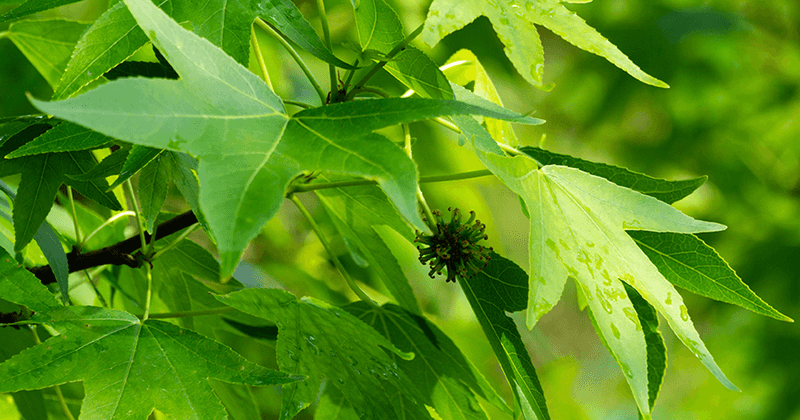
Mature sweetgums are not automatically dangerous, invasive, or headed for removal. The species has real issues in specific situations: hard seedpods on paved pedestrian surfaces, vigorous roots in tight planting strips, moderate water needs in a drought-prone state, and a large mature size that can outlast the infrastructure around it.
Those are legitimate concerns in the right setting. They are not a verdict on every tree of the species.
Alameda’s planning approach is a useful model: assess the individual tree’s health and structure, evaluate the site, retain what is healthy and manageable, and phase out what is genuinely declining or creating serious hazards. That same logic applies to a homeowner trying to decide what to do with the sweetgum in front of their house.
Start by getting a certified arborist to assess the tree’s condition before making any decisions about roots or removal. Check your city’s permit requirements before touching a street tree.
If seedpods are the main complaint, explore mulching and professional suppression options before committing to removal. And if removal turns out to be the right call, choose a replacement matched to your actual soil, climate, rooting space, and water budget, not just one that looks good in a photo.
Managing trees near sidewalks and preserving urban canopy both require the same thing: slowing down enough to evaluate what is actually in front of you. The sweetgum you grew up with deserves at least that much before the chainsaw arrives.