
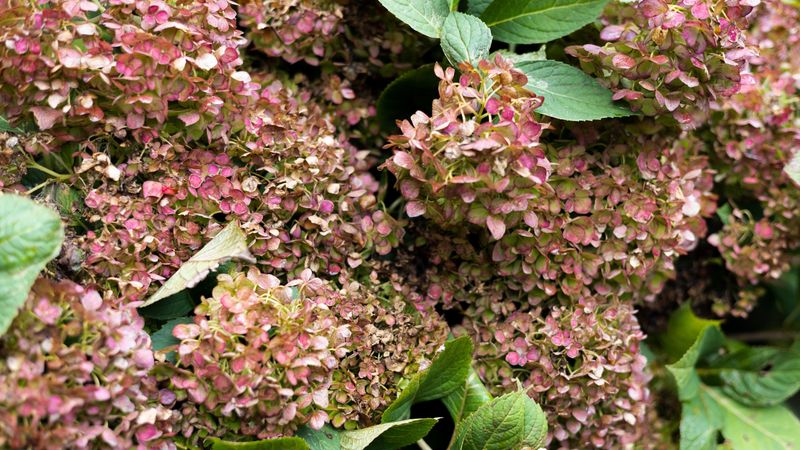
Watching your hydrangea blooms go from beautiful to brown and papery in the summer heat is genuinely alarming, especially when you feel like you’ve been doing everything right. The good news is that brown flowers don’t automatically mean your plant is dying or that you’ve made a serious mistake.
Several different things can cause this, from normal flower aging to intense afternoon sun to a root zone that dried out faster than you realized. Understanding which one you’re dealing with makes all the difference in how you respond.
Brown blooms can have several explanations
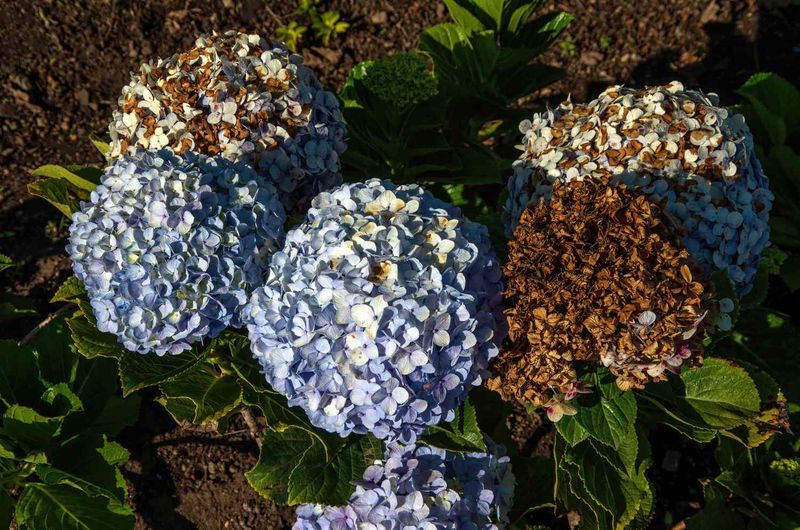
Panic is a natural first reaction when you step outside and find your hydrangea blooms turning brown and crispy. Before you grab the hose or start pulling flowers off, slow down and take a closer look, because brown petals alone don’t tell you what went wrong.
One of the most common misunderstandings about hydrangeas is that browning always signals a watering mistake. University of Illinois Extension guidance on heat stress makes clear that intense afternoon sun and high temperatures can scorch flower petals even when the soil beneath the plant remains adequately moist.
In that situation, adding more water won’t undo the damage or stop more from happening.
Color change can also be completely normal, depending on the species. Illinois Extension’s profile of smooth hydrangea ‘Annabelle’ notes that its blooms naturally cycle from green to white and then back toward tan or brown as they age.
Oakleaf and panicle hydrangeas follow a similar path, shifting toward pink, parchment, or light brown as the season progresses. UGA’s native plants guide describes this seasonal progression as a normal part of the plant’s life cycle, not a sign of failure.
The practical starting point is to treat brown blooms as a clue worth investigating rather than a verdict. Look at where the browning is concentrated, check the soil, and consider the recent weather before drawing any conclusions.
A shallow sprinkle can leave hydrangea roots dry
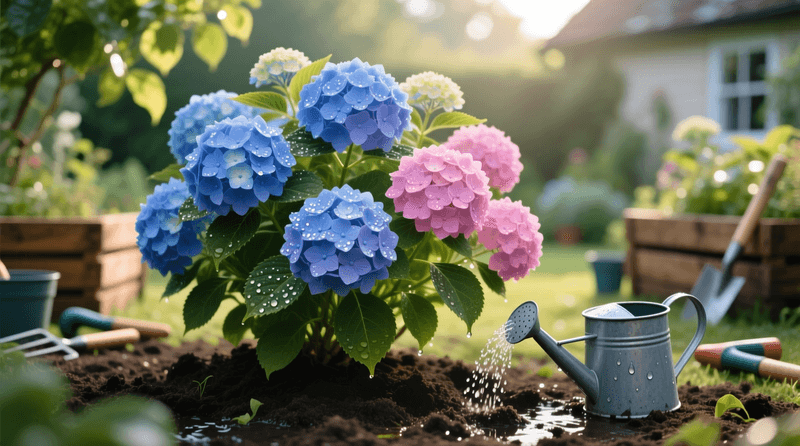
When a hydrangea does show signs of dry-root stress during a Southern heat wave, one plausible contributor is a watering habit that looks adequate on the surface but doesn’t actually reach the root zone. A quick sprinkle over the foliage or a brief pass with the hose can wet the top inch or two of soil while leaving everything below bone dry.
UGA Extension’s Henry County newsletter highlights that bigleaf hydrangeas have relatively shallow root systems, high water requirements, and a strong preference for moist, well-drained soil. That combination makes them especially vulnerable when the upper soil dries out faster than water can penetrate deeper.
A plant that looks watered from above may still be thirsty at the roots.
Penn State Extension’s review of common watering myths explains that frequent, light watering can actually encourage roots to stay near the surface rather than growing deeper where moisture is more stable. Over time, this creates a plant that is more dependent on surface moisture and therefore more vulnerable to brief dry spells or hot, dry afternoons.
The fix isn’t necessarily more frequent watering. Texas A&M AgriLife’s EarthKind water efficiency guide recommends applying water slowly and directly to the root zone so it can soak in rather than run off.
A slow, thorough soak that reaches several inches into the soil does more for your hydrangea than a daily surface sprinkle.
Check soil moisture before watering again
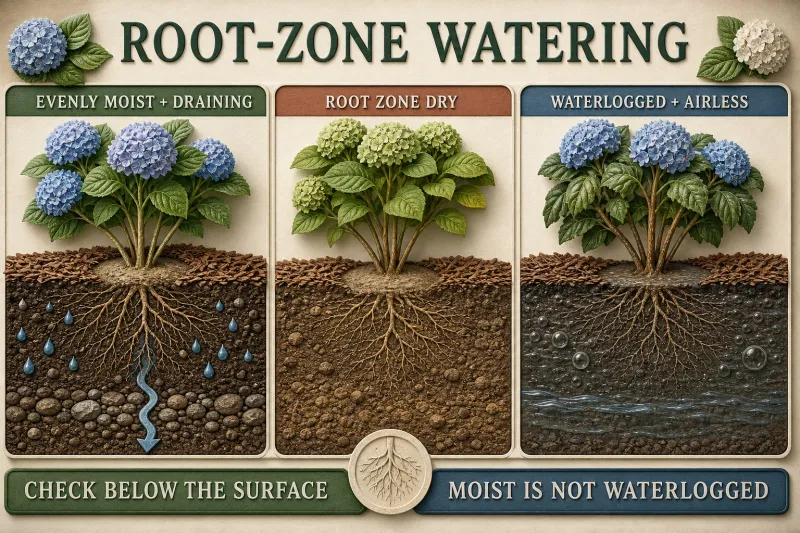
Before you water again, do one thing first: put your fingers into the soil. Dig or press down several inches into the ground near the plant, but not right up against the stem, and feel what’s there.
Dry, powdery soil below the surface is a clear signal that the root zone needs water. Soil that still feels cool and damp tells you to hold off, even if the blooms look unhappy.
UGA Extension’s Colquitt County advice on heat-wave watering specifically warns gardeners not to overwater plants just because temperatures are high. Adding water to soil that’s already moist reduces oxygen around the roots and can cause decline symptoms that look a lot like drought stress, including brown leaf edges and wilting.
The result is a plant that looks worse even though it’s getting more water.
Temporary afternoon wilting is another thing worth understanding before you react. UGA Cherokee County Master Gardener newsletter guidance notes that hydrangeas commonly droop during the hottest part of a summer afternoon and then recover on their own by evening or the following morning.
That temporary sag is a heat response, not necessarily a drought emergency. Responding to afternoon appearance alone by flooding the plant can cause more harm than the wilting itself.
The soil check takes less than a minute and gives you real information instead of guesswork. Make it a habit before every watering session during hot weather.
Deliver a slow soak to the root zone
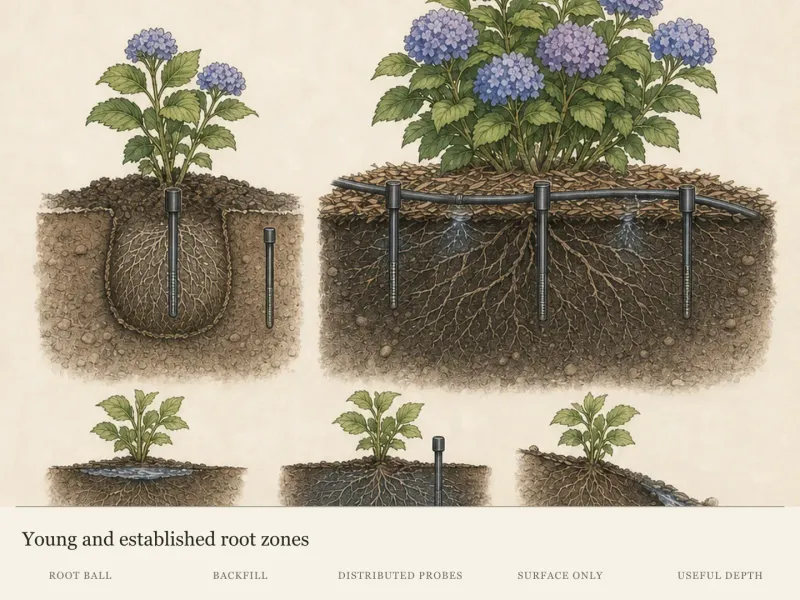
Once you’ve confirmed the soil below the surface is dry, the goal is to get water all the way down to the roots, not just wet the top layer. The most reliable way to do that is to apply water slowly at the soil surface around the plant using a soaker hose, a drip line, or a regular hose turned down to a slow, steady trickle at the base.
UGA Extension’s guide to caring for ornamental landscape plants recommends directing water to the root zone rather than spraying it over foliage or flowers. A quick spray over the top of the plant doesn’t substitute for root-zone irrigation, and wet foliage or flowers left sitting in humid conditions can increase the risk of fungal problems.
Keeping water at ground level is both more effective and less risky.
UGA Extension’s circular on landscape plant establishment also recommends morning watering when possible, because cooler temperatures and lower evaporation rates mean more water actually reaches the roots rather than disappearing into the air. Morning watering also gives foliage time to dry before nightfall.
That said, if your plant’s soil is severely dry right now, don’t wait until tomorrow morning to act. University of Wisconsin Extension’s extreme heat and drought guidance acknowledges that a plant in serious moisture stress may need immediate root-zone watering rather than a scheduled approach.
The practical priority is getting water to the roots while avoiding standing water or waterlogged soil, which creates its own set of problems. Aim for evenly moist, not soggy.
Use mulch and shade to reduce repeat stress
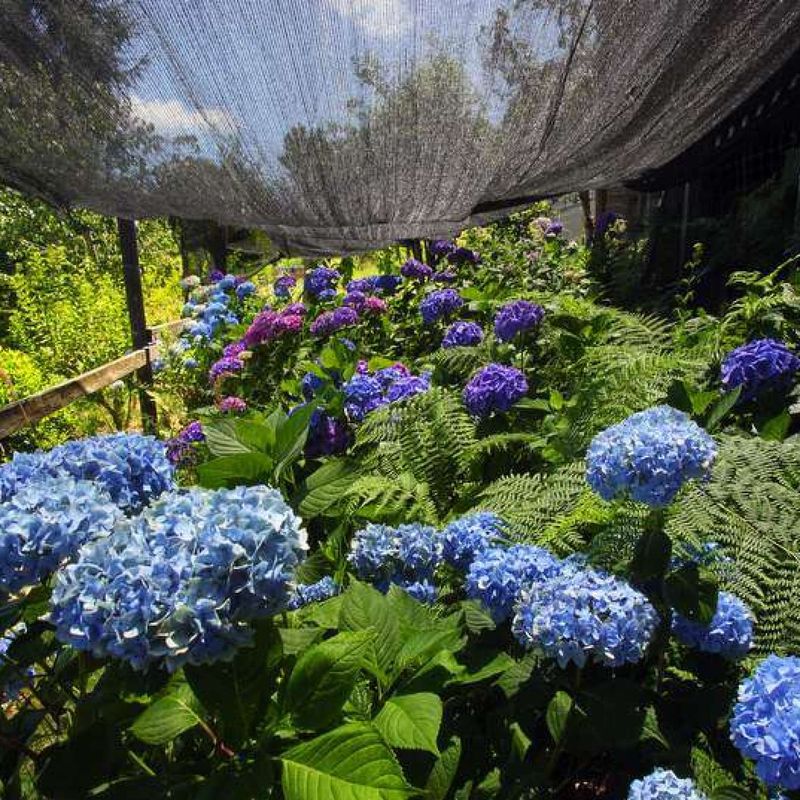
Correcting your watering method helps right now, but two additional steps can reduce how often you find yourself in this situation. Mulch and thoughtful siting work together to keep the root zone cooler and slower to dry out between watering sessions.
Spreading approximately 2 to 4 inches of organic mulch, such as shredded bark or wood chips, around the plant creates a buffer between the soil and the summer sun. University of Minnesota Extension’s mulching guide explains that organic mulch slows evaporation and moderates soil temperature, both of which matter enormously when air temperatures climb into the 90s.
Keep the mulch a few inches away from direct contact with the plant’s stems to avoid trapping moisture against the crown, where it can encourage rot.
Where you plant a hydrangea in the South also has a real effect on how much stress it experiences. UGA Extension’s hydrangea publication and UGA Richmond County Extension’s 2025 hydrangea article both recommend morning sun and afternoon shade for bigleaf hydrangeas in hot Southern sites, paired with moist, well-drained soil.
That combination gives the plant the light it needs to bloom without the intensity of direct afternoon exposure that scorches petals.
For newly planted shrubs in Florida specifically, University of Florida IFAS guidance on landscape irrigation recommends low-volume irrigation directed over the root ball and nearby soil rather than broad overhead watering. Florida’s sandy soils and distinct rainfall patterns make this a regional consideration rather than a universal rule.
Wherever you garden in the South, the principle is the same: reduce heat exposure and slow moisture loss at the root zone.
Look at the browning pattern for heat clues
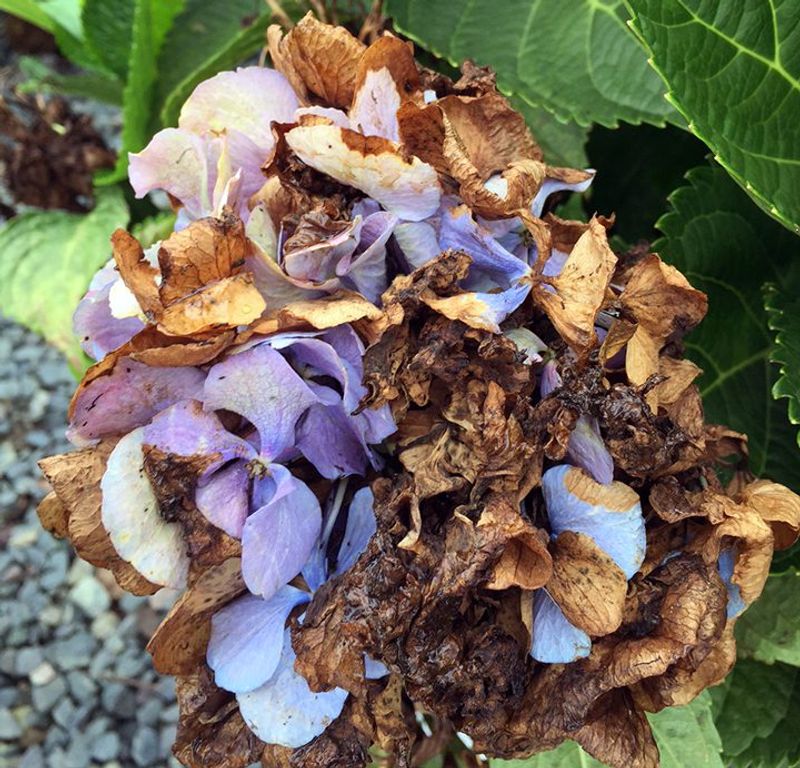
Where the browning shows up on your plant can tell you quite a bit about what caused it, even if it can’t give you a definitive answer. Paying attention to the pattern is one of the most useful things you can do before deciding how to respond.
Browning that’s concentrated on the side of the plant facing the afternoon sun, or on the outer and upper edges of the flower heads, points more toward heat or radiant-heat exposure than toward a root problem. University of Illinois Extension’s heat stress article notes that scorch damage tends to appear on the most exposed surfaces first, particularly on plants growing near pavement, south-facing walls, or other surfaces that absorb and radiate heat.
A plant in that situation can have perfectly adequate soil moisture and still show scorched petals.
UGA Cherokee County’s Master Gardener newsletter also describes how reflected radiant heat from hard surfaces can push temperatures around a plant well above air temperature, creating localized stress that irrigation alone cannot prevent. If your hydrangea sits beside a driveway, a concrete patio, or a south-facing brick wall, heat reflection is worth considering as a contributing factor.
By contrast, browning that appears more uniformly across the plant, accompanied by dry, powdery soil and general wilting, fits more closely with root-zone moisture stress. Gradual color change that moves evenly through the flower head, without a sharp burned edge, often reflects normal bloom aging rather than injury.
Illinois Extension’s coverage of ‘Annabelle’ hydrangea aging is a useful reminder that some browning is simply the bloom completing its natural cycle.
Watch for wet-root stress and disease signs
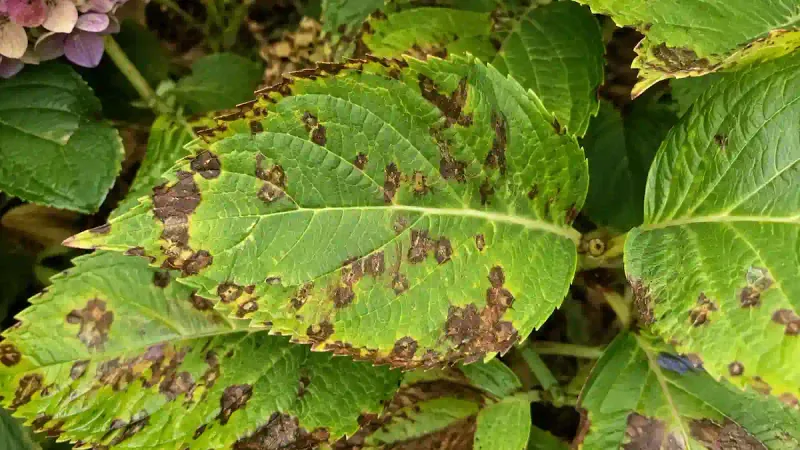
Not every brown bloom points toward a need for more water. Two other possibilities deserve a look, especially if your soil has been staying wet or if you’ve been watering frequently during a rainy stretch: wet-root stress and fungal disease.
Overwatering or poor drainage reduces the oxygen available to roots, and the resulting root damage can produce symptoms that look nearly identical to drought stress. Brown leaf edges, wilting, and general decline can all appear even when the soil feels wet.
UGA Colquitt County Extension’s heat-wave watering caution emphasizes that moist or waterlogged soil should not be watered again just because temperatures are high. If your soil stays soggy between sessions, the problem may be drainage rather than drought.
Botrytis gray mold is a fungal disease that can turn petals brown or black, but it comes with additional signs that set it apart from heat damage or aging. Penn State Extension’s hydrangea disease guide describes Botrytis as more likely when flowers have been persistently wet or humidity has been high, and it is often accompanied by fuzzy gray growth on affected tissue, leaf spots, or blighted buds.
University of Minnesota Extension’s gray mold resource reinforces that brown flowers alone are not enough evidence to justify fungicide treatment. You need those additional signs before reaching for a product.
When the pattern of symptoms is unclear or multiple issues seem to overlap, a local extension office can help. UGA DeKalb Extension’s guidance on getting a plant diagnosis walks through how to submit a sample and what information to include for the most accurate result.
Protect future buds when you remove spent flowers
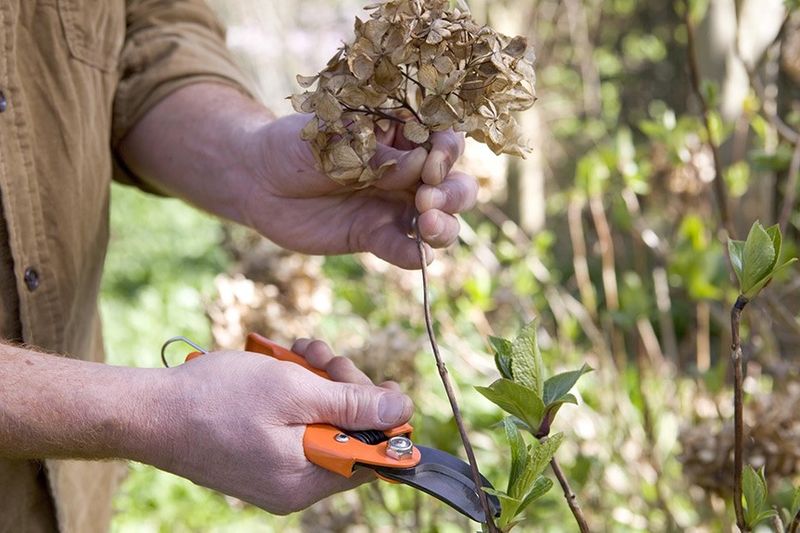
Once you’ve addressed the root cause of the browning, it’s natural to want to clean up the plant. Removing unattractive flower heads is fine for appearance, but the timing and method matter more than most gardeners realize, and the species in your yard determines the rules.
Bigleaf and oakleaf hydrangeas generally bloom on old wood, meaning next season’s flower buds form on the current year’s stems before winter. Illinois Extension’s pruning guide for hydrangeas explains that cutting back these species at the wrong time removes the buds that would have produced next year’s flowers.
Penn State Extension’s species-by-species pruning breakdown recommends limiting deadheading on old-wood bloomers to removing only the spent head itself, leaving the stem and any visible buds below it intact.
Smooth hydrangeas, such as ‘Annabelle,’ and panicle hydrangeas bloom on new wood and are generally more forgiving of late-season cleanup and cutting back. UGA Henry County Extension’s newsletter notes that removing spent heads improves appearance but will not restore petals that have already been scorched, dried, or aged past their prime.
Brown petals are finished regardless of what you do next.
Fertilizer won’t bring them back either. University of Florida IFAS guidance on fertilizing landscape plants cautions that applying fertilizer to stressed or damaged plants can add more stress rather than support recovery.
After cleanup, return to the basics: confirm soil moisture, check your mulch layer, and assess whether the plant’s exposure is setting it up for the same problem next summer. A hydrangea with brown flowers today can still be a healthy, thriving plant by next season with the right conditions in place.