
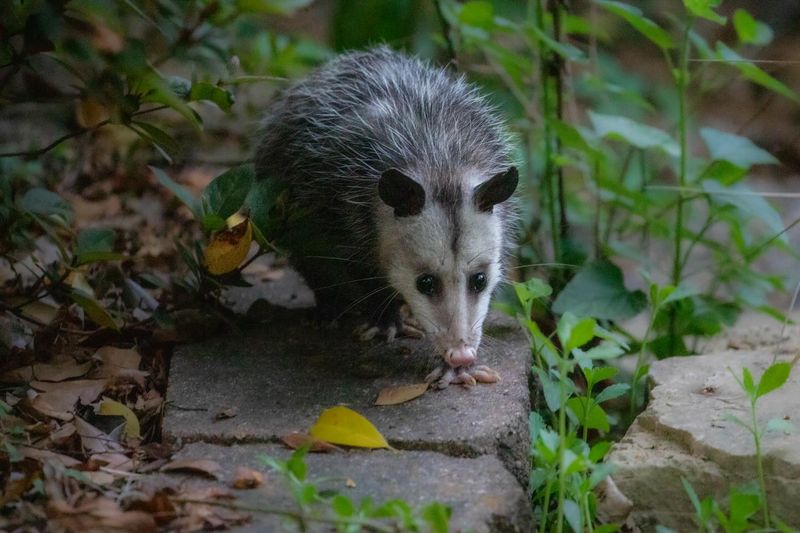
Spotting a Virginia opossum shuffling through your backyard after dark can feel surprising, but for North Carolina homeowners this summer, it is one of the most common wildlife encounters around. You may have heard that these animals gobble up thousands of ticks a week, making them a natural shield for your family and pets.
The truth is more complicated and more useful than that headline suggests. Understanding what actually draws opossums to your yard gives you real tools to coexist safely and protect everyone in your household from ticks at the same time.
Nightly visits are normal for North Carolina opossums
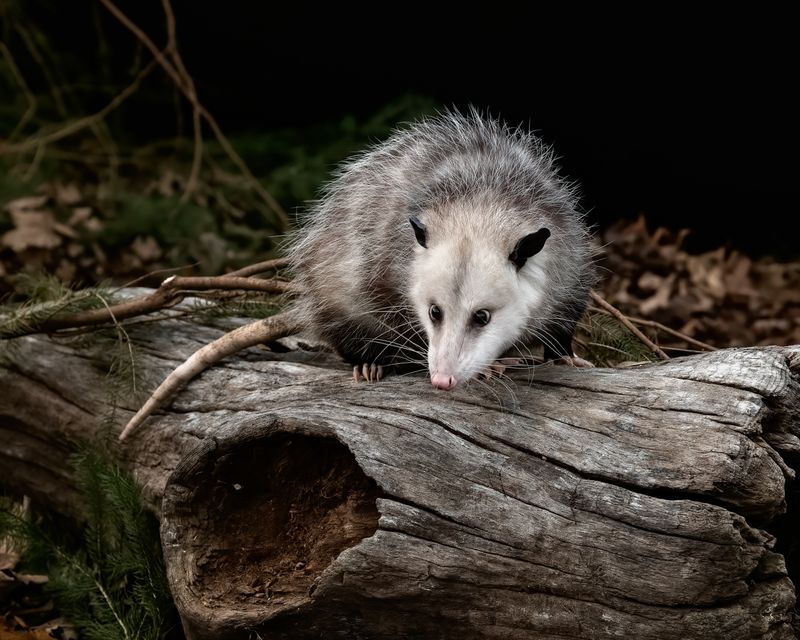
Across North Carolina, from the coastal plain to the Piedmont and up into the mountains, Virginia opossums are about as common as they come. North Carolina Wildlife Resources Commission notes that the species occupies a wide range of habitats, from wooded stream corridors to suburban neighborhoods, and is classified as both a game species and a furbearer in the state.
Seeing one after dark is not a warning sign.
The Virginia opossum is built for nighttime living. Solitary by nature, it spends daylight hours resting in brush piles, hollow logs, culverts, or gaps under structures, then emerges at dusk to roam and forage.
A single animal can cover a surprisingly large area in one night, which is why the same individual may appear in your yard several nights running without actually living there.
Their adaptability is worth appreciating. Opossums thrive alongside people in ways that many wildlife species cannot, partly because they eat almost anything edible and partly because they navigate suburban landscapes with ease.
That flexibility is what puts them in your camera-trap footage, not some special quality of your yard.
Seeing one does not mean your property is unusually healthy, unusually tick-free, or unusually good for wildlife. Repeated visits are a clue about resources, not a report card.
The sections that follow will explain what resources are likely drawing the animal back and what you can do about it, whether you want to encourage a peaceful pass-through or reduce how often it happens.
What is bringing the opossum back?
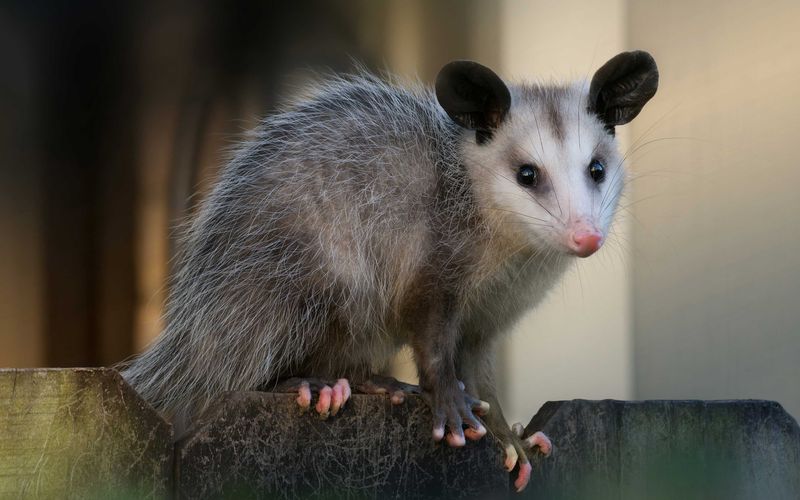
Repeat visits almost always come down to something the yard is offering: food, water, shelter, or a reliable travel corridor between patches of cover. Before assuming anything about your yard’s ecology, a quick property walk during daylight will usually reveal the real answer.
Opossums are true omnivores. The Smithsonian’s National Zoo describes their diet as ranging from insects, worms, and small vertebrates to fruit, eggs, and carrion.
In a suburban yard, those natural foods share space with a long list of human-provided options: unsecured garbage cans, outdoor pet food bowls, compost bins without tight lids, fallen fruit under trees, and birdseed scattered below feeders. Any one of those sources can turn a passing opossum into a nightly regular.
Water matters too. A low birdbath, a puddle that forms near a downspout, or a decorative pond can all serve as reliable drinking spots during hot summer nights when natural water sources shrink.
If food and water are both present, you have created a very convenient rest stop.
Shelter is the third draw. Gaps under porches, loose siding on sheds, crawl space vents without screens, and stacked lumber or brush piles are all attractive resting spots for an animal that prefers a ready-made den over digging its own.
UGA Cooperative Extension guidance on resolving human-nuisance wildlife conflicts points directly to these structural gaps as common entry points for opossums and similar animals.
A wildlife camera showing an opossum moving through your yard cannot tell you whether your property has low pesticide use, high biodiversity, or fewer ticks than your neighbors. Move from speculation to inspection: walk the perimeter, look for the attractants, and address them one by one.
The famous tick number does not describe a wild yard
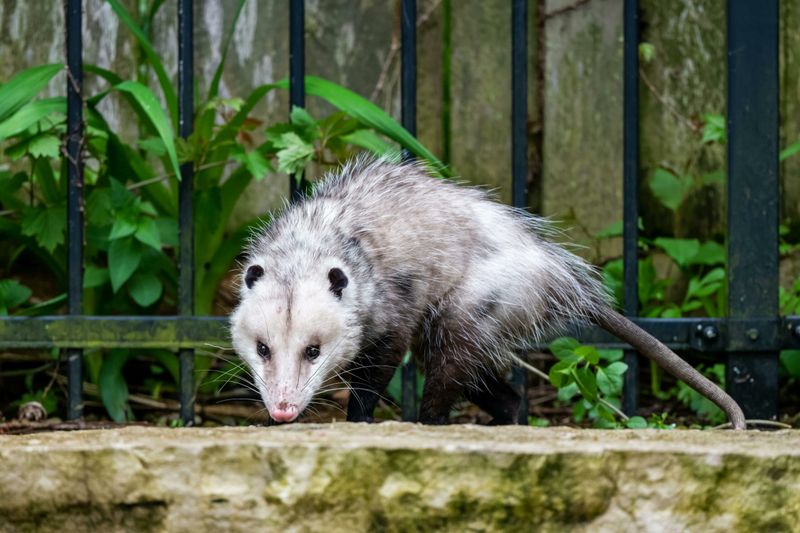
Few wildlife facts have traveled farther on social media than the claim that a single opossum eats 5,000 or 5,500 ticks every week. If you have seen that number in a nature post or a gardening group, you have seen it stripped of the context that makes it meaningful.
The figure originated from a captive experiment. Researchers at the Cary Institute of Ecosystem Studies exposed several animals, including opossums, to black-legged tick larvae under controlled conditions, then estimated how many larvae each host appeared to kill.
That 2009 study by Keesing and colleagues was genuinely useful for comparing how different host species respond to tick larvae in a laboratory setting. It was never designed to measure what happens in a wild yard.
A later study looked at the question from the other direction. Researchers examined stomach contents from 32 wild-sourced Virginia opossums and found no ticks or tick parts in any of them.
They also reviewed 23 earlier opossum diet studies and found no ticks reported there either. That 2021 peer-reviewed analysis concluded that ticks are not a preferred diet item for wild opossums and warned against treating the animals as a dependable tick-control method.
Penn State Extension makes the point plainly: the available field evidence does not support using opossums, chickens, or guinea fowl as reliable tick-control strategies. An opossum might incidentally swallow a tick while grooming, the same way you might accidentally swallow a gnat while jogging.
That is a far cry from a dependable pest-control service operating in your backyard every summer night.
The practical takeaway is simple: an opossum passing through your yard may or may not encounter a tick, and if it does, it may or may not ingest it. Nothing in the current research supports the idea that those visits meaningfully lower the tick population around your home.
Tick prevention needs its own plan, and that plan should not depend on who wanders through after dark.
Their real yard benefit is broader than tick control
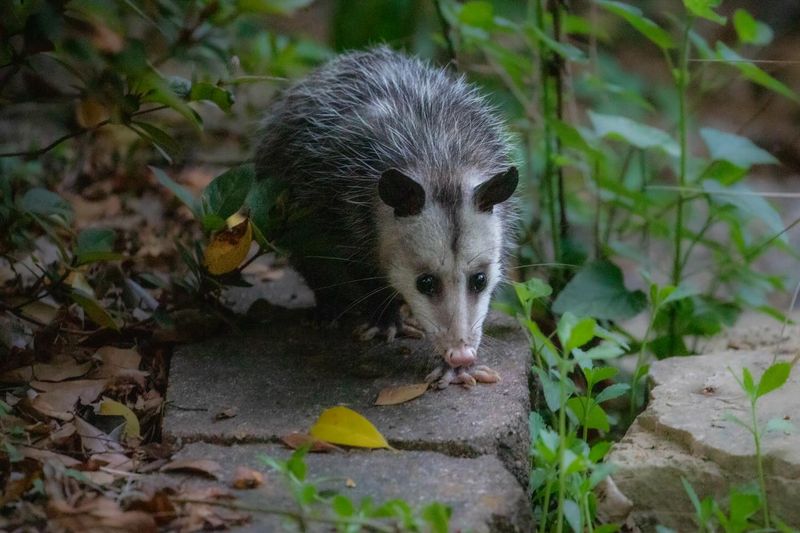
Set aside the tick headline for a moment and the opossum still earns a reasonable reputation as a low-conflict nighttime neighbor. North Carolina Wildlife lists cockroaches, beetles, worms, snails, slugs, mice, rats, snakes, fruit, vegetation, and carrion among the foods opossums consume.
For a gardener dealing with slug damage on hostas or a homeowner noticing more roaches near the foundation, an opossum’s appetite covers a genuinely useful range of prey.
Carrion scavenging is an underappreciated part of that role. An opossum that finds and removes a dead bird, mouse, or squirrel is performing a kind of yard sanitation that benefits everyone.
Generalist scavengers like this one help recycle organic matter and reduce the conditions that attract flies and other pests.
Where the picture gets more complicated is the tick question in reverse. Opossums do not just eat potential tick hosts; they can also carry ticks themselves.
Research on urban wildlife hosts in places like New York City, eastern Tennessee, and East Texas shows that opossums can be infested with ticks, with results varying by tick species, season, location, and the surrounding host community. An animal that kills some tick larvae during grooming may still be carrying attached ticks on its fur at the same time.
Those are separate biological facts, not contradictions. The honest summary is that opossums are useful generalist scavengers whose diet may include a variety of garden and yard pests, but their presence does not guarantee lower tick numbers or lower disease risk.
Appreciating what they actually do is more useful than crediting them with a pest-control guarantee they cannot deliver.
Remove attractants without trapping dependent young
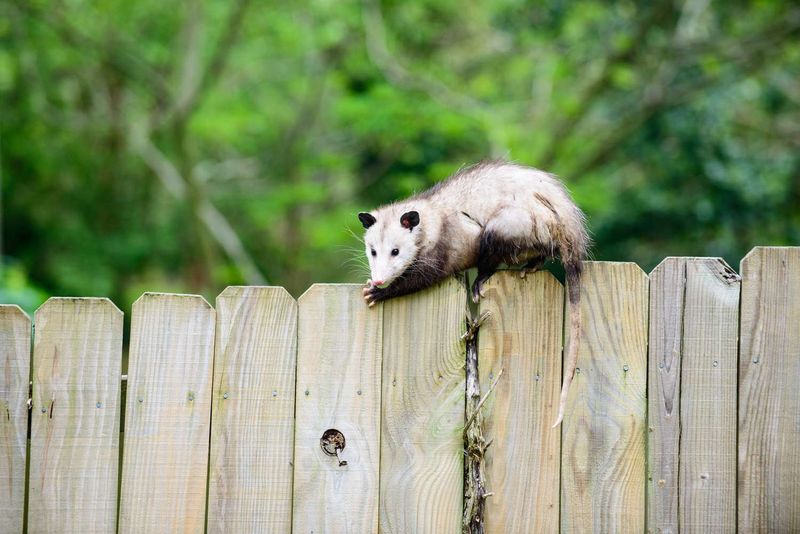
When opossum visits start feeling disruptive, the most effective response is also the simplest: remove whatever is drawing the animal back. Trapping, relocating, or chasing the animal rarely solves anything if the attractant stays in place, because a different opossum will find it within days.
Start with food sources. Bring pet food and water bowls indoors before dark, switch to a garbage can with a locking or bungee-secured lid, and make your compost bin inaccessible by using a closed tumbler or a bin with a tight-fitting lid.
If you have fruit trees, pick up fallen fruit regularly. Remove or relocate bird feeders temporarily if ground-feeding is drawing animals in at night.
UGA Cooperative Extension’s wildlife conflict guidance identifies these food-source controls as the first and most reliable step in reducing unwanted wildlife visits.
Intentional feeding makes things worse, not better. UGA Extension’s nuisance wildlife guidance explains that feeding wildlife creates dependency, draws in additional species including raccoons and rodents, and generates conflicts around pets, garbage, and structures that are harder to resolve once they start.
For structural exclusion, check for gaps under porches, sheds, crawl spaces, and decks. Hardware cloth or welded wire with small openings can seal these entry points reliably.
For garden beds, buried chicken wire or hardware cloth along the perimeter provides more consistent protection than commercial repellents, which require frequent reapplication and lose effectiveness in rain.
Before sealing any opening into a structure, confirm that both the adult opossum and any dependent young have left. Opossums give birth to tiny young that spend weeks in the mother’s pouch and then ride on her back, and sealing an opening with young inside traps them without a way to survive.
If you suspect a den, nest, or dependent young may be present inside a structure, contact a licensed North Carolina wildlife-control professional rather than attempting to seal the opening yourself.
Build a separate tick-protection routine
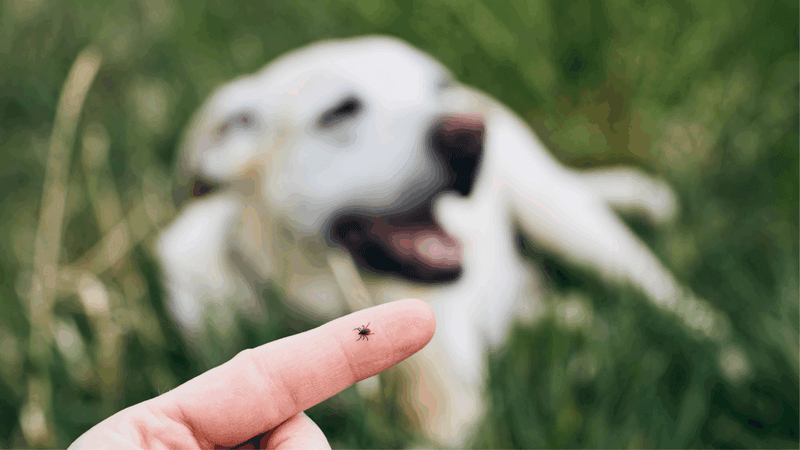
Tick protection for your family and pets needs to stand on its own, completely separate from whatever wildlife is visiting your yard. North Carolina tracks ehrlichiosis, Lyme disease, anaplasmosis, and spotted-fever illnesses including Rocky Mountain spotted fever, and North Carolina Division of Public Health tick-borne illness surveillance confirms that these diseases are a real summer concern in the state, with or without opossums in the picture.
Yard management is the foundation. CDC tick-prevention guidance recommends removing leaf litter, clearing tall grass and brush near the home and at the lawn edge, and mowing regularly.
A 3-foot-wide barrier of wood chips or gravel placed between your lawn and any adjacent wooded or brushy area creates a zone that ticks are reluctant to cross, reducing the number that migrate from wild habitat into maintained lawn. These steps lower exposure but do not eliminate ticks entirely.
Personal habits matter just as much as yard work. After any time outdoors, including time in your own backyard, check your body carefully, paying attention to the scalp, behind the ears, under the arms, around the waist, and behind the knees.
Check children thoroughly. Tumble clothing in a dryer on high heat for at least 10 minutes to kill any ticks that hitched a ride.
Showering within two hours of coming indoors can help remove unattached ticks and further reduce risk.
Pets need their own protection, and checking them after outdoor time is not the same as preventing tick attachment. Talk to your veterinarian about tick prevention products appropriate for your dog or cat, since the options vary by species, weight, and health status.
CDC Lyme disease prevention guidance also supports using EPA-registered repellents on people and treating clothing with permethrin as additional layers of protection. Rely on North Carolina vector-borne disease resources for current local guidance on disease risk and prevention updates.
Know when to leave the animal alone—and when to call
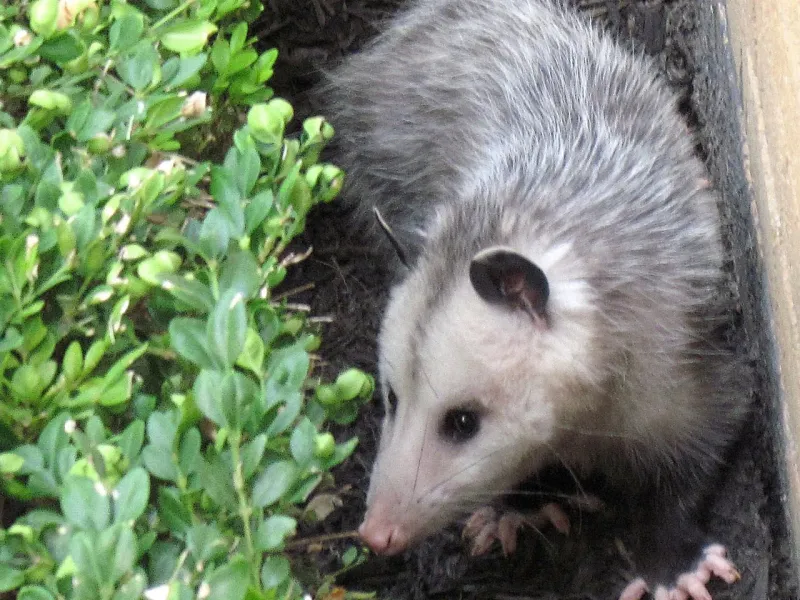
Most opossum encounters in a North Carolina yard require nothing from you except patience. The animal is almost certainly passing through on its nightly route, and if you leave it alone, it will move on within minutes or hours.
Interfering with a healthy, normally behaving opossum is unnecessary and potentially stressful to both the animal and the person involved.
Some behaviors that look alarming are actually normal opossum responses to stress. Hissing with an open mouth, drooling, swaying, waddling slowly, and the famous “playing dead” response are all defensive tactics the species uses when threatened.
None of those behaviors alone signal disease. North Carolina Wildlife Resources Commission specifically notes that daytime activity alone is not a cause for concern, so a summer opossum spotted in the late afternoon does not automatically need intervention.
What does warrant a closer look is behavior that goes beyond defensiveness: an animal walking in tight circles, an obviously injured animal, or one that has been lying in an exposed spot for many hours without moving. These patterns, not hissing or playing dead, are the signals worth acting on.
Never handle or approach an unfamiliar opossum. Opossums are described as highly resistant to rabies, and they rarely spread it compared to raccoons, skunks, bats, and foxes, but CDC rabies prevention guidance is clear that any mammal can become infected.
After any bite or scratch from wildlife, wash the wound thoroughly with soap and water for at least 15 minutes and contact a healthcare provider or public health office promptly.
Contact a licensed North Carolina small-mammal rehabilitator if you find an obviously injured opossum, a lone young opossum shorter than roughly 7 inches excluding the tail, or young found in the pouch of a dead female. For situations involving an opossum inside a structure or one causing property damage, check North Carolina Wildlife depredation resources and the NC licensed wildlife-control agent directory before attempting any trapping.
Opossums are regulated as game and furbearer animals in North Carolina, and current North Carolina trapping regulations apply to capture and relocation, so improvising removal without checking those rules can create legal problems on top of a wildlife problem.
A visitor can be welcome without becoming your tick strategy
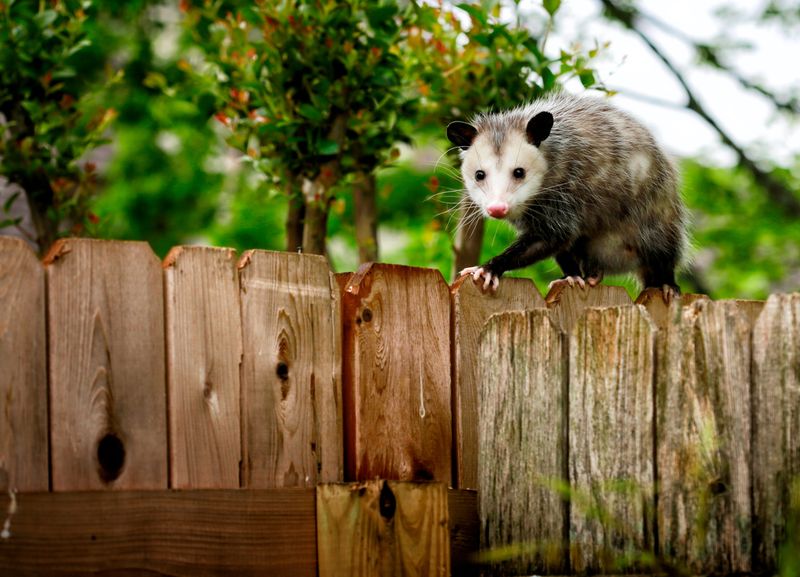
A Virginia opossum moving through your yard on a summer night is doing exactly what the species has always done across North Carolina: foraging, traveling, and making use of whatever the landscape offers. That visit says something about available resources, not about the health score of your property or the safety of your lawn.
When the animal is not causing damage or entering structures, the simplest response is to let it pass. Remove obvious attractants if visits feel too frequent, and keep structural gaps closed so the animal stays outside where it belongs.
Wildlife conflict guidance consistently points to attractant removal as the most durable solution, and that holds for opossums as reliably as for any other species.
Continue your tick-prevention routine independently of whether an opossum visited last night. CDC tick prevention steps, regular yard maintenance, post-outdoor body checks, and veterinarian-recommended pet protection are what actually stand between your family and tick-borne illness.
The opossum is not part of that equation in any reliable way.
North Carolina’s native opossum is worth appreciating for what it genuinely is: a resilient, adaptable scavenger that cleans up carrion, eats a wide range of pests, and asks nothing from you in return. Responsible stewardship means letting it do that work without feeding it, without relocating it on a whim, and without outsourcing your family’s tick safety to an animal that was never built for that job.