
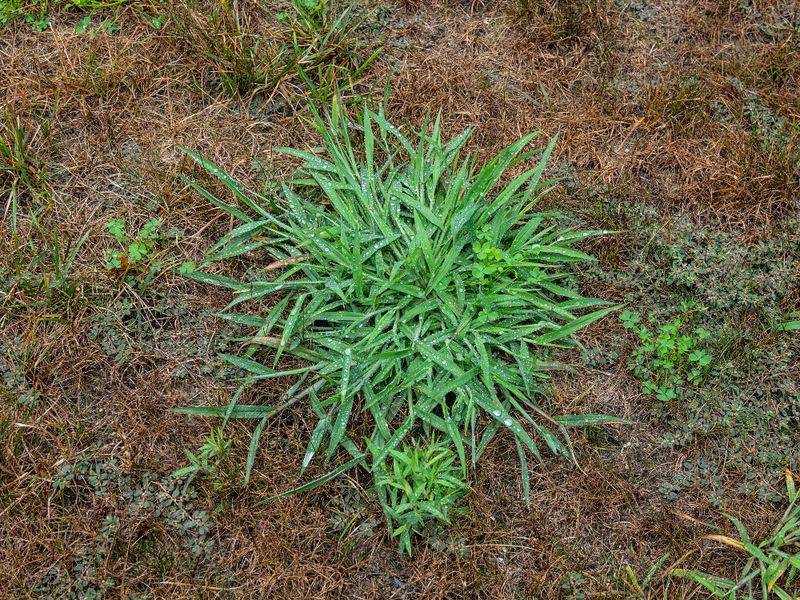
Crabgrass is one of the most stubborn weeds Southern homeowners deal with every summer, and no matter how many times you pull it or spray it, it seems to show up again the following year. The frustrating truth is that it keeps coming back because of how it reproduces, not because your efforts were completely wasted.
Getting ahead of it takes more than one product and more than one step, but the good news is that the approach is straightforward once you understand the cycle.
Crabgrass returns because it replenishes the seedbank
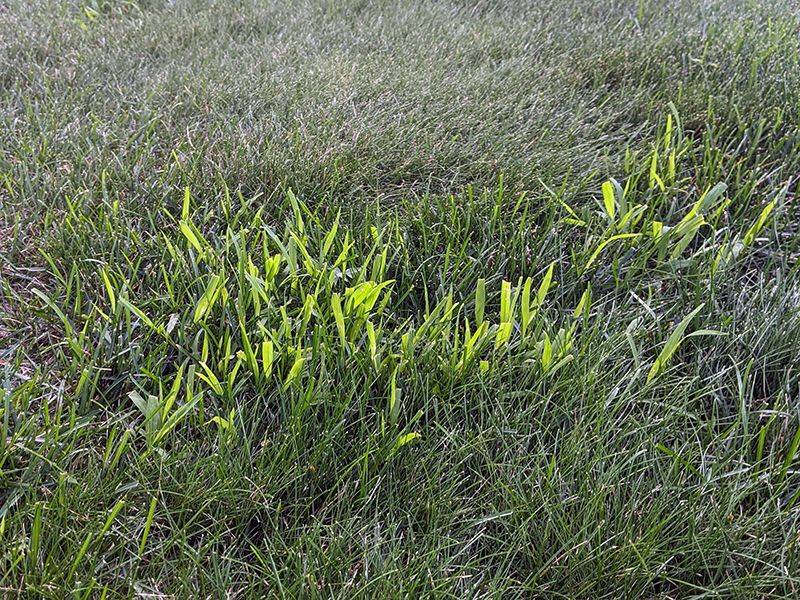
Every fall, crabgrass dies with the first frost or the end of the warm season, and most homeowners assume the problem died with it. What actually happened is that the plant already finished its real work months earlier, setting seed before the season ended.
Crabgrass is a summer annual, meaning it completes its entire life cycle in a single growing season, and it relies almost entirely on seeds to return the following year.
The numbers behind that comeback are striking. Cornell’s weed science profile of large crabgrass notes that a single mature plant can produce more than 100,000 seeds, many of which remain viable in the soil for years.
That reservoir of seeds in the ground is called the seedbank, and it explains why crabgrass seems to reappear no matter what you do in a single season.
Bare or thin patches in the lawn give those seeds exactly the warm soil and sunlight they need to sprout. Missed plants that were allowed to set seed before removal, late or poorly timed treatments, and stretches of compacted or disturbed soil all contribute to a seedbank that keeps refilling.
Recurring outbreaks are less a sign that one product failed and more a sign that the cycle was never fully interrupted. Fixing the problem means addressing the plant’s life cycle at multiple points across the growing season, not reaching for a single fix after the crabgrass is already visible.
Your mower helps the lawn compete, but it cannot solve crabgrass alone
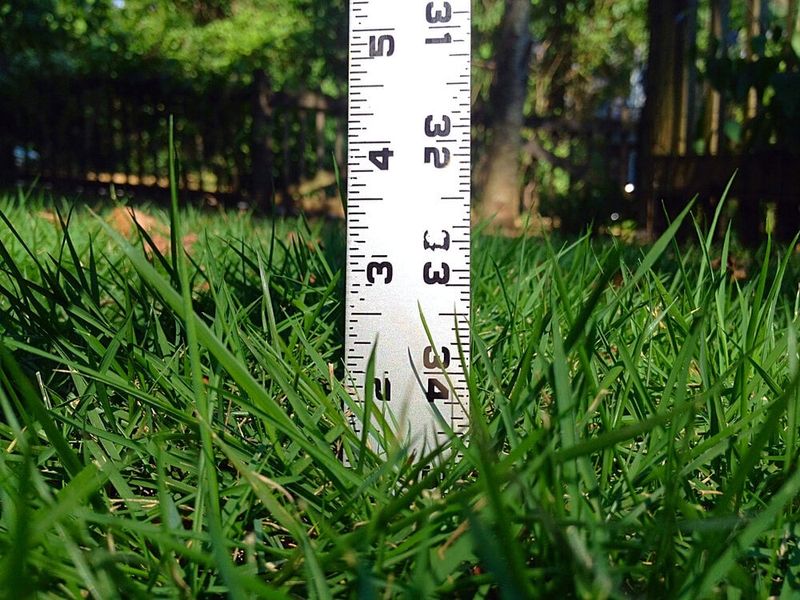
The lawn mower is the most common piece of equipment in any garage, and it does play a real role in managing crabgrass pressure. The role just happens to be indirect.
Mowing at the upper end of the recommended height for your specific turfgrass encourages the desirable grass to grow thicker and shade the soil, which makes it harder for crabgrass seedlings to find the light and warmth they need to establish.
What the mower cannot do is kill established crabgrass or independently prevent the seedbank from refilling. NC State TurfFiles notes that crabgrass can tolerate close mowing, so scalping the lawn in an attempt to weaken it typically backfires by weakening the desirable turf and exposing bare soil where seeds can sprout.
Cutting can reduce seed production only when plants are removed or cut before they actually set seed, which requires catching them early in the season.
Recommended mowing heights vary by grass species, cultivar, and maintenance goals, so always confirm with local guidance rather than applying a single number to every lawn. As a general reference, UC IPM’s crabgrass management resource notes approximate ranges of 2 to 3 inches for St. Augustinegrass and 1 to 2 inches for bermudagrass and zoysiagrass, though your county extension office can give you the most accurate range for your cultivar and region.
The mower is a useful supporting tool in a broader management plan, not a standalone solution for a crabgrass problem that has already taken hold.
Remove the crabgrass that is already growing
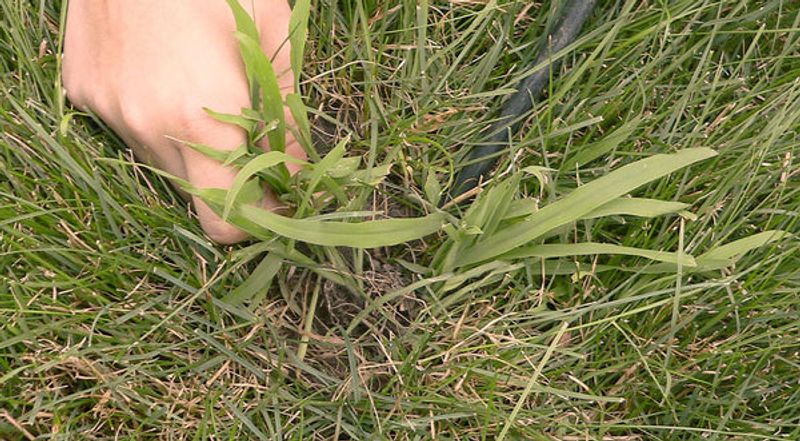
When crabgrass has already sprouted and is visible in the lawn, the first practical step is getting rid of what is actually there. Hand-pulling or digging works well for scattered plants, especially early in the season before the plant has had a chance to develop seed heads.
Iowa State University Extension recommends removing plants as soon as possible and disposing of any that have already flowered or begun to set seed, since those seeds can still mature even after the plant is pulled.
Hand removal is most practical for small outbreaks covering a limited area. For a lawn-wide infestation, pulling by hand quickly becomes impractical, and it does not stop other seeds already in the soil from germinating later in the season.
Think of hand removal as a way to reduce this year’s seed production, not as a way to eliminate the problem permanently.
For larger or more established infestations, post-emergent herbicides are a separate option, but product selection must match the turfgrass species, not just the target weed. Texas A&M AgriLife Extension specifically warns that quinclorac, one active ingredient sometimes used for emerged crabgrass, should not be used where St. Augustinegrass is present because it can cause significant injury to that grass.
It may also temporarily discolor bermudagrass. Always read the product label carefully and confirm it lists your turf species before applying any post-emergent treatment.
Use pre-emergent control before crabgrass seedlings appear
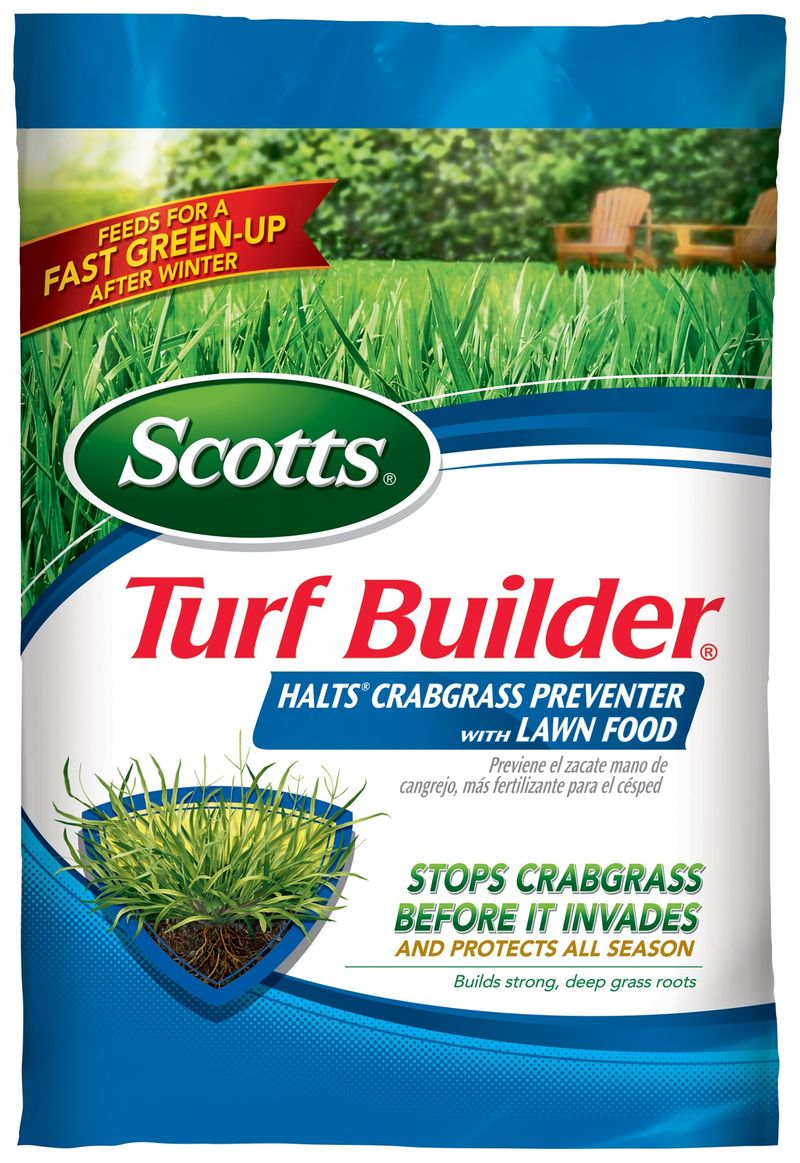
Once crabgrass is actively growing in the lawn, the window for the most effective chemical prevention has already closed. Pre-emergent herbicides work by preventing or suppressing seedlings before they emerge from the soil, so they need to be in place before germination begins.
Applied to an existing infestation, they will not reliably kill established plants.
UF/IFAS Gardening Solutions identifies dithiopyr, pendimethalin, and prodiamine as common active ingredients available to homeowners for crabgrass prevention. These are examples drawn from extension guidance, not an exhaustive list, and each product must be matched to the turfgrass species in your lawn.
A product safe for bermudagrass may not be appropriate for centipedegrass or bahiagrass, so checking the label for your grass type is a required step, not an optional one.
Most pre-emergent products also need to be watered into the soil after application, according to label directions, to move the active ingredient into the zone where seeds germinate. UF/IFAS publication EP575 notes that effectiveness typically declines over time, with many products providing roughly six to ten weeks of control, meaning a second application may be warranted if the label permits one.
Following the label’s rate, timing, and watering requirements is the difference between a product that performs and one that disappoints. Using a pre-emergent correctly and on time generally offers more dependable prevention than any improvised household remedy.
Set the timing by local conditions in Florida or Texas

Timing a pre-emergent application is not a matter of picking a date from a national calendar. Crabgrass germination in the South is driven by soil temperature, and that temperature varies by location, year, and even the exposure of different parts of your yard.
Applying too early means the product may break down before germination peaks; applying too late means seedlings are already up and the product’s prevention window has passed.
For Florida homeowners, UF/IFAS publication EP141 provides approximate planning dates: around February 1 in South Florida, February 15 in Central Florida, and March 1 in North Florida. A useful temperature cue is watching for daytime temperatures that consistently remain around 65 to 70 degrees Fahrenheit for four or five consecutive days, which signals that soil conditions are approaching germination range.
Actual timing shifts from year to year with winter weather patterns, so treat these dates as a planning target rather than a fixed deadline.
In Texas, crabgrass germination typically begins around mid-February in South Texas, early March in the North and Central regions, and mid-March in the Panhandle. Texas A&M AgriLife Extension points to a soil temperature of approximately 55 degrees Fahrenheit at a 2-inch depth, sustained for several days, as a useful germination indicator.
Monitoring soil temperature with an inexpensive probe thermometer takes the guesswork out of the decision. Regardless of region, follow the specific product label and check with your local extension office for the most current local guidance before applying.
Build a thicker lawn to close crabgrass’s openings
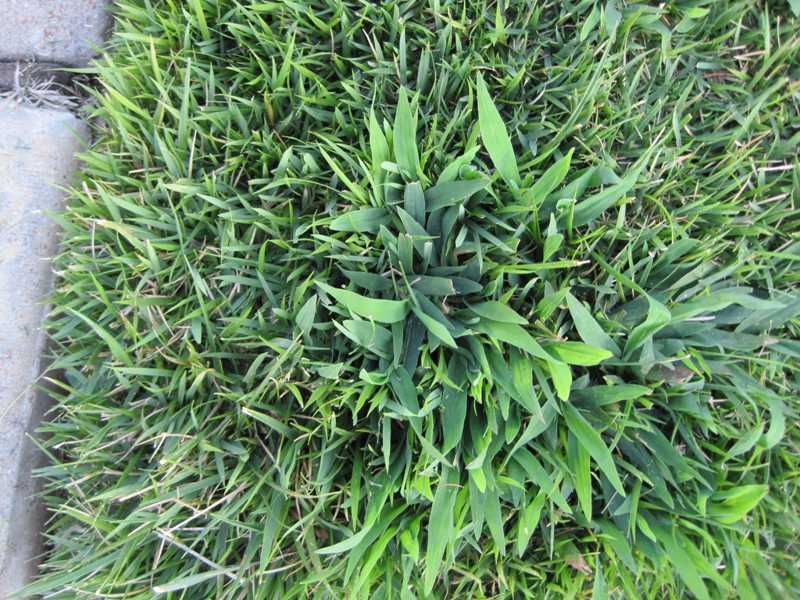
Crabgrass is an opportunist. It fills gaps, and a lawn with bare patches, thin turf, or compacted soil gives it exactly the foothold it needs.
Building a denser stand of desirable grass is one of the most durable nonchemical tools available to Southern homeowners, and the lawn mower is central to that effort when used correctly.
Mowing at the upper end of the recommended range for your turfgrass species, rather than cutting short, allows the canopy to shade the soil and reduce the light available to germinating weed seeds. NC State TurfFiles and UC IPM both note that cutting turf too short and irrigating with frequent, shallow watering sessions can favor crabgrass invasion by stressing the desirable grass and keeping the surface soil moist and warm.
Deep, infrequent watering encourages roots to grow deeper and makes the lawn more resilient during dry spells.
Repairing bare or thin areas is equally important. Bare soil is essentially an open invitation for the seedbank to germinate.
Rutgers Cooperative Extension reinforces that adequate fertility, matched to the turf species and time of year, supports the kind of vigorous growth that crowds out weeds. Fertilizer schedules vary by grass type and region, so consult local extension recommendations rather than following a generic national program.
A thicker lawn does not replace timely removal and labeled herbicide use; it works alongside those steps to reduce how many crabgrass seeds find a viable spot to grow.
Vinegar and salt can damage the lawn instead of fixing it
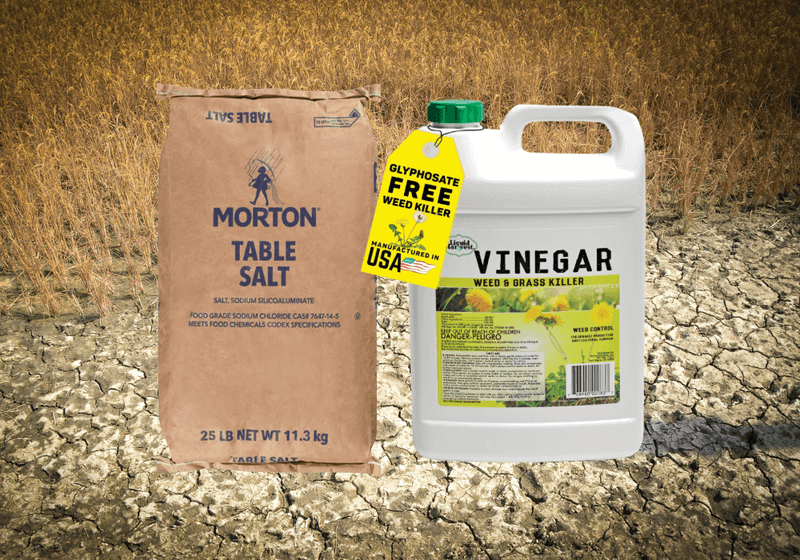
When crabgrass refuses to quit, it is tempting to reach for whatever is in the pantry or garage. Vinegar is one of the most common suggestions that circulates online, but the practical reality for lawn use is more complicated than the recommendation suggests.
Grocery-store vinegar is typically around 5% acetic acid, and while it can scorch very young, tender weed tissue, University of Maryland Extension explains that vinegar-based treatments work by burning contacted foliage and do not provide residual prevention. The crabgrass roots and the seeds in the soil are unaffected.
Stronger horticultural vinegar products can reach 10 to 30 percent acetic acid or higher. Those concentrations are nonselective, meaning they can injure or kill desirable lawn grass along with the crabgrass, and they carry meaningful risks to skin, eyes, and nearby ornamental plants.
University of Connecticut Extension cautions that higher concentration does not make a product selective for the target weed; it simply increases the hazard to everything it contacts.
Adding salt to a vinegar mixture creates additional problems. Ask Extension guidance notes that salt can accumulate in the soil and harm desirable plants and future plantings long after the initial application.
Other substances sometimes found in garages, such as bleach, gasoline, or kerosene, are not appropriate weed treatments under any circumstances and can create serious safety, soil, and water-quality hazards. If a product is not labeled for use in a lawn, it should not go on the lawn.
Corn gluten meal offers mixed prevention, not a guaranteed cure

Corn gluten meal comes up regularly in conversations about natural crabgrass prevention, and it is worth understanding both what it can do and where its limits are. First, a clarification: corn gluten meal is not the same product as ordinary cornmeal found in the grocery store.
It is a byproduct of wet corn milling, and specific labeled products derived from it have been studied for pre-emergent weed suppression properties.
The research record is genuinely mixed. Iowa State University’s corn gluten meal research found some suppression of weed germination under favorable conditions, particularly after repeated annual applications.
However, University of Maryland Extension and Rutgers Cooperative Extension both report that results are inconsistent, especially under heavy weed pressure, and that corn gluten meal generally performs less reliably than conventional pre-emergent herbicides when crabgrass is a serious problem.
One practical consideration that often gets overlooked is nitrogen. Corn gluten meal contains a substantial amount of nitrogen, roughly 9 to 10 percent by weight, and that contribution needs to be counted as part of the lawn’s overall fertilizer plan for the season.
Applying it without adjusting the rest of your fertility program can lead to over-fertilization. UConn IPM’s turf weed guidance reinforces that corn gluten meal should not be treated as a dependable one-product solution for a severe or recurring infestation.
It may be a reasonable component of a low-input program on a lightly affected lawn, but it is not a replacement for well-timed, labeled prevention.
Let the turf species and product label decide the treatment
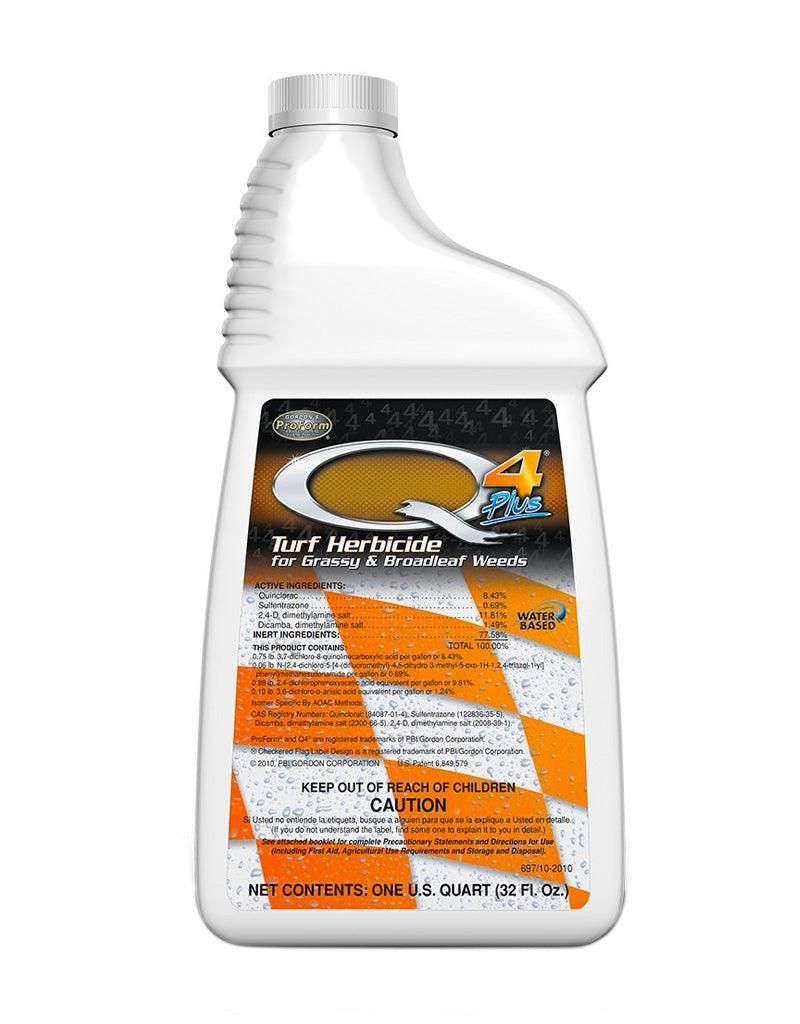
Before buying any herbicide, the first step is identifying the grass growing in your lawn. Weed control products are not interchangeable across turf species, and applying the wrong product can cause more damage than the crabgrass itself.
Bermudagrass, St. Augustinegrass, centipedegrass, bahiagrass, and zoysiagrass each have different tolerances for herbicide active ingredients, and UF/IFAS publication EP141 lists those tolerances specifically for Florida homeowners. Texas lawns follow similar logic, with grass species determining which products are appropriate.
The product label is a legally enforceable document, not a suggestion. EPA pesticide label guidance makes clear that the label governs the approved turf species, application rate, required personal protective equipment, watering-in instructions, reentry intervals, and any restrictions near ornamentals, water features, or drainage areas.
Reading and following the label is both a legal requirement and the most reliable way to get the outcome you are looking for.
Pre-emergent herbicides can also interfere with lawn reseeding or new sod establishment. UF/IFAS Gardening Solutions advises checking the specific product label and following the required waiting interval, often two to four months, before installing sod or planting seed.
A related timing issue involves weed-and-feed products: the window for applying a crabgrass pre-emergent does not always line up with the best time to fertilize actively growing turf, so the two goals may need to be handled separately.
The seasonal sequence that actually limits recurring crabgrass is straightforward: maintain turf at the correct height for your grass species, remove visible plants before they produce seed, repair thin or bare areas promptly, and apply a correctly labeled pre-emergent before local germination begins each year. No single product in any garage can do all of that, but a consistent plan built around your specific lawn and region can make a real difference over time.