
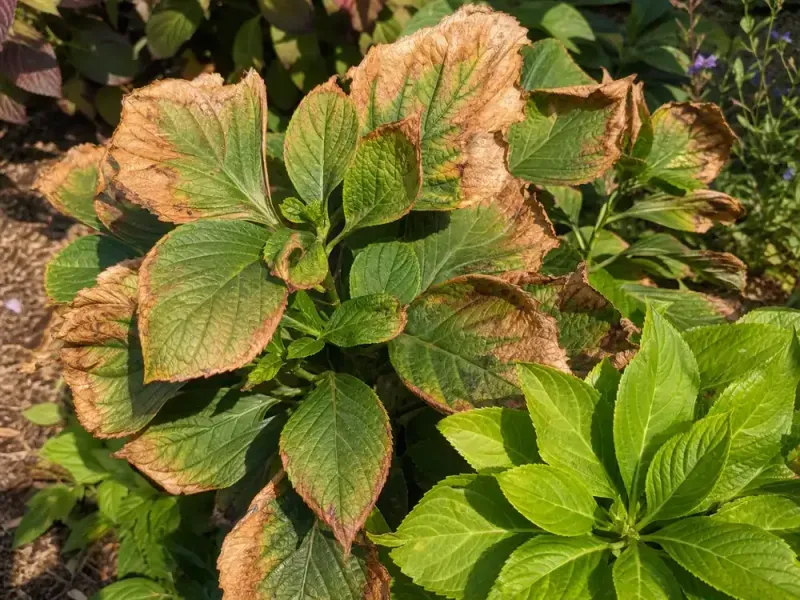
Crispy brown edges creeping across your hydrangea leaves in August are one of the most common and confusing sights in North Carolina gardens. Most homeowners reach for the hose first, but dry soil is only one piece of a bigger picture.
Understanding what those scorched margins are actually signaling can save you from making the problem worse and help your shrubs push through the rest of summer in better shape.
The brown edge is a water-transport warning
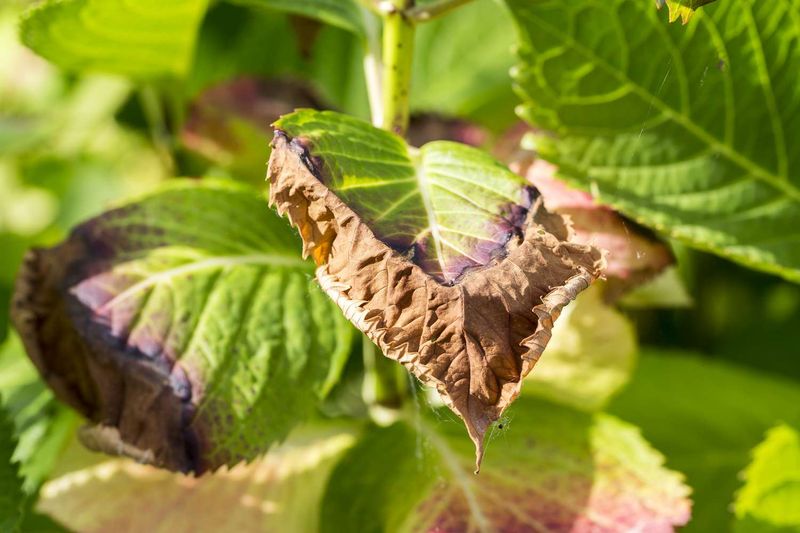
Leaf scorch is the most useful working diagnosis when you spot dry, crispy brown margins on hydrangea foliage after a stretch of late-summer heat, especially when the damage shows up first on the uppermost or most sun-exposed leaves. The symptom has a straightforward physical explanation: the leaves are releasing water through their surfaces faster than the root system can pull moisture up from the soil to replace it.
NC State Extension’s plant health alert on hydrangea leaf scorch identifies this water-supply imbalance as the core problem, and it makes clear that scorch is physiological rather than contagious.
Drought is one genuine cause of that imbalance, but it is far from the only one. Intense afternoon sun, hot or drying wind, reflected heat from a nearby wall or driveway, transplant stress, compacted soil, and damaged roots can all tip the balance in the same direction, even when the soil holds some moisture.
Washington State University’s leaf scorch fact sheet reinforces this point, noting that high evaporative demand from heat, wind, and sun can outpace root uptake regardless of soil conditions.
Two things are worth anchoring before moving further into diagnosis. First, tissue that has already turned brown will stay brown.
Correcting the underlying stress protects new and healthy growth going forward, but it will not reverse the cosmetic damage already done. Second, scorch alone generally does not threaten the life of the shrub.
NC State’s Extension Gardener Handbook on woody ornamentals treats leaf scorch as a manageable stress response, not a death sentence, which means the most productive next step is figuring out which part of the water-supply chain is breaking down.
What the pattern on the leaves can tell you
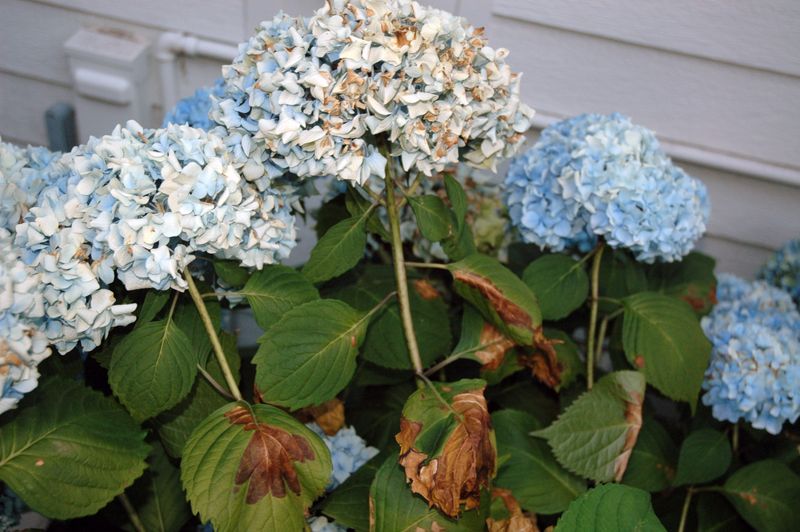
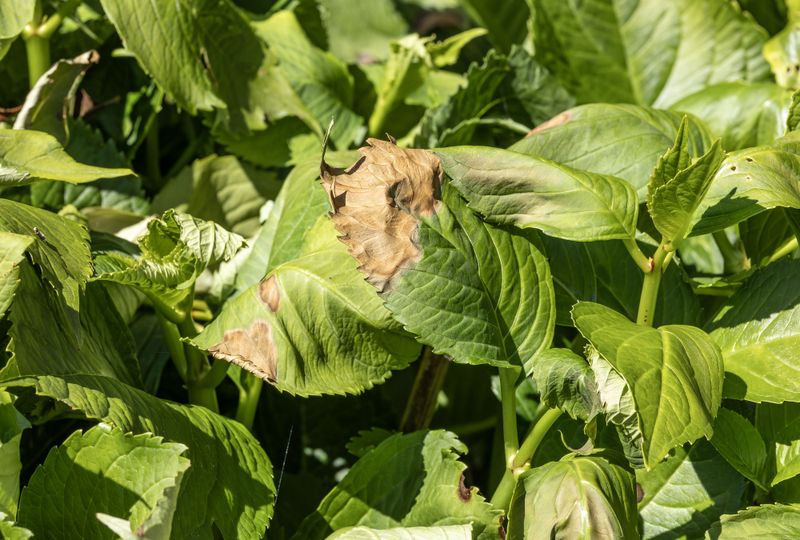
Before adjusting your watering schedule or reaching for any product, spend a few minutes reading the leaves themselves. Scorch tends to produce browning that starts at the outer edge and moves inward, creating a dry, papery border on the leaf margin.
The damage is often more pronounced on leaves that face the afternoon sun or sit at the top of the plant where heat and wind exposure are greatest.
Washington State University’s hydrangea scorch fact sheet describes this pattern as irregular crispy areas concentrated on the most exposed foliage, which distinguishes it from the organized lesion pattern of a fungal problem. Cercospora leaf spot, one of the more common fungal diseases on hydrangeas in the Southeast, looks quite different: it produces discrete tan-to-gray spots with dark purple or reddish halos rather than a continuous brown margin.
Penn State Extension’s guide to hydrangea diseases notes that Cercospora becomes most noticeable in late summer and fall, which is the same window when scorch peaks, so the two can appear at the same time and need to be read separately.
Symptoms that push the investigation toward bacterial, viral, or other fungal causes include numerous distinct spots across the leaf surface, mottling, distorted or curled tissue, ring patterns, or a progressive decline spreading through the whole plant. University of Maryland Extension’s hydrangea problem guide draws a clear line here: simple crispy edges warrant a site and moisture check, while lesions with halos or unusual patterns warrant a closer disease investigation.
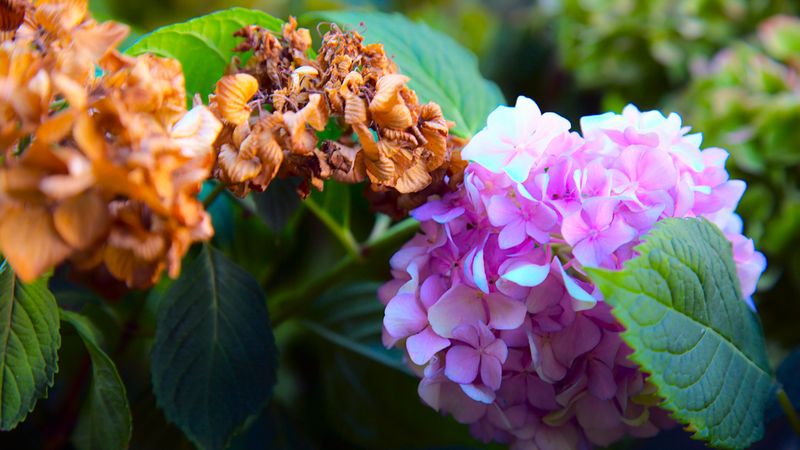
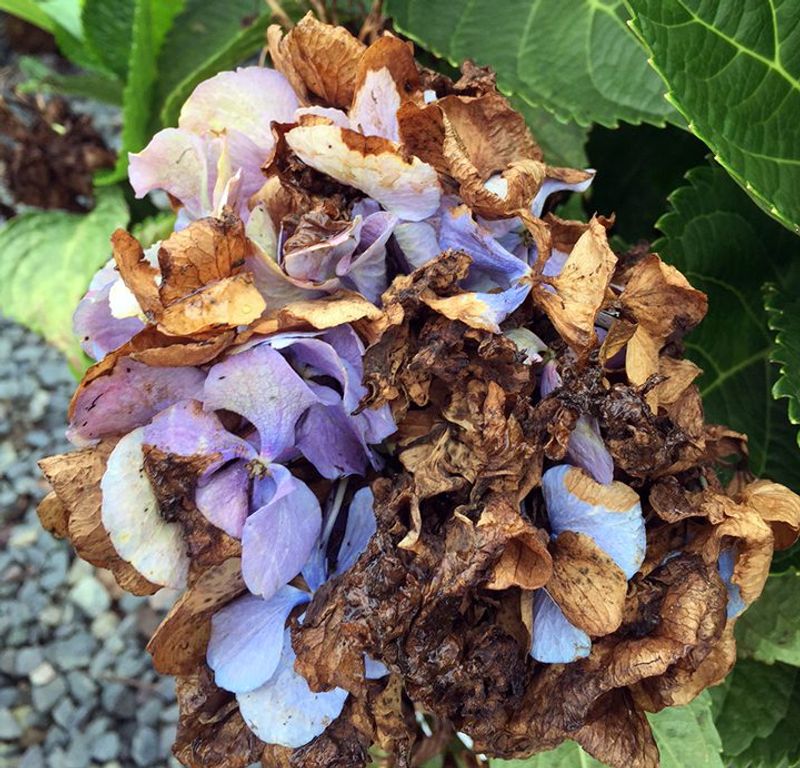
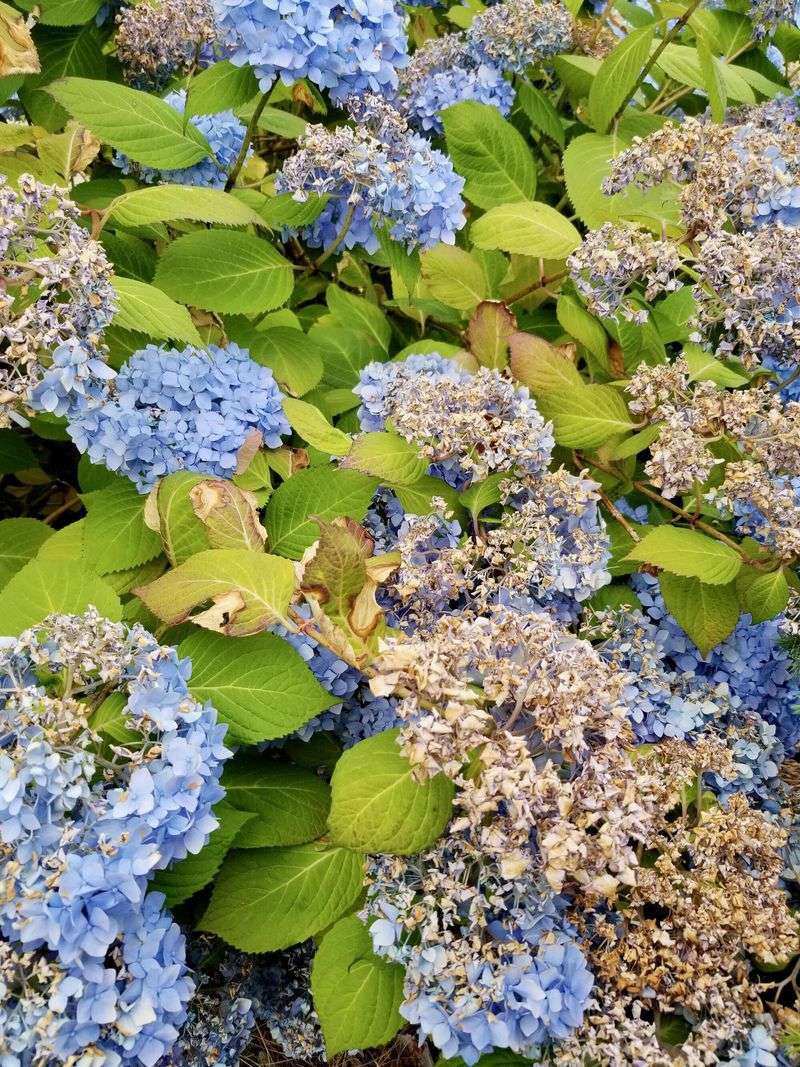
One more distinction worth making: browning flowers are a separate issue from browning leaves. Hydrangea blooms naturally become papery as they age, and heat or moisture stress can accelerate that process.
Ask Extension’s hydrangea browning resource confirms that flower browning on its own does not establish a leaf disease. Focus the leaf-scorch diagnosis on the foliage, not the blooms.
Check the root zone before you change the watering routine
Grabbing the hose is the instinctive response to brown leaves, but a quick soil check first can save you from making the wrong call. Push a finger or a trowel blade into the soil near the plant’s root zone and go down roughly 3 inches.
NC State’s Extension Gardener Handbook on woody ornamentals uses this depth as a practical reference point: if the soil is dry at that level, the plant likely needs water. If the soil still feels cool and damp, the situation is more complicated.
A hydrangea that wilts noticeably during the hottest part of the afternoon but then recovers on its own overnight, with the root zone still moist, is probably showing heat stress rather than straightforward drought. In that scenario, the leaves are losing water faster than the roots can move it up during peak heat, but the plant is rebalancing on its own once temperatures drop.
Adding more water to already-moist soil in that situation does not solve the problem and can create new ones.
The opposite mistake is just as common. Compacted soil, poor drainage, or ground that stays persistently saturated can damage roots and reduce their ability to move water into the plant, producing browning that looks exactly like drought stress even though water is physically present.
NC State’s container and root-zone guidance identifies root damage and oxygen-starved soil as causes of poor moisture transport, and the same principle applies to in-ground plants growing in compacted or low-lying spots.
Recently transplanted hydrangeas deserve extra attention during this check. A new plant’s root system has not yet spread far enough to supply the full canopy efficiently, making it more vulnerable to scorch than an established shrub in the same spot.
Washington State University’s scorch fact sheet notes this limited root-system issue directly. If the plant went in the ground within the past year, factor that into your reading of the soil check and monitor more closely through the rest of the season.
Deep, measured watering helps only when the roots can use it
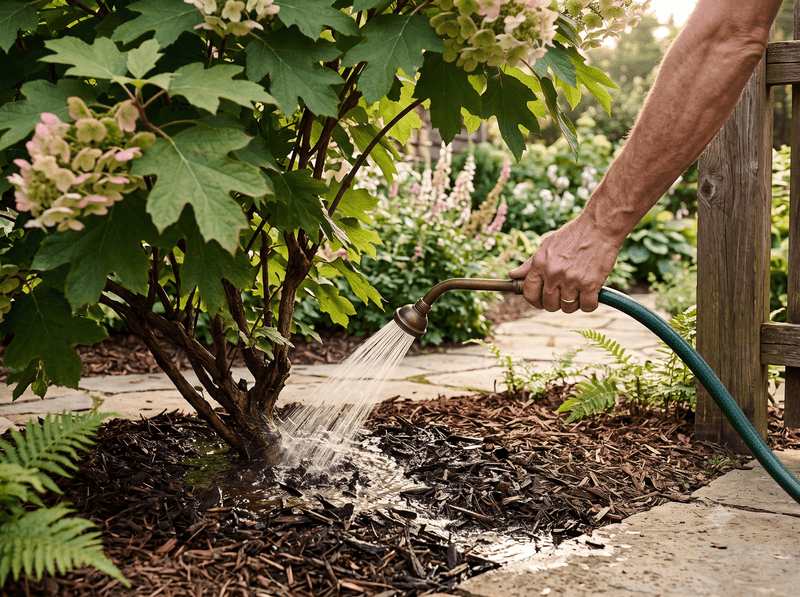
When the root-zone check confirms the soil is genuinely dry several inches down, the corrective move is to water slowly and thoroughly rather than quickly and repeatedly. Applying water at a pace the soil can absorb allows it to move down into the root zone rather than running off the surface or pooling.
After watering, check how deeply the moisture actually penetrated by pushing a trowel in again an hour or two later. If water moved only an inch or two, the soil may be compacted or the application was too brief.
NC State’s woody ornamentals handbook recommends allowing the soil to dry out somewhat between irrigation sessions rather than watering on a fixed daily schedule. For established shrubs during prolonged dry spells, it offers a rough reference of about every 10 days, but that figure is a starting point, not a rule.
Clay soil holds water longer than sandy soil; a mulched bed retains moisture better than bare ground; a slope drains faster than a flat bed; a plant in full afternoon sun loses moisture more quickly than one in dappled shade. All of those variables shift the timing.
Organic mulch is one of the most straightforward tools for reducing how often you need to water. Applied about 2 to 3 inches deep around woody plants and extended beyond the edge of the canopy, mulch reduces soil-temperature swings and slows evaporation between rain events.
UGA Cooperative Extension’s bigleaf hydrangea guide recommends 3 to 5 inches of organic mulch for that species specifically. Keep mulch pulled back at least 6 inches from the main stems or crown to avoid trapping moisture against the wood.
Where you direct the water also matters. Watering the soil at the root zone rather than overhead keeps foliage dry and reduces the conditions that favor fungal disease.
Penn State Extension’s hydrangea disease guide notes that prolonged leaf wetness from sprinkler irrigation increases disease pressure. If overhead watering cannot be avoided, watering in the morning gives leaves the best chance to dry before evening temperatures drop.
Exposure and hydrangea type change the remedy
Brown edges on a bigleaf hydrangea in a coastal-plain yard baking in afternoon sun call for a different response than the same symptom on an oakleaf hydrangea growing in a partly shaded Piedmont garden. Matching the remedy to the species and the site is what separates a useful fix from one that does nothing.
Bigleaf hydrangeas, the mophead and lacecap types most commonly sold in North Carolina, are the most heat-sensitive of the common species. NC State’s bigleaf hydrangea plant profile notes that these shrubs perform best with dappled or partial shade and need protection from hot afternoon exposure.
UGA’s growing guide reinforces this, specifically advising against hot, dry, and exposed sites for bigleaf types.
Oakleaf hydrangeas have a wider sun tolerance. NC State’s oakleaf hydrangea profile lists full sun to part shade as acceptable when the plant is growing in organically rich, well-drained soil with adequate moisture.
Panicle hydrangeas, including popular cultivars in the Limelight family, are generally more adaptable to sun and moderately drier conditions than bigleaf types, though site and cultivar still influence how well they handle prolonged heat. NC State’s Limelight hydrangea profile confirms this broader sun tolerance without treating it as immunity to scorch.
Beyond species, look at what surrounds the plant. A concrete driveway, a brick wall, or a dark-colored fence nearby can reflect and radiate heat directly onto foliage for hours after the sun has shifted.
Prevailing wind from a hot, exposed direction adds to the evaporative load on the leaves. For a plant showing scorch in those conditions, temporary shade from a shade cloth or a strategically placed patio umbrella, combined with wind protection if possible, can reduce stress without requiring any changes to the root zone.
Oregon State University Extension’s heat-wave guide for hydrangeas recommends temporary shade as a practical first response before considering anything more involved.
A recently transplanted shrub in a difficult spot deserves the same temporary protection rather than an immediate move. If a site consistently produces scorch year after year despite adequate moisture and mulch, relocating the plant to a better-suited location is worth planning, but that kind of move is best done during a cooler season with appropriate transplant preparation rather than in the middle of a summer heat spell.
Fertilizer and fungicide can distract from the real problem
Two products tend to come out of the garage when hydrangea leaves brown: fertilizer and fungicide. Both are sometimes appropriate, but reaching for either without a clear diagnosis can make the situation worse rather than better.
Fertilizer feels like a logical rescue move, but excess fertilizer and the salt accumulation it causes can injure roots and produce the same marginal and tip burn you are trying to fix. NC State’s woody ornamentals handbook states that fertilizer should be applied only after the underlying problem has been identified, and that lack of fertilizer is rarely the explanation for a general plant problem.
NC State’s container and root-zone guidance echoes the warning about root injury from overapplication. If you applied fertilizer recently and the browning appeared shortly after, the most useful response is to water according to the product label and current soil conditions to help dilute and move the material through the root zone, not to add more fertilizer on top.
UGA’s bigleaf hydrangea guide also advises watering after fertilizing as standard practice to help the material reach the roots without sitting in concentrated form near the crown.
Fungicide is the other common overreaction. Dry, crispy brown margins that fit the scorch pattern do not call for a fungicide application.
NC State’s hydrangea leaf scorch alert is direct on this point: scorch is physiological, not infectious, and does not spread from plant to plant. Penn State Extension’s hydrangea disease guide reserves fungicide recommendations for confirmed fungal disease with distinct lesions, halos, or progressive spotting.
Removing badly damaged leaves is optional and purely cosmetic. The meaningful intervention is always correcting the heat, water-supply, exposure, or root-zone problem behind the symptom.
Use the symptom to choose the next action
A practical weekend checkup starts at the soil, not the shelf. Push a finger or trowel into the root zone about 3 inches deep and note what you find.
Dry soil points toward deep, slow watering at the root zone and a mulch layer to slow future moisture loss. Moist or wet soil shifts the question toward exposure, drainage, and root health rather than irrigation.
NC State’s leaf scorch alert and the woody ornamentals handbook both anchor this soil-first approach.
After the soil check, assess afternoon sun exposure, nearby heat-reflecting surfaces, wind, hydrangea species, and whether the plant was installed within the past year. Temporary shade cloth or wind protection can reduce stress quickly when exposure is the primary driver.
If the root zone stays moist but the plant continues declining with unusual spotting or distortion, a disease investigation is the logical next step. University of Maryland Extension’s problem guide provides a clear reference for separating those symptom patterns.
The brown tissue already on the leaves will stay brown. The goal of every step in this checkup is to protect the healthy growth that remains and give the shrub a better foundation for next season.
A hydrangea that looks rough in late August can still finish the year well if the underlying stress is addressed rather than masked.