
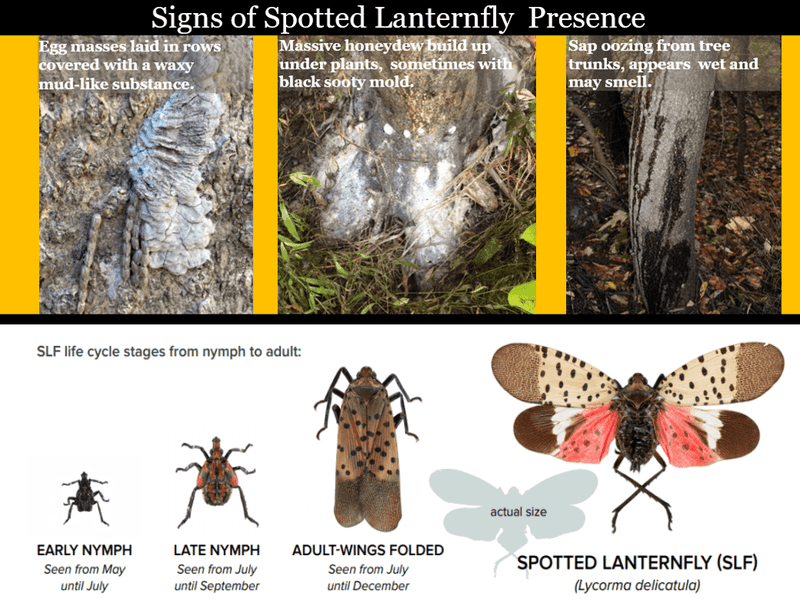
Something sticky and black on your tomato leaves or a strange vinegar smell under your maple tree may be the first hint that spotted lanternfly has moved into your yard, even before you ever lay eyes on the bug itself. This invasive insect is spreading across North Carolina, and catching possible evidence early gives you a chance to document it and report it to the right people.
The damage it leaves behind can look like problems caused by other common pests, so knowing what to look for and what to do next makes all the difference.
The First Clues May Appear Below the Canopy
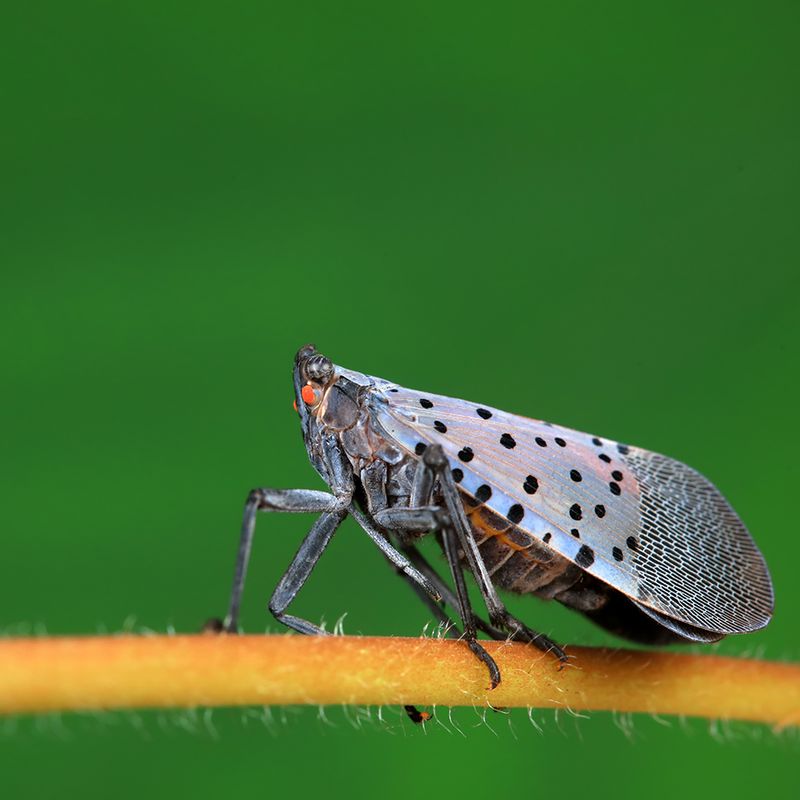
Sticky, shiny patches on leaves, patio furniture, car hoods, or the ground beneath a tree can be one of the first things a gardener notices when spotted lanternfly feeding is underway nearby. That stickiness is honeydew, a sugary liquid excreted by sap-feeding insects as they tap into plant tissue.
NCDA&CS spotted lanternfly guidance lists honeydew buildup, black sooty mold, and a fermented or vinegar-like odor beneath heavily infested trees among the most recognizable early warning signs.
Black sooty mold often follows honeydew because the mold grows on that sugary residue. You may notice it coating the upper surfaces of lower leaves or spreading across a deck or concrete surface below an affected plant.
The mold itself does not feed on the plant, but it blocks sunlight and can reduce how well leaves photosynthesize.
A sour or vinegar-like smell drifting from a tree on a warm afternoon is another possible signal worth paying attention to. Sap oozing from feeding sites on bark can also appear, leaving wet or darkened patches on the trunk.
Around the base of an affected tree or shrub, you may start to see an unusual number of ants, wasps, yellow jackets, or bees drawn in by the sweet honeydew.
Separating nuisance effects from direct plant stress matters here. Honeydew staining decks, vehicles, and outdoor cushions and the arrival of stinging insects are genuine annoyances, but they are different from the physiological stress the plant itself experiences from sustained feeding.
All of these clues together warrant a closer look, but none of them, on their own, identify spotted lanternfly. USDA APHIS spotted lanternfly information reinforces that confirmation requires finding the insect, an egg mass, or a reliable photograph.
Why a Small, Jumping Nymph Can Be Easy to Miss
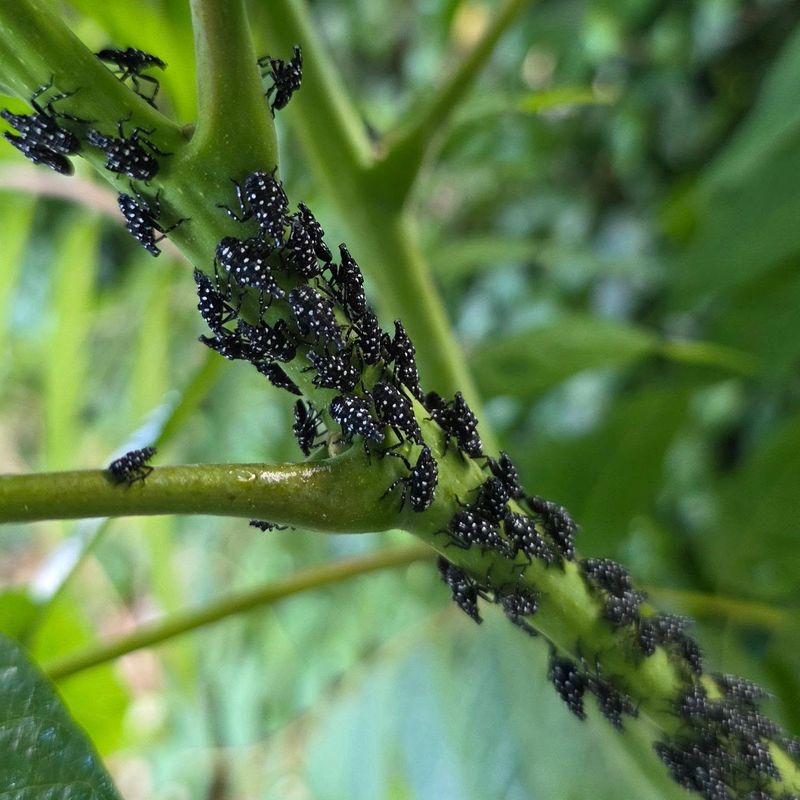
Spotted lanternfly is an invasive planthopper, not a true fly, and it feeds by driving piercing-sucking mouthparts into plant phloem to extract sap. That feeding method is what produces honeydew, and because the youngest nymphs are so small, a gardener may notice the sticky residue before ever spotting the insect responsible.
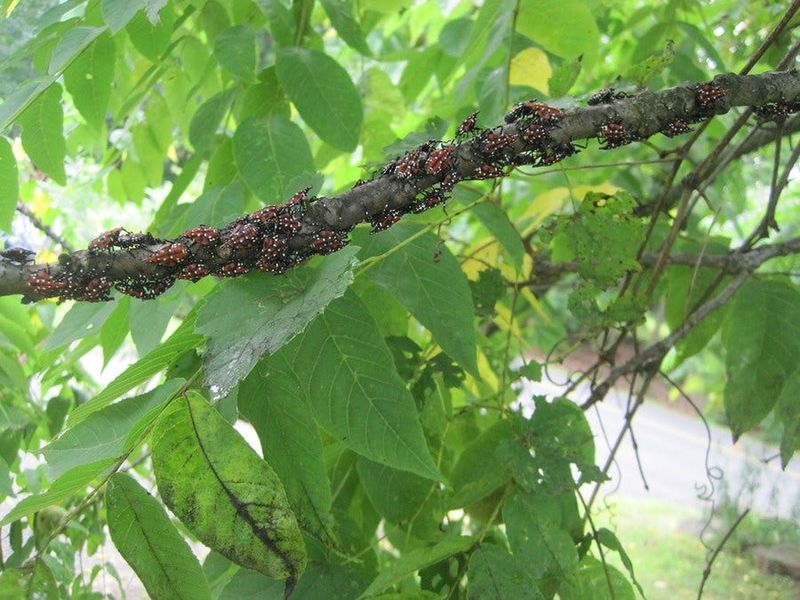
Early nymphs are black with white spots, wingless, and only about 1/8 to 1/4 inch long, roughly the size of a small tick. NCDA&CS describes the full nymph progression: later nymphs grow to about 1/2 inch and develop a striking pattern of red patches, black stripes, and white spots.
Both early and later nymphs jump quickly and readily when disturbed, which makes them easy to miss during a casual walkthrough of the garden.
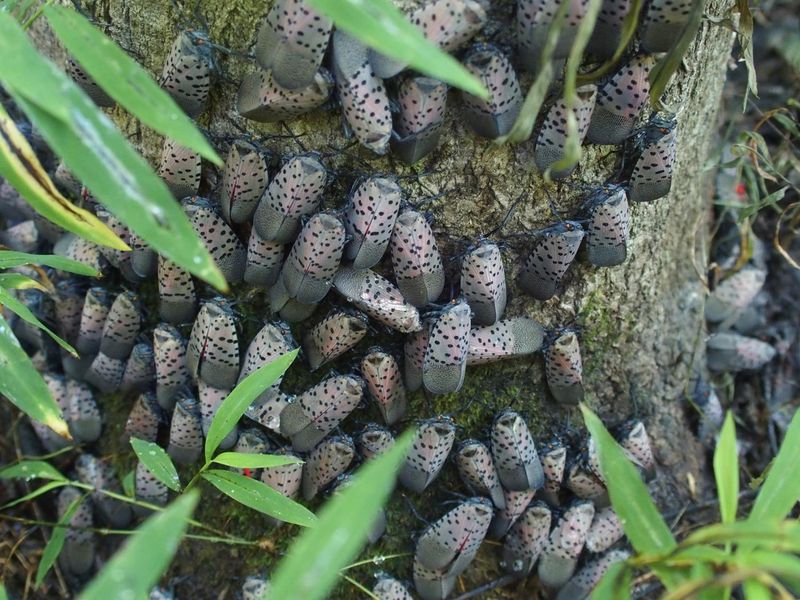
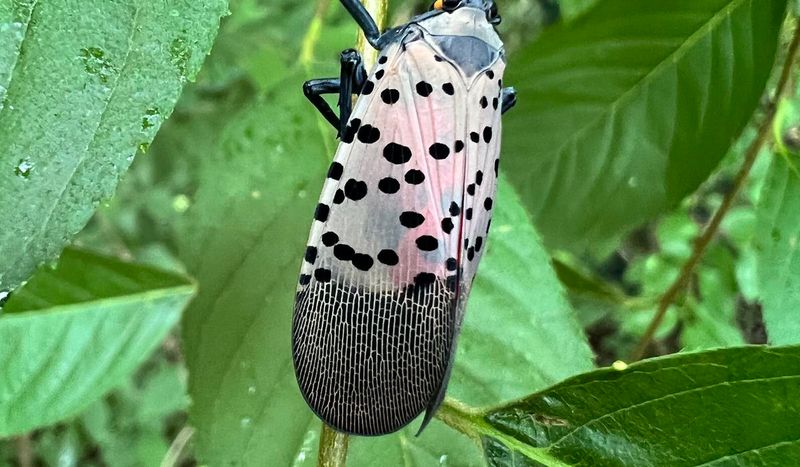
Adults add another layer of camouflage. At rest, they show gray-brown forewings covered with black spots, which blends surprisingly well against tree bark.
The bright red hindwings that make spotted lanternfly so recognizable in photographs are only visible when the insect is flying or startled into opening its wings. Adults can also spend much of their time high in the canopy, well out of easy view from the ground.
None of this means feeding evidence always shows up first. Penn State Extension notes that gardeners may also see the insect itself before noticing any plant symptoms, particularly if adults land on a fence, car, or outdoor surface at eye level.
The sequence simply is not predictable, which is why knowing both what the insect looks like and what its feeding can leave behind gives you more ways to catch a possible infestation early.
Egg Masses Give You Evidence to Document
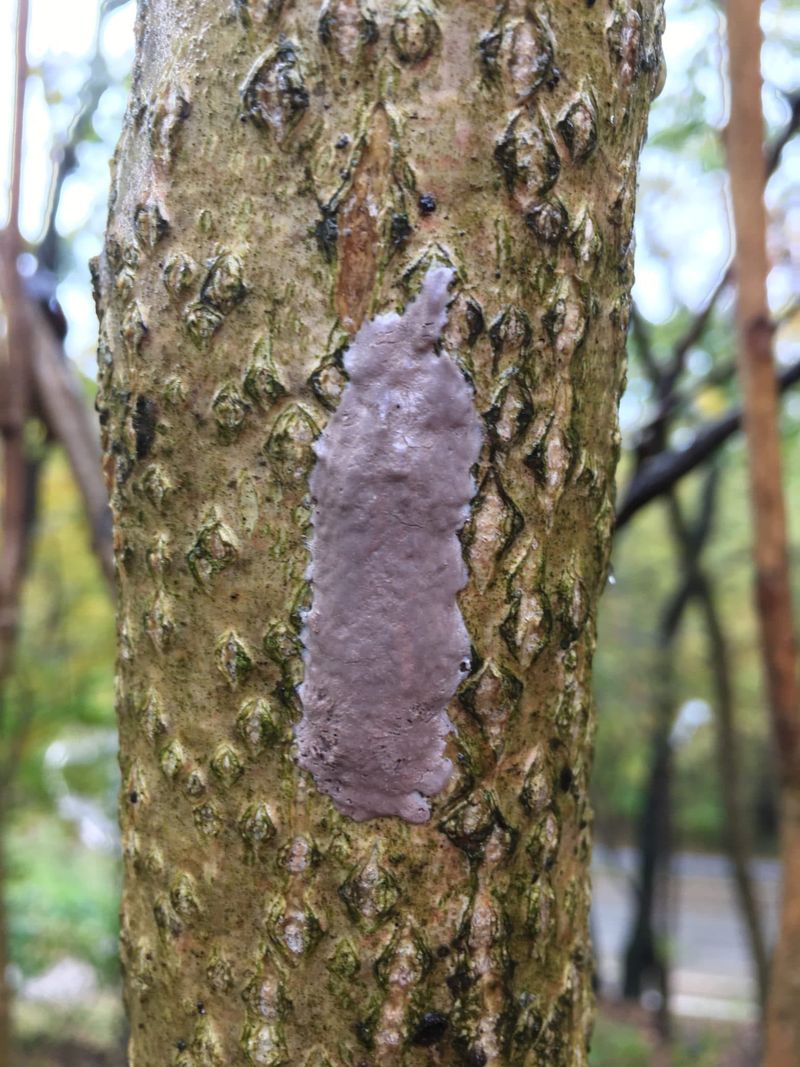
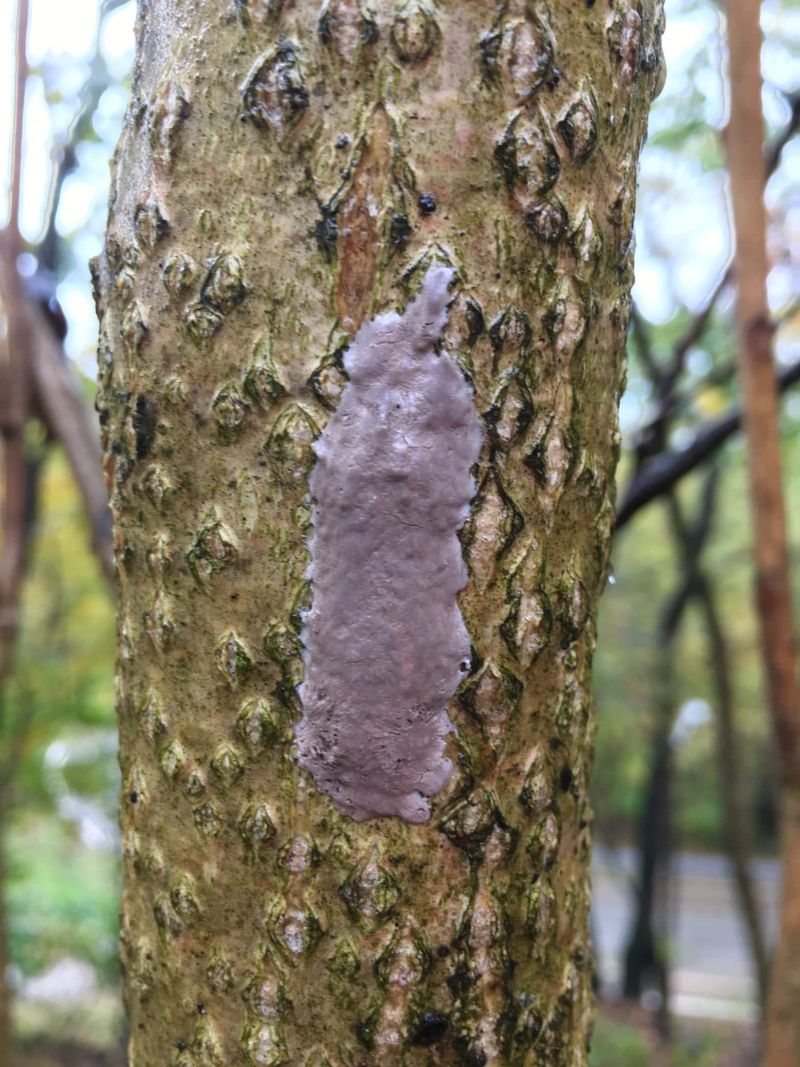
When plant symptoms alone are not enough to confirm what you are dealing with, egg masses can provide much stronger evidence. A spotted lanternfly egg mass is roughly 1 inch long and typically holds about 30 to 50 eggs arranged in rows beneath a waxy coating.
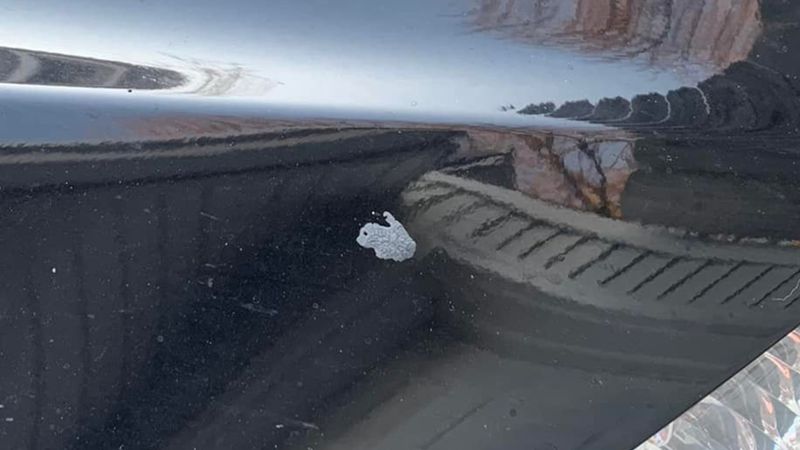
Fresh masses often look like a smear of shiny gray putty, while older ones dry out and take on the appearance of cracked mud or a dried paint drip. NCDA&CS egg mass identification guidance confirms these characteristics and notes that masses can appear from approximately September through May.
Tree bark is the obvious place to look, but egg masses turn up on a wide range of smooth, hard surfaces. Rocks, fences, outdoor grills, patio furniture, trailers, vehicles, firewood stacks, and even lawn equipment can all carry them.
Checking low on tree trunks is a good starting point, but a thorough inspection means scanning anything that has been parked or stored near a potential host plant.
Finding an egg mass is more useful than noticing sticky leaves because the mass is a specific, documentable piece of evidence. Photograph it with a quarter or pen for scale before doing anything else, and record the location and date.
Whether scraping or removing the mass is appropriate depends on local guidance at the time of your inspection. Penn State Extension guidance on egg masses and Penn State’s egg removal instructions walk through the steps carefully, including scraping into a bag with hand sanitizer or alcohol, but always check current NCDA&CS recommendations for your county before acting, since reporting the find may take priority over removal.
Use an Approximate North Carolina Inspection Calendar
Knowing roughly when each life stage appears in North Carolina helps you focus your inspections at the right time of year. NCDA&CS provides approximate activity windows for the state: egg masses from around September through May, early nymphs from late March through June, later nymphs from late May through July, and adults from July through December.
Treat these as general guides rather than fixed statewide rules because weather and your specific location in the Piedmont, coastal plain, or mountains can shift timing in either direction.
During the egg-mass window, focus on tree trunks, rocks, fences, and any hard outdoor surfaces that have been sitting undisturbed near potential host plants. Once late March arrives, shift your attention to tender new growth on preferred hosts, where early nymphs prefer to feed.
Their small size means checking the undersides of young leaves and along fresh stems carefully, ideally on a calm morning when insects are less likely to jump away quickly.
As nymphs mature and adults emerge through summer and into fall, look at host-plant canopies and the lower surfaces of leaves, as well as the ground and surrounding surfaces where honeydew may be accumulating. Tree-of-heaven is a preferred host and a particularly useful inspection target, especially near disturbed areas, road edges, rail lines, and unmanaged lots where it commonly grows.
NC State Extension’s tree-of-heaven profile explains how widely this invasive tree has spread across the state and why it draws spotted lanternfly in large numbers.
Keep in mind that tree-of-heaven is a priority inspection spot, not the only place spotted lanternfly will be found. The insect feeds on a broad range of hosts including maples, walnuts, willows, apples, and stone fruits, so a yard without tree-of-heaven is not automatically a low-risk yard.
Separate Lanternfly Clues From Look-Alike Problems
Honeydew and sooty mold on a plant do not automatically point to spotted lanternfly. Aphids, scale insects, whiteflies, and other sap-feeding pests all produce honeydew as a byproduct of feeding, and the black sooty mold that follows looks the same regardless of which insect caused it.
Jumping straight to a spotted lanternfly conclusion based on sticky or moldy leaves alone leads to misidentification and unnecessary alarm.
Wilting, localized branch dieback, early fall coloration, and reduced plant vigor are also nonspecific. NC State Extension’s spotted lanternfly publication describes these as stress symptoms that indicate something is affecting the plant but cannot by themselves tell you which pest is responsible.
Drought, root problems, fungal disease, and several other insects can produce the same visual result.
The practical checkpoint is to inspect the affected growth and nearby surfaces directly. Look for the small black-and-white nymphs on new growth, the larger red-patched later nymphs, adults resting on bark or branches, or the distinctive egg masses described in the previous section.
NCDA&CS look-alike guidance reinforces the value of finding one of these identifiable life stages rather than relying on plant symptoms alone.
When you find something that looks like a match, photograph it with a quarter or pen placed next to the subject for scale. A clear, well-lit photo showing the insect or egg mass up close is far more useful for a state inspector or Extension agent than a picture of sooty mold.
The goal at this stage is to move from a plausible warning sign to something that can actually be confirmed, because that confirmation is what makes a report actionable.
Make a Report Officials Can Investigate
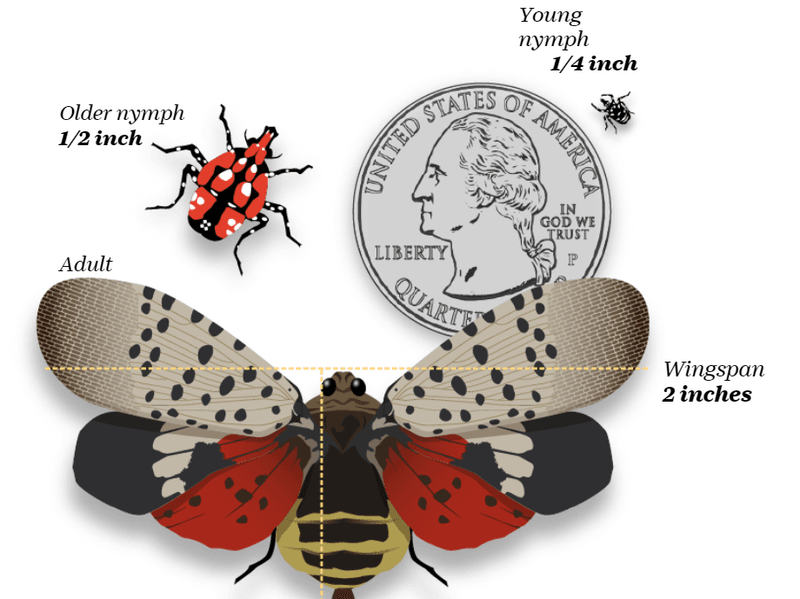
A photograph with a size reference is the most important thing you can produce when you find a suspected spotted lanternfly or egg mass. Place a quarter or a pen directly next to the subject before taking the photo, and try to capture enough detail to show markings, shape, and color.
If the insect flies or jumps away before you can photograph it, take a picture of the location itself, since even that gives investigators useful context.
Along with the photograph, write down the exact address or GPS coordinates, the date, the plant or surface where you found the evidence, and a brief description of what you observed. Then submit everything through NCDA&CS’s reporting tool at ncagr.gov/SLF.
NC State Extension’s spotted lanternfly page also points residents to this reporting channel and explains that NCDA&CS responds to detections and attempts management or eradication when feasible.
A useful report supports surveillance and makes a state response possible. What it does not do is guarantee that a population will be stopped or eradicated.
Eradication is feasible in some situations, particularly when a population is caught early and isolated, but established infestations are typically managed rather than eliminated. Understanding that distinction helps set realistic expectations without diminishing the real value of reporting.
Residents in areas that NCDA&CS has already identified as generally infested, such as parts of western Guilford County and eastern Forsyth County, may have different reporting expectations than those in counties where the insect has not yet been confirmed. If you are unsure whether your location falls inside an established area, the NCDA&CS website and local Extension office can clarify current guidance.
Reporting from outside confirmed zones is where individual observations carry the most weight for state surveillance efforts.
Inspect Outdoor Items Before Moving Them
Human-assisted movement is one of the main reasons spotted lanternfly spreads so quickly between counties and states. Egg masses laid on vehicles, trailers, firewood, outdoor grills, lawn mowers, patio furniture, and similar items can hitch a ride to a new location miles away, and the insects inside will hatch right on schedule wherever the item ends up.
USDA APHIS spotted lanternfly resources highlight this movement pathway as a central concern in the insect’s continued spread across the eastern United States.
Before moving any outdoor item out of an area where spotted lanternfly has been found or suspected, take a few minutes to check it carefully. Run your hand or a flashlight along the undersides of trailers and vehicle bumpers, check the legs and undersides of patio furniture, look at the ends and bark surfaces of firewood, and inspect the frames and decks of mowers and other equipment.
The egg masses are roughly the size of a smear of dried mud, so they are easy to overlook on a dirty or rough surface.
NC State Extension also notes that adults can hitchhike directly on vehicles or in cargo. A quick visual check before getting on the road, especially after parking near wooded areas or known host trees, adds another layer of protection.
Catching early warning signs in your yard gives you a useful head start on this step. When you have already documented possible evidence and reported it, you are also in a better position to recognize that items in your yard may carry egg masses and need checking before they leave the property.
Inspection before transport is one of the most direct actions a homeowner can take to slow the spread beyond their own neighborhood.
Choose Control Measures After Confirmation
Confirming the pest before taking any control action is the single most important step in an integrated pest-management approach. Treating a plant for spotted lanternfly when the actual problem is aphids or scale wastes money, may harm beneficial insects, and does nothing to address the real infestation.
Once you have a credible identification through a photograph, a captured insect, or a confirmed egg mass, the next step is to assess the situation rather than reach for a product immediately.
Monitor preferred host plants and new growth over several days to get a clearer picture of how many insects are present and which plants are most affected. For guidance on whether and how to treat, contact your local NC Cooperative Extension office or a licensed pest management professional.
NC State Extension’s spotted lanternfly publication outlines an integrated approach and notes that treatment decisions depend on plant species, infestation size, plant health, location, and how much nuisance reduction the homeowner is seeking. Not every landscape tree in an affected area needs chemical treatment.
If sticky bands are part of a management plan, they must include a wildlife barrier. An uncovered sticky band can trap birds, bats, squirrels, lizards, and beneficial insects.
Penn State Extension’s management guide explains how to use banding safely, including the use of wire mesh or netting around the band to exclude nontarget animals while still catching spotted lanternfly nymphs.
Skip any homemade treatments. Penn State Extension’s home remedies warning explains that dish soap, vinegar, salt, essential oils, and similar mixtures are untested for this pest, may injure plants, can harm people, pets, and beneficial insects, and may violate pesticide law.
Stick to products with a current label that lists spotted lanternfly and follow all label directions exactly.
Removing tree-of-heaven from your property can reduce a preferred host and support native-plant restoration goals. NC State Extension’s tree-of-heaven profile covers removal methods, but removing it does not guarantee that spotted lanternfly will leave your yard, since the insect feeds on many other plants.
Penn State Extension’s FAQ also clarifies that grapevines and young black walnut or tree-of-heaven saplings face the clearest severe risks, while established ornamental trees generally experience stress rather than outright death from spotted lanternfly feeding.
Careful Observation Leads to Better Action
A practical response to spotted lanternfly starts with paying attention to what your plants are telling you. When you spot sticky residue, sooty mold, or an unusual number of wasps gathering around a tree, take it as a prompt to inspect more closely rather than a reason to panic.
Check tender new growth for small nymphs, scan bark and hard surfaces for egg masses, and photograph anything that looks like a match with a coin for scale.
Confirmation comes before treatment. Once you have credible evidence, submit it through NCDA&CS’s spotted lanternfly reporting channel if you are outside an established infestation area, and check outdoor items carefully before moving them off your property.
NC State Extension reinforces that early detection supports informed official response, but it does not guarantee that a population can be stopped once it is present.
What early observation does give you is time, and in pest management, time translates into better decisions. The gardener who notices the first sticky leaves in June and reports a confirmed egg mass by July has done something genuinely useful for North Carolina’s surveillance effort, even if the outcome is managed rather than eliminated.
Staying alert, staying specific, and staying connected to your Extension office is the most effective combination any homeowner can bring to this problem.