
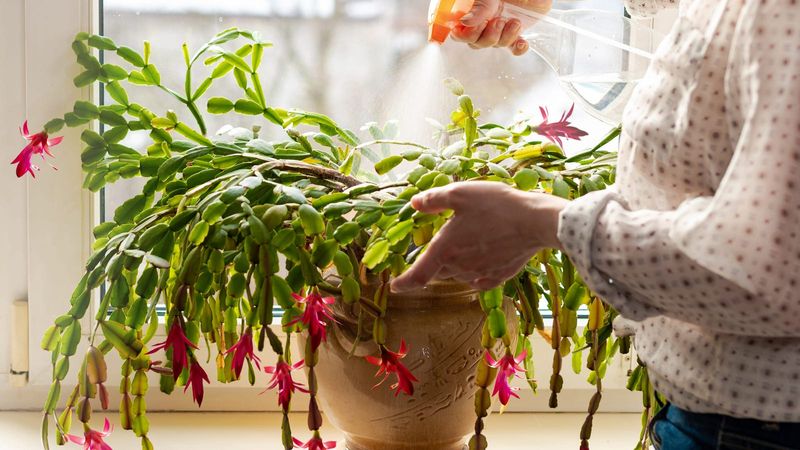
Most people who grow a Christmas cactus through the winter are surprised when the same plant looks pale, shriveled, or just plain sad by July. The name “cactus” sends a lot of gardeners down the wrong path, leading them to treat it like a desert plant when it actually has completely different needs.
Getting summer care right is the key to keeping this plant healthy and giving it the best shot at blooming come fall.
A common summer mistake: treating a rainforest cactus like a desert one
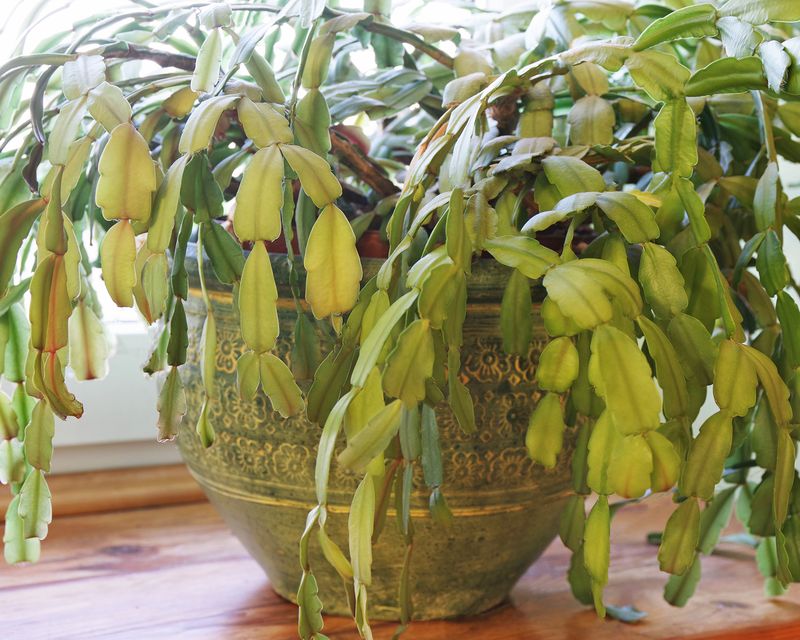
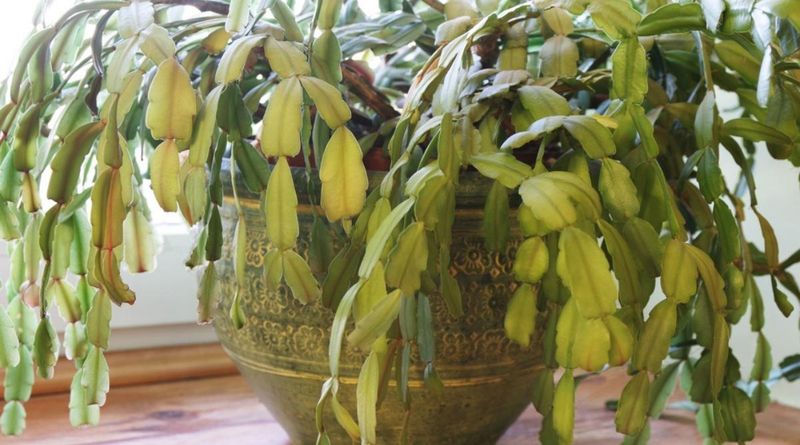
Placing a Christmas cactus in harsh, direct summer sun is one of the most common ways gardeners unintentionally damage the plant. Intense sunlight can cause stem segments to turn pale, take on a reddish or yellowish cast, or develop what looks like a sunburn, and that kind of stress can weaken the plant heading into the fall season.
University of Minnesota Extension specifically warns that too much sun can produce pale stems and drought stress in holiday cacti.
That said, direct sun does not explain every case of summer decline. Overwatering, poor drainage, prolonged drought, extreme heat, pest pressure, and disease can all cause the same kinds of symptoms.
A wilted or sad-looking plant may have a root problem rather than a light problem.
The practical path forward starts with correcting light conditions and then checking moisture and drainage. Ruling out causes one at a time gives you a much clearer picture of what the plant actually needs, rather than making multiple changes at once and losing track of what helped.
UConn Extension notes that both drought stress and overwatering can damage roots and reduce flowering, so neither extreme is safe.
Rainforest origins explain the different care rules
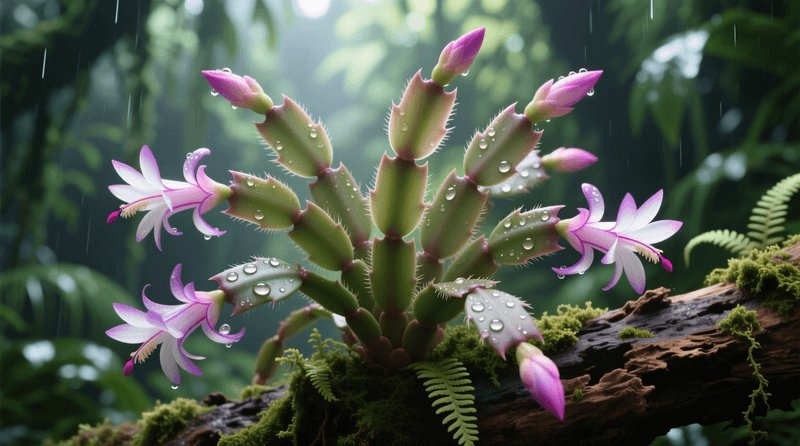
Schlumbergera, the genus that includes Christmas cactus and its close relatives, originates in the humid mountain rainforests of southeastern Brazil. These plants grow as epiphytes, meaning they anchor themselves to tree branches and rocky outcroppings rather than rooting in deep garden soil.
NC State Extension confirms that Schlumbergera species are native to this moist, shaded habitat, which explains why their care looks so different from that of a true desert cactus.
Because they evolved under a forest canopy, these plants are built for bright but filtered light, consistent humidity, and a growing medium that holds some moisture while draining quickly. Roots clinging to bark never sit in standing water, but they also never go bone-dry for weeks at a time.
That balance is exactly what you want to recreate at home.
The rainforest background does not mean the plant tolerates soggy soil. Epiphyte roots need air as much as they need moisture, and saturated potting mix can rot them just as easily as any other houseplant.
The goal is an airy, fast-draining environment that stays evenly moist during active summer growth, not one that swings between floods and droughts.
Move it outdoors into bright shade, not harsh sun
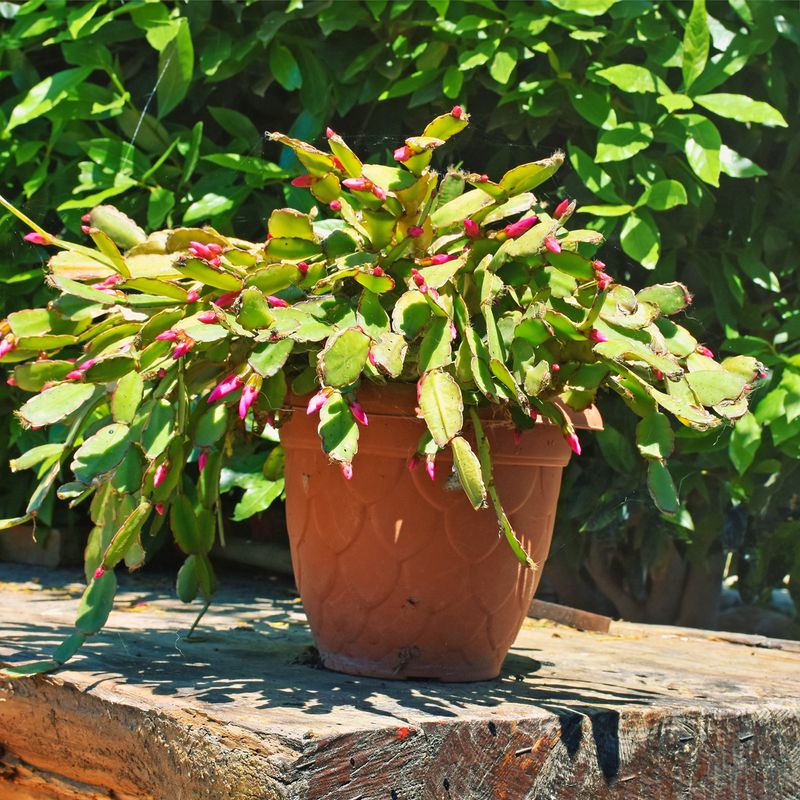
A shaded porch, a covered patio, or a spot under a large tree can be excellent summer locations for a Christmas cactus, as long as the plant stays out of intense direct sun. University of Minnesota Extension recommends bright, indirect light and specifically cautions against excessive sunlight, which can scorch stems and stress the plant.
Bright filtered light is the target, not deep shade and not open sky.
Afternoon sun in Florida and Texas is especially intense in summer and can damage a plant quickly. If you are transitioning an indoor plant to an outdoor location, move it gradually rather than setting it directly into strong light.
Start with a shadier spot for a week or two, then shift it toward brighter filtered conditions as it adjusts. Texas A&M AgriLife recommends outdoor shade during summer and bringing the plant indoors before frost arrives in the fall.
Florida gardeners have options too. UF/IFAS notes that Christmas cactus can be grown outdoors in warmer parts of the state, provided it receives protection from freezing temperatures.
Wherever you place it outside, shade is non-negotiable during the hottest months, and the plant should always come back indoors before any risk of frost or freeze.
Water by checking the mix, not by following the calendar
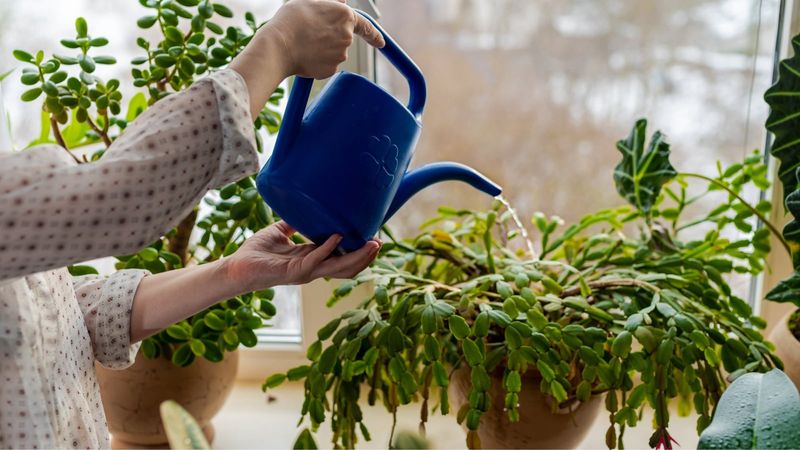
Forget picking a watering day and sticking to it. A fixed schedule can easily overwater a plant sitting in heavy, slow-draining soil or leave an outdoor plant parched during a hot, breezy week.
The right approach is to check the potting mix itself and let what you find guide the decision. UConn Extension advises watering once the surface or upper inch of the mix begins to dry during active growth periods.
When it is time to water, do it thoroughly. Moisten the entire root ball so water flows freely from the drainage holes, then stop and let the excess drain completely.
Never leave the pot sitting in a saucer full of water, because roots sitting in standing water can rot within days. UF/IFAS and Penn State Extension both emphasize thorough watering followed by complete drainage as the core summer moisture routine.
How often that cycle repeats depends on factors that change constantly: pot size, mix type, light level, outdoor heat, humidity, and whether recent rain has already moistened an outdoor plant. UMass commercial production guidance notes that watering intervals shift dramatically between warm, sunny conditions and cool, cloudy ones, which illustrates why a calendar schedule simply cannot keep up.
Check the mix, not the clock.
Check drainage before assuming a wilted plant needs water
Wilting looks the same whether the cause is too little water or too much. Before reaching for the watering can, check the potting mix and inspect the drainage situation.
UConn Extension specifically warns that a plant can wilt because excessive moisture has destroyed the roots, leaving them unable to supply water to the stems even when the soil is soaking wet. Adding more water to an already saturated pot makes root rot worse, not better.
A well-drained, aerated potting mix is more important than the label on the bag. Iowa State University Extension notes that a regular potting mix can work fine if it drains well, so you do not need to hunt for a product specifically marketed as cactus mix.
What matters is that water moves through quickly and the roots get air between waterings. A container with drainage holes is not optional.
Underwatering tells a different story. A genuinely thirsty plant will show shriveled or slightly limp segments, and the potting mix will feel dry an inch or more down.
Texas A&M AgriLife notes that drought stress is a documented cause of decline, so prolonged dryness is not a safe fallback either. Check moisture depth, inspect for drainage problems, and empty saucers after every watering to keep the roots in the best possible condition.
Support summer growth without forcing flowers with drought
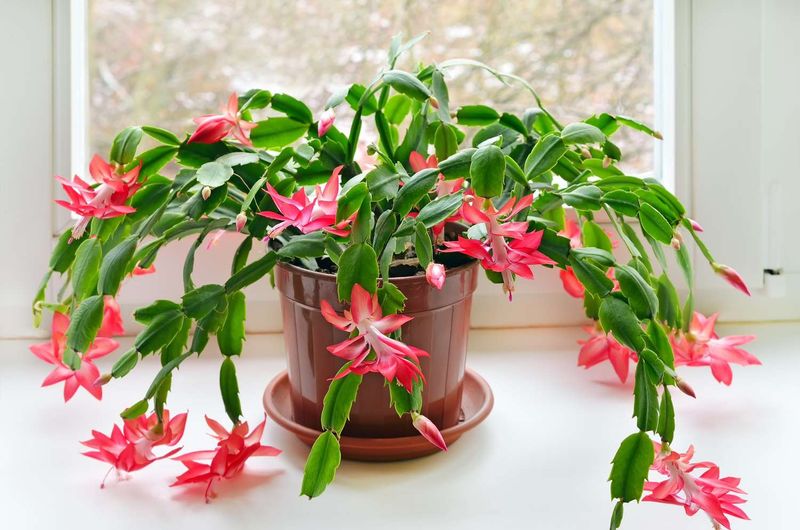
Summer is an active growing period, so a light feeding program supports the plant rather than pushing it toward early flowering. A diluted, balanced houseplant fertilizer applied roughly once a month during spring and summer is a reasonable approach, following the product label for rate and frequency.
University of Minnesota Extension and University of Illinois Extension both recommend reducing or stopping fertilizer as the plant moves into the fall bud-formation window.
Pruning is another useful summer task. Removing a few stem segments after flowering and through late spring or early summer encourages the plant to branch out and grow fuller.
UF/IFAS advises not pruning beyond mid-summer, so that new growth has time to mature before fall. Removed segments can be rooted in moist potting mix to start new plants.
Fall flower formation is triggered mainly by shorter days and cooler nights, not by summer drought. UMass research found that water stress did not reliably induce flowering and could actually reduce bud set, so withholding water is not a dependable strategy.
What does work is providing roughly 12 to 14 hours of uninterrupted darkness and cool nights in approximately the 55 to 65 degrees F range for several weeks in fall, with ranges varying by cultivar. Artificial light at night, including nearby streetlights or lamps, can interfere with bud formation even when days are short enough outdoors.
NC State Extension confirms that both photoperiod and temperature work together to initiate buds.
Use the plant’s symptoms to choose the next correction
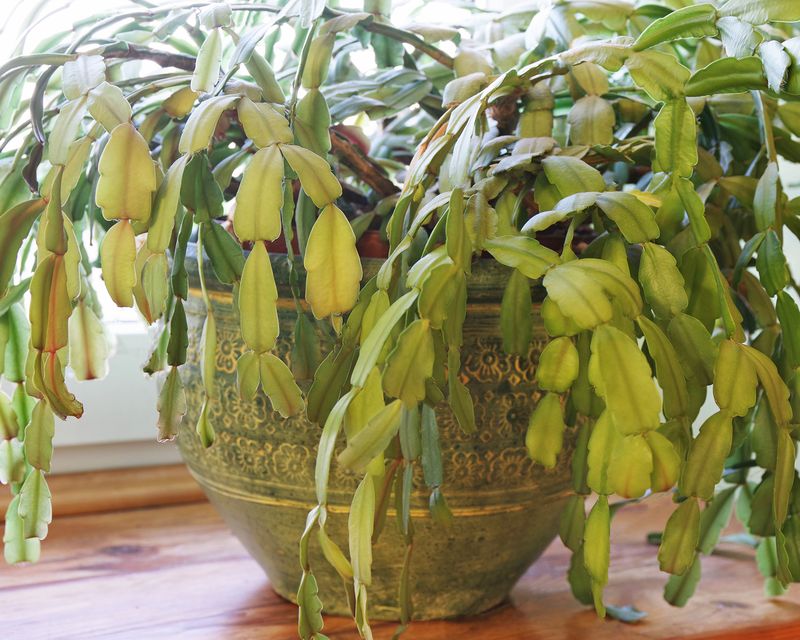
Pale or bleached stem segments that look washed out or have a reddish tint usually point toward too much direct sun. Moving the plant to a shadier spot with filtered light is the first response, and the plant often recovers color as new growth comes in.
University of Minnesota Extension links pale stems directly to excessive sunlight exposure.
Shriveled segments that look thin or wrinkled typically suggest the plant has been too dry for too long. Check the mix depth before watering, and if it is dry more than an inch down, water thoroughly and let excess drain.
Wilting, on the other hand, can mean either too little moisture or root damage from too much, so always check whether the mix is wet or dry before deciding how to respond. UConn Extension draws this distinction clearly and cautions against assuming a wilted plant is simply thirsty.
Before making any change, think through recent conditions: how much sun has the plant received, how long since the last watering, has it rained recently outdoors, and has the temperature been unusually extreme? One more thing worth knowing: many plants sold as Christmas cactus are actually Thanksgiving cactus or hybrids.
University of Illinois Extension explains that these types share similar care needs but bloom at different times, so an “early” or “late” flower display is not necessarily a sign that something went wrong.
Finish with a filtered-light, well-drained summer routine
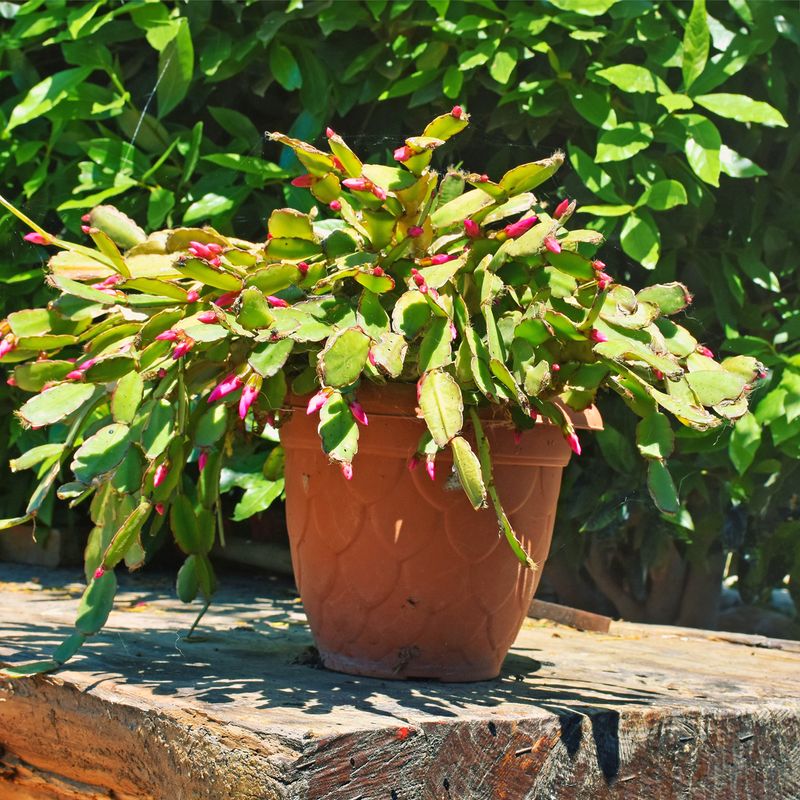
A reliable summer routine for a Christmas cactus comes down to a short checklist. Keep the plant in bright, filtered light – a shaded porch or spot under a tree works well.
Check the potting mix regularly and water thoroughly when the top inch begins to dry, making sure excess water drains freely and the pot never sits in a saucer of standing water.
Before bringing any outdoor plant back inside for fall, inspect it carefully for hitchhikers. UConn Extension recommends checking for mealybugs, scale insects, spider mites, aphids, and other pests before moving the plant indoors, where an infestation can spread to other houseplants.
Also protect the plant from any risk of cold or freezing temperatures, whether that means bringing it inside early in Texas or choosing a frost-protected spot in warmer parts of Florida.
A plant that has spent summer in good filtered light with consistent, well-drained moisture is in far better shape to respond to the shorter days and cooler nights of fall. University of Minnesota Extension confirms that fall bud formation depends on those seasonal cues, not on summer stress.
Healthy roots and strong stems going into fall give the plant its best opportunity – though no routine can promise a perfect bloom every year.