
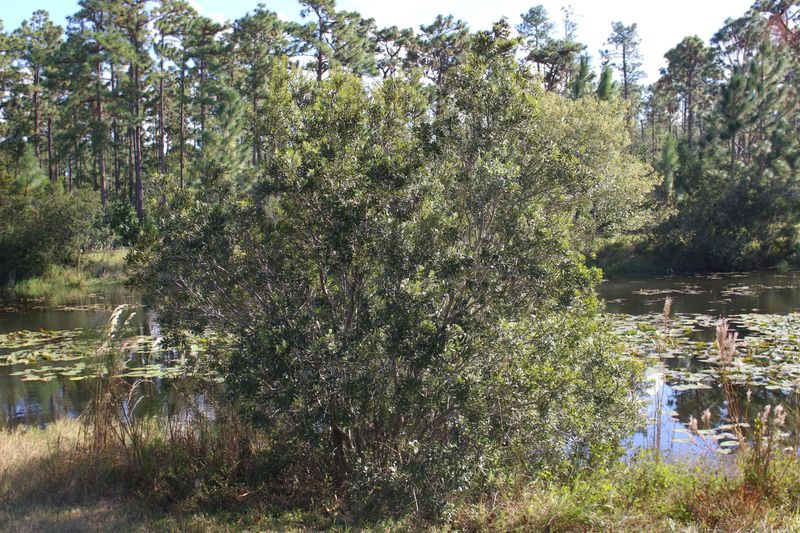
Plenty of North Carolina yards have a privet hedge running along the fence line, and plenty of homeowners have no idea the plant is quietly spreading into nearby woods and creek banks. Japanese privet and Chinese privet are documented invasives in the state, and once they get established, getting rid of them is a real fight.
Southern wax myrtle, Morella cerifera, gives you the same dense green screen without the ecological baggage, and female plants produce small gray-blue fruits that certain birds actively seek out. Before you plant another row of privet or let the existing one keep spreading, it is worth knowing what your options actually are.
Why Japanese and Chinese privet deserve a closer look
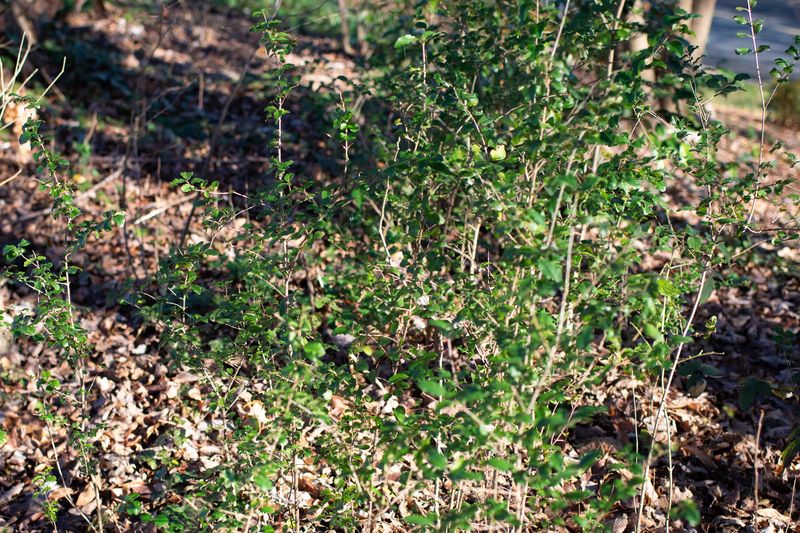
Privet hedges feel like a permanent fixture in older North Carolina neighborhoods, and the plants do grow fast, fill in quickly, and stay green through most winters. That practical appeal is real, and it explains why both Japanese privet, Ligustrum japonicum, and Chinese privet, Ligustrum sinense, ended up in so many yards across the Coastal Plain and Piedmont.
Some birds and insects do use privet flowers and fruit, so the plant is not a complete ecological void.
The problem is what happens beyond the property line. NC State Extension lists Japanese privet as invasive in North Carolina, and Chinese privet is documented to form dense, shade-casting stands that crowd out native understory plants along roadsides, stream banks, and forest edges.
Birds eat the fruit and deposit the seeds well outside any homeowner’s yard, which is exactly how both species spread so effectively into natural areas.
The U.S. Forest Service species review for Ligustrum documents strong ecological impacts from Japanese and Chinese privet across several southern regions, while noting that the evidence for European privet is more mixed.
That distinction matters: not every Ligustrum species behaves the same way, and this article focuses on the two with the clearest documented invasive track record in North Carolina.
The practical job a privacy screen needs to do is straightforward: block sightlines, buffer noise and wind, and stay dense enough to be useful year-round. Japanese and Chinese privet accomplish that job.
The question is whether a homeowner who cares about the surrounding landscape needs to default to them, or whether a native plant can do the same screening work without the documented spread into natural areas. That is exactly where southern wax myrtle enters the picture.
Southern wax myrtle offers a useful native screen
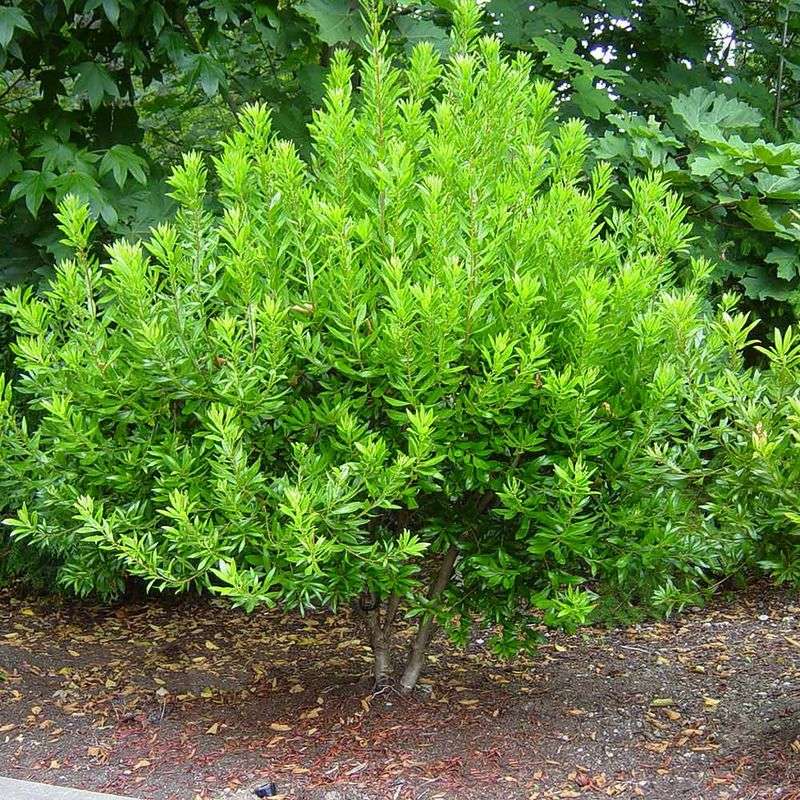
Southern wax myrtle, Morella cerifera, is a broadleaf evergreen or semi-evergreen native shrub and small tree that grows naturally across the Coastal Plain and into the eastern Piedmont of North Carolina. Older references and nursery tags may still use the name Myrica cerifera, so both names are worth knowing when you are searching for plants or extension resources.
NC State Extension’s plant profile for Morella cerifera lists screening, hedge, barrier, windbreak, and background planting among its landscape uses, which maps almost exactly onto the jobs homeowners typically ask privet to do. At full size, wax myrtle can reach roughly 20 to 25 feet tall and 8 to 10 feet wide, though most landscape specimens stay considerably smaller depending on site conditions, soil quality, and how often they are pruned.
The foliage is dense and aromatic, and the plant holds its leaves through most winters in eastern North Carolina, making it a reliable year-round screen in the regions where it performs best.
It tolerates full sun to partial shade and handles a notably wide range of soil conditions, from moist or occasionally wet ground near drainage swales to established, relatively dry sites once it is rooted in. That flexibility makes it genuinely useful across a variety of eastern North Carolina yards, not just the wetter coastal settings where it grows wild.
The form, though, is different from privet. NC State describes its natural growth habit as dense, spreading, irregular, and multi-stemmed rather than upright and columnar.
Homeowners who want a neat, tightly clipped wall of uniform height will find wax myrtle a poor fit for that goal. Those who want a robust, informal green barrier that fills space and provides genuine cover will find it much more workable, provided they account for its mature width from the start.
Female plants provide documented food for some birds
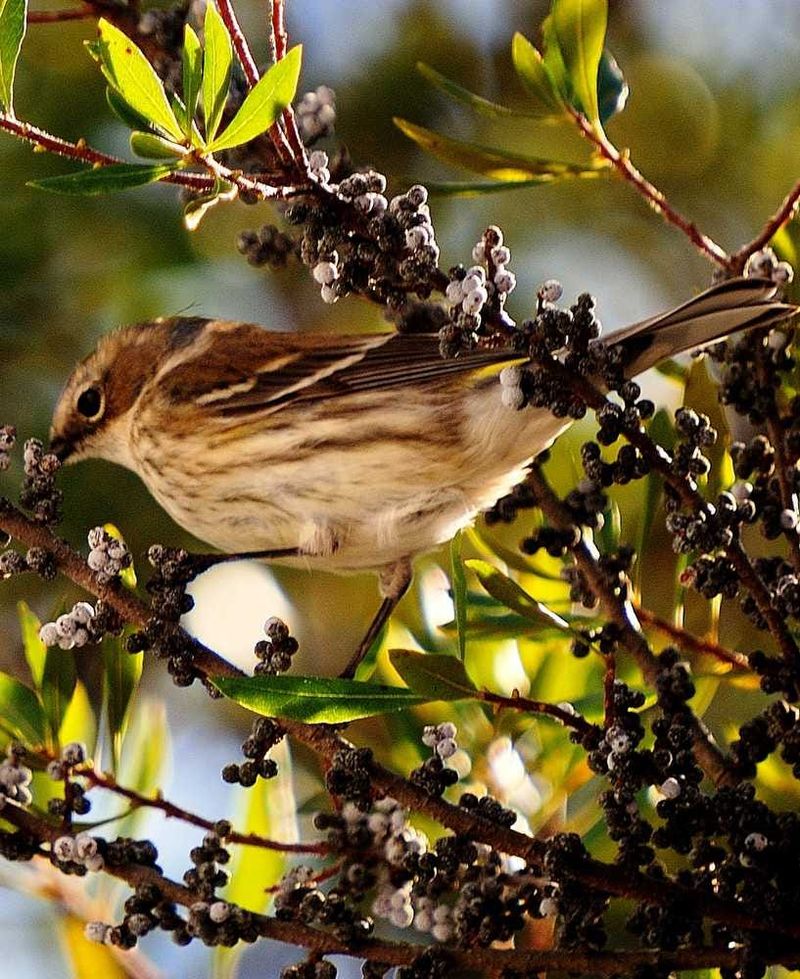
Wax myrtle’s wildlife value is specific and worth stating precisely. Female plants produce small, waxy gray-blue fruits that typically ripen between August and October, and NC State Extension’s guide to managing urban habitats for birds identifies yellow-rumped warblers and tree swallows as birds documented to consume the fruits.
The dense evergreen or semi-evergreen canopy also provides cover for birds moving through or sheltering in a landscape, which is a separate and meaningful habitat function even when the plant is not fruiting.
There is an important catch that affects whether your planting actually feeds birds at all. Wax myrtle is generally dioecious, meaning male and female reproductive structures appear on separate plants.
Only female plants produce the familiar gray-blue fruits, and a compatible male plant growing nearby is typically needed for reliable pollination and fruit set. NC State’s plant profile confirms this dioecious character and notes that nursery stock may not be reliably sexed when plants are young, which means a row of wax myrtles purchased as small container plants could turn out to be all males, all females, or an unknown mix.
If fruit production for birds is a priority, ask your nursery whether they carry sexed plants or can identify them at purchase. Planting at least one confirmed male for every few females in a row gives you the best odds of reliable fruiting.
A planting that is all female with no male nearby may produce little or no fruit, and a planting that is all male will produce none at all.
Bird use also depends on factors outside your control: regional bird populations, seasonal movement patterns, surrounding habitat, and whether other fruit sources are available nearby. Wax myrtle creates genuine food and cover value, but it is not a guaranteed bird-feeder substitute, and actual bird visits will vary by season and location.
Design around mature width, not a tight hedge grid
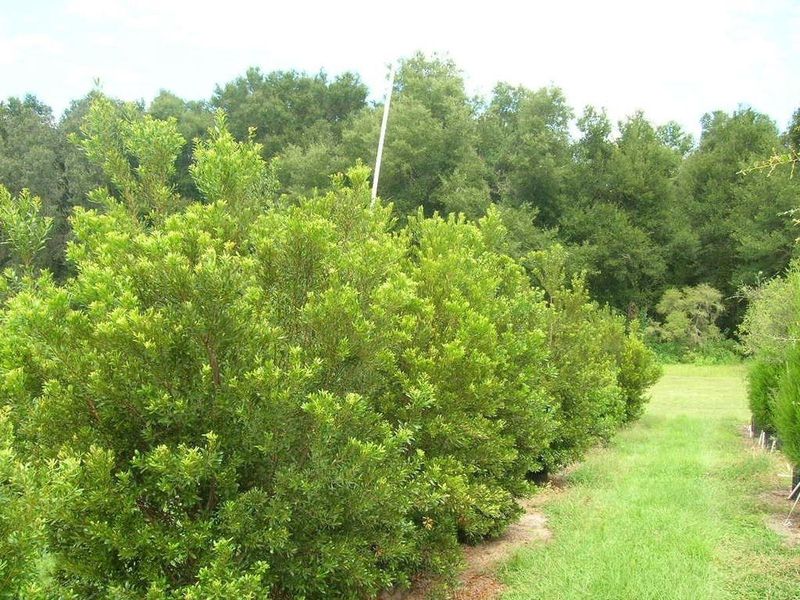
Spacing mistakes are the most common reason wax myrtle screens underperform. Homeowners accustomed to privet, which can be planted relatively close together and sheared into a narrow wall, sometimes apply the same logic to wax myrtle and end up with plants that crowd each other, lose interior foliage, and require constant cutting to stay manageable.
NC State’s wax myrtle profile lists an available planting space of 6 to 12 feet, but mature plants commonly reach 8 to 10 feet wide or more under good conditions. The right spacing for your row depends on three things: how quickly you want the screen to close in, how much access you need along the planting, and how much pruning you are willing to do over the long term.
Plants set 6 feet apart will knit together faster but require earlier intervention to prevent overcrowding. Plants set 10 to 12 feet apart will take longer to form a solid screen but will need less corrective work once they mature.
Wax myrtle works well as an informal screen along a property boundary, a windbreak on an exposed side yard, a barrier that discourages foot traffic through a garden edge, or a background planting that anchors a mixed native border. NC State confirms these landscape roles and describes the plant’s natural form as spreading, irregular, and multi-stemmed rather than upright and contained.
The trade-off is real and worth naming directly: wax myrtle can screen effectively, but it asks for more horizontal space than a clipped privet wall and produces a less formal appearance. For homeowners who want the look of a perfectly uniform green fence, wax myrtle is probably not the right fit.
For those who want a robust, living boundary that takes care of itself reasonably well and provides genuine habitat value, the extra width is a manageable compromise.
Water during establishment and prune for function
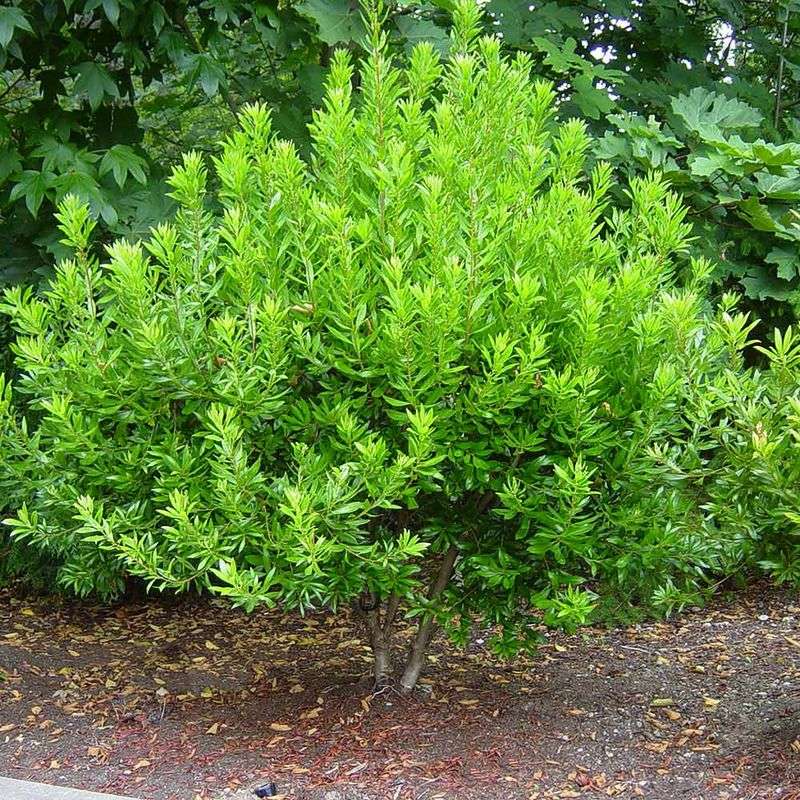
Native status does not mean no care required. Wax myrtle is a tough plant once it is rooted in, but new transplants need consistent moisture during the first growing season, and supplemental watering during drought matters even after that first year.
University of Georgia Cooperative Extension’s native plant guide notes that establishment watering is essential for native shrubs regardless of their eventual drought tolerance, and that principle applies directly to wax myrtle planted in a North Carolina yard. A two- to three-inch layer of mulch over the root zone helps retain moisture and reduces the frequency of watering needed during the first summer.
Pruning is the other maintenance commitment that surprises some homeowners. Wax myrtle responds well to shaping, but the timing and technique matter more than they do with privet.
Heavy, repeated shearing removes the older wood where the following season’s fruit develops, which reduces berry production and undercuts the wildlife value you planted the shrub to provide. NC State’s guide to pruning specific plants addresses wax myrtle for hedge and screen use and supports selective reduction and shaping during the growing season rather than aggressive mechanical shearing on a tight schedule.
When an established plant has grown too large, too open at the base, or too leggy to screen effectively, rejuvenation pruning is an option. NC State’s landscape management calendar identifies late January through March as an appropriate window for rejuvenating overgrown wax myrtles, cutting them back hard before new growth begins so the plant can flush out with fresh structure in spring.
The goal of any pruning program should be a healthy, functional screen that retains enough older wood to fruit reliably. Think of it as guiding the plant rather than containing it, and you will spend less time fighting its natural form while keeping the bird-food function intact.
Check regional fit, spread, and fire-safe placement
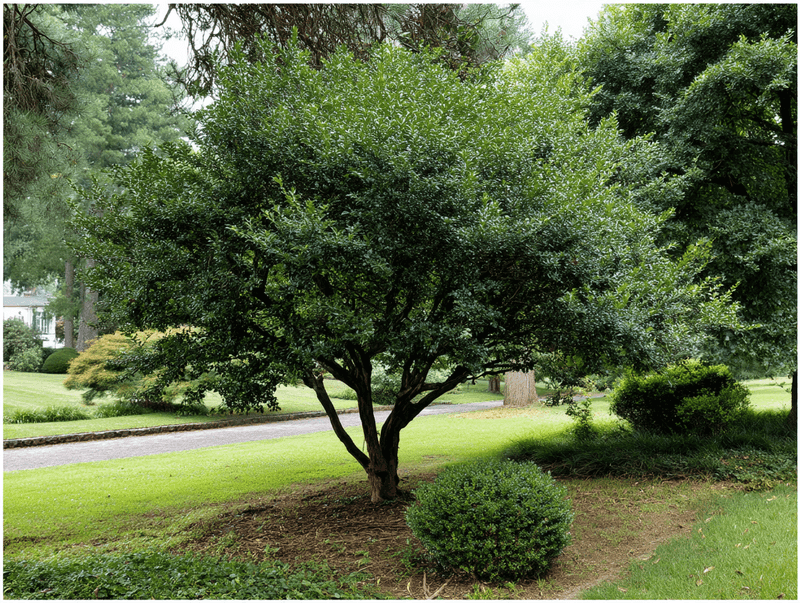
Wax myrtle is a strong native option for much of eastern North Carolina, but it comes with three site-specific cautions that every homeowner should check before planting. Getting these right keeps the recommendation honest and the planting safe.
First, spread. NC State’s plant profile notes that wax myrtle can sucker and form sizable colonies under favorable conditions, and because birds consume the fruits and deposit seeds away from the parent plant, some spread beyond the original planting area is possible.
That makes wax myrtle a lower-invasive-concern native alternative to Japanese and Chinese privet in the North Carolina context, not a plant that can never spread at all. Monitor the base of established plants for suckers and remove them when they appear outside the intended planting area.
Second, region. NC State’s wax myrtle profile covers the Coastal Plain and Piedmont regions, not the Mountains.
Mountain gardeners considering wax myrtle should verify local hardiness, source plants from a provenance suited to higher elevations, and check with their county extension office before treating it as a reliable statewide recommendation.
Third, fire safety. Wax myrtle contains aromatic oils in its leaves, stems, and branches that make it highly flammable.
NC State’s fire-resistant landscaping guide assigns wax myrtle a high flammability rating, which means it should not be planted directly against a home’s foundation or within the immediate defensible space around the structure, especially in fire-prone settings. Use it as a boundary screen or windbreak set back from the house rather than as a foundation planting.
Finally, if you are replacing existing privet, plan for a process rather than a single removal. The U.S.
Forest Service documents that cutting privet can trigger vigorous resprouting, so removal typically requires follow-up monitoring and repeated treatments. Follow North Carolina pesticide labels and consult extension guidance rather than improvising herbicide applications on your own.
Make the native-screen choice fit the site
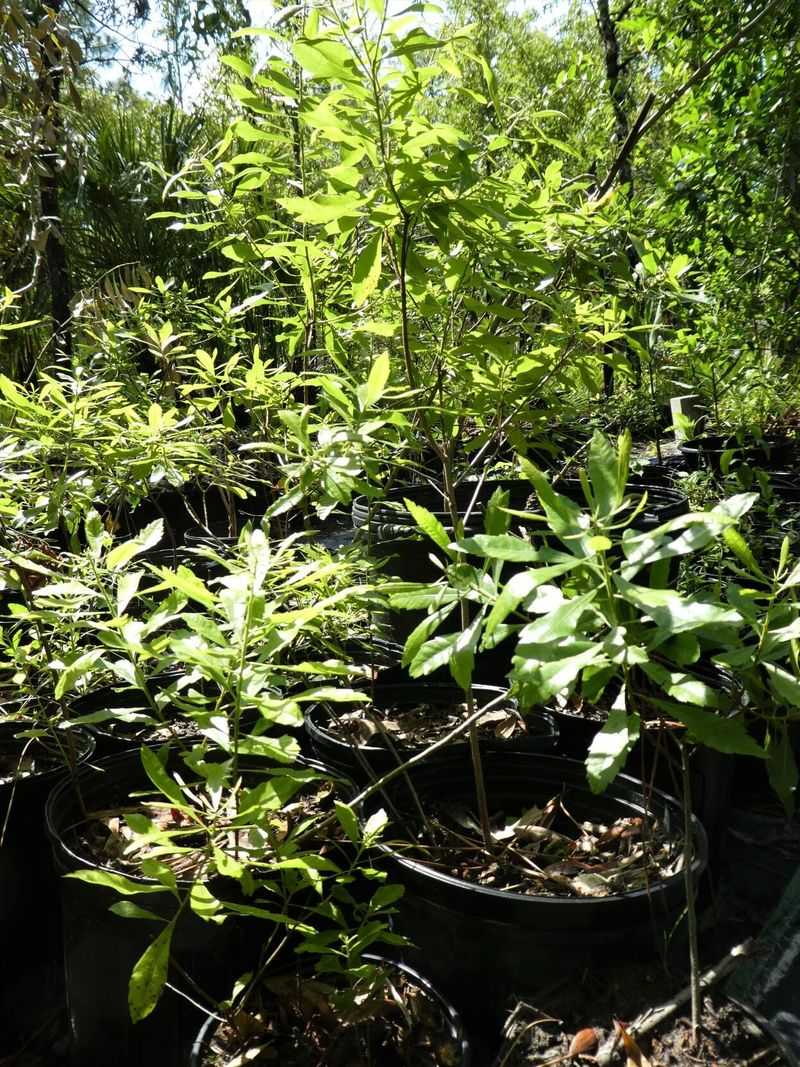
Southern wax myrtle earns its place as a strong native screening option for much of eastern North Carolina when homeowners go in with accurate expectations. NC State Extension’s plant profile confirms its value as a hedge, barrier, windbreak, and background planting with documented wildlife use, and NC State’s urban bird habitat guide ties specific bird species to the fruits female plants produce.
Responsible use means matching the plant to your region and site, allowing enough horizontal space for its mature spreading form, planning for at least one male plant near your female fruiting plants, watering consistently through the first year, pruning selectively rather than shearing hard, watching for suckers at the base, and keeping the planting set back from the home’s immediate defensible space because of the high flammability rating.
That is a more considered approach than simply grabbing Japanese or Chinese privet at the garden center because it grows fast and greens up quickly. Wax myrtle can spread under favorable conditions and is not a plant you install and never think about again.
What it offers in return is a native screen with a documented track record of bird use, genuine regional fit across the Coastal Plain and eastern Piedmont, and a lower invasive-concern profile than the privet species most likely to escape your yard and show up in someone else’s woods.
A planting chosen carefully and managed honestly tends to stay useful a lot longer than one chosen for convenience alone.