
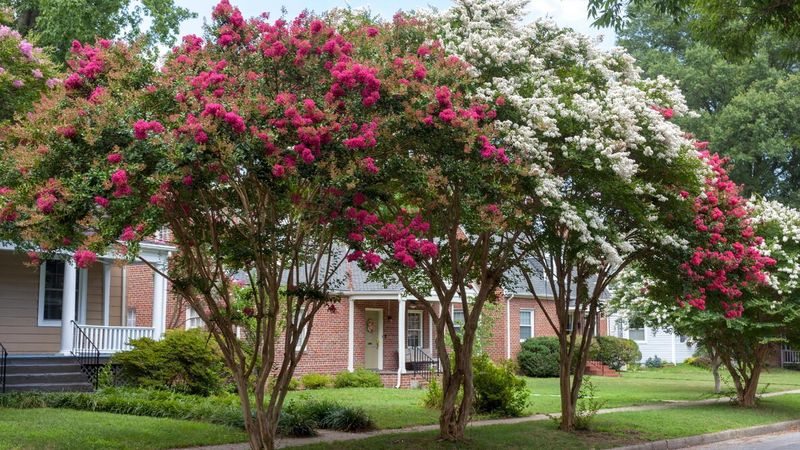
That pretty crape myrtle by your patio has a whole root system you never see. Many Central Texas homeowners wonder what those roots do to the grass, the pipes, and the slab nearby.
Some of those worries are fair and some are overblown. Here is how to tell the difference and what to do about it.
How crape myrtle roots grow
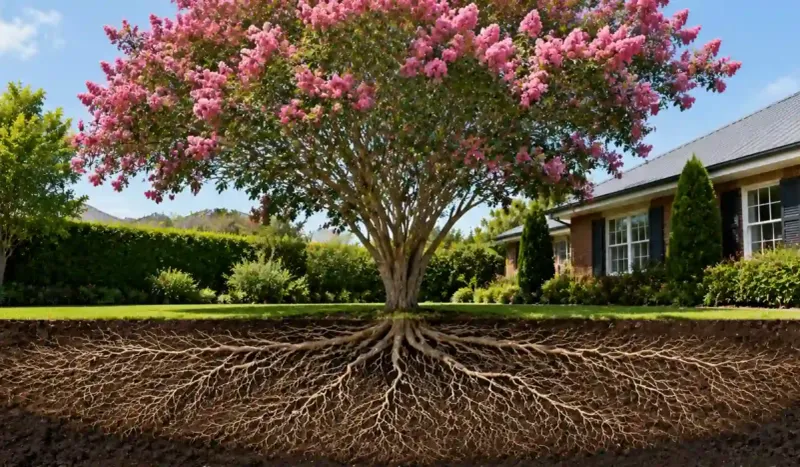
Extension guides describe crape myrtle roots as shallow and fibrous. That means a mass of fine, branching roots that stay mostly in the upper layers of soil rather than one deep taproot plunging downward.
Those top inches are where air, water, and nutrients are easiest to find.
Roots tend to favor soil that holds oxygen. Loose, well-aerated ground near the surface is attractive, while soggy or tightly packed soil is not.
A University of Florida publication notes the same shallow, fibrous habit in crape myrtles.
Here is a common mix-up: shallow does not mean the roots huddle near the trunk. Roots can travel sideways through the upper soil, and how far they go depends on the site.
Oxygen, moisture, compaction, and neighboring plants all shape the pattern, as Colorado State Extension explains for trees in general.
So there is no single magic number for how far a crape myrtle’s roots reach. They do not necessarily stop at the edge of the canopy either.
A tree growing in compacted Central Texas clay may behave differently from one in a loose, irrigated bed, and a root that wanders toward a regularly watered spot should not surprise anyone.
Knowing the roots live near the surface explains most of what homeowners notice, from thin grass to the occasional root poking up near a bed edge. It also tells you that digging around the tree can reach those roots quickly.
Why grass may struggle beneath a crape myrtle
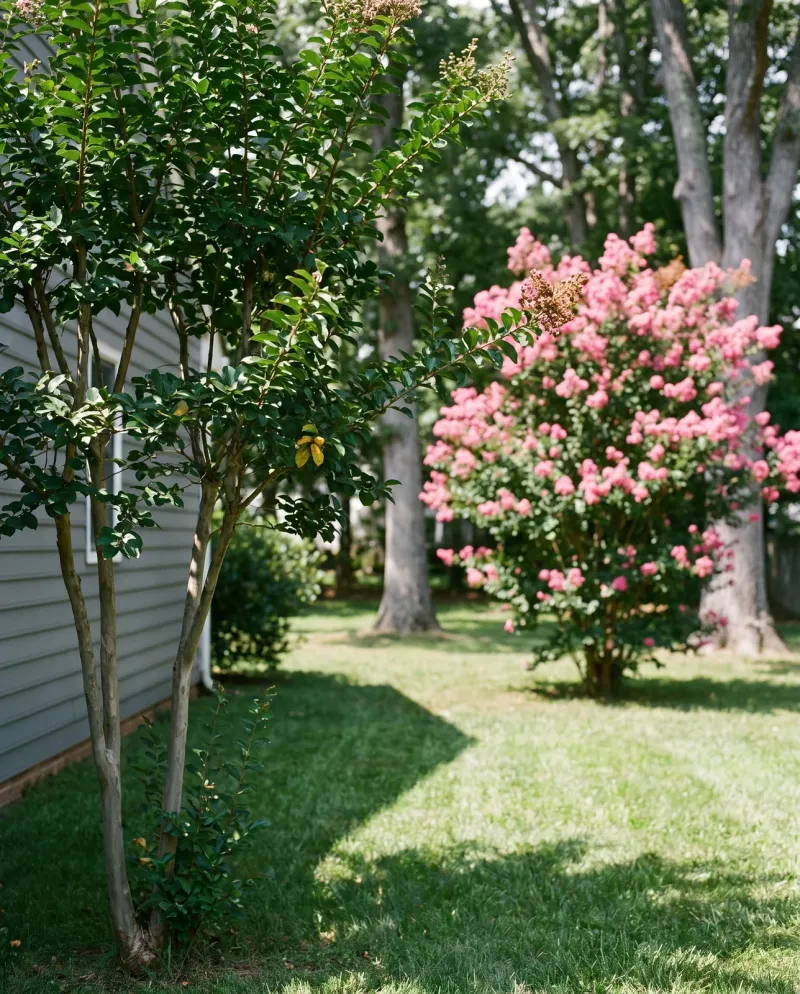
Grass under a crape myrtle often looks tired, and the tree usually has two ways of causing it. The canopy casts shade, and turf generally needs plenty of light to stay thick.
University of Maryland Extension points out that shade and competition from tree roots for water and nutrients both make lawns harder to maintain. That advice covers trees broadly rather than crape myrtles in a specific turf trial, but the logic fits.
Because crape myrtle roots sit in the same upper soil as grass roots, the two compete directly. During a hot Texas summer with watering limits, that contest can get lopsided fast.
Thinning grass is a lawn problem, not a sign of foundation trouble. Shade and root competition can fully explain bare patches without anything happening to your slab.
If the lawn keeps losing, try changing the plan instead of fighting the roots. A ring of mulch or a planting bed under the tree gives you a clean, attractive look with no mowing around exposed roots.
Spread mulch a few inches deep and keep it pulled back from the trunk so bark stays dry.
Resist two tempting fixes: repeatedly cutting roots to make room for sod, and piling soil over roots to level the area. Both can stress the tree, and neither solves the shade.
How roots interact with pipes and structures
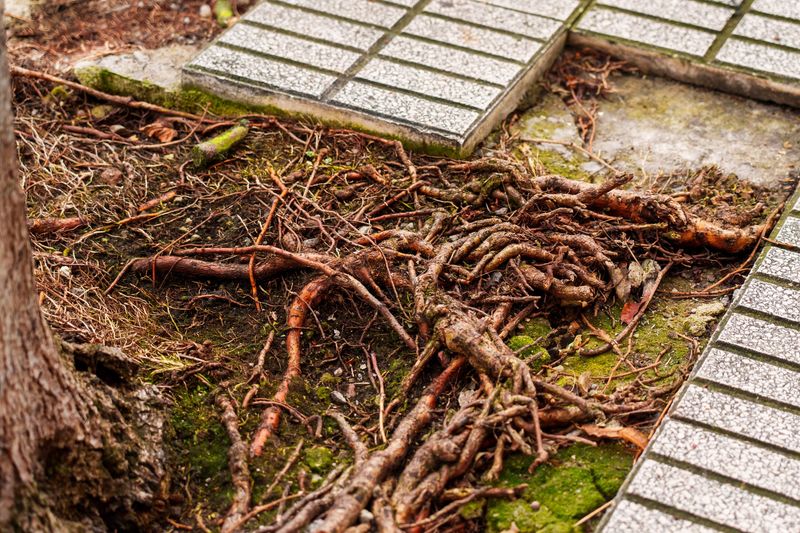
Roots are opportunists. They generally follow moisture and slip into openings that already exist, which is different from forcing their way through solid construction.
Purdue Extension explains that tree roots usually exploit cracks or weak points rather than breaking sound foundations.
Pipes are where this matters most. A U.S.
Forest Service review of root intrusion in sewer systems describes roots as a recognized problem, especially in older pipes with defective joints. A small leak can release moisture and vapor that draw roots toward it.
That gives two very different situations. A newer, tight pipe or an intact slab offers roots little to get into.
An aging clay line with loose joints or a cracked slab is another story.
Crape myrtles can show up in these stories. A Texas A&M AgriLife expert response about a crepe myrtle root obstructing water flow shows roots can be involved in a blockage.
It is one example, though, and it does not mean every crape myrtle will do this.
The balanced takeaway is simple. Do not assume a crape myrtle will wreck your plumbing, and do not assume it never could.
Slow drains, gurgling, or repeated backups are good reasons to call a plumber for a camera inspection of the line.
What expansive clay changes—and what it does not prove
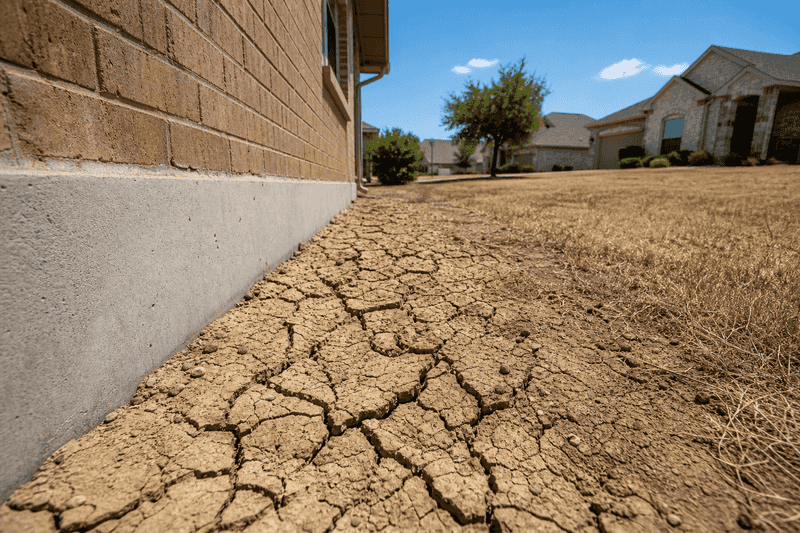
Much of Central Texas sits on expansive clay, soil that swells when wet and shrinks when dry. Those moisture swings can push and pull on a slab unevenly.
The Texas Real Estate Commission’s guide for inspectors treats soil moisture as part of how foundations perform, and Austin’s hazard mitigation plan lists expansive soils as a local hazard.
This is a different mechanism from roots forcing their way into a crack. Here the soil itself changes volume as moisture rises and falls.
Trees can pull water from the ground and may contribute to drying in some settings, but that is only one factor among several.
Drainage, plumbing leaks, how the foundation was built, and long dry spells followed by heavy rain all play a part. A crape myrtle standing near a crack tells you where the tree is, not why the crack formed.
That is also why pulling out the tree is not a guaranteed cure. If movement is caused by drainage or a leak, the slab can keep shifting after the tree is gone.
If you see stair-step cracks, sticking doors, or gaps at window frames, have a qualified foundation professional or engineer look at the whole picture. Steady, even watering near the slab and good drainage away from the house are sensible habits in this soil regardless of what grows nearby.
Choose planting spaces and root work carefully
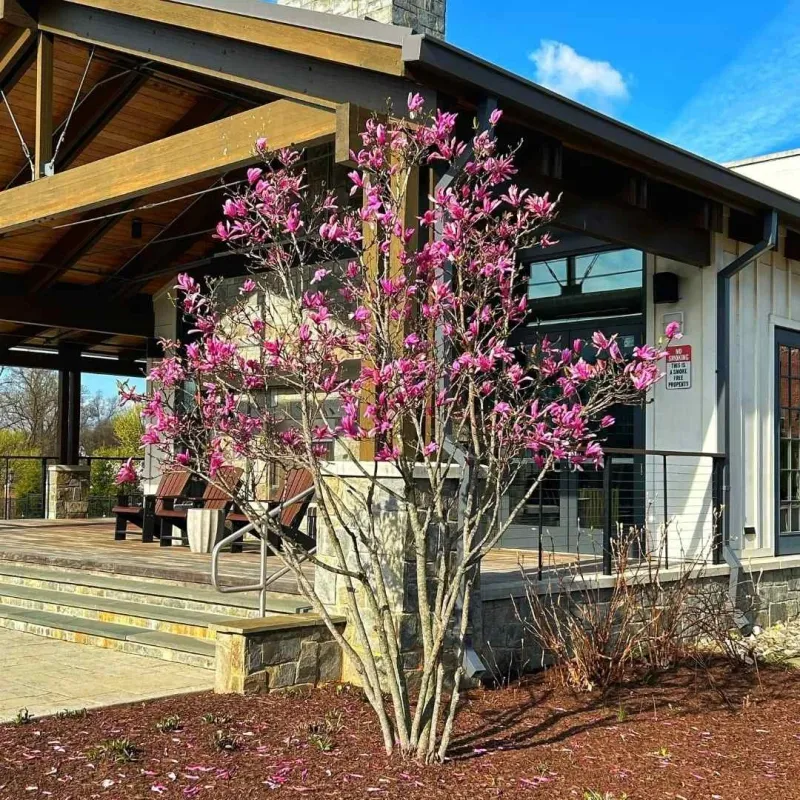
Start with the above-ground size. Texas A&M AgriLife’s crape myrtle guide lists cultivar growth habit and mature height, which helps you pick a tree that fits the space without constant pruning.
Those numbers are for planning the canopy. They are not a promise about root spread or how much clearance a foundation needs, so there is no single safe planting distance to memorize.
Call in a qualified arborist for an on-site visit if roots are lifting a sidewalk or patio, the tree sits very close to a structure, or heavy pruning of roots is on your mind. Losing large roots can weaken a tree’s health and stability, which is why a casual root barrier or a weekend of root cutting is a poor idea.
University of Florida IFAS notes that root loss can affect how well a tree stands up in wind.
Before any shovel goes in, contact Texas 811. Texas law requires notice before covered excavation, and Texas 811 recommends calling before any digging project, even a small one.
The Railroad Commission’s damage prevention program exists because buried pipelines and lines are easy to strike.
Planting a new tree? Mark the mature canopy size on the ground, check where pipes and utilities run, and give the tree room to grow in open soil.
Put lawn changes and foundation concerns in perspective
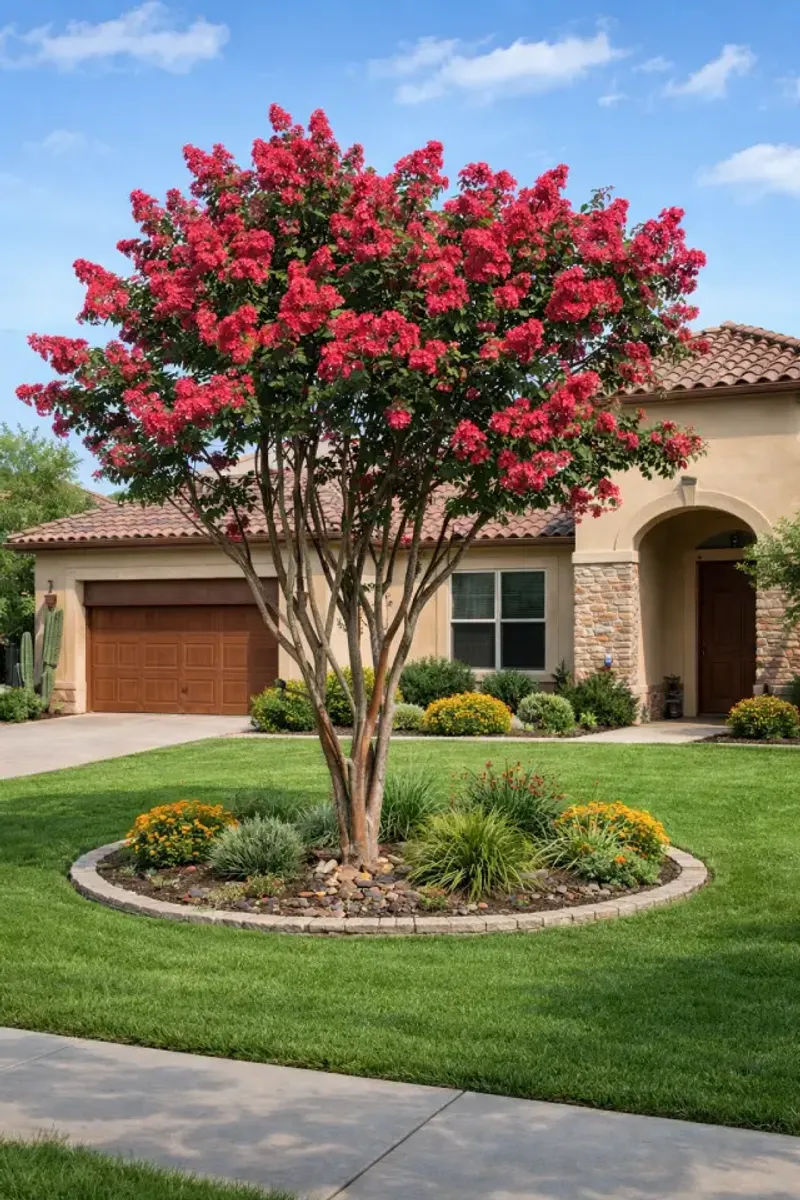
Thin grass and surface roots under a crape myrtle are everyday effects of a shallow-rooted tree, and a mulch bed handles them well. Structural movement is a separate question, and a tree’s nearness alone does not prove it caused anything, as Purdue Extension and the Texas Real Estate Commission both suggest.
For real cracks or big root work, get qualified help and call 811 before digging.
Roots shape the lawn first and the slab only under certain conditions.