
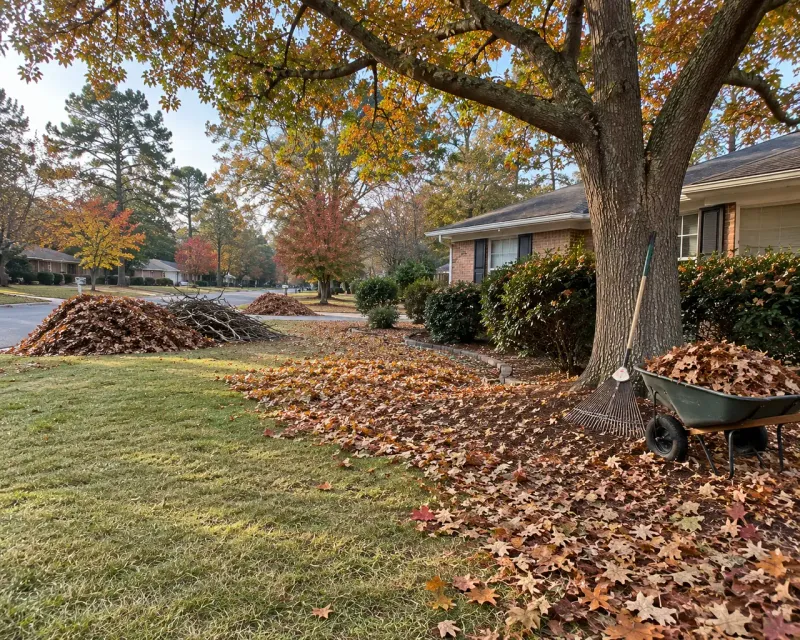
In most cases, the person whose yard the leaves land in is the one who rakes them up. California law does not appear to make a tree owner collect ordinary leaves that blow next door.
Things change when a tree causes serious damage or safety problems, though, and that is where it gets interesting. Here is how to sort out your pile, plus what to do with it once you decide to deal with it.
Ordinary fallen leaves are usually the receiving homeowner’s cleanup
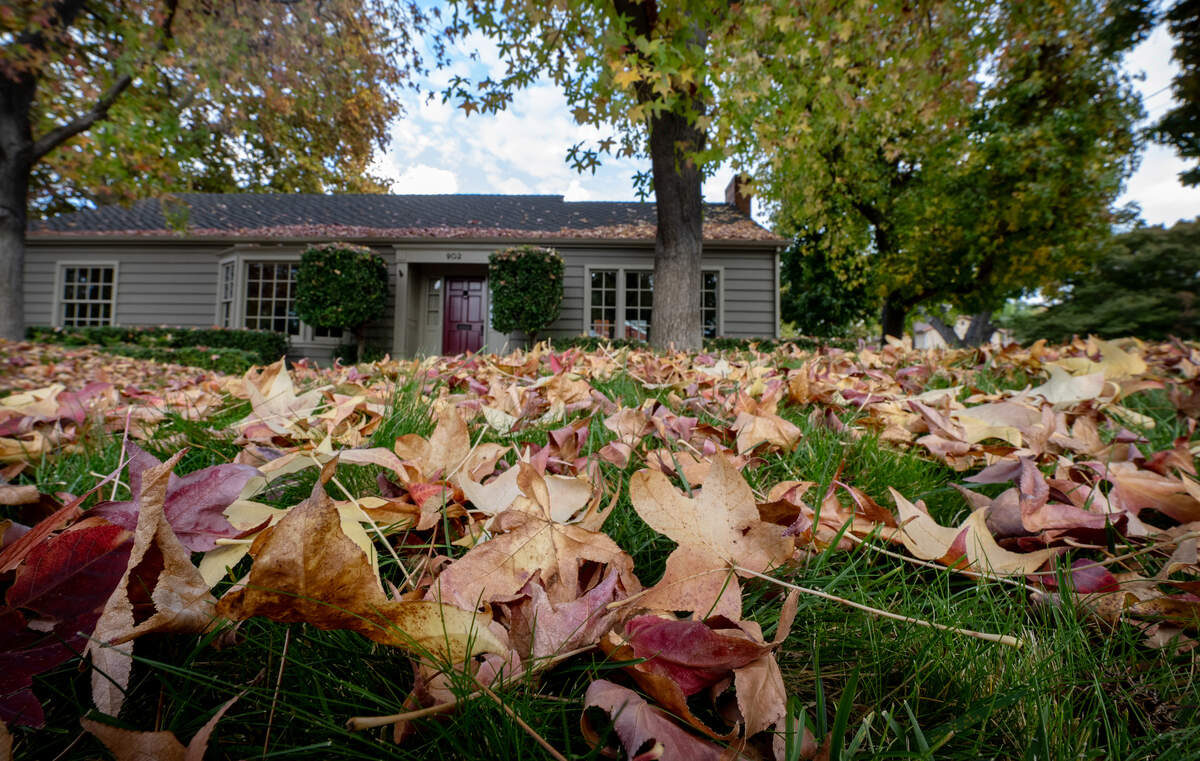
Here is the practical default. When seasonal leaves naturally blow from a neighbor’s tree into your yard, you will generally be the one who manages them.
The sources reviewed do not point to a statewide rule that makes a tree owner come over and collect ordinary leaves.
The California Association of Realtors tree guide is a helpful starting point for how tree and neighbor questions usually play out. It treats leaf and branch issues as part of living next to trees, with some situations calling for more than a rake.
That said, this is a general default, not an absolute rule. You are not always legally responsible for every leaf that lands on your property, and leaves can never be ruled out as part of a problem in every case.
California defines nuisance broadly in Civil Code section 3479, and the outcome depends on the actual facts.
Think of it this way. A yard full of oak or sycamore leaves in fall is a seasonal chore for most homeowners.
Substantial interference with how you use your property, damage to your home, or a real safety concern is a different situation, and later sections cover how to tell the difference.
If a friendly conversation with your neighbor is possible, it often goes further than any legal argument. Some neighbors will happily trim a branch or help with a cleanup day if you ask kindly.
When leaves become a serious property problem
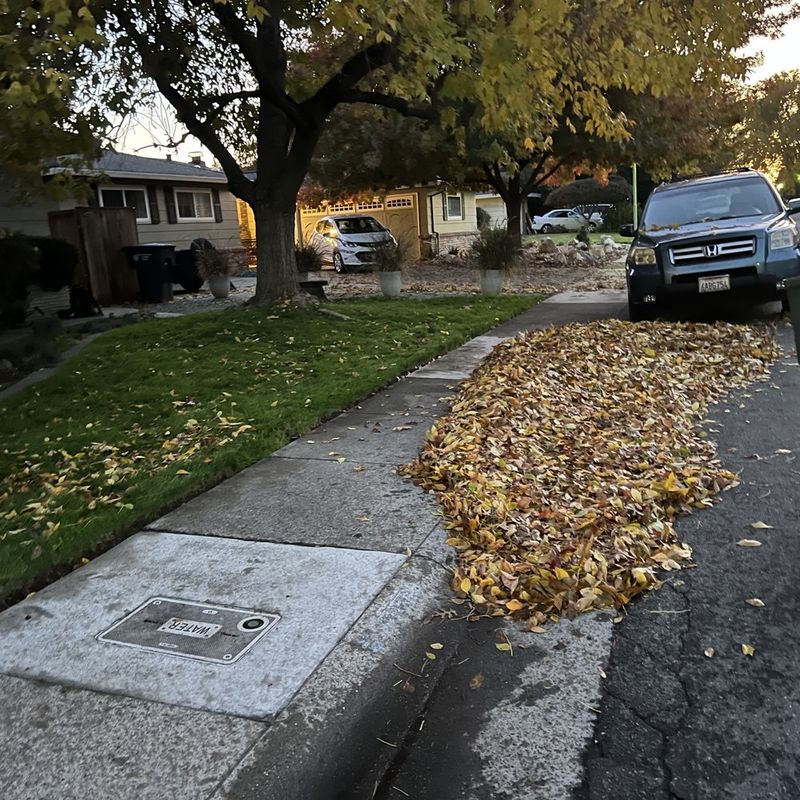
California’s nuisance statute is written broadly. Civil Code section 3479 covers things that interfere with the comfortable use of property, which leaves room for courts to look at each situation on its own facts.
No bright-line test decides when a tree crosses over. Ordinary inconvenience, such as a few weekends of raking, does not guarantee a claim.
Serious or recurring interference, property damage, or safety worries are the kinds of facts that may raise a nuisance question.
Picture two yards. In one, leaves drift in each fall and get bagged or composted.
In the other, branches keep dropping, a limb has already hit the house, and gutters clog again and again. The second yard has a very different story to tell.
A well-known California case shows why context matters. In Bonde v.
Bishop, the court dealt with much more than routine autumn leaf fall, which the next section walks through.
Clogged gutters alone do not make a neighbor automatically liable. If you are seeing damage or hazards, write down dates, take photos, and keep repair records.
Then consider talking with a local attorney or your city’s resources about your specific situation.
Bonde v. Bishop involved more than ordinary leaf cleanup
The California Court of Appeal decision in Bonde v. Bishop is often brought up in leaf disputes, but the facts went well beyond a pile of autumn leaves.
Small branches fell continually from the neighbor’s tree. A large branch had already fallen and damaged the house.
Leaves clogged the gutters, cleanup was needed often, and the homeowners worried that more limbs would come down.
The court affirmed an order to abate the nuisance by removing the overhanging limbs. That is a fix aimed at the source of the hazard, not a bill for raking.
The court also reversed a $200 damages award. The reason was that the claimed damages for cleanup time had not been properly pleaded.
So the case should not be read as saying a tree owner must pay for routine leaf cleanup.
What the case does show is that California courts can act when a tree creates a combination of debris, gutter trouble, falling branches, and safety concerns. For a typical homeowner with seasonal leaves, it is a reminder to look at the whole picture.
Is it just leaves, or are limbs a danger?
Leaf-drop timing varies around California
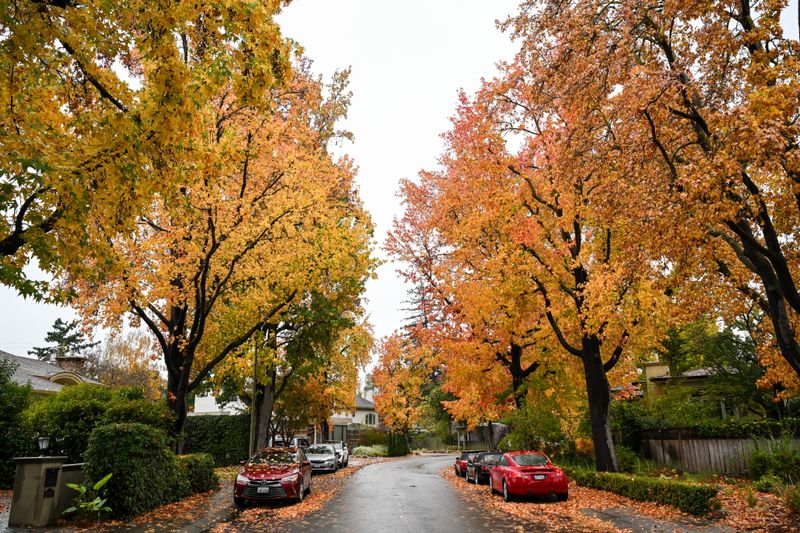
Fall leaf drop does not happen on one schedule across the state. A coastal neighborhood, a Central Valley street, and a Sierra foothill town can all see leaves come down at different times.
Several things drive the timing. Species matters, since deciduous trees such as maple, sycamore, and liquidambar drop leaves on a different calendar than evergreens like live oak, which shed older leaves at other times of year.
Local weather and your location play a role too.
Drought is a big California factor. UC IPM guidance on normal dormancy notes that drought can cause leaves to brown and drop earlier than usual, so a dry summer can send leaves into your yard well before the typical autumn show.
That means your own cleanup window may start early, stretch long, or arrive in several waves. Watch the trees around you rather than the calendar, and plan on checking gutters and roofs more than once.
Overhanging branches are a separate property-line issue
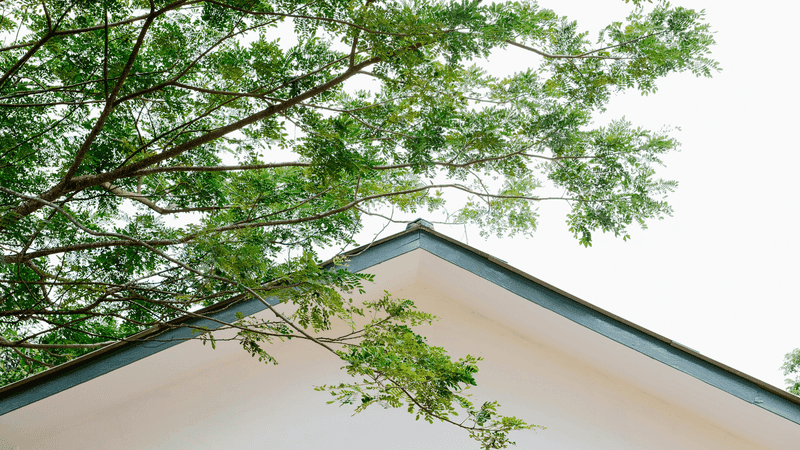
Who cleans up leaves is one question. What you can do about branches that cross the property line is another.
The Sacramento County Public Law Library summarizes some limits on self-help. You should not enter your neighbor’s property without permission or other legal authority, even to trim your own problem.
Self-help pruning has limits, and unnecessary injury to the plant should be avoided.
Protected-tree rules may also apply. Some cities and counties regulate certain trees, such as native oaks or large heritage trees, and cutting them without a permit could cause trouble.
Rules vary from place to place.
Because of that, there is no one-size pruning instruction that works for everyone. Before you pick up a saw, check with your city or county about local tree rules.
A good first step is to talk with your neighbor. Many people are glad to have a branch trimmed by a certified arborist, and sharing the cost can be cheaper than a dispute.
Use safe fallen leaves in the garden
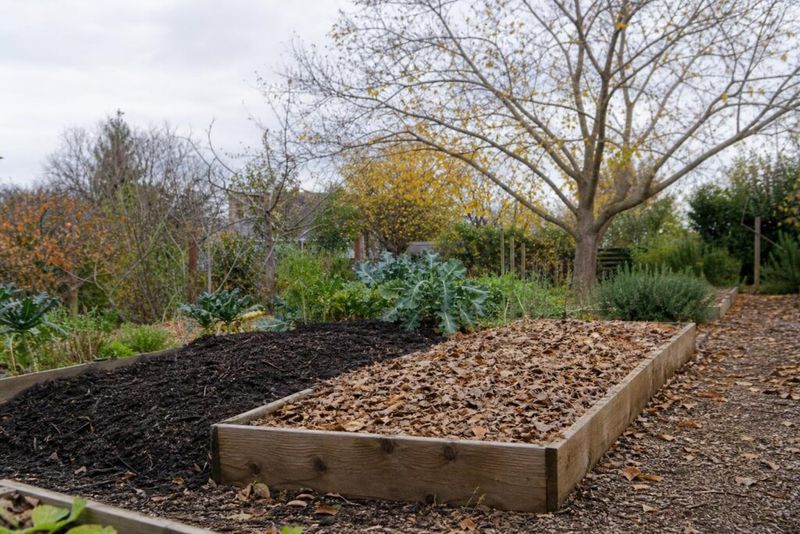
Once the leaves are in your yard, many of them can work for you. UC Marin Master Gardeners suggest leaving some leaves in suitable garden areas, composting them away from the home, or mowing a light covering into a lawn.
Amount matters. A thick layer can smother grass, so spread leaves lightly over turf or mow them in a little at a time.
In garden beds, a modest cover can protect soil and shelter beneficial insects.
Leaf type matters too. Hard, waxy leaves like magnolia and live oak may break down more slowly.
UC Master Gardener advice points to shredding them to speed things up, and running a mower over them is an easy way to do it.
Location is the other piece. Keep compost piles and leaf-filled beds away from your house.
Pick garden areas that are open and away from structures, and clear the rest.
So the answer is not to leave every leaf where it falls. Use the leaves that suit a garden, and move the others out of places where they cause problems.
Clear leaves from areas where fire safety matters
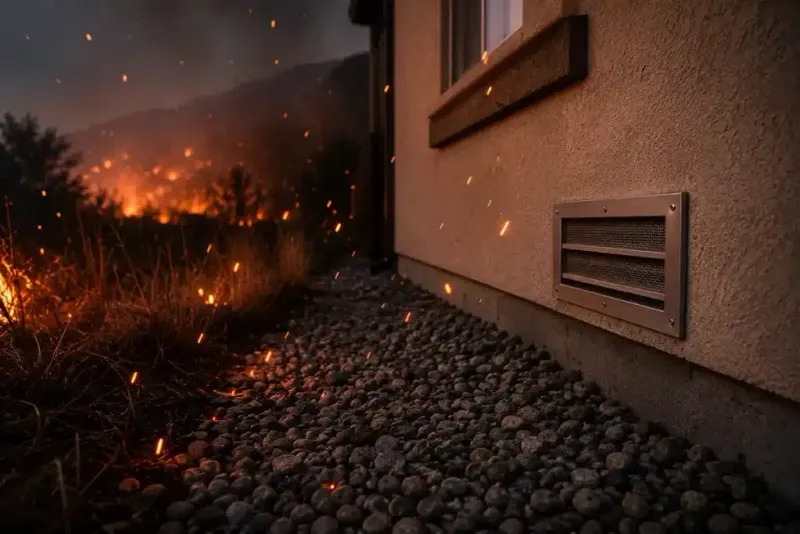
California’s fire season changes the rules for leaf piles. CAL FIRE defensible-space guidance advises clearing dead leaves and debris from roofs, gutters, decks, porches, stairs, and areas beneath structures, since embers can land and ignite dry material.
The same guidance calls for keeping the first five feet next to your home ember-resistant. The Board of Forestry and Fire Protection describes this as Zone 0, so a leaf-mulched bed right against the wall is a poor fit.
That is where the garden advice and the fire advice meet. A light layer of leaves in a bed several feet out may be fine, while a layer against siding or under a deck is not.
Requirements can differ by jurisdiction. Your local fire authority may have its own rules and inspection schedules, so check with them for what applies to your address, especially in hillside or wildland-edge neighborhoods.
Match your response to the problem

Ordinary leaves on your property are generally your cleanup, as the Realtors tree guide and Civil Code 3479 suggest. Recurring interference, damage, or limb hazards call for a closer look.
Keep leaves off the spots CAL FIRE flags.
This is a general summary, not an answer for any one dispute. A rake handles the leaves, but a falling limb deserves a real conversation.