
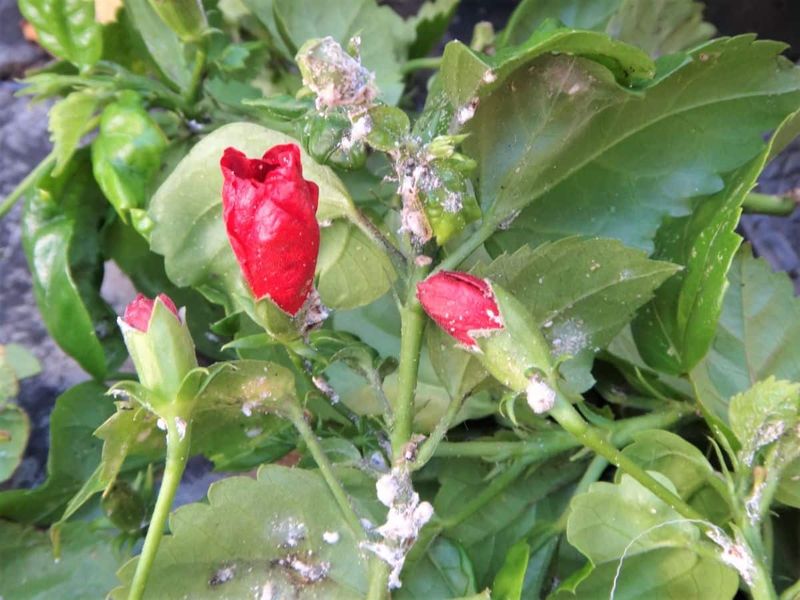
Those little tufts of white fluff in the joints of your indoor hibiscus are often mealybugs, and a cotton swab dampened with rubbing alcohol is a cheap way to go after them tonight. You only need a swab, a bottle of isopropyl alcohol at 70% or less, and a good light.
The fix works best as a careful process, so a few quick checks will keep your plant safe. Here is how to look, dab, test, and follow up.
Check beneath the white fluff
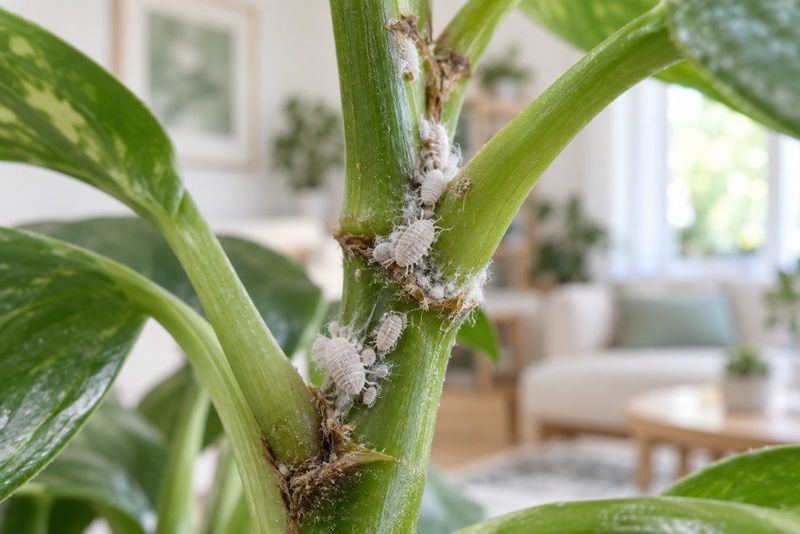
Cottony wax tucked into a leaf joint is a strong clue, but it is only a clue. Mealybugs are small, soft, sap-feeding insects that cover themselves in white wax, and UC IPM guidance describes the cottony material, the insects beneath it, and the sticky honeydew they leave behind.
Honeydew shows up as shiny, tacky spots on leaves or on the surface below the plant. Sticky leaves plus fluff make mealybugs more likely, since the insects drain sap and can weaken the plant over time.
Before you act, look closer. Cottony cushion scale, woolly aphids, some soft scales, and whiteflies can all look similar from a few feet away.
Gently lift a bit of the wax with a toothpick and look for small, oval, soft-bodied insects underneath. NC State Extension also notes how mealybugs hide under their waxy coating.
If you cannot tell what you are seeing, take a clear photo or a sample to your local Extension office for identification. A correct name saves you from treating the wrong pest.
Inspect the leaf joints and stem crevices
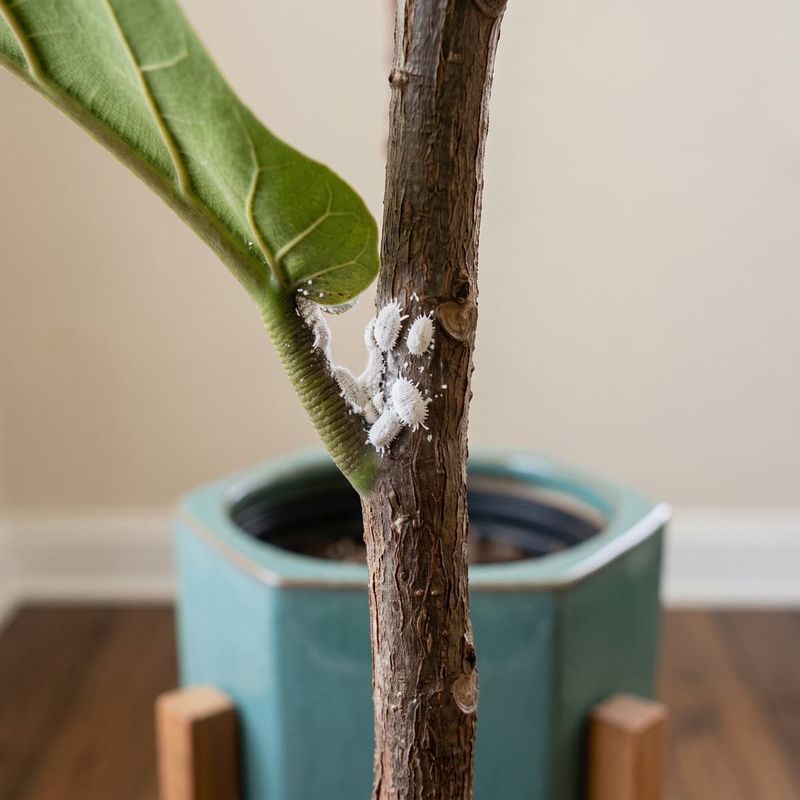
Grab a flashlight and a magnifying glass, then work through the plant slowly. Start with the spots where mealybugs like to settle: the joints where leaves meet stems, the crotches between branches, the undersides of leaves, and tender new growth.
Check the pot rim, the saucer, and any stake or plant support nearby too.
These insects can slip into tight folds, so a plant that looks mostly clean may still have a few tucked away. UC IPM lists the cottony masses as a sign, and NC State Extension describes how they gather in sheltered spots.
Remember that visible wax may not show the whole picture. Some of the cottony material can be egg masses, and insects may sit beneath or behind it.
A quick glance rarely finds everything.
Jot down where you found fluff, such as the third node on the tallest stem. That small map helps you compare later and shows whether the problem is shrinking or spreading.
Use a swab to target a few visible insects
Tonight’s first move is simple. Move the suspect hibiscus away from your other houseplants so any pests do not wander.
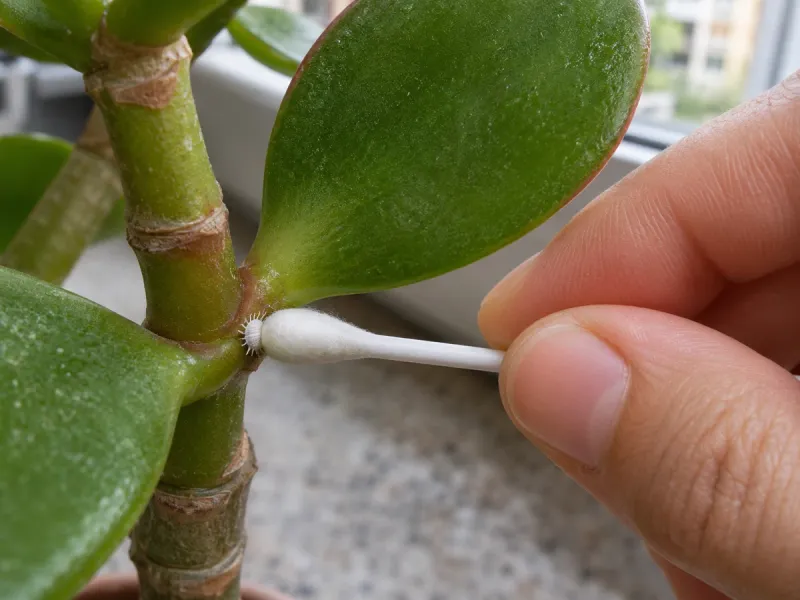
Then dampen a cotton swab with isopropyl alcohol at 70% or less. Squeezing out the extra liquid keeps it from dripping onto leaves.
Dab each visible mealybug directly. University of Maryland Extension describes this swab method for indoor plants, and UC IPM specifies a solution of 70% or less applied right on the insects.
Use a fresh swab when one gets dirty so you do not smear insects around. A toothpick can help in very tight joints.
Keep expectations realistic. The swab only affects what it touches.
Wiping away white fluff does not prove the plant is clear, because hidden insects and protected eggs may be nearby. Think of this as the first round, not the finish.
Test for leaf damage before treating more broadly
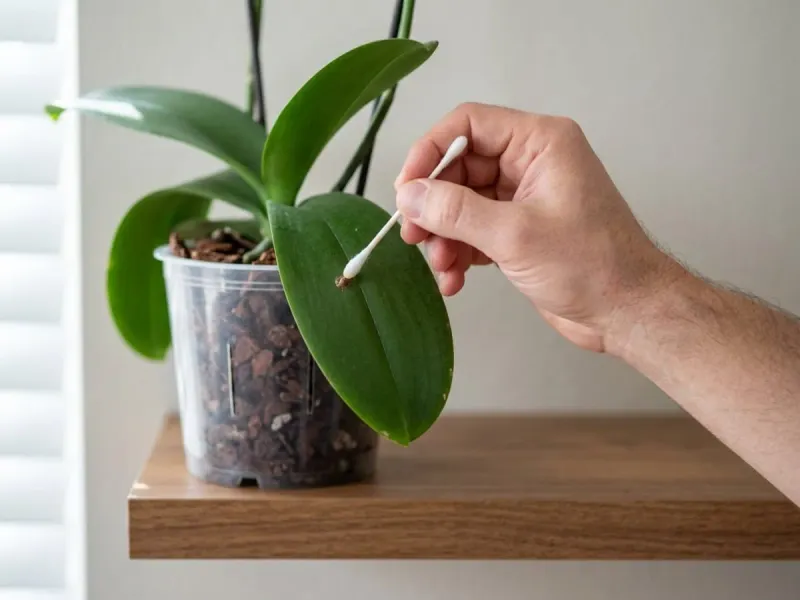
Alcohol can burn plant tissue, and hibiscus can be sensitive. Before you treat more than a few insects, test a small area.
Dab a bit of your diluted alcohol on one leaf or a short stretch of stem, then leave it alone.
Wait 1 to 2 days and check for browning, scorching, or spotting. UC IPM advises this test, and Wisconsin Horticulture cautions that damage symptoms may take a day or two to appear.
That waiting period is why tonight’s job is limited. Dabbing individual visible insects is one thing.
Spraying the whole plant with household-strength alcohol is a different act with more risk, and it should not be a same-night fix.
If the test spot looks fine after two days, you can keep dabbing more insects with more confidence. If you see leaf burn, stop and consider another option instead.
Recheck the plant and repeat treatment if needed
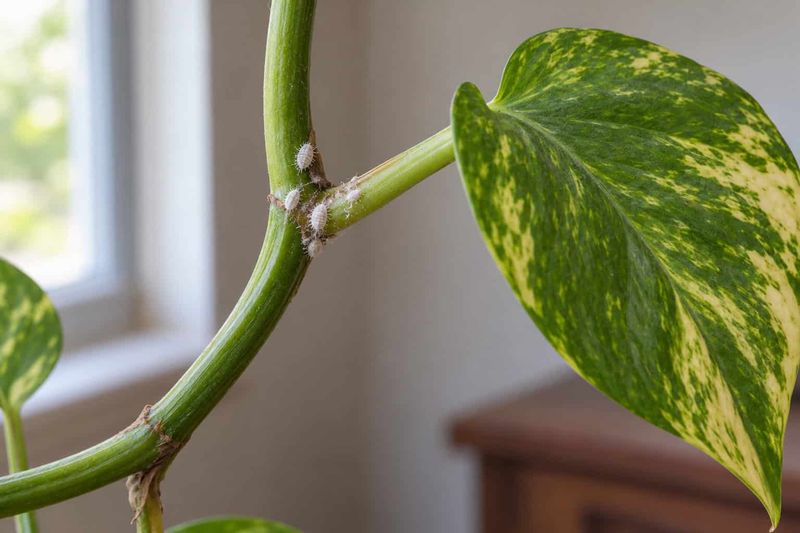
A week from now, go back with your flashlight. Hidden insects and protected eggs can slip past a spot treatment, so new fluff may appear in joints you already checked.
Finding some is common and does not mean you failed.
UC IPM suggests repeating treatment weekly until the infestation is gone, while University of Maryland Extension advises monitoring after treatment and notes that retreatment may be necessary.
No fixed number of rounds guarantees success, so let what you see guide you. Check leaf joints, stem crotches, and leaf undersides each time, and swab any new insects directly.
Keep the hibiscus apart from other plants while you watch it. If a few clean weeks pass with no new fluff or sticky spots, that is encouraging, though a quick look now and then is still wise.
Choose another option for a widespread infestation
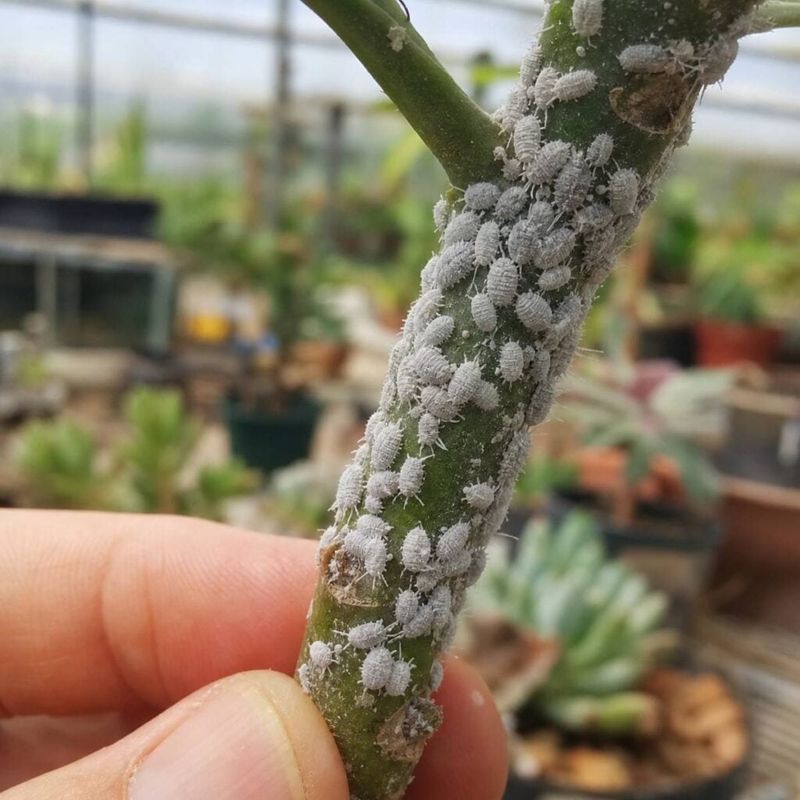
Sometimes the fluff is not limited to a few joints. If you find insects on most stems, leaves, and new growth, swabbing every one gets slow, and some will likely be missed.
That is the time to consider a different approach.
One option is pruning badly infested parts and discarding them in a sealed bag. Another is an insecticidal soap labeled for houseplants and for mealybugs.
Wisconsin Horticulture and University of Maryland Extension both mention these choices for heavier problems.
Read the product label first and follow it closely, including any plant-safety directions. Expect that multiple applications may be needed, and neither pruning nor soap guarantees success.
A light infestation does not require escalation. If only a handful of insects show up, careful swabbing and regular rechecks may be enough.
Scout plants before bringing them indoors
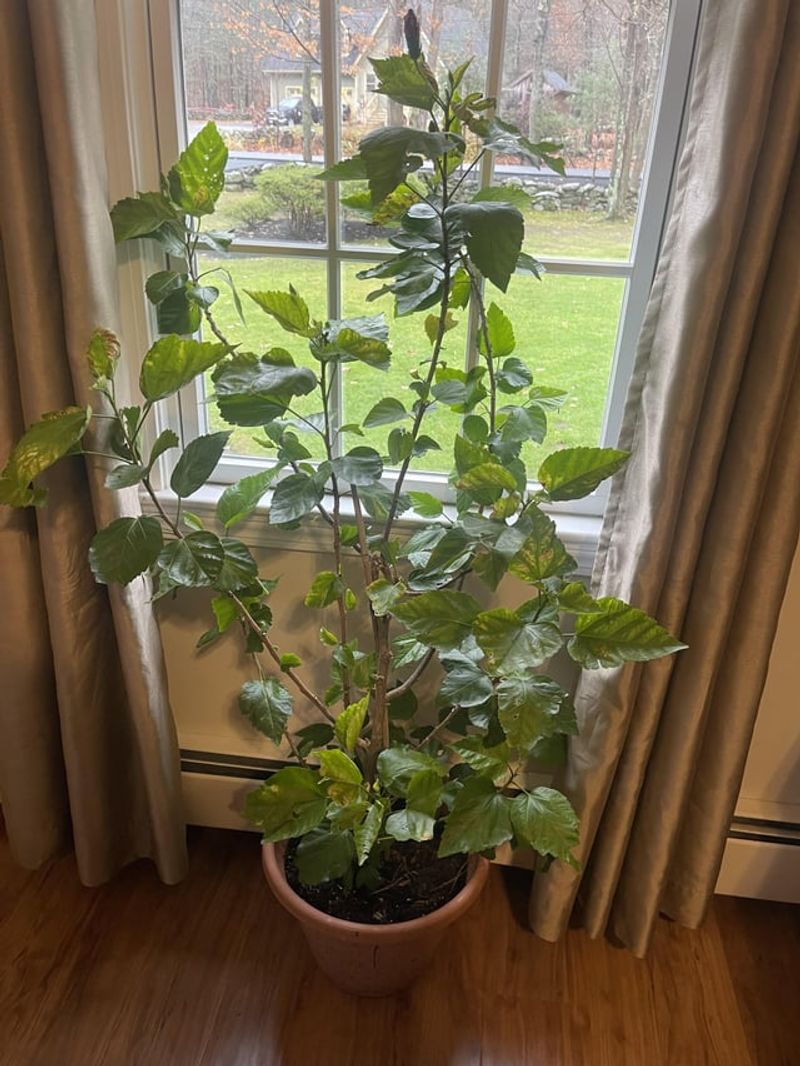
Next fall, give your potted tropical hibiscus a once-over before it crosses the doorway. Turn leaves over, peek into the joints, and check the soil surface and pot.
Penn State Extension recommends checking plants for pests before moving them inside for winter.
Care sheets such as Smithsonian Gardens on Hibiscus rosa-sinensis can help you plan indoor conditions for the season.
If anything looks suspicious, keep that plant separate from your other houseplants for a while and keep watching it. These steps are sensible precautions, not proof that a plant is pest-free, since tiny insects and eggs can hide well.
This advice is meant for potted tropical hibiscus and houseplant care, so do not assume it fits every plant called hibiscus. Name the pest before picking the treatment, because a good ID saves effort.