
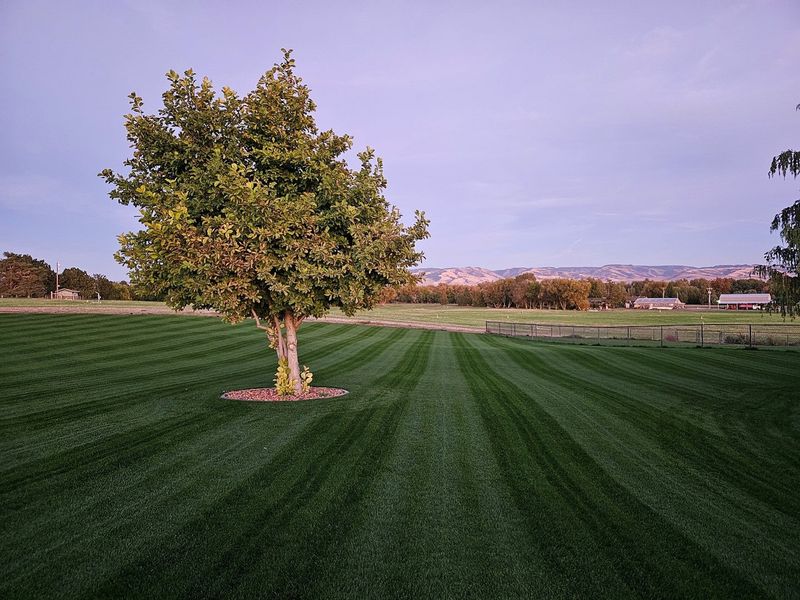
That bare ring under your bird feeder may be a thick mat of spilled seed hulls covering the grass. Hulls pile up all winter, and when the lawn starts to grow again, the mat can block it.
A rake, a tray, and a few small feeder changes can cut down the buildup. Here is how to check the spot, clear it safely, and keep it from happening again.
Look for buildup beneath the feeder
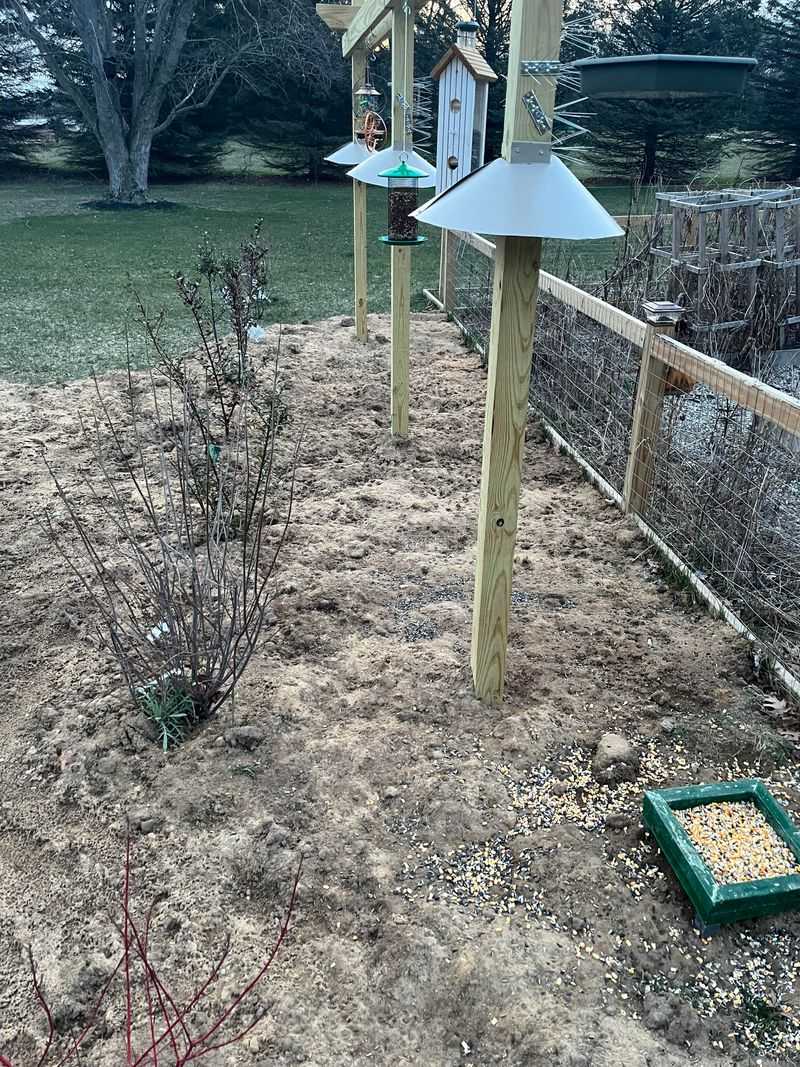
Kneel down and look closely at the bare spot under your feeder. A thick layer of spilled seed and hulls sitting on top of the grass is a strong clue, and Illinois Extension notes that these hulls can mat together beneath feeders.
A bare patch alone does not tell you the cause, though. Hull buildup is one likely explanation, not a diagnosis for every bald spot.
Squirrels, raccoons, and other animals can scratch and disturb the ground too, and a Colorado Master Gardener response on sunflower effects on nearby plants openly admits that cause and effect can be hard to pin down.
So look for clues. Is there a crusty layer of hulls you can lift off the soil?
Do you see digging marks, tracks, or torn-up turf? A thick pile points toward hulls, while scattered holes suggest wildlife.
Hull buildup can smother grass as it grows
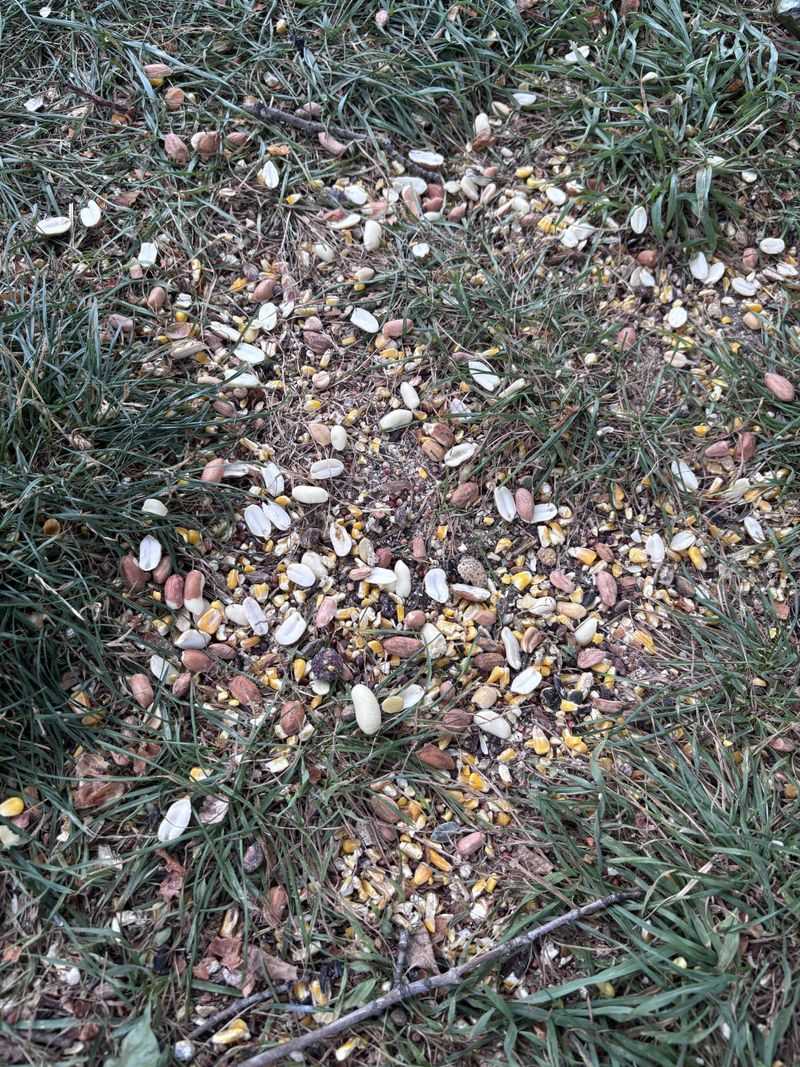
Cold weather gets blamed for a lot, but the documented lawn risk here is different. Hulls that pile up through winter can knit into a mat, and Illinois Extension recommends removing that mat before lawn growth resumes.
Raking is a good first step.
Think of it like a blanket over the grass. New shoots that try to push up can get blocked from light and air.
That is smothering, not frost damage.
You may also hear that sunflower hulls harm nearby plants. Some plants may be affected through a process called allelopathy, but research is limited.
A University of Maryland Extension expert says it is usually not a huge problem and that some plants grow normally nearby. The soil is not broadly toxic, so do not write off the spot.
Clear the area with a rake or broom
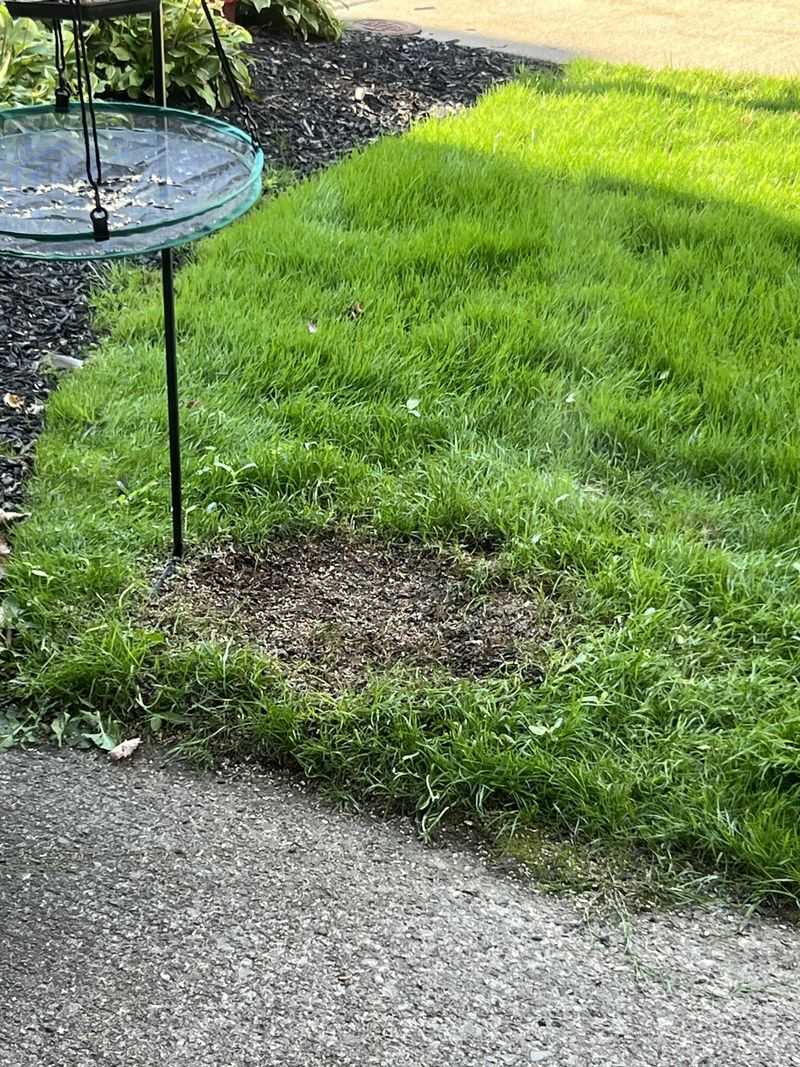
Grab a hard rake or leaf rake and pull the hulls and spilled seed off the grass. Illinois Extension names raking as the go-to method, and a wet-dry vacuum can pick up whatever is left.
On pavement or a deck, a broom works well.
Protect yourself while you work. Cornell’s FeederWatch guidance recommends gloves when handling feeders and a mask when raking or sweeping beneath them.
Skip the leaf blower. A bird feeder fact sheet advises raking instead, since blowing debris around could send germs into the air.
Bag the pile or compost it away from the feeder.
Work gently so you do not tear up thin grass. One cleanup helps, but it will not guarantee the lawn bounces back.
Use a tray to catch some falling seed
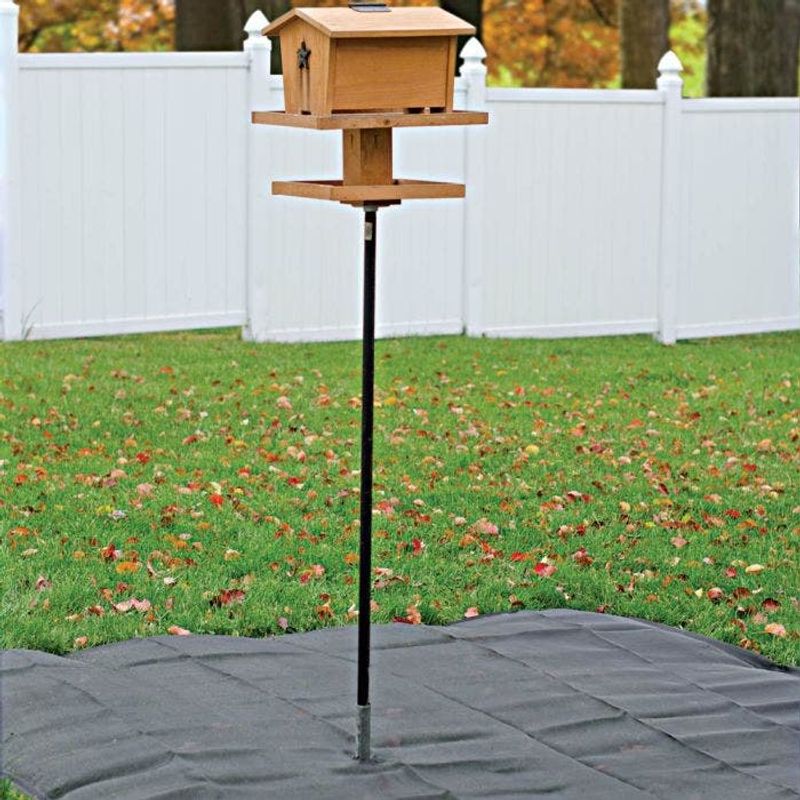
Many feeders come with attachable catch trays, as the Oklahoma Department of Wildlife Conservation points out. A tray sits under the ports and catches some of the food and hulls before they hit the lawn.
Some, not all. Wind, messy eaters, and birds flicking seed aside will still send a bit to the ground.
Expect fewer hulls, not zero.
A tray also needs upkeep. If it sits out in the rain, Oregon State University Extension advises cleaning it daily so wet seed does not sour.
Treat the tray as a way to slow future buildup. It will not repair a bare patch on its own, but it can make each raking a lot lighter.
Choose hulled seed or move the feeder
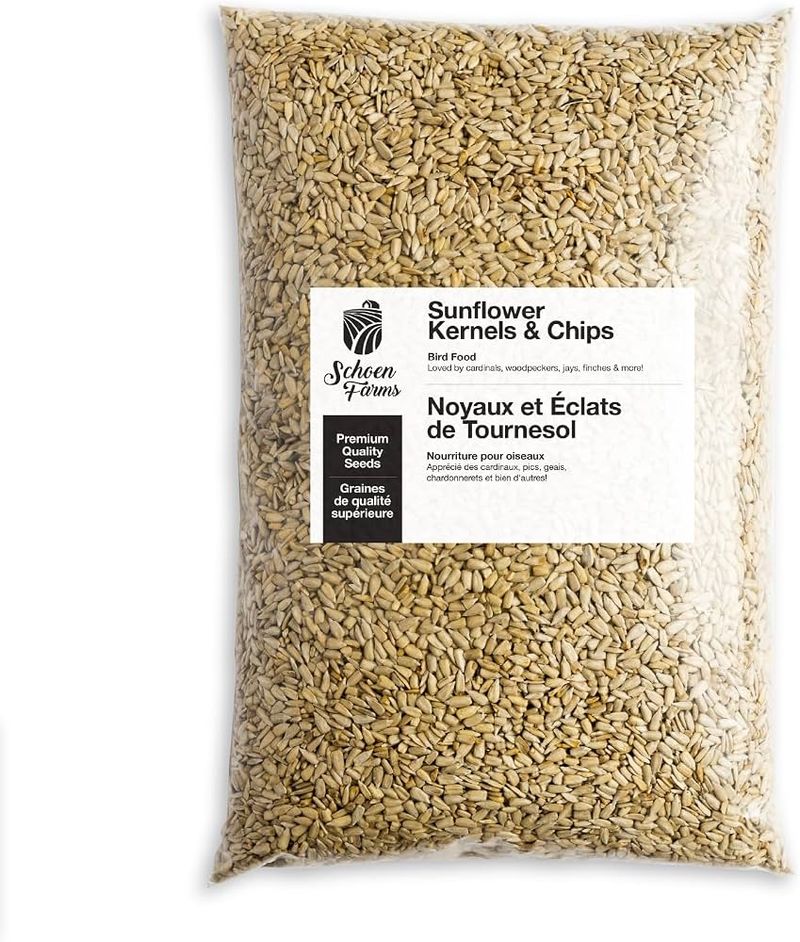
Shells are the bulk of the mess, so hulled sunflower seed is worth a try. Project FeederWatch lists hulled sunflower as a feeder food, and Cornell’s classroom feeder tips suggest it to reduce mess.
Birds can still drop kernels and leave droppings, so it cuts the mess rather than ending it.
Moving the feeder is another option. If debris keeps stacking up in one place, shifting the feeder a few feet now and then spreads out the waste.
Oregon State guidance also supports occasional moves.
Pick a new spot over a hard surface or an area you can rake easily, and keep it away from spots where cats could hide.
Keep trays and the ground area clean
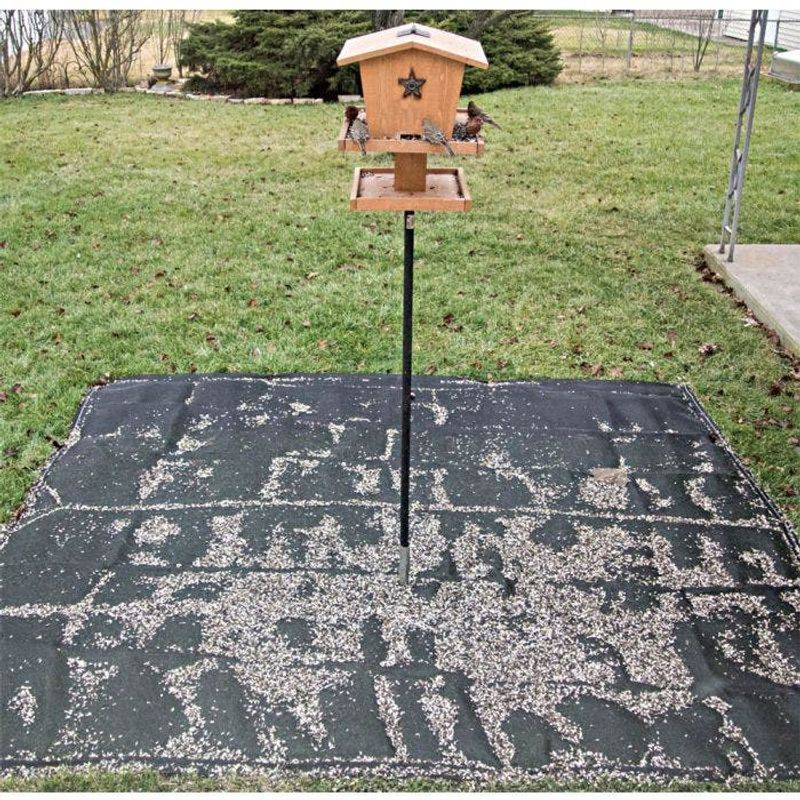
Ground-feeding birds like juncos and sparrows happily eat fallen seed, so you do not need to scour the lawn spotless. What should not stay are old, moldy, or spoiled food and piles of droppings.
Check the tray often. Oregon State University Extension says a tray exposed to rain needs cleaning daily, because damp seed can turn bad fast.
Dump it, scrub it, and let it dry before refilling.
Keep up the ground routine too. Cornell’s FeederWatch advice is to regularly clean below feeders, wear gloves when handling feeders, and put on a mask when raking or sweeping underneath.
A quick weekly rake works for many yards. After heavy rain or a thaw, take a closer look at the spot.
Reduce buildup and watch how the lawn responds
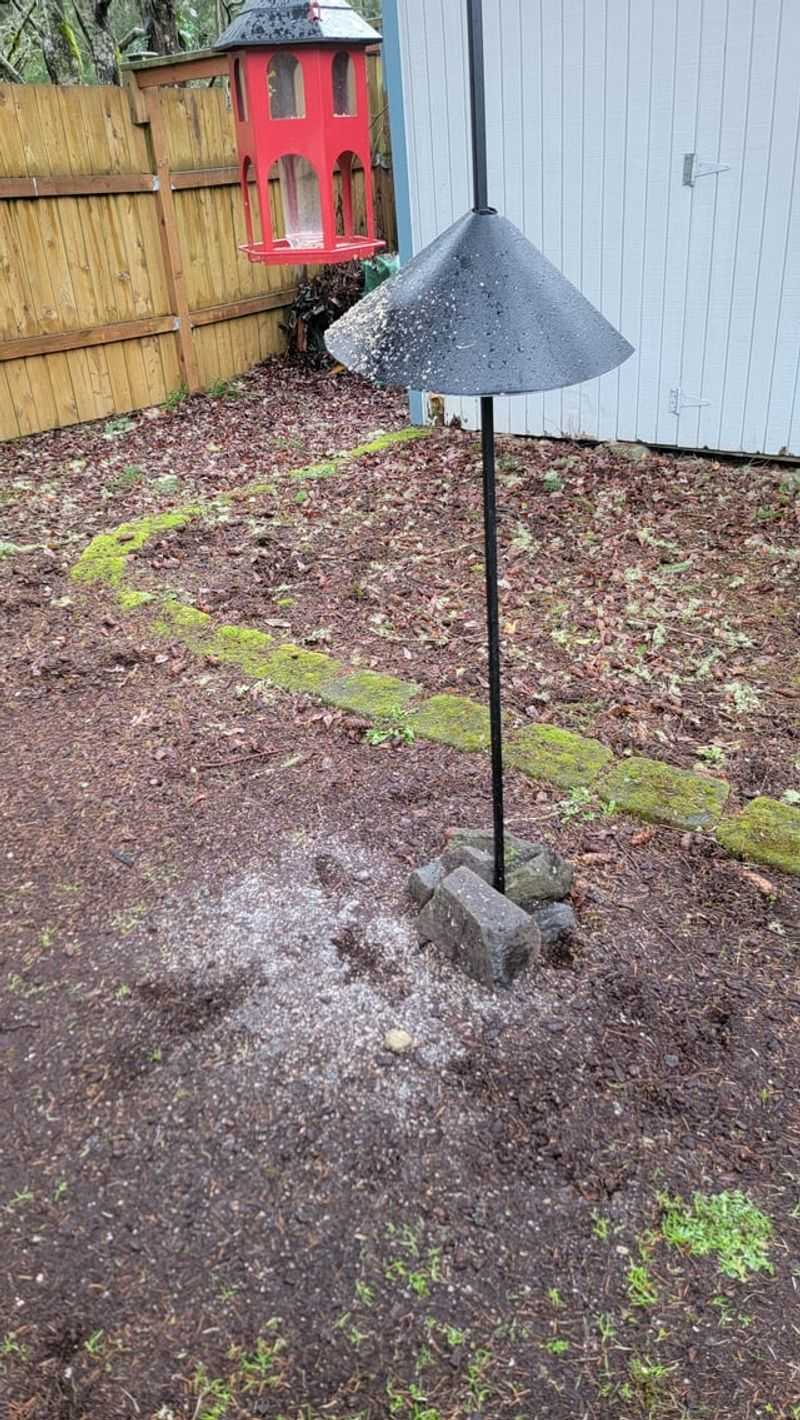
The plan is simple: clear the old hull mat, catch more of the new spills, and keep the feeding area tidy. Illinois Extension points to raking before growth resumes, and FeederWatch backs regular cleaning below feeders.
These steps tackle one plausible reason for grass smothering. They do not guarantee the patch will fill in, and no reliable timetable exists.
Watch the spot as the weather warms, and if bare ground stays put, consider other causes such as animal digging.
The birds keep coming, and your lawn gets a fair chance.